Fairy Ring
Why mushrooms grow in circles — and what the ring does to the soil beneath it.
Fairy rings are rings or arcs of mushrooms produced by a single underground mycelium growing radially outward from a central point. The centre exhausts its nutrients and dies while the living front keeps expanding, leaving a dark green band, a bare zone of starved grass, or a perfect circle of fruiting bodies. Rings can exceed ten metres across and have carried folklore for centuries.
In this article
- 1Fairy Ring
- 2Form and Appearance
- 3Detection Signs
- 4Development and Growth
- 5Nutrients and the Dead Grass Zone
- 6Species and Habitats
- 7Current Explanatory Model
- 8Management
- 9Folklore and Cultural Interest
- 10Key Facts
- 11Frequently Asked Questions
- 12From folklore to autotoxicity
- 13Frequently asked questions
- 14Knowledge graph
Fairy Ring
A fairy ring is a naturally occurring ring or arc of mushrooms. The phenomenon also carries the names fairy circle, elf circle, elf ring and pixie ring. It belongs to the kingdom Fungi. The term itself descends from a legacy of mysticism surrounding natural phenomena in ancient times, and fairy rings have drawn interest since ancient times because of their mysterious, circular appearance.
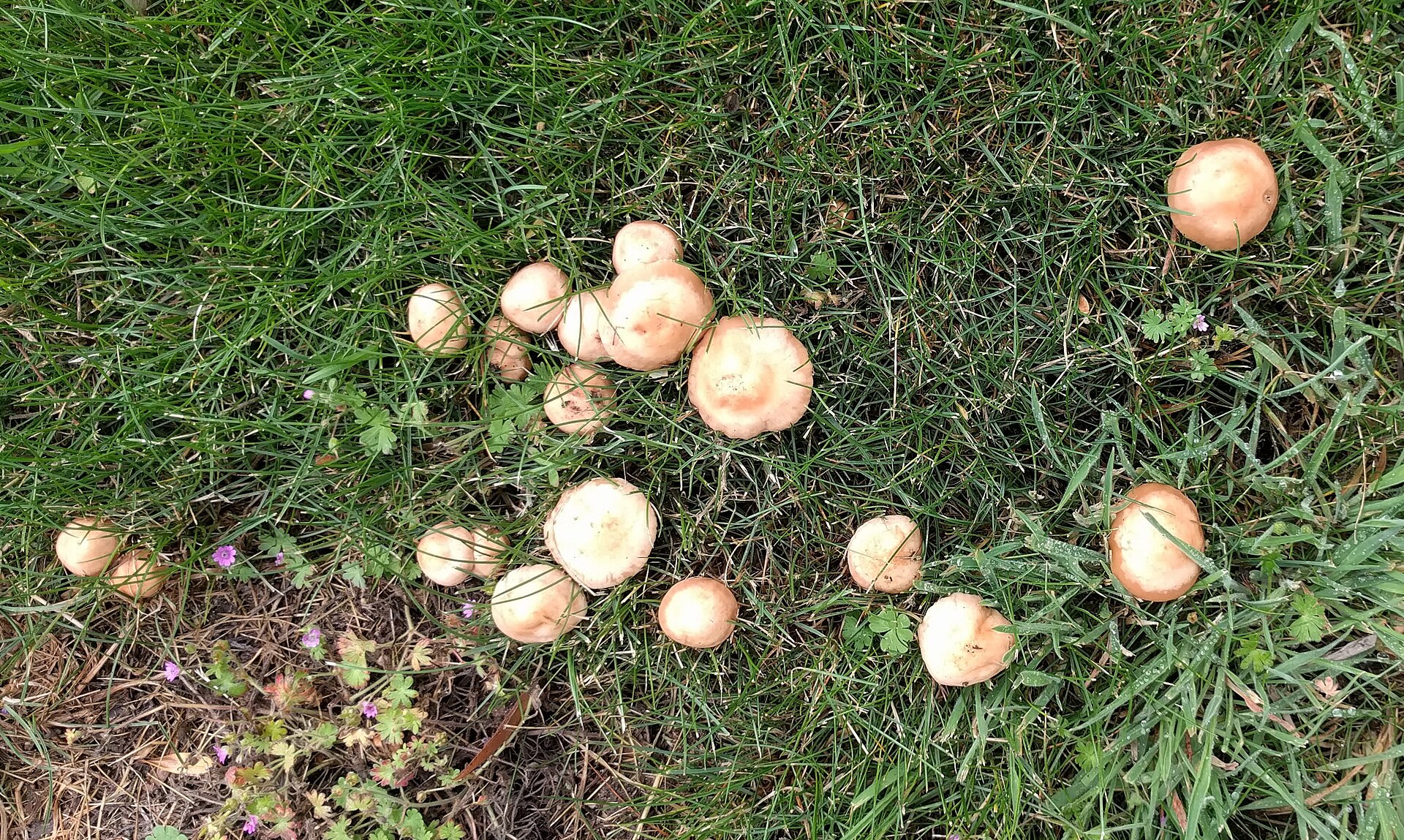
Such rings are detectable by sporocarps, the fungal spore pods, arranged in rings or arcs, and equally by a necrotic zone of dead grass or by a ring of dark green grass. On lawns the ring may reach up to 15 feet in diameter, with a distinctly different colour or texture from the grass inside and outside it. Grass within fairy rings can be denser, greener and faster growing, or alternatively browner and drier than the surrounding grass, depending on conditions. During wet weather, rings of mushrooms may form at the edge of the discoloured grass.
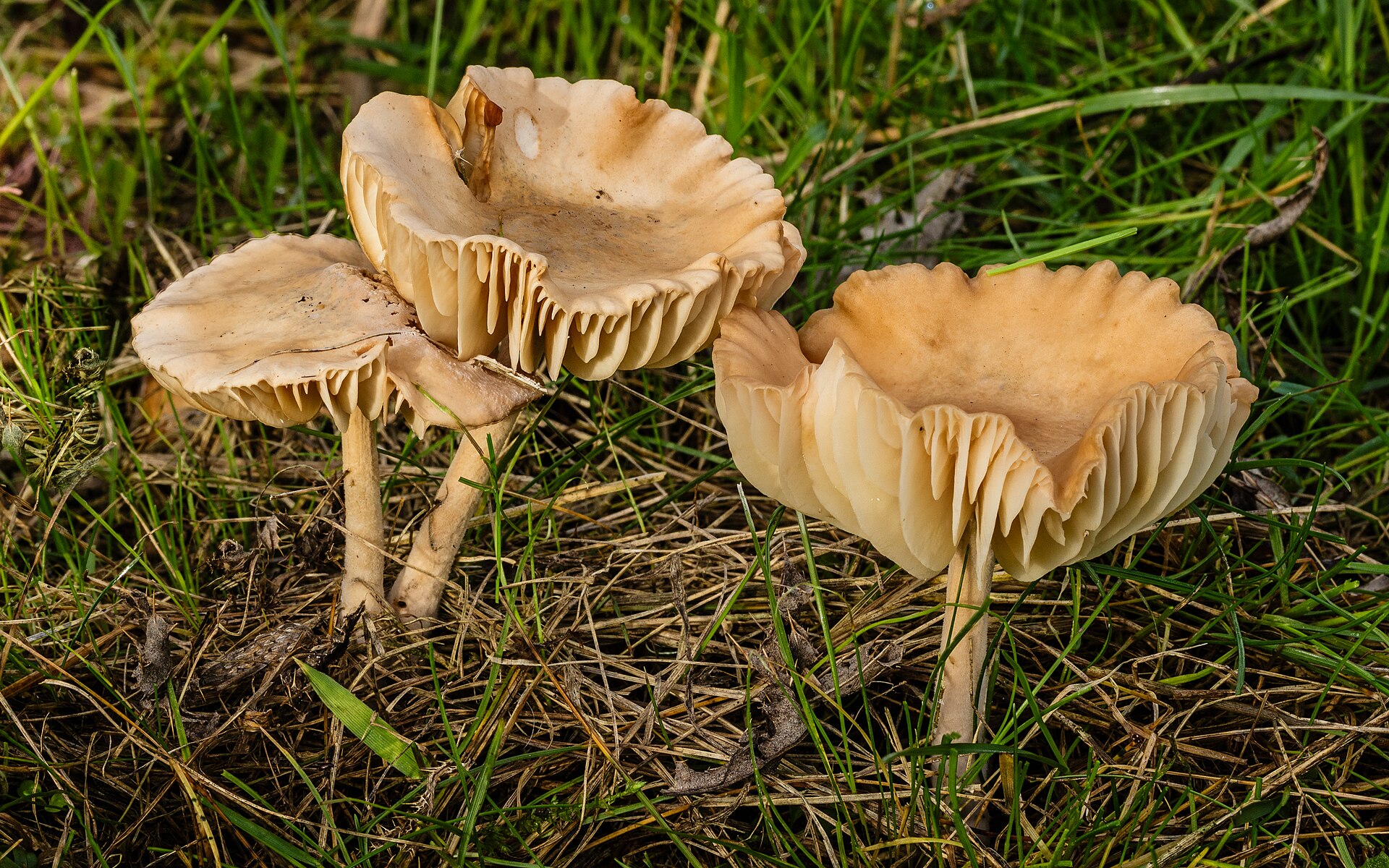
A ring begins when the mycelium, or spawn, of a mushroom falls in a favourable spot and sends out a subterranean network of fine tubular threads called hyphae. Umbrella-shaped fruiting bodies spring up from just behind the outer edge of the mycelium. When conditions are right the fungus forms circles made of mushroom that spring forth from one underground mycelium. Rings occur when fungi grow radially in the soil, raising from a central point, progressively degrading organic matter and thus affecting vegetation. They are caused by certain fungi that feed on decaying organic matter such as tree stumps, logs, leaves or roots buried in the soil.
In grass the best known fairy ring fungus has the scientific name Marasmius oreades. This species lives amongst the roots of turf, altering the appearance of the grass and producing toadstools at certain times of the year, mainly in late summer and autumn. Its colonies are the most damaging, spreading slowly across the turf. The dead grass over the growing edge of the mycelium is the reason a fairy ring shows a dying margin. Other colonies of fungi cause fairy rings as well, but most have no effect on the turf, or even seem to enhance the growth.
Rings are most commonly found on lawns and golf courses where soils have high levels of organic matter, and in areas where trees have recently been removed. The current model explains the dynamics of the fungal mycelium by self-DNA accumulation and the build-up of autotoxicity, a schematic functional model in which self-DNA accumulation and autotoxicity together account for that dynamics.
Fairy rings are the subject of much folklore and myth worldwide, particularly in Western Europe1Fairy ring · Wikipedia ↗.
People once believed that mushrooms growing in a circle followed the path made by fairies dancing in a ring2Fairy Rings · Utah State University Intermountain Herbarium ↗.
Contrary to popular belief, fairy rings are not the result of fairies, witches or other supernatural beings dancing and cavorting in circles.
The ring is not static. Its living outer edges keep growing year by year, so the diameter of the ring gradually increases. Rings may grow to over 10 metres (33 ft) in diameter, and they become stable over time as the fungus grows and seeks food underground. Over time the ring's underground segments die out, until the ring form on the surface can no longer be discerned.
Fairy rings are the subject of much folklore and myth worldwide, particularly in Western Europe. People once believed that mushrooms growing in a circle followed the path made by fairies dancing in a ring. Contrary to popular belief, fairy rings are not the result of fairies, witches, or other supernatural beings dancing and cavorting in circles.
1. Form and Appearance
A fairy ring is a circular area of abnormal turf growth, and the largest recorded examples reach over 10 metres (33 ft) in diameter. Such rings occur mainly in forested areas, though they also appear in grasslands or rangelands. The surface pattern is recognised by three signs: fruiting bodies, dead grass, and a dark green band.
The form arises because the hyphae that make up the mycelium grow evenly in all directions and then produce a near-perfect circle of fruiting bodies—mushrooms—above ground. The living outer edges keep growing year by year, and hence the diameter of the ring gradually increases. The rings become stable over time as the fungus grows and seeks food underground.
The discoloration of the turf follows from the fungus drawing on the soil. As it grows, the mycelium uses up all of the nutrients in the soil, starving the grass. Nitrogen depletion starves the grass. Large rings are created when the older mycelium in the center finally exhausts the soil nutrients and dies, and on the death of the central mycelium the nutrients are returned to the soil and grass can grow again.
Over time the ring's underground segments die out, until the ring form on the surface can no longer be discerned. Researchers verified dikaryotic growth in sampled Marasmius oreades rings and ran transplantation treatments to test how the fungus directs its growth. Where dead patches of grass occur, spiking and watering to break up the water-repellent properties of the fungal colony is helpful, as is feeding.
The cycle begins when a fungal spore grows into a mycelium—the underground threads that form a single fungal organism—and sends out a subterranean network of tubular threads called hyphae. When conditions are right, the fungus forms "fairy rings," circles made of mushroom that spring forth from one underground mycelium. During wet weather, rings of mushrooms may form at the edge of the discolored grass.
The most damaging fairy rings are slowly spreading colonies of the fungus Marasmius oreades, which lives amongst the roots of turf, altering the appearance of the grass and producing toadstools at certain times of the year, mainly in late summer and autumn.
Due to their mysterious, circular appearance, fairy rings have been of interest since ancient times.
2. Detection Signs
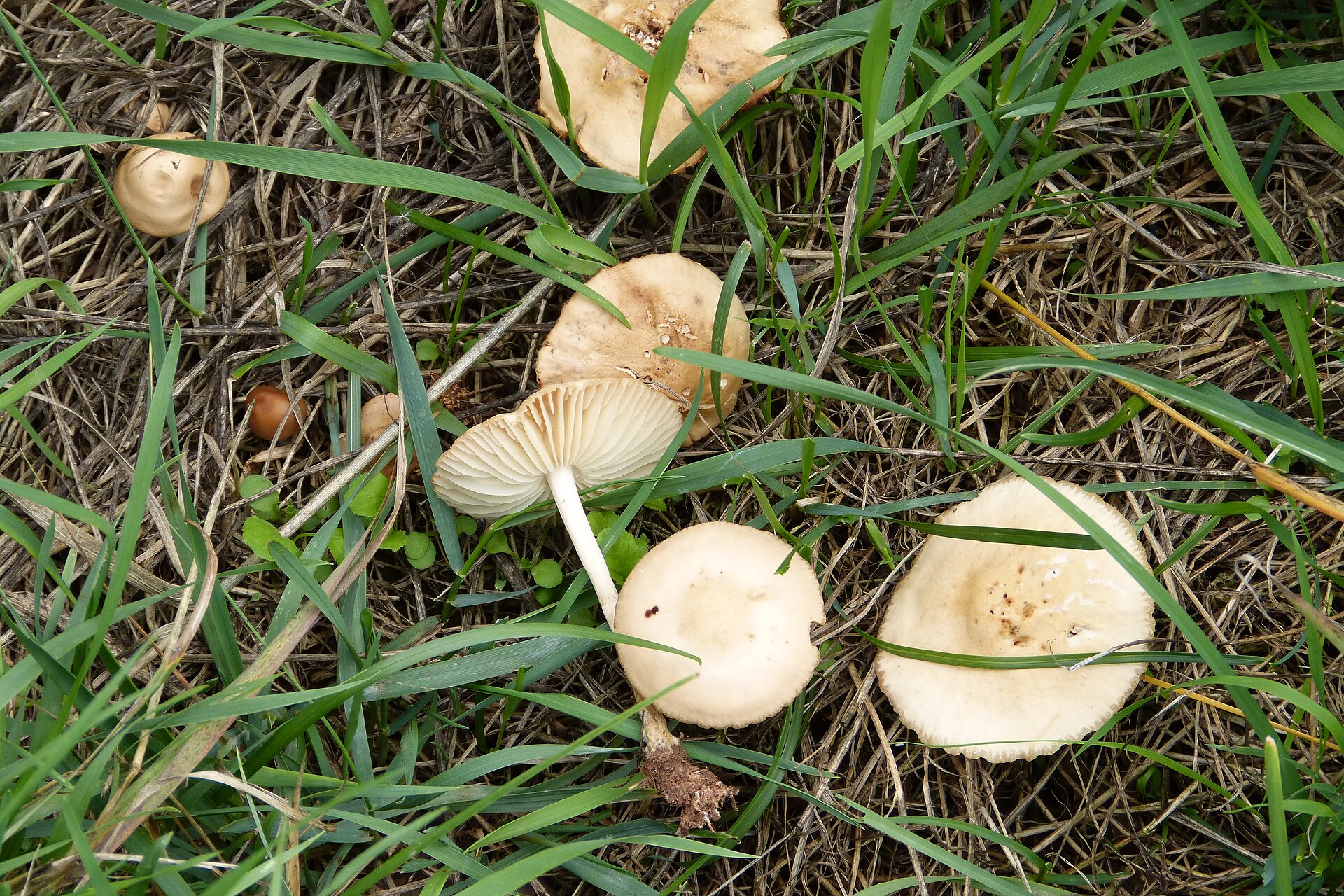
A fairy ring announces itself in three distinct ways: through the fruiting bodies, or sporocarps, that emerge in rings or arcs; through a necrotic zone of dead grass; and through a ring of dark green grass. Observers may encounter an irregular ring or part-ring of dead grass that gradually expands over time. Immediately adjacent to the dead grass the turf often appears greener than the surrounding sward. At certain times of the year the same ground bears crops of brown toadstools.
The fruiting bodies appear in late summer and autumn. This seasonal window is the period in which the toadstools are most readily seen, while the grass symptoms persist as the more durable signature of the colony beneath.
Beneath the visible ring the colony changes with age: gradually the underground mycelium at the centre of the circle dies out. The annular form and the radial outward growth of the mycelium are not explained by current knowledge.
Fruiting bodies (sporocarps) in rings or arcs.2
A necrotic zone of dead grass, sometimes an irregular ring or part-ring that gradually expands.2
A ring of dark green grass, with greener grass immediately adjacent to the dead grass.2
Crops of brown toadstools at certain times of the year, notably late summer and autumn.2
The ring begins when the mycelium of a mushroom settles in a favourable spot and sends out a subterranean network of fine tubular threads known as hyphae. As it grows the mycelium draws down the nutrients in the soil and starves the grass, which is why dead grass appears over the growing edge of the colony. The living outer edges keep extending year by year, so the diameter of the ring gradually increases. Umbrella-shaped fruiting bodies spring up from just behind that outer edge. Where the central mycelium finally exhausts the soil nutrients and dies, the nutrients return to the soil and grass can grow again, which is how the larger rings arise. Over time the underground segments die out until the ring form on the surface can no longer be discerned.
Rings are circular areas of abnormal turf growth, most commonly found on lawns and golf courses where soils hold high levels of organic matter, and in areas where trees have recently been removed. They are caused by certain fungi that feed on decaying organic matter such as tree stumps, logs, leaves or roots buried in the soil. Depending on conditions the grass within a ring can be denser, greener and faster growing, or alternatively browner and drier than the surrounding grass. During wet weather rings of mushrooms may form at the edge of the discoloured grass.
In grass the best known fairy ring fungus is Marasmius oreades. The most damaging rings are the slowly spreading colonies of this species, which lives among the roots of turf, alters the appearance of the grass and produces toadstools at certain times of the year, mainly in late summer and autumn. Other fungi cause rings as well, but most have no effect on the turf or even seem to enhance its growth.
Rings may grow to over 10 metres (33 ft) in diameter and become stable over time as the fungus grows and seeks food underground. One measure records rings of grass up to 15 feet in diameter with a distinctly different colour or texture from the grass inside or outside them.
3. Development and Growth
A fairy ring begins when the mycelium, or spawn, of a mushroom settles in a favourable spot and sends out a subterranean network of fine tubular threads known as hyphae. These hyphae extend evenly in every direction, and above ground the fungus produces a near-perfect circle of fruiting bodies — the mushrooms themselves. Among the best known of the species that form such rings is Marasmius oreades.
The circle is not static. The mycelium at the centre of the ring dies and releases nutrients, while the living outer edges continue to grow year by year, so that the diameter of the ring steadily increases. In time the underground segments die out as well, until the ring on the surface can no longer be discerned.
Rings may grow to over 10 metres (33 ft) in diameter, and they become stable over time as the fungus grows and seeks food underground. It is not known why the mycelium grows as an annular structure rather than a solid disc, nor why it grows radially outwards.
Fairy rings are circular areas of abnormal turf growth, found most often on lawns and golf courses where soils hold high levels of organic matter, and in places where trees have recently been removed. The discoloured band may be denser, greener and faster growing than the surrounding grass, or browner and drier, depending on conditions. Rings of mushrooms may appear at the edge of the discoloured grass during wet weather. The condition is caused by certain fungi that feed on decaying organic matter such as tree stumps, logs, leaves or roots buried in the soil.
The mechanism is one of nutrient depletion. As the mycelium grows it uses up the nutrients in the soil and starves the grass, which is why a fairy ring shows dead grass over the growing edge of the mycelium. Umbrella-shaped fruiting bodies spring up from just behind that outer edge. Large rings form when the older mycelium at the centre finally exhausts the soil nutrients and dies; with the death of the central mycelium the nutrients return to the soil and grass can grow again. The underground mycelium at the centre of the circle dies out gradually.
In grass the best known fairy ring fungus is Marasmius oreades. Other colonies of fungi cause fairy rings as well, but most have no effect on the turf, or even seem to enhance its growth. Researchers have verified dikaryotic growth in sampled Marasmius oreades rings and ran transplantation treatments to test how the fungus directs its growth.
Rings are detectable by sporocarps in rings or arcs, by a necrotic zone of dead grass, or by a ring of dark green grass. They are found mainly in forested areas, but also appear in grasslands or rangelands. A fairy ring is also known as a fairy circle, elf circle, elf ring or pixie ring. Fairy rings are the subject of much folklore and myth worldwide, particularly in Western Europe, and people once believed that mushrooms growing in a circle followed the path made by fairies dancing in a ring. Because of their mysterious, circular appearance they have been of interest since ancient times.
4. Nutrients and the Dead Grass Zone
The feeding behaviour of the fungus is what leaves the mark on the lawn. As it grows the mycelium uses up all of the nutrients in the soil, starving the grass. The result is a band of dead or dying turf that traces the advancing edge of the colony.
The fruiting bodies appear in a precise relation to that edge. Umbrella-shaped fruiting bodies, called mushrooms, spring up from just behind the outer edge of the mycelium. The mushrooms therefore stand on the inner side of the dying grass, following the same circular line as the colony itself.
The ring widens because the colony keeps extending outward into fresh soil. Large rings are created when the older mycelium in the center finally exhausts the soil nutrients and dies. Once the central mycelium has died, the ring is no longer a solid disc of fungal growth but a band, with spent ground at its heart.
The starvation behind the dead grass is a matter of nitrogen. Depletion of nitrogen is what starves the turf, and the necrotic zone of dead grass is one of the signs by which a ring is detected, alongside the fruiting bodies and a band of dark green grass. Rings occur in forests, grasslands and rangelands.
The discoloration is not uniform. Grass within fairy rings may be denser, greener and faster growing, or browner and drier, than the surrounding grass depending on conditions. Rings of mushrooms may form at the edge of the discolored grass during wet weather, and the affected rings of grass can reach up to 15 feet in diameter, with a color or texture distinctly different from the grass inside or outside them.
The most damaging rings are slowly spreading colonies of Marasmius oreades, which lives among the roots of turf, alters the appearance of the grass and produces toadstools at certain times of the year, mainly in late summer and autumn. Symptoms include an irregular ring or part-ring of dead grass gradually expanding across the turf, grass greener than usual immediately adjacent to the dead grass, and crops of brown toadstools at certain times of the year. Where dead patches occur, spiking and watering to break up the water-repellent properties of the fungal colony is helpful, as is feeding.
The return of the center is part of the cycle. When the central mycelium dies, the nutrients are returned to the soil and grass can grow again, so the mycelium dies and releases nutrients. In grass, the best known fairy ring fungus is Marasmius oreades.
5. Species and Habitats
Fairy rings are circular areas of abnormal turf growth most commonly found on lawns and golf courses where soils have high levels of organic matter and in areas where trees have recently been removed. They are caused by certain fungi that feed on decaying organic matter buried in the soil such as tree stumps, logs, leaves or roots.
In grass the best known fairy ring fungus is Marasmius oreades which lives amongst the roots of turf and produces toadstools at certain times of the year mainly in late summer and autumn. The most damaging fairy rings are slowly spreading colonies of this fungus which alters the appearance of the grass.
A fairy ring begins when the mycelium of a mushroom settles in a favourable spot and sends out a subterranean network of fine tubular threads known as hyphae. The underground mycelium at the centre of the circle gradually dies out, while its living outer edges keep growing year by year, so the diameter of the ring steadily increases. Over time the ring's underground segments die out until the ring form on the surface can no longer be discerned.
As the mycelium grows it uses up all of the nutrients in the soil, starving the grass, which is why a fairy ring shows dead grass over the growing edge of the mycelium. Umbrella-shaped fruiting bodies called mushrooms spring up from just behind the outer edge of the mycelium. Large rings are created when the older mycelium in the centre finally exhausts the soil nutrients and dies; on the death of the central mycelium the nutrients are returned to the soil and grass can grow again.
Fairy rings are found mainly in forested areas but also appear in grasslands or rangelands. They are detectable by sporocarps in rings or arcs, by a necrotic zone of dead grass, or by a ring of dark green grass. The rings may grow to over 10 metres (33 ft) in diameter and become stable over time as the fungus grows and seeks food underground. Rings of grass up to 15 feet in diameter may have a distinctly different colour or texture than the grass inside or outside the ring. Depending on conditions the grass within fairy rings can be denser, greener and faster growing, or alternatively browner and drier than the surrounding grass. During wet weather rings of mushrooms may form at the edge of the discoloured grass.
Marasmius oreades is the best known fairy ring species. Other colonies of fungi cause fairy rings as well, but most have no effect on the turf or even seem to enhance its growth.
6. Current Explanatory Model
Fairy rings arise when fungi grow radially through the soil, expanding outward from a central point and progressively degrading organic matter as they advance, with the result that the vegetation above is visibly affected. The current explanatory model treats the dynamics of the fungal mycelium as the product of two coupled processes: the accumulation of self-DNA and the build-up of autotoxicity. This schematic functional account is offered alongside research questions that remain open and require further investigation.
Empirical support for the model comes from work on Marasmius oreades, in which researchers verified dikaryotic growth in sampled rings. The same study applied transplantation treatments designed to test how the fungus directs its growth. Read together, the field evidence and the functional scheme describe a fungus whose radial expansion, substrate degradation and effect on surrounding vegetation are governed by internal constraints on the mycelium itself.
The mechanism is best understood through the life of the mycelium itself. A ring begins when the spawn of a mushroom settles in a favourable spot and puts out a subterranean network of fine tubular threads known as hyphae. The mycelium at the centre of the circle gradually dies out, while its living outer edges keep growing year by year, so that the diameter of the ring steadily increases. In time the underground segments die out altogether, until the ring form on the surface can no longer be discerned.
The visible consequences follow from what the fungus does to the soil. As it grows the mycelium uses up all of the nutrients in the soil, starving the grass, which is why a fairy ring shows dead grass over the growing edge of the mycelium. Umbrella-shaped fruiting bodies, the mushrooms themselves, spring up from just behind the outer edge of the mycelium. Large rings are created when the older mycelium in the centre finally exhausts the soil nutrients and dies; on the death of the central mycelium the nutrients are returned to the soil and grass can grow again.
In grass the best known fairy ring fungus has the scientific name Marasmius oreades. The most damaging fairy rings are slowly spreading colonies of this fungus, which lives amongst the roots of turf, altering the appearance of the grass and producing toadstools at certain times of the year, mainly in late summer and autumn. Rings are detectable by sporocarps in rings or arcs, by a necrotic zone of dead grass, or by a ring of dark green grass. They may grow to over 10 metres (33 ft) in diameter and become stable over time as the fungus grows and seeks food underground.
Fairy rings are circular areas of abnormal turf growth, most commonly found on lawns and golf courses where soils have high levels of organic matter, and in areas where trees have recently been removed. They are rings of grass up to 15 feet in diameter that have a distinctly different colour or texture than the grass inside or outside of the ring. Depending on conditions, grass within fairy rings can be denser, greener and faster growing, or alternatively browner and drier than surrounding grass, and during wet weather rings of mushrooms may form at the edge of the discoloured grass. The underlying cause is certain fungi that feed on decaying organic matter such as tree stumps, logs, leaves or roots buried in the soil.
The phenomenon is widespread in its setting: fairy rings are found mainly in forested areas, but also appear in grasslands or rangelands. Their mysterious circular appearance has drawn interest since ancient times, and people once believed that mushrooms growing in a circle followed the path made by fairies dancing in a ring. Fairy rings are accordingly the subject of much folklore and myth worldwide, particularly in Western Europe.
7. Management
In principle the ring can be eliminated by excavating the active front of the colony, that is the ring itself, and replacing the removed material with fresh soil. Because the visible ring marks the advancing margin of the fungus, treatment is directed at that band rather than at the enclosed area. Removal must reach a depth of at least 30 cm (1 ft).
Where dead patches of grass have already appeared, spiking and watering help by breaking up the water-repellent properties of the fungal colony. Feeding the affected turf is likewise beneficial. These measures address the symptoms that make a ring conspicuous, namely the necrotic zone of dead grass and the ring of dark green grass, both of which are detectable alongside the sporocarps borne in rings or arcs.
A ring begins when the mycelium, or spawn, of a mushroom settles in a favourable spot and puts out a subterranean network of fine tubular threads known as hyphae. The mycelium draws on the nutrients in the soil as it grows, starving the grass above it, which is why dead grass appears over the growing edge of the colony. Mushrooms spring up from just behind that outer edge, and in wet weather rings of mushrooms may form at the edge of the discoloured grass.
The centre of the circle gradually dies out while the living outer edges keep growing year by year, so the diameter of the ring steadily increases. Large rings arise when the older mycelium at the centre finally exhausts the soil nutrients and dies; with the death of the central mycelium the nutrients return to the soil and grass can grow there again. In time the underground segments die out altogether, until the ring form on the surface can no longer be discerned. Rings may grow to over 10 metres (33 ft) in diameter and become stable over time as the fungus grows and seeks food underground.
Rings are circular areas of abnormal turf growth, most commonly found on lawns and golf courses where soils hold high levels of organic matter, and in areas where trees have recently been removed. They are caused by certain fungi that feed on decaying organic matter such as tree stumps, logs, leaves or roots buried in the soil. A ring may measure up to 15 feet in diameter and has a distinctly different colour or texture from the grass inside or outside it. Depending on conditions, the grass within a ring can be denser, greener and faster growing, or alternatively browner and drier than the surrounding turf.
In grass the best known fairy ring fungus is Marasmius oreades. The most damaging rings are slowly spreading colonies of this fungus, which lives amongst the roots of turf, alters the appearance of the grass and produces toadstools at certain times of the year, mainly in late summer and autumn. Other colonies of fungi cause fairy rings as well, but most have no effect on the turf, or even seem to enhance its growth.
Rings are found mainly in forested areas, but also appear in grasslands or rangelands. People once believed that mushrooms growing in a circle followed the path made by fairies dancing in a ring, and fairy rings are the subject of much folklore and myth worldwide, particularly in Western Europe. Because of their mysterious circular appearance they have been of interest since ancient times.
8. Folklore and Cultural Interest
Fairy rings are the subject of much folklore and myth worldwide, particularly in Western Europe. People once believed that mushrooms growing in a circle followed the path made by fairies dancing in a ring. Due to their mysterious, circular appearance, fairy rings have been of interest since ancient times.
A fairy ring, also called a fairy circle, elf circle, elf ring or pixie ring, is a naturally occurring ring or arc of mushrooms. Such rings are found mainly in forested areas, but also appear in grasslands or rangelands. They are detectable by sporocarps, the fungal spore pods, arranged in rings or arcs, as well as by a necrotic zone of dead grass or by a ring of dark green grass. The rings may grow to over 10 metres (33 ft) in diameter, and they become stable over time as the fungus grows and seeks food underground.
A ring begins when the mycelium, or spawn, of a mushroom falls in a favourable spot and sends out a subterranean network of fine, tubular threads called hyphae. Gradually the underground mycelium at the centre of the circle dies out, while its living outer edges keep growing year by year, so that the diameter of the ring gradually increases. Over time the ring's underground segments die out, until the ring form on the surface can no longer be discerned. As the mycelium grows it uses up all of the nutrients in the soil, starving the grass, which is the reason a fairy ring has dead grass over the growing edge of the mycelium. Umbrella-shaped fruiting bodies, called mushrooms, spring up from just behind the outer edge of the mycelium. Large rings are created when the older mycelium in the center finally exhausts the soil nutrients and dies; on the death of the central mycelium the nutrients are returned to the soil and grass can grow again.
In grass, the best known fairy ring fungus has the scientific name Marasmius oreades. The most damaging fairy rings are slowly spreading colonies of this fungus, which lives amongst the roots of turf, altering the appearance of the grass and producing toadstools at certain times of the year, mainly in late summer and autumn. Other colonies of fungi cause fairy rings as well, but most have no effect on the turf, or even seem to enhance the growth.
Fairy rings are circular areas of abnormal turf growth most commonly found on lawns and golf courses where soils have high levels of organic matter, and in areas where trees have recently been removed. They are rings of grass up to 15 feet in diameter that have a distinctly different color or texture than the grass inside or outside of the ring. Depending on conditions, grass within fairy rings can be denser, greener and faster growing, or alternatively browner and drier than surrounding grass. During wet weather, rings of mushrooms may form at the edge of the discolored grass. The rings are caused by certain fungi that feed on decaying organic matter — tree stumps, logs, leaves or roots — buried in the soil.
9. Key Facts
| Attribute | Value |
|---|---|
| Best known species in grass | Marasmius oreades 2 |
| Maximum recorded diameter | over 10 metres (33 ft) 1 |
| Other names | fairy circle, elf circle, elf ring, pixie ring 1 |
A fairy ring begins when mushroom mycelium settles in a favourable spot and extends a subterranean network of fine tubular threads known as hyphae . The mycelium draws on buried decaying organic matter such as tree stumps, logs, leaves or roots , and as it grows it depletes the nutrients in the soil, starving the grass above 2. This explains why a ring shows dead grass over the growing edge of the mycelium 2. The underground centre of the circle gradually dies out while the living outer edges keep growing year by year, so the diameter of the ring steadily increases . Large rings arise when the older central mycelium finally exhausts the soil nutrients and dies 2; with the death of the central mycelium the nutrients return to the soil and grass can grow again 2. In time the underground segments die out until the ring form on the surface can no longer be discerned .
Rings are detected by sporocarps, the fungal spore pods, arranged in rings or arcs, and also by a necrotic zone of dead grass or by a ring of dark green grass 1. Umbrella-shaped fruiting bodies called mushrooms spring up from just behind the outer edge of the mycelium 2, and in wet weather rings of mushrooms may form at the edge of the discoloured grass . Rings may grow to over 10 metres (33 ft) in diameter and become stable over time as the fungus grows and seeks food underground 1. Measured as rings of grass, they reach up to 15 feet in diameter and have a distinctly different colour or texture than the grass inside or outside the ring . Depending on conditions the grass within them can be denser, greener and faster growing, or alternatively browner and drier than the surrounding grass .
Fairy rings occur mainly in forested areas but also appear in grasslands or rangelands 1, and they are most commonly found on lawns and golf courses where soils hold high levels of organic matter, and in areas where trees have recently been removed . In grass the best known fairy ring fungus is Marasmius oreades 2. The most damaging rings are slowly spreading colonies of this fungus, which lives amongst the roots of turf, alters the appearance of the grass and produces toadstools at certain times of the year, mainly in late summer and autumn 3Fairy rings · Royal Horticultural Society ↗. Other fungi cause fairy rings as well, but most have no effect on the turf or even seem to enhance its growth 3.
Because of their mysterious circular appearance, fairy rings have drawn interest since ancient times , and they are the subject of much folklore and myth worldwide, particularly in Western Europe 1. People once believed that mushrooms growing in a circle followed the path made by fairies dancing in a ring 2.
10. Frequently Asked Questions
What is a fairy ring?
A fairy ring is a naturally occurring ring or arc of mushrooms; it is also called a fairy circle, elf circle, elf ring or pixie ring.1
Which fungus is best known in grass?
In grass the best known fairy ring fungus is Marasmius oreades.2
Why are fairy rings considered damaging?
The most damaging fairy rings are slowly spreading colonies of Marasmius oreades which lives amongst the roots of turf and alters the appearance of the grass.3
When do the toadstools appear?
Marasmius oreades produces toadstools at certain times of the year, mainly in late summer and autumn.3
11. From folklore to autotoxicity
- 2025Fairy rings enter folklore across Western Europe as the dancing ground of fairies and elveFairy rings enter folklore across Western Europe as the dancing ground of fairies and elves.
- 2025Their strange circular form draws attention long before any explanation exists.Their strange circular form draws attention long before any explanation exists.
- 2025Fungal fairy rings intrigue people and scientists alike for centuries of study.Fungal fairy rings intrigue people and scientists alike for centuries of study.
- 2025The ring is explained as one mycelium growing radially outward from a central point.The ring is explained as one mycelium growing radially outward from a central point.
- 2025Hyphae spread evenly in every direction and fruit into a near-perfect circle.Hyphae spread evenly in every direction and fruit into a near-perfect circle.
- 2025Researchers confirm dikaryotic growth and test directionality with transplantation.Researchers confirm dikaryotic growth and test directionality with transplantation.
- 2025The annular habit itself remains unexplained: no one knows why the mycelium is a ring andThe annular habit itself remains unexplained: no one knows why the mycelium is a ring and not a disc.
- 2025A functional model attributes the dynamics to self-DNA accumulation and autotoxicity.A functional model attributes the dynamics to self-DNA accumulation and autotoxicity.
- 2025Rings are now framed as ecosystem engineers acting on soil chemistry, plants and microbiotRings are now framed as ecosystem engineers acting on soil chemistry, plants and microbiota.
12. Frequently asked questions
Where do fairy rings grow in the wild?
They are found mainly in forested areas, but also appear in grasslands or rangelands1. Their habitats thus span forests, grasslands and rangelands.
How deep must soil be removed to get rid of a ring?
Removal of the active front of the colony requires a minimum depth of 30 cm (1 ft).
Why does the grass at the centre of a ring recover?
On the death of the central mycelium the nutrients are returned to the soil and grass can grow again2.
Is Marasmius oreades the only fungus that forms these rings?
Other colonies of fungi cause fairy rings as well, but most have no effect on the turf, or even seem to enhance the growth3.
What is the current explanation for how the mycelium behaves?
The current model is self-DNA accumulation and autotoxicity2, a schematic functional model in which these two processes explain the dynamics of the fungal mycelium.
Do all fairy rings look the same?
Depending on conditions, grass within fairy rings can be denser, greener and faster growing, or alternatively browner and drier than surrounding grass.
References (10)
- 1Fairy ring — Wikipedia Web↩View source
- 2Fairy Rings — Utah State University Intermountain Herbarium Web↩View source
- 3Fairy rings — Royal Horticultural Society Web↩View source
- 4Fairy ring — Wikipedia WebView source
- 5Fairy ring — Encyclopaedia Britannica WebView source
- 6Fun facts about fungi: fairy rings — Utah State University Herbarium WebView source
- 7Fairy rings in turfgrass — University of Wisconsin Extension WebView source
- 8Fungal fairy rings: history, ecology, dynamics and engineering functions — PMC / NIH (PMC11881004) WebView source
- 9How fungi form fairy rings and inspire superstitions — National Geographic WebView source
- 10Spatial structure and growth dynamics of fairy rings formed by Marasmius oreades — Royal Society Open Science WebView source