Tiryns
A Mycenaean fortress with walls later Greeks called Cyclopean.
Overview
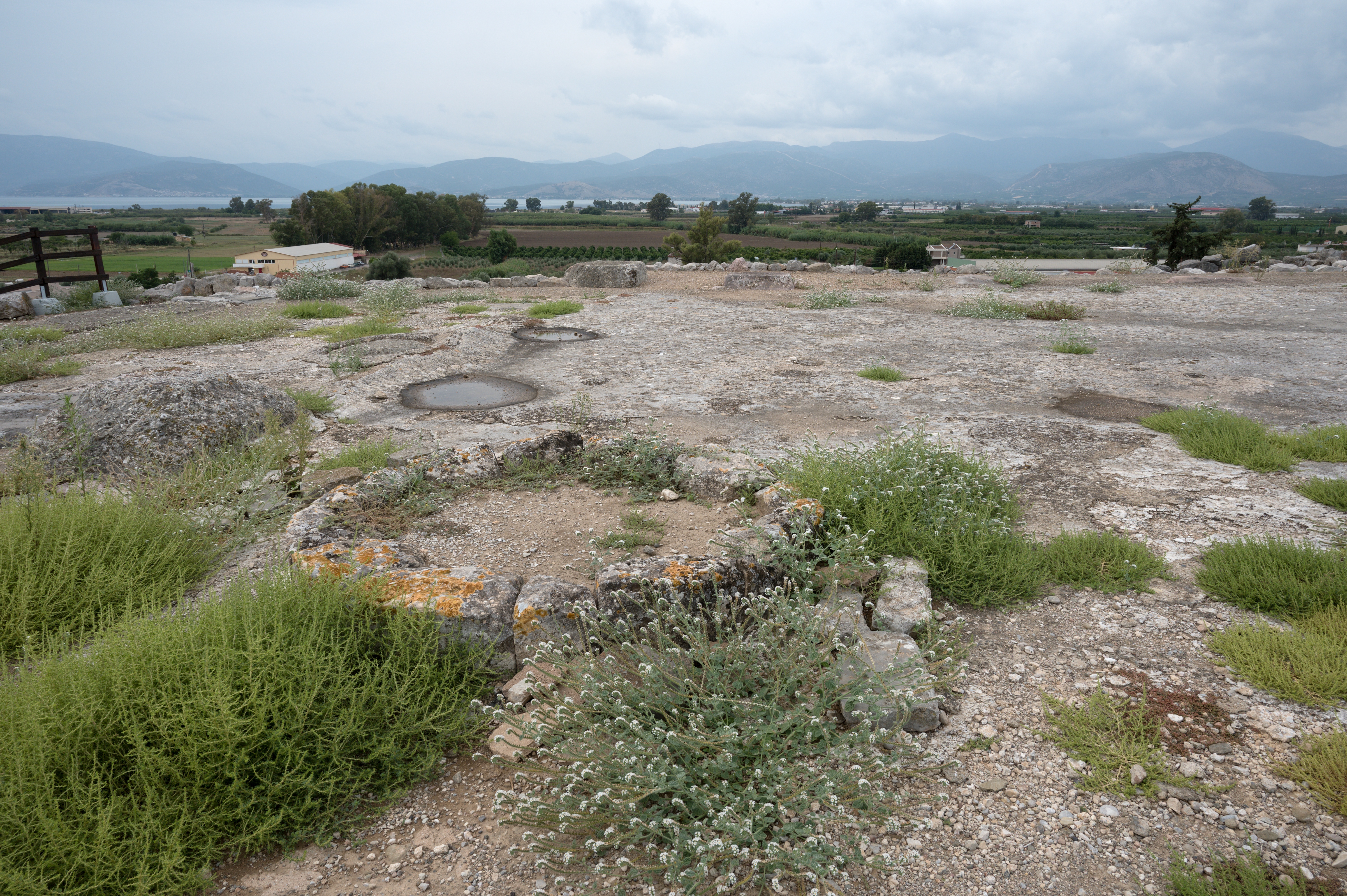
Tiryns is a Mycenaean archaeological site in Argolis in the Peloponnese, and the location from which the mythical hero Heracles was said to have performed his Twelve Labours 1Tiryns — wiki · Wikipedia ↗. Its most notable features were its palace, its Cyclopean tunnels and especially its walls, which gave the city its Homeric epithet of "mighty walled Tiryns" 1. The site is first referenced by Homer, who praised its massive walls 2Tiryns — sec1 · Wikipedia ↗.
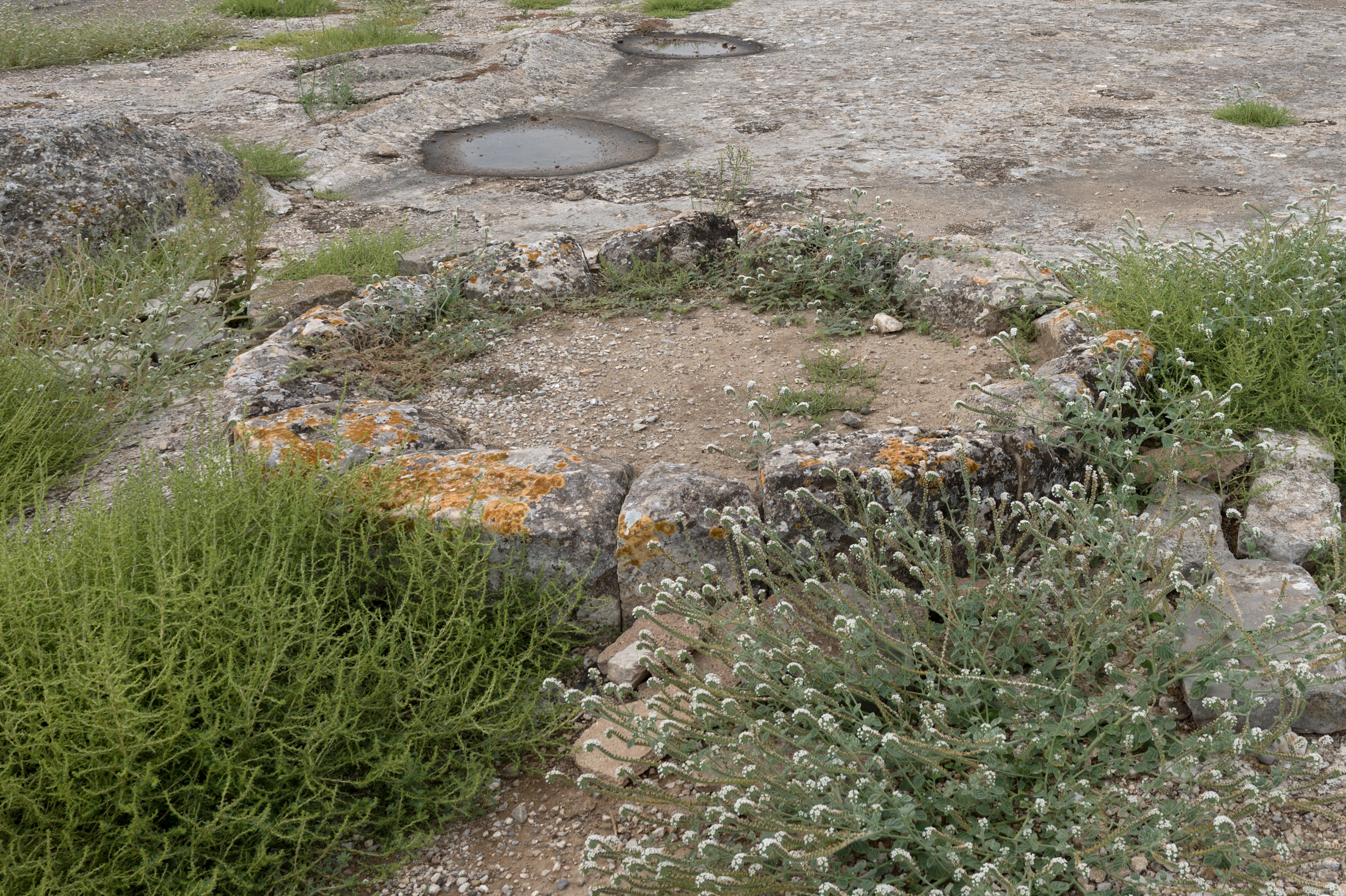
An imposing circular structure from this period survived under the yard of a Mycenaean palace 3Tiryns — sec2 · Wikipedia ↗. The first Greek inhabitants—the creators of the Middle Helladic civilization and the Mycenaean civilization after that—settled Tiryns at the beginning of the Middle Helladic period (2000–1600 BC) 3.
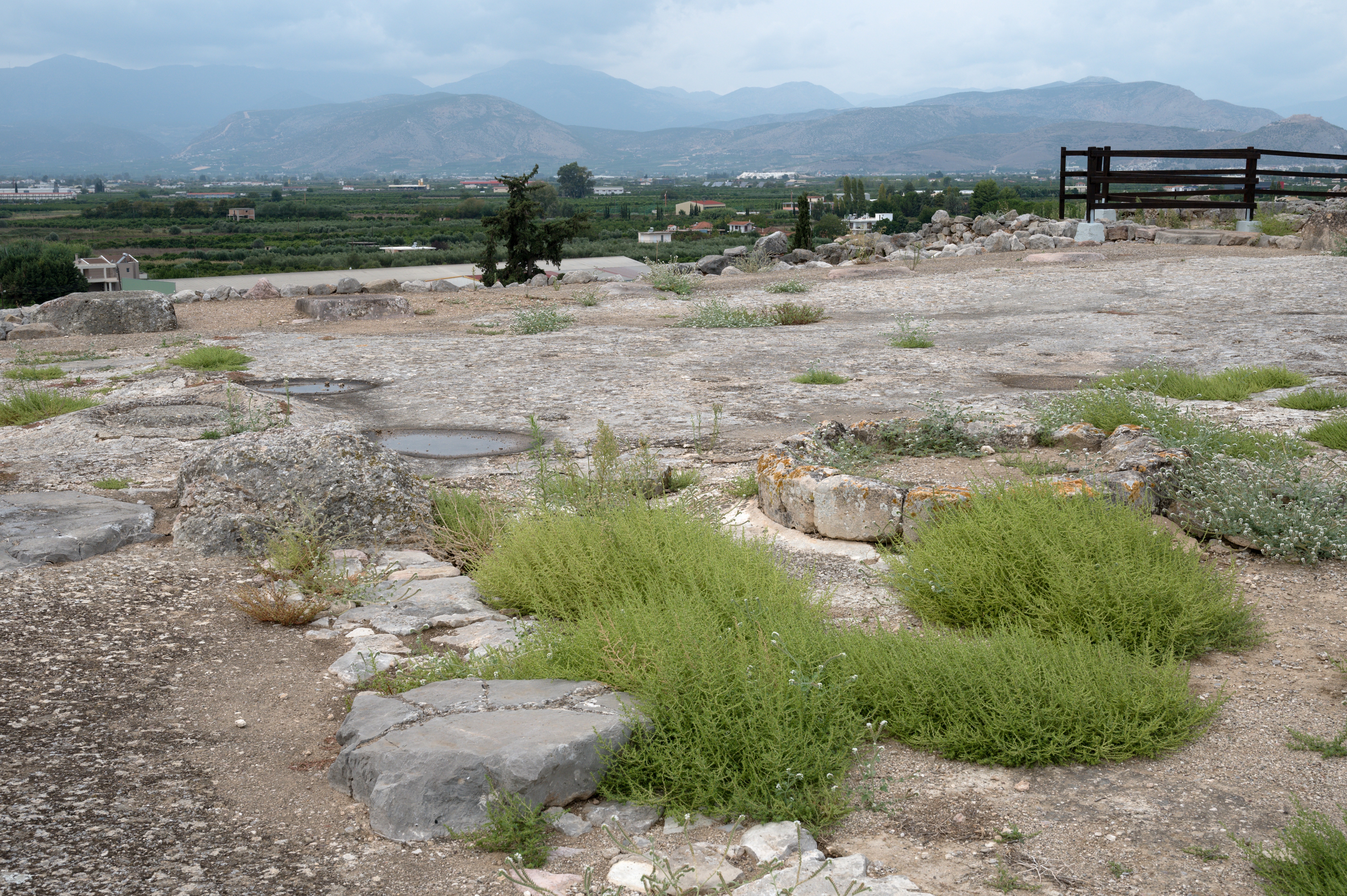
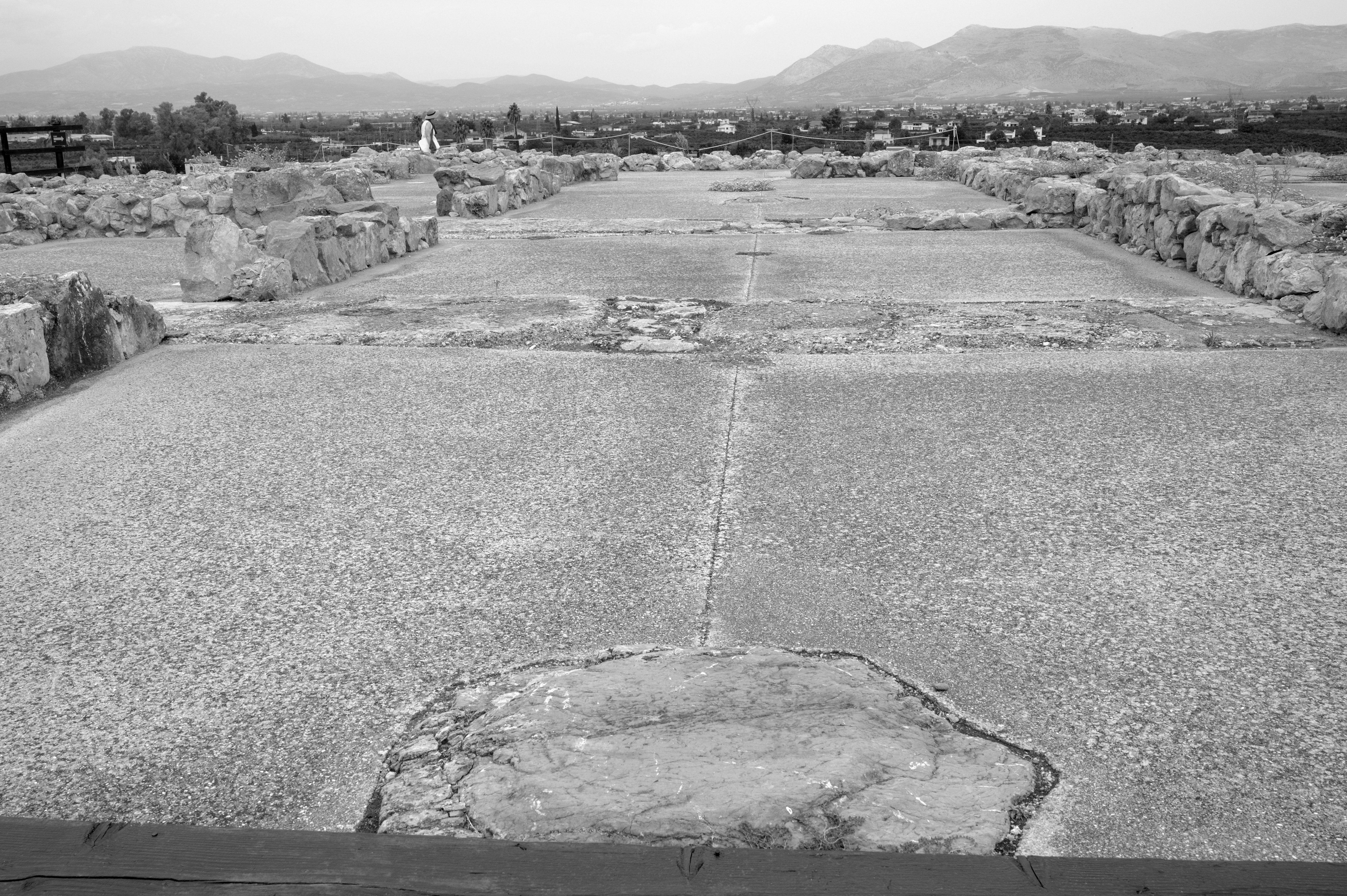
In the Late Helladic the city underwent its greatest growth, also known as the Mycenaean period 4Tiryns — sec6 · Wikipedia ↗. It reached its height of importance between 1400 and 1200 BC, when it became one of the most important centers of the Mycenaean world, and in particular in Argolis 1. The famous megaron of the palace has a large reception hall, the main room of which had a throne placed against the right wall and a central hearth bordered by four Minoan-style wooden columns that served as supports for the roof 1.
The disaster that struck the Mycenaean centers at the end of the Bronze Age affected Tiryns, but it is certain that the area of the palace was inhabited continuously into the early Archaic period, until the middle of the 8th century BC, when a little later a temple was built in the ruins of the palace 4. The site went into decline at the end of the Mycenaean period, and was completely deserted by the time Pausanias visited in the 2nd century AD 1.
After trial excavations in August 1876 Heinrich Schliemann considered the palace of Tiryns to be medieval, so he came very close to destroying the remains to excavate deeper for Mycenaean treasures 5Tiryns — sec8 · Wikipedia ↗. From 1910 the excavations were led by Georg Karo, though the "Tiryns Treasure" was initially excavated in 1915 in Karo's absence by the Greek archaeologist 5.
Along with the nearby ruins of Mycenae, UNESCO designated Tiryns as a World Heritage Site in 1999 because of its outstanding architecture and testimony to the development of Ancient Greek civilization 1.
Occupation of the hill reaches back seven thousand years, to before the beginning of the Bronze Age, making Tiryns in origin a hill fort rather than a palace site 1. The early pre-Hellenic settlement of the 3rd millennium BC lay about 15 km southeast of Mycenae, on a hill 300 m long, between 45 and 100 m wide, and no more than 18 m high 3.
The megaron of the palace belongs to a building type that originated and evolved from the megaroid, the large hall-centered rectangular building of mainland Greece dating back to the Late Neolithic and Early Bronze Age 6Tiryns — megaron · Reference ↗. Its main room held the throne-room of the wanax, or Mycenaean ruler, with the throne set in the room containing the central hearth 6. The surviving ruins of the Mycenaean citadel date to the end of the third period 4.
At the beginning of the Classical period Tiryns, like Mycenae, became a relatively insignificant city 7Tiryns — sec7 · Wikipedia ↗. According to Herodotus, when Cleomenes I of Sparta defeated the Argives their slaves occupied Tiryns for many years 7. Herodotus also records that Tiryns took part in the Battle of Plataea in 480 BC with 400 hoplites 7. After viewing the walls of the ruined citadel in the 2nd century AD the geographer Pausanias wrote that two mules pulling together could not move even the smaller stones 2.
The "Tiryns Treasure" was initially excavated in 1915 in Karo's absence by the Greek archaeologist Apostolos Arvanitopoulos, who was stationed in the region as a reserve officer of the Hellenic Army 5. Karo was removed from his post at the DAI in late 1916, and excavations at Tiryns thereafter ceased until the end of World War I in 1918 5.
1. Legend and Myth
Greek legend links the three Argolic centers with three mythical heroes: Acrisius, founder of the Doric colony of Argos; his brother Proetus, founder of Tiryns; and his grandson Perseus, the founder of Mycenae 2. There Proetus occupied Tiryns and fortified it with the assistance of the cyclopes 2.
Despite its importance, little value was given to Tiryns and its mythical rulers and traditions by epics and drama 7. The city's legendary standing nevertheless remained a concern to its neighbors: even in decline, Mycenae and Tiryns were disturbing to the Argives, who in their political propaganda wanted to monopolize the glory of legendary (and mythical) ancestors 7.
At the beginning of the Classical period Tiryns, like Mycenae, became a relatively insignificant city 7. In 468 BC Argos completely destroyed both Mycenae and Tiryns, and—according to Pausanias—transferred the residents to Argos, to increase the population of the city 7. Pausanias dedicated a short piece (2.25.8) to Tiryns, and newer travelers, traveling to Greece in search of places where the heroes of the ancient texts lived, did not understand the significance of the city 7.
After viewing the walls of the ruined citadel in the 2nd century AD the geographer Pausanias wrote that two mules pulling together could not move even the smaller stones 2.
Tiryns is first referenced by Homer, who praised its massive walls 2. The earliest literary notice of the site is thus an appreciation of its fortifications rather than of its rulers 1.
The city became associated with the myths surrounding Heracles, as it was the residence of the hero during his labors, and some sources cite it as his birthplace 1. Tiryns is accordingly described as the location from which the mythical hero Heracles was said to have performed his Twelve Labours 1.
The same hostility toward the legendary past of Mycenae and Tiryns is recorded in a second formulation: even in decline, both were disturbing to the Argives, who in their political propaganda wanted to monopolize the glory of legendary (and mythical) ancestors 3.
2. Early Helladic Settlement
Tiryns was a hill fort whose occupation reaches back seven thousand years, to a time before the beginning of the Bronze Age1.
The later citadel and lower town would in time hold a population of 10,000 people spread over 20–25 hectares by 1300 BC1.
At the beginning of the Middle Helladic period (2000–1600 BC) the first Greek inhabitants settled Tiryns3. These were the people who created the Middle Helladic civilization and, in succession to it, the Mycenaean civilization3.
3. Middle Helladic and Mycenaean Period
The first Greek inhabitants—the creators of the Middle Helladic civilization and the Mycenaean civilization after that—settled Tiryns at the beginning of the Middle Helladic period (2000–1600 BC)3. In the Late Helladic the city underwent its greatest growth, also known as the Mycenaean period4. It reached its height of importance between 1400 and 1200 BC, when it became one of the most important centers of the Mycenaean world, and in particular in Argolis1.
In the middle of the 3rd millennium BC the site was a flourishing early pre-Hellenic settlement, situated about 15 km (9.3 mi) southeast of Mycenae on a hill 300 m (980 ft) long, 45–100 m (148–328 ft) wide, and no more than 18 m (59 ft) high3. From this period an imposing circular structure survived beneath the yard of a Mycenaean palace3.
The surviving ruins of the Mycenaean citadel date to the end of the third period4. The megaron contained the throne-room of the wanax, or Mycenaean ruler, whose throne stood in the main room with the central hearth6. The megaron itself originated and evolved from the megaroid, or large hall-centered rectangular building, of mainland Greece dating back to the Late Neolithic and Early Bronze Age6, and the Cretan elements in the Tiryns megaron were adopted by the Mycenaeans from the palace type found in Minoan architecture6. Artistic portrayals of bulls, a common zoomorphic motif in Mycenaean vase painting, appear on Greek megaron frescoes, such as the one in the Pylos megaron, where a bull is depicted at the center of a Mycenaean procession6.
The disaster that struck the Mycenaean centers at the end of the Bronze Age affected Tiryns, but it is certain that the area of the palace was inhabited continuously into the early Archaic period, until the middle of the 8th century BC; a little later a temple was built in the ruins of the palace4. The site went into decline at the end of the Mycenaean period and was completely deserted by the time Pausanias visited in the 2nd century AD1.
Tiryns is a Mycenaean archaeological site in Argolis in the Peloponnese, and the location from which the mythical hero Heracles was said to have performed his Twelve Labours1. After trial excavations in August 1876 Heinrich Schliemann considered the palace of Tiryns to be medieval, and so came very close to destroying the remains to excavate deeper for Mycenaean treasures5.
4. The Palace and the Megaron
A raised throne stood against the right wall, and at the centre of the room lay a hearth bordered by four wooden columns in the Minoan style, which carried the roof above 6. The same arrangement of throne, central hearth and four supporting columns defines the hall in the general description of the palace 1.
The main room of the megaron also held the throne-room of the wanax, the Mycenaean ruler, whose seat was placed in that same space with the central hearth 6. The Cretan elements visible in the Tiryns megaron were taken over by the Mycenaeans from the palace type of Minoan architecture 6.
The Mycenaean megaron did not appear without precedent. It originated and evolved from the megaroid, the large hall-centred rectangular building of mainland Greece, which dates back to the Late Neolithic and Early Bronze Age 6.
The megaron of Tiryns is not the only hall of its kind: the Mycenaean palaces of Thebes and Mycenae also preserve famous megara 6. Painted decoration of the mainland halls drew on a shared repertory of animal imagery, and bulls — a common zoomorphic motif in Mycenaean vase painting — appear on Greek megaron frescoes, as in the megaron at Pylos, where a bull is shown at the centre of a Mycenaean procession 6.
The palace was not abandoned when the Bronze Age ended. The disaster that struck the Mycenaean centres at the end of the Bronze Age affected Tiryns, yet the area of the palace was certainly inhabited continuously into the early Archaic period, until the middle of the 8th century BC, and a little later a temple was built in the ruins of the palace 4 3. An imposing circular structure from an earlier period also survived under the yard of the Mycenaean palace 3.
Modern understanding of the hall rests on the excavations of Heinrich Schliemann, whose judgement very nearly cost the building its remains. After trial excavations in August 1876 Schliemann considered the palace of Tiryns to be medieval, and he came very close to destroying the remains in order to dig deeper for Mycenaean treasures 5. The results of the work were published as "Tiryns: The prehistoric palace of the kings of Tiryns, the results of the latest excavations" 5. A reconstruction of the great hall was proposed in "A Suggested Restoration of the Great Hall in the Palace of Tiryns", printed in The Journal of Hellenic Studies 7 (1886): 161-169 5.
5. Decline and Classical Period
The disaster that struck the Mycenaean centers at the end of the Bronze Age affected Tiryns, but it is certain that the area of the palace was inhabited continuously into the early Archaic period, until the middle of the 8th century BC (a little later a temple was built in the ruins of the palace)4. At the beginning of the Classical period Tiryns, like Mycenae, became a relatively insignificant city3.
Herodotus mentions that Tiryns took part in the Battle of Plataea in 480 BC with 400 hoplites7. When Cleomenes I of Sparta defeated the Argives, their slaves occupied Tiryns for many years, according to Herodotus7.
In 468 BC Argos completely destroyed both Mycenae and Tiryns, and—according to Pausanias—transferred the residents to Argos, to increase the population of the city7. Even in decline, Mycenae and Tiryns were disturbing to the Argives, who in their political propaganda wanted to monopolize the glory of legendary (and mythical) ancestors7. Despite its importance, little value was given to Tiryns and its mythical rulers and traditions by epics and drama7.
The decline of the site belongs to the end of the Mycenaean period, and by the time Pausanias visited in the 2nd century AD it was completely deserted1.
6. Later Visitors and Description
The site went into decline at the end of the Mycenaean period, and was completely deserted by the time Pausanias visited in the 2nd century AD1. After viewing the walls of the ruined citadel in the 2nd century AD the geographer Pausanias wrote that two mules pulling together could not move even the smaller stones2. Pausanias dedicated a short piece (2.25.8) to Tiryns7. Newer travelers, traveling to Greece in search of places where the heroes of the ancient texts lived, did not understand the significance of the city7.
The disaster that struck the Mycenaean centers at the end of the Bronze Age affected Tiryns, but it is certain that the area of the palace was inhabited continuously into the early Archaic period, until the middle of the 8th century BC (a little later a temple was built in the ruins of the palace)4.
At the beginning of the Classical period Tiryns, like Mycenae, became a relatively insignificant city7. When Cleomenes I of Sparta defeated the Argives, their slaves occupied Tiryns for many years, according to Herodotus7. Herodotus also mentions that Tiryns took part in the Battle of Plataea in 480 BC with 400 hoplites7.
After trial excavations in August 1876, Heinrich Schliemann considered the palace of Tiryns to be medieval, so he came very close to destroying the remains to excavate deeper for Mycenaean treasures5. From 1910 the excavations were led by Georg Karo, though the "Tiryns Treasure" was initially excavated in 1915 in Karo's absence by the Greek archaeologist Apostolos Arvanitopoulos, who was stationed in the region as a reserve officer of the Hellenic Army5.
7. Excavation History
Heinrich Schliemann conducted trial excavations at Tiryns in August 1876 and judged the palace to be medieval in date, a conclusion that brought him very close to destroying the remains in order to dig deeper for Mycenaean treasures5.
From 1910 the excavations were led by Georg Karo5. The "Tiryns Treasure" was initially excavated in 1915 in Karo's absence by the Greek archaeologist Apostolos Arvanitopoulos, who was stationed in the region as a reserve officer of the Hellenic Army5.
Karo was removed from his post at the DAI in late 1916, and excavations at Tiryns thereafter ceased until the end of World War I in 19185.
8. World Heritage Status
UNESCO designated Tiryns a World Heritage Site in 1999 alongside the nearby ruins of Mycenae1. The inscription rests on the site's outstanding architecture and on its testimony to the development of Ancient Greek civilization1.
Tiryns is a Mycenaean archaeological site in Argolis in the Peloponnese, and the place from which the mythical hero Heracles was said to have performed his Twelve Labours1. Occupation of the hill fort reaches back seven thousand years, to before the beginning of the Bronze Age1. An imposing circular structure from that period survived under the yard of a Mycenaean palace3.
The first Greek inhabitants—the creators of the Middle Helladic civilization and the Mycenaean civilization after that—settled Tiryns at the beginning of the Middle Helladic period (2000–1600 BC)3. In the Late Helladic, also known as the Mycenaean period, the city underwent its greatest growth4, and it reached its height of importance between 1400 and 1200 BC, when it became one of the most important centers of the Mycenaean world, and in particular in Argolis1. The surviving ruins of the Mycenaean citadel date to the end of the third period4.
Tiryns is first referenced by Homer, who praised its massive walls2. After viewing the walls of the ruined citadel in the 2nd century AD the geographer Pausanias wrote that two mules pulling together could not move even the smaller stones2. At the beginning of the Classical period Tiryns, like Mycenae, became a relatively insignificant city7. According to Herodotus, when Cleomenes I of Sparta defeated the Argives their slaves occupied Tiryns for many years7.
After trial excavations in August 1876 Heinrich Schliemann considered the palace of Tiryns to be medieval, and so came very close to destroying the remains to excavate deeper for Mycenaean treasures5. From 1910 the excavations were led by Georg Karo, though the "Tiryns Treasure" was initially excavated in 1915 in Karo's absence by the Greek archaeologist Apostolos Arvanitopoulos, who was stationed in the region as a reserve officer of the Hellenic Army5. Karo was removed from his post at the DAI in late 1916, and excavations at Tiryns thereafter ceased until the end of World War I in 19185.
9. Key dates
- 1450 BCE=== Mycenaean and Postpalatial period === After about 1450 BC, Knossos bec=== Mycenaean and Postpalatial period === After about 1450 BC, Knossos became an important Mycenaean administrative centre.
- 1300 BCEBC, the citadel and lower town had a population of 10,000 people1300 BC, the citadel and lower town had a population of 10,000 people covering 20–25 hectares.
- 480 BCEHerodotus also mentions that Tiryns took part in the Battle of PlataeaHerodotus also mentions that Tiryns took part in the Battle of Plataea in 480 BC with 400 hoplites .
- 468 BCEIn 468 BC, Argos completely destroyed both Mycenae and Tiryns, and—accordiIn 468 BC, Argos completely destroyed both Mycenae and Tiryns, and—according to Pausanias—transferred the residents to Argos, to increase the population of the city.
- 1400It reached its height of importance between 1400 and 1200 BC, whenIt reached its height of importance between 1400 and 1200 BC, when it became one of the most important centers of the Mycenaean world, and in particular in Argolis.
- 1866Thiersch, "Thiersch's Leben", Leipzig, 1866 ^ [1] Heinrich Schliemann et aThiersch, "Thiersch's Leben", Leipzig, 1866 ^ [1] Heinrich Schliemann et al., "Tiryns: The prehistoric palace of the kings of Tiryns, the results of the latest excavations", Charles Scribner's Sons, London, 1885 ^ Jebb, Richard Claverhouse.
- 1876After trial excavations in August 1876, Heinrich Schliemann considered theAfter trial excavations in August 1876, Heinrich Schliemann considered the palace of Tiryns to be medieval, so he came very close to destroying the remains to excavate deeper for Mycenaean treasures.
- 1886"A Suggested Restoration of the Great Hall in the Palace of Tiryns.""A Suggested Restoration of the Great Hall in the Palace of Tiryns." The Journal of Hellenic Studies 7 : 161-169 ^ Matz, Friedrich .
- 1910From 1910, the excavations were led by Georg Karo , though theFrom 1910, the excavations were led by Georg Karo , though the "Tiryns Treasure" was initially excavated in 1915 in Karo's absence by the Greek archaeologist Apostolos Arvanitopoulos [ el ] , who was stationed in the region as a reserve officer of the Hellenic Army .
- 1916Karo was removed from his post at the DAI in late 1916Karo was removed from his post at the DAI in late 1916, and excavations at Tiryns thereafter ceased until the end of World War I in 1918.
10. Frequently asked questions
What did the geographer Pausanias write about the walls of Tiryns?
After viewing the walls of the ruined citadel in the 2nd century AD Pausanias wrote that two mules pulling together could not move even the smaller stones 2.
Did Tiryns fight at the Battle of Plataea?
Herodotus mentions that Tiryns took part in the Battle of Plataea in 480 BC with 400 hoplites 7.
Who occupied Tiryns after Cleomenes I of Sparta defeated the Argives?
According to Herodotus, when Cleomenes I of Sparta defeated the Argives their slaves occupied Tiryns for many years 7.
Who excavated the "Tiryns Treasure" in 1915?
The treasure was initially excavated in 1915 in Georg Karo's absence by the Greek archaeologist Apostolos Arvanitopoulos, who was stationed in the region as a reserve officer of the Hellenic Army 5.
Why did excavations at Tiryns stop during the First World War?
Karo was removed from his post at the DAI in late 1916, and excavations at Tiryns thereafter ceased until the end of World War I in 1918 5.
What happened to Knossos after about 1450 BC?
After about 1450 BC Knossos became an important Mycenaean administrative centre 8Tiryns — knossos · Reference ↗.
References (8)
- 1Tiryns — wiki — Wikipedia Web↩View source
- 2Tiryns — sec1 — Wikipedia Web↩View source
- 3Tiryns — sec2 — Wikipedia Web↩View source
- 4Tiryns — sec6 — Wikipedia Web↩View source
- 5Tiryns — sec8 — Wikipedia Web↩View source
- 6Tiryns — megaron — Reference Web↩View source
- 7Tiryns — sec7 — Wikipedia Web↩View source
- 8Tiryns — knossos — Reference Web↩View source