Ball Lightning
The glowing spheres that appear during thunderstorms — reported for eight centuries, measured only once, and still unexplained.
Ball lightning is a rare atmospheric phenomenon in which a luminous sphere, usually 10-20 centimetres across, floats or drifts for seconds to a minute during or after a thunderstorm. Reports go back to at least 1195, yet almost no instrumental data exists: only in July 2012 did researchers in China record the emission spectrum of a naturally occurring ball, finding lines of silicon, iron and calcium that point to vaporized soil. Lab experiments can make visually similar glowing balls, but nobody has shown they are the same thing, and no explanation is widely accepted.
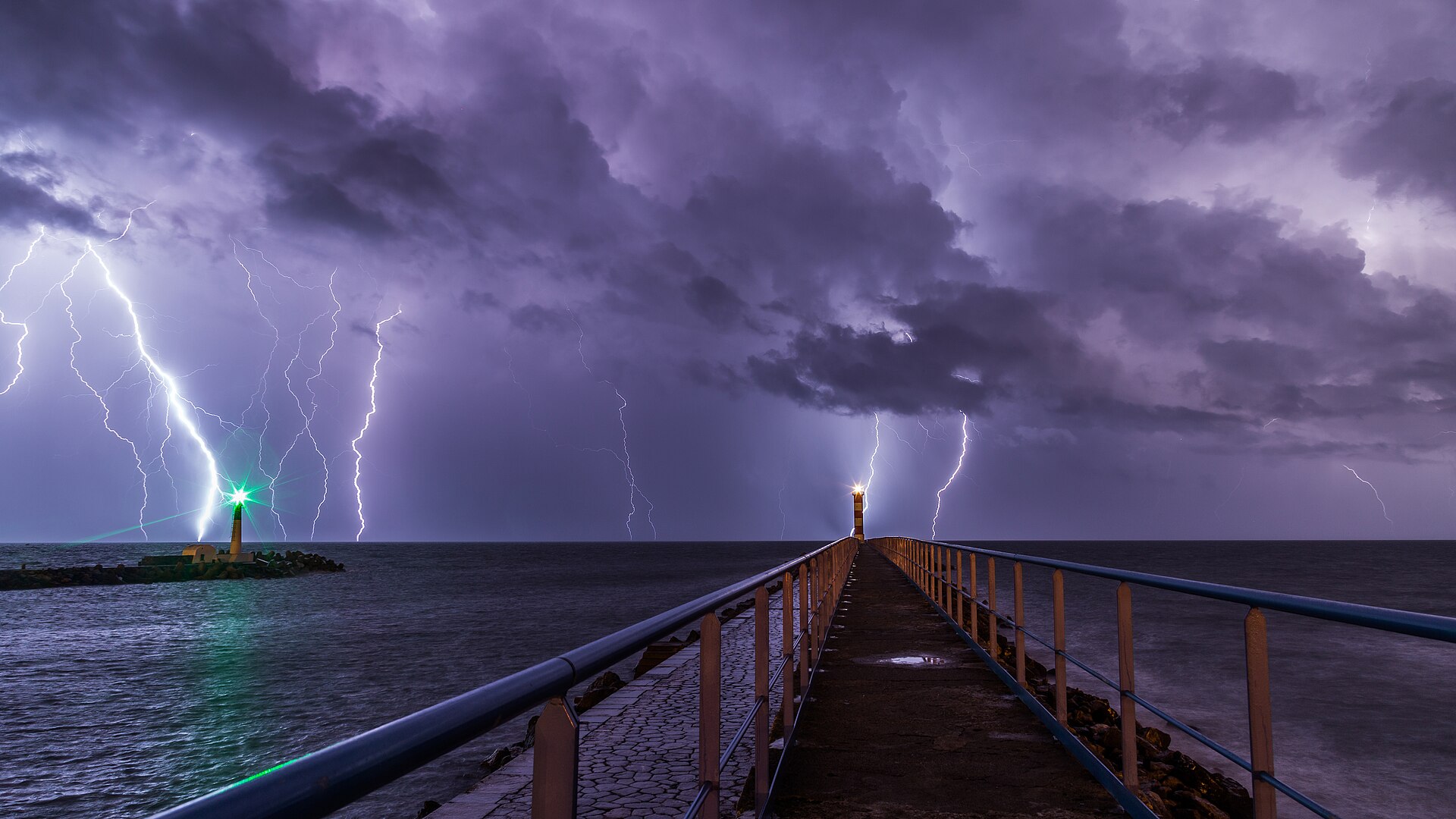
Overview
Ball lightning is described as luminescent spherical objects ranging from pea-sized up to several metres across, usually linked with thunderstorms. It is so rare that only about one in a million lightning strikes is thought to produce it, yet more than 10,000 written accounts exist. The Royal Meteorological Society describes it as a bright spherical object averaging about 25 centimetres, sometimes several metres across.
1. Historical Reports
The earliest known account of ball lightning comes from the monk Gervase of Canterbury and dates to 1195, describing a fiery globe that descended from a dense cloud during a storm. An early English account uncovered in 2022 pre-dates the previous earliest English description by nearly 450 years. C&EN likewise places the oldest report at 1195 in England and notes that Georg Richmann was killed by a globe of fire in his Saint Petersburg laboratory.
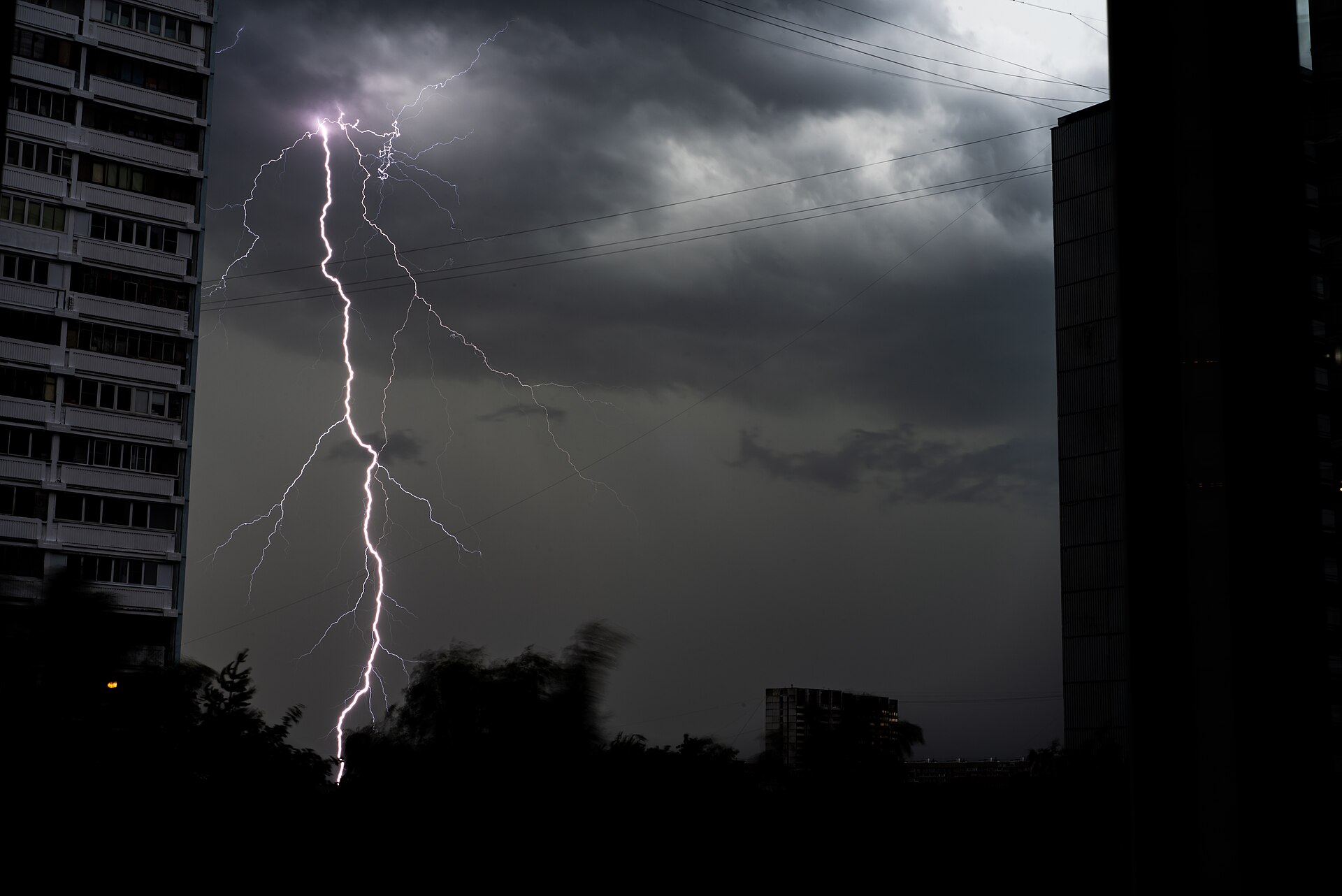
Witnesses typically describe fist-size floating spheres of fire that spin, hover and sometimes explode, with most modern accounts far less dramatic than the 1638 church case. A recent European Severe Storms Laboratory record from 2022 logged a yellowish burning object with licking flames on a wavy path about 15 m above a road. Even with the spectrum in hand there is still no widely accepted explanation; hypotheses date back to the 1840s, when the English physician William Snow Harris first brought the phenomenon into science.
2. Description and Characteristics
A literature review records the typical diameter of ball lightning as most commonly 10–20 cm (4–8 inches). A Cumbrian observer in July 2013 described a 60 cm glowing patch of grass followed by an orangey-yellow light passing right in front of her during a storm. Video of a 2012 event showed an apparent size of about 5 m across over ~15 m of travel.
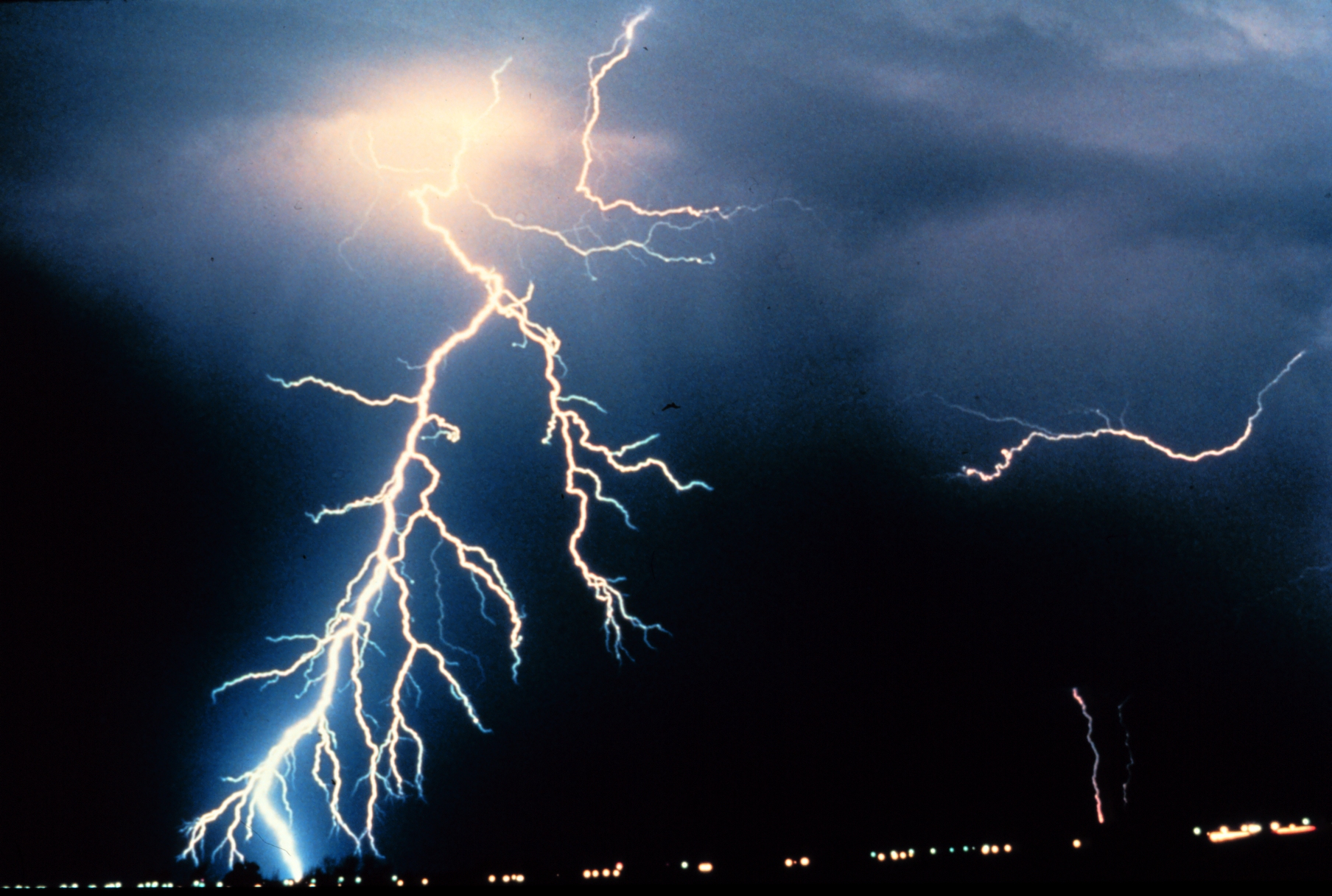
The typical lifetime runs from one second to over a minute. Brightness flicker has been measured at about 100 Hz, possibly from a 50 Hz power line. Plasma explanations face a basic obstacle: hot plasma in air tends both to recombine and disappear and to rise away.
The vapour-silicon hypothesis holds that heat separates oxygen from soil silica, leaving pure silicon that condenses into a charged aerosol glowing as it re-oxidises. A silica hypothesis explains the glow as vaporized soil silica condensing into charged nanoparticles that burn, but cannot easily explain sightings inside aircraft. Aerosol theorists argue that fine particles react chemically and electromagnetically inside the ball, some picturing a radiant fluff ball of filaments.
3. The 2012 Spectrum
The single published natural spectrum of ball lightning was captured by chance on the Tibetan Plateau in July 2012 during ordinary lightning research, while the team was photographing ordinary strikes. The observation was made with two slitless spectrographs at a distance of 0.9 km (900 m). The results appeared in Physical Review Letters on 17 January 2014.
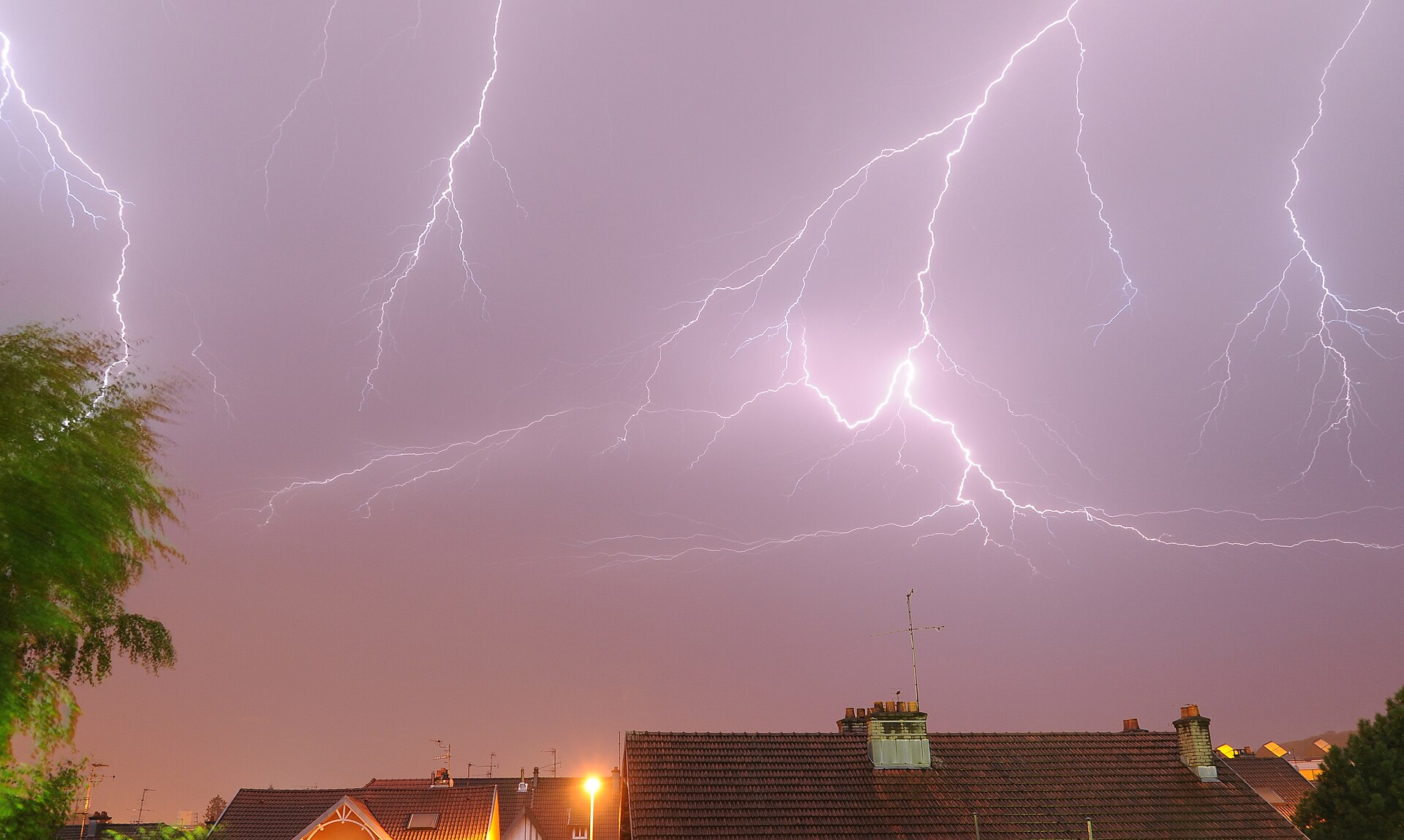
The observed ball travelled at about 8.6 m per second and spanned roughly 5 m on camera. Its temperature was assessed as cooler than the parent lightning.
4. Theoretical Explanations
No explanation of ball lightning is widely accepted, and hypotheses about its nature reach back to the 1840s, when the English physician William Snow Harris first brought the phenomenon into science.
One family of explanations treats the ball as the afterglow of vaporized soil: lightning vaporizes silicate minerals, and the released silicon recombines into nanoparticles that glow as they oxidize in air.
A different line of reasoning holds that the rapidly changing magnetic field of a close lightning flash can excite neurons and so produce ball-like hallucinations.
5. Laboratory Analogues
Laboratory analogues include microwave fireballs, water-discharge fireballs, silicon-wafer arcs and plasma toroids that last only about 200 milliseconds.
Abrahamson and Dinniss proposed in 2000 that a strike on soil vaporizes silicon compounds and the resulting nanoparticle network glows as it oxidizes.
6. Research and Community
Interest in ball lightning has persisted for decades, sustained in part by the International Committee on Ball Lightning, which has run symposia on the subject since a 1988 meeting in Tokyo. The phenomenon under discussion is described as luminescent spherical objects ranging from pea-sized up to several metres across, usually linked with thunderstorms. Reports place its size anywhere from a golf ball to a small car, its duration from seconds to minutes, and its ending either in a gradual fade or in a violent explosion.
7. Selected Observations
The observational record of ball lightning is thin, uneven, and largely anecdotal. The one published natural spectrum appeared in Physical Review Letters at the start of 2014 and was captured by chance during ordinary lightning research on the Tibetan Plateau during the summer of two thousand and twelve while the team was photographing ordinary strikes .
| Date | Location | Description | Source |
|---|---|---|---|
| 7 June 1195 | near London | Gervase of Canterbury | — |
| 1638 | Devon church | 2.4 m fireball, 4 dead, about 60 injured | — |
| July 2013 | Cumbria | 60 cm glowing patch of grass, orangey-yellow light | rmets |
| July 2012 | Tibetan Plateau | spectrum captured at 0.9 km | aps |
| 2022 | European Severe Storms Laboratory | yellowish burning object with licking flames about 15 m above a road | wiki |
8. Key Dates
-
1195Earliest known accountThe monk Gervase of Canterbury describes a fiery globe descending from a dense cloud during a storm 1Turritopsis dohrnii · Wikipedia ↗
-
1840sEntry into scienceThe English physician William Snow Harris first brings the phenomenon into science 1
-
summer of 2012Spectrum capturedA team photographing ordinary strikes on the Tibetan Plateau records a spectrum by chance during ordinary lightning research
-
start of 2014Spectrum publishedThe one published natural spectrum appears in Physical Review Letters
9. Frequently Asked Questions
How common is ball lightning?
It is so rare that only about one in a million lightning strikes is thought to produce it, yet more than 10,000 written accounts exist .
What is it made of?
The recorded spectrum carried emission lines of neutral silicon, calcium, iron, nitrogen and oxygen rather than the ionized nitrogen of the parent flash 1.
Is there a scientific consensus?
No widely accepted explanation exists; hypotheses date back to the 1840s, when the English physician William Snow Harris first brought the phenomenon into science 1.
10. Timeline
- 7 June 1195Gervase of Canterbury records a fiery globeThe monk Gervase describes a marvellous sign near London: a dark cloud released a white substance that became a spherical fiery globe falling towards the river. Durham University researchers identified it as probably the earliest English description of ball lightning.
- 21 October 1638The Great Thunderstorm at Widecombe-in-the-MoorAn 8-foot ball of fire was reported to strike and enter the village church in Devon, killing four people and injuring about sixty, and leaving a sulphurous smell. Contemporaries blamed the devil or the flames of hell.
- 6 August 1753Georg Richmann killed by a glowing globeThe Saint Petersburg professor, repeating a Franklin-style lightning experiment during a meeting of the Academy of Sciences, was struck in the forehead by a ball of fire and killed; the globe had travelled down the insulating string.
- 1843Ball lightning enters the scientific literatureThe English physician and electrical researcher William Snow Harris brought the phenomenon into the scientific realm, followed by François Arago of the French Academy in 1855.
- 4–6 July 1988First International Symposium on Ball LightningThe International Committee on Ball Lightning began holding international symposia with a meeting at Waseda University in Tokyo, institutionalising research on the phenomenon.
- 2000The soil-vapour (silicon) hypothesis proposedJohn Abrahamson and James Dinniss suggested in Nature that a lightning strike on soil vaporizes silicon compounds; the resulting nanoparticle network would glow as it oxidizes in air — later dubbed the dirt clod hypothesis.
- July 2012First spectrum of natural ball lightning recordedA team from Northwest Normal University in Lanzhou filmed a ball lightning event with two slitless spectrographs at a distance of 900 m on the Tibetan Plateau while studying ordinary lightning, collecting 1.64 seconds of video and its spectrum.
- 17 January 2014Physical Review Letters publishes the spectrumCen, Yuan and Xue reported emission lines of neutral silicon, calcium and iron, elements abundant in soil, giving the vaporized-silicon idea its strongest support and prompting a Physics commentary titled 'First Spectrum of Ball Lightning'.
- 24 June 2022European Severe Storms Laboratory logs a new caseDuring a large thunderstorm front in Lower Austria, an observer saw a yellowish burning object with licking flames travel a wavy path about 15 m above a road before vanishing after two seconds.
11. Frequently asked questions
How large and how long-lived is a typical ball?
What happened at Widecombe in 1638?
During the Great Thunderstorm at a Devon church witnesses described a 2.4 m ball of fire that smashed pews and windows and filled the church with foul sulphur-tinged smoke. The disaster left 4 dead and about 60 injured1.
How hot is ball lightning compared with the lightning that spawns it?
Could some sightings be illusions rather than objects?
Sceptics have proposed that ball lightning is merely a positive after-image left on the retina after an ordinary lightning flash. Some interviewees suggested that at least a few reports may be magnetic-field-induced hallucinations rather than physical objects5Some 'ball lightning' reports may be hallucinations · Science News ↗, though that idea cannot account for physical damage reported by witnesses or for simultaneous sightings by several observers1.
What did the spectral lines reveal about the ball's composition?
The spectral lines were silicon, iron and calcium, all elements expected to be abundant in soil, while aluminium could not be checked within 400-1000 nm. Physics commentary called the record the first measurement of ball lightning's emission spectrum and found soil elements consistent with a popular theory.
Did the 2012 measurement settle the debate?
Lightning specialist Martin Uman called it a unique observation, probably of one type of ball lightning, that does not by itself settle which theory is right. The Chinese team reported the ball forming just off the ground, travelling about five metres, then another fifteen metres before vanishing after just over a second and a half.
References (9)
- 1Turritopsis dohrnii — Wikipedia Web↩View source
- 2Making the headlines: Researchers discover the earliest report of ball lightning in England — Royal Meteorological Society WebView source
- 3Anatomy of a Lightning Ball — Science News WebView source
- 4Thunder and Lightning | UCAR Center for Science Education — UCAR / NSF NCAR Web↩View source
- 5Some 'ball lightning' reports may be hallucinations — Science News Web↩View source
- 6Ball lightning - Wikipedia — Wikipedia WebView source
- 7Ball Lightning | MetMatters — Royal Meteorological Society WebView source
- 8Observation of the Optical and Spectral Characteristics of Ball Lightning — Physical Review Letters (APS) JournalView source
- 9First Spectrum of Ball Lightning (Physics 7, 5) — American Physical Society WebView source