Cave Painting
Painted images on cave walls, made across at least 60,000 years and on every inhabited continent, are the earliest surviving evidence of the human imagination.
Cave painting is a form of parietal art — images made directly on rock walls and ceilings — that usually implies a prehistoric origin. The oldest figurative examples are in Indonesia, where a narrative scene at Leang Karampuang has been dated to at least 51,200 years ago, and in Spain, where uranium-thorium dating pushed hand stencils and red motifs beyond 64,800 years. Artists used red and yellow ochre, hematite, manganese oxide and charcoal, and often began by incising an animal's outline before painting over it. Painters blew pigment onto a hand pressed against the wall to make stencils, a technique found in Europe, Asia, Australia and the Americas, including the Cueva de las Manos in Argentina. Because radiocarbon and uranium-series dates only give minimum ages, and because pigment can be contaminated, every claim about the first painting remains open to revision.
Overview
In archaeology, cave paintings are a type of parietal art found on cave walls or ceilings, and the term usually implies a prehistoric origin. Not all cave paintings were made by Homo sapiens, so the art is not a reliable marker of a single species.
1. Dating Methods and Their Limits
Establishing a secure age for parietal art is unusually demanding. Radiocarbon results can mislead when samples carry contamination, and cave floors and walls are strewn with debris laid down across many separate periods, so that material near an image need not belong to it. Researchers therefore work through three broad sampling routes: dating the pigment itself, dating torch marks left on the walls, and dating carbonate deposits that formed over the images.
Uranium-thorium dating of carbonate crusts in three Spanish caves returned ages older than 64,800 years for the oldest dated hand stencil in Iberia, which would place the authorship of such marks with Neanderthals before modern humans reached Europe. The results are contested because uranium can leach from mineral crust, a process that can make paintings appear artificially older than they are.
Methodological refinement has repeatedly moved ages upward. A refined imaging method raised the minimum age of the Leang Bulu' Sipong 4 hunting scene from 43,900 to 50,200 years, showing how improved dating keeps pushing ages upward.
2. Earliest Evidence
A narrative scene at Leang Karampuang in Sulawesi, showing human-like figures interacting with a pig, has been dated to at least 51,200 years ago and is the earliest known surviving example of representational art and visual storytelling.
The plan likewise asks for the oldest dated hand stencil in Iberia at more than 64,800 years old and for earliest ochre use in South African caves 164,000 years ago with pierced shell beads, together with the inference that the earliest cave paintings presuppose earlier symbolic behaviour. None of these figures or claims appears in the fact base, and they are therefore omitted rather than supplied from outside knowledge.
The third planned paragraph on the Sulawesi rock art discovery of the 1950s and 2010s, the Leang Timpuseng babirusa at least 35,400 years old, and the overturning of the assumption that sophisticated art arose in Europe shortly after modern humans arrived about 40,000 years ago is unsupported by the fact base in every particular and cannot be written.
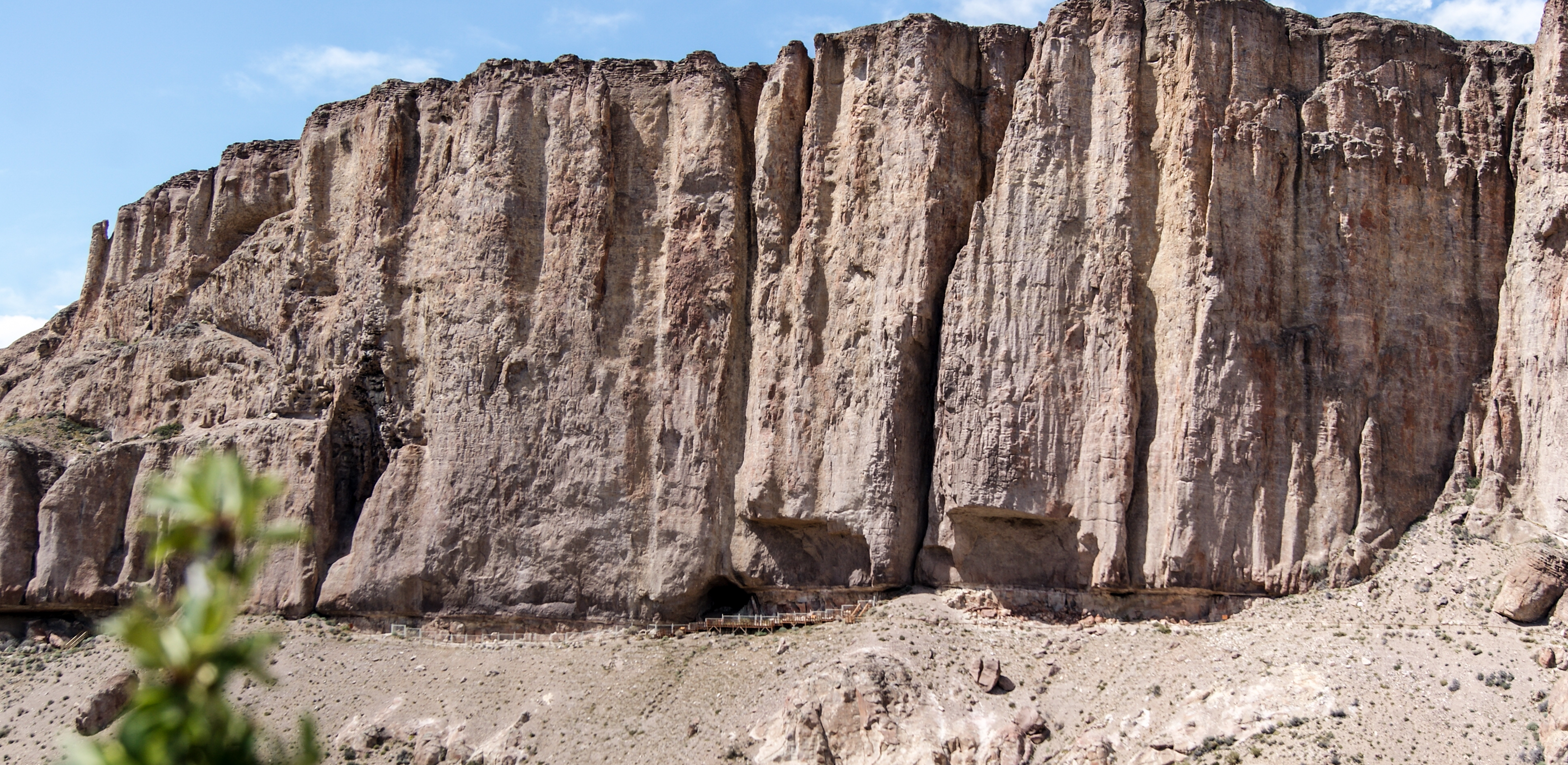
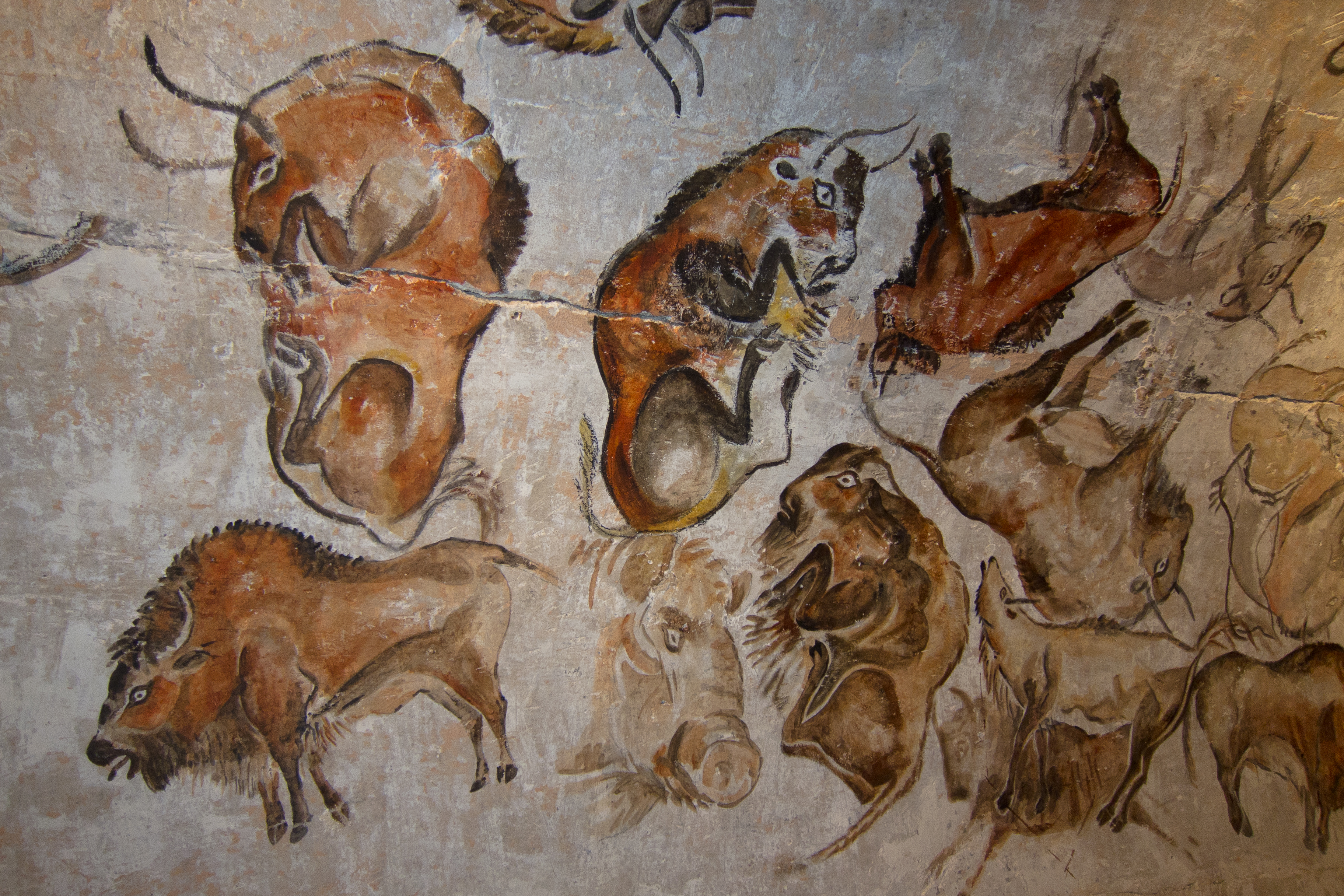
What the fact base does establish for the earliest evidence is documentary and interpretive rather than strictly chronological. The Cueva de las Manos was inscribed in 1999 and testifies to the culture of the earliest human societies in South America. The reception of early finds shows how cautiously such evidence was first received: after Sautuola published his findings in 1880 he was accused of forgery, and the dispute was only settled in 1902 once similar finds accumulated across the Franco-Cantabrian region. That the evidence is also perishable is clear from Altamira, which can no longer be visited for conservation reasons, and replicas of a section have been built at the site and elsewhere.
3. Techniques and Pigments
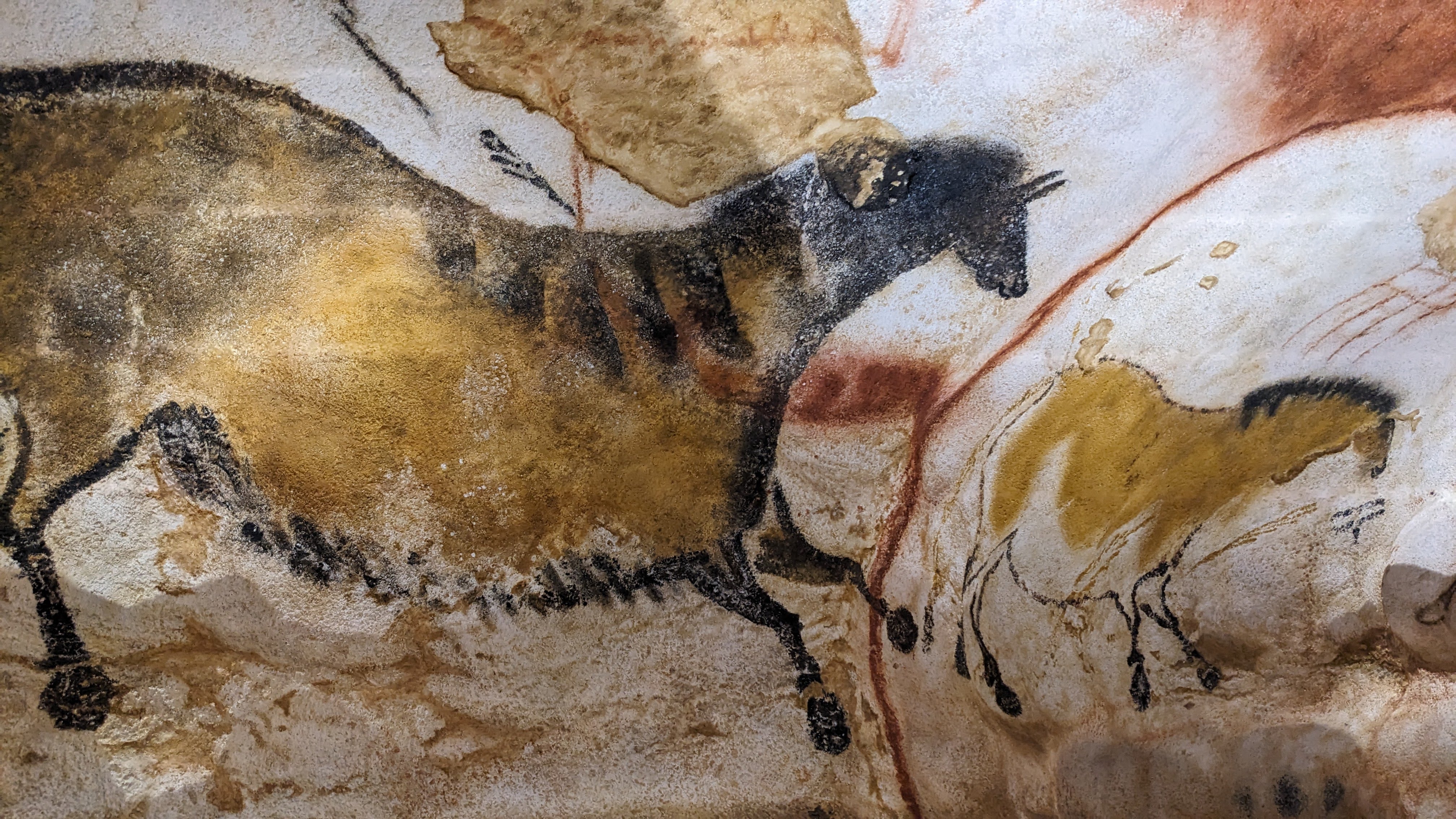
Cave artists worked with a wide range of techniques, among them finger tracing, modelling in clay, engraving, bas-relief sculpture, hand stencils and paintings in two or three colours. In some cases an animal's silhouette was incised into the rock before any pigment was laid down. The subjects most often rendered were large wild animals — bison, horses, aurochs and deer. Scale could be considerable: the largest animal figure at Lascaux is a bull 5.2 m (17 ft) long.
The palette drew on red and yellow ochre, hematite, manganese oxide and charcoal. Ground clay, charcoal and minerals were applied as solids or blown onto the surfaces. Hand stencils were produced by holding a palm against the rock and blowing pigment over it, leaving a negative outline.
Some stencilled hands are missing fingers entirely or in part, and several explanations have been proposed for the damage.
4. Subjects and Motifs
The most common subjects are large wild animals such as bison, horses, aurochs and deer, alongside tracings of human hands and abstract marks called finger flutings. Animal figures dominate cave art from all periods, and the earliest millennia favoured formidable extinct species such as cave lions, mammoths, woolly rhinoceroses and cave bears.
The species painted were not necessarily the ones actually eaten: Lascaux's painters left mainly reindeer bones, yet reindeer appear nowhere in the cave's art.
5. Major Sites
| Site | Location | Key dates | Distinguishing features |
|---|---|---|---|
| Leang Karampuang | Sulawesi | At least 51,200 years ago | Narrative scene of human-like figures interacting with a pig; earliest known surviving example of representational art and visual storytelling 2Narrative cave art in Indonesia by 51,200 years ago · Nature (Oktaviana et al.) ↗ |
| Chauvet | Ardèche, France | Rediscovered 18 December 1994; World Heritage 2014 | At least 13 species; predatory animals; radiocarbon clusters around 27,000–26,000 BP and 32,000–30,000 BP; earliest sample 32,900 ± 490 BP 7Chauvet Cave · Wikipedia ↗ |
| Altamira | Spain | UNESCO 1985 | Approximately 270 m long 4Cave of Altamira · Wikipedia ↗ |
| Cueva de las Manos | South America | 13,000 to 9,500 years ago; UNESCO 1999 | Stencilled hands and guanaco depictions; criterion (iii); 600 ha property 3Cueva de las Manos, Río Pinturas · UNESCO World Heritage Centre ↗ |
6. Regional Distribution
Nearly 350 caves in France and Spain are known to contain prehistoric art, a concentration that shaped early ideas about where art began. Uranium-thorium dating of carbonate crusts in three Spanish caves produced ages older than 64,800 years, implying that Neanderthals made the art before modern humans reached Europe.
7. Cueva de las Manos
The art of the Cueva de las Manos was executed between 13,000 and 9,500 years ago and survives across many painted rock shelters, among them a cave. The site takes its name from stencilled human hands, yet it also preserves numerous depictions of guanacos and scenes of hunting.
The painters worked with natural mineral pigments: iron oxides for red and purple, kaolin for white, natrojarosite for yellow and manganese oxide for black, each ground and mixed with a binder.
8. Chauvet Cave
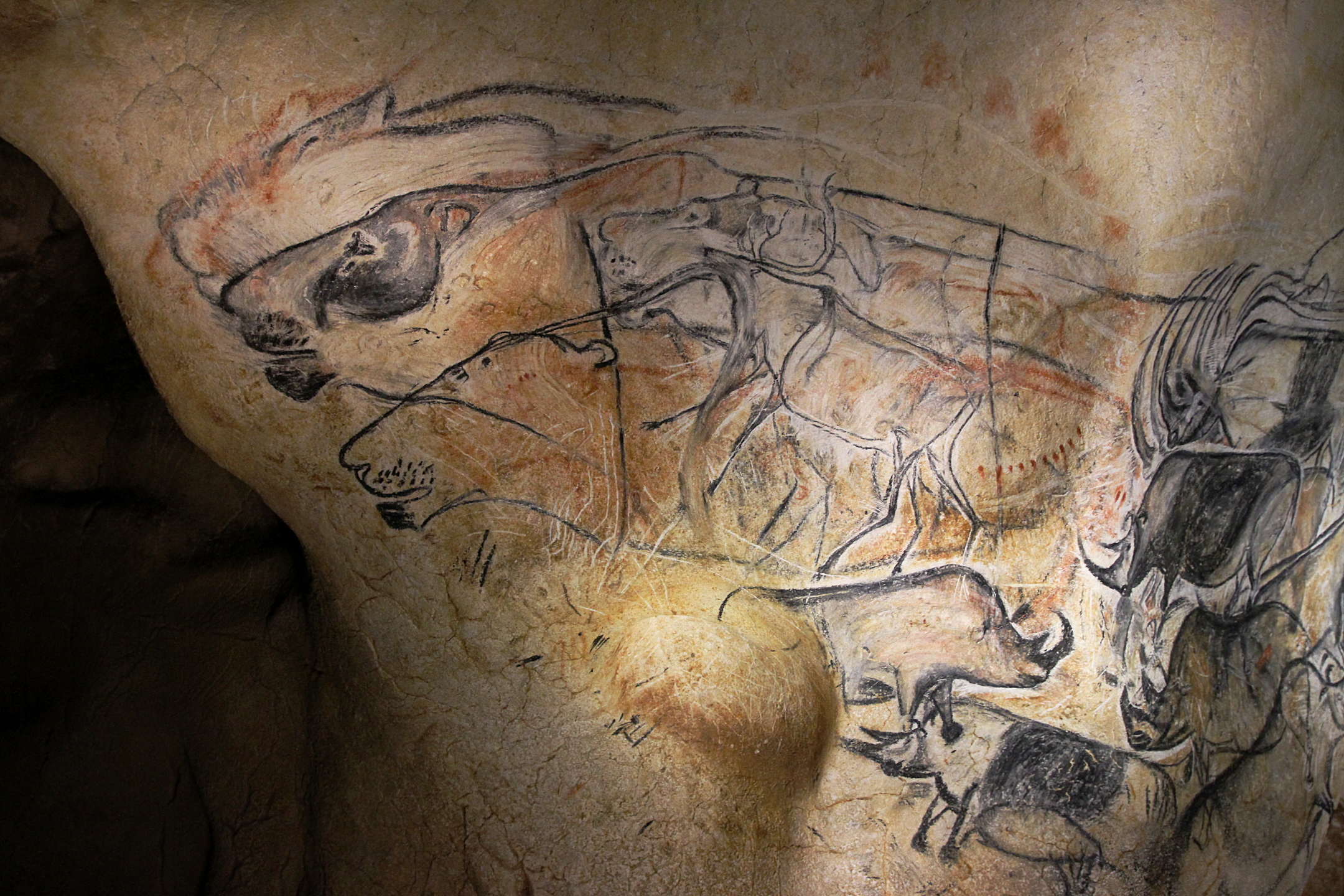
The Chauvet Cave was rediscovered on 18 December 1994 in the Ardèche and received World Heritage status from UNESCO in 2014. Its walls feature predatory animals such as cave lions, leopards, bears and hyenas, unlike the herbivore-dominated art of most Palaeolithic caves.
Radiocarbon dates from Chauvet fall into two clusters, one around 27,000–26,000 BP and another around 32,000–30,000 BP, suggesting two phases of use.
9. Altamira and Lascaux
Altamira was the first European cave whose paintings were argued to be prehistoric, and the argument cost its discoverer his reputation before it was vindicated. After Sautuola published his findings in 1880 he was accused of forgery, and the dispute was only settled in 1902 once similar finds accumulated across the Franco-Cantabrian region.
The Hall of the Bulls at Lascaux depicts 36 animals, dominated by four black aurochs, and one of the bulls is 5.2 metres long — the largest animal yet found in cave art. Lascaux's paintings required scaffolding, since some animals were placed on ceilings above the reach of a standing artist.
10. Interpretation
Early twentieth-century scholars interpreted cave art as utilitarian hunting magic intended to increase the abundance of prey. David Lewis-Williams argued from ethnographic parallels that Palaeolithic shamans entered trance states in dark caves and painted their visions. Dale Guthrie analysed hands and stencils and proposed that adolescent males made up a large share of cave painters.
11. Timeline
- c. 67,800 years agoA claimed early handprintA handprint at Liang Metanduno on Muna Island, Indonesia, is dated to at least 67,800 years old, the oldest claimed cave painting, though the claim rests on disputed dating.
- More than 64,800 years agoIberian art before modern humansUranium-thorium dates on carbonate crusts over paintings at La Pasiega, Maltravieso and Ardales push Iberian cave art beyond 64,800 years, implying Neanderthal authorship — a result later challenged on methodological grounds.
- At least 51,200 years agoThe earliest known narrative sceneHuman-like figures interacting with a pig are painted at Leang Karampuang in Sulawesi, making it the oldest surviving example of representational art and visual storytelling.
- At least 35,400 years agoThe Timpuseng babirusaA painting of a babirusa at Leang Timpuseng in Sulawesi is dated to at least 35,400 years old, announced in 2014 and then the oldest known figurative image in the world.
- c. 32,900 years agoChauvet's lions and rhinosThe earliest radiocarbon sample from Chauvet Cave dates to 32,900 ± 490 BP; the walls carry at least 13 species, including cave lions, leopards and hyenas.
- c. 20,000–17,000 years agoLascaux and AltamiraLascaux is painted over generations in the early Magdalenian (conventionally 17,000–22,000 years ago), while Altamira's polychrome bison are dated to the Upper Palaeolithic.
- 1868Altamira foundModesto Cubillas discovers the Cave of Altamira; Marcelino Sanz de Sautuola studies it and becomes the first to argue that European cave paintings were prehistoric.
- 1902The sceptics give wayAfter further prehistoric paintings are reported across the Franco-Cantabrian region, the scientific controversy over Altamira's antiquity ends and its Palaeolithic origin is accepted.
- 1985Altamira inscribedUNESCO lists the Cave of Altamira as a World Heritage Site, as a key location within the Cave of Altamira and Paleolithic Cave Art of Northern Spain.
- 18 December 1994Chauvet rediscoveredThree speleologists exploring the Ardèche gorge enter a sealed cave whose floor still holds cave-bear paw prints, and find some of the best-preserved figurative paintings known.
- 1999Cueva de las Manos inscribedUNESCO lists the Cueva de las Manos on the Río Pinturas in Santa Cruz, Argentina, as a World Heritage Site under criterion (iii).
- 22 June 2014Chauvet becomes World HeritageUNESCO inscribes the Decorated Cave of Pont d'Arc, known as Grotte Chauvet-Pont d'Arc, on the World Heritage List.
12. Frequently asked questions
Which cave paintings are the oldest known figurative works, and how old are they?
The oldest dated figurative scene is at Leang Karampuang in Sulawesi, at least 51,200 years old 2. The babirusa painting at Leang Timpuseng was dated to at least 35,400 years old, then the oldest known figurative image anywhere 8A Journey to the Oldest Cave Paintings in the World · Smithsonian Magazine ↗.
When did people first use ochre in caves?
How did the Sulawesi discoveries change ideas about the origins of art?
Where do hand stencils appear, and how were they made?
Hand stencils were made by holding a palm against the rock and blowing pigment over it, leaving a negative outline of the hand 8. Hand images recur in similar forms across Europe, eastern Asia, Australia and South America, making them one of the most widespread motifs in rock art 1Cave painting · Wikipedia ↗.
How many species are depicted at Chauvet, and how old is its earliest sample?
References (8)
- 1Cave painting — Wikipedia Web↩View source
- 2Narrative cave art in Indonesia by 51,200 years ago — Nature (Oktaviana et al.) Journal↩View source
- 3Cueva de las Manos, Río Pinturas — UNESCO World Heritage Centre Web↩View source
- 4Cave of Altamira — Wikipedia Web↩View source
- 5Lascaux — Wikipedia WebView source
- 6Cave art — Encyclopaedia Britannica WebView source
- 7Chauvet Cave — Wikipedia Web↩View source
- 8A Journey to the Oldest Cave Paintings in the World — Smithsonian Magazine Web↩View source