Cello
The cello from the viola da gamba to the concert hall: its construction and acoustics, the Cremonese workshops of the Amati family and Stradivari, its repertoire, and the cellists who made it a solo voice.
The cello, or violoncello, is the bass member of the violin family, with four strings tuned C, G, d, a an octave below the viola. It grew out of the sixteenth-century viols and the decorated instruments Andrea Amati made for the French court, and only in the seventeenth and eighteenth centuries did it displace the bass viola da gamba as a solo instrument. Stradivari's smaller violoncellos, the soundpost and bridge of the family, the bowed-string acoustics studied at the University of New South Wales, and Cremona's UNESCO-listed violin-making tradition show how a workshop craft became the reference instrument of the modern orchestra and of soloists from Pablo Casals to the present.
In this article
- 1Overview
- 2Construction and Form
- 3Tuning and Sound Production
- 4Historical Development
- 5Repertoire and Solo Role
- 6Cremonese Makers and the Amati Legacy
- 7Stradivari and the Batta-Piatigorsky Cello
- 8The King Cello
- 9Cremona as a Craft Centre
- 10Notable Instruments in Collections
- 11Timeline
- 12Timeline: from the vihuela de arco to Cremona's UNESCO listing
- 13Frequently asked questions
- 14Knowledge graph
Overview
The cello is the bass member of the violin family, the group that forms the backbone of the modern symphony orchestra. It carries four strings. Unlike the smaller members of its family, it stands vertically on the floor.
1. Construction and Form
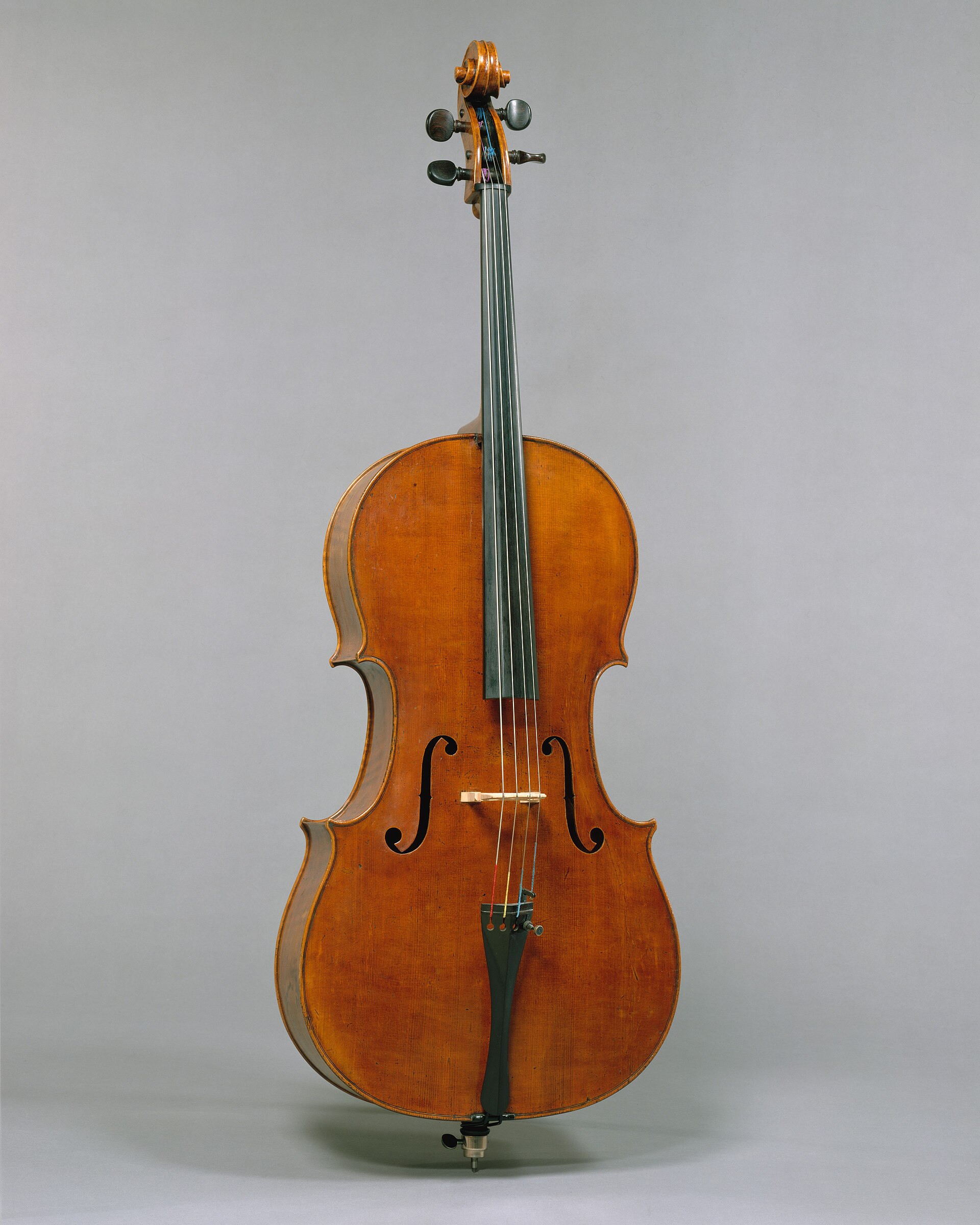
The cello is built around a large hollow wooden body of rounded, waisted outline, proportionally deeper in its ribs and shorter in the neck than the violin. Its belly is of spruce or pine and its back of sycamore, maple or a similar hardwood, the two plates spaced by shallow ribs. Both the top and the back are arched, and two f-shaped sound holes are cut into them. A long neck carries the fingerboard and ends in a scroll beyond the pegbox, while four strings run from the tailpiece across a curved bridge to the tuning pegs.
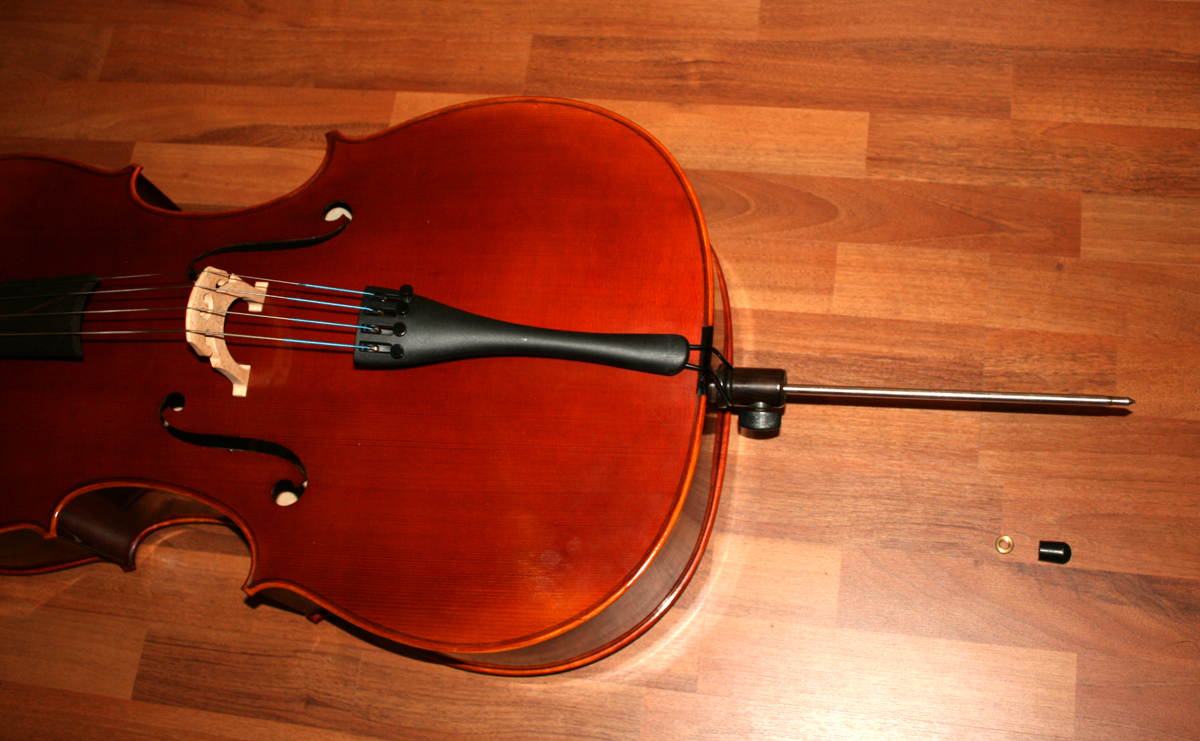
The body measures about 27.5 inches (70 cm) in length, or 47 inches (119 cm) with the neck, making the instrument larger than the viola but smaller than the double bass. Its bridge stands much higher than that of the violin and rests on legs rather than feet, and the instrument is supported on the floor by an endpin, a long steel rod. The sound post is peculiar to the violin family, although it was later used on the viola da gamba family known as the viols.
2. Tuning and Sound Production
The cello is tuned in fifths, exactly one octave below the viola, at C, G, d, a. The pitch of a vibrating string depends on four things, and thicker, more massive strings vibrate more slowly. The strings themselves make hardly any noise; it is the bridge and the body that transmit vibrational energy into the air as sound. The bridge is effective at transmitting power from about one to four kHz, where the ear is most sensitive, which contributes to the instrument's bright timbre. The treble foot of the bridge sits near the soundpost, which prevents the belly from collapsing under string tension and couples the plates.
A vibrating string can produce a motion that is rich in harmonics, and bowing the string allows a range of expressive techniques. Compared with pizzicato, or plucking the string, the bow allows the player to input energy continuously and so to maintain a note. Rosin on the bow gives a big difference between static and sliding friction, so the bow tends to stick to the string and drag it along before the string breaks free and slides past with very little friction. With the modern Tourte bow, when the player presses hard on the strings the wood straightens, which helps to pull the hair tighter and allows greater force on the string. The hatchet head of the modern bow distributes more weight to the tip, allowing a more uniform application of force during the stroke.
3. Historical Development
The viol, or viola da gamba, was a bowed and fretted instrument held on the leg and used at court and in the home; it was developed during the Renaissance and remained popular in Europe especially through the Renaissance and Baroque eras. Ensembles known as consorts required sets, or chests, of viols in three sizes — treble, tenor, and bass — the last of which could also serve for solo playing. Its gut frets, wrapped around the neck, made it comparatively easy to play in tune, which helped account for its immense popularity among amateur and professional musicians alike.
During the 17th century the combination of cello and harpsichord for basso continuo parts became standard. Only during the 17th and 18th centuries did the cello replace the bass viola da gamba as a solo instrument. The cello's rise as a solo instrument is bound up with the violin-making tradition of Cremona, a city that has been the capital of violin-making for five centuries. In February 1539 Andrea Amati leased, and later bought, property in the centre of Cremona — a house and workshop that would remain in his family's possession for another two hundred years. He is probably the Andrea liutaio who appeared in the household of Giovanni Leonardo de Martinengo in a military census of 1520, and by about 1525 he might well have been working independently. Andrea could increasingly rely on the assistance of two sons, Antonio and Girolamo, probably born in the periods 1537 to 1540 and 1550 to 1554 respectively.
The decorated Amati instruments were limited in number because of the demands of their ornamentation, and they are now extremely rare to see outside of museums and private collections. Stradivari left behind more than 700 drawings, shapes and tools from his workshop, which can be admired only in Cremona. The instrument's later repertory includes J.S. Bach's six suites for unaccompanied cello, Beethoven's five sonatas for cello and piano, and concertos by Edouard Lalo, Antonin Dvorak, Camille Saint-Saens, Edward Elgar and Samuel Barber.
4. Repertoire and Solo Role
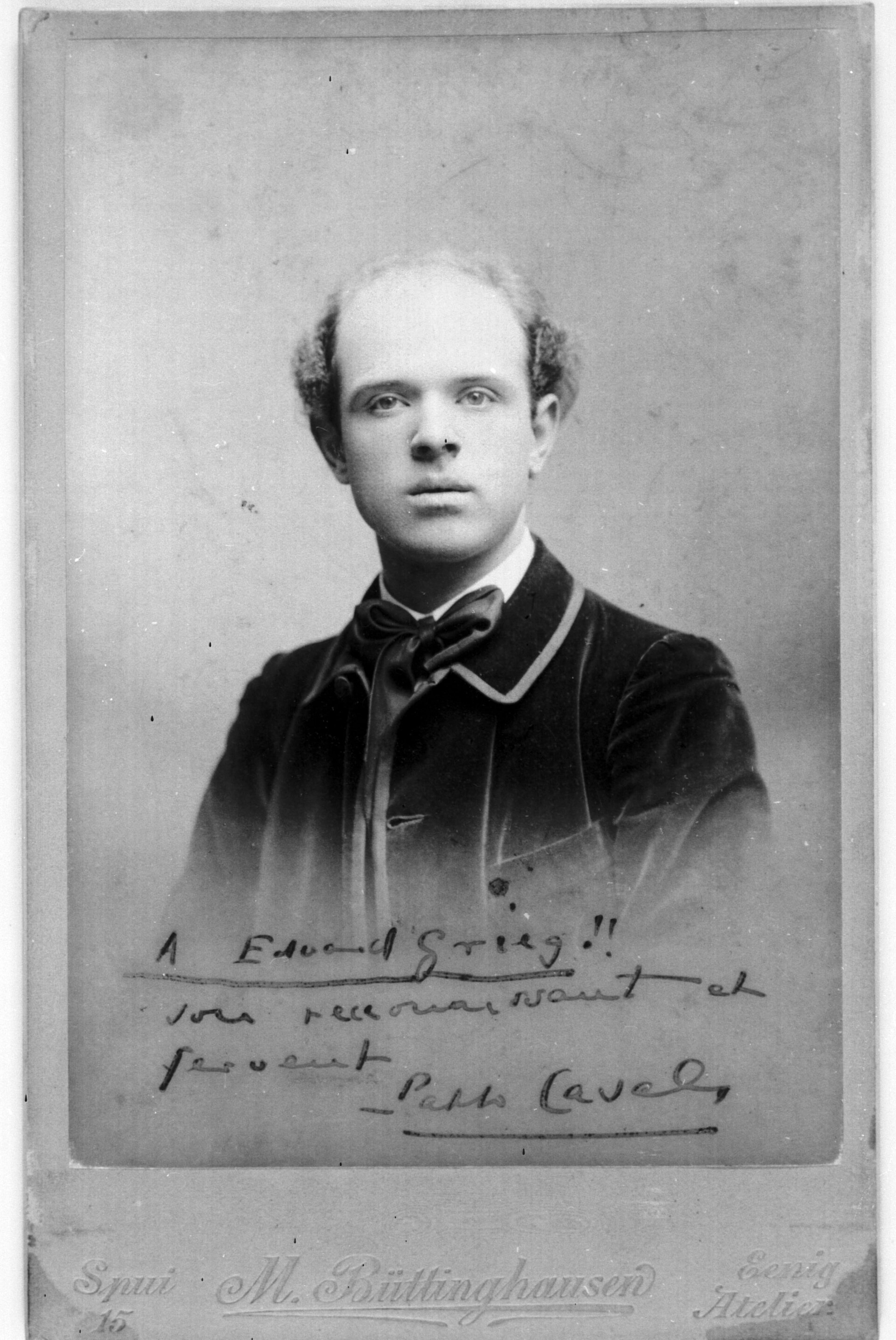
Pablo Casals (1876-1973) revitalized appreciation of Bach's cello music, especially the six unaccompanied suites. Born in Vendrell, Spain, he debuted in Barcelona in 1891. He developed a flexible left-hand and freer bowing technique marked by seeming effortlessness and a singing tone. Having won an international reputation as a cellist, Casals helped found the Ecole Normale de Musique in Paris in 1919 and established and conducted the Orquestra Pau Casals in Barcelona.
Casals announced his retirement from public performance in 1946 to protest worldwide recognition of the Franco regime in Spain, and in 1950 he returned to recording and conducting, choosing spoken over silent protest.
5. Cremonese Makers and the Amati Legacy
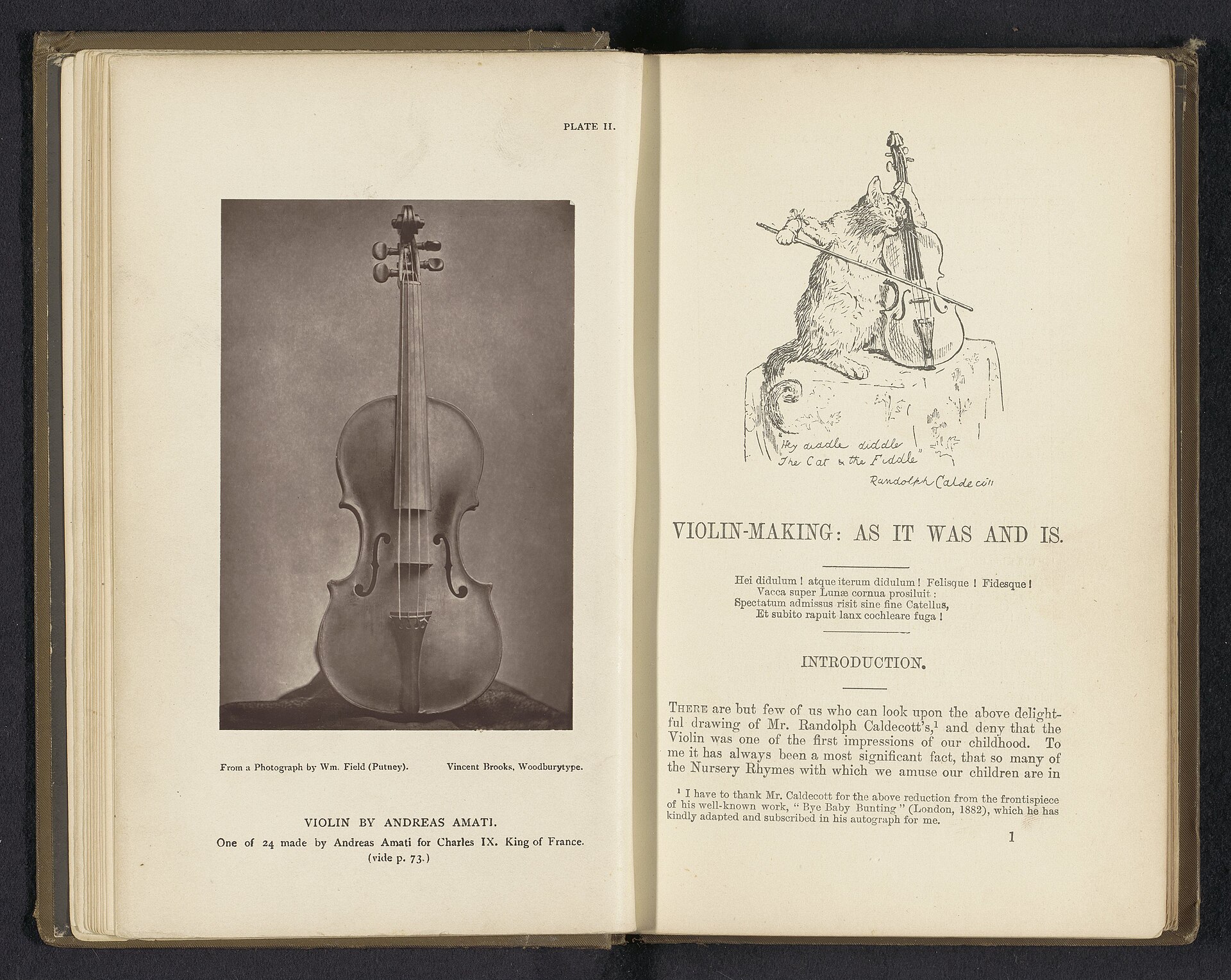
Andrea Amati of Cremona, active in the sixteenth century, belonged to the first generation of makers to add a fourth string to the violin and to establish the standard sizes of cello, viola and violin in their classic modern shapes. His instruments display an elegance of line and a delicacy and lightness surpassing many later examples, and they are exceedingly rare: eight small and large violins, three violas and five violoncellos are all that survive.
Nicolo Amati, grandson of Andrea, is today regarded as the finest craftsman of this family of luthiers. He was the only violin maker in Cremona to survive the famine and plague that devastated that city around 1630, in a period of crisis.
6. Stradivari and the Batta-Piatigorsky Cello
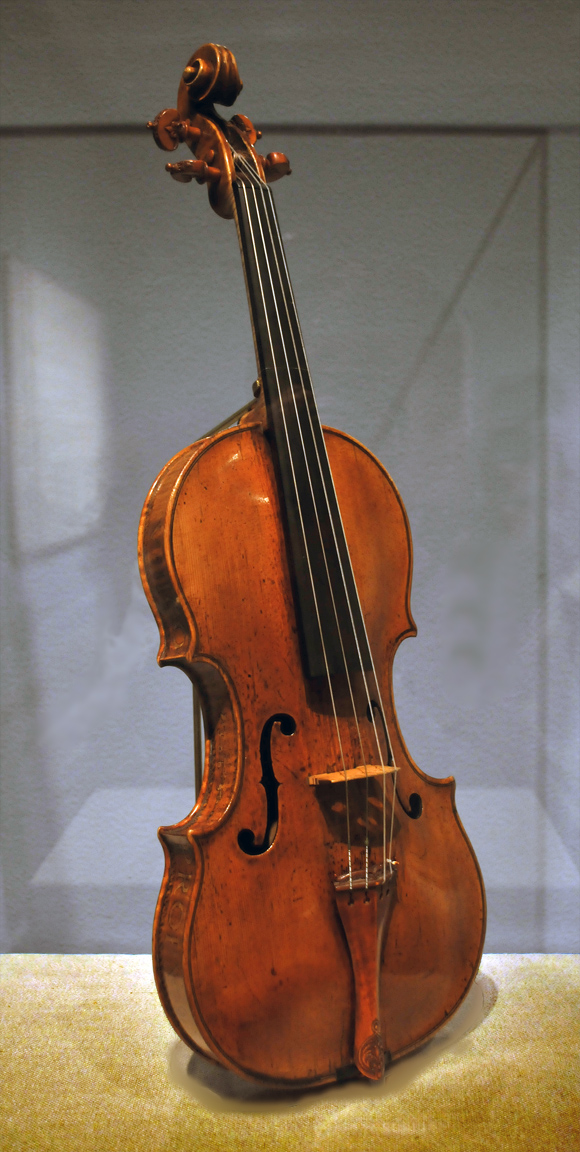
Antonio Stradivari was born in 1644 in Cremona and died there on 18 December 1737, and he brought the craft of violin-making to its highest pitch of perfection. He was still a pupil of Nicolo Amati in 1666 when he began placing his own label on violins, at first following the smaller of Amati's models with a thick yellow varnish. In 1684 he began producing larger models with deeper-coloured varnish, and his long models from 1690 represented a complete innovation in proportions. During the 1680s he moved away from Nicolo Amati's style, experimenting with his own soundhole shapes, a softer varnish, wider purfling and a stronger tone. Stradivari also made some fine cellos and violas, and his method of violin making created a standard for subsequent times, setting the proportions of the modern violin with its shallower body that yields a more powerful and penetrating tone than earlier violins.
About 650 instruments survive from a seventy-year career, and his sons Francesco (1671-1743) and Omobono (1679-1742), also violin makers, are believed to have assisted him.
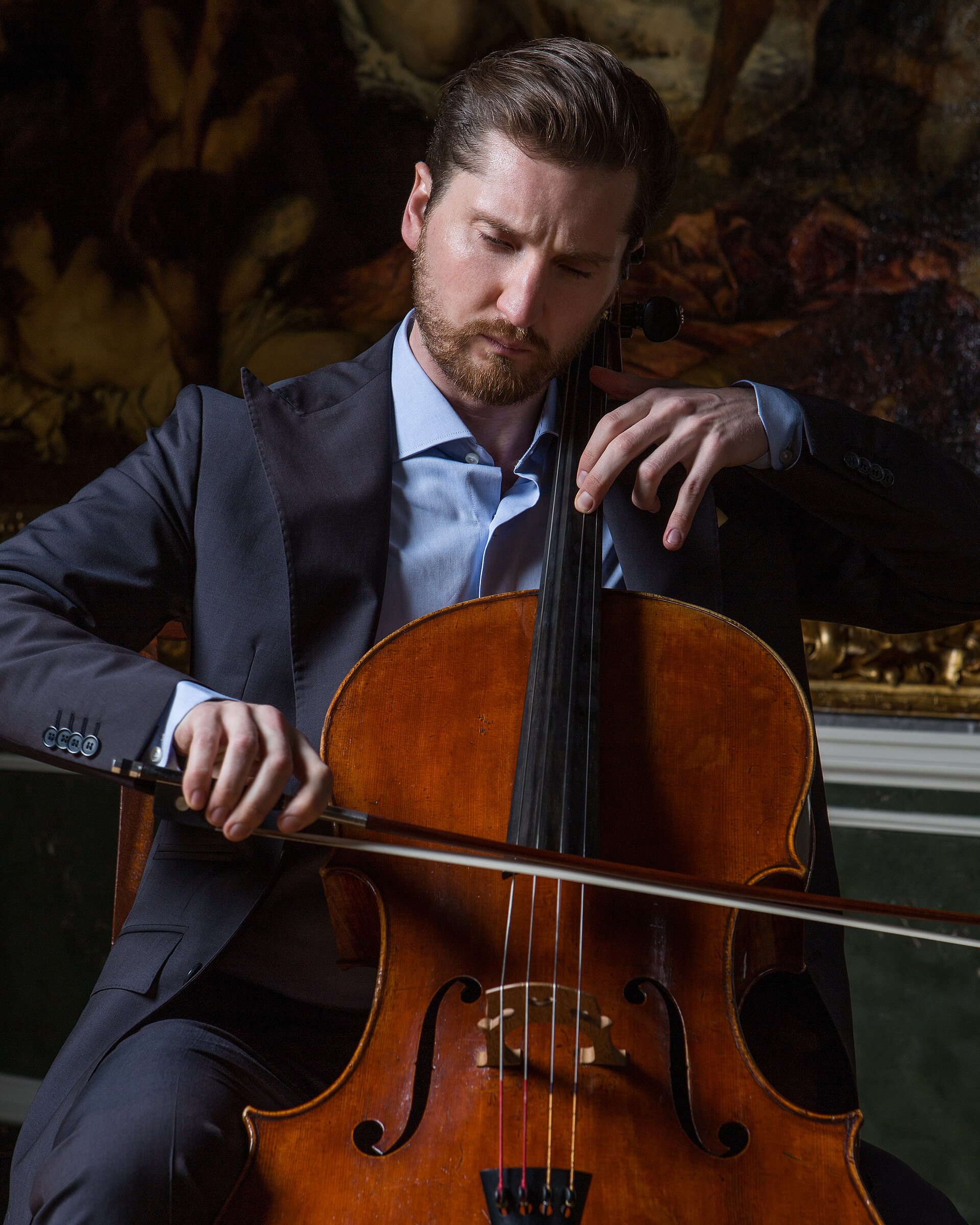
The Batta-Piatigorsky Violoncello was made by Stradivari in Cremona in 1714, built of spruce, maple and ebony, 76 cm high with a lower bout width of 43.9 cm. It is named after the Dutch cellist Alexandre Batta (1816-1902), who purchased it in Paris around 1836 as a young man. Horace Havemeyer, an art collector and Metropolitan Museum trustee, himself owned and had lent Piatigorsky another important Stradivari cello, the Duport.
Just as Stradivari's career began about 1665 there was a major advance in string making, the development of gut strings overspun with fine metal wire. With these new strings Stradivari was able to reduce the size of the cello, improving its acoustical qualities and making it easier to play.
7. The King Cello
Decorated instruments in the violin family such as Andrea Amati's King cello were usually made in sets or consorts, and were intended as diplomatic gifts to celebrate important state occasions. The King cello is described as the world's oldest surviving cello. It was on view at the Met in the Andre Mertens Galleries for Musical Instruments, on loan from the National Music Museum in Vermillion, South Dakota.
The Orpheon Foundation reconstructed the original dimensions of the Andrea Amati King violoncello, deriving the original design of the instrument's body from the basic proportions Amati used for his models.
8. Cremona as a Craft Centre
Cremonese violin craftsmanship is renowned for its traditional process of fashioning and restoring violins, violas, cellos and contrabasses, and was inscribed in 2012 on the Representative List of the Intangible Cultural Heritage of Humanity. Each violin-maker constructs from three to six instruments per year, shaping and assembling more than 70 pieces of wood around an inner mould by hand, according to the different acoustic response of each piece.
This traditional violin-making is promoted by two violin-makers' associations, the Consorzio Liutai Antonio Stradivari and the Associazione Liutaria Italiana, and is considered fundamental to the identity of Cremona and its citizens.
At the Violin's Museum in Cremona visitors can discover the past and present of this handicraft production, included in the Intangible UNESCO Heritage, through direct contact with the great masters and their masterpieces.
9. Notable Instruments in Collections
The Ashmolean holds an exceptional sequence of violins, violas and cellos by members of the Amati family, Antonio Stradivari, and several later craftsmen. Among these instruments are the earliest dated violin, made by Andrea Amati in 1564, and Stradivari's Messiah of 1716, described as the most famous violin in the world. The collection also holds a group of viols from northern Italy and England by makers such as Gasparo da Salo and Giovanni Maria da Brescia, together with citterns and guitars.
10. Timeline
-
about 1520Andrea Amati born
-
about 1578Andrea Amati dies
11. Timeline: from the vihuela de arco to Cremona's UNESCO listing
- in the 1480sThe vihuela de arcoIn the 1480s in Valencia two corollaries of the vihuela emerged: the plucked vihuela de mano, ancestor of the modern guitar, and the vihuela de arco, a bowed and fretted instrument held at the lap.
- about 1520Andrea Amati, founder of the Cremona schoolAndrea Amati, whose dates are given as about 1520 to about 1578, was the founder of the Cremona school of violin making and was perhaps originally influenced by slightly earlier makers from Brescia.
- February 1539Amati's house and workshop in CremonaIn February 1539 Andrea Amati was able to lease, and later buy, property in the centre of Cremona, a house and workshop that would remain in his family's possession for another two hundred years.
- about 1550The modern violin takes shapeThe modern four-string violin is generally considered to have originated about 1550 in northern Italy, incorporating features of the rebec, the Renaissance fiddle and the lira da braccio.
- mid-16th centuryAndrea Amati's "King" celloDecorated instruments in the violin family such as Andrea Amati's King cello were usually made in sets or consorts and intended as diplomatic gifts; the King cello, the world's oldest surviving cello, is a rare survivor of that practice.
- about 1564The earliest dated violinAndrea Amati's earliest-known violins are dated about 1564, and the Ashmolean Museum holds the earliest dated violin, made by Amati in that decade.
- 1619The King cello compared with PraetoriusThe Orpheon Foundation compares the King violoncello with the drawing in Syntagma Musicum of 1619 by Michael Praetorius when reconstructing its original dimensions.
- about 1665Overspun strings and the smaller celloAs Stradivari's career began, a major advance in string making — gut strings overspun with fine metal wire — let him reduce the size of the cello, improving its acoustical qualities and making it easier to play.
- 1666Stradivari's own labelStradivari was still a pupil of Nicolò Amati in 1666 when he began to place his own label on violins of his making, at first following the smaller of Amati's models.
- 1684Stradivari's larger modelsIn 1684 Stradivari began to produce larger models, using a deeper-coloured varnish and experimenting with minute details in the form of the instrument.
- from 1690The "long pattern"Stradivari's long models, dating from 1690, represent a complete innovation in the proportions of the instrument.
- after 1700Smaller violoncellosAfter 1700 Stradivari experimented with building smaller violoncellos, influenced by the Brescian maker Giovanni Paolo Maggini; these smaller instruments aided the rise of the cello as a virtuoso solo instrument.
- 1714The Batta-Piatigorsky celloAntonio Stradivari made the violoncello later known as the Batta-Piatigorsky cello in Cremona in 1714, of spruce, maple and ebony.
- 29 December 1876Birth of Pablo CasalsPablo Casals was born in Vendrell, Spain, in 1876 and went on to revitalize appreciation of Bach's six unaccompanied suites for cello.
- 1946Casals's silent protestCasals announced his retirement from public performance in 1946 to protest worldwide recognition of the Franco regime in Spain, and returned to recording and conducting in 1950.
- 2012Cremona violin-making inscribed by UNESCOTraditional violin craftsmanship in Cremona was inscribed in 2012 on the Representative List of the Intangible Cultural Heritage of Humanity.
12. Frequently asked questions
How many strings did the earliest cellos have?
The earliest cellos were developed during the 16th century and were frequently made with five strings, serving mainly to reinforce the bass line in ensembles 4Cello | Definition, Music, & Facts · Encyclopaedia Britannica ↗.
What is the King cello decorated with?
The King cello is painted in oil in the style of Limoges porcelain, with coloured fields outlined by thin black lines together with coloured, transparent overglazing of metal leaf 7Taking a Closer Look at the Amati "King" Cello · The Metropolitan Museum of Art ↗. The collar surrounding the escutcheon in the centre of the instrument's back represents the collar of the Order of Saint Michael, created by Louis XI in 1469 and limited to sixteen members 7.
How was the King cello originally held by its player?
Four filled holes visible on the back of the instrument once held bosses and rings that enabled the costumed player to hold the instrument securely during court ballets of the sixteenth century 7.
What did Stradivari's experiments after 1700 produce?
After 1700 Stradivari experimented with building smaller violoncellos, influenced by the instruments of the Brescian maker Giovanni Paolo Maggini and later Cremonese makers; these smaller instruments aided in the rise of the cello as a virtuoso solo instrument 10Violin Makers: Nicolo Amati (1596-1684) and Antonio Stradivari (1644-1737) · The Metropolitan Museum of Art, Heilbrunn Timeline of Art History ↗.
What is the modern four-string violin thought to have originated from?
The modern four-string violin is generally considered to have originated about 1550 in northern Italy, and the earliest violins incorporated features of existing bowed instruments: the rebec, the Renaissance fiddle, and the lira da braccio 15Renaissance Violins · The Metropolitan Museum of Art, Heilbrunn Timeline of Art History ↗.
References (16)
- 1Stringed instrument — The violin family — Encyclopaedia Britannica WebView source
- 2About the Viol — Viola da Gamba Society of America WebView source
- 3The Viol — The Metropolitan Museum of Art, Heilbrunn Timeline of Art History WebView source
- 4Cello | Definition, Music, & Facts — Encyclopaedia Britannica Web↩View source
- 5Violin's Museum (Museo del Violino) — Cremona Musei, Comune di Cremona WebView source
- 6Building a Family Dynasty: Three Generations of Amati Luthiers — The Metropolitan Museum of Art WebView source
- 7Taking a Closer Look at the Amati "King" Cello — The Metropolitan Museum of Art Web↩View source
- 8Antonio Stradivari | Italian violin maker — Encyclopaedia Britannica WebView source
- 9Pablo Casals | Cellist, Composer, Conductor — Encyclopaedia Britannica WebView source
- 10Violin Makers: Nicolo Amati (1596-1684) and Antonio Stradivari (1644-1737) — The Metropolitan Museum of Art, Heilbrunn Timeline of Art History 1596 Web↩View source
- 11The Batta-Piatigorsky Violoncello (L.2013.71a-g) — The Metropolitan Museum of Art 2013 WebView source
- 12Violoncello "The King" by Andrea Amati — The Orpheon Foundation WebView source
- 13Traditional violin craftsmanship in Cremona — UNESCO Intangible Cultural Heritage WebView source
- 14Musical Instruments Collection — Ashmolean Museum, University of Oxford BookView source
- 15Renaissance Violins — The Metropolitan Museum of Art, Heilbrunn Timeline of Art History Web↩View source
- 16Andrea Amati | Italian violin maker — Encyclopaedia Britannica WebView source