Golden Gate Bridge
A suspension bridge across a strait engineers said could not be spanned.
Overview
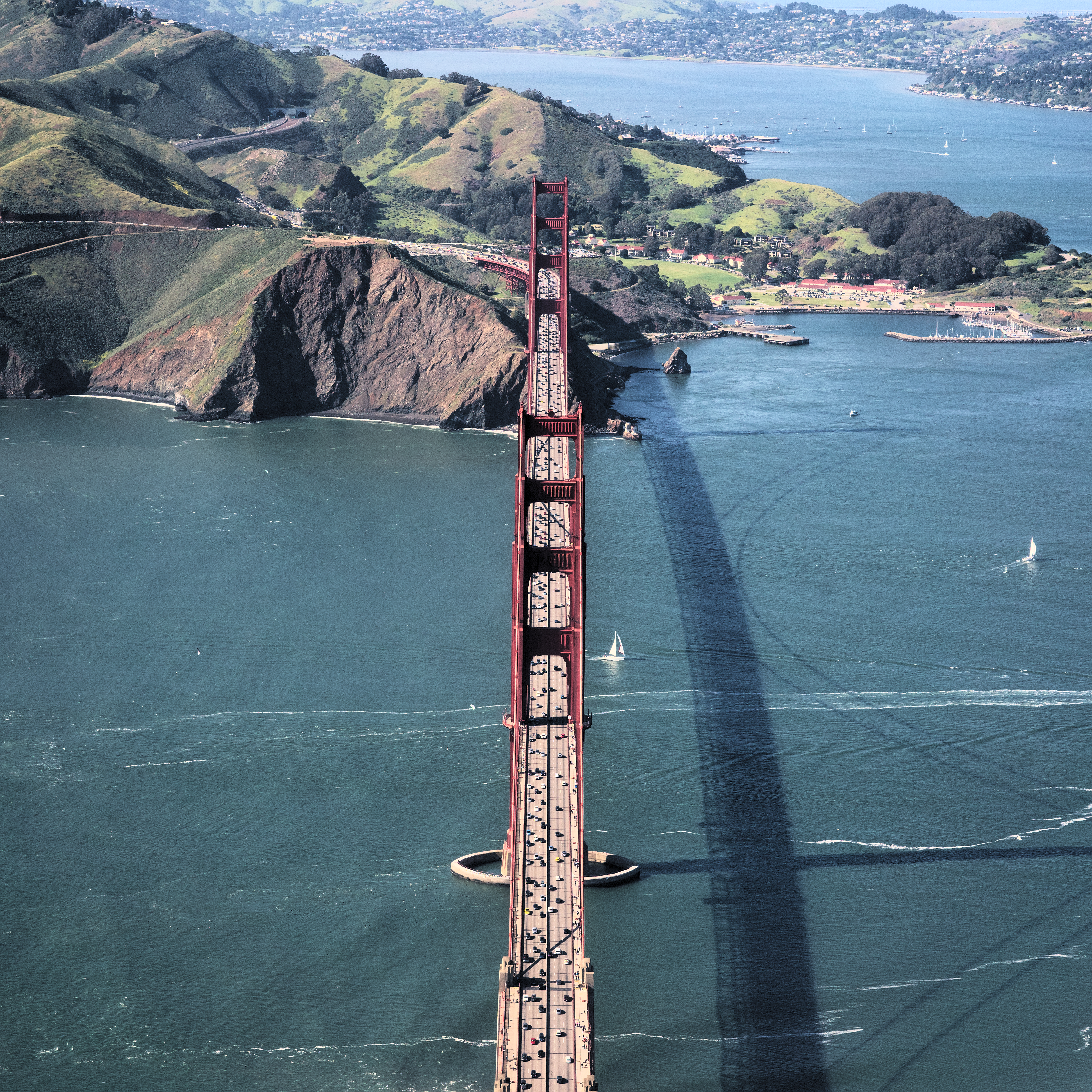
The Golden Gate Bridge is a suspension bridge spanning the Golden Gate, the one-mile-wide (1.6 km) strait connecting San Francisco Bay and the Pacific Ocean in California, United States. The structure links San Francisco—the northern tip of the San Francisco Peninsula—to Marin County, carrying both U.S. Recognized by the American Society of Civil Engineers as one of the Wonders of the Modern World, the bridge is one of the most internationally recognized symbols of San Francisco and California.
Before the bridge existed, the only practical short route between San Francisco and what is now Marin County was by boat across a section of San Francisco Bay. A ferry service began as early as 1820, with a regularly scheduled service beginning in the 1840s for the purpose of transporting water to San Francisco. San Francisco Bay has been served by ferries of all types for over 150 years. Although the construction of the Golden Gate Bridge and the San Francisco–Oakland Bay Bridge led to the decline in the importance of most ferries, some are still in use today for both commuters and tourists.
The idea of a bridge across the Golden Gate was not new, but the proposal that eventually took hold was made in a 1916 San Francisco Bulletin article by former engineering student James Wilkins. San Francisco's City Engineer estimated the cost at $100 million (equivalent to $3.0 billion in 2025), and impractical for the time. The Golden Gate Bridge and Highway District, authorized by an act of the California Legislature, was incorporated in 1928 as the official entity to design, construct, and finance the Golden Gate Bridge. The bonds were approved in November 1930 by votes in the counties affected by the bridge.
Strauss was the chief engineer in charge of the overall design and construction of the bridge project. The final suspension design was conceived and championed by Leon Moisseiff, the engineer of the Manhattan Bridge in New York City. The construction project was carried out by the McClintic-Marshall Construction Co., a subsidiary of Bethlehem Steel Corporation founded by Howard H. A plaque of the major contributors to the Golden Gate Bridge lists contractors, engineering-staff, directors and officers, among them the Pacific Bridge Company for foundations and the bridge deck, Barrett & Hilp for anchorages and the toll plaza, Bethlehem Steel Company Incorporated for the main span structural steel, J.H. Roebling's Sons Company, Alta Electric and Mechanical Company Incorporated for electrical work, and Easton & Smith for Presidio approach roads and viaducts.
The Round House Café diner was included in the southeastern end of the Golden Gate Bridge, adjacent to the tourist plaza which was renovated in 2012. Fog is a common weather phenomenon in the San Francisco Bay Area and the entire coastline of California extending south to the northwest coast of the Baja California Peninsula. Some studies suggest that the prevalence of fog in the San Francisco Bay Area has decreased since 1951; however, some suggest these data are insufficient, or even suggest contrary results. San Francisco congestion pricing is a proposed traffic congestion user fee for vehicles traveling into the most congested areas of the city of San Francisco at certain periods of peak demand, part of a mobility and pricing study being carried out by the San Francisco County Transportation Authority (SFCTA) to reduce congestion at and near central locations and to reduce its associated environmental impacts, including cutting greenhouse gas emissions.
The Golden Gate National Recreation Area protects 82,116 acres (33,231 ha) of ecologically and historically significant landscapes surrounding the San Francisco Bay Area. It is also one of the largest urban parks in the world, with a size two-and-a-half times that of the consolidated city and county of San Francisco.
1. Ferry Service Before the Bridge
Before the bridge existed, the only practical short route between San Francisco and what is now Marin County was by boat across a section of San Francisco Bay, and many wanted a bridge to connect the two.
Ferry service began as early as 1820, with a regularly scheduled service beginning in the 1840s for the purpose of transporting water to San Francisco.
San Francisco Bay has been served by ferries of all types for over 150 years. One of the earliest ferry routes ran between San Francisco and Oakland on what was called the creek route. The name derived from the Oakland landing site located at the foot of Broadway where Jack London Square is today. In 1851 Captain Thomas Gray began the first regular ferry service to San Francisco from the East Bay.
The crossing between the Hyde Street Pier in San Francisco and the Sausalito Ferry Terminal in Marin County took approximately 20 minutes and cost $1.00 per vehicle prior to 1937, when the price was reduced to compete with the new bridge.
In 1920 the service was taken over by the Golden Gate Ferry Company, which merged in 1929 with the ferry system of the Southern Pacific Railroad, becoming the Southern Pacific-Golden Gate Ferries, Ltd., the largest ferry operation in the world.
The construction of the Golden Gate Bridge and the San Francisco–Oakland Bay Bridge led to the decline in the importance of most ferries, though some are still in use today for both commuters and tourists.
2. Proposals and Design
The prospect of a fixed crossing between San Francisco and Marin attracted attention long before it could be built, and the proposal that ultimately took hold was published in a 1916 San Francisco Bulletin article by James Wilkins, a former engineering student. A suspension-bridge design was chosen, drawing on recent advances in bridge design and metallurgy. The Department of War was concerned that the bridge would interfere with ship traffic.
Joseph Strauss, an ambitious engineer and poet who had designed a 55-mile-long railroad bridge across the Bering Strait for his graduate thesis, responded to the proposal. San Francisco's City Engineer estimated the cost at $100 million (equivalent to $3.0 billion in 2025) and judged it impractical for the time.
Strauss was the chief engineer in charge of the overall design and construction of the bridge project. The final suspension design was conceived and championed by Leon Moisseiff, engineer of the Manhattan Bridge, who introduced his "deflection theory" by which a thin, flexible roadway would flex in the wind, greatly reducing stress by transmitting forces via suspension cables to the bridge towers.
Irving Morrow, a relatively unknown residential architect, designed the overall shape of the towers, the lighting scheme, and Art Deco elements such as tower decorations, streetlights, railing, and walkways.
The design proved sound, though a later Moisseiff design, the original Tacoma Narrows Bridge, collapsed in a strong windstorm soon after completion because of an unexpected aeroelastic flutter.
The Golden Gate Bridge and Highway District, authorized by an act of the California Legislature, was incorporated in 1928 as the official entity to design, construct, and finance the Golden Gate Bridge.
The Round House Café, an Art Deco design by Alfred Finnila completed in 1938, has been popular throughout the years as a starting point for various commercial tours of the bridge and an unofficial gift shop.
3. Finance and Construction
The Golden Gate Bridge and Highway District was incorporated in 1928 as the official entity to design, construct, and finance the bridge, authorized by an act of the California Legislature. The bonds were approved in November 1930 by votes in the affected counties.
The District was unable to sell the bonds until 1932, when Amadeo Giannini, the founder of San Francisco–based Bank of America, agreed on behalf of his bank to buy the entire issue in order to help the local economy.
Construction was carried out by the McClintic-Marshall Construction Co., a subsidiary of Bethlehem Steel Corporation founded by Howard H..
During the bridge work, Alfred Finnila, Assistant Civil Engineer of California, oversaw the entire iron work and half of the road work. The Round House Café, an Art Deco design by Alfred Finnila completed in 1938, was included in the southeastern end adjacent to the tourist plaza renovated in 2012 and has been popular as a starting point for commercial tours and an unofficial gift shop.
| Role | Contractor or engineer |
|---|---|
| Foundations | Pacific Bridge Company |
| Anchorages | Barrett & Hilp |
| Structural steel — main span | Bethlehem Steel Company Incorporated |
| Approach steel | J.H. Roebling's Sons Company |
| Electrical work | Alta Electric and Mechanical Company Incorporated |
| Bridge deck | Pacific Bridge Company |
| Presidio approach roads and viaducts | Easton & Smith |
| Toll plaza | Barrett & Hilp |
| Chief engineer | Joseph B. Strauss |
Strauss served as chief engineer in charge of the overall design and construction of the bridge project. The final suspension design was conceived and championed by Leon Moisseiff, the engineer of the Manhattan Bridge in New York City.
The bridge is a suspension structure spanning the Golden Gate, the one-mile-wide (1.6 km) strait connecting San Francisco Bay and the Pacific Ocean in California, United States. It links San Francisco—the northern tip of the San Francisco Peninsula—to Marin County, carrying both U.S..
The idea of spanning the Golden Gate was not new, but the proposal that eventually took hold was made in a 1916 San Francisco Bulletin article by former engineering student James Wilkins. San Francisco's City Engineer estimated the cost at $100 million (equivalent to $3.0 billion in 2025 ), and impractical for the time.
A plaque of the major contributors to the Golden Gate Bridge lists contractors, engineering-staff, directors and officers: for foundations, the Pacific Bridge Company; for anchorages, Barrett & Hilp; for structural steel, the main span was supplied by Bethlehem Steel Company Incorporated and the approach steel by J.H.. Roebling's Sons Company handled electrical work through Alta Electric and Mechanical Company Incorporated, the bridge deck was built by the Pacific Bridge Company, the Presidio approach roads and viaducts by Easton & Smith, and the toll plaza by Barrett & Hilp. The engineering staff was headed by chief engineer Joseph B..
The Round House Café diner was included in the southeastern end of the Golden Gate Bridge, adjacent to the tourist plaza which was renovated in 2012. The construction of the Golden Gate Bridge and the San Francisco–Oakland Bay Bridge led to the decline in the importance of most ferries, though some are still in use today for both commuters and tourists.
4. Opening and Legacy
The Golden Gate Bridge opened to the public on May 27, 1937. In the decades since that opening the structure has undergone various retrofits and other improvement projects.
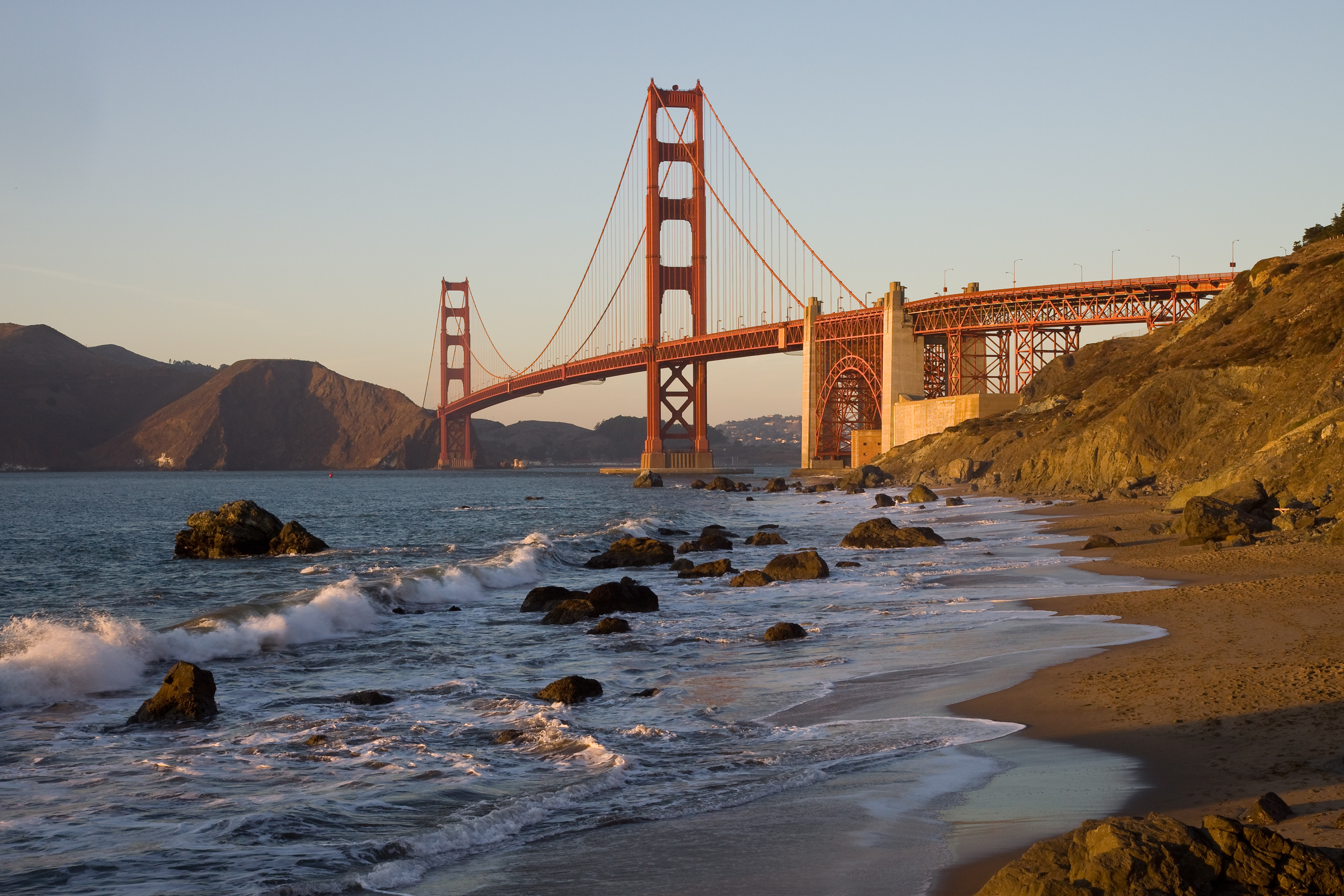
The bridge is a suspension bridge spanning the Golden Gate, the one-mile-wide (1.6 km) strait connecting San Francisco Bay and the Pacific Ocean in California, United States. Frommer's travel guide describes the Golden Gate Bridge as "possibly the most beautiful, certainly the most photographed, bridge in the world".
Before the bridge existed, the only practical short route between San Francisco and what is now Marin County was by boat across a section of San Francisco Bay. A ferry service began as early as 1820, with a regularly scheduled service beginning in the 1840s for the purpose of transporting water to San Francisco. San Francisco Bay has been served by ferries of all types for over 150 years. Although the construction of the Golden Gate Bridge and the San Francisco–Oakland Bay Bridge led to the decline in the importance of most ferries, some are still in use today for both commuters and tourists.
The idea of a bridge spanning the Golden Gate was not new, but the proposal that eventually took hold was made in a 1916 San Francisco Bulletin article by former engineering student James Wilkins. San Francisco's City Engineer estimated the cost at $100 million (equivalent to $3.0 billion in 2025 ) and judged it impractical for the time. The Golden Gate Bridge and Highway District, authorized by an act of the California Legislature, was incorporated in 1928 as the official entity to design, construct, and finance the Golden Gate Bridge. The bonds were approved in November 1930 by votes in the counties affected by the bridge.
Strauss was the chief engineer in charge of the overall design and construction of the bridge project. The final suspension design was conceived and championed by Leon Moisseiff, the engineer of the Manhattan Bridge in New York City. The construction project was carried out by the McClintic-Marshall Construction Co., a subsidiary of Bethlehem Steel Corporation founded by Howard H. A plaque of the major contributors to the Golden Gate Bridge lists contractors, engineering-staff, directors and officers, among them the Pacific Bridge Company for foundations and the bridge deck, Barrett & Hilp for anchorages and the toll plaza, Bethlehem Steel Company Incorporated for the main span, and J.H. Roebling's Sons Company, with electrical work by Alta Electric and Mechanical Company Incorporated and approach roads and viaducts by Easton & Smith.
The structure links San Francisco—the northern tip of the San Francisco Peninsula—to Marin County, carrying both U.S. The Round House Café diner was then included in the southeastern end of the Golden Gate Bridge, adjacent to the tourist plaza which was renovated in 2012. Fog is a common weather phenomenon in the San Francisco Bay Area and the entire coastline of California extending south to the northwest coast of the Baja California Peninsula. Some studies suggest that the prevalence of fog in the San Francisco Bay Area has decreased since 1951; however, some suggest these data are insufficient, or even suggest contrary results.
5. Setting and Environment
The bridge occupies the Golden Gate, the largest coastal gap at the entrance to San Francisco Bay. That gap also communicates via the Bay with the Carquinez Strait and the Central Valley.
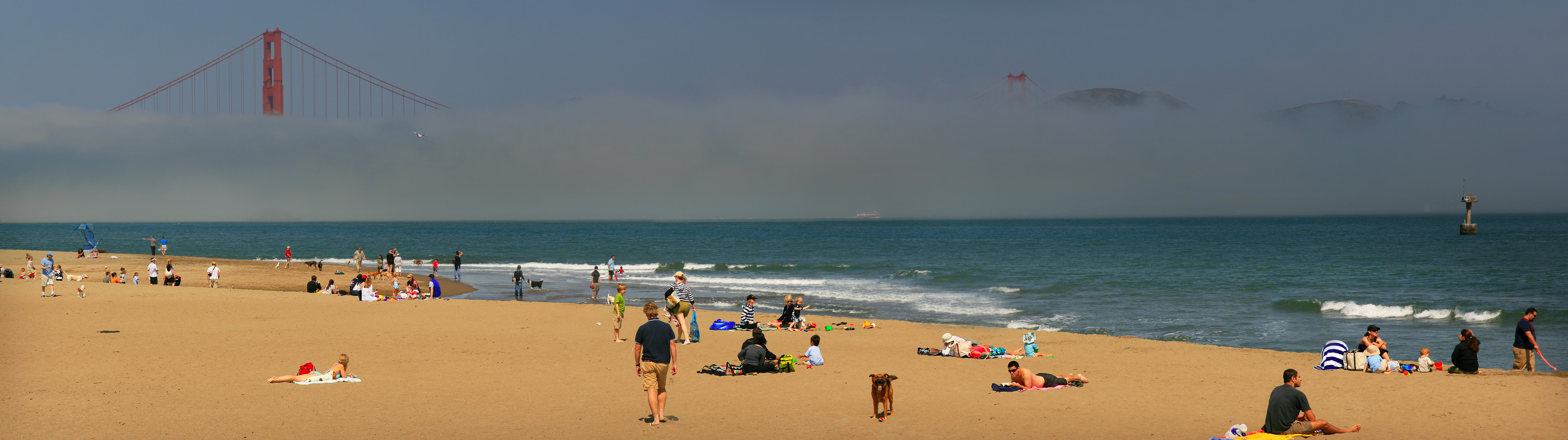
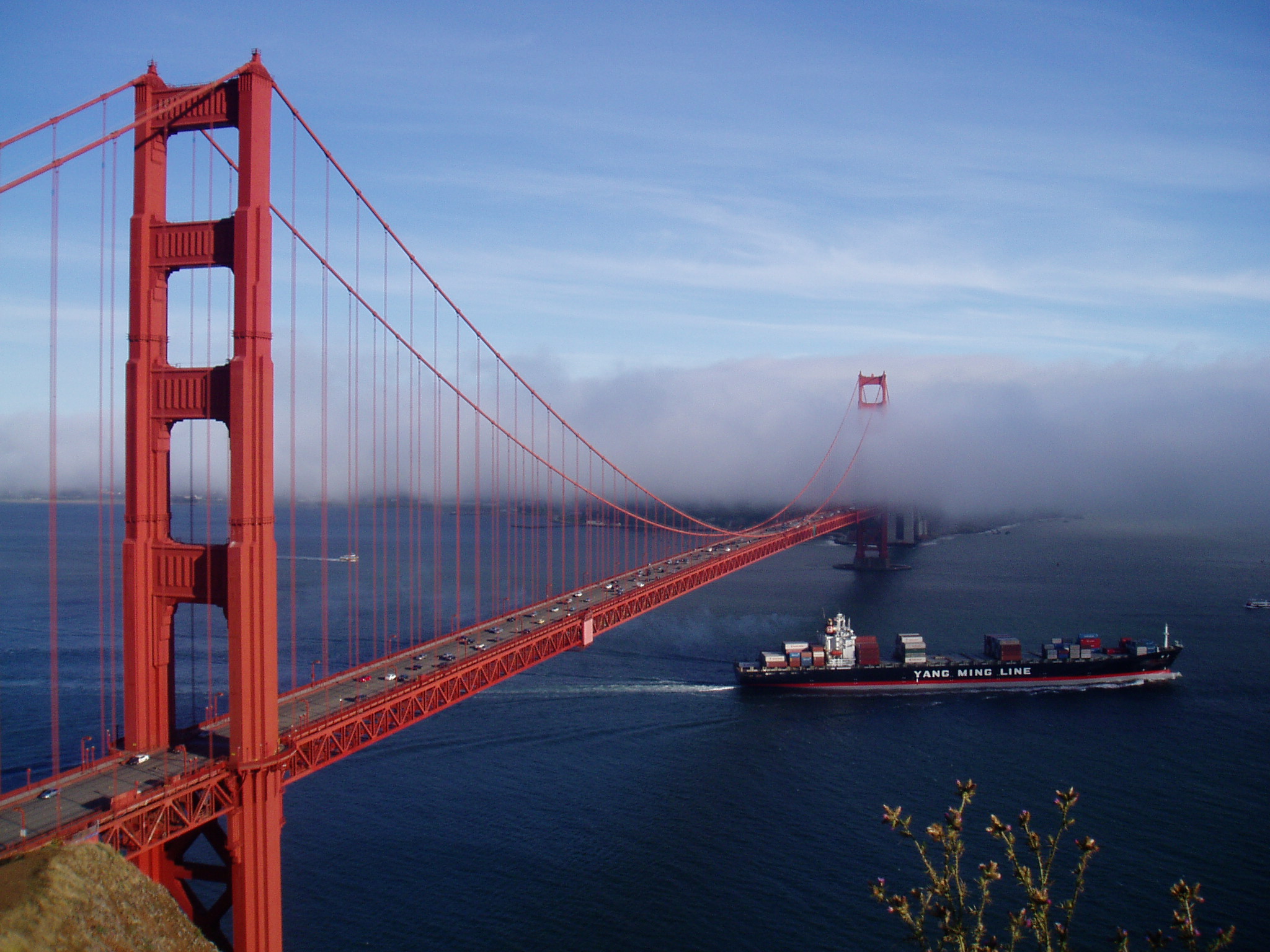
Fog is a common weather phenomenon in the San Francisco Bay Area and along the entire coastline of California extending south to the northwest coast of the Baja California Peninsula.
Some studies suggest that the prevalence of fog in the San Francisco Bay Area has decreased since 1951. Some suggest these data are insufficient, or even suggest contrary results.
The Golden Gate Bridge is a suspension bridge spanning the Golden Gate, the one-mile-wide (1.6 km) strait connecting San Francisco Bay and the Pacific Ocean in California, United States. The structure links San Francisco—the northern tip of the San Francisco Peninsula—to Marin County, carrying both U.S..
Before the bridge was built, the only practical short route between San Francisco and what is now Marin County was by boat across a section of San Francisco Bay. A ferry service began as early as 1820, with a regularly scheduled service beginning in the 1840s for the purpose of transporting water to San Francisco. San Francisco Bay in California has been served by ferries of all types for over 150 years. Although the construction of the Golden Gate Bridge and the San Francisco–Oakland Bay Bridge led to the decline in the importance of most ferries, some are still in use today for both commuters and tourists.
Although the idea of a bridge spanning the Golden Gate was not new, the proposal that eventually took hold was made in a 1916 San Francisco Bulletin article by former engineering student James Wilkins. San Francisco's City Engineer estimated the cost at $100 million (equivalent to $3.0 billion in 2025 ), and impractical for the time. The Golden Gate Bridge and Highway District, authorized by an act of the California Legislature, was incorporated in 1928 as the official entity to design, construct, and finance the Golden Gate Bridge. The bonds were approved in November 1930, by votes in the counties affected by the bridge.
Strauss was the chief engineer in charge of the overall design and construction of the bridge project. The final suspension design was conceived and championed by Leon Moisseiff, the engineer of the Manhattan Bridge in New York City. The Golden Gate Bridge construction project was carried out by the McClintic-Marshall Construction Co., a subsidiary of Bethlehem Steel Corporation founded by Howard H. The Round House Café diner was then included in the southeastern end of the Golden Gate Bridge, adjacent to the tourist plaza which was renovated in 2012.
San Francisco congestion pricing is a proposed traffic congestion user fee for vehicles traveling into the most congested areas of the city of San Francisco at certain periods of peak demand. The proposed congestion pricing charge is part of a mobility and pricing study being carried out by the San Francisco County Transportation Authority (SFCTA) to reduce congestion at and near central locations and to reduce its associated environmental impacts, including cutting greenhouse gas emissions. The surrounding national recreation area protects 82,116 acres (33,231 ha) of ecologically and historically significant landscapes surrounding the San Francisco Bay Area. It is also one of the largest urban parks in the world, with a size two-and-a-half times that of the consolidated city and county of San Francisco.
6. Golden Gate National Recreation Area
The Golden Gate National Recreation Area protects 82,116 acres (33,231 ha) of ecologically and historically significant landscapes surrounding the San Francisco Bay Area. It ranks among the largest urban parks in the world, with a size two-and-a-half times that of the consolidated city and county of San Francisco.
The park is not one continuous locale but rather a collection of areas that stretch from southern San Mateo County to northern Marin County and includes several areas of San Francisco mostly on the West Side of the city.
The park is as diverse as it is expansive; it contains famous tourist attractions such as Muir Woods National Monument, Alcatraz, and the Presidio of San Francisco.
7. Congestion Pricing Context
San Francisco congestion pricing is a proposed traffic congestion user fee for vehicles traveling into the most congested areas of the city at certain periods of peak demand. The charge is part of a mobility and pricing study being carried out by the San Francisco County Transportation Authority (SFCTA) to reduce congestion at and near central locations and to reduce its associated environmental impacts, including cutting greenhouse gas emissions.
The initial charging scenarios considered were presented in public meetings held in December 2008. The final draft proposal called for implementation of a six-month to one-year trial in 2015 and was discussed by the San Francisco Board of Supervisors (SFBS) in December 2010.
Under a separate initiative congestion pricing tolls were implemented at the San Francisco–Oakland Bay Bridge in July 2010. That arrangement was also suspended indefinitely in 2020 due to the COVID-19 pandemic.
8. Key dates
- 1820A ferry service began as early as 1820, with a regularly scheduled service beg…A ferry service began as early as 1820, with a regularly scheduled service beginning in the 1840s for the purpose of transporting water to San Francisco.
- 1851== The Creek Route ferries (1851–1937) == One of the earliest ferry routes ran…== The Creek Route ferries (1851–1937) == One of the earliest ferry routes ran between San Francisco and Oakland on what was called the "creek route".
- 1891 1891 Although the idea of a bridge spanning the Golden Gate was not new… 1891 Although the idea of a bridge spanning the Golden Gate was not new, the proposal that eventually took hold was made in a 1916 San Francisco Bulletin article by former engineering student James Wilkins.
- 1920In 1920, the service was taken over by the Golden Gate Ferry Company , which m…In 1920, the service was taken over by the Golden Gate Ferry Company , which merged in 1929 with the ferry system of the Southern Pacific Railroad , becoming the Southern Pacific-Golden Gate Ferries, Ltd., the largest ferry operation in the world.
- 1928Finance The Golden Gate Bridge and Highway District, authorized by an act of t…Finance The Golden Gate Bridge and Highway District, authorized by an act of the California Legislature , was incorporated in 1928 as the official entity to design, construct, and finance the Golden Gate Bridge.
- 1930The bonds were approved in November 1930, by votes in the counties affected by…The bonds were approved in November 1930, by votes in the counties affected by the bridge.
- 1932However, the District was unable to sell the bonds until 1932, when Amadeo Gia…However, the District was unable to sell the bonds until 1932, when Amadeo Giannini , the founder of San Francisco–based Bank of America , agreed on behalf of his bank to buy the entire issue in order to help the local economy.
- 1937The ferry crossing between the Hyde Street Pier in San Francisco and Sausalito…The ferry crossing between the Hyde Street Pier in San Francisco and Sausalito Ferry Terminal in Marin County took approximately 20 minutes and cost $1.00 per vehicle prior to 1937, when the price was reduced to compete with the new bridge.
9. Frequently asked questions
How long did the ferry crossing take before the bridge existed, and what did it cost?
The crossing between the Hyde Street Pier in San Francisco and the Sausalito Ferry Terminal in Marin County took approximately 20 minutes and cost $1.00 per vehicle prior to 1937, when the price was reduced to compete with the new bridge2Golden Gate Bridge · Wikipedia ↗.
Which company took over the ferry service in 1920, and what did it become?
In 1920 the service was taken over by the Golden Gate Ferry Company, which merged in 1929 with the ferry system of the Southern Pacific Railroad, becoming the Southern Pacific-Golden Gate Ferries, Ltd., the largest ferry operation in the world12Golden Gate Bridge · Wikipedia ↗.
Do any ferries still run on the bay now that the bridge is built?
Although the construction of the Golden Gate Bridge and the San Francisco–Oakland Bay Bridge led to the decline in the importance of most ferries, some are still in use today for both commuters and tourists3Ferries of San Francisco Bay · Wikipedia ↗.
What attractions lie within the Golden Gate National Recreation Area?
The park is as diverse as it is expansive, containing famous tourist attractions such as Muir Woods National Monument, Alcatraz, and the Presidio of San Francisco11Golden Gate National Recreation Area · Wikipedia ↗.
Why is San Francisco sometimes called "naturally air-conditioned"?
Because the city lies adjacent to the Golden Gate, it is often subject to the fog and low clouds blowing in on the marine layer, and for this reason San Francisco is sometimes described as "naturally air-conditioned"9San Francisco fog · Wikipedia ↗.
References (12)
- 1Golden Gate Bridge — Wikipedia WebView source
- 2Golden Gate Bridge — Wikipedia Web↩View source
- 3Ferries of San Francisco Bay — Wikipedia Web↩View source
- 4Golden Gate Bridge — Wikipedia WebView source
- 5Golden Gate Bridge — Wikipedia WebView source
- 6Golden Gate Bridge — Wikipedia WebView source
- 7Golden Gate Bridge — Wikipedia WebView source
- 8Golden Gate Bridge — Wikipedia Web↩View source
- 9San Francisco fog — Wikipedia Web↩View source
- 10San Francisco congestion pricing — Wikipedia WebView source
- 11Golden Gate National Recreation Area — Wikipedia Web↩View source
- 12Golden Gate Bridge — Wikipedia Web↩View source