Great Zimbabwe
A stone city built without mortar by the Shona.
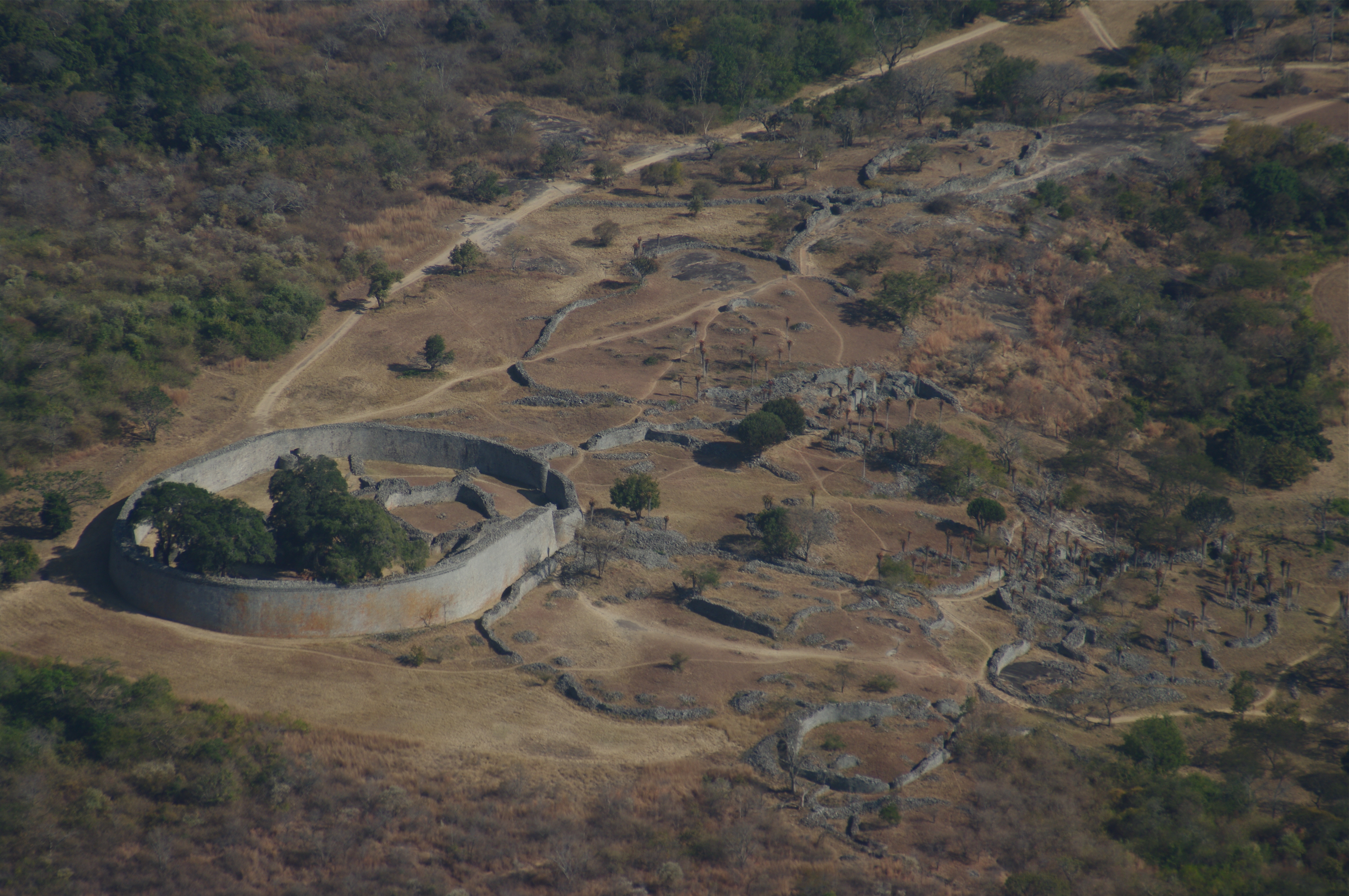
Overview
Great Zimbabwe was a city in the south-eastern hills of the modern country of Zimbabwe, near Masvingo 1Great Zimbabwe — wiki · Wikipedia ↗. The ruins there are some of the oldest and largest structures located in Southern Africa 2Great Zimbabwe — sec4 · Wikipedia ↗. The site is composed of the Hill Complex, the Valley Complex, and the Great Enclosure, which were constructed at different times 1.
Its most formidable edifice, commonly referred to as the Great Enclosure, has walls as high as 11 m (36 ft) extending approximately 250 m (820 ft) 2. These dry stone walls were constructed without mortar and were built during the 13th and 14th centuries; the enclosure likely served as the royal residence, with demarcated public spaces for rituals 1.
Traditional estimates are that Great Zimbabwe had as many as 18,000 inhabitants at its peak 2. The later Gumanye people are considered the ancestors of the Karanga (south-central Shona), who would construct Great Zimbabwe 3Great Zimbabwe — sec3 · Wikipedia ↗.
Great Zimbabwe and surrounding sites were looted by European antiquarians between the 1890s and 1920s 1. The site has since been adopted as a national monument by the Zimbabwean government, and the modern independent state was named after it 1.
The site lies on the eastern coastal plains of the Indian Ocean 4Great Zimbabwe — manyikeni · Reference ↗. Among the stone enclosures of Zimbabwean tradition it stands out as one of the few located relatively near the coast, a position that underscores its role as a coastal trade location 4.
1. Name
The name Zimbabwe is the Shona designation for the ruins, and two derivations have been proposed for it. The first holds that the word comes from Dzimba-dze-mabwe, rendered from Shona as 'large houses of stone', in which dzimba is the plural of imba, 'house', and mabwe the plural of ibwe, 'stone' 5Great Zimbabwe — sec1 · Wikipedia ↗. The second suggests that Zimbabwe is a contracted form of dzimba-hwe, meaning 'venerated houses' in the Zezuru dialect of Shona, a term usually applied to the houses or graves of chiefs 5.
The name is first recorded in 1531 by Vicente Pegado, captain of the Portuguese garrison of Sofala 5. Great Zimbabwe has since been adopted as a national monument by the Zimbabwean government, and the modern independent state was named after it 1.
The city stood in the south-eastern hills of the modern country of Zimbabwe, near Masvingo 1. The Great Zimbabwe area was previously settled by the San, dating back 100,000 years 3. Between the 4th and the 7th centuries communities of the Gokomere or Ziwa cultures farmed the valley, and mined and worked iron, but built no stone structures 3. The site was settled from around 1000 AD, and served as the capital of the Kingdom of Great Zimbabwe from the 13th century 1.
Construction of the stone buildings started in the 11th century and continued for over 300 years 2. The edifices were erected by ancestors of the Shona people, who live in Zimbabwe and nearby countries 1. The ruling dynasty used their wealth to have houses built out of thick daga (earthen daub), rather than daga and poles, and built stone walls to shield themselves from public view 2. The ruins at Great Zimbabwe are some of the oldest and largest structures located in Southern Africa 2.
The central stone enclosure complex belongs to a tradition of architecture distinguished by mortarless stone walls, and the find of a Zimbabwe-style iron gong at the site also suggests cultural ties 4. The Kingdom of Mapungubwe was an ancient state located at the confluence of the Shashe and Limpopo rivers in present day South Africa, south of Great Zimbabwe 6Great Zimbabwe — mapungubwe · Reference ↗. The site is located in the Mapungubwe National Park in South Africa, on the border with Zimbabwe and Botswana 6. In the present day they are often associated with the Kalanga (Shona) and Venda peoples 6.
The site today is covered by the Cenchrus ciliaris grass, commonly found in Zimbabwe but seldom reported in Mozambique 4. Quatz flakes of the late Stone Age type have been found on the site and presumed to predate it 7Great Zimbabwe — ohinga · Reference ↗.
2. Settlement and early occupation
The valley was settled long before the stone buildings rose. San communities occupied the area going back 100,000 years 3. Between the 4th and 7th centuries Gokomere or Ziwa communities farmed the valley and worked iron but built no stone structures 8Great Zimbabwe — sec2 · Wikipedia ↗. The later Gumanye people are considered ancestors of the Karanga (south-central Shona), who would construct Great Zimbabwe 8.
The occupation of the site is conventionally divided into three phases: a first in 1200 AD during which the stone enclosure was under construction, a second spanning 1200-1450 AD that represents the height of occupation, and a final phase extending to 1700 AD that ends with the abandonment of the site 4.
3. Construction and growth
Construction of the stone buildings started in the 11th century and continued for over 300 years2. The Great Enclosure, with its 11 m (36 ft) high dry stone walls constructed without mortar, was built during the 13th and 14th centuries1. It likely served as the royal residence, with demarcated public spaces for rituals1.
The growth of the settlement has been linked to the decline of Mapungubwe from around 13002. A second explanation points to the greater availability of gold in the hinterland of Great Zimbabwe2.
The site lies in the south-eastern hills of the modern country of Zimbabwe, near Masvingo1. The area had been settled by the San long before the stone city rose, a presence dated back 100,000 years3. Between the 4th and the 7th centuries communities of the Gokomere or Ziwa cultures farmed the valley and mined and worked iron, but built no stone structures3. Quartz flakes of the late Stone Age type have been found on the site and are presumed to predate it7.
The city itself was settled from around 1000 AD and served as the capital of the Kingdom of Great Zimbabwe from the 13th century1. The edifices were erected by ancestors of the Shona people, who live in Zimbabwe and nearby countries1. The architecture belongs to the Great Zimbabwe tradition, distinguished by mortarless stone walls, and to the famous Mwenu Mutapa's Kingdom4. The central stone enclosure complex is built in this tradition, and the find of a Zimbabwe-style iron gong at the site also suggests cultural ties4. The ruling dynasty used its wealth to have houses built out of thick daga, earthen daub, rather than daga and poles, and built stone walls to shield themselves from public view2.
Mapungubwe, whose decline is one proposed spur to the city's growth, was an ancient state at the confluence of the Shashe and Limpopo rivers in present day South Africa, south of Great Zimbabwe6. Its site now lies in the Mapungubwe National Park in South Africa, on the border with Zimbabwe and Botswana6. In the present day the people associated with it are often identified as the Kalanga (Shona) and Venda peoples6.
The name Zimbabwe is the Shona name of the ruins, first recorded in 1531 by Vicente Pegado, captain of the Portuguese garrison of Sofala5. One proposed derivation traces it to Dzimba-dze-mabwe, translated from Shona as 'large houses of stone', from dzimba, the plural of imba, 'house', and mabwe, the plural of ibwe, 'stone'5. The conical tower stands inside the Great Enclosure5. The site today is covered by the Cenchrus ciliaris grass, commonly found in Zimbabwe but seldom reported in Mozambique4.
4. Architecture and layout
The Great Enclosure is defined by walls reaching as high as 11 m and extending approximately 250 m2. Within this monumental setting the ruling dynasty directed its wealth toward construction of a distinctive kind2. Houses were built out of thick daga (earthen daub) rather than the humbler combination of daga and poles2. Stone walls were raised to shield the rulers from public view2.
The institutionalisation of Great Zimbabwe's politico-religious ideology served to legitimise the position of the king (mambo)2. That ideology drew a link between leaders, their ancestors, and God (known as Mwari)2.
Construction of the stone buildings began in the 11th century and went on for more than 300 years2. The ruins at Great Zimbabwe rank among the oldest and largest structures in Southern Africa2. The edifices were raised by ancestors of the Shona people, who live in Zimbabwe and nearby countries1. The central stone enclosure complex belongs to a building tradition marked by mortarless stone walls4.
The site lies in the south-eastern hills of the modern country of Zimbabwe, near Masvingo1. It was settled from around 1000 AD and served as the capital of the Kingdom of Great Zimbabwe from the 13th century1. Earlier occupation of the area is attributed to the San, dating back 100,000 years3. Between the 4th and the 7th centuries communities of the Gokomere or Ziwa cultures farmed the valley and mined and worked iron, but built no stone structures3. Flakes of the late Stone Age type have been found on the site and are presumed to predate it7.
The name Zimbabwe is the Shona name of the ruins, first recorded in 1531 by Vicente Pegado, captain of the Portuguese garrison of Sofala5. One proposed derivation traces the word to Dzimba-dze-mabwe, translated from Shona as 'large houses of stone', from dzimba, the plural of imba, 'house', and mabwe, the plural of ibwe, 'stone'5. The conical tower stands inside the Great Enclosure5. The site today is covered by the Cenchrus ciliaris grass, commonly found in Zimbabwe but seldom reported in Mozambique4.
Comparable stone-walled settlements lie elsewhere in the region. The Kingdom of Mapungubwe was an ancient state at the confluence of the Shashe and Limpopo rivers in present day South Africa, south of Great Zimbabwe6. Its site is located in the Mapungubwe National Park in South Africa, on the border with Zimbabwe and Botswana6. In the present day such remains are often associated with the Kalanga (Shona) and Venda peoples6. The find of a Zimbabwe-style iron gong at another site suggests cultural ties with this tradition4.
Distant stone settlements invite comparison but remain contested. Thimlich Ohinga is the largest of 138 sites containing 521 stone structures built near Lake Victoria in Kenya7. Some debate exists with regard to the origin and builders of Thimlich Ohinga and the other stone walled settlements7. On the Kenyan coast, Malindi has been an important Swahili settlement since the 14th century, and the city once rivalled Mombasa for dominance in the African Great Lakes region9Great Zimbabwe — kenya · Reference ↗. The Portuguese voyager Duarte Barbosa wrote by the 15th century that Mombasa is a place of great traffic and has a good harbour in which there are always moored small craft of many kinds and also great ships, both of which are bound from Sofala and others which come from Cambay and Melinde and others which sail to the island of Zanzibar9.
5. Population and scale
Traditional estimates are that Great Zimbabwe had as many as 18,000 inhabitants at its peak 2. The Zimbabwe state centred on it likely covered 50,000 km² (19,000 sq mi) 1. To the north, Great Zimbabwe, on the fringe of the Mapungubwe state and with a distinct population, rose to become its successor, adopting the same elitist spatial arrangement and sacred leadership 6.
Great Zimbabwe lies in the south-eastern hills of the modern country of Zimbabwe, near Masvingo 1. The area had been settled by the San long before, dating back 100,000 years 3. Between the 4th and the 7th centuries communities of the Gokomere or Ziwa cultures farmed the valley and mined and worked iron, though they built no stone structures 3. The site itself was settled from around 1000 AD and served as the capital of the Kingdom of Great Zimbabwe from the 13th century 1. Construction of the stone buildings began in the 11th century and continued for over 300 years 2. The edifices were erected by ancestors of the Shona people, who live in Zimbabwe and nearby countries 1.
The ruins are among the oldest and largest structures in Southern Africa 2. The ruling dynasty used its wealth to have houses built out of thick daga rather than daga and poles, and built stone walls to shield themselves from public view 2. The name Zimbabwe is the Shona name of the ruins, first recorded in 1531 by Vicente Pegado, captain of the Portuguese garrison of Sofala 5. One proposed derivation traces the word to Dzimba-dze-mabwe, translated from Shona as 'large houses of stone' 5.
The Kingdom of Mapungubwe was an ancient state at the confluence of the Shashe and Limpopo rivers in present day South Africa, south of Great Zimbabwe 6. Its site lies in the Mapungubwe National Park, on the border with Zimbabwe and Botswana 6. In the present day its people are often associated with the Kalanga (Shona) and Venda peoples 6.
The Great Zimbabwe tradition of architecture is distinguished by mortarless stone walls, and the central stone enclosure complex is built in this tradition; the find of a Zimbabwe-style iron gong at the site also suggests cultural ties 4. The site today is covered by the Cenchrus ciliaris grass, commonly found in Zimbabwe but seldom reported in Mozambique 4. Quartz flakes of the late Stone Age type have been found on the site and are presumed to predate it 7.
6. Decline and legacy
Great Zimbabwe and surrounding sites were looted by European antiquarians between the 1890s and 1920s1. The city itself stood in the south-eastern hills of the modern country of Zimbabwe, near Masvingo1. In later years Great Zimbabwe has been adopted as a national monument by the Zimbabwean government, and the modern independent state was named after it1.
The name Zimbabwe is the Shona designation for the ruins and was first recorded in 1531 by Vicente Pegado, captain of the Portuguese garrison of Sofala5. One etymology derives the word from Dzimba-dze-mabwe, rendered from Shona as 'large houses of stone', where dzimba is the plural of imba, 'house', and mabwe the plural of ibwe, 'stone'5.
The Great Zimbabwe area had been settled by the San long before the stone city, with occupation dating back 100,000 years3. Between the 4th and the 7th centuries communities of the Gokomere or Ziwa cultures farmed the valley and mined and worked iron, though they built no stone structures3. The site was settled from around 1000 AD and served as the capital of the Kingdom of Great Zimbabwe from the 13th century1. Construction of the stone buildings began in the 11th century and continued for over 300 years2. The edifices were erected by ancestors of the Shona people, who live in Zimbabwe and nearby countries1. The ruling dynasty used its wealth to have houses built of thick daga, earthen daub, rather than daga and poles, and raised stone walls to shield itself from public view2.
The growth of the city has been linked to the decline of Mapungubwe from around 1300, or to the greater availability of gold in the hinterland of Great Zimbabwe2. Mapungubwe was an ancient state at the confluence of the Shashe and Limpopo rivers in present day South Africa, south of Great Zimbabwe, and its people are in the present day often associated with the Kalanga (Shona) and Venda peoples6. The ruins at Great Zimbabwe are among the oldest and largest structures in Southern Africa2.
Related stone-building traditions extend beyond the city itself. Manyikeni is believed to belong to the Great Zimbabwe tradition of architecture, distinguished by mortarless stone walls, and to the famous Mwenu Mutapa's Kingdom4. The central stone enclosure complex at Great Zimbabwe is built in this tradition, and the find of a Zimbabwe-style iron gong at Manyikeni also suggests cultural ties4. The site of Manyikeni today is covered by the Cenchrus ciliaris grass, commonly found in Zimbabwe but seldom reported in Mozambique4.
7. Related sites and cultural context
Thimlich Ohinga is the largest of 138 sites containing 521 stone structures that were built near Lake Victoria in Kenya7. The two complexes differ in technique: unlike Great Zimbabwe, Thimlich Ohinga was constructed using unshaped and random loose stones made from local basalt7.
To the north, Great Zimbabwe stood on the fringe of the Mapungubwe state and held a distinct population of its own6. In time it rose to become that state's successor6. The transition carried over a shared political and ceremonial order, with Great Zimbabwe adopting the same elitist spatial arrangement and sacred leadership6.
Great Zimbabwe was a city in the south-eastern hills of the modern country of Zimbabwe, near Masvingo1. The area had been settled by the San long before, dating back 100,000 years3. Between the 4th and the 7th centuries communities of the Gokomere or Ziwa cultures farmed the valley and mined and worked iron, but built no stone structures3. The site was settled from around 1000 AD and served as the capital of the Kingdom of Great Zimbabwe from the 13th century1. Construction of the stone buildings started in the 11th century and continued for over 300 years2. The edifices were erected by ancestors of the Shona people, who live in Zimbabwe and nearby countries1.
The ruling dynasty used their wealth to have houses built out of thick daga (earthen daub), rather than daga and poles, and built stone walls to shield themselves from public view2. Zimbabwe is the Shona name of the ruins, first recorded in 1531 by Vicente Pegado, captain of the Portuguese garrison of Sofala5. One proposal derives the word from Dzimba-dze-mabwe, translated from Shona as 'large houses of stone' (dzimba = plural of imba, 'house'; mabwe = plural of ibwe, 'stone')5.
Great Zimbabwe and surrounding sites were looted by European antiquarians between the 1890s and 1920s1.
The Kingdom of Mapungubwe (pronounced mah-POON-goob-weh) was an ancient state located at the confluence of the Shashe and Limpopo rivers in present day South Africa, south of Great Zimbabwe6. The site is located in the Mapungubwe National Park in South Africa, on the border with Zimbabwe and Botswana6. In the present day its people are often associated with the Kalanga (Shona) and Venda peoples6.
Manyikeni is believed to be part of the Great Zimbabwe tradition of architecture, distinguished by mortarless stone walls, and part of the famous Mwenu Mutapa's Kingdom4. Its central stone enclosure complex is built in this tradition, and the find of a Zimbabwe-style iron gong at the site also suggests cultural ties4. The site today is covered by the Cenchrus ciliaris grass, commonly found in Zimbabwe but seldom reported in Mozambique4.
At Thimlich Ohinga and at Great Zimbabwe mortar and dressing were not used, and therefore great care and skill was needed to ensure stability7. Quartz flakes of the late Stone Age type have been found on the site and presumed to predate it7. On the Kenyan coast, Malindi has been an important Swahili settlement since the 14th century, and the city once rivalled Mombasa for dominance in the African Great Lakes region9. By the 15th century the Portuguese voyager Duarte Barbosa wrote that Mombasa is a place of great traffic and has a good harbour in which there are always moored small craft of many kinds and also great ships, both of which are bound from Sofala and others which come from Cambay and Melinde and others which sail to the island of Zanzibar9.
8. Excavation
The stone enclosure was excavated for the first time in 1975 and 1976 shortly after Mozambique independence by the Eduardo Mondlande University Centre for African Studies and the British Institute in Eastern Africa to 19784.
The ruins lie in the south-eastern hills of the modern country of Zimbabwe, near Masvingo1. They are among the oldest and largest structures in Southern Africa2. The stone buildings were begun in the 11th century and construction continued for over 300 years2. The area was settled from around 1000 AD and served as the capital of the Kingdom of Great Zimbabwe from the 13th century1. The edifices were erected by ancestors of the Shona people, who live in Zimbabwe and nearby countries1.
Earlier occupation of the valley is attested by communities of the Gokomere or Ziwa cultures, who between the 4th and the 7th centuries farmed the valley and mined and worked iron but built no stone structures3. The Great Zimbabwe area was previously settled by the San, dating back 100,000 years3. Quartz flakes of the late Stone Age type have been found on the site and presumed to predate it7.
The architecture belongs to the Great Zimbabwe tradition, distinguished by mortarless stone walls, and is associated with the Mwenu Mutapa's Kingdom4. The central stone enclosure complex is built in this tradition, and the find of a Zimbabwe-style iron gong at the site also suggests cultural ties4. The ruling dynasty used their wealth to have houses built out of thick daga (earthen daub), rather than daga and poles, and built stone walls to shield themselves from public view2. The site today is covered by the Cenchrus ciliaris grass, commonly found in Zimbabwe but seldom reported in Mozambique4.
The name Zimbabwe is the Shona name of the ruins, first recorded in 1531 by Vicente Pegado, captain of the Portuguese garrison of Sofala5. One proposal derives the word from Dzimba-dze-mabwe, translated from Shona as 'large houses of stone' (dzimba = plural of imba, 'house'; mabwe = plural of ibwe, 'stone')5.
Comparable stone-walled settlements lie elsewhere in the region. The Kingdom of Mapungubwe was an ancient state at the confluence of the Shashe and Limpopo rivers in present day South Africa, south of Great Zimbabwe6; the site is located in the Mapungubwe National Park in South Africa, on the border with Zimbabwe and Botswana6, and in the present day these remains are often associated with the Kalanga (Shona) and Venda peoples6. Great Zimbabwe is the largest of 138 sites containing 521 stone structures that were built near Lake Victoria in Kenya7, and some debate exists with regard to the origin and builders of Thimlich Ohinga and the other stone walled settlements7.
9. Key dates
- 1000It was settled from around 1000 AD, and served as the capitalIt was settled from around 1000 AD, and served as the capital of the Kingdom of Great Zimbabwe from the 13th century.
- 1200This occupation period is typically broken up into three periods: 1200 ADThis occupation period is typically broken up into three periods: 1200 AD in which the stone enclosure was being built; 1200-1450 AD in which consists of the height of occupation; and to 1700 AD in which the site was abandoned.
- 1300Its growth has been linked to the decline of Mapungubwe from aroundIts growth has been linked to the decline of Mapungubwe from around 1300, or the greater availability of gold in the hinterland of Great Zimbabwe.
- 1531Name Main article: Name of Zimbabwe The conical tower inside the GreatName Main article: Name of Zimbabwe The conical tower inside the Great Enclosure at Great Zimbabwe Zimbabwe is the Shona name of the ruins, first recorded in 1531 by Vicente Pegado, captain of the Portuguese garrison of Sofala .
- 1975The stone enclosure was excavated for the first time in 1975 andThe stone enclosure was excavated for the first time in 1975 and 1976, shortly after Mozambique independence by the Eduardo Mondlande University Centre for African Studies and the British Institute in Eastern Africa to 1978.
10. Frequently asked questions
When was the name Zimbabwe first recorded, and by whom?
The name was first recorded in 1531 by Vicente Pegado, captain of the Portuguese garrison of Sofala 5.
Who built the stone structures at Great Zimbabwe?
The edifices were erected by ancestors of the Shona people, who live in Zimbabwe and nearby countries 1.
How far is the related site of Manyikeni from Great Zimbabwe?
Manyikeni lies 350 km from Great Zimbabwe, the capital of a large, pre-colonial empire active from at least the 11th through the 14th centuries 4.
What plant cover is found at Manyikeni, and what has been suggested about it?
What evidence links Manyikeni culturally to Great Zimbabwe?
The central stone enclosure complex at Manyikeni is built in the Great Zimbabwe tradition, and the find of a Zimbabwe-style iron gong at the site also suggests cultural ties 4.
References (9)
- 1Great Zimbabwe — wiki — Wikipedia Web↩View source
- 2Great Zimbabwe — sec4 — Wikipedia Web↩View source
- 3Great Zimbabwe — sec3 — Wikipedia Web↩View source
- 4Great Zimbabwe — manyikeni — Reference Web↩View source
- 5Great Zimbabwe — sec1 — Wikipedia Web↩View source
- 6Great Zimbabwe — mapungubwe — Reference Web↩View source
- 7Great Zimbabwe — ohinga — Reference Web↩View source
- 8Great Zimbabwe — sec2 — Wikipedia Web↩View source
- 9Great Zimbabwe — kenya — Reference Web↩View source