Petra
A capital carved into rose-red cliffs and then abandoned.
In this article
- 1Overview
- 2Early settlement and Edomite period
- 3Nabataean emergence and the founding of Raqmu
- 4Antigonid confrontations
- 5The Nabataean Kingdom and its extent
- 6Religion and deities
- 7Architecture and monuments
- 8Roman and Byzantine period
- 9Crusader and Mamluk period
- 10Related Nabataean sites and the wider region
- 11Key dates
- 12Frequently asked questions
- 13Knowledge graph
Overview
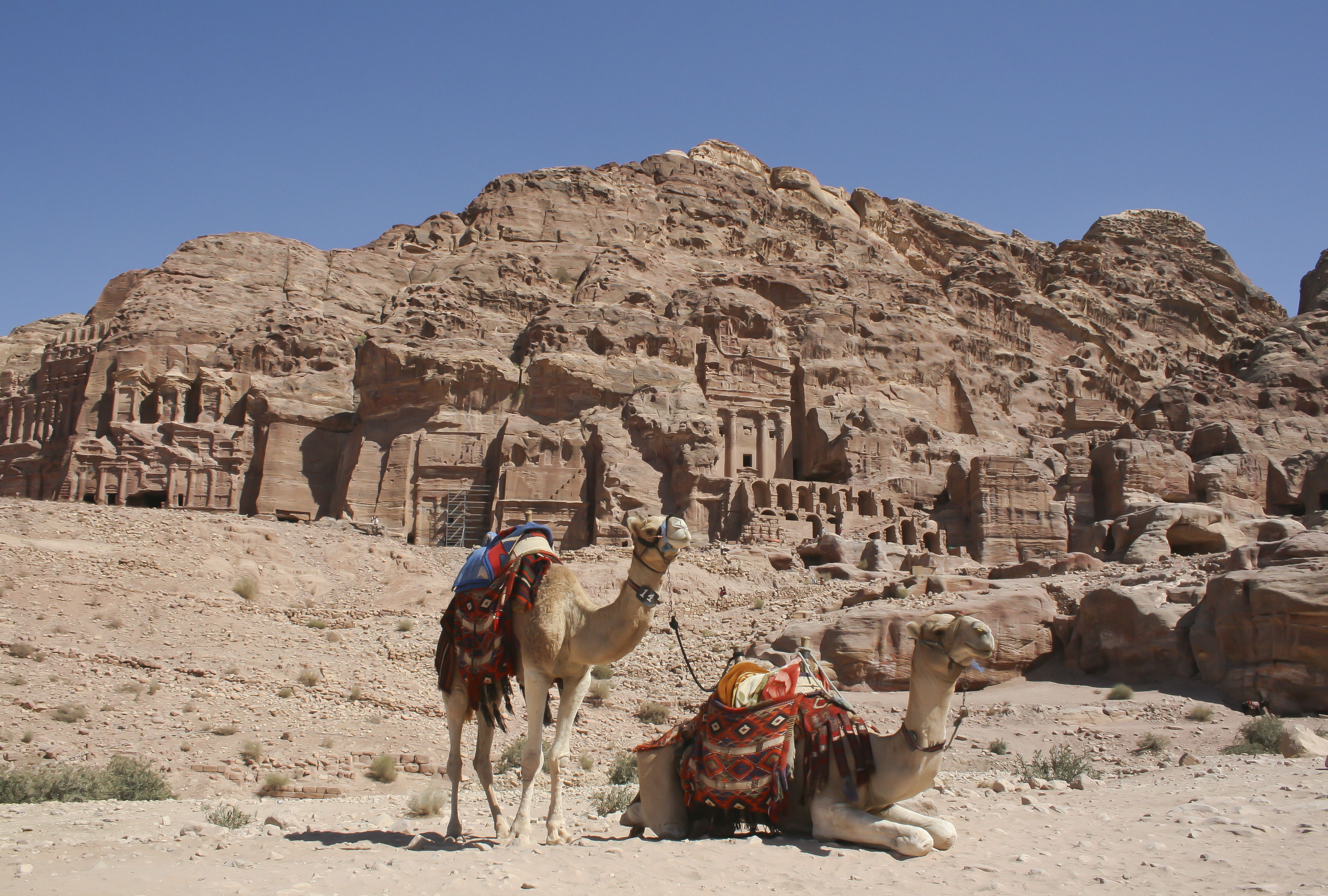
It is famous for its rock-cut architecture and water conduit systems, and is also called the "Rose City" because of the colour of the sandstone from which it is carved1Petra · Wikipedia ↗.
The area around Petra has been inhabited from as early as 7000 BC and was settled by the Nabataeans, a nomadic Arab people, in the 4th century BC1. The Nabataeans were one among several nomadic Bedouin tribes that roamed the Arabian Desert and moved with their herds to wherever they could find pasture and water1. A majority of the remains date from the time of the Nabataean Kingdom, when the city was founded2Hegra · Wikipedia ↗.
The Nabataean Kingdom, also named Nabatea, was a political state of the Nabataean Arabs during classical antiquity3Nabataean Kingdom · Wikipedia ↗. It stretched south along the Tihamah into the Hejaz, up as far north as Damascus, which it controlled for a short period (85–71 BC)3. The Nabataean religion was a form of Arab polytheism practiced in Nabataea, an ancient Arab nation that was well established by the third century BCE and lasted until the Roman annexation in 106 CE4Nabataean religion · Wikipedia ↗. Much knowledge of Nabataean grave goods has been lost due to extensive looting throughout history4. The Antigonid–Nabataean confrontations were three confrontations initiated by Greek general Antigonus I against the Arab Nabataeans in 312 BC5Antigonid–Nabataean confrontations · Wikipedia ↗.
Nabataean architecture refers to the building traditions of the Nabateans, an ancient Arab people who inhabited northern Arabia and the southern Levant6Nabataean architecture · Wikipedia ↗. Their settlements—most prominently the assumed capital city of Raqmu (present-day Petra, Jordan)—gave the name Nabatene to the Arabian borderland that stretched from the Euphrates to the Red Sea7Nabataeans · Wikipedia ↗. Nabataean architecture is found across ancient settlements in northwestern Arabia, as well as throughout the Southern Levant including the Hauran region and the Negev Desert, reflecting the broad geographic reach of Nabataean civilization6. The Nabataeans are known for finely-potted painted ceramics, which became dispersed among the Greco-Roman world, as well as contributions to sculpture and Nabataean architecture8Nabataean art · Wikipedia ↗.
Within the site, the Great Temple at Petra is a grand monumental complex that lies south of the Colonnaded Street9Great Temple (Petra) · Wikipedia ↗. Arguably one of the most iconic ancient Arab monuments in the Petra Archaeological Park, the monastery is located high in the hills northwest of the Petra city center10Ed-Deir, Petra · Wikipedia ↗. Like Petra, Little Petra is a Nabataean site, with buildings carved into the walls of the sandstone canyons11Little Petra · Wikipedia ↗. The ancient city of Halasa, Elusa in the Byzantine period, was a city in the Negev near present-day Kibbutz Mash'abei Sadeh that was once part of the Nabataean Incense Route12Elusa (Haluza) · Wikipedia ↗. After the Roman annexation the province's capital city was initially Petra, as it had been under the Nabataeans, but Bosra later served in this capacity13Arabia Petraea · Wikipedia ↗.
1. Early settlement and Edomite period
The Petra area preserves traces of habitation reaching back to the Neolithic. By 7000 BC some of the earliest recorded farmers had settled at Beidha, a Pre-Pottery Neolithic site in the vicinity4.
During the Iron Age the area fell within the sphere of the Edomites. The Iron Age lasted between 1200 and 600 BC, and throughout that span the Petra area was occupied by the Edomites1.
The physical setting shaped how the Edomites held the land.
Habitation in the Petra area reaches back as early as 7000 BC1. The Nabataeans, a nomadic Arab people, settled the site in the 4th century BC6. The ancient city itself was founded by the Nabateans, probably in the late 4th or early 3rd century BCE5.
Raqmu, as Petra was known, is the assumed capital of the Nabataean settlements1. Nabataean architecture is found across ancient settlements in northwestern Arabia and throughout the Southern Levant, including the Hauran region and the Negev Desert, a distribution that reflects the broad geographic reach of Nabataean civilization6. The settlements gave the name Nabatene to the Arabian borderland stretching from the Euphrates to the Red Sea7.
The Nabataean Kingdom extended south along the Tihamah into the Hejaz and north as far as Damascus, which it controlled for a short period between 85 and 71 BC3.
2. Nabataean emergence and the founding of Raqmu
The Nabataeans were one among several nomadic Bedouin tribes that roamed the Arabian Desert and moved with their herds to wherever they could find pasture and water 1. The area around Petra was settled by the Nabataeans, a nomadic Arab people, in the 4th century BC 1. The ancient site itself was founded by the Nabateans, probably in the late 4th or early 3rd century BCE 12. The Nabataean religion was a form of Arab polytheism practiced in Nabataea, an ancient Arab nation that was well established by the third century BCE 2.
The Antigonid–Nabataean confrontations were three confrontations initiated by Greek general Antigonus I against the Arab Nabataeans in 312 BC 8. In the 12th century the Crusaders built fortresses such as the Alwaeira Castle but were forced to abandon Pet 10.
The Nabataeans were one among several nomadic Bedouin tribes that roamed the Arabian Desert and moved with their herds to wherever they could find pasture and water 1. Their settlements—most prominently the assumed capital city of Raqmu (present-day Petra, Jordan)—gave the name Nabatene to the Arabian borderland that stretched from the Euphrates to the Red Sea 7. Nabataean architecture, the building traditions of this ancient Arab people who inhabited northern Arabia and the southern Levant, is found across ancient settlements in northwestern Arabia, as well as throughout the Southern Levant including the Hauran region and the Negev Desert, reflecting the broad geographic reach of Nabataean civilization 6.
The Nabataean Kingdom was a political state of the Nabataean Arabs during classical antiquity 3. It stretched south along the Tihamah into the Hejaz, up as far north as Damascus, which it controlled for a short period (85–71 BC) 3. Petra is the archaeological site of the Nabataean kingdom capital, carved in the desert rock of (Trans)Jordan 14Petra (disambiguation) · Wikipedia ↗. A majority of the remains date from the time of the Nabataean Kingdom, when the city was founded 2.
Reaching Edom, just north of Petra, Antigonus became aware of the wealth of the Nabataeans, generated from the spice trade caravans 5. The Nabataeans are known for finely-potted painted ceramics, which became dispersed among the Greco-Roman world, as well as contributions to sculpture and Nabataean architecture 8. Nabataean art is most well known for the archaeological sites in Petra, specifically monuments such as Al Khazneh and Ad Deir 8. Dushara and al-Uzza were two of the principal deities of the city, which otherwise included many idols from other Nabataean deities such as Allat and Manat 1. Much knowledge of Nabataean grave goods has been lost due to extensive looting throughout history 4.
3. Antigonid confrontations
The Antigonid–Nabataean confrontations were three confrontations initiated by Greek general Antigonus I against the Arab Nabataeans in 312 BC5. Reaching Edom, just north of Petra, Antigonus became aware of the wealth of the Nabataeans, generated from the spice trade caravans5.
The Nabataeans were one among several nomadic Bedouin tribes that roamed the Arabian Desert and moved with their herds to wherever they could find pasture and water1.
The Nabataeans were an ancient Arab people who inhabited northern Arabia and the southern Levant6. Their building traditions, known as Nabataean architecture, are found across ancient settlements in northwestern Arabia and throughout the Southern Levant, including the Hauran region and the Negev Desert, reflecting the broad geographic reach of Nabataean civilization6. Their settlements gave the name Nabatene to the Arabian borderland that stretched from the Euphrates to the Red Sea7.
The Nabataean Kingdom was a political state of the Nabataean Arabs during classical antiquity3. It stretched south along the Tihamah into the Hejaz and as far north as Damascus, which it controlled for a short period (85–71 BC)3. The Nabataean religion was a form of Arab polytheism practiced in Nabataea, an ancient Arab nation well established by the third century BCE and lasting until the Roman annexation in 106 CE4. Much knowledge of Nabataean grave goods has been lost to extensive looting throughout history4.
The area around Petra has been inhabited from as early as 7000 BC and was settled by the Nabataeans, a nomadic Arab people, in the 4th century BC1. A majority of the remains date from the time of the Nabataean Kingdom, when the city was founded2. Petra is the archaeological site of the Nabataean kingdom capital, carved in the desert rock of (Trans)Jordan14, and its assumed capital city was Raqmu, present-day Petra in Jordan6. Famous for its rock-cut architecture and water conduit systems, Petra is also called the "Rose City" because of the colour of the sandstone from which it is carved1.
The Nabataeans are known for finely-potted painted ceramics, which became dispersed among the Greco-Roman world, as well as for contributions to sculpture and Nabataean architecture8. Arguably one of the most iconic ancient Arab monuments in the Petra Archaeological Park, the monastery is located high in the hills northwest of the Petra city center10. The Great Temple at Petra is a grand monumental complex lying south of the Colonnaded Street9. Like Petra, Little Petra is a Nabataean site with buildings carved into the walls of the sandstone canyons11.
The ancient city of Halasa, Elusa in the Byzantine period, was a city in the Negev near present-day Kibbutz Mash'abei Sadeh that was once part of the Nabataean Incense Route12. When the province of Arabia Petraea was organized, its capital was initially Petra, as it had been under the Nabataeans, but Bosra later served in this capacity13.
4. The Nabataean Kingdom and its extent
The Nabataean Kingdom was the political state of the Nabataean Arabs in classical antiquity, and its territory reached south along the Tihamah into the Hejaz and north as far as Damascus, which it controlled for a short period between 85 and 71 BC.7
The settlements of this people were numerous, most prominently the assumed capital city of Raqmu, the site of present-day Petra in Jordan.6
Nabataean architecture is found across ancient settlements in northwestern Arabia, as well as throughout the Southern Levant including the Hauran region and the Negev Desert, reflecting the broad geographic reach of Nabataean civilization.6
From these settlements the name Nabatene, rendered in Ancient Greek as Ναβατηνή (Nabatēnḗ), was given to the Arabian borderland that stretched from the Euphrates to the Red Sea.7
The area around Petra has been inhabited from as early as 7000 BC and was settled by the Nabataeans, a nomadic Arab people, in the 4th century BC.1 The ancient site itself was founded by the Nabateans, probably in the late 4th or early 3rd century BCE.5 The Nabataeans were one among several nomadic Bedouin tribes that roamed the Arabian Desert and moved with their herds to wherever they could find pasture and water.1
Petra would later become the capital city of the Nabataean Kingdom in the second century BC.1 The city is the archaeological site of that kingdom's capital, carved in the desert rock of (Trans)Jordan.14 A majority of the remains date from the time of the Nabataean Kingdom, when the city was founded.2
The Nabataean religion was a form of Arab polytheism practiced in Nabataea, an ancient Arab nation that was well established by the third century BCE and lasted until the Roman annexation in 106 CE.4 Much knowledge of Nabataean grave goods has been lost due to extensive looting throughout history.4
The Antigonid–Nabataean confrontations were three confrontations initiated by Greek general Antigonus I against the Arab Nabataeans in 312 BC.5 The Nabataeans are known for finely-potted painted ceramics, which became dispersed among the Greco-Roman world, as well as contributions to sculpture and Nabataean architecture.8 Nabataean art is most well known for the archaeological sites in Petra, specifically monuments such as Al Khazneh and Ad Deir.8
The ancient city of Halasa, Elusa (Ἐλοῦσα) in the Byzantine period, was a city in the Negev near present-day Kibbutz Mash'abei Sadeh that was once part of the Nabataean Incense Route.12 The province's capital city was initially Petra, as it had been under the Nabataeans, but Bosra later served in this capacity.13
5. Religion and deities
The religion of Petra belonged to the wider Nabataean tradition, a form of Arab polytheism practiced in Nabataea4. Nabataea was an ancient Arab nation well established by the third century BCE and lasting until the Roman annexation in 106 CE4.
Dushara and al-Uzza stood among the principal deities of the city1. The city's pantheon otherwise included many idols from other Nabataean deities such as Allat and Manat1.
The material record of Nabataean belief is uneven. Much knowledge of Nabataean grave goods has been lost due to extensive looting throughout history4.
6. Architecture and monuments
Nabataean architecture refers to the building traditions of the Nabateans, an ancient Arab people who inhabited northern Arabia and the southern Levant 6.
Among the monuments of the Petra Archaeological Park, Ad Deir, known as the monastery, stands high in the hills northwest of the Petra city center 10. It is arguably one of the most iconic ancient Arab monuments in the park 10.
The Nabateans are known for finely-potted painted ceramics, which became dispersed among the Greco-Roman world, as well as for their contributions to sculpture and to Nabataean architecture 8. Nabataean art is most well known for the archaeological sites in Petra, specifically monuments such as Al Khazneh and Ad Deir 8.
Petra is famous for its rock-cut architecture and water conduit systems, and it is also called the "Rose City" because of the colour of the sandstone from which it is carved 1.
The settlements of the Nabateans, most prominently the assumed capital city of Raqmu (present-day Petra, Jordan), carry Nabataean architecture across ancient settlements in northwestern Arabia, as well as throughout the Southern Levant including the Hauran region and the Negev Desert, reflecting the broad geographic reach of Nabataean civilization 6.
7. Roman and Byzantine period
The Nabataean Kingdom was a political state of the Nabataean Arabs during classical antiquity3 and stretched south along the Tihamah into the Hejaz, up as far north as Damascus, which it controlled for a short period (85–71 BC)3. Their settlements—most prominently the assumed capital city of Raqmu (present-day Petra, Jordan)—gave the name Nabatene to the Arabian borderland that stretched from the Euphrates to the Red Sea7.
The ancient site was founded by the Nabateans, probably in the late 4th or early 3rd century BCE5. The Nabataean religion was a form of Arab polytheism practiced in Nabataea, an ancient Arab nation that was well established by the third century BCE and lasted until the Roman annexation in 106 CE4. The Nabateans are known for finely-potted painted ceramics, which became dispersed among the Greco-Roman world, as well as contributions to sculpture and Nabataean architecture8.
A Roman bronze coin of Geta shows the Petra temple with a statue of Tyche6. In the 3rd century BC the city was conquered by the Greeks and renamed Philadelphia, later part of the Nabataean, and the Roman realms9.
The ancient city of Halasa, Elusa in the Byzantine period, was a city in the Negev near present-day Kibbutz Mash'abei Sadeh that was once part of the Nabataean Incense Route12. Two further Crusader-period castles are known in and around Petra: the first is al-Wu'ayra, situated just north of Wadi Musa1.
8. Crusader and Mamluk period
9. Related Nabataean sites and the wider region
Hegra lay at the kingdom's southernmost extent and ranked as its second largest city after the capital, Petra in modern-day Jordan2. Like Petra it is a Nabataean site whose buildings were carved into the walls of the sandstone canyons2.
Elusa, called Halasa in the Byzantine period, stood in the Negev near present-day Kibbutz Mash'abei Sadeh and was once part of the Nabataean Incense Route12.
The Nabataean Kingdom was a political state of the Nabataean Arabs during classical antiquity3. At its height it stretched south along the Tihamah into the Hejaz and north as far as Damascus, which it controlled for a short period (85–71 BC)3. The Nabataeans themselves were one among several nomadic Bedouin tribes that roamed the Arabian Desert and moved with their herds to wherever they could find pasture and water1.
Nabataean building traditions belong to an ancient Arab people who inhabited northern Arabia and the southern Levant6. Their settlements are most prominently associated with the assumed capital city of Raqmu, present-day Petra in Jordan, but Nabataean architecture is found across ancient settlements in northwestern Arabia and throughout the Southern Levant, including the Hauran region and the Negev Desert6. Nabataean art is best known from the archaeological sites at Petra, specifically monuments such as Al Khazneh and Ad Deir8. The Nabataeans are also known for finely potted painted ceramics, which became dispersed among the Greco-Roman world, as well as for contributions to sculpture and architecture8.
The Antigonid–Nabataean confrontations were three confrontations initiated by the Greek general Antigonus I against the Arab Nabataeans in 312 BC5. Reaching Edom, just north of Petra, Antigonus became aware of the wealth of the Nabataeans, generated from the spice trade caravans5.
The Nabataean religion was a form of Arab polytheism practiced in Nabataea, an ancient Arab nation well established by the third century BCE and lasting until the Roman annexation in 106 CE4. Dushara and al-Uzza were two of the principal deities of the city, which otherwise included many idols from other Nabataean deities such as Allat and Manat1. Much knowledge of Nabataean grave goods has been lost through extensive looting over the course of history4.
After the annexation the province's capital was initially Petra, as it had been under the Nabataeans, but Bosra later served in this capacity13. In the 3rd century BC the city of Amman was conquered by the Greeks and renamed Philadelphia, later part of the Nabataean and the Roman realms15Amman · Wikipedia ↗.
10. Key dates
- 7000 BCEHistory Neolithic Cliffs near Petra, View over Wadi Arabah By 7000 BCHistory Neolithic Cliffs near Petra, View over Wadi Arabah By 7000 BC, some of the earliest recorded farmers had settled in Beidha , a Pre-Pottery Neolithic settlement just north of Petra.
- 312 BCEThe Antigonid–Nabataean confrontations were three confrontations initiatedThe Antigonid–Nabataean confrontations were three confrontations initiated by Greek general Antigonus I against the Arab Nabataeans in 312 BC.
- 71 BCEThe Nabataean Kingdom stretched south along the Tihamah into the Hejaz, upThe Nabataean Kingdom stretched south along the Tihamah into the Hejaz, up as far north as Damascus, which it controlled for a short period .
- 1200Iron Age Edom The Iron Age lasted between 1200 and 600 BCIron Age Edom The Iron Age lasted between 1200 and 600 BC; in that time, the Petra area was occupied by the Edomites .
11. Frequently asked questions
What was Petra called in Nabataean times?
Current evidence suggests that the Nabataean name for Petra was Raqēmō, variously spelled in inscriptions as rqmw or rqm1.
When did Petra become the capital of the Nabataean Kingdom?
Petra would later become the capital city of the Nabataean Kingdom in the second century BC1.
Which monuments at Petra are most associated with Nabataean art?
Nabataean art is most well known for the archaeological sites in Petra, specifically monuments such as Al Khazneh and Ad Deir8.
How does Ad Deir rank among Petra's monuments for visitors?
It is the second most commonly visited monument in Petra, after the Khazneh or "Treasury"10.
What is the Great Temple at Petra and when was it completed?
What became of the name Petra in earlier usage?
The old meaning, which was in use up to around the early 20th century, covered almost the entire length of what today is called the Jordan Rift Valley2.
References (15)
- 1Petra — Wikipedia Web↩View source
- 2Hegra — Wikipedia Web↩View source
- 3Nabataean Kingdom — Wikipedia Web↩View source
- 4Nabataean religion — Wikipedia Web↩View source
- 5Antigonid–Nabataean confrontations — Wikipedia Web↩View source
- 6Nabataean architecture — Wikipedia Web↩View source
- 7Nabataeans — Wikipedia Web↩View source
- 8Nabataean art — Wikipedia Web↩View source
- 9Great Temple (Petra) — Wikipedia Web↩View source
- 10Ed-Deir, Petra — Wikipedia Web↩View source
- 11Little Petra — Wikipedia Web↩View source
- 12Elusa (Haluza) — Wikipedia Web↩View source
- 13Arabia Petraea — Wikipedia Web↩View source
- 14Petra (disambiguation) — Wikipedia Web↩View source
- 15Amman — Wikipedia Web↩View source