Honey Bee
Colony, swarming and robbers, from a beekeeper's cyclopedia.
Root's cyclopedia describes the honey bee as a colony of queens, drones and workers, treats the races of Europe, Africa and the East, and gives long practical entries on swarming, robbing, the wax moth and the queen cells.
Overview
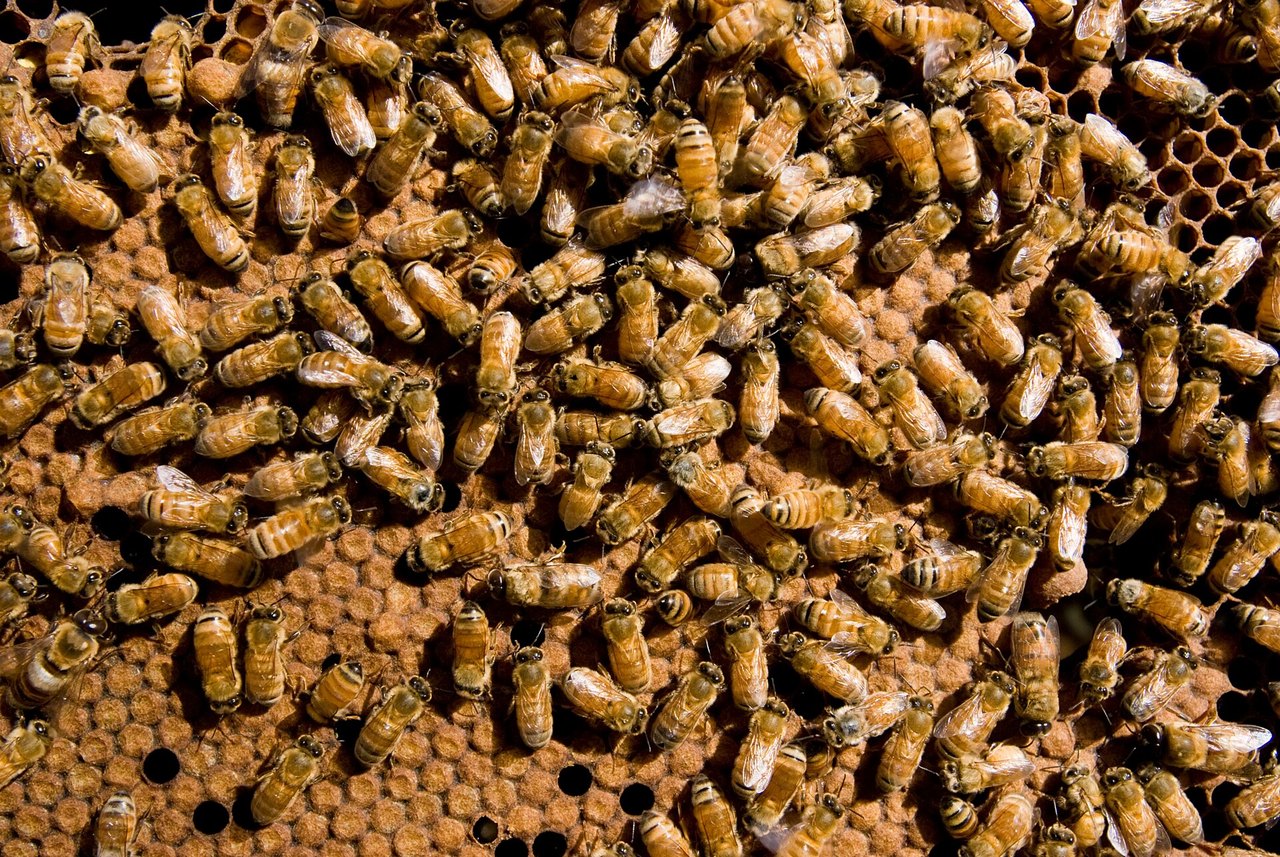
Root's account of the honey bee begins with the colony rather than the individual, and the colony is made up of distinct kinds of bee. The drones are only slightly larger than the workers, jet-like blue-black without yellow, their strong wings showing changing hues like those of wasps. The queens are large in proportion to their workers and quite prolific, coloured leather or dark copper. Between these extremes stand the workers, whose character Root describes through the contrast between strains: some bees are much more nervous, and when a hive of them is opened they run like a flock of sheep from one corner of the hive to another, boiling over in confusion, hanging in clusters from one corner of the frame as it is held up, and finally falling off in bunches to the ground, where they continue a wild scramble in every direction, probably crawling up one's trousers-leg if the opportunity offers. The development of a bee occupies three days in the egg, six in the larval state, and twelve days sealed up, a timetable Root commends to the keeper who needs to discover just when a queen was lost or a colony swarmed. 1The ABC and XYZ of Bee Culture: a cyclopedia of everything pertaining to the care of the honey-bee · A. I. Root Co., Medina, Ohio (via Internet Archive) ↗
Where the colony lives is a matter of some variety. It sometimes happens that a colony takes its abode in some fine shade tree in a park, which the authorities will not allow to be cut; or the bees domicile in the woods of some farmer who, while he will allow the bee-hunter to get the bees, will not let him cut the tree; or, as it often happens, a colony makes its home between the plaster and the clapboarding of the house. Such situations test the keeper's patience, and Root recalls a year when, struggling to hive a swarm from a most difficult position, an interested man stood off at a safe distance in a most pained state of mind. 1
The species itself has a range that appears co-extensive with that of the hive-bee, being found throughout Europe and North America, in India, and even in the cold regions of Northern Siberia. Root treats the several races as variants within this broad distribution: the black race, natives of North Africa, are sometimes called Punics, and though tested to some extent in this country they have not been able to establish any claim in their favour that would entitle them to consideration on the part of American bee-keepers. 1
1. Races and Kinds
The European races occupy most of Root's attention, and he treats them as variants within a single widely distributed species rather than as separate kinds. The black strain of certain bees looks very much like the black Caucasians, and their general characteristics, so far as he has been able to observe them, are alike. The Egyptian bee, known to entomologists as Apis fasciata, has been cultivated for thousands of years by the Egyptians and was probably the first species reduced by mankind to domestic purposes; Root considers it probable, however, that it is the mother-species of the Cyprian, Holy-Land and Grecian bees. It is a fast, excellent worker, but reputed to possess an irritable temper, though kept domesticated for thousands of years. 1
The Eastern bees receive shorter treatment. The facts prove, in Root's view, that they have not run out Apis Indica, Apis dorsata and other Eastern bees in their own habitats; furthermore, it is doubtful whether they would be able to stand the changing climate of the United States, even in the South, for it must be understood that India and the Philippines have a much warmer climate than the Southern States. Early travellers in South and Central America did not fail to notice the stingless bees, and these are quite frequently referred to by them; at a Philadelphia field-day meeting at which a thousand bee-keepers were present, two colonies of a large species of stingless bees were exhibited. 1
Root ascribes the diminishing trouble from the wax-worm in his comb honey to the increase of Italians in his own apiary and in those all about him, for most of the bees in the woods are now partly Italianized. The black race of North Africa, sometimes called the Punics, had by contrast made no such case for itself among American bee-keepers. 1
The members of a colony are described chiefly by their several forms. The drones are only slightly larger than the workers, jet-like blue-black without yellow, their strong wings showing changing hues like those of wasps. The queens are large in proportion to their workers and quite prolific, coloured leather or dark copper. Between these extremes stand the workers, whose character Root conveys through the contrast between strains: some bees are much more nervous, and when a hive of them is opened they run like a flock of sheep from one corner of the hive to another, boiling over in confusion, hanging in clusters from one corner of the frame as it is held up, and finally falling off in bunches to the ground, where they continue a wild scramble in every direction, probably crawling up one's trousers-leg if the opportunity offers. 1
2. Body
The sting is not among the parts Root treats at length, and the stingless bees of South and Central America serve him chiefly as a curiosity of travel and exhibition. What he returns to instead is the machinery of the working bee as the keeper encounters it in the field. A bee released over a chunk of honey will circle about it as a young bee circles in front of the hive, learning where to return; during the dry autumn days such a chunk is quite a little gold-mine in its estimation. On this habit Root builds a practical trick: near a forest where wild bees are suspected, a little honey is poured into a feeder and the box set cautiously over the first bee found upon the flowers. 1
The tongue and the wings are read together in the rearing of queens and the timing of a colony's life. When queen-cells are nearly ready to hatch, the queens may be heard gnawing out by holding the comb close to the ear. Frank Cheshire, in his work on bees and bee-keeping, is cited for the hatching of the egg: the chorion breaks, usually after three days, the time varying with temperature, and a footless larva of thirteen segments besides the head alternately straightens and bends to free itself of the envelope. Root urges the keeper to learn such data thoroughly, since the development of a bee occupies three days in the egg, six in the larval state and twelve sealed up, and it is often very important to discover just when a queen was lost or a colony swarmed. 1
The wings of the drones draw a different notice. They are strong, and show changing hues like those of wasps against the jet-like blue-black of the body. In the moths that share the hive the wings serve the keeper as a mark of sex, the sexes being readily distinguished by the outline of the wings, as a glance at the plate accompanying the article will show. 1
What the beekeeper sees in these parts is therefore seldom the anatomy alone. A circling flight tells him where a forager will return; a sound at the comb tells him a queen is near her hatching; a wing tells him the sex of a moth. The bee's body, in Root's pages, is legible chiefly as a set of signs by which the work of the apiary may be timed and directed. 1
3. Swarming
The division of a colony is bound up with the place it has chosen to live, and Root's account of taking bees from the woods turns on that difficulty. A colony may settle in a fine shade tree in a park, where the authorities will not allow it to be cut; or in a farmer's woods, where the owner will let the bee-hunter take the bees but not fell the tree; or, as often happens, between the plaster and the clapboarding of a house. Felling a bee tree is a gamble in itself. It may come down a smashed heap of ruins, combs and honey and bees mixed with dirt and rubbish, or it may strike the limbs of smaller trees and ease its fall so that little injury is done. Of two trees taken a few years before, one held about as much honey as had been fed to the bees, and the other not one visible cell full. 1
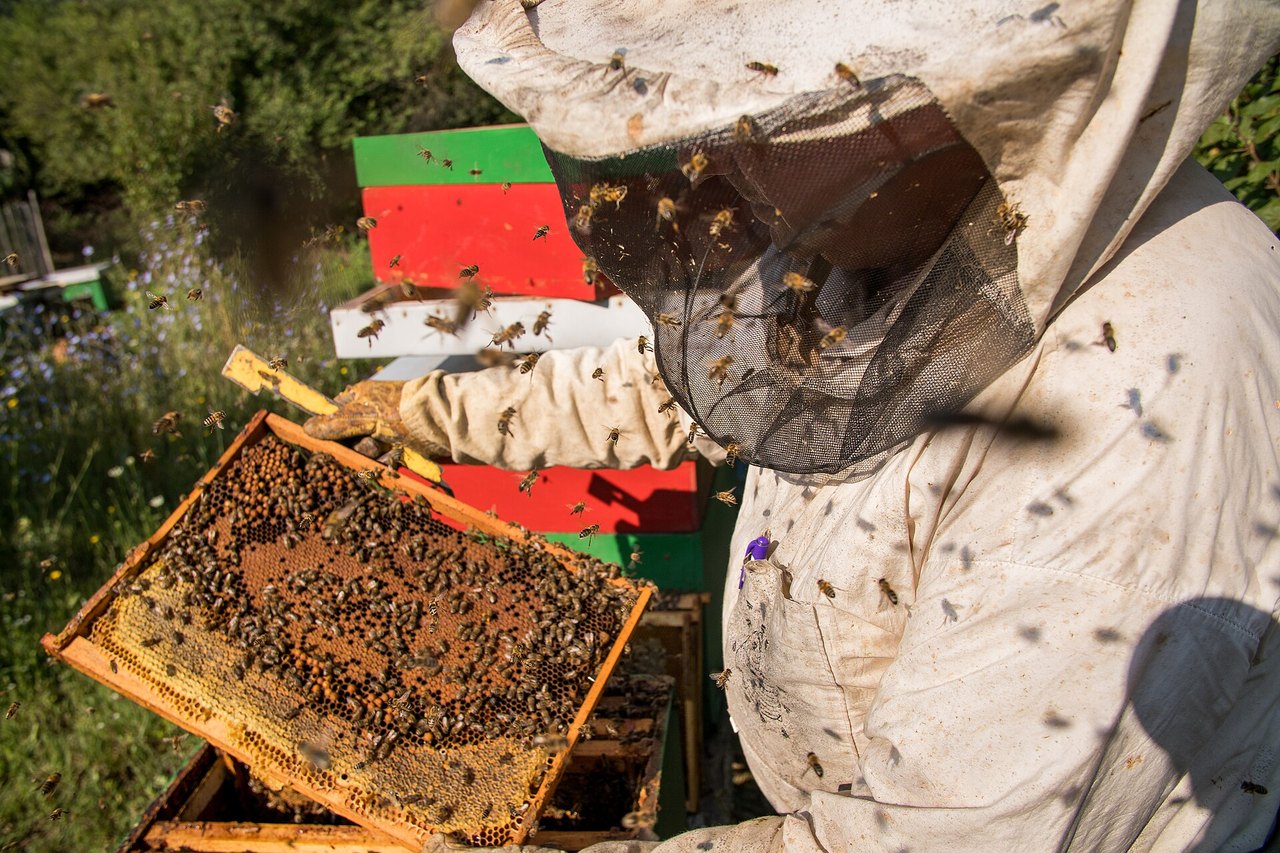
Once a colony is hived, the bees themselves finish the work of removal. Those in the hive, including the captured bees, rob all the honey out of the old nest in the tree or house within three or four days, carrying it in to the extemporized platform. Root weighs this against the alternative and finds it wanting as a way of building up an apiary: with the facilities then available for rearing bees, a keeper could stock an apiary much quicker by rearing them than by bringing them home from the woods and transferring. 1
Hiving a swarm is not always a tidy operation. Root recalls a year when he was struggling to hive a swarm from a most difficult position while an interested man stood off at a safe distance in a most pained state of mind. The nervousness of certain bees makes the business worse; when a hive of them is opened they run like a flock of sheep from one corner to another, boiling over in confusion, hanging in clusters from a corner of the frame as it is held up, and finally falling off in bunches to the ground, where they continue a wild scramble in every direction, probably crawling up one's trousers-leg if the opportunity offers. 1
What Root holds out as the aim of all this is modest. He would keep bees for honey and for fun: plenty of honey for the table, just enough to bestow on the neighbors so they will not tire of it, and fun enough to season life with an out-of-door interest and the feeling that no summer day is likely to pass without a surprise. 1
4. Robbing
A bee that finds a chunk of honey in the dry autumn days regards it as quite a little gold-mine, and Root observes that as soon as it takes wing it will circle about the honey, as a young bee does in front of the hive, so that it may know where to return. The habit is the keeper's opportunity as well as his hazard. When he gets on the ground near some forest where he suspects wild bees, he may pour a little honey into the feeder and cautiously set the box over the first bee he finds upon the flowers, letting the circling instinct do the rest. 1
The same instinct, turned against his own apiary, is what the keeper must forestall. The bees in a hived colony, including those that were captured, will rob all the honey out of the old nest in the tree or house within three or four days, carrying it in to the extemporized platform. Root's remedy for combs left in spring after the death of the bees is to put them in the care of a good strong colony, there being no safer place. Combs have been kept in his barn two years or more, but they were not removed from the hives until fall and were kept through the summer months in a close box where no moth could possibly get at them. 1
The bee-moth is the reason for such care. It has doubtless been all through the hive, for it can go where a bee can, and has laid its eggs in every comb, trusting to the young worms to evade the bees after they hatch. Root has often seen moths flit like lightning from crevices in hives of common bees, and sometimes dart among the bees and out again, though whether they can deposit an egg so quickly he is unable to say. Where filth accumulates on the bottomboard, the combs should be lifted out and brushed, and all the worms crushed; if they are promptly picked out for about a week no more appear, which shows the eggs were laid on the combs while in the hive. The young worms travel very rapidly, so the eggs may have been deposited on the frame or the edges of the comb, and the moth chooses the sides of the frames, as near the brood-comb as possible, the larvae having a decided preference for that comb. 1
5. The Queen and Brood
The queen-cells give the keeper his most delicate warning of what is to come. When they are nearly ready to hatch, Root notes, the queens may be heard gnawing out, a sound caught by holding the comb close to the ear. It is a small thing to listen for, but it fixes the moment when a colony's intentions become audible rather than merely suspected. 1
Timing such events matters because a colony's history is written in days. Root sets out the figures a keeper should learn thoroughly, since it is often very important to discover just when a queen was lost or a colony swarmed: development occupies three days in the egg, six in the larval state, and twelve days sealed up. Frank Cheshire, in his work on bees and bee-keeping, describes the beginning of it, the chorion of the egg breaking usually after three days, the time varying with temperature, and a footless larva of thirteen segments, exclusive of the head, alternately straightening and bending its body to free itself of the envelope. 1
Against this background the raising of new queens belongs to the same economy of the hive. Root holds that with the facilities now available for rearing bees, a keeper could stock an apiary much quicker by rearing the bees than by bringing them home from the woods and transferring them. The queen herself, in the black race he describes, is large in proportion to her workers and quite prolific, coloured leather or dark copper; the drones of that race are only slightly larger than the workers, a jet-like blue-black without yellow, their strong wings showing changing hues like those of wasps. 1
What the keeper is working toward is modest enough. Root's ideal is to keep bees for honey and for fun, with plenty for the table and just enough to bestow on the neighbours so they will not tire of it, and fun enough to season life with an out-of-door interest. 1
6. The Wax Moth
The wax moth is the enemy that goes where a bee can go. Root states the matter plainly: the moth has doubtless been all through the hive, laying its eggs in every comb, trusting to the young worms to evade the bees by some means after they hatch. In hives of common bees he has often seen moths flit like lightning from crevices, and sometimes dart among the bees and out again; whether they can deposit an egg so quickly he is unable to say. The doubt is left standing, and it is characteristic of his account that the insect's speed is reported while its feats are not overstated. 1
Filth on the bottomboard is the invitation. Where an accumulation has gathered there, Root directs the keeper to lift out all the combs, brush it off, and be sure to crush all the worms, a sample of how the eggs and cocoons of the bee-moth are deposited on wood. The moth lays in any convenient spot, such as the sides and bottoms of the frames, on the walls of the hive itself, or on the comb. Two kinds are commonly found in Australia, so well known and so frequently figured that he thinks detailed technical description unnecessary; the sexes can be distinguished by the outline of the wings, and the second species is known as Achroea grissella, the lesser beeswax-moth or honey-moth. The species is very widely distributed, found throughout Europe and North America, in India, and even in the cold regions of Northern Siberia, with a range co-extensive with that of the hive-bee itself. 1
Experience has made Root less fearful of the worm in comb honey. A few years earlier the same trouble attended honey taken from the hive early in the season, but of late he has had less and less of it, hardly seeing a wax-worm in his comb honey at all, and he has not once fumigated his honey-house. He ascribes this to the increase of Italians in his own apiary and in those about him, most of the bees in the woods being now partly Italianized. Combs left in spring after the death of the bees are safest in the care of a good strong colony; he has kept combs in his barn two years or more, but they were not removed from the hives until fall and spent the summer months in a close box where no moth could possibly get at them. 1
7. Honey and the Apiary
What the apiary yields is not measured in any single figure, and Root is candid about the uncertainty. Of two trees he took a few years earlier, one contained just about as much honey as had been fed to the bees, and the other not one visible cell full. The crop, in other words, may repay the outlay or may return nothing, and the keeper works without a guarantee. Honey serves purposes beyond the table. A whole chunk of it, during the dry autumn days, is a little gold-mine in the bee's estimation, and the keeper turns that estimate to account: on the ground near some forest where wild bees are suspected, he pours a little honey into the feeder and cautiously sets the box over the first bee found upon the flowers. As soon as it takes wing it circles about the honey, as a young bee does in front of the hive, so that it may know where to return. 1
The taking of a wild colony is a rough business. The tree may come down as a smashed heap of ruins, with combs, honey, and bees all mixed up with dirt and rubbish, or it may strike on limbs or small trees and ease its fall so as to do very little injury. Complication arises when a colony settles in a fine shade tree in a park that the authorities will not allow cut, or in a farmer's woods where the bee-hunter may take the bees but not the tree, or between the plaster and the clapboarding of a house. Once hived, the bees including those captured rob all the honey out of the old nest in the course of three or four days, carrying it into the hive on the extemporized platform. 1
Root weighs the wild swarm against reared stock and finds the balance shifting. With the facilities then available for rearing bees, a keeper could stock an apiary much quicker by rearing than by bringing bees home from the woods and transferring them. The work has its vexations: struggling to hive a swarm from a most difficult position, he was watched from a safe distance by an interested man in a most pained state of mind. 1
The aim he sets before the keeper is modest and double. Bees are kept for honey and for fun, with plenty for the table and just enough bestowed on the neighbors that they will not tire of it, and fun enough to season life with an out-of-door interest and the feeling that no summer day is likely to pass without a surprise. 1
8. Key Facts
| Attribute | Value |
|---|
9. Frequently asked questions
What kinds of bee make up a colony?
The queen, the drones and the workers, each with a distinct part in the hive. 1
Why do bees rob other hives?
When the honey flow stops they take honey wherever they find it, including an old nest or a weak hive. 1
What is swarming?
The division of a colony: part of it leaves with a queen, and the beekeeper must hive it. 1
What is the wax moth?
A hive pest that can go where a bee can go; it lays in every comb and thrives on filth in the hive. 1
10. Timeline
- 1910Root publishes the ABC and XYZ of Bee Culture.Root publishes the ABC and XYZ of Bee Culture.
References (1)
- 1The ABC and XYZ of Bee Culture: a cyclopedia of everything pertaining to the care of the honey-bee — A. I. Root Co., Medina, Ohio (via Internet Archive) Archive↩View source