Indian Elephant
Form, tusks and family herds, from a descriptive survey of 1916.
Lydekker describes the Indian elephant as almost hairless, with tusks measured in feet and cheek-teeth built of thin plates, living in bamboo forests in family herds under a leader.
Overview
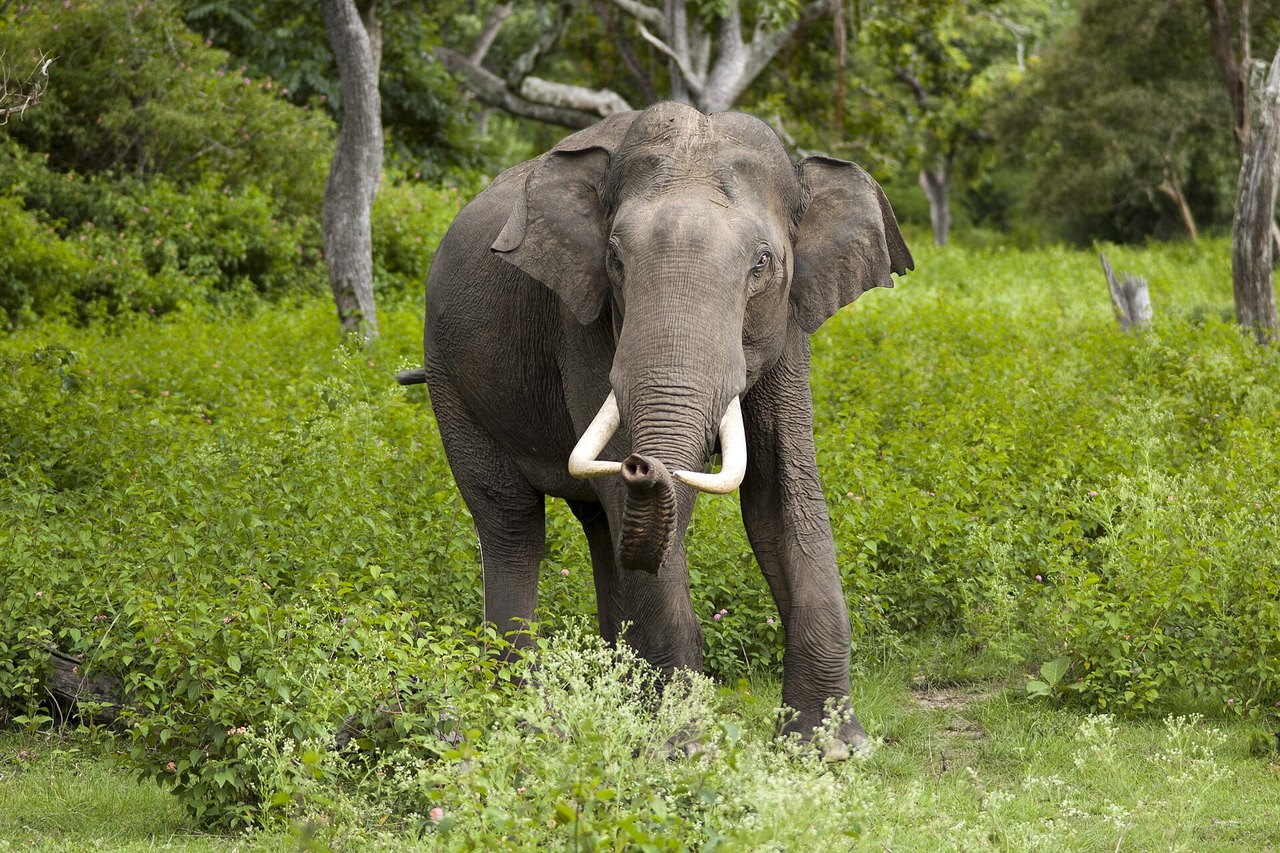
Lydekker introduces the Indian elephant chiefly by what it lacks, for the animal is almost hairless, retaining only a few faint traces of woolly fur such as that of the mammoth, together with a tuft of long hairs at the end of the tail. The comparison with the mammoth is his own, and it serves to place the species within a larger extinct and living series rather than to isolate it. What hair remains is therefore vestigial, a survival rather than a covering. 1Wild Life of the World: a descriptive survey of the geographical distribution of animals (vol. 2, The Indian Fauna) · Frederick Warne, London (via Internet Archive) ↗
Its haunts are forests in undulating or mountainous districts, and those containing many bamboos are preferred; at the beginning of the rainy season, however, the animals often move for a while into grassy plains. The preference is not arbitrary, for the cheek-teeth consist of a number of closely approximated thin vertical plates, evidently adapted for masticating grass and leaves, and the food consists almost entirely of grasses and the young shoots and leaves of certain trees and plants, especially palm, bamboo, plantain, and fig, together with wild fruits. Dentition and diet are thus presented as a single piece of reasoning: the structure of the teeth explains the choice of browse. 1
The trunk, which the author is careful to distinguish from the tusks, serves drinking rather than fighting. When an elephant drinks, water is sucked up into the two tubes of the trunk for a distance of about 18 inches and then squirted into the mouth. In attack, by contrast, the trunk is kept tightly coiled up, the work being done by the feet and tusks. One of the longest tusks known measured 8 feet in length, nearly 17 inches in circumference, and weighed 74½ lbs. 1
The herds themselves are family parties, the elephants in a herd generally belonging to the same family and all closely related to one another, and the leader is in all cases a female. Most elephants are timid and peaceful, though females with young, as well as the solitary males known as "rogues," may sometimes be aggressive. Vocal signals carry across the herd: the attention of the female to her calf is attracted by a subdued rumbling sound in the throat. 1
1. Form and Tusks
The tusks are the weapon and the record of age at once, and Lydekker gives their scale by a single superlative: one of the longest known measured 8 feet in length, nearly 17 inches in circumference, and weighed 74½ lbs. Against such dimensions the trunk is a delicate instrument, and the author is careful to keep the two apart. When an elephant drinks, water is sucked up into the two tubes of the trunk for a distance of about 18 inches and then squirted into the mouth. In attack, by contrast, the trunk is kept tightly coiled up, and the work is done by the feet and tusks. The arrangement suggests a division of labour in which the trunk is reserved for feeding and drinking and the tusks for offence. 1
Behind the tusks the cheek-teeth do the quieter work of grinding. They consist of a number of closely approximated thin vertical plates, a construction that Lydekker reads as evidently adapted for masticating grass and leaves. The inference is not left standing alone, for he sets the teeth beside the food they must deal with: grasses almost entirely, with the young shoots and leaves of certain trees and plants, especially palm, bamboo, plantain, and fig, together with wild fruits. Structure and diet are thus presented as a single piece of reasoning rather than as two separate entries in a description. 1
The ears and tail receive less of his attention, and what he says of the tail is chiefly a matter of hair. The animal is almost hairless, with only a few faint traces of woolly fur such as that of the mammoth, and a tuft of long hairs at the end of the tail. That tuft is the one conspicuous survival of the covering the mammoth is presumed to have worn, and the comparison with the mammoth is Lydekker's own, serving to place the Indian elephant within a larger extinct and living series rather than to isolate it. Of the ears the facts before us say nothing, and the description rests on the hair, the tusks and the teeth. 1
What emerges is an animal whose visible parts are each assigned a function. The tusks are measured and weighed, the trunk is timed and its capacity noted, the cheek-teeth are explained by the browse they reduce, and the tail is reduced to a vestige. The portrait is built from use rather than from appearance. 1
2. Haunts
The haunts of the Indian elephant are forests in undulating or mountainous districts, and Lydekker singles out for emphasis those containing many bamboos. The preference is stated as a general rule rather than a local accident, and it follows naturally from the animal's food, since bamboo shoots stand among the plants on which it chiefly browses. The same forests supply the grasses and the young leaves of palms, plantains and figs that make up the rest of its fare, so that the haunt and the diet answer to one another. 1
The attachment to hilly, bamboo-bearing country is not, however, absolute. At the beginning of the rainy season the elephants often move for a while into grassy plains, leaving the forest for the open ground. Lydekker records the movement without elaborating on its cause, and it stands in his account as a seasonal exception to an otherwise settled preference for broken, wooded ground. 1
Within these haunts the animals live in herds, and the composition of the herd is itself a fact of their economy. Generally the elephants in a herd belong to the same family and are all closely related to one another, and the leader is in all cases a female. The bond that holds the herd together is therefore one of kinship, with authority resting in the female rather than in any male of the group. Most elephants are timid and peaceful, though females with young, and the solitary males known as rogues, may sometimes be aggressive. 1
The forest, with its bamboo and its cover, is thus the setting for a social animal whose movements are governed by the season and whose food is drawn from the growth around it. Lydekker's account of where the elephant is found is inseparable from his account of what it eats and how it lives, and the hilly bamboo forest is presented as the place where those several facts meet. 1
3. Herds and Leadership
The herd, being a family, is also a nursery, and Lydekker describes the mother's care of the calf through sound rather than sight. The attention of the female to her calf is attracted by a subdued rumbling sound in the throat, a low call rather than the roar that otherwise belongs to the animal's voice. In this the most conspicuous organ of the elephant, the trunk, has no part; the communication between mother and young is carried on by a noise deep in the throat, and the young are attended by being called rather than by being handled. 1
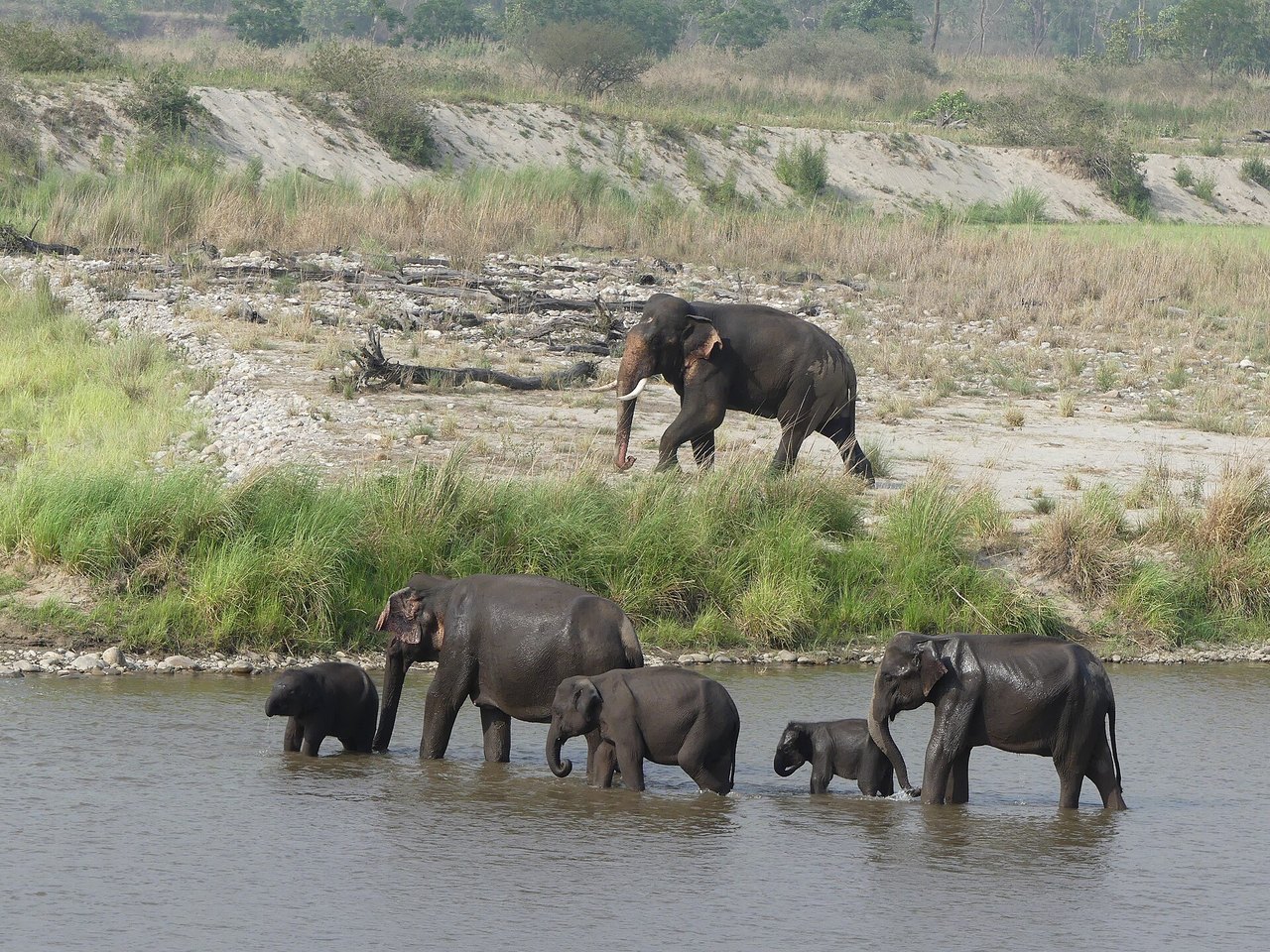
Against this picture of family life Lydekker sets the exceptions to the elephant's general temper. Most elephants are timid and peaceful, and the herd, made up as it is of near kin under a female leader, belongs to that peaceful majority. Females with young, however, may sometimes be aggressive, and so may the solitary males known as rogues. The aggression of the mother is thus an extension of her attention to the calf: the same female who answers the calf's rumbling call with her own may turn on an intruder. 1
When such an attack is made, it is made by the feet and tusks and not by the trunk, which is kept tightly coiled up on such occasions. The detail is characteristic of Lydekker's method, for it shows the trunk, so prominent in drinking and in the ordinary business of feeding, deliberately withheld from the one action where its use might be expected. The weapons of the elephant in anger are the heavy feet and the tusks, and the trunk is protected rather than employed. 1
Leadership among these animals therefore rests with the female at the head of a related herd, and the care of the young is bound up with her. The rumbling call, the occasional aggressiveness of mothers, and the coiled trunk of the charging elephant all belong to the same domestic arrangement, in which the family herd and its female leader are the centre around which the young are raised. 1
4. Key Facts
| Attribute | Value |
|---|
5. Frequently asked questions
How is the Indian elephant described?
Almost hairless, with faint traces of the woolly fur found in the mammoth. 1
What are its cheek-teeth like?
A number of closely approximated thin vertical plates, evidently adapted for crushing. 1
Where does it live?
Forests in undulating or mountainous districts, generally those with many bamboos. 1
How are herds made up?
Members generally belong to one family and are closely related, and the herd has a leader. 1
6. Timeline
- 1916Lydekker publishes Wild Life of the World.Lydekker publishes Wild Life of the World.
References (1)
- 1Wild Life of the World: a descriptive survey of the geographical distribution of animals (vol. 2, The Indian Fauna) — Frederick Warne, London (via Internet Archive) Archive↩View source