Magpie
Colour, tail and intelligence, described by an attentive Victorian observer.
Smith ranks the magpie second only to the jay among the crows for colour and form, describes its barred wing and tail longer than its body, objects to caging it, and treats its readiness to keep pace with change as a mark of high intelligence.
Overview
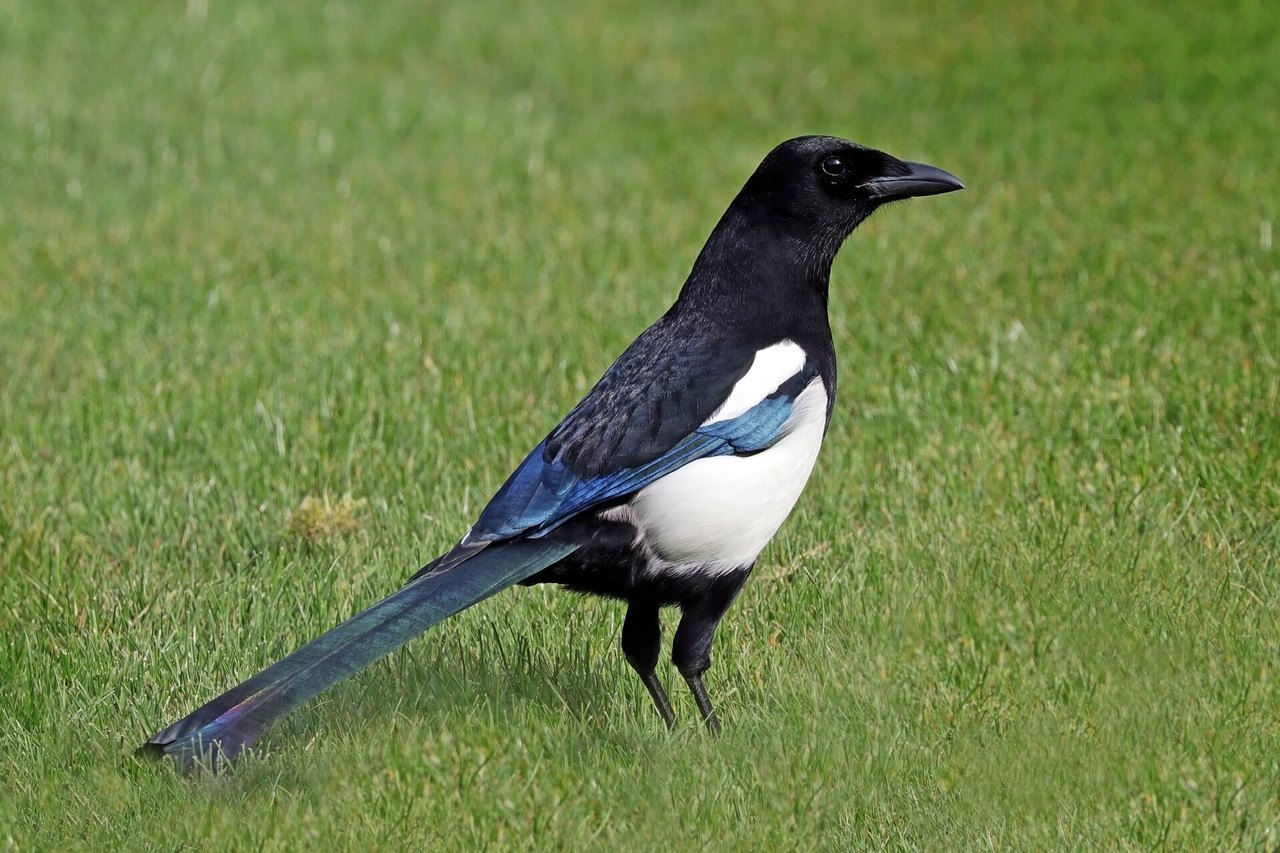
Among the crows the magpie holds a place apart. With the single exception of the jay, Bosworth Smith counts him the most striking in colour and the most graceful in form of the whole tribe, and it is this distinction that gives the bird his standing in the English scene. Yet he is nowhere exactly a common bird in England. The two judgments sit together without contradiction: a creature may be the handsomest of its family and still be scarce, and Smith's account keeps both facts in view rather than letting either cancel the other. 1Bird Life and Bird Lore · J. M. Dent, London (via Internet Archive) ↗
Scarcity of that kind is not the same as obscurity. The magpie is hard to overlook and, in the ordinary way, hard to approach. Except at the breeding season, it is difficult to get nearer to him than eighty to a hundred yards, so that most encounters are had at a distance and on the bird's terms. What the observer sees, therefore, is a creature that is neither plentiful nor hidden, present enough to be known and wary enough to remain only partly known. 1
That wariness belongs with an intelligence Smith rates highly. The brain of the magpie, as in all the crow tribe, is very highly developed, and the same quickness shows in the body. The tail is considerably longer than the whole of the rest of his body, beak and all, and the beak itself is capable alike of breaking the strongest snail shell and of neatly spitting and carrying off an egg. Movement matches the tools: he crosses the ground by leaps and bounds of surprising length. 1
Intelligence of this order has its limits, and Smith is candid about them. The magpie has learned, a sure mark of high intelligence, how to keep pace with changing circumstances; but the bird kept in confinement, within a few square feet for life, shows what happens when the lesson comes too late. He was, in fact, like so many of us, too old to learn. The remark is characteristic of Smith, who measures the magpie's mind without exempting it from the common lot. 1
1. Form and Plumage
The bird's colour and grace are not, in Smith's account, on show at will. Except at the breeding season, it is difficult to get nearer to the magpie than eighty to a hundred yards, so the barred back that gives him much of his distinction is a thing seen at a distance or not at all. What the observer gains in wariness he loses in detail; the markings that make the magpie striking are precisely those the magpie's own caution keeps from close inspection. Smith's estimate of the range is a practical caution as much as a measurement, and it shapes everything he can say about the bird's appearance. 1
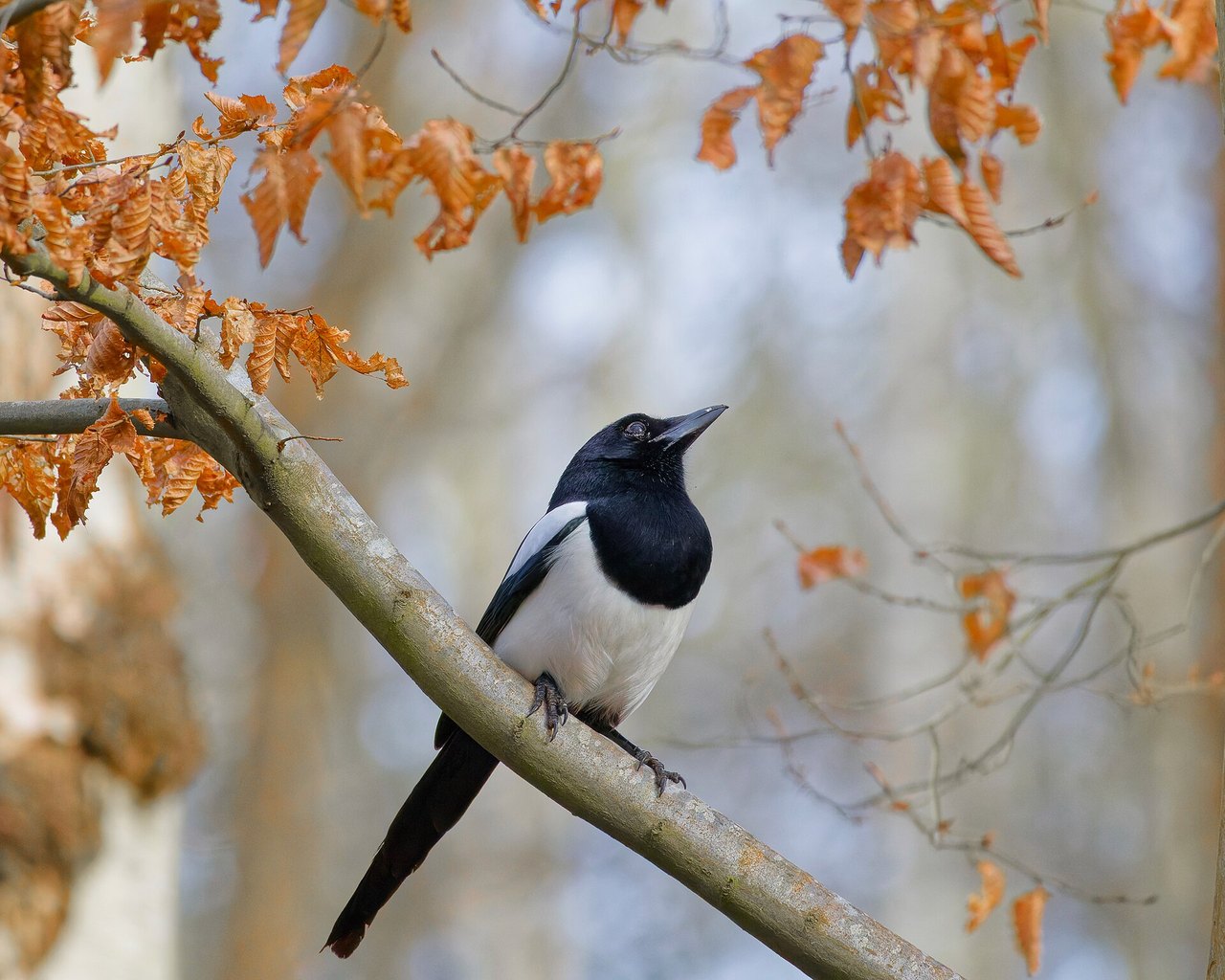
Form, however, declares itself even at that remove. The tail is considerably longer than the whole of the rest of his body, beak and all, and so dominates the silhouette that the bird is recognisable before any colour can be made out. It is a proportion that governs the way he moves as much as the way he looks, and it accounts for much of the grace Smith allows him. 1
The beak belongs to the same economy of means. It is capable alike of breaking the strongest snail shell and of neatly spitting and carrying off an egg, a range that runs from the hardest casing to the most fragile prize. Nothing in the bird's equipment is specialised to a single use, and the tail's excess of length is matched by a beak that serves the magpie in more than one kind of work. 1
Smith does not treat these proportions as curiosities to be catalogued. They are the terms on which the magpie is seen at all: a long-tailed, wary bird, marked in a way that rewards a closer view than he commonly permits, and built for a life that keeps him at the edge of observation. 1
2. Beak and Legs
The bill is a generalist's tool rather than a specialist's. It is capable alike of breaking the strongest snail shell and of neatly spitting and carrying off an egg, so that the same instrument serves for the hardest casing and the most fragile prize. Smith presents this range without surprise, as though a beak that can crack a shell and lift an egg whole were the natural equipment of a bird that must turn its hand to whatever the day offers. Nothing in the account suggests a tool shaped around a single food or a single method; the magpie's bill is equal to more than one kind of work, and the reader is left to infer that its owner is equal to more than one kind of occasion. 1
Movement matches the tool. The bird crosses the ground by leaps and bounds of surprising length, a gait that suits a body whose tail is considerably longer than the whole of the rest of him, beak and all. Smith does not labour the connection, but the proportion he records elsewhere gives the leaps their sense: a bird so heavily extended behind cannot shuffle; he must spring, and spring far. The observer who has failed to come nearer than eighty to a hundred yards, except at the breeding season, has usually seen the magpie in just this manner, departing in long bounds rather than in flight. 1
What the leaps and the bill have in common is economy. The same creature that can break the strongest snail shell is not built to dawdle over it, and the legs that carry him across open ground in surprising strides belong to a bird whose caution keeps him at a distance. Smith's magpie is thus equipped at both ends for a life led at the edge of observation: a beak that takes what is available, and a gait that removes him quickly from the reach of anyone who would look closer. 1
3. The Caged Bird
The magpie is nowhere exactly a common bird in England, and Smith ranks him, with the one exception of the jay, as the most striking in colour and the most graceful in form of all the members of the crow tribe. A bird of that rank, kept for life within a few square feet, is the subject of his complaint against the cage. Confinement does not merely restrict a creature so formed; it removes the conditions under which the form has any meaning. The long tail, the leaps, the wariness that keeps an observer at eighty to a hundred yards except at the breeding season—all belong to a life lived at large, and none of them survives the reduction to a few square feet. 1
The objection rests on what Smith takes the bird to be. The magpie's brain, as in all the crow tribe, is very highly developed, and it is precisely this that the cage offends. A highly developed brain has nothing to do within four walls but turn on itself. The intelligence that in the open country learns to keep pace with other creatures, a sure mark of high intelligence in Smith's eyes, is left in the cage without anything to keep pace with. 1
What, then, would a magpie worth keeping be? Smith's answer is implicit in his account of the bird's powers. The beak that can break the strongest snail shell and neatly spit and carry off an egg, the leaps and bounds of surprising length, the tail considerably longer than the whole of the rest of his body, beak and all—these are the equipment of a creature whose life is spent in use. A magpie worth the keeping would be one still able to exercise them. The bird that has learned to keep pace has learned something no cage can teach, and the bird too old to learn, too old to learn, is the one whose intelligence has already been spent or closed. 1
Smith's judgment, in short, is that the cage destroys the magpie by making his gifts useless. The bird is not a ornament to be displayed but a working intelligence, and the measure of what should be kept is the measure of what can still be done. 1
4. Intelligence
Smith treats the capacity to learn as the surest mark of mind in the magpie, and he finds it demonstrated in the bird's accommodation to the creatures around him. The magpie has learned how to keep pace with them, and Smith singles this out as evidence of high intelligence rather than mere habit. What the bird has acquired is not a trick but an adjustment, a way of matching its movements to lives not its own. Intelligence of this order is active; it shows itself in what the bird does with what it meets. 1
Against that standard the caged bird is measured and found wanting, though not through any fault of its own. The brain of the magpie, as in all the crow tribe, is very highly developed, and a highly developed brain has little to work upon within four walls. The objection to confinement therefore rests on what the bird is: a creature whose mind is built for use, and which, denied use, has nothing to keep pace with. 1
The bird too old to learn stands as the counter-example, and Smith's phrasing carries a note of recognition rather than reproach. He was, in fact, like so many of us, too old to learn. The comparison is deliberate. What closes the magpie off from new acquisition is not stupidity but the same hardening that Smith observes in people, and the bird is judged by the same measure. The creature that can no longer take on the lesson has already spent or shut up the intelligence that the lesson would have exercised. 1
His conclusion follows from this estimate of the bird rather than from any sentiment about captivity. A magpie worth the keeping would be one still able to exercise the powers that make it what it is, and the measure of what should be kept is the measure of what can still be done. The bird is a working intelligence, and the cage offends it precisely because the work is taken away. 1
5. Key Facts
| Attribute | Value |
|---|---|
| The tail | The tail is considerably longer than the whole of the rest of his body 1 |
| How close one may get | difficult, except at the breeding season, to get nearer to the magpie than eighty to a hundred yards 1 |
| The bill | capable alike of breaking the strongest snail shell 1 |
| Movement | by leaps and bounds of surprising length 1 |
| Adapting | He has learned — a sure mark of high intelligence — how "to keep pace" with them 1 |
| In England | he is nowhere exactly a common bird in England 1 |
6. Frequently asked questions
How close can you get to a magpie?
Except at the breeding season, hardly nearer than eighty to a hundred yards. 1
How long is its tail?
Considerably longer than the whole of the rest of the body, beak included. 1
What can its bill do?
It can break the strongest snail shell, spit and carry an egg, and give a severe nip to a hand. 1
Why does a caged magpie suffer?
Its nature is to be always moving and inquisitive; confined within a few square feet it is a melancholy sight. 1
7. Timeline
- 1905Smith publishes Bird Life and Bird Lore.Smith publishes Bird Life and Bird Lore.
References (1)
- 1Bird Life and Bird Lore — J. M. Dent, London (via Internet Archive) Archive↩View source