Meroë
More pyramids than Egypt, built by the Kushite kings.
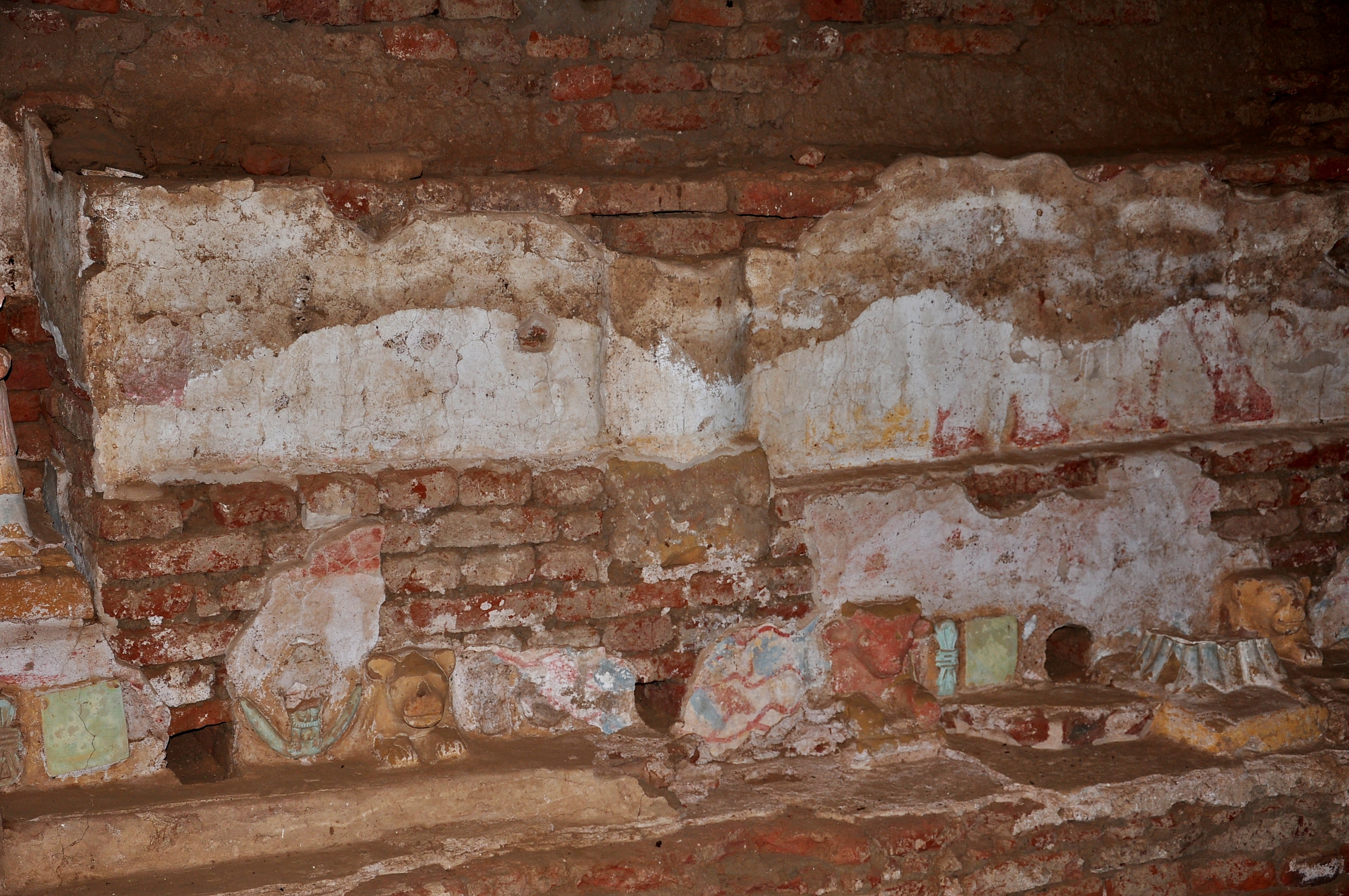
Overview
Meroë was an ancient city on the east bank of the Nile about 6 km (3.7 mi) north-east of the Kabushiya station, which is 35 km (22 mi) north-east of Shendi, Sudan, about 200 km north-east of Khartoum 1Meroë — mero · Reference ↗. It served as the capital of the Kingdom of Kush for several centuries from around 590 BC, until its collapse in the 4th century AD 1. The Kushitic Kingdom of Meroë gave its name to the "Island of Meroë", which was the modern region of Butana, a region bounded by the Nile (from the Atbarah River to Khartoum), the Atbarah and the Blue Nile 1.
The Kingdom of Kush was an ancient kingdom in Nubia, centered along the Nile Valley in what is now northern Sudan and southern Egypt 2Meroë — kush · Reference ↗. Its history is marked by three successive capitals: the first at Kerma (2500–1500 BC), the second centered on Napata (1000–300 BC) and the third centered on Meroë (300 BC – 30 BC) 3Meroë — pyramids · Reference ↗. In the Third Meroitic Period (270 BC – 1st century AD) the seat of government and the royal palace were in Meroë 4Meroë — sec4 · Wikipedia ↗.
Meroë was the base of a flourishing kingdom whose wealth was centered around a strong iron industry 5Meroë — sec8 · Wikipedia ↗. The Meroë pyramids date to the later stage of the Kingdom of Kush (3rd century BC–4th century AD) and were burial places for Kushite monarchs, other members of the royal family, and important officials and dignitaries 6Meroë — mero · Reference ↗. The Pyramids of Meroë are a large number of Nubian pyramids, encompassing three cemeteries near the ancient city of Meroë 6.
The Kingdom of Kush is also known as the Kushite Empire, or simply Kush 2. Its monarchs ruled from the 8th century BCE to the 4th century CE, a major civilization of ancient Nubia roughly corresponding to modern-day Sudan 7Meroë — kush · Reference ↗. The 25th dynasty was a line of pharaohs who originated in the Kingdom of Kush, located in present-day northern Sudan and Upper Egypt 8Meroë — egypt · Reference ↗. Kushite religion is the traditional belief system and pantheon of deities associated with the Ancient Kushites, who founded the Kingdom of Kush in the land of Nubia, also known as Ta-Seti, in present-day Sudan 9Meroë — religion · Reference ↗. Nubia was an early cradle of civilization, producing several complex societies that engaged in trade and industry 2, and Egyptian heirs subsequently ruled much of Nubia for the next four centuries 10Meroë — nubia · Reference ↗.
The city's history is recorded in hieroglyphs as mjrwjwꜣt, within the era of the Kingdom of Kush spanning 780 BC to 350 AD 11Meroë — sec1 · Wikipedia ↗. In the First Meroitic Period (542–315 BC) the Kings ruled over both Napata and Meroë 12Meroë — sec2 · Wikipedia ↗. Rome's conquest of Egypt led to border skirmishes and incursions by Meroë beyond the Roman borders 13Meroë — sec5 · Wikipedia ↗. After the collapse of the Kingdom of Kush in the 4th century a new polity came into being, originally covering the Nile Valley from the 3rd cataract to somewhere south of Abu Hamed at Mograt Island 14Meroë — makuria · Reference ↗.
The Nubian pyramids were constructed by the rulers of the ancient Kushite kingdoms in the region of the Nile Valley known as Nubia, located in present-day northern Sudan 3. Kings were buried in Meroë, in the North Cemetery, and Queens in West Cemetery 15Meroë — sec6 · Wikipedia ↗. Jewish oral tradition avers that Moses, in his younger years, had led an Egyptian military expedition into Sudan (Kush), as far as the city of Meroë, which was then called Saba 16Meroë — sec7 · Wikipedia ↗. One theory holds that the name came from a word in the Meroitic language meaning "the ram", because the place was a pasture for sheep that were being sanctified in the Kingdom of Kush during the Meroitic period, as shown by the remains of the statues inside the sheep hall at the entrance Al-Naq’a Palace and the Al-Bajrawiya area 17Meroë — shendi · Reference ↗.
1. Location and Name
Meroë lies near a large bend of the Nile River in the region that was called Nubia in antiquity18Meroë — barkal · Reference ↗. It is situated about 400 km north of Khartoum near Karima18. The site belongs to the wider Nubian landscape that was an early cradle of civilization, producing several complex societies that engaged in trade and industry2.
The choice of the place was not arbitrary. Martin Meredith states the Kushite rulers chose Meroë between the Fifth and Sixth Cataracts because it was on the fringe of the summer rainfall belt and the area was rich in iron ore and hardwood for iron working11. Metalworking is believed to have taken place in Meroë possibly through bloomeries and blast furnaces5. The town traded ivory, slaves, rare skins, ostrich feathers, copper and ebony5.
Meroë stood as one of the centers of the Kingdom of Meroë, which served as a bridge between the Mediterranean world and Africa19Meroë — naqa · Reference ↗. In the First Meroitic Period (542–315 BC) the kings ruled over Napata and Meroë12. King Aspelta moved the capital to Meroë considerably farther south than Napata11. In the sequence of Nubian centers the third was centered on Meroë (300 BC – 300 AD)3.
Royal burials formed the Pyramids of Meroë containing the remains of the Kings and Queens of Meroë12. Kings are buried in Meroë in the North Cemetery and Queens in West Cemetery15. The pyramids mostly built of local sandstone and in later periods of brick are under 30 metres (98 ft) in height—significantly smaller than the well-known ancient Egyptian pyramids6. Among the burials of the Northern Cemetery is that of Queen Shanakdakhete (170–150 BC) with a necklace made of 54 composite human head and ram's head gold pendants with a small carnelian bead between each4.
The name of the city is recorded in hieroglyphs as mjrwjwꜣt, within the era of the Kingdom of Kush spanning 780 BC to 350 AD11. The Kushitic Kingdom of Meroë gave its name to the "Island of Meroë", the designation of the modern region of Butana, which is bounded by the Nile from the Atbarah River to Khartoum, by the Atbarah and by the Blue Nile1. A separate tradition holds that the name derived from a word in the Meroitic language meaning "the ram", on the grounds that the place served as pasture for sheep being sanctified in the Kingdom of Kush during the Meroitic period17. That reading is supported, in the same account, by the remains of statues inside the sheep hall at the entrance of Al-Naq’a Palace and in the Al-Bajrawiya area17. Jewish oral tradition gives the city another name altogether, holding that Moses in his younger years led an Egyptian military expedition into Sudan as far as Meroë, which was then called Saba16.
The precise position of the ancient city is on the east bank of the Nile about 6 km (3.7 mi) north-east of the Kabushiya station, itself 35 km (22 mi) north-east of Shendi in Sudan and about 200 km north-east of Khartoum1. The Kingdom of Kush, also called the Kushite Empire or simply Kush, was an ancient kingdom in Nubia centered along the Nile Valley in what is now northern Sudan and southern Egypt2. Its monarchs ruled from the 8th century BCE to the 4th century CE, a civilization roughly corresponding to modern-day Sudan7. The Kushite religion was the traditional belief system and pantheon of deities associated with the Ancient Kushites, who founded the kingdom in the land of Nubia, also known as Ta-Seti, in present-day Sudan9. A line of pharaohs of the 25th dynasty originated in this kingdom, in present-day northern Sudan and Upper Egypt8.
Meroë served as the capital of the Kingdom of Kush for several centuries from around 590 BC until its collapse in the 4th century AD1. In the Third Meroitic Period (270 BC – 1st century AD) the seat of government and the royal palace were in Meroë4. The city was the base of a flourishing kingdom whose wealth was centered around a strong iron industry5. Rome's conquest of Egypt led to border skirmishes and incursions by Meroë beyond the Roman borders13. After the collapse of the Kingdom of Kush in the 4th century the polity of Makuria came into being, originally covering the Nile Valley from the 3rd cataract to somewhere south of Abu Hamed at Mograt Island14. Egyptian heirs had earlier ruled much of Nubia for the next four centuries10.
The Pyramids of Meroë are a large number of Nubian pyramids, encompassing three cemeteries near the ancient city6. The Nubian pyramids were constructed by the rulers of the ancient Kushite kingdoms in the region of the Nile Valley known as Nubia, located in present-day northern Sudan3.
2. Historical Setting: Nubia and the Kingdom of Kush
Nubia was an early cradle of civilization and the seat of several empires, the most prominent of which was Kush.10 The Kingdom of Kush endured across a long span, from 780 BC to 350 AD.7 Its political center shifted over the centuries among three capitals: Kerma, which served from 2500 to 1500 BC; Napata, from 1000 to 300 BC; and Meroë, from 300 BC to 300 AD.10
Kushite power reached its height with the 25th Dynasty of pharaohs, whose line originated in Kush.8 That dynasty reunified Lower Egypt, Upper Egypt and Kush, creating the largest Egyptian empire since the New Kingdom.8 The eventual establishment of the Kingdom of Kush came under Alara c. 1069 BCE.7
The system of royal succession in the Kingdom of Kush is not well understood.7 Egyptian heirs subsequently ruled much of Nubia for the next four centuries.10
In the 1560s the Ottomans occupied Lower Nubia, while the former Makurian territories south of the 3rd cataract, including Dongola, had been annexed by the Islamic Funj Sultanate by the early 16th century.14
Meroë itself served as the capital of the Kingdom of Kush for several centuries from around 590 BC, a role it held until the kingdom's collapse in the 4th century AD.1 The city's era is conventionally framed as the Kingdom of Kush spanning 780 BC to 350 AD, and a reconstruction of the Near East in 200 BC shows the Kingdom of Meroë alongside its neighbours.11 The wealth of the kingdom centered on a strong iron industry, and the city gave its name to the "Island of Meroë", the modern Butana region bounded by the Nile from the Atbarah River to Khartoum, together with the Atbarah and the Blue Nile.51
The Meroë pyramids belong to the later stage of the Kingdom of Kush, dated to the 3rd century BC through the 4th century AD, and served as burial places for Kushite monarchs, other members of the royal family, and important officials and dignitaries.6 They form a large concentration of Nubian pyramids, grouped in three cemeteries near the ancient city.6 The practice of pyramid burial for royalty and other wealthy figures of the Kushite kingdom began as early as the 7th century BC.3
The Kingdom of Kush was an ancient kingdom in Nubia, centered along the Nile Valley in what is now northern Sudan and southern Egypt.2 Its monarchs ruled from the 8th century BCE to the 4th century CE over a major civilization of ancient Nubia, roughly corresponding to modern-day Sudan.7 Kushite religion was the traditional belief system and pantheon of the Ancient Kushites, who founded the kingdom in the land of Nubia, also known as Ta-Seti, in present-day Sudan.9 In the New Kingdom Period Nubia fell under Egyptian control, but later unified under leaders such as King Alara and King Kashta, leading to the establishment of the Second Kingdom of Kush.9
After the collapse of the Kingdom of Kush in the 4th century, Makuria came into being, originally covering the Nile Valley from the 3rd cataract to somewhere south of Abu Hamed at Mograt Island.14 One proposed origin for the name Meroë is a word in the Meroitic language meaning "the ram", on the theory that the place was a pasture for sheep being sanctified in the Kingdom of Kush during the Meroitic period, as indicated by remains of statues inside the sheep hall at the entrance of Al-Naq'a Palace and the Al-Bajrawiya area.17 Jewish oral tradition further avers that Moses in his younger years led an Egyptian military expedition into Sudan (Kush) as far as the city of Meroë, then called Saba.16
3. Meroë as Capital
Meroë became the political centre of the Kushite kingdom when King Aspelta moved the capital there, farther south than Napata. The shift is reflected in the First Meroitic Period (542–315 BC), during which the kings ruled over both Napata and Meroë12. Over the following centuries the southern city grew into the permanent seat of royal authority.
By the Third Meroitic Period (270 BC – 1st century AD) the seat of government and the royal palace were established in Meroë4. The court, the administration and the monarchy were thus anchored in the city rather than in the older northern centre.
Martin Meredith states that the Kushite rulers chose Meroë, between the Fifth and Sixth Cataracts, because it lay on the fringe of the summer rainfall belt, and because the area was rich in iron ore and hardwood for iron working11. The position offered both a more favourable climate and the raw materials of a metallurgical economy.
The city lay on the east bank of the Nile, about 6 km (3.7 mi) north-east of the Kabushiya station, which is itself 35 km (22 mi) north-east of Shendi, Sudan, and about 200 km north-east of Khartoum120Meroë — wiki · Wikipedia ↗. It gave its name to the "Island of Meroë", the modern region of Butana, bounded by the Nile from the Atbarah River to Khartoum, by the Atbarah and by the Blue Nile120.
Meroë served as the capital of the Kingdom of Kush for several centuries from around 590 BC, until its collapse in the 4th century AD120. In the wider succession of Kushite centres it belongs to the third phase, the kingdom centred on Meroë (300 BC – 300 AD), following Kerma (2500–1500 BC) and Napata (1000–300 BC)3. Its era is given as the Kingdom of Kush (780 BC–350 AD)11.
The wealth of the kingdom was centred on a strong iron industry, and metalworking is believed to have taken place in Meroë, possibly through bloomeries and blast furnaces5. The city was one of the centres of the Kingdom of Meroë, which served as a bridge between the Mediterranean world and Africa19.
Kings were buried in Meroë, in the North Cemetery, and queens in the West Cemetery154; some queens were buried in the West Cemetery while kings and many queens lay at Nuri12. The Pyramids of Meroë form a large number of Nubian pyramids across three cemeteries near the ancient city6, dating to the later stage of the Kingdom of Kush (3rd century BC–4th century AD) and serving as burial places for Kushite monarchs, other members of the royal family, and important officials and dignitaries6. Among the burials is that of Queen Shanakdakhete (170–150 BC), with a necklace made of 54 composite human head and ram's head gold pendants4.
Rome's conquest of Egypt led to border skirmishes and incursions by Meroë beyond the Roman borders13. In 23 BC, in response to a Nubian attack on southern Egypt, the Roman governor of Egypt, Publius Petronius, invaded Nubia to end the Meroitic raids13. The Aksumite presence was short lived before Meroë was taken by the Kingdom of Alodia15.
Two explanations of the name survive. One holds that it came from a word in the Meroitic language meaning "the ram", because the place was a pasture for sheep being sanctified in the Kingdom of Kush during the Meroitic period, as shown by the remains of statues inside the sheep hall at the entrance of Al-Naq'a Palace and the Al-Bajrawiya area17. Jewish oral tradition avers that Moses, in his younger years, had led an Egyptian military expedition into Sudan (Kush) as far as the city of Meroë, which was then called Saba16.
4. Economy and Script
Meroë was the base of a flourishing kingdom whose wealth was centered around a strong iron industry5. Metalworking is believed to have taken place in Meroë, possibly through bloomeries and blast furnaces5. Alongside this industrial base the kingdom traded ivory, slaves, rare skins, ostrich feathers, copper, and ebony5.
The kingdom whose wealth the iron industry sustained was Kush, an ancient Nubian realm centered along the Nile Valley in what is now northern Sudan and southern Egypt2. Meroë served as its capital for several centuries from around 590 BC until the kingdom's collapse in the 4th century AD1. The city itself lay on the east bank of the Nile about 6 km (3.7 mi) north-east of the Kabushiya station, which is 35 km (22 mi) north-east of Shendi, Sudan, about 200 km north-east of Khartoum1.
The seat of government and the royal palace were established at Meroë during the Third Meroitic Period (270 BC – 1st century AD)4. In the earlier First Meroitic Period (542–315 BC) the kings had ruled over both Napata and Meroë12. The era of the Kingdom of Kush is dated to 780 BC–350 AD11, and its monarchs reigned from the 8th century BCE to the 4th century CE7. Kings were buried at Meroë in the North Cemetery and queens in the West Cemetery15.
The pyramids of Meroë form a large group of Nubian pyramids across three cemeteries near the ancient city6. They date to the later stage of the Kingdom of Kush (3rd century BC–4th century AD) and served as burial places for Kushite monarchs, other members of the royal family, and important officials and dignitaries6. The Nubian pyramids were built by the rulers of the ancient Kushite kingdoms in the Nile Valley region known as Nubia, in present-day northern Sudan3.
Rome's conquest of Egypt led to border skirmishes and incursions by Meroë beyond the Roman borders13. The 25th dynasty was a line of pharaohs who originated in the Kingdom of Kush, in present-day northern Sudan and Upper Egypt8. After the collapse of the Kingdom of Kush in the 4th century, Makuria came into being, originally covering the Nile Valley from the 3rd cataract to somewhere south of Abu Hamed at Mograt Island14.
The origin of the name is disputed. One theory holds that it came from a word in the Meroitic language meaning "the ram", because the place was a pasture for sheep being sanctified in the Kingdom of Kush during the Meroitic period, as shown by the remains of statues inside the sheep hall at the entrance of Al-Naq'a Palace and the Al-Bajrawiya area17. Jewish oral tradition avers that Moses in his younger years led an Egyptian military expedition into Sudan (Kush) as far as the city of Meroë, then called Saba16.
5. Conflict with Rome
Rome's conquest of Egypt led to border skirmishes and incursions by Meroë beyond the Roman borders 13. In 23 BC the Roman governor of Egypt Publius Petronius invaded Nubia to end the Meroitic raids, acting in response to a Nubian attack on southern Egypt 13. He pillaged northern Nubia and sacked Napata in 22 BC before returning home 13.
Meroë lay on the east bank of the Nile, roughly 6 km (3.7 mi) north-east of the Kabushiya station, itself 35 km (22 mi) north-east of Shendi in Sudan and about 200 km north-east of Khartoum 1. The city served as the capital of the Kingdom of Kush for several centuries from around 590 BC until the kingdom's collapse in the 4th century AD 1. Kush itself was an ancient Nubian kingdom centred along the Nile Valley in what is now northern Sudan and southern Egypt 2, and Nubia was an early cradle of civilization that produced several complex societies engaged in trade and industry 2.
The seat of government and the royal palace were established at Meroë during the Third Meroitic Period (270 BC – 1st century AD) 4, while in the earlier First Meroitic Period (542–315 BC) the kings had ruled over both Napata and Meroë 12. The city anchored a flourishing kingdom whose wealth was centred on a strong iron industry 5, and it gave its name to the Meroitic script 5. The era of the Kingdom of Kush is dated 780 BC–350 AD 11, and the monarchs who ruled it governed a major civilization of ancient Nubia roughly corresponding to modern-day Sudan 7. The 25th dynasty was a line of pharaohs who originated in the Kingdom of Kush, located in present-day northern Sudan and Upper Egypt 8.
Kings were buried at Meroë in the North Cemetery and queens in the West Cemetery 15. The Pyramids of Meroë are a large number of Nubian pyramids encompassing three cemeteries near the ancient city 6, and they date to the later stage of the Kingdom of Kush (3rd century BC–4th century AD), serving as burial places for Kushite monarchs, other members of the royal family, and important officials and dignitaries 6. The Nubian pyramids were constructed by the rulers of the ancient Kushite kingdoms in the region of the Nile Valley known as Nubia, in present-day northern Sudan 3.
Kushite religion was the traditional belief system and pantheon of deities associated with the Ancient Kushites, who founded the Kingdom of Kush in the land of Nubia, also known as Ta-Seti, in present-day Sudan 9. One theory holds that the name Meroë came from a word in the Meroitic language meaning "the ram", because the place was a pasture for sheep being sanctified in the Kingdom of Kush during the Meroitic period, as shown by the remains of statues inside the sheep hall at the entrance of Al-Naq’a Palace and the Al-Bajrawiya area 17. Jewish oral tradition avers that Moses in his younger years led an Egyptian military expedition into Sudan (Kush) as far as the city of Meroë, which was then called Saba 16.
After the collapse of the Kingdom of Kush in the 4th century, Makuria came into being and originally covered the Nile Valley from the 3rd cataract to somewhere south of Abu Hamed at Mograt Island 14. Egyptian heirs subsequently ruled much of Nubia for the next four centuries 10. The Temple of Mut at Jebel Barkal stands about 400 km north of Khartoum near Karima, by a large bend of the Nile in the region called Nubia in ancient times 18.
6. Pyramids and Burials
The pyramids of Meroë belong to the later stage of the Kingdom of Kush, spanning the 3rd century BC to the 4th century AD6. They served as burial places for Kushite monarchs, for other members of the royal family, and for important officials and dignitaries6. Most were built of local sandstone, with brick used in later periods6. None exceeds 30 metres (98 ft) in height, which leaves them significantly smaller than the well-known ancient Egyptian pyramids6.
Among the burials is that of Queen Shanakdakhete, whose grave in the Northern Cemetery is dated to 170–150 BC4. Her necklace was made of 54 composite human head and ram's head gold pendants, with a small carnelian bead between each4.
The pyramids at Meroë are a large number of Nubian pyramids, encompassing three cemeteries near the ancient city of Meroë6. They belong to the wider tradition of Nubian pyramids constructed by the rulers of the ancient Kushite kingdoms in the region of the Nile Valley known as Nubia, located in present-day northern Sudan3. Royal burials formed the Pyramids of Meroë, containing the remains of the Kings and Queens of Meroë12.
In Nubian culture the pyramids were integral to burial customs for royalty and other wealthy figures of the Kushite kingdom, with this practice starting as early as the 7th century BC3. It was during the 25th dynasty that the Nile valley saw the first widespread construction of pyramids (many in what is now Northern Sudan) since the Middle Kingdom8.
Goods found in burials at the Terminal A Group Cemetery L at Qustul suggest that Nubians in Lower Nubia also had ritualistic practices that were independent of Ancient Egyptian religion9.
7. Decline and Aftermath
The Kingdom of Kush collapsed in the 4th century and Meroë came into being in the aftermath of that dissolution 14. An Aksumite presence followed but proved short lived before Meroë was taken by the Kingdom of Alodia 15.
From the same collapse the kingdom of Makuria emerged 14. In its original extent Makuria covered the Nile Valley from the 3rd cataract to somewhere south of Abu Hamed at Mograt Island 14.
The later political order of the region was reshaped from two directions. In the 1560s the Ottomans occupied Lower Nubia 14. The former Makurian territories south of the 3rd cataract, including Dongola, had meanwhile been annexed by the Islamic Funj Sultanate by the early 16th century 14.
Kush was an ancient kingdom in Nubia, centred along the Nile Valley in what is now northern Sudan and southern Egypt 2. Its monarchs ruled from the 8th century BCE to the 4th century CE over a civilization roughly corresponding to modern-day Sudan 7. The line of pharaohs known as the 25th dynasty originated in Kush, in present-day northern Sudan and Upper Egypt 8. The Kushites founded their kingdom in the land of Nubia, also called Ta-Seti, and developed the traditional belief system and pantheon of deities known as Kushite religion 9. Nubia itself was an early cradle of civilization, producing several complex societies that engaged in trade and industry 2.
Meroë served as the capital of the Kingdom of Kush for several centuries from around 590 BC until the kingdom's collapse in the 4th century AD 1. In the First Meroitic Period, dated 542–315 BC, the kings ruled over both Napata and Meroë 12. During the Third Meroitic Period, running from 270 BC to the 1st century AD, the seat of government and the royal palace were in Meroë 4. The city was the base of a flourishing kingdom whose wealth centred on a strong iron industry, and it was there that the Meroitic script was used 5. The era of the Kingdom of Kush is given as 780 BC–350 AD 11.
The city lay on the east bank of the Nile about 6 km (3.7 mi) north-east of the Kabushiya station, which is 35 km (22 mi) north-east of Shendi, Sudan, and about 200 km north-east of Khartoum 1. Rome's conquest of Egypt led to border skirmishes and incursions by Meroë beyond the Roman borders 13. Jewish oral tradition avers that Moses, in his younger years, led an Egyptian military expedition into Sudan (Kush) as far as the city of Meroë, which was then called Saba 16. One theory holds that the name came from a Meroitic word meaning "the ram", because the place was a pasture for sheep sanctified in the Kingdom of Kush during the Meroitic period, as shown by the remains of statues inside the sheep hall at the entrance of Al-Naq'a Palace and the Al-Bajrawiya area 17.
The Pyramids of Meroë are a large number of Nubian pyramids, encompassing three cemeteries near the ancient city 6. The Nubian pyramids were constructed by the rulers of the ancient Kushite kingdoms in the region of the Nile Valley known as Nubia, in present-day northern Sudan 3. The Meroë pyramids date to the later stage of the Kingdom of Kush (3rd century BC–4th century AD) and were burial places for Kushite monarchs, other members of the royal family, and important officials and dignitaries 6. Kings were buried in Meroë, in the North Cemetery, and queens in the West Cemetery 15.
8. Meroë in Legend
Jewish oral tradition preserves a memory of Moses that reaches far beyond the familiar narrative of the Exodus. In his younger years, the tradition avers, he led an Egyptian military expedition into Sudan, into the land of Kush, and carried it as far as the city of Meroë16. At the time of that campaign the city was known by another name: Saba16.
Meroë stood on the east bank of the Nile, roughly 6 km (3.7 mi) north-east of the Kabushiya station and 35 km (22 mi) north-east of Shendi in Sudan, some 200 km north-east of Khartoum1. Its name was also given to the "Island of Meroë", the modern Butana region bounded by the Nile from the Atbarah River to Khartoum, together with the Atbarah and the Blue Nile1. The city was one of the centres of the Kingdom of Meroë, which served as a bridge between the Mediterranean world and Africa19, and it appears in hieroglyphs as mjrwjwꜣt within the era of the Kingdom of Kush (780 BC–350 AD)11.
The city's rise belongs to a sequence of Nubian capitals: the first was at Kerma (2500–1500 BC), the second centred on Napata (1000–300 BC), and the third on Meroë (300 BC – 300 AD)3. King Aspelta moved the capital to Meroë, considerably farther south than Napata11. In the First Meroitic Period (542–315 BC) the kings ruled over both Napata and Meroë12, and by the Third Meroitic Period (270 BC – 1st century AD) the seat of government and the royal palace were in Meroë4. Martin Meredith states that the Kushite rulers chose Meroë, between the Fifth and Sixth Cataracts, because it lay on the fringe of the summer rainfall belt and the area was rich in iron ore and hardwood for iron working11.
Meroë was the base of a flourishing kingdom whose wealth was centred on a strong iron industry5, and metalworking is believed to have taken place there, possibly through bloomeries and blast furnaces5. Rome's conquest of Egypt led to border skirmishes and incursions by Meroë beyond the Roman borders13; in 23 BC, in response to a Nubian attack on southern Egypt, the Roman governor of Egypt, Publius Petronius, invaded Nubia to end the Meroitic raids13. The Aksumite presence was short lived before Meroë was taken by the Kingdom of Alodia15.
The Pyramids of Meroë are a large number of Nubian pyramids, encompassing three cemeteries near the ancient city6. They date to the later stage of the Kingdom of Kush (3rd century BC–4th century AD) and were burial places for Kushite monarchs, other members of the royal family, and important officials and dignitaries6. Kings were buried in Meroë, in the North Cemetery, and Queens in West Cemetery15, though elsewhere the record differs: kings and many queens are buried in Nuri, with some queens buried in Meroë, in the West Cemetery12. The Northern Cemetery has yielded the grave of Queen Shanakdakhete (170–150 BC), with a necklace made of 54 composite human head and ram's head gold pendants with a small carnelian bead between each4.
The origin of the name is disputed. One theory claims that it came from a word in the Meroitic language meaning "the ram", because the place was a pasture for sheep that were being sanctified in the Kingdom of Kush during the Meroitic period, as shown by the remains of the statues inside the sheep hall at the entrance Al-Naq’a Palace and the Al-Bajrawiya area17.
9. Key dates
- 1500 BCEThe capital of the first was at Kerma , the second wasThe capital of the first was at Kerma , the second was centered on Napata and the third was centered on Meroë .
- 1069 BCEBCE, leading to the eventual establishment of the Kingdom of Kush under1069 BCE, leading to the eventual establishment of the Kingdom of Kush under Alara c.
- 780 BCEHistory Kingdom of Kush in 200 BC, showing the Kingdom of MeroëHistory Kingdom of Kush in 200 BC, showing the Kingdom of Meroë and its neighbours.
- 590 BCEThis city was the capital of the Kingdom of Kush for severalThis city was the capital of the Kingdom of Kush for several centuries from around 590 BC, until its collapse in the 4th century AD.
- 315 BCEFirst Meroitic Period The Kings ruled over Napata and Meroë.First Meroitic Period The Kings ruled over Napata and Meroë.
- 270 BCEThird Meroitic Period The seat of government and the royal palace areThird Meroitic Period The seat of government and the royal palace are in Meroë .
- 150 BCEPyramids of Meroë - Northern Cemetery Queen Shanakdakhete Necklace made ofPyramids of Meroë - Northern Cemetery Queen Shanakdakhete Necklace made of 54 composite human head and ram's head gold pendants with a small carnelian bead between each.
10. Frequently asked questions
What does the name Meroë possibly mean?
One theory holds that the name came from a word in the Meroitic language meaning "the ram", because the place was a pasture for sheep being sanctified in the Kingdom of Kush during the Meroitic period 17. Remains of statues inside the sheep hall at the entrance of Al-Naq’a Palace and in the Al-Bajrawiya area are cited as evidence 17.
Where were the kings and queens of Kush buried?
Kings and many queens are buried in Nuri, while some queens are buried in Meroë, in the West Cemetery 12.
How did the Kingdom of Kush first come to be identified?
What happened to Nubia during the New Kingdom Period?
In the New Kingdom Period Nubia fell under Egyptian control, but later unified under leaders like King Alara and King Kashta, leading to the establishment of the Second Kingdom of Kush 9.
When did pyramid building become widespread in the Nile valley?
It was during the 25th dynasty that the Nile valley saw the first widespread construction of pyramids since the Middle Kingdom, many of them in what is now Northern Sudan 8. In Nubian culture the pyramids were integral to burial customs for royalty and other wealthy figures of the Kushite kingdom, a practice starting as early as the 7th century BC 3.
What was the weekly market at Shendi like?
The weekly market in Shendi is described as the largest of its kind in Nubia, located at the intersection of two land based trade routes 17. Cattle, horses, gum arabic, tobacco, honey, coffee, sheep and other commodities came from central and southern Sudan and the western lowlands of Abyssinia via Sinnar, while sugar, white cotton and copper yellow came from Egypt via Berber 17.
References (20)
- 1Meroë — mero — Reference Web↩View source
- 2Meroë — kush — Reference Web↩View source
- 3Meroë — pyramids — Reference Web↩View source
- 4Meroë — sec4 — Wikipedia Web↩View source
- 5Meroë — sec8 — Wikipedia Web↩View source
- 6Meroë — mero — Reference Web↩View source
- 7Meroë — kush — Reference Web↩View source
- 8Meroë — egypt — Reference Web↩View source
- 9Meroë — religion — Reference Web↩View source
- 10Meroë — nubia — Reference Web↩View source
- 11Meroë — sec1 — Wikipedia Web↩View source
- 12Meroë — sec2 — Wikipedia Web↩View source
- 13Meroë — sec5 — Wikipedia Web↩View source
- 14Meroë — makuria — Reference Web↩View source
- 15Meroë — sec6 — Wikipedia Web↩View source
- 16Meroë — sec7 — Wikipedia Web↩View source
- 17Meroë — shendi — Reference Web↩View source
- 18Meroë — barkal — Reference Web↩View source
- 19Meroë — naqa — Reference Web↩View source
- 20Meroë — wiki — Wikipedia Web↩View source