Monarch Migration
Each autumn a super-generation of monarchs flies up to 3,000 miles to a few hectares of oyamel fir forest in Mexico — and the forest they reach has shrunk to a fraction of its 1990s size.
The monarch butterfly is the only butterfly known to make a two-way migration like a bird's, with the eastern population travelling up to 3,000 miles from Canada and the United States to oyamel fir forests in Michoacan and the State of Mexico. The journey takes a special migratory generation that enters reproductive diapause, may live up to nine months, and has never been to Mexico before; it is the grandchildren of these butterflies, several generations later, that return south. Scientists measure the population not by counting insects but by the area of forest the colonies occupy: a record 18.19 hectares in 1996-1997, an all-time low of 0.67 hectares in 2013-2014, 2.22 acres in 2023-2024, 4.42 acres in 2024-2025 and 7.24 acres in 2025-2026 — still far below the 6-hectare level considered needed for a sustainable population. The migration depends on milkweed for breeding, intact forest canopy for winter shelter, and the Monarch Butterfly Biosphere Reserve that shelters about 70 percent of the eastern population. In December 2024 the U.S. Fish and Wildlife Service proposed listing the monarch as threatened under the Endangered Species Act, a decision still pending.
In this article
- 1What is the monarch migration?
- 2The four generations
- 3Why one generation lives eight times longer
- 4How they navigate
- 5How far and how fast
- 6When the journey starts
- 7Roosting: the nightly stop
- 8Two flyways
- 9Tagging: how we know where they go
- 10The overwintering forests
- 11The reserve and what it protects
- 12Measuring a population you cannot count
- 13The hectare record: peak, crash, partial recovery
- 14How close is extinction?
- 15Milkweed: the single plant everything depends on
- 16The listing fight
- 17What the numbers say now
- 18Departure: the return north
- 19The 2002 storm
- 20Timeline
- 21Frequently asked questions
- 22Knowledge graph
What is the monarch migration?
The monarch is the only butterfly known to make a two-way migration in the manner of migratory birds, and unlike other butterflies it cannot survive the cold winters of northern climates. In all the world no butterflies migrate like the monarchs of North America: they travel farther than any other tropical butterfly and are the only ones to make such a long two-way journey every year.
Although the migration resembles bird or whale migration, an individual monarch makes the round trip only once; it is the children's grandchildren that return south the following autumn. It is remarkable that the migrating generation finds the overwintering sites even though it has never before been to Mexico.
The eastern migratory population can cover more than 4,000 km between late summer and early fall, from breeding areas spanning hundreds of millions of hectares to Mexican overwintering sites comprising fewer than 20 hectares.
1. The four generations
Monarchs have up to four generations each summer, each travelling a little farther north than the last, and it is the final generation of the year that turns and migrates south. Four generations are involved in the annual cycle, and two to three generations complete the northward leg while females lay eggs for the next generation along the way.
Generation 1 monarchs are the offspring of the butterflies that overwintered in Mexico, and each successive generation travels farther north, so that three to four generations are needed to reach the northern United States and Canada. The first generation produced by the overwintering population recolonises the eastern breeding grounds through the central latitudes in roughly late April through May, with second and third generations populating the grounds over the summer.
It is generally the fourth generation that flies through the central and southern United States and northern Mexico to the wintering sites in central Mexico. During the summer breeding season monarchs live only two to five weeks, but the last generation of the year enters reproductive diapause, does not reproduce, and is the one that migrates to Mexico.
The migratory generation can live for up to nine months, compared with two to six weeks for summer adults, and most monarchs emerging after about mid-August in the eastern United States enter diapause. The generation undertaking the southbound migration lives eight times longer than its parents and grandparents, an extension attributed to a regulatory age-inducing hormone.
2. Why one generation lives eight times longer
Monarchs in diapause remain active rather than dormant, and their high-metabolic activities are reduced, lowering oxygen consumption while fats and lipids supply water and energy. Late-summer monarchs look like summer adults but will not mate or lay eggs until the following spring, instead storing fat in the abdomen that fuels a flight of one to three thousand miles.
The diapausing butterflies become reproductive in February and March as they move north, laying eggs on milkweeds as they progress into the United States, and some can live as long as nine months. As warm temperatures and lengthening days return, the migratory generation completes development it had halted, becomes reproductive and lays the eggs of the new generation, starting the journey north.
3. How they navigate
Researchers believe monarchs combine several directional aids, such as the magnetic pull of the earth and the position of the sun, rather than relying on any single one. Monarchs are thought to respond to several cues that promote the southward flight, including the angle of light from the sun, the senescence of larval milkweed, shortening days and falling temperatures.
How monarchs find the overwintering sites each year remains unsolved, since the butterflies returning each fall are the great-great-grandchildren of those that left the previous spring. UNESCO notes that how the butterflies find their way back to their overwintering site each year remains a mystery.
Ninety percent of tags recovered in Mexico came from monarchs tagged when the sun angle at solar noon lay within a migration window of about 57 degrees at the leading edge and 46 degrees at the trailing edge.
4. How far and how fast
Monarchs can travel between 50 and 100 miles a day and may need up to two months to complete the journey to the overwintering grounds. Tagging and observational data suggest monarchs travel roughly 70 to 75 miles a day, and the longest single-day flight of a tagged eastern monarch was recorded at 265 miles.
The farthest-ranging monarch butterfly on record travelled 265 miles in a single day.
Migration pace is slow early, faster in late September and slower again in October, a slow-fast-slow pattern consistent with monarchs holding a constant sun angle as they move south. The eastern population's journey from Canada through the United States to Mexico may last more than two months, and these butterflies may fly more than 2,000 miles (3,000 km).
Monarchs use a combination of air currents and thermals to travel long distances, with some individuals flying as far as 3,000 miles to reach their winter home.
5. When the journey starts
The fall migration begins in early August at northerly latitudes and ends in Mexico as the last monarchs reach the overwintering sites by early December. The shorter days and cooler air of late summer trigger the migratory change, which in Minnesota occurs around the end of August.
As they move south monarchs stop to nectar and actually gain weight during the trip, and some researchers think they conserve fuel by gliding on air currents.
6. Roosting: the nightly stop
Monarchs travel only by day and must find a roost at night, gathering close together on cool autumn evenings at sites that many individuals use year after year. Pine, fir and cedar trees are often chosen for roosting because their thick canopies moderate the temperature and humidity at the roost site.
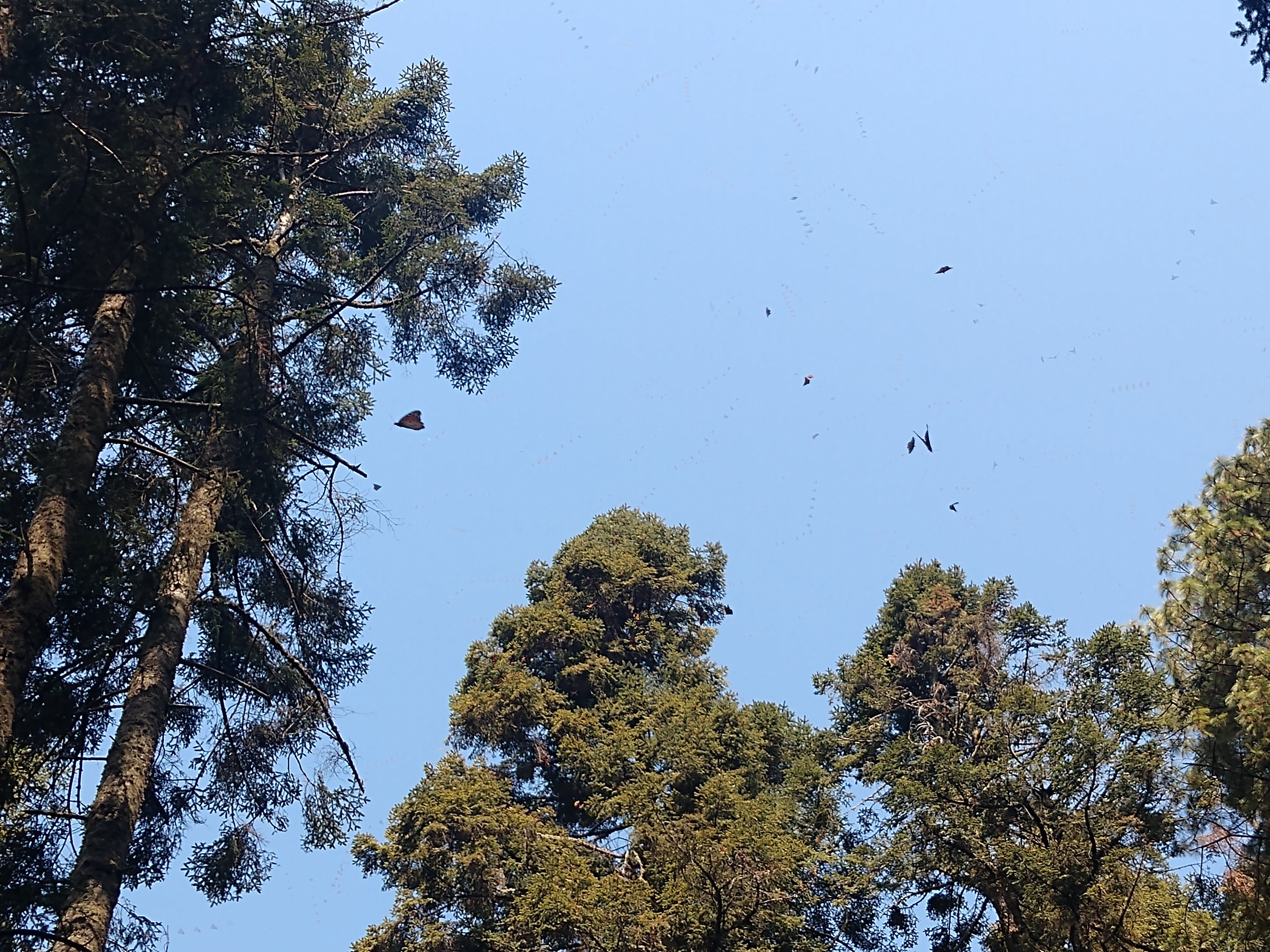
In the morning monarchs bask in the sunlight to warm themselves before taking flight again. Otherwise solitary animals, migrating monarchs often cluster at night as they move southward, and because they are cold-blooded they cannot fly in cold weather.
Monarchs moving south congregate on peninsulas, whose shape funnels the migrants, and they gather along the shore at the tip to wait for a gentle breeze to help them cross open water.
7. Two flyways
Two migratory flyways cross North America: a central one leading to Mexico and a smaller eastern seaboard flyway whose timing lags the central flyway. Monarchs following the Atlantic coast are less likely to be recovered in Mexico, suggesting they head somewhere other than Mexico or suffer higher mortality than inland migrants.
8. Tagging: how we know where they go
Between 1998 and 2015 more than 1.38 million monarchs were tagged, and 13,824 of them, about 1 percent, were recovered in Mexico.
9. The overwintering forests
The eastern population overwinters in the same 11 to 12 mountain areas in the states of Mexico and Michoacan from October until late March. Monarchs roost for the winter in oyamel fir forests at elevations of 2,400 to 3,600 metres, nearly two miles above sea level, where temperatures range from 0 to 15 degrees Celsius.
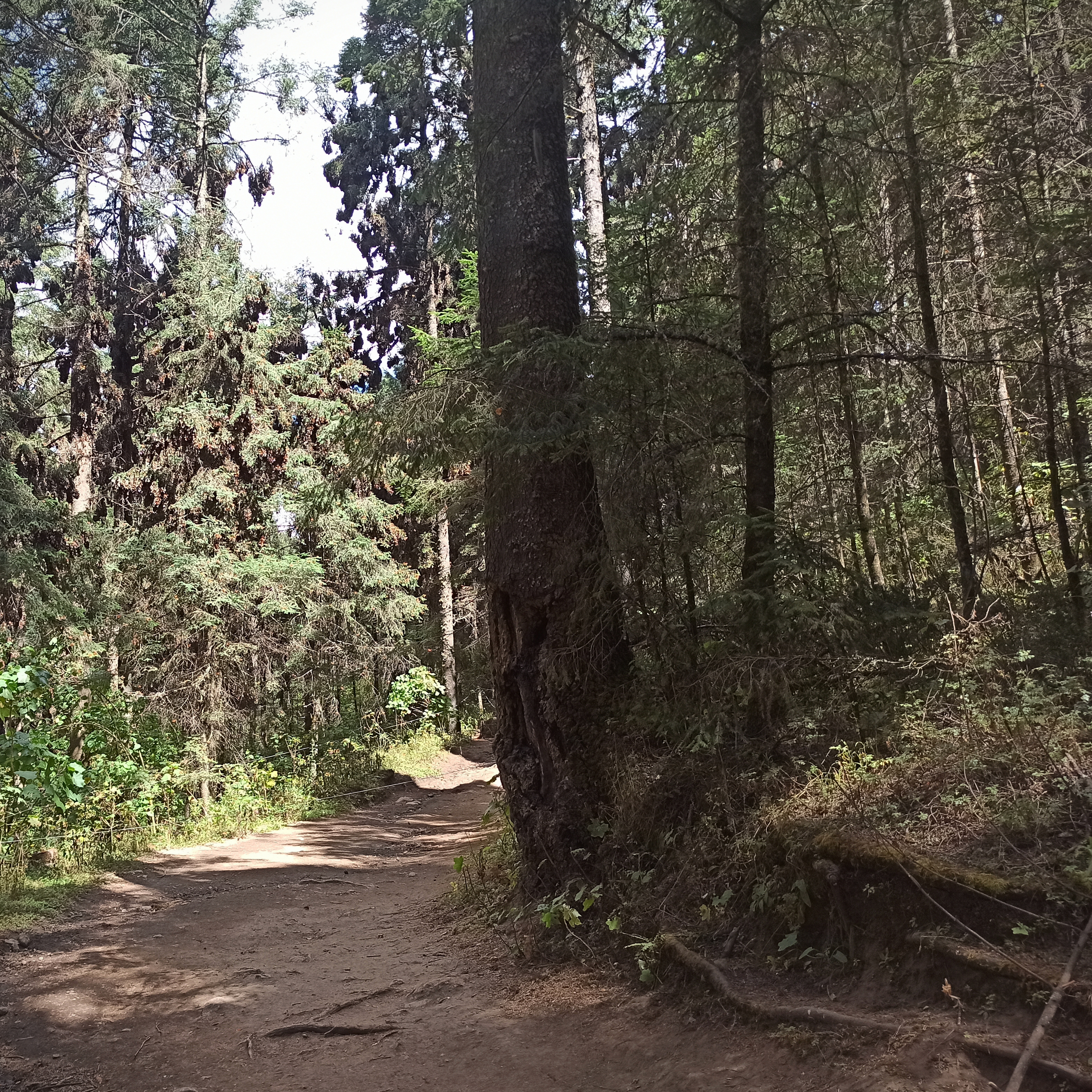
Monarchs cluster together to stay warm and tens of thousands can gather on a single tree; oyamel trees generally support the load but branches sometimes break. The butterflies choose spots that are close to but not quite freezing, clustering together over whole trunks and branches and clinging to fir and pine needles.
Overwintering sites sit about 3,000 metres above sea level on steep southwest-facing slopes, where the butterflies need a cool place so they do not metabolise their energy reserves quickly. The tall trees make a thick canopy over the butterflies, and protective trees and bushes soften the wind and shield them from occasional snow, rain or hail.
Reaching central Mexico from early November, monarchs aggregate in oyamel fir trees on south-southwest facing mountain slopes that offer cool temperatures, water and shelter. The high-altitude forests that shelter hundreds of millions of monarchs each winter lie on the border of the states of Mexico and Michoacan.
Monarchs that fall from the trees and are too cold to fly back up can sometimes crawl to lower bushes to avoid predators.
Overwintering monarchs can drink at nearby water on sunny days but must fly back to the roost before getting too cold.
10. The reserve and what it protects
The Mexican government created the Monarch Butterfly Biosphere Reserve in 1986 to protect 62 square miles of forest within four separate monarch sanctuaries, and expanded it to 217 square miles at the start of the century. The 56,259 hectare Monarch Butterfly Biosphere Reserve lies in rugged forested mountains about 100 km northwest of Mexico City.
The World Heritage property protects 8 of the 14 overwintering colonies and an estimated 70 percent of the total overwintering population of the eastern monarch. UNESCO inscribed the property for the most dramatic manifestation of insect migration: up to a billion monarchs returning annually to cluster within 14 overwintering colonies.
IUCN's World Heritage Outlook rates the site's current threats as very high, citing forest loss and degradation, ongoing illegal small-scale logging and poorly managed tourism.
Forest degradation in the core zone of the Monarch Butterfly Biosphere Reserve decreased by 10 percent, with 9.14 acres damaged between April 2023 and February 2024 — down from 10.13 acres over the preceding year — an improvement of about one tenth. The main causes of that degradation were illegal logging at 6.17 acres, natural causes mainly drought at 2.47 acres, and removal of trees to prevent disease spread at 0.45 acres.
11. Measuring a population you cannot count
Researchers map the occupied trees in each colony and calculate the enclosed area in hectares as an index of population size, monitoring that WWF-Mexico has carried out with Mexican agencies for three decades. Because individual monarchs cannot be counted, scientists measure the area of trees they occupy, with each hectare roughly 2.47 acres or just over two American football fields.
Estimates suggest 20 to 30 million monarchs per hectare, with a median of 21.1 million according to Thogmartin and colleagues. Published overwintering density estimates range from 6.9 to 60.9 million butterflies per hectare, and the six-estimate mixture has a median of 21.1 million per hectare.
12. The hectare record: peak, crash, partial recovery
The largest population since monitoring began in the early 1990s was 18.19 ha in the winter of 1996-1997; over the following years it fell by more than 90 percent to a record low of 0.67 ha in the winter of 2013 — 2014 — the smallest figure on record.
After the 1996-1997 peak the population is thought to have declined by over 90 percent, reaching a record low of 0. The 1996 population of 18. 19 ha followed the most favourable conditions in the 30-year record, but a 1997 April freeze deep into Texas cut the next count to 5. 77 ha and drought in 2000 cut it to 2.
Monarch numbers fell to 5.77 ha one year and 5.56 ha the next, rose to 9.05 ha, then crashed to 2.83 ha in 2000 while habitat was still abundant, which Monarch Watch attributes to weather.
In 2023-2024 the largest colonies were found outside the Monarch Butterfly Biosphere Reserve, with 0.84 acres in the Palomas sanctuary and 0.5 acres in Pena Ahumada, both in the State of Mexico. The 2023-2024 figure was the second-smallest area recorded since monitoring began in 1993 — exceeded in its smallness only by the 1.7 acres of the 2013-2014 winter, while the largest population was the 45 acres monitored in 1996 — 1997 — three years after record-keeping began.
The 2024-2025 survey found the population wintering in central Mexico's forests occupying 4.42 acres, up from 2.22 acres the previous winter, though still far below the long-term average. The census released in March 2026 found overwintering habitat in central Mexico up 64 percent, with butterflies covering 7.24 acres against 4.42 acres the previous winter.
The area recorded in 2024 was 10 percent of the 1996 figure and 29 percent of the level when recording began three decades earlier.
Monarch Watch's director notes that numbers fell from double-digit overwintering hectares in 1995-1996 to an all-time low of 0.67 hectares in the winter of 2013 — a decline of more than 95 percent.
13. How close is extinction?
A threshold of at least 6 hectares of overwintering monarchs is recommended to support a sustainable eastern migratory population, and the population remains below that target. There is between a 16 percent and 62 percent risk of quasi-extinction within 20 years, meaning the population falls so low that recovery is unlikely, unless ambitious restoration goals are met.
The lowest overwintering level reached to date was 0.67 ha, and the risk of quasi-extinction was tested against thresholds ranging from 0.01 to 0.25 hectares of occupied area in Mexico.
The White House target was 6 hectares of overwintering monarchs by 2020 — and starting from that level the population's risk of reaching 0.01 ha over the next two decades would be only 3 percent.
Monarchs at low populations are at much greater risk of extinction if they meet catastrophic weather such as extreme Midwest drought or blizzards at the Mexican overwintering colonies.
14. Milkweed: the single plant everything depends on
Adult monarchs feed on the nectar of many flowers, but they lay eggs on milkweed plants because that is the only food the caterpillars can eat. Milkweed is the only plant in which the butterflies lay their eggs and from which monarch caterpillars feed, and climatic variation in the breeding areas can affect its abundance.

Monarchs obtain toxins called cardenolides by consuming milkweed plants, and those bright-coloured compounds serve as a warning to predators.
A female monarch lays from 100 to 300 eggs during her life, the eggs hatch about four days after they are laid, and larvae grow from less than 1 cm to about 5 cm.
Land-use change in the United States combined with widespread herbicide and insecticide use has contributed to the loss of milkweed and of the nectar plants adult monarchs feed from. Prior to the introduction of genetically altered corn and soybeans milkweed was common in crop fields, but the link between GMO crops and monarch declines has been called suggestive rather than conclusive.
A 2018 study correlated monarch decline with the fact that 95 percent of United States corn and soybean crops used genetically modified seeds resistant to glyphosate, which allowed a second aerial application. Monarch egg densities were higher on milkweed in agricultural fields, so the loss of agricultural milkweeds has itself resulted in a decline in monarchs.
15. The listing fight
The formal push began in August 2014 when the Center for Biological Diversity, the Center for Food Safety, the Xerces Society and researcher Lincoln Brower petitioned for listing as threatened with a 4(d) rule. In December 2020 the Service determined listing was warranted but precluded by higher-priority actions for other species, which categorised the monarch as a candidate species.
On 10 December 2024 the US Fish and Wildlife Service proposed listing the monarch as threatened with species-specific protections and flexibilities under section 4(d) of the Endangered Species Act. The proposed 4(d) rule adopts the same prohibitions that apply to an endangered species (including take) and would apply across the historical range on public and private lands in the contiguous United States, Puerto Rico and the U.S.
A threatened listing with a 4(d) rule lets the Service modify or exempt some prohibitions based on conservation and management needs specific to the monarch, whereas an endangered listing would have brought automatic prohibitions. As of October 2026 the monarch is proposed for listing as threatened but is not currently listed, and a proposed settlement would require a final determination to reach the Federal Register before the middle of 2030; the deal sets a deadline rather than an outcome.
The IUCN added the monarch to its Red List as endangered in 2021 and changed the status to vulnerable two years later, and the monarch has not been listed as endangered in the United States.
16. What the numbers say now
In the mid-1990s an estimated 380 million eastern monarchs made the journey to Mexico, and today the eastern migratory population is estimated to have declined by approximately 80 percent. The Service estimates the probability of extinction for eastern monarchs at 56 to 74 percent, and proposes 4,395 acres of critical habitat for the western population across seven California counties.
Monarchs in North America have a 56 to 74 percent probability of extinction in 60 years for the eastern population and 99 percent for the western population. To save the monarch the Service says four things are needed: a significant increase in milkweed and nectar plants in breeding and migratory areas, protection of overwintering habitat, minimised insecticide and herbicide impacts, and maintained public support.
17. Departure: the return north
The monarchs leave their Mexican roosts during the second week of March, flying north and east to find milkweed on which to lay eggs, and if they return before the milkweed is up they cannot continue the cycle. The migrating females lay eggs on milkweed as they fly, recolonising the southern United States before they die, and it is their newly emerged offspring that recolonise their parents' original homes.
Departing in March, the overwintering generation flies north into Texas and the southern states, laying eggs and nectaring as it migrates and breeds. After winter the same butterflies fly an additional 600 miles north into the United States, where they lay eggs on milkweed and complete an eight-month life cycle.
Summer monarchs live a much briefer life than the overwintering generation: their adult lifespan is only three to five weeks compared with eight or nine months.
18. The 2002 storm
On 12 January 2002 a winter storm blew in over central Mexico and its cold temperatures and rain wiped out up to 250 million monarchs, about 80 percent of those in Mexico. Intense logging had degraded the Mexican fir forest by 44 percent over the preceding 28 years, leaving monarchs more exposed to the storm's winds and rain.
Overwintering monarchs need protection from snow and wind, and the surrounding trees serve as a buffer against both.
19. Timeline
- 1975Wintering sites locatedThe scientific community finally tracked down the monarch's Mexican wintering sites, previously known only to local villagers and landowners.
- 1986Monarch Butterfly Biosphere Reserve createdThe Mexican government established the reserve to protect 62 square miles of forest across four monarch sanctuaries; in 2000 it was expanded to 217 square miles.
- 1993Systematic winter census beginsWWF and its partners began measuring the area of Mexican forest in which monarchs hibernate during the last two weeks of December.
- winter 1996–1997Largest overwintering population on recordThe colonies occupied 18.19 ha, the largest population recorded since monitoring began, and Monarch Watch switched to circular self-adhesive tags that raised recovery rates.
- January 2002Winter storm wipes out much of the populationA storm on 12 January brought rain followed by freezing temperatures and killed up to 250 million monarchs, roughly 80 percent of those overwintering in Mexico.
- 2008World Heritage inscriptionUNESCO inscribed the reserve's three core zones as a World Heritage site under criterion (vii), recognising the most dramatic manifestation of insect migration.
- August 2014Petition for Endangered Species Act protectionThe Center for Biological Diversity, the Center for Food Safety, the Xerces Society and Lincoln Brower petitioned the Service to list the monarch as threatened with a 4(d) rule.
- winter 2013–2014All-time low in occupied areaThe overwintering population fell to 0.67 ha, the lowest since monitoring began and the trigger for the listing petition.
- December 2020Listing found warranted but precludedThe Service determined that listing the monarch was warranted but precluded by higher-priority actions, making it a candidate species.
- 10 December 2024Threatened listing proposedThe Service proposed listing the monarch as threatened with a 4(d) rule and proposed 4,395 acres of critical habitat for the western population in California.
- winter 2023–2024Second-smallest census on recordMonarchs occupied 2.2 acres, 59 percent below the previous winter and second only to 2013–2014 in smallness since monitoring began in 1993.
- March 2025Population nearly doublesThe 2024–2025 survey reported 4.42 acres of occupied forest, up from 2.22 acres, with scientists attributing much of the gain to less severe drought along the flyway.
- March 2026Census rises a further 64 percentThe 2025–2026 census found 7.24 acres of occupied forest, up from 4.42 acres, though still well below the 6-hectare sustainability target and far from the 1990s peak.
- June 6, 2030Deadline set for a final listing decisionA proposed settlement filed in Center for Biological Diversity v. U.S. Fish and Wildlife Service would require a final listing determination in the Federal Register by this date.
20. Frequently asked questions
How large is the eastern monarch population, and how far has it fallen?
In the mid-1990s an estimated 380 million eastern monarchs made the journey to Mexico, and the eastern migratory population is estimated to have declined by approximately 80 percent 21Monarch Butterfly Proposed for Endangered Species Act Protection · U.S. Fish and Wildlife Service ↗. The Service estimates the probability of extinction for eastern monarchs at 56 to 74 percent 21.
How many monarchs are packed into a hectare of overwintering forest?
Estimates suggest 20 to 30 million monarchs per hectare, with a median of 21.1 million according to Thogmartin and colleagues 14Eastern Monarch Numbers Increase, But Conservation Efforts Still Critical · Monarch Joint Venture ↗. Published overwintering density estimates range from 6.9 to 60.9 million butterflies per hectare 13Density estimates of monarch butterflies overwintering in central Mexico (Thogmartin et al., PeerJ 5:e3221) · PeerJ ↗.
What population level is considered sustainable?
A threshold of at least 6 hectares of overwintering monarchs is recommended to support a sustainable eastern migratory population, and the population remains below that target 14. The White House target was 6 hectares of overwintering monarchs by 2020, and starting from that level the population's risk of reaching 0.01 ha over the next two decades would be only 3 percent 18New Research Indicates Eastern Monarch Population at Risk of Extinction · Monarch Joint Venture ↗.
Where exactly in Mexico do the monarchs spend the winter?
The eastern population overwinters in the same 11 to 12 mountain areas in the states of Mexico and Michoacan from October until late March 1Migration and Overwintering · U.S. Forest Service (USDA) ↗. Monarchs roost for the winter in oyamel fir forests at elevations of 2,400 to 3,600 metres, nearly two miles above sea level, where temperatures range from 0 to 15 degrees Celsius 1.
How many monarchs has tagging covered, and what has it revealed?
Between 1998 and 2015 more than 1.38 million monarchs were tagged, and 13,824 of them, about 1 percent, were recovered in Mexico 3Is the Timing, Pace, and Success of the Monarch Migration Associated With Sun Angle? (Frontiers in Ecology and Evolution) · Frontiers ↗. Monarch Watch's tagging program has produced a dataset with records of over one million tagged butterflies and more than 16,000 recoveries 6Monarch Migration · Monarch Joint Venture ↗.
What happened to the monarchs in the January 2002 storm?
On 12 January 2002 a winter storm blew in over central Mexico and its cold temperatures and rain wiped out up to 250 million monarchs, about 80 percent of those in Mexico 24Mass Mortality of Monarchs in Mexico · NASA Earth Observatory ↗. Intense logging had degraded the Mexican fir forest by 44 percent over the preceding 28 years, leaving monarchs more exposed to the storm's winds and rain 24.
References (26)
- 1Migration and Overwintering — U.S. Forest Service (USDA) Web↩View source
- 2Monarch Migration (two-way migration map and biology) — Monarch Watch, University of Kansas WebView source
- 3Is the Timing, Pace, and Success of the Monarch Migration Associated With Sun Angle? (Frontiers in Ecology and Evolution) — Frontiers 2019 Journal↩View source
- 4Monarch Butterfly Biology — U.S. Forest Service (USDA) WebView source
- 5Monarch butterfly migration — Wikipedia WebView source
- 6Monarch Migration — Monarch Joint Venture Web↩View source
- 7Monarch butterfly — Wikipedia WebView source
- 8Monarch Butterfly Biosphere Reserve (World Heritage List, ref. 1290) — UNESCO World Heritage Centre WebView source
- 9Monarch butterfly (Danaus plexippus) species profile — U.S. Fish and Wildlife Service WebView source
- 10Conservation in North America — U.S. Forest Service (USDA) WebView source
- 11Monarch Butterfly Biosphere Reserve - World Heritage Outlook conservation assessment — IUCN WebView source
- 12Eastern monarch butterfly population nearly doubles in 2025 — World Wildlife Fund 2025 WebView source
- 13Density estimates of monarch butterflies overwintering in central Mexico (Thogmartin et al., PeerJ 5:e3221) — PeerJ Web↩View source
- 14Eastern Monarch Numbers Increase, But Conservation Efforts Still Critical — Monarch Joint Venture 2024 Web↩View source
- 15Is the eastern monarch population continuing to decline? (Chip Taylor, 29 March 2024) — Monarch Watch, University of Kansas 2024 WebView source
- 16Eastern migratory monarch butterfly populations decrease by 59% in 2024 — World Wildlife Fund 2024 WebView source
- 17Eastern Monarch Butterfly Numbers Increase, but Remain Below Historic Levels (17 March 2026) — The Xerces Society for Invertebrate Conservation 2026 WebView source
- 18New Research Indicates Eastern Monarch Population at Risk of Extinction — Monarch Joint Venture Web↩View source
- 19Questions and answers: Monarch Species Status Assessment Report Version 2.3 — U.S. Fish and Wildlife Service WebView source
- 20United States Endangered Species Act Status — Monarch Joint Venture WebView source
- 21Monarch Butterfly Proposed for Endangered Species Act Protection — U.S. Fish and Wildlife Service 2024 Web↩View source
- 22Questions and answers: Monarch 4(d) rule — U.S. Fish and Wildlife Service WebView source
- 23Monarch Listing Decision (updated 19 December 2025) — Monarch Watch, University of Kansas 2025 WebView source
- 24Mass Mortality of Monarchs in Mexico — NASA Earth Observatory Web↩View source
- 25Monarch Watch Tagging Program — Monarch Watch, University of Kansas WebView source
- 26Decades-Old Monarch Watch Tag Recovered (22 April 2026) — Monarch Watch, University of Kansas 2026 WebView source