Mount Rushmore
Four presidents carved into granite — and the Lakota land beneath them.
In this article
- 1Overview
- 2The Black Hills Setting
- 3Indigenous History and Sacred Significance
- 4Land Claim and the 1876 Seizure
- 5Origins: Doane Robinson's Proposal
- 6Construction and the Sculptor
- 7The Hall of Records
- 8Memorial Site and Visitor Facilities
- 9Protests and Contested Meaning
- 10Recognition and Cultural References
- 11Key dates
- 12Frequently asked questions
- 13Knowledge graph
Overview
Mount Rushmore National Memorial is a national memorial centered on a colossal sculpture carved into the granite face of Mount Rushmore in the Black Hills, about 2 mi (3 km) southwest of Keystone, South Dakota, in the United States. The sculptor Gutzon Borglum named the work the Shrine of Democracy and oversaw its execution from 1927 to 1941 with the help of his son, Lincoln Borglum. The memorial park covers 1,278 acres (2.00 sq mi; 517 hectares) and attracts more than two million visitors annually.
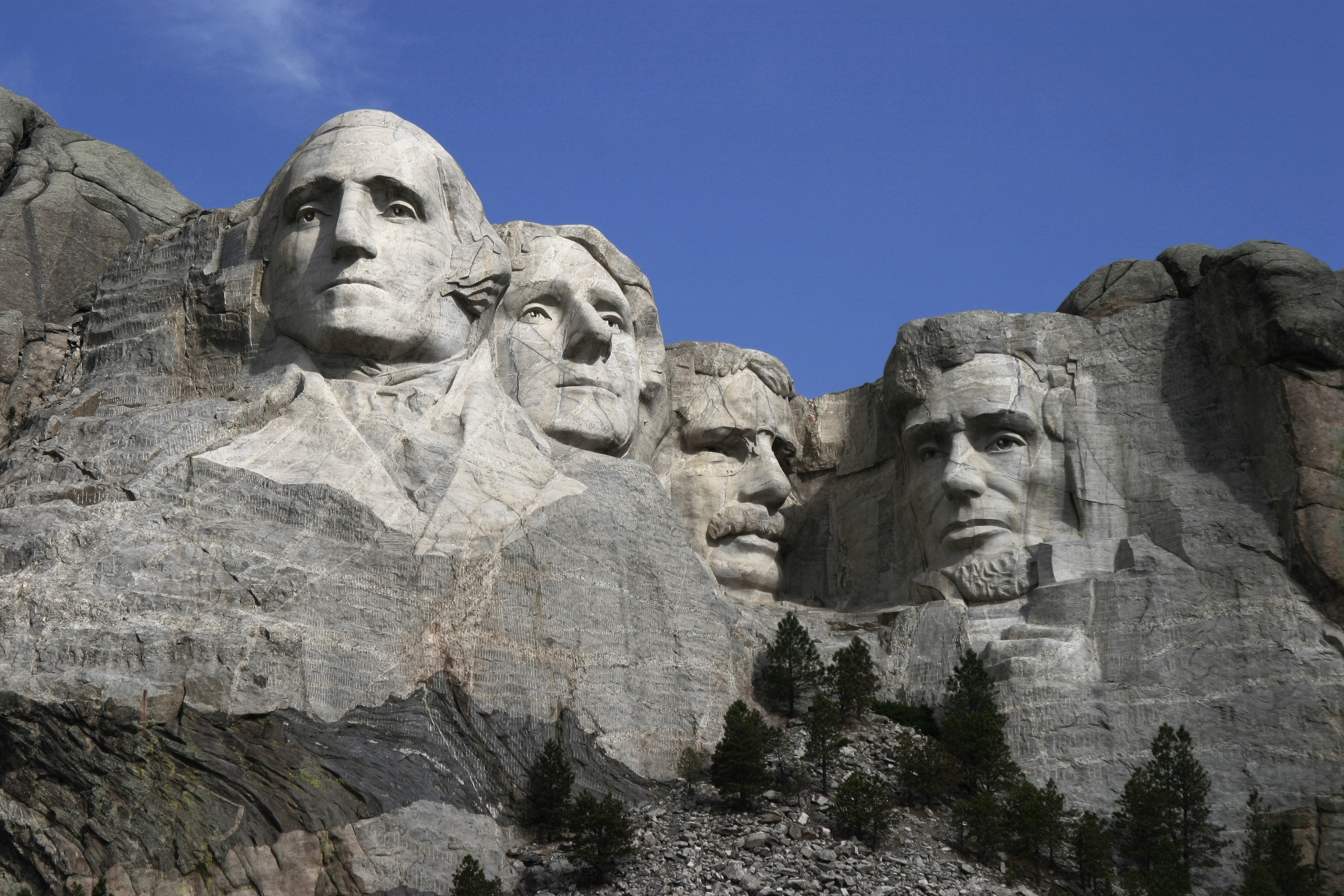
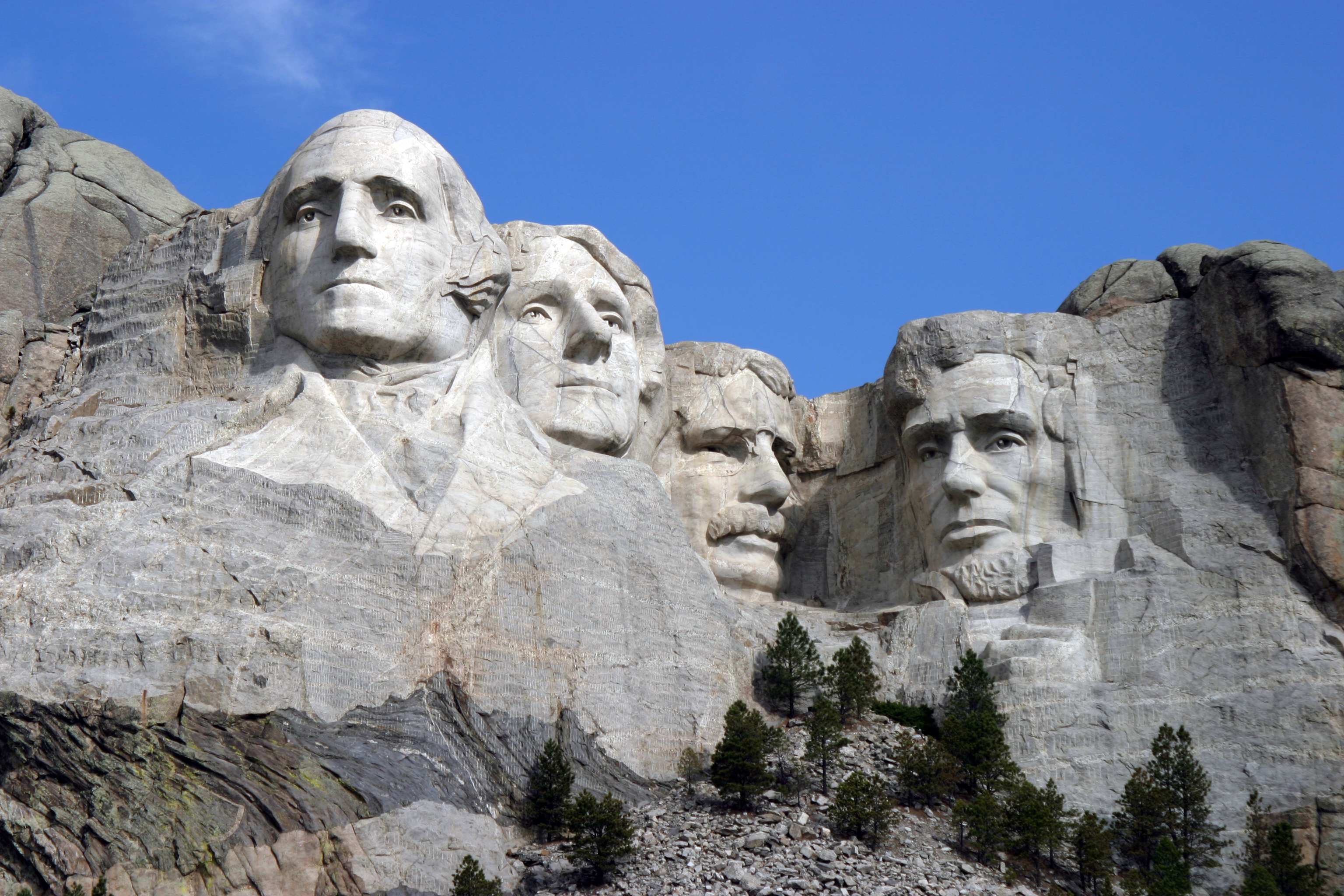
The carvings depict United States presidents George Washington, Thomas Jefferson, Theodore Roosevelt, and Abraham Lincoln, executed at a height of 60 feet (18 m) to represent the first 150 years of American history. Between October 4, 1927, and October 31, 1941, Gutzon Borglum and 400 workers sculpted the colossal figures. Construction of the memorial began on October 4, 1927, and took 14 years to complete.
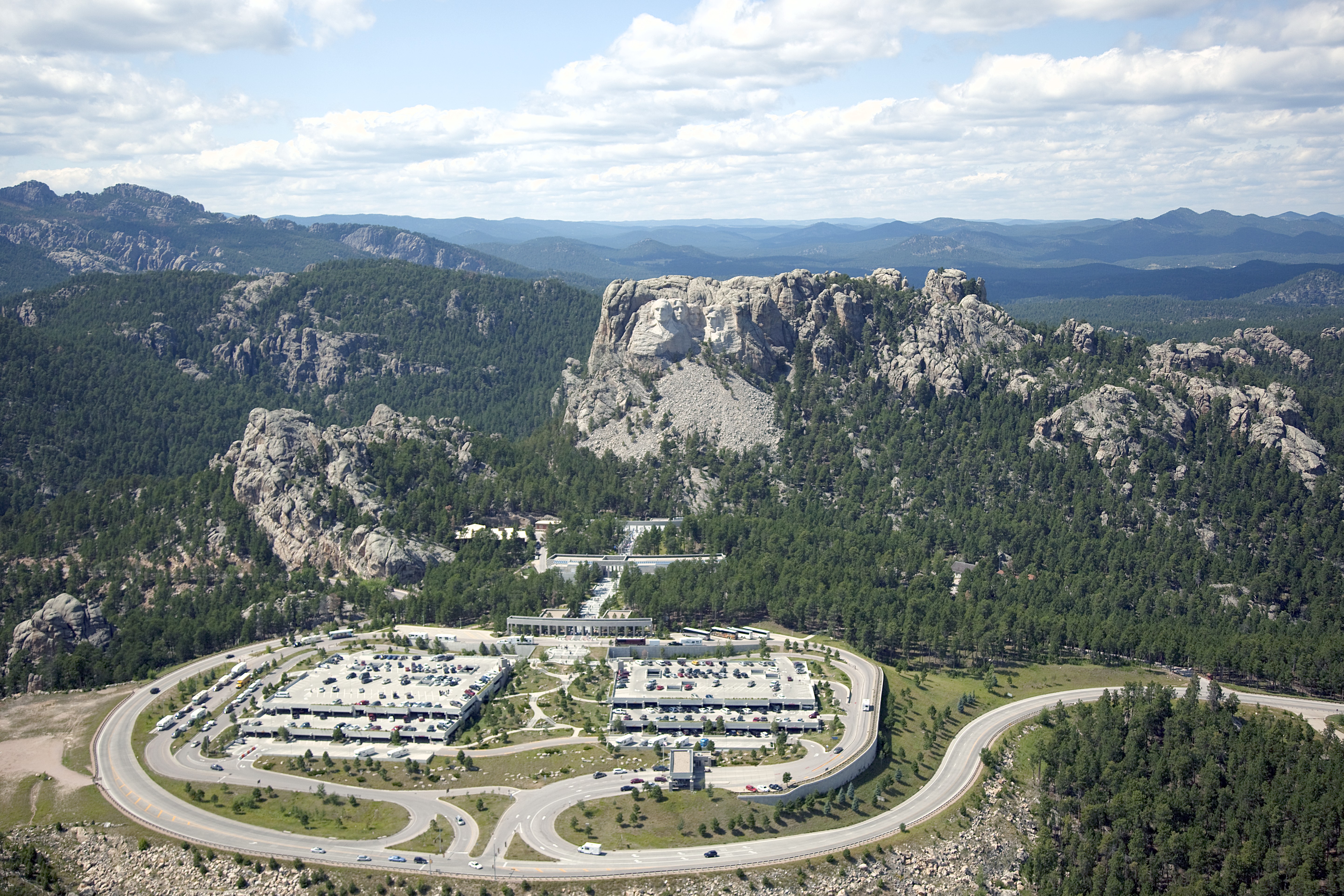
The memorial is centered on the monumental sculptures, which are faced by a building and terrace complex designed to optimize viewing of the sculptures. The terrace is built atop the Lincoln Borglum Visitor Center, which serves as a museum housing exhibits on the history of Mount Rushmore and its construction and on the presidents depicted in the sculpture. The 1,278-acre (517-hectare) site extends northward from the sculptures to include the entirety of Mount Rushmore and half of Old Baldy Mountain, and southward to Grizzly Bear Creek, where it borders on the Black Elk Wilderness and has a trail connection to the South Dakota Centennial Trail. The National Memorial is bounded by Black Hills National Forest on all sides.
The peak that would later be known as Mount Rushmore is situated in the Black Hills, which has been inhabited by numerous indigenous groups over the centuries. The Black Hills are an outlying subrange of the greater Rocky Mountain system rising from the Great Plains of North America in western South Dakota and eastern Wyoming. They form part of the North American Cordillera, specifically a range within the Rocky Mountain Front of Wyoming, South Dakota, and Montana. The United States' second oldest mountain range, the Black Hills are 125 miles (201 km) long and 65 miles (105 km) wide, stretching across South Dakota and Wyoming. The United States government illegally seized the Black Hills from the Sioux Nation in 1876.
Mount Rushmore is 3.7 mi (6.0 km) east-northeast of the summit of Black Elk Peak (formerly Harney Peak), the highest point in the Black Hills. It is considered part of the Black Elk Range (formerly the Harney Range) in treatments that distinguish that subrange of the Black Hills.
In 1923 the Secretary of the South Dakota State Historical Society, Doane Robinson, who would later come to be known as the "Father of Mount Rushmore", sought to boost tourism to South Dakota through the construction of a large monument in the Black Hills. He proposed that this monument should be built from the granite cliffs in the Black Hills of South Dakota. Robinson's plan had some support in South Dakota, but opposition was particularly strong in the Black Hills area. On August 20, 1924, Robinson wrote to Gutzon Borglum, the sculptor of the Stone Mountain memorial, asking him to travel to the Black Hills region to determine whether the carving could be accomplished. Borglum had been having disagreements with the Stone Mountain Memorial Association, and on September 24, 1924, travelled to South Dakota to meet Robinson.
Borglum and his workers managed to start the project, beginning a vault high on Mount Rushmore, in a crag behind the Abraham Lincoln figure.
The sculptor of the memorial was Gutzon Borglum, the son of Danish immigrants. The four presidents were selected by Borglum because of their role in preserving the Republic and expanding its territory.
Borglum originally envisioned a grand Hall of Records where America's greatest historical documents and artifacts, including the United States Constitution and Declaration of Independence, could be protected and exhibited for visitors. He also envisioned the construction of a long series of stairways that would lead up the side of Mount Rushmore to the vault's entrance.
Ten years of redevelopment work culminated with the completion of extensive visitor facilities and sidewalks in 1998, such as a visitor center, the Lincoln Borglum Museum, and the Presidential Trail. On October 15, 1966, Mount Rushmore was listed on the National Register of Historic Places.
By 1800 the Cheyenne, Arapaho, and Lakota Sioux had supplanted the earlier indigenous groups, with the Lakota becoming the majority in the area by 1850. A bill denied the Sioux all further appropriation and treaty-guaranteed annuities until they gave up the Black Hills.
Black Elk Peak, which rises to 7,242 feet (2,207 m), is the range's highest summit.
1. The Black Hills Setting
The Black Hills take their name from the dark image cast by the thick forest of pine and spruce trees covering the hills, a name given by the Native Americans belonging to the Lakota (Sioux). The Lakota call the range Pahá Sápa and regard the entire region as sacred ground, describing the hills as wamakaognaka e'cante, "the heart of everything that is". American Indian tribes have a long history in the Black Hills and consider it a sacred site. The Cheyenne, Arapaho, and other Native groups of the Northern Plains also recognize particular sites within the Black Hills as having sacred significance.
After conquering the Cheyenne in 1776 the Lakota took the territory of the Black Hills, which became central to their culture. By 1800 those groups were supplanted by the Cheyenne, Arapaho, and Lakota Sioux, with the Lakota becoming the majority in the area by 1850. Mount Rushmore was originally known to the Lakota as Igmu Tanka Pahá (Cougar Mountain) due to the many cougars living in the area.
Black Elk Peak, which rises to 7,242 feet (2,207 m), is the range's highest summit.
The carved mountain entered the national record when on October 15, 1966 Mount Rushmore was listed on the National Register of Historic Places. Members of the American Indian Movement led an occupation of the monument in 1971, naming it "Mount Crazy Horse", and Lakota holy man John Fire Lame Deer planted a prayer staff on top of the mountain.
The Black Hills form an outlying subrange of the greater Rocky Mountain system, rising from the Great Plains in western South Dakota and eastern Wyoming. They belong to the North American Cordillera, specifically to a range within the Rocky Mountain Front of Wyoming, South Dakota, and Montana. The range is the second oldest in the United States, measuring 125 miles (201 km) in length and 65 miles (105 km) in width across the two states. Mount Rushmore itself lies 3.7 mi (6.0 km) east-northeast of the summit of Black Elk Peak, the highest point in the Black Hills, and the memorial is bounded on all sides by Black Hills National Forest.
The United States government illegally seized the Black Hills from the Sioux Nation in 1876. A bill attached to the seizure "denied the Sioux all further appropriation and treaty-guaranteed annuities" until they gave up the Black Hills.
In 1923 Doane Robinson, Secretary of the South Dakota State Historical Society and later known as the "Father of Mount Rushmore", sought to boost tourism to South Dakota through the construction of a large monument in the Black Hills, proposing that it be built from the granite cliffs of the Black Hills. His plan had some support in South Dakota, but opposition was particularly strong in the Black Hills area. On August 20, 1924 Robinson wrote to Gutzon Borglum, the sculptor of the Stone Mountain memorial, asking him to travel to the Black Hills region to determine whether the carving could be accomplished.
2. Indigenous History and Sacred Significance
The Black Hills have been inhabited by numerous indigenous groups over the centuries, and the peak that would later bear the name Mount Rushmore stands within that range. American Indian tribes have a long history in the Black Hills and consider it a sacred site. The Cheyenne, Arapaho, and other Native groups of the Northern Plains also recognize particular sites within the Black Hills as having sacred significance.
3. Land Claim and the 1876 Seizure
The taking was reinforced by legislative pressure.
The memorial occupies the granite face of Mount Rushmore, known in Lakota as Tȟuŋkášila Šákpe Pahá, or Six Grandfathers Mountain, set in the Black Hills roughly 2 mi (3 km) southwest of Keystone, South Dakota. The range itself is an outlying subrange of the greater Rocky Mountain system, rising from the Great Plains of North America across western South Dakota and eastern Wyoming, and its highest summit is Black Elk Peak at 7,242 feet (2,207 m). The peak has stood within territory inhabited by numerous indigenous groups over the centuries; by 1800 the Cheyenne, Arapaho and Lakota Sioux had supplanted earlier occupants, and the Lakota held the majority in the area by 1850.
The memorial site extends across 1,278 acres (517 hectares), running northward from the sculptures to take in the whole of Mount Rushmore and half of Old Baldy Mountain, and southward to Grizzly Bear Creek, where it borders the Black Elk Wilderness and connects by trail to the South Dakota Centennial Trail.
Doane Robinson, secretary of the South Dakota State Historical Society and later called the "Father of Mount Rushmore", proposed in 1923 a large monument in the Black Hills as a means of boosting tourism to the state. The commission went to the sculptor Gutzon Borglum, son of Danish immigrants, who named the work the Shrine of Democracy and directed its execution from 1927 to 1941 with the help of his son, Lincoln Borglum. Carving began on October 4, 1927 and took 14 years to complete; between that date and October 31, 1941 Borglum and 400 workers sculpted the 60-foot-high (18 m) figures of George Washington, Thomas Jefferson, Theodore Roosevelt and Abraham Lincoln, chosen for their role in preserving the Republic and expanding its territory and meant to represent the first 150 years of American history.
Borglum also planned a grand Hall of Records to protect and exhibit the country's founding documents, among them the United States Constitution and the Declaration of Independence, reached by a long series of stairways leading up the mountainside to the vault's entrance. Mount Rushmore was listed on the National Register of Historic Places on October 15, 1966, and ten years of redevelopment work ended with the completion of extensive visitor facilities and sidewalks in 1998, including a visitor center, the Lincoln Borglum Museum and the Presidential Trail.
4. Origins: Doane Robinson's Proposal
Doane Robinson served as Secretary of the South Dakota State Historical Society and would later be remembered as the "Father of Mount Rushmore". In 1923 he set out to draw visitors to South Dakota by means of a large monument in the Black Hills.
On August 20, 1924 Robinson wrote to Gutzon Borglum, the sculptor of the Stone Mountain memorial, inviting him to travel to the Black Hills region so that he could judge whether the carving could be accomplished. Borglum had been at odds with the Stone Mountain Memorial Association, and on September 24, 1924 he made the journey to South Dakota to meet Robinson.
Robinson's proposal did not go unchallenged: while it drew some support within South Dakota, opposition was especially pronounced among those living in the Black Hills area itself.
5. Construction and the Sculptor
The sculptor Gutzon Borglum named the work the Shrine of Democracy and oversaw its execution from 1927 to 1941 with the help of his son Lincoln Borglum. Between October 4 1927 and October 31 1941 Borglum and 400 workers sculpted the colossal 60-foot-high carvings of United States presidents George Washington, Thomas Jefferson, Theodore Roosevelt, and Abraham Lincoln to represent the first 150 years of American history.
Borglum envisaged other grand extensions to his plan, but a combination of hard granite, looming war in Europe, and lack of funding conspired against him.
The memorial's sculptor was Gutzon Borglum, the son of Danish immigrants. The project's origins lie with Doane Robinson, Secretary of the South Dakota State Historical Society, who in 1923 sought to boost tourism to South Dakota through the construction of a large monument in the Black Hills. Robinson would later come to be known as the "Father of Mount Rushmore". On August 20 1924 Robinson wrote to Gutzon Borglum, then the sculptor of the Stone Mountain memorial, asking him to travel to the Black Hills region to determine whether the carving could be accomplished.
Work on Mount Rushmore National Memorial began on October 4 1927 and took 14 years to complete.
Among the extensions Borglum envisaged was the construction of a long series of stairways that would lead up the side of Mount Rushmore to the entrance of the vault.
A terrace stands atop the Lincoln Borglum Visitor Center, which serves as a museum housing exhibits on the history of Mount Rushmore and its construction and on the presidents depicted in the sculpture.
6. The Hall of Records
Gutzon Borglum's plan for Mount Rushmore extended beyond the carved faces to a grand Hall of Records, a chamber in which America's greatest historical documents and artifacts could be protected and exhibited to visitors. Among the treasures he intended the hall to shelter were the United States Constitution and the Declaration of Independence. The vault itself was begun in a crag behind the figure of Lincoln. To carry visitors to its door, Borglum envisioned the construction of a long series of stairways leading up the side of the mountain to the vault's entrance.
In 1998 a stone time capsule was constructed inside the mouth of the cave. It houses 16 enamel panels bearing biographical and historical information about Mount Rushmore. The panels also carry the texts of the documents Borglum had wanted to preserve there.
The memorial that contains the unfinished hall is a national memorial built around a colossal sculpture cut into the granite face of Mount Rushmore, known in Lakota as Tȟuŋkášila Šákpe Pahá, or Six Grandfathers Mountain, in the Black Hills about 2 mi (3 km) southwest of Keystone, South Dakota. The Black Hills themselves form an outlying subrange of the greater Rocky Mountain system, rising from the Great Plains across western South Dakota and eastern Wyoming. Black Elk Peak, the range's highest summit, rises to 7,242 feet (2,207 m).
The peak stands in country inhabited by numerous indigenous groups over the centuries. By 1800 those groups had been supplanted by the Cheyenne, Arapaho, and Lakota Sioux, with the Lakota becoming the majority in the area by 1850. The United States government illegally seized the Black Hills from the Sioux Nation in 1876, and a later bill denied the Sioux all further appropriation and treaty-guaranteed annuities until they gave up the Black Hills.
The monument owed its existence to a tourism campaign: in 1923 Doane Robinson, secretary of the South Dakota State Historical Society, who would later come to be known as the "Father of Mount Rushmore", sought to boost tourism to South Dakota through the construction of a large monument in the Black Hills. The sculptor was Gutzon Borglum, the son of Danish immigrants, who named the work the Shrine of Democracy and oversaw its execution from 1927 to 1941 with the help of his son, Lincoln Borglum. Construction began on October 4, 1927, and took 14 years to complete; between October 4, 1927, and October 31, 1941, Borglum and 400 workers sculpted the colossal 60-foot-high (18 m) carvings of United States presidents George Washington, Thomas Jefferson, Theodore Roosevelt, and Abraham Lincoln to represent the first 150 years of American history. These presidents were selected by Borglum because of their role in preserving the Republic and expanding its territory.
The memorial site covers 1,278 acres (517 hectares), extending northward from the sculptures to include the entirety of Mount Rushmore and half of Old Baldy Mountain, and southward to Grizzly Bear Creek, where it borders on the Black Elk Wilderness and has a trail connection to the South Dakota Centennial Trail. Mount Rushmore was listed on the National Register of Historic Places on October 15, 1966. Ten years of redevelopment work culminated in 1998 with the completion of extensive visitor facilities and sidewalks, including a visitor center, the Lincoln Borglum Museum, and the Presidential Trail.
The name also belongs to an American rock band of the late 1960s from San Francisco, California, which played a heavy blues rock style with psychedelic elements. Its album High on Mount Rushmore (1968, DOT Records) - DLP 25898 debuted at number 41 on the Billboard national album chart.
7. Memorial Site and Visitor Facilities
The memorial park covers 1,278 acres (2.00 sq mi; 517 hectares). The site of Mount Rushmore National Memorial extends northward from the sculptures to include the entirety of Mount Rushmore and half of Old Baldy Mountain, and southward to Grizzly Bear Creek, where it borders on the Black Elk Wilderness and has a trail connection to the South Dakota Centennial Trail.
Ten years of redevelopment work culminated with the completion of extensive visitor facilities and sidewalks in 1998, such as a visitor center, the Lincoln Borglum Museum, and the Presidential Trail.
Mount Rushmore attracts more than two million visitors annually to the memorial park.
The memorial is centered on the monumental sculptures, which are faced by a building and terrace complex designed to optimize viewing of the sculptures. The terrace is built atop the Lincoln Borglum Visitor Center, which serves as a museum housing exhibits on the history of Mount Rushmore and its construction and on the presidents depicted in the sculpture. The National Memorial is bounded by Black Hills National Forest on all sides.
The memorial's origins lie in a letter of August 20, 1924, when Robinson wrote to Gutzon Borglum, the sculptor of the Stone Mountain memorial, asking him to travel to the Black Hills region to determine whether the carving could be accomplished. Borglum had been having disagreements with the Stone Mountain Memorial Association, and on September 24, 1924, travelled to South Dakota to meet Robinson. The sculptor of the memorial was Gutzon Borglum, the son of Danish immigrants. Construction of Mount Rushmore National Memorial began on October 4, 1927, and took 14 years to complete.
Borglum originally envisioned a grand Hall of Records where America's greatest historical documents and artifacts, including the United States Constitution and Declaration of Independence, could be protected and exhibited for visitors. American Indian tribes have a long history in the Black Hills and consider it a sacred site. The Cheyenne, Arapaho, and other Native groups of the Northern Plains also recognize particular sites within the Black Hills as having sacred significance.
8. Protests and Contested Meaning
Members of the American Indian Movement led an occupation of the site in 1971 and renamed it "Mount Crazy Horse". During that action the Lakota holy man John Fire Lame Deer planted a prayer staff on top of the mountain.
Lame Deer described the staff as forming a symbolic shroud over the presidents' faces, one "which shall remain dirty until the treaties concerning the Black Hills are fulfilled".
The contested reading of the mountain stands against the official account of its making, in which Gutzon Borglum and 400 workers sculpted the colossal 60-foot-high (18 m) carvings of George Washington, Thomas Jefferson, Theodore Roosevelt and Abraham Lincoln between October 4 1927 and October 31 1941 to represent the first 150 years of American history.
In 1991 President George H. Bush is referenced in connection with the continuing dispute.
The peak rises within the Black Hills, an outlying subrange of the Rocky Mountain system that lifts from the Great Plains across western South Dakota and eastern Wyoming. The range's highest summit is Black Elk Peak, which reaches 7,242 feet (2,207 m). The mountain itself is known in Lakota as Tȟuŋkášila Šákpe Pahá, or Six Grandfathers Mountain, and the memorial sits about 2 mi (3 km) southwest of Keystone, South Dakota.
The land beneath the carving has been inhabited by numerous indigenous groups over the centuries. By 1800 those groups were supplanted by the Cheyenne, Arapaho and Lakota Sioux, with the Lakota becoming the majority in the area by 1850. The United States government illegally seized the Black Hills from the Sioux Nation in 1876, and a later bill denied the Sioux all further appropriation and treaty-guaranteed annuities until they gave up the Black Hills.
The memorial's origin lies in tourism rather than commemoration. In 1923 the Secretary of the South Dakota State Historical Society, Doane Robinson — later known as the "Father of Mount Rushmore" — sought to boost tourism to South Dakota through the construction of a large monument in the Black Hills. The sculptor Gutzon Borglum, son of Danish immigrants, named the work the Shrine of Democracy and oversaw its execution from 1927 to 1941 with the help of his son, Lincoln Borglum. Construction began on October 4, 1927, and took 14 years to complete. The presidents were chosen by Borglum for their role in preserving the Republic and expanding its territory.
Borglum also envisioned a grand Hall of Records where America's greatest historical documents and artifacts, including the United States Constitution and Declaration of Independence, could be protected and exhibited for visitors. He planned a long series of stairways leading up the side of the mountain to the vault's entrance. The memorial was listed on the National Register of Historic Places on October 15, 1966, and ten years of redevelopment work culminated in 1998 with extensive visitor facilities and sidewalks, among them a visitor center, the Lincoln Borglum Museum and the Presidential Trail.
The memorial site covers 1,278 acres (517 hectares), extending northward from the sculptures to include the whole of Mount Rushmore and half of Old Baldy Mountain, and southward to Grizzly Bear Creek, where it borders the Black Elk Wilderness and connects by trail to the South Dakota Centennial Trail. In the years when automobile travel opened the region, the memorial was a popular destination for visitors touring the Black Hills National Forest, Wind Cave National Park and Needles Highway.
9. Recognition and Cultural References
The name Mount Rushmore also belongs to an American rock band of the late 1960s from San Francisco, California, United States, which played a heavy blues rock style with psychedelic elements. In June 1967 the group played two sets at The KFRC Fantasy Fair and Magic Mountain Music Festival. Its album High on Mount Rushmore appeared in 1968 on DOT Records as DLP 25898 and debuted at number 41 on the Billboard national album chart.
The memorial occupies a 1,278-acre (517-hectare) site that runs northward from the sculptures to take in the whole of Mount Rushmore and half of Old Baldy Mountain, and southward to Grizzly Bear Creek, where it meets the boundary of the Black Elk Wilderness and connects by trail to the South Dakota Centennial Trail.
The peak stands in the Black Hills, an outlying subrange of the greater Rocky Mountain system that rises from the Great Plains across western South Dakota and eastern Wyoming. Black Elk Peak, at 7,242 feet (2,207 m), is the range's highest summit. The mountain itself lies about 2 mi (3 km) southwest of Keystone, South Dakota, and carries the Lakota name Tȟuŋkášila Šákpe Pahá, or Six Grandfathers Mountain.
The Black Hills had been inhabited by numerous indigenous groups over the centuries. By 1800 those groups were supplanted by the Cheyenne, Arapaho, and Lakota Sioux, and the Lakota had become the majority in the area by 1850. The United States government illegally seized the range from the Sioux Nation in 1876, and a bill denied the Sioux all further appropriation and treaty-guaranteed annuities until they gave up the Black Hills.
In 1923 Doane Robinson, secretary of the South Dakota State Historical Society and later known as the "Father of Mount Rushmore", sought to boost tourism to the state through a large monument in the Black Hills. The sculptor was Gutzon Borglum, son of Danish immigrants, who named the work the Shrine of Democracy and oversaw its execution from 1927 to 1941 with the help of his son, Lincoln Borglum. Construction began on October 4, 1927, and took 14 years to complete: between October 4, 1927, and October 31, 1941, Borglum and 400 workers sculpted the 60-foot-high (18 m) carvings of George Washington, Thomas Jefferson, Theodore Roosevelt, and Abraham Lincoln to represent the first 150 years of American history. The presidents were chosen for their role in preserving the Republic and expanding its territory.
Borglum originally envisioned a grand Hall of Records in which America's greatest historical documents and artifacts, including the United States Constitution and Declaration of Independence, could be protected and exhibited to visitors, reached by a long series of stairways leading up the mountainside to the vault's entrance. Mount Rushmore was listed on the National Register of Historic Places on October 15, 1966. Ten years of redevelopment work culminated in 1998 with extensive visitor facilities and sidewalks, among them a visitor center, the Lincoln Borglum Museum, and the Presidential Trail.
10. Key dates
- 1765The Lakota Sioux settled the area in about 1765 after being pushed out of Wisc…The Lakota Sioux settled the area in about 1765 after being pushed out of Wisconsin and Minnesota by European settlers and Chippewa tribes.
- 1776After conquering the Cheyenne in 1776, the Lakota took the territory of the Bl…After conquering the Cheyenne in 1776, the Lakota took the territory of the Black Hills, which became central to their culture.
- 1800By 1800 those groups were supplanted by the Cheyenne , Arapaho , and Lakota Si…By 1800 those groups were supplanted by the Cheyenne , Arapaho , and Lakota Sioux , with the Lakota becoming the majority in the area by 1850.
- 1876The United States government illegally seized the Black Hills – a mountain ran…The United States government illegally seized the Black Hills – a mountain range in the US states of South Dakota and Wyoming – from the Sioux Nation in 1876.
- 1923In 1923, the Secretary of the South Dakota State Historical Society , Doane Ro…In 1923, the Secretary of the South Dakota State Historical Society , Doane Robinson , who would later come to be known as the "Father of Mount Rushmore", sought to boost tourism to South Dakota through the construction of a large monument in the Black Hills.
- 1924On August 20, 1924, Robinson wrote to Gutzon Borglum, the sculptor of the Ston…On August 20, 1924, Robinson wrote to Gutzon Borglum, the sculptor of the Stone Mountain memorial, asking him to travel to the Black Hills region to determine whether the carving could be accomplished.
- 1927The construction of Mount Rushmore National Memorial began on October 4, 1927…The construction of Mount Rushmore National Memorial began on October 4, 1927, and took 14 years to complete.
- 1933In 1933, the National Park Service took Mount Rushmore under its jurisdiction.In 1933, the National Park Service took Mount Rushmore under its jurisdiction.
11. Frequently asked questions
Who was the chief carver of the mountain?
The chief carver of the mountain was Luigi Del Bianco, an artisan and stonemason who emigrated to the U.S.2Mount Rushmore · Wikipedia ↗
What technique did the carvers use to remove rock?
The carving involved the use of dynamite, followed by the process of "honeycombing", where workers drilled closely spaced holes, allowing small pieces of rock to be removed by hand.2
Why were these four presidents chosen?
These presidents were selected by Borglum because of their role in preserving the Republic and expanding its territory.2
Who was the sculptor of the memorial?
The sculptor of the memorial was Gutzon Borglum, the son of Danish immigrants.3Construction of Mount Rushmore · Wikipedia ↗
What happened to the project when Borglum died?
His team had reached 70 feet into the granite by March 1941, when Borglum unexpectedly died.3
Which agency took charge of the monument in the 1930s?
In 1933 the National Park Service took Mount Rushmore under its jurisdiction.2
References (12)
- 1Mount Rushmore — Wikipedia WebView source
- 2Mount Rushmore — Wikipedia Web↩View source
- 3Construction of Mount Rushmore — Wikipedia Web↩View source
- 4Mount Rushmore — Wikipedia WebView source
- 5Mount Rushmore — Wikipedia WebView source
- 6Black Hills — Wikipedia WebView source
- 7Black Hills land claim — Wikipedia WebView source
- 8Mount Rushmore — Wikipedia WebView source
- 9Mount Rushmore — Wikipedia WebView source
- 10Mount Rushmore — Wikipedia WebView source
- 11Mount Rushmore (band) — Wikipedia WebView source
- 12Mount Rushmore — Wikipedia WebView source