Vaquita
The world's smallest cetacean is down to a handful of animals in the northern Gulf of California, killed almost entirely by gillnets.
The vaquita, Phocoena sinus, is a porpoise found only in the northern Gulf of California in Mexico and the smallest of all living cetaceans, reaching about 150 cm as an adult female. A 1997 range-wide survey counted 567 animals; by 2018 the estimate had fallen below 19, a decline of roughly 98 percent, driven by entanglement in gillnets set illegally for the totoaba and legally for shrimp and fish. A 2017 attempt to capture animals for a sanctuary, VaquitaCPR, caught two and lost one. Recent surveys count 7 to 10 individuals, with calves still being born, leaving the species one bad season from extinction.
Overview
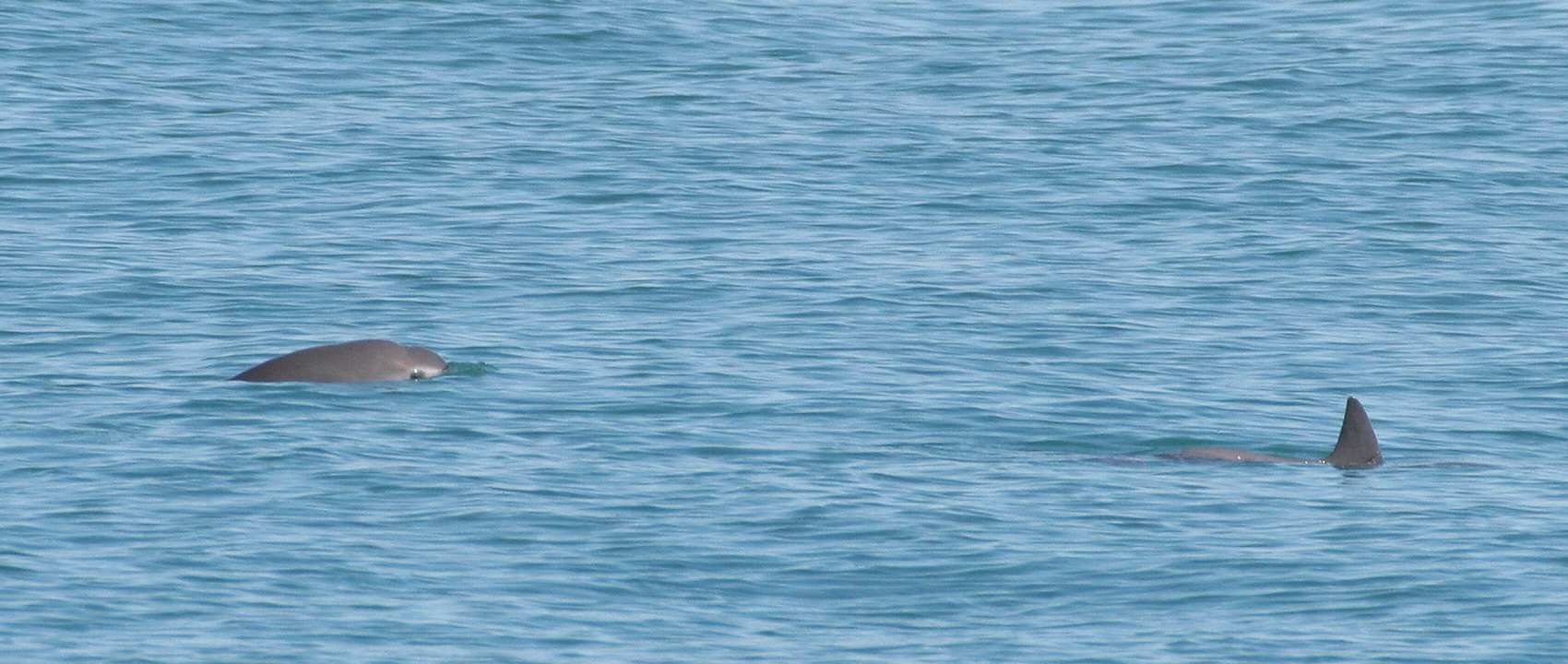
The vaquita is a shy member of the porpoise family and the most endangered of the world's marine mammals. It is a species of porpoise endemic to the northern end of the Gulf of California in Baja California, Mexico, and it has the smallest range of any whale, dolphin or porpoise, living only in that northern gulf, an area rich in fish and shrimp. Most vaquitas live east of San Felipe within a 1,519-square-mile area that is less than one-fourth the size of metropolitan Los Angeles. The animals occupy shallow, turbid waters of less than 150 m depth, within the smallest range of any cetacean species.
Reaching a maximum body length of 150 cm in females and 140 cm in males, the vaquita is the smallest of all living cetaceans. It is about 5 feet long with a rounded head and no beak, black patches around its eyes and lips, and spade-shaped teeth. Vaquitas forage as generalists on demersal fish, crustaceans and squids, with benthic fish such as grunts and croakers dominating the diet; they feed on small fish, crustaceans such as shrimp, and cephalopods such as squid and octopuses. They are generally seen alone or in pairs, often with a calf, but have been observed in small groups of up to 10 individuals.
The vaquita was defined as a species by two zoologists, Kenneth S. Norris and William N. McFarland, in 1958 after studying the morphology of skull specimens. The species is on the brink of extinction and is listed as Critically Endangered by the IUCN Red List, with the steep decline driven primarily by gillnet bycatch; it has been listed as critically endangered by the IUCN Red List of Threatened Species since 1996. Because totoaba and vaquita are similar in size, gillnets illegally set for totoaba are the deadliest for vaquitas.
The first comprehensive survey across the whole range took place in 1997 and estimated a population of 567 individuals; by 2007 abundance was estimated to have dropped to 150. From 1997 to 2008 vaquitas declined from around 600 to about 200 individuals as a result of legal fishing, largely for shrimp exported to the United States. Abundance was estimated at fewer than 19 individuals in 2018, down from the 567 counted in the 1997 range-wide survey. A 2024 survey observed a minimum of 6 to 8 individuals, the lowest ever counted, though the small survey area may explain the figure rather than a real decline. Monitoring in 2025 identified 7 to 10 unique individuals and the birth of new calves.
Mexico launched a program in 2008 called PACE-VAQUITA to enforce the gillnet ban in the Biosphere Reserve, swap gear for vaquita-safe alternatives, and support fishers who surrendered permits. Poaching continued because totoaba swim bladders can sell for $20,000 to more than $80,000, earning them the name cocaine of the sea. In 2019 the UNESCO World Heritage Site where the last vaquitas live was classified as a World Heritage Site in Danger. In March 2020 the U.S. National Marine Fisheries Service announced a ban on imported Mexican shrimp and other seafood caught in vaquita habitat. Beginning in July 2022 the Mexican government placed 193 concrete blocks in the Gulf of California no-tolerance zone to snag and destroy illegal gillnets.
1. Taxonomy and naming
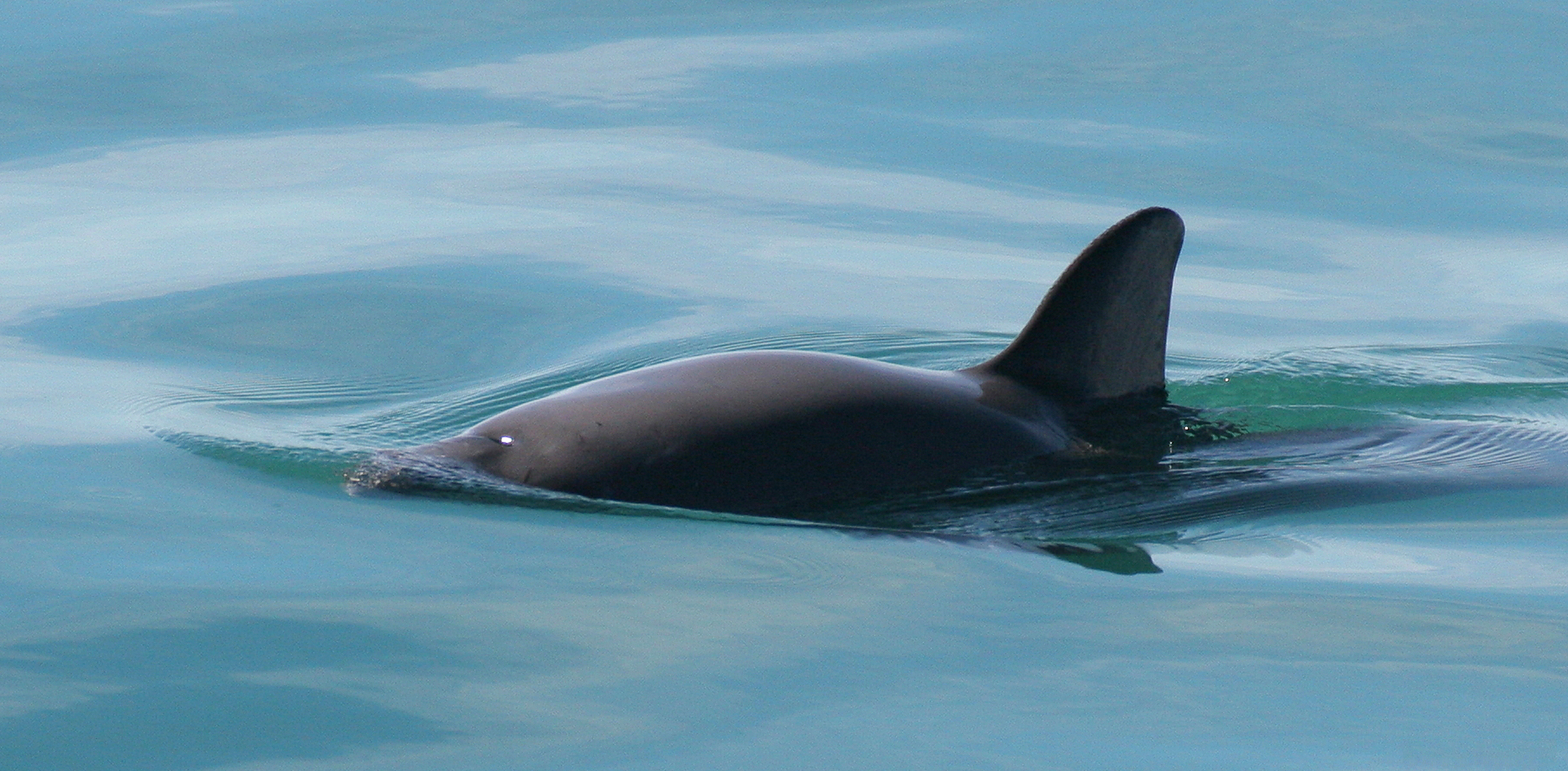
The vaquita is a species of porpoise confined to the northern end of the Gulf of California in Baja California, Mexico, a shy member of the porpoise family and the most endangered of the world's marine mammals. It is the smallest of all living cetaceans, reaching a maximum body length of 150 cm in females and 140 cm in males. Externally it is about 5 feet long, with a rounded head and no beak, black patches around the eyes and lips, and spade-shaped teeth.
The species was defined by two zoologists, Kenneth S. Norris and William N. McFarland, in 1958 after studying the morphology of skull specimens. Its range is the smallest of any whale, dolphin or porpoise, and most individuals live east of San Felipe within a 1,519-square-mile area that is less than one-fourth the size of metropolitan Los Angeles. Vaquitas keep to shallow, turbid waters of less than 150 m depth, within the smallest range of any cetacean species.
Vaquitas forage as generalists on demersal fish, crustaceans and squids, with benthic fish such as grunts and croakers dominating the diet. They also take small fish, crustaceans such as shrimp, and cephalopods such as squid and octopuses. They are generally seen alone or in pairs, often with a calf, but have been observed in small groups of up to 10 individuals.
The steep decline is driven primarily by gillnet bycatch, and because totoaba and vaquita are similar in size, gillnets illegally set for totoaba are the deadliest for vaquitas. From 1997 to 2008 vaquitas declined from around 600 to about 200 individuals as a result of legal fishing, largely for shrimp exported to the United States. The first comprehensive survey across the whole range took place in 1997 and estimated a population of 567 individuals; by 2007 abundance was estimated to have dropped to 150. Abundance was estimated at fewer than 19 individuals in 2018, down from the 567 counted in the 1997 range-wide survey. A 2024 survey observed a minimum of 6 to 8 individuals, the lowest ever counted, though the small survey area may explain the figure rather than a real decline. Monitoring in 2025 identified 7 to 10 unique individuals and the birth of new calves.
The vaquita has been listed as critically endangered by the IUCN Red List of Threatened Species since 1996. In 2019 the UNESCO World Heritage Site where the last vaquitas live was classified as a World Heritage Site in Danger. Mexico launched a program in 2008 called PACE-VAQUITA to enforce the gillnet ban in the Biosphere Reserve, swap gear for vaquita-safe alternatives, and support fishers who surrendered permits. Poaching continued because totoaba swim bladders can sell for $20,000 to more than $80,000, earning them the name cocaine of the sea. In March 2020 the U.S. National Marine Fisheries Service announced a ban on imported Mexican shrimp and other seafood caught in vaquita habitat. Beginning in July 2022 the Mexican government placed 193 concrete blocks in the Gulf of California no-tolerance zone to snag and destroy illegal gillnets.
2. Population decline
The first survey to span the animal's entire range was carried out in 1997 and returned an estimate of 567 individuals2Vaquita · Wikipedia ↗. A repeat survey in 2008 put total abundance at 245 animals, 57 percent below the 1997 figure, equivalent to an average loss of 7.6 percent per year3Vaquita Conservation and Abundance · NOAA Fisheries ↗. Between those two points the species is reckoned to have fallen from roughly 600 to about 200 individuals, a contraction attributed to legal fishing, chiefly for shrimp destined for the United States market1Vaquita · NOAA Fisheries ↗. By 2007 abundance was estimated to have dropped to 1502.
Monitoring from 2011 onward relied on passive acoustic detectors deployed each summer through 2018, supplemented by visual counts of at least seven animals in 2017 and six in 20184Decline towards extinction of Mexico's vaquita porpoise (Phocoena sinus) · Royal Society Open Science (Jaramillo-Legorreta et al. 2019) ↗. The acoustic record showed the population falling by 80 percent between 2011 and 2015, before the emergency gillnet ban took effect in May 20153. The ban did not arrest the slide: the estimated rate of decline was 48 percent in 2017 and 47 percent in 20184.
Combining acoustic data with visual observations for the years 2011 to 2018 yields an average annual decline of 33 percent and a cumulative population decline of 98.6 percent5Vaquita · U.S. Marine Mammal Commission ↗. The same analysis places the probability that the decline exceeds 33 percent a year at greater than 99 percent4. A separate acoustic estimate puts the annual decline across that window at about 45 percent, with a credible interval of 38 to 53 percent6Phocoena sinus, Vaquita. The IUCN Red List of Threatened Species 2022 · IUCN ↗.
For 2018 the population was estimated at fewer than 19 animals, with a posterior mean of 94. The trajectory is set against a very low ceiling on recovery: given the species' demographic parameters, the maximum annual population growth rate was thought to be about 4 percent, and recent evidence of annual calving could raise it to roughly 6 percent4. The IUCN Red List classes the vaquita as Critically Endangered, with gillnet bycatch identified as the principal driver of the steep decline2.
A 2024 survey recorded a minimum of 6 to 8 individuals, the lowest count ever obtained; the small area covered may account for the figure rather than a genuine further decline2.
3. Threats
The vaquita is a porpoise found nowhere but the northern end of the Gulf of California in Baja California, Mexico. It is the smallest of all living cetaceans, with females reaching a maximum body length of 150 cm and males 140 cm. A shy member of the porpoise family, it is regarded as the most endangered of the world's marine mammals. Its range is the smallest of any whale, dolphin or porpoise, confined to a part of the gulf rich in fish and shrimp. Most individuals live east of San Felipe within a 1,519-square-mile area less than one-fourth the size of metropolitan Los Angeles. The animals keep to shallow, turbid waters of less than 150 m depth, within the smallest range of any cetacean species. They are generally seen alone or in pairs, often with a calf, though small groups of up to 10 individuals have been observed. Externally they are about 5 feet long, with a rounded head and no beak, black patches around the eyes and lips, and spade-shaped teeth.
Vaquitas forage as generalists on demersal fish, crustaceans and squids, with benthic fish such as grunts and croakers dominating the diet. They also feed on small fish, crustaceans such as shrimp, and cephalopods such as squid and octopuses. The species was defined by two zoologists, Kenneth S. Norris and William N. McFarland, in 1958 after studying the morphology of skull specimens.
The central mechanism of decline is entanglement in gillnets, and the deadliest of these are set illegally for totoaba, a fish similar in size to the vaquita. Poaching has persisted because totoaba swim bladders can sell for $20,000 to more than $80,000, a price that has earned them the name cocaine of the sea. Legal fishing also took its toll: from 1997 to 2008 vaquitas declined from around 600 to about 200 individuals as a result of legal fishing, largely for shrimp exported to the United States. The first comprehensive survey across the whole range took place in 1997 and estimated a population of 567 individuals; by 2007 abundance was estimated to have dropped to 150. Abundance was estimated at fewer than 19 individuals in 2018, down from the 567 counted in the 1997 range-wide survey. A 2024 survey observed a minimum of 6 to 8 individuals, the lowest ever counted, though the small survey area may explain the figure rather than a real decline. Monitoring in 2025 identified 7 to 10 unique individuals and the birth of new calves.
The species has been listed as critically endangered by the IUCN Red List of Threatened Species since 1996. Mexico launched a program in 2008 called PACE-VAQUITA to enforce the gillnet ban in the Biosphere Reserve, swap gear for vaquita-safe alternatives, and support fishers who surrendered permits. In 2019 the UNESCO World Heritage Site where the last vaquitas live was classified as a World Heritage Site in Danger. In March 2020 the U.S. National Marine Fisheries Service announced a ban on imported Mexican shrimp and other seafood caught in vaquita habitat. Beginning in July 2022 the Mexican government placed 193 concrete blocks in the Gulf of California no-tolerance zone to snag and destroy illegal gillnets.
4. Conservation measures
The vaquita is a porpoise found only at the northern end of the Gulf of California in Baja California, Mexico, and it is the smallest of all living cetaceans, with females reaching a maximum body length of 150 cm and males 140 cm. It is a shy member of the porpoise family and the most endangered of the world's marine mammals. The animal has a rounded head without a beak, black patches around the eyes and lips, and spade-shaped teeth, and measures about 5 feet in length.
The species was defined by two zoologists, Kenneth S. Norris and William N. McFarland, in 1958 after they studied the morphology of skull specimens. Vaquitas occupy shallow, turbid waters of less than 150 m depth, within the smallest range of any cetacean species; they have the smallest range of any whale, dolphin or porpoise, living only in the northern Gulf of California, an area rich in fish and shrimp. Most individuals live east of San Felipe within a 1,519-square-mile area that is less than one-fourth the size of metropolitan Los Angeles.
Vaquitas forage as generalists on demersal fish, crustaceans and squids, with benthic fish such as grunts and croakers dominating the diet; they feed on small fish, crustaceans such as shrimp, and cephalopods such as squid and octopuses. They are generally seen alone or in pairs, often with a calf, but have been observed in small groups of up to 10 individuals.
The species is on the brink of extinction and is listed as Critically Endangered by the IUCN Red List, with the steep decline driven primarily by gillnet bycatch; it has held that listing since 1996. Because totoaba and vaquita are similar in size, gillnets illegally set for totoaba are the deadliest for vaquitas. From 1997 to 2008 vaquitas declined from around 600 to about 200 individuals as a result of legal fishing, largely for shrimp exported to the United States.
The first comprehensive survey across the whole range took place in 1997 and estimated a population of 567 individuals; by 2007 abundance was estimated to have dropped to 150. Abundance was estimated at fewer than 19 individuals in 2018, down from the 567 counted in the 1997 range-wide survey. A 2024 survey observed a minimum of 6 to 8 individuals, the lowest ever counted, though the small survey area may explain the figure rather than a real decline. Monitoring in 2025 identified 7 to 10 unique individuals and the birth of new calves.
Mexico launched a program in 2008 called PACE-VAQUITA to enforce the gillnet ban in the Biosphere Reserve, swap gear for vaquita-safe alternatives, and support fishers who surrendered permits. Poaching continued because totoaba swim bladders can sell for $20,000 to more than $80,000, earning them the name cocaine of the sea. In 2019 the UNESCO World Heritage Site where the last vaquitas live was classified as a World Heritage Site in Danger. In March 2020 the U.S. National Marine Fisheries Service announced a ban on imported Mexican shrimp and other seafood caught in vaquita habitat. Beginning in July 2022 the Mexican government placed 193 concrete blocks in the Gulf of California no-tolerance zone to snag and destroy illegal gillnets.
5. Timeline
6. Timeline
- 1958Named as a speciesNorris and McFarland describe the vaquita as a new species from skull specimens found on the beach.
- January 1985Listed under the U.S. Endangered Species ActThe U.S. National Marine Fisheries Service adds the vaquita to the List of Endangered and Threatened Wildlife, effective February 8, 1985.
- 1993Biosphere reserve establishedThe Mexican government creates a biosphere reserve covering the Upper Gulf of California and the Colorado River Delta.
- 1996Critically EndangeredThe IUCN Red List re-assesses the vaquita and concludes it qualifies as Critically Endangered; the international recovery team CIRVA is formed in 1996/97.
- 1997First range-wide surveyThe first survey covering the whole range estimates 567 vaquitas, with a 95 percent confidence interval of 177 to 1,073.
- 2005Vaquita Refuge decreedOn CIRVA's recommendation, Mexico decrees a refuge covering about 80 percent of the area where vaquitas have been sighted.
- 2008Abundance at 245, PACE-Vaquita launchedA second binational survey estimates 245 animals, 57 percent below 1997; Mexico publishes the PACE Vaquita recovery plan.
- April 2015Emergency gillnet banPresident Enrique Pena Nieto announces a two-year ban on gillnet fishing across the entire known vaquita range, with the navy assisting enforcement.
- November 2016Only about 30 remainCIRVA concludes that roughly 30 vaquitas likely survive, a 90 percent decline between 2011 and 2016.
- October-November 2017VaquitaCPR rescue attemptA 65-scientist team captures two vaquitas in the Gulf; both are released but the second does not survive.
- Summer 2018Fewer than 19 leftAcoustic monitoring and visual counts give a posterior mean of 9 vaquitas, with a 98.6 percent decline since 2011.
- March 2020U.S. seafood import banThe U.S. National Marine Fisheries Service bans imports of Mexican shrimp and other seafood caught in vaquita habitat.
- July 2022Concrete blocks in the Zero Tolerance AreaMexico places 193 concrete blocks in the no-tolerance zone to snag and destroy illegal gillnets.
- June 2024Lowest count on recordA survey observes a minimum of 6 to 8 individuals, the lowest ever counted, though the small survey area may explain the figure.
- 2025Calves seenMonitoring identifies 7 to 10 unique individuals and the birth of new calves.
7. Frequently asked questions
How many vaquitas were left in 2018?
The 2018 estimate placed the population at fewer than 19 individuals, with a posterior mean of 9 4.
What did the 2015 international survey find?
A third international survey in 2015 estimated total abundance at 59 individuals, with a 95 percent credible interval of 22 to 145 3.
How fast did the population fall between 2011 and 2015?
Passive acoustic monitoring indicated the population fell by 80 percent between 2011 and 2015, before the emergency gillnet ban began in May 2015 3.
What does the vaquita look like?
Vaquitas are about 5 feet long with a rounded head and no beak, black patches around their eyes and lips, and spade-shaped teeth 1.
Where do totoaba swim bladders end up?
The totoaba is butchered for its swim bladder, which is smuggled to China and Hong Kong and sold for thousands of dollars each 7VaquitaCPR Rescue Efforts · VaquitaCPR ↗.
What happened to the habitat in 2019?
In 2019 the UNESCO World Heritage Site where the last vaquitas live was classified as a World Heritage Site in Danger 2.
References (8)
- 1Vaquita — NOAA Fisheries Web↩View source
- 2Vaquita — Wikipedia Web↩View source
- 3Vaquita Conservation and Abundance — NOAA Fisheries Web↩View source
- 4Decline towards extinction of Mexico's vaquita porpoise (Phocoena sinus) — Royal Society Open Science (Jaramillo-Legorreta et al. 2019) Web↩View source
- 5Vaquita — U.S. Marine Mammal Commission Web↩View source
- 6Phocoena sinus, Vaquita. The IUCN Red List of Threatened Species 2022 — IUCN 2022 Web↩View source
- 7VaquitaCPR Rescue Efforts — VaquitaCPR Web↩View source
- 8Vaquita - Porpoise Conservation Society — Porpoise Conservation Society WebView source