Mount Vesuvius
The volcano above Naples, measured by a Victorian geologist.
Lobley's 1889 account gives the height and base of Vesuvius, the Bay of Naples, the new cone of Monte Nuovo, and the depth of the lava over Herculaneum.
Overview
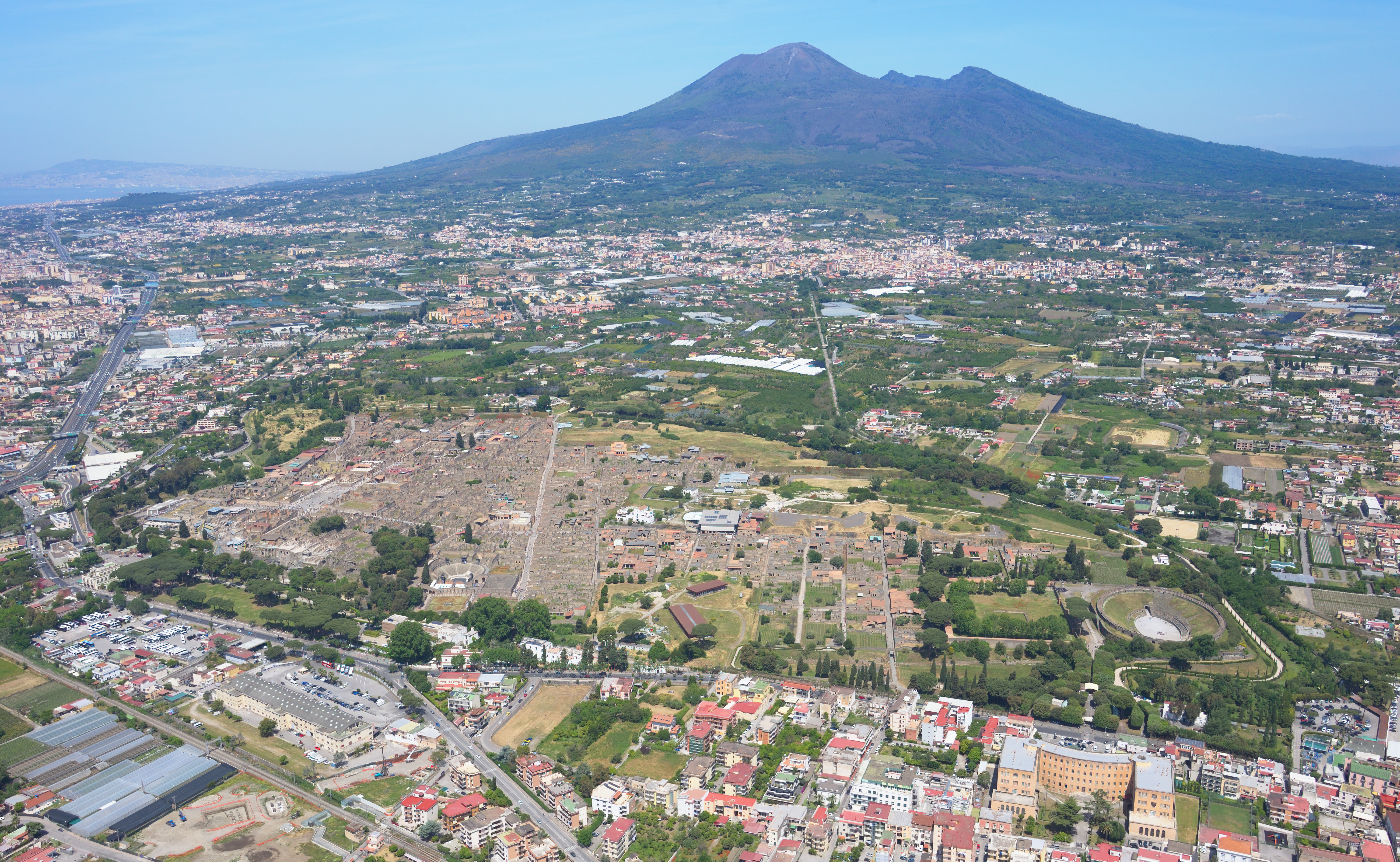
Mount Vesuvius is a volcanic mountain rising upwards of 4,000 feet above the level of the sea, and in Lobley's measurement its base extends to nearly thirty miles in extreme circumference. The mountain is therefore not a single isolated peak but a great volcanic mass whose skirts spread widely across the surrounding country, so that its true scale is understood only when height and base are taken together. A mountain of such extent, rising to so considerable an elevation, dominates the landscape in which it stands. 1Mount Vesuvius: a descriptive, historical, and geological account of the volcano and its surroundings · Roper & Drowley, London (via Internet Archive) ↗
The circumference of the base gives the measure of the mountain as a whole, and it is this wide foundation, rather than the summit alone, that accounts for the space the volcano occupies. Lobley's figure of nearly thirty miles describes the outermost limit of the volcanic ground, and within that limit the mountain rises by degrees to its full height. The elevation of upwards of 4,000 feet is thus carried on a base of exceptional breadth, and the two dimensions together convey the magnitude of the mass. 1
The mountain stands within a bay of over 52 miles in circuit, of which 35 miles are shore. This setting places Vesuvius at the centre of a wide expanse of coast and water, and the extent of the bay is itself a measure of the region in which the volcano is the dominant feature. The circumference of the mountain's base and the circuit of the bay are therefore related magnitudes, each contributing to an understanding of the scale on which the volcanic district is formed. 1
Lobley's account of Vesuvius is thus founded on measurement of the mountain's height and of the spread of its base, and these figures establish the mountain as a feature of considerable elevation and still greater lateral extent. The height of upwards of 4,000 feet, set against a base of nearly thirty miles in extreme circumference, defines the physical scale on which the subsequent details of the volcano's structure and history are to be understood. 1
1. The Mountain Measured
The mountain's own elevation is not the whole of its vertical measure, for the ground about it rises into separate eminences whose heights Lobley records beside it. Monte Sant'Angelo stands 1,476 feet above the level of the sea, and the Camaldoli reaches 1,488 feet, so that these two neighbouring heights are of closely comparable elevation and together form a secondary order of relief beneath the principal summit. Higher again stands the observatory, at 2,080 feet above the sea, a station placed well up the flank of the mountain and therefore itself a measure of how the mass gathers height as it rises. 1
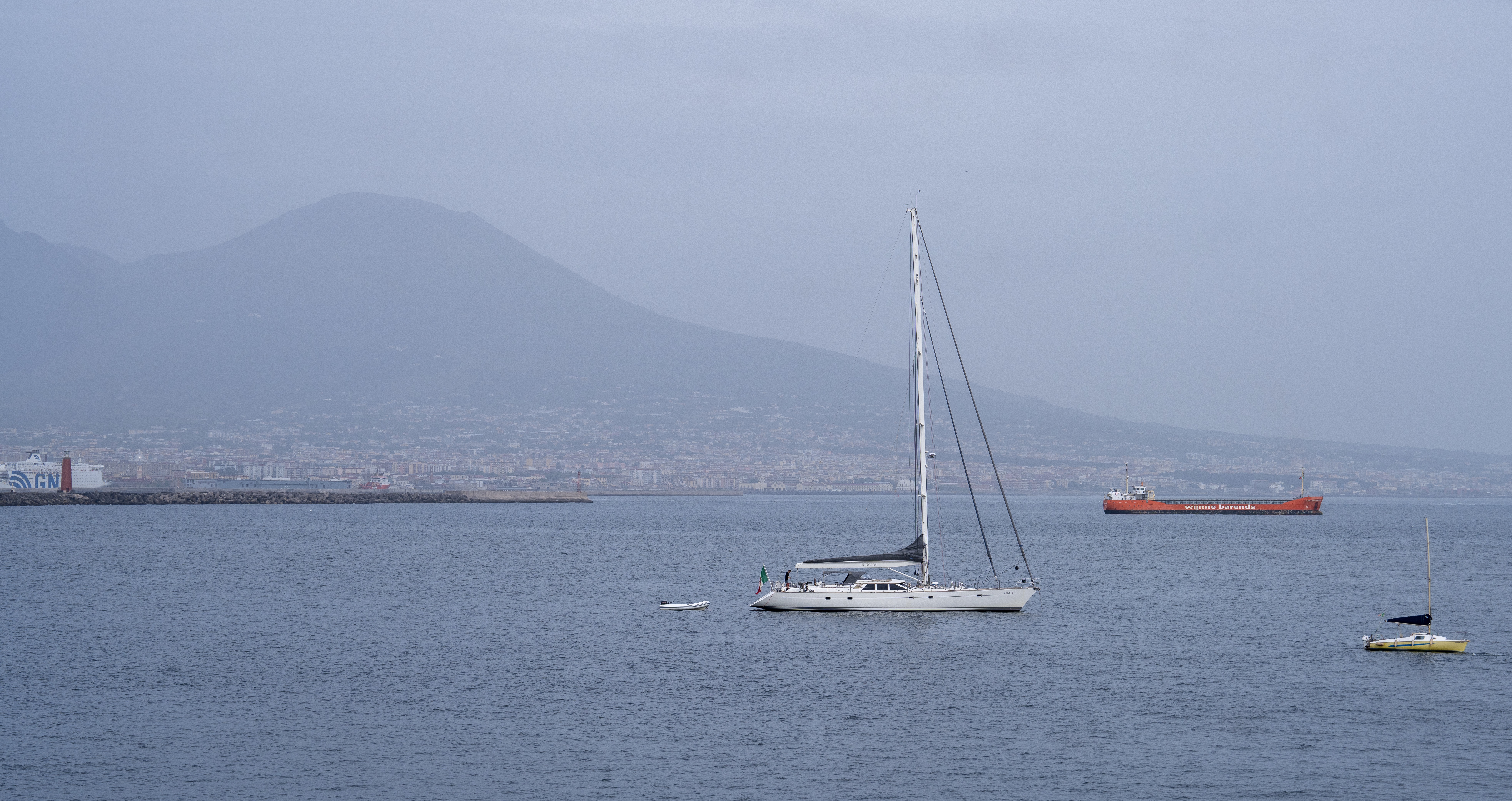
The peaks that surround the central cone attain a greater elevation still, and their heights show that the volcanic district is built up of several distinct summits rather than one. Monte Trocchia reaches 3,582 feet, Monte Ottajano 3,653 feet, and Ponta Nasione 3,730 feet above the level of the sea. These three, standing within a narrow range of one another, approach the full height of Vesuvius itself, and in consequence the mountain is seen to be the chief among a group of high points rather than a solitary eminence rising from a plain. 1
At the other extreme of scale stands Monte Nuovo, a tuff cone of 413 feet in height and 8,000 feet in circumference, with a crater 370 feet deep. Its small elevation set against so considerable a circuit at its base marks it as a feature of an entirely different order from the great peaks, and Lobley's inclusion of it among his measurements serves to place the principal heights in relief. The mountain is thus measured at every level, from the low cone to the summits that rival the chief peak, and the full figure of its height is understood only against this surrounding company of lesser and greater elevations. 1
2. Monte Nuovo
Monte Nuovo belongs to a different order of relief from the great summits of the volcanic district, and Lobley's treatment of it makes that difference plain. The hill is a tuff cone, and the observers who measured it returned figures that agree closely on its height while differing in what they chose to record beside it. One measurement gives the cone as 430 feet high, with a crater descending 370 feet within it; another gives 413 feet in height together with a circuit of 8,000 feet at the base. The small discrepancy between the two heights is less significant than the agreement in scale: by either account the hill is a low mound, and the depth of its crater is comparable to a large fraction of its own elevation above the surrounding ground. 1
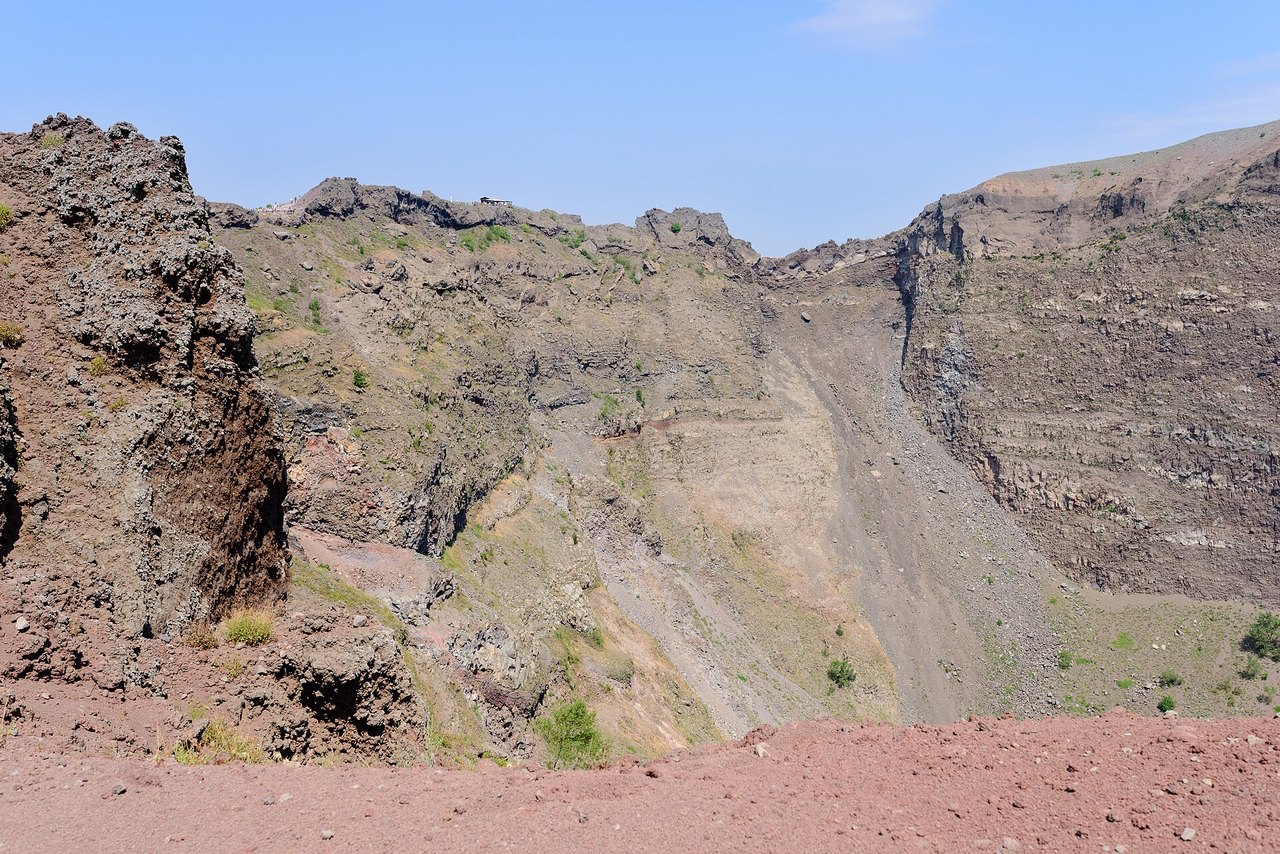
The circuit of 8,000 feet is the more instructive figure, for set against a height of little more than four hundred feet it describes a form broad in proportion to its rise. A cone so wide at its foot and so modest in elevation stands in evident contrast to the great peaks, whose heights Lobley records in the thousands of feet. The inclusion of Monte Nuovo among the measurements therefore serves a comparative purpose: it supplies the lower limit against which the principal heights may be read, and it shows that the district's volcanic forms range from low tuff cones to summits that rival the chief mountain. 1
The crater, at 370 feet deep, is the feature that most sharply distinguishes the hill from a mere swell of ground. Its depth approaches the whole height of the cone as one observer measured it, so that the interior hollow accounts for the greater part of the elevation, and the hill is in consequence less a solid mass than a rim of tuff enclosing a deep basin. The three observers, measuring height, circumference and crater depth, thus describe between them not simply a hill but a particular structure, and it is on their several figures, taken together, that the account of Monte Nuovo rests. 1
3. The Bay of Naples
Lobley's account of the Bay of Naples begins with its size, for the gulf is no mere inlet but a considerable body of water. He gives its circuit as over 52 miles, and the shore that bounds it as 35 miles. These two figures, taken together, describe a bay broad enough to hold a volcano of commanding height upon its margin, yet enclosed enough that the mountain's presence is felt along the whole of its coast. The shores the volcano overlooks therefore extend for tens of miles, and the gulf is proportioned to the scale of the mountain that dominates it. 1
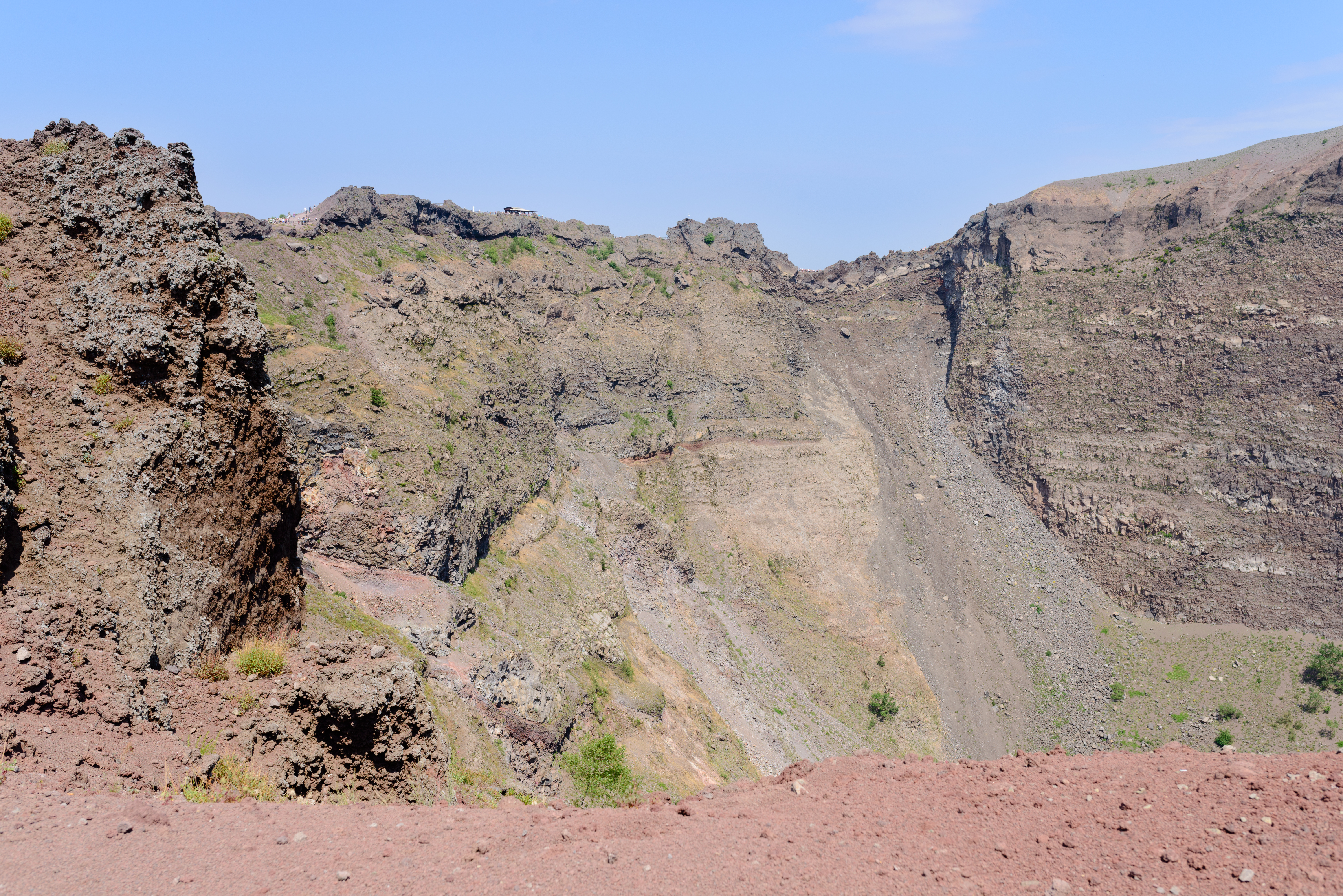
The dimensions of the bay are matched by those of Vesuvius itself, which Lobley measures at nearly thirty miles in extreme circumference at its base and upwards of 4,000 feet above the level of the sea. A mountain of such extent occupies a substantial part of the country enclosed by the gulf, and its base spreads across a circuit comparable to the whole shore of the bay. The relationship between the two is thus one of near parity in scale: the mountain's foot and the bay's shore are of the same order of magnitude, and the volcano cannot be understood as a feature set within the landscape but as a mass that itself defines a large part of it. 1
The bay is not, however, merely a setting for the mountain. Its shores carry the towns and buried remains that give the region its historical importance, and Lobley's measurements of the surrounding heights show how densely the volcanic district is built up. The circuit of the gulf and the circuit of the mountain's base together frame a country in which the works of man and the products of eruption lie close together, and in which the sea provides the natural boundary to the volcanic field. 1
In consequence, the Bay of Naples serves Lobley as the unit within which the volcano is to be measured. The gulf's extent fixes the horizon against which the mountain is seen, and the mountain's own circumference fixes the ground it occupies. The two measurements, the bay's circuit and the mountain's base, establish between them the scale of the whole district, and it is within this frame that the lesser heights and the buried cities take their places. 1
4. Herculaneum Buried
The buried city of Herculaneum lies at a depth of 70 or 80 feet below the present surface of the ground, a measure that conveys the scale of the material that has accumulated above it since its destruction. Lobley's figure is not a casual estimate but the distance that separates the ancient streets from the surface on which the later inhabitants of the district walk, and it indicates how completely the works of the city were entombed. The depth is such that the buried remains are removed from ordinary view and can be reached only by excavation carried down through the whole thickness of the overlying deposits. 1
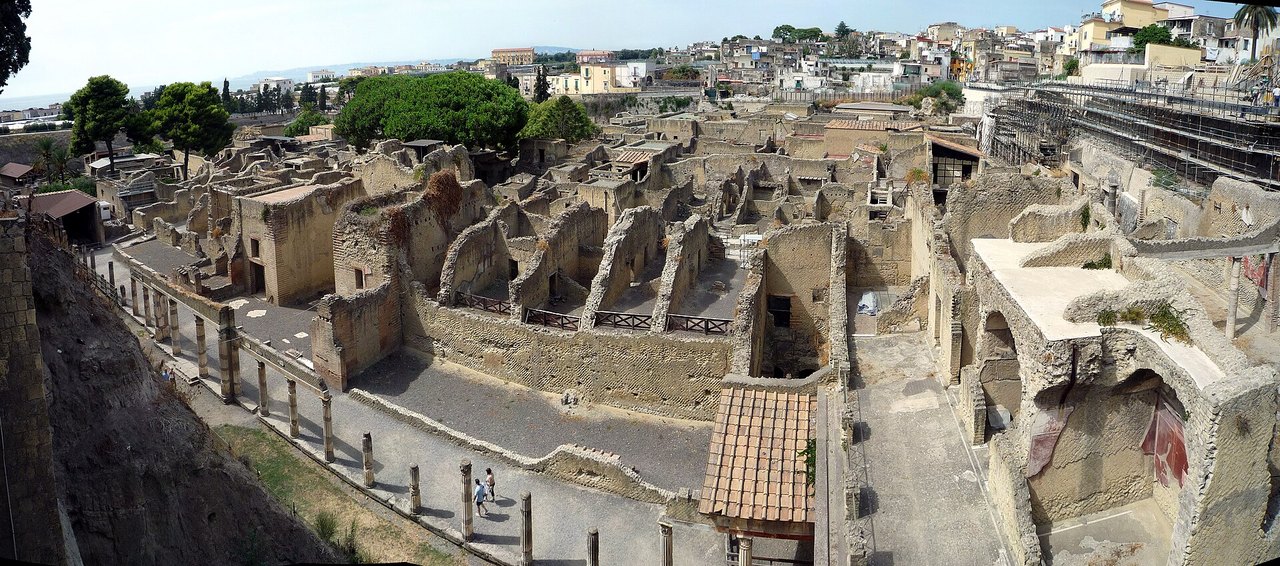
The material that covers the city is not uniform in character, for Lobley records a lava bed cut through in the vicinity that is 38 feet thick and 700 feet wide. A bed of such extent represents a single flow of considerable volume, and its presence among the deposits above the buried city shows that the covering is the product of more than one kind of volcanic action. The tuff and ash that fell upon the city and the lava that later spread across the country are distinct in origin, yet both contribute to the depth at which the ancient level now lies. 1
In consequence, the excavation of Herculaneum is an undertaking of a different order from the clearing of ground that has been merely covered with ash. The workman must pass through a lava bed of great thickness before reaching the level of the city, and the depth of 70 or 80 feet is made up in part of material that resists removal. The buried city is therefore sealed beneath a covering that is both deep and hard, and the measure of that covering is the measure of the labour required to recover it. 1
Lobley's account of the buried city thus belongs to the same scheme of measurement as his account of the mountain. The depth at which Herculaneum lies and the thickness of the lava bed cut through nearby are the terms in which the effects of eruption upon the works of man are expressed, and they show that the volcano's activity has not merely obscured the ancient country but has added to it a new surface of its own making. 1
5. The Observatory
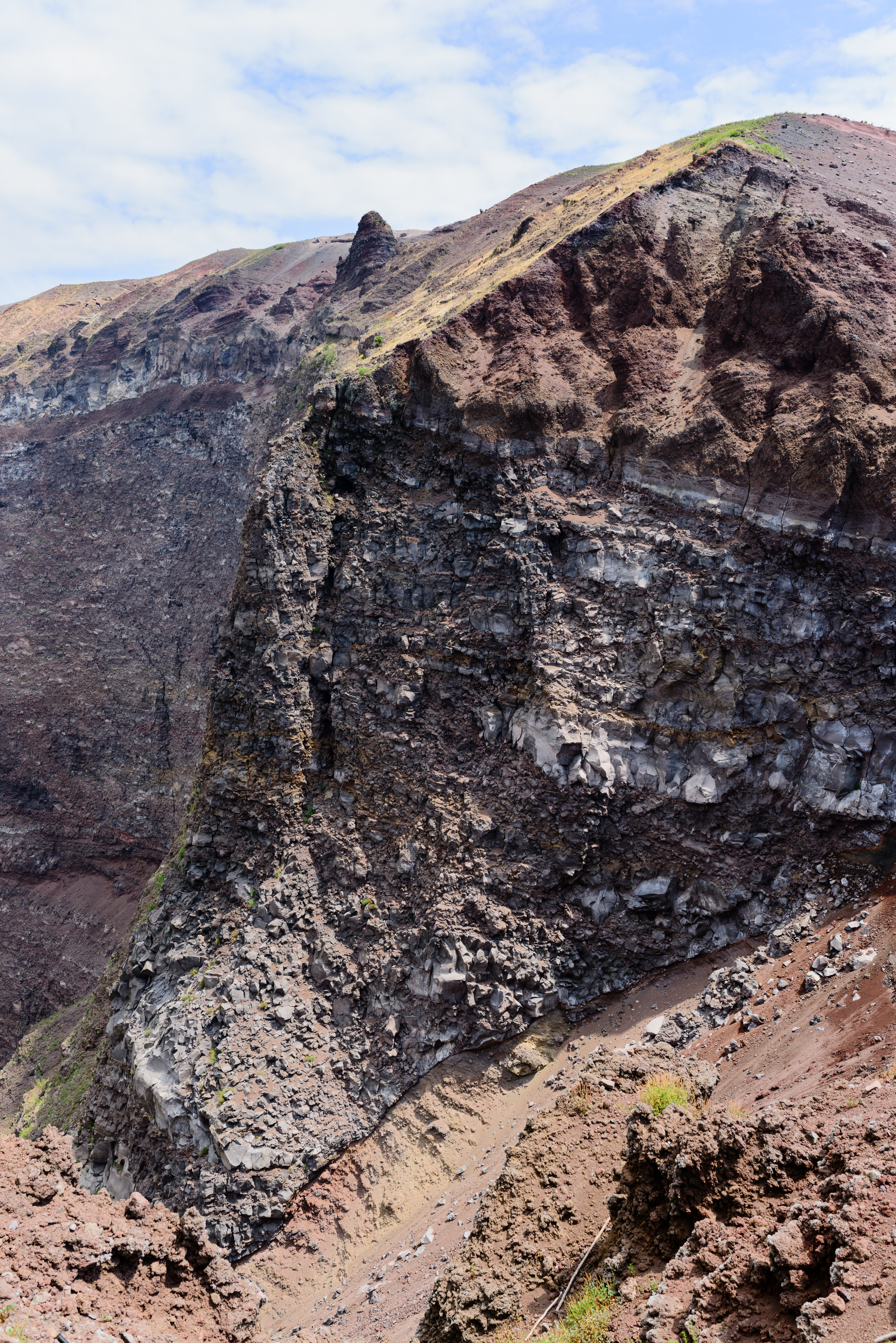
The observatory on the slope of Vesuvius stands at a height of 2,080 feet above the level of the sea, roughly midway between the base of the mountain and its summit. Lobley's figure places the station at a considerable elevation, well above the surrounding plain and the lesser eminences that border it, yet still far below the culminating point of the cone. In his scheme of measurement the observatory serves as a fixed point of reference on the mountain's flank, a known station from which the greater height of the summit, upwards of 4,000 feet above the sea, may be judged. The building is thus set within the mountain's own mass rather than upon the plain beneath it, and its position on the slope is what gives it its value for observation. 1
Near the observatory Lobley notes a well, sunk into the ground at that elevated station. The well is a modest feature beside the great measurements of the mountain, but it belongs to the same careful record of the slope and its works. Its presence at such a height indicates that the ground about the observatory was occupied and furnished for the use of those stationed there, and it takes its place among the small practical details that Lobley sets down alongside the larger figures of height and circumference. 1
The observatory's elevation may be read against the other heights that Lobley records in the neighbourhood. Monte Sant'Angelo stands at 1,476 feet above the sea, and the observatory therefore lies some hundreds of feet above that point, though it falls well short of Monte Ottajano at 3,653 feet, of Monte Trocchia at 3,582 feet, and of Ponta Nasione at 3,730 feet. These comparisons show that the station occupies an intermediate level on the mountain's flank, above the lower hills and below the higher summits that surround the cone. In consequence, the observatory is neither a valley station nor a summit station, but a post upon the slope itself, from which the mountain may be watched at close range. 1
The height of 2,080 feet is therefore not an isolated number but a position within the measured structure of Vesuvius. Lobley's account of the observatory and its well belongs to the same systematic survey as his figures for the mountain's base and summit, and it shows that the slope itself, with its buildings and its works, was included in the compass of his measurement. 1
6. Key Facts
| Attribute | Value |
|---|---|
| Height above the sea | upwards of 4,000 feet above the level of the sea 1 |
| Circumference of the base | nearly thirty miles in extreme circumference 1 |
| Bay of Naples | over 52 miles in circuit 1 |
| The Observatory | 2,080 feet above the level of the sea 1 |
| Punta del Nasione | 3,730 feet above the level of the sea 1 |
| Depth over Herculaneum | at a depth of 70 or 80 feet below the present surface of the ground 1 |
7. Frequently asked questions
How high is Vesuvius?
Lobley gives it as upwards of 4,000 feet above the level of the sea. 1
How large is its base?
Nearly thirty miles in extreme circumference. 1
How deep is the material over Herculaneum?
A bed of lava covers the tufa holding the ruins at 70 or 80 feet below the present surface. 1
What is Monte Nuovo?
A new tuff cone in the Phlegraean Fields, given as 413 feet high and 8,000 feet in circumference. 1
8. Timeline
- 79Vesuvius buries Pompeii and Herculaneum.Vesuvius buries Pompeii and Herculaneum.
- 1631A great eruption destroys the cone and forms a new one.A great eruption destroys the cone and forms a new one.
- 1889Lobley publishes his descriptive account of the volcano.Lobley publishes his descriptive account of the volcano.
References (1)
- 1Mount Vesuvius: a descriptive, historical, and geological account of the volcano and its surroundings — Roper & Drowley, London (via Internet Archive) Archive↩View source