Dodo
The extinct flightless bird of Mauritius, described by Richard Owen in 1866.
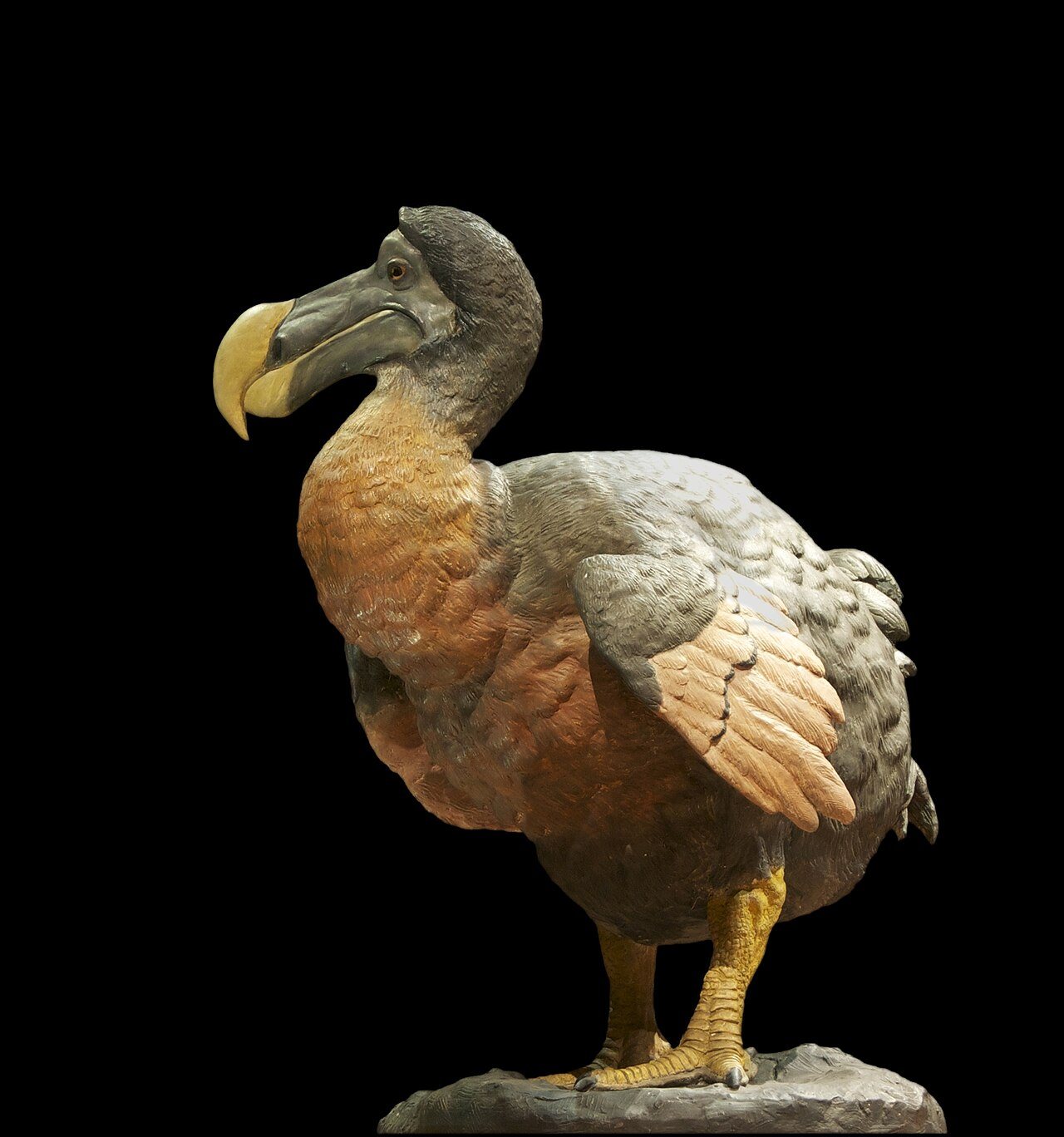
The dodo was a flightless ground bird of Mauritius. Owen's 1866 memoir reconstructed its skeleton from fragmentary remains and argued that lost flight and island isolation preceded its extinction.
In this article
- 1Overview
- 2Naming and First Records
- 3The Materials Owen Worked From
- 4The Skeleton and the Skull
- 5The Brain and the Air-Cells
- 6Lost Flight
- 7Diet and the Islands
- 8Human Arrival and Extinction
- 9Comparison with Other Flightless Birds
- 10What Survives of the Dodo Today
- 11Key Facts
- 12Frequently asked questions
- 13Timeline
- 14Knowledge graph
Overview
The dodo was a flightless bird of Mauritius, first described in 1598 as being as large as a swan, its wings reduced to three or four black little pens. Richard Owen's 1866 memoir is the foundational anatomical study of this bird, and its importance lies in the fact that Owen worked from the surviving relics—a head and foot preserved in the Ashmolean Museum at Oxford—to reconstruct the animal's structure and to explain how such a creature had come to exist and then to vanish. The memoir is therefore both a description and an argument: it treats the dodo not as a curiosity but as a problem in comparative anatomy, asking what kind of bird it was and why it was built as it was. 1Memoir on the Dodo (Didus ineptus, Linn.) · Taylor and Francis, London (via Biodiversity Heritage Library) ↗
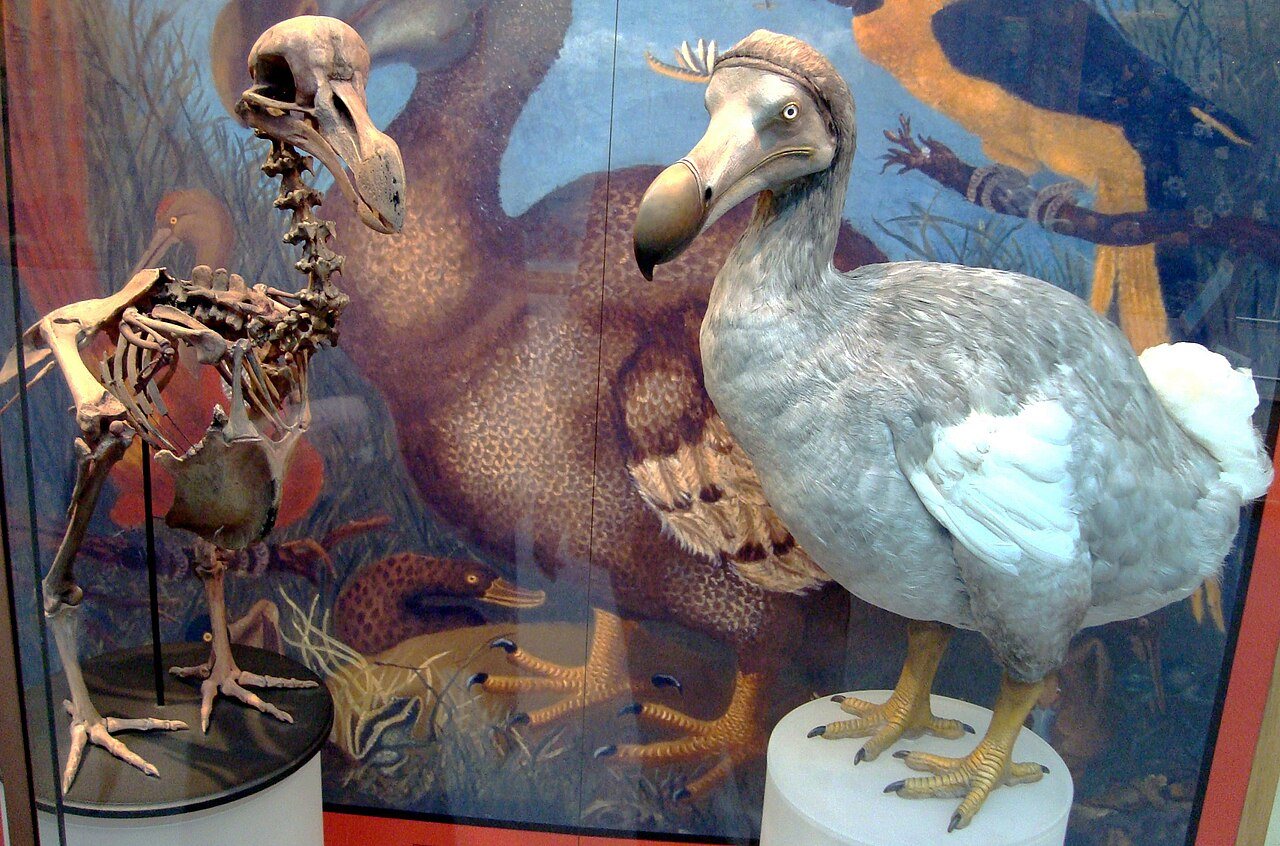
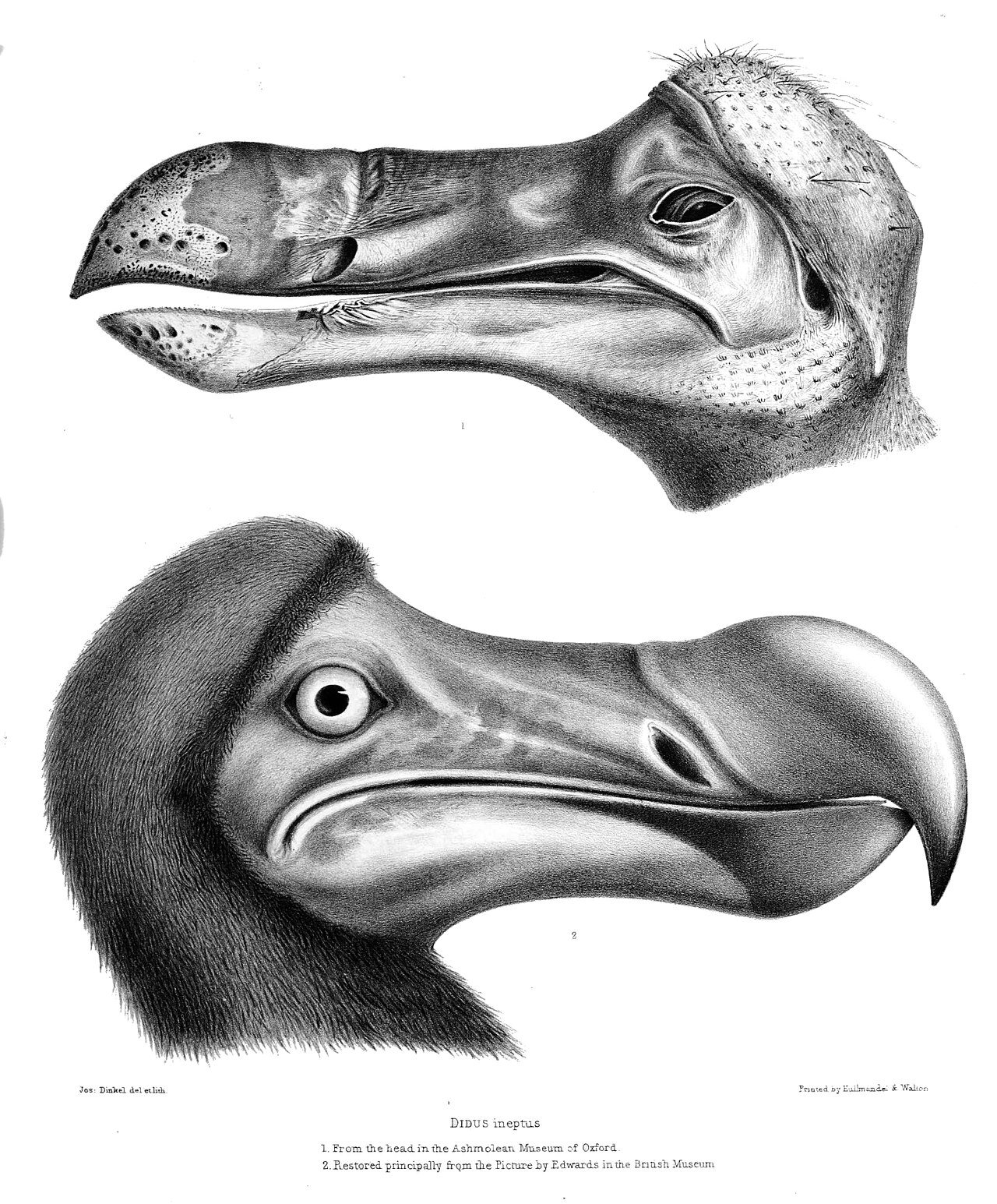
Owen's answer was that the dodo was a heavy ground-bird, and the details of its skull support that characterization. The cranial cavity is small in proportion to the skull as a whole, and Owen compared the brain's relative size to that of the Crown-pigeons (Goura), a comparison that places the dodo among birds of modest cerebral development. The bill muscles, by contrast, are powerfully developed, and the diploe in Didus exceeds the diameter of the cranial cavity itself—a striking disproportion that indicates an animal whose feeding apparatus was far more developed than its brain. The skull's breadth, height and length, taken together, describe a massive, rounded structure consistent with a bird that lived on the ground and relied on strength rather than flight. 1
From these structures Owen drew a broader conclusion: the dodo was a degenerate member of its order, its condition the product of disuse of wings in flight and of an island existence without lethal enemies. The recent advent of Man, in his account, supplied the pressure that the bird's long isolation had never provided. In consequence, the memoir matters not only as a description of an extinct species but as an early attempt to explain extinction in terms of an animal's own adaptations and the circumstances in which it lived. 1
1. Naming and First Records
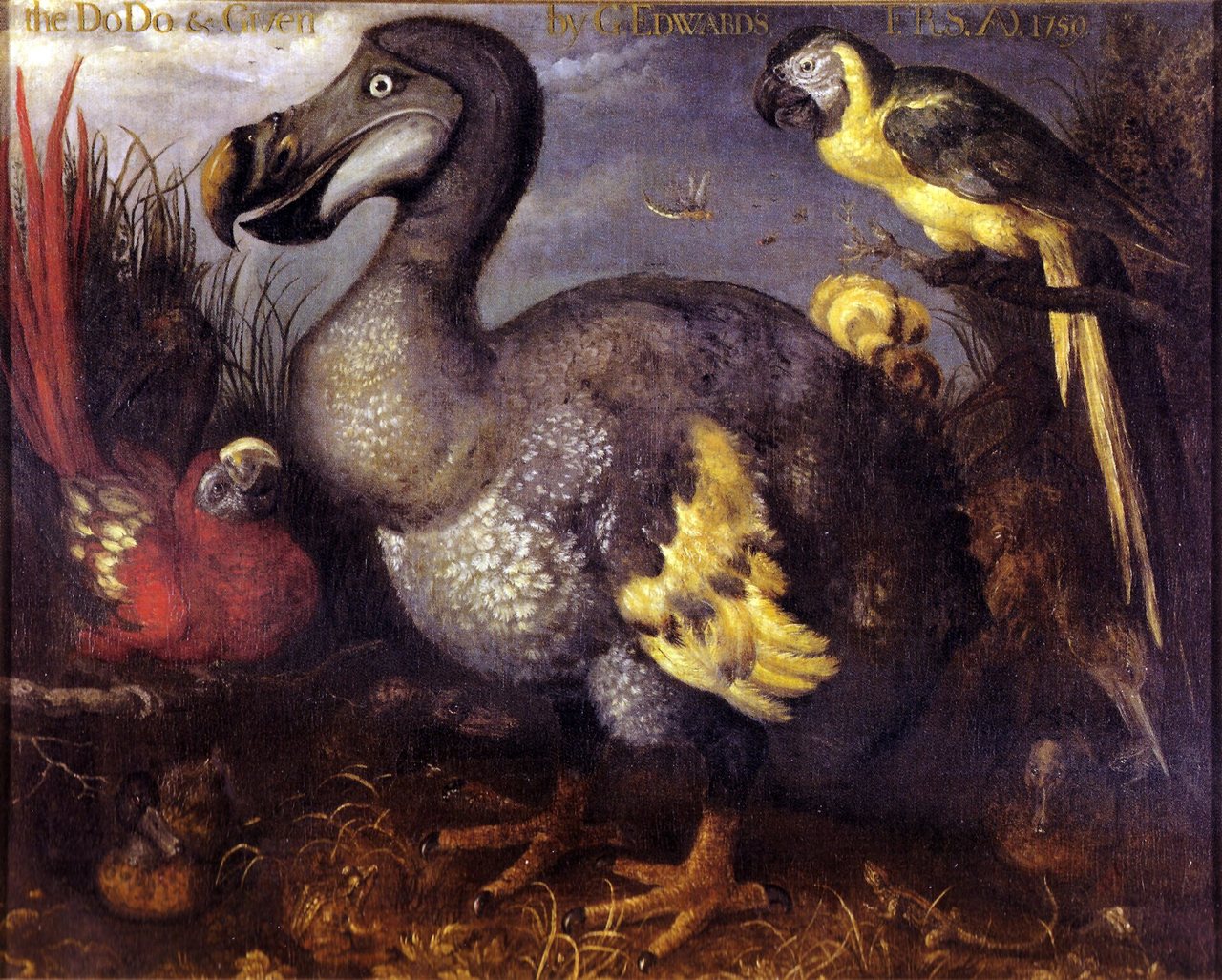
The earliest surviving record of the bird dates from 1598, when Dutch voyagers to Mauritius set down an account of a creature they judged to be as large as their swans. The comparison is the more telling because it was made by men for whom the swan was a familiar measure of waterfowl, and it fixes the dodo at once as a bird of unusual bulk, flightless and heavy upon the ground. What the account preserves is not a naturalist's description but the impression of sailors encountering an animal wholly without fear of them, and it is from this first contact that the later literature takes its departure. 1
To this same account belongs the name Walgh-Vogel, by which the bird was long known. The word carries the sense of a nauseous or insipid fowl, and it records a judgement formed at the table rather than in the study: the flesh was found unpalatable, and the name fastened upon the bird accordingly. It is a reminder that the first records of the dodo are records of use and appetite, not of anatomy, and that the creature entered European knowledge as an object of provisioning rather than of science. 1
The Dutch description also noted the meagreness of the wing, which bore in place of a full plumage only three or four black little pens. This detail, slight in itself, marks the point at which the written record first touches the structural peculiarity that would occupy later anatomists; the observers set down what they saw of a wing too small for flight, without attempting to explain it. In this respect the account of 1598 is characteristic of its kind, accurate in the particular and silent as to the cause. 1
Nothing in these early notices anticipates the questions that would later be asked of the bird's frame and its place among the heavy ground-birds. The first records are content to describe a large and fearless fowl, unpleasant to eat and poorly furnished with wings, and it was left to subsequent inquiry to draw from such observations the larger conclusions they would eventually support. 1
2. The Materials Owen Worked From
Owen's reconstruction of the dodo rested on a very narrow material foundation. The surviving relics were a head and a foot, preserved in the Ashmolean Museum at Oxford, and these two fragments constituted the essential anatomical evidence available to him. Everything else that early voyagers had recorded about the living bird came down as description rather than specimen, and description could not be measured, sectioned or compared bone against bone. The scarcity of the material therefore shaped the method at every stage: the head supplied the osteology of the skull, the foot the osteology of the limb, and between them they had to bear the weight of conclusions that a more abundant series of specimens would ordinarily have supported. 1
The head was the more instructive of the two, because the skull of a bird carries so much of its systematic character. From it Owen could establish that the dodo was a heavy ground-bird, and could examine the interior structure of the bill, where the diploe exceeds a certain diameter in Didus, a point of internal organisation that only a preserved cranium can reveal. The foot, for its part, gave him the proportions of the toes and the character of the joints, evidence that spoke directly to the bird's manner of life on the ground. Yet two fragments cannot supply the whole skeleton, and the ribs, the sternum and the wing bones, which would have settled many questions of affinity, were wanting. 1
In consequence Owen's comparisons had to proceed by careful inference from the parts he possessed to the parts he did not. Where the skull of the dodo could be set beside that of a Crown-pigeon, the contrast in cranial capacity and in the relative size of the brain became apparent, and such comparisons, drawn from the single cranium, did much of the work that a fuller series of specimens would have done. The method was necessarily one of close and repeated examination of a small quantity of material, with each structure made to yield the maximum of information. 1
The scarcity of the relics thus explains the character of Owen's memoir: its patient attention to the details of a single head and a single foot, and its reliance on those details for conclusions that extended far beyond them. It was from these two surviving fragments, and not from any abundance of specimens, that the anatomy of the dodo was recovered. 1
The method of reasoning from a small remnant of bone to a whole animal is not peculiar to the dodo. It has been applied, for example, to the megalodon, an extinct shark reconstructed largely from teeth. 1
3. The Skeleton and the Skull
Owen's account of the dodo's skeleton presents a bird whose frame was built for mass rather than flight, and the skull is the clearest evidence of that design. The cranium is short and deep, measuring one inch eight lines in length against a breadth of one inch six lines and a height of one inch, proportions that leave little room for a large brain and much for the attachment of powerful muscles. Owen judged the brain small even by comparison with the crown-pigeons (Goura), and the thickness of bone in the bill exceeds the diameter of the cranial cavity itself, so that the skull is less a housing for the brain than a buttress for the beak. 1
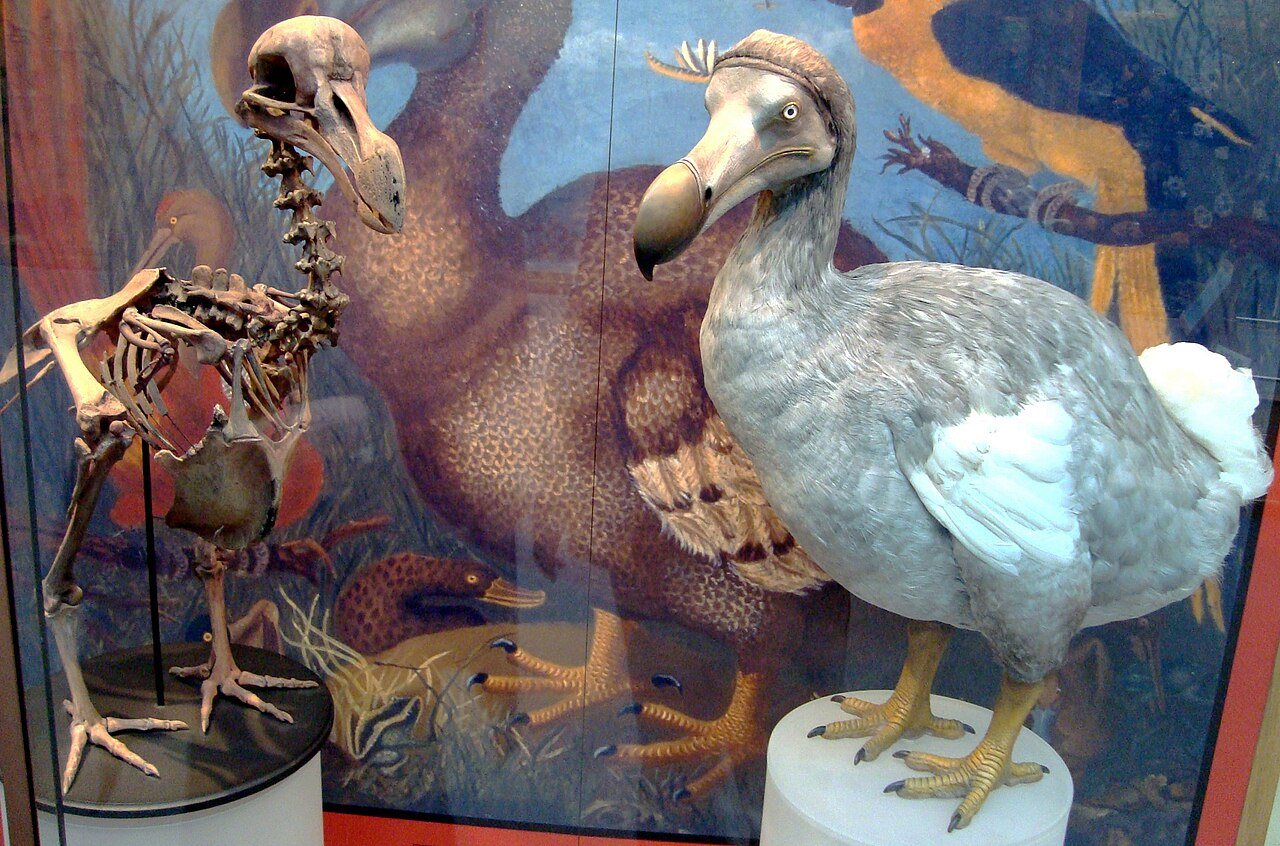
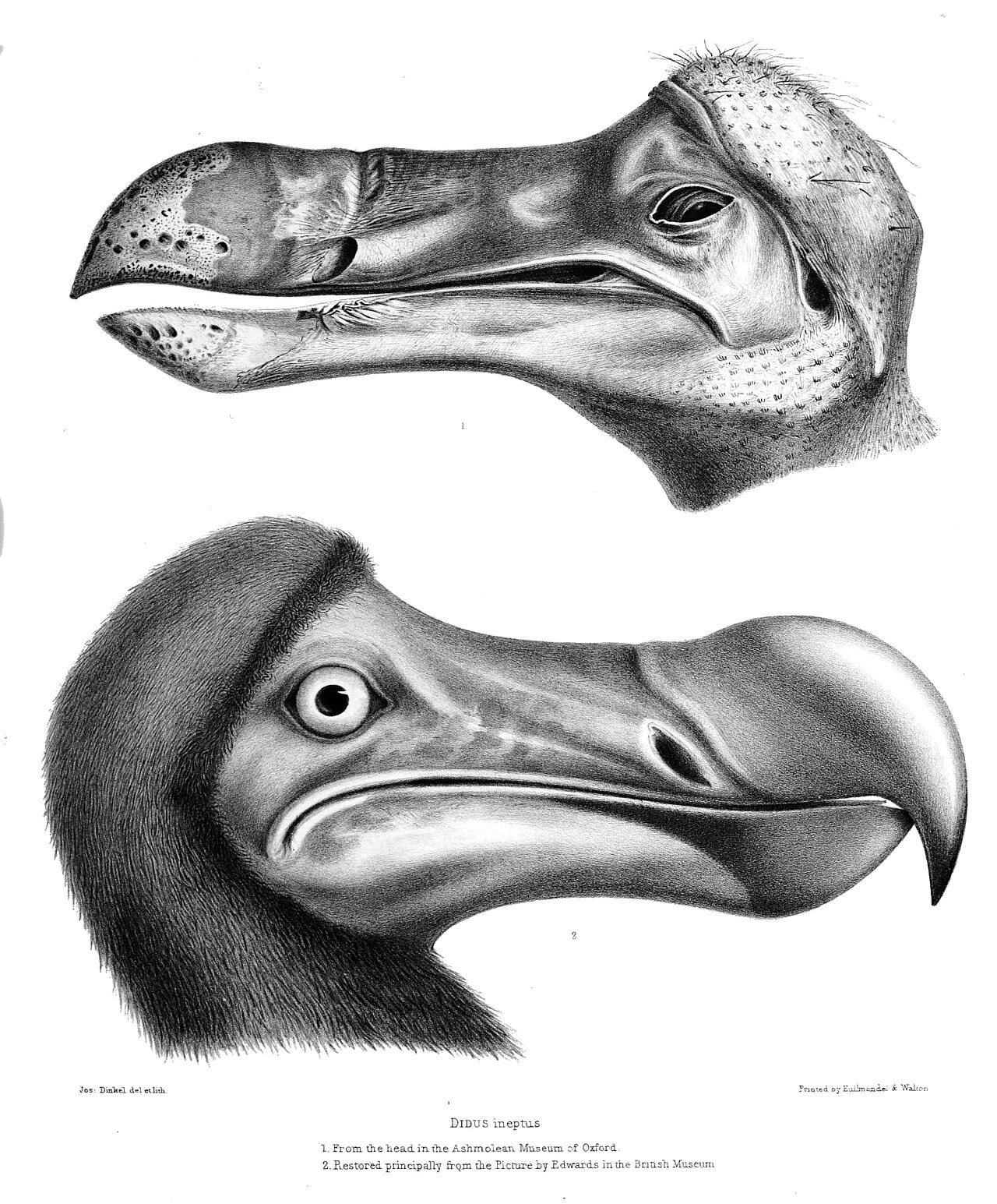
The beak, in consequence, dominates the head. Its muscular support and the density of the bone around it indicate a bird that worked its food by main force rather than by delicacy, and Owen's remarks on the breast and gizzard point in the same direction: the apparatus of mastication was heavy throughout. The ribs, at nine inches, belong to a trunk of considerable depth, and the foot, with toes two inches long, was proportioned to carry a body as large as a swan. Nothing in the skeleton suggests the lightness that flight demands. 1
Owen classed the dodo among the heavy ground-birds, and he read the skeleton as the record of a degenerate member of that group. The wings had fallen into disuse for flight, and the structure had followed: the relics preserved at Oxford, a head and a foot, and the old report that the wing quills were no more than three or four black little pens, agree with a bird in which the organs of flight had dwindled while the organs of support and of feeding retained their bulk. 1
The cause of this degeneration Owen found in the conditions of the island itself. Mauritius offered no lethal enemies, and in the absence of such pressure the wings were left unused without penalty; the bird's extinction he attributed to the recent arrival of Man, the first enemy against which its heavy frame and vestigial wings could offer no defence. The skeleton therefore documents not a primitive form but a specialised one, shaped by security into a build that could not survive its loss. 1
4. The Brain and the Air-Cells
Owen's examination of the dodo's cranium revealed a skull whose external proportions were modest but whose internal economy was remarkable. The cranial cavity measured one inch eight lines in length, one inch six lines in breadth, and one inch in height. These dimensions acquire their significance only when set beside the brain they enclosed, for the cerebrum was disproportionately small, and Owen drew comparison with the Crown-pigeons (Goura), birds of far slighter body, to demonstrate how far the dodo's cerebral development fell short of what its bulk might suggest. The skull, in short, belonged to a heavy ground-bird, and its structure announced as much before any consideration of the brain within. 1
The most striking feature of the cranium, however, was not its size but its texture. Owen found the diploe—the spongy layer between the inner and outer tables of the skull—developed to an extraordinary degree, exceeding in Didus the diameter recorded in the bill-muscle region. The bone was thus constructed on a honeycomb principle, a lattice of air-cells pervading the cranial walls. In consequence the head, though outwardly compact, was internally lightened and strengthened at once, a structure Owen interpreted as consonant with the habits of a bird that had ceased to rely upon flight. 1
From this anatomy Owen reasoned outward to the animal's condition. The dodo, he concluded, was a degenerate member of its order, and the small cerebrum and the air-filled skull were symptoms of that degeneracy rather than isolated curiosities. The disuse of wings in flight, the absence of lethal enemies upon Mauritius, and the recent advent of Man upon the island together formed the conditions under which such degeneration could proceed unchecked. The honeycomb cranium was therefore not merely an anatomical peculiarity but evidence of a species whose organisation had been shaped by the security of its isolation. 1
The brain and the air-cells, taken together, illustrate the method of Owen's inquiry: measurement serving not as an end but as the ground for inference about habit and history. The cranial dimensions, the comparison with the Crown-pigeons, and the spongy texture of the skull all pointed in one direction, toward a bird whose structure had been relaxed by the very safety of its island home. 1
5. Lost Flight
The dodo's inability to fly follows directly from its bulk. The first description of 1598 records a bird as large as our swans, and Owen treats the wing as correspondingly reduced: what remains in place of a wing is no more than three or four black little pens. A body of such size could not be raised by so vestigial an organ, and the disproportion is the starting point for Owen's argument rather than an incidental curiosity. 1
Owen's explanation is disuse. The wings, he argues, fell out of use for flight, and the structure of the bird records that falling away. The skull confirms the reading: he classifies it as that of a heavy ground-bird, and the cranium bears this out in its proportions, its breadth of 3 inches and 8 lines exceeding its height and length and giving the head the massiveness of a creature that lives on the ground rather than in the air. The brain is small in relation to the body, a condition Owen illustrates by comparison with the Crown-pigeons (Goura). In the same way the bill muscles are lodged in a diploe that in Didus exceeds the stated diameter, and the ribs, at 9 inches, belong to a frame built for support rather than lift. The foot, with its toe of two inches, and the breast and gizzard noted in connection with mastication, complete the picture of a bird organised about the ground. 1
From this Owen draws the wider conclusion that the dodo is a degenerate member of its kind. The degeneration is not accident but consequence: with no lethal enemies on Mauritius to demand flight or speed, the wings were left unused, and disuse in time remodelled the bird. The recent advent of Man, in Owen's account, is what ended a condition that had persisted without challenge; the absence of lethal enemies had permitted the degeneracy, and the arrival of Man removed the security in which it had flourished. 1
The surviving relics, the head and foot in the Ashmolean Museum at Oxford, are therefore more than curiosities. They are the evidence on which the argument for disuse rests, and through them Owen reconstructs a bird whose flightlessness is written into its bones. 1
6. Diet and the Islands
Mauritius, the island to which the dodo was confined, lies among the neighbouring islands of the Indian Ocean, and it was there that the bird found itself in circumstances unlike those of any continental species. The first description of the bird, set down in 1598, records it as large as our swans, a comparison that conveys something of its bulk and its unfamiliarity to European eyes. What the island offered it to eat, and what it lacked, are central to any account of its condition. 1
Owen's examination of the surviving relics, a head and a foot preserved in the Ashmolean Museum at Oxford, together with the anatomy of the breast and gizzard, indicates a bird adapted to the mastication of its food rather than to pursuit of it. The foot itself bears a toe of notable length, two inches, and the ribs measure nine inches, proportions consistent with a heavy ground-bird that gathered its sustenance from the ground. In such a setting the bird had no need of flight, and the wings were reduced accordingly, replaced in effect by three or four black little pens. 1
The absence of enemies is the fact upon which Owen's reasoning turns. In a country without lethal foes, the dodo had no occasion to exercise its wings, and the disuse of wings in flight, continued through successive generations, left the organ diminished. The same security that permitted this degeneration also left the bird unprepared for the recent advent of Man, whose arrival introduced the pressures to which it could not answer. In consequence the very freedom from enemies that had shaped its structure became, in Owen's account, the cause of its extinction. 1
Owen regarded the dodo as a degenerate member of its order, and the skull confirms the judgment: a heavy ground-bird's cranium, broad and low in its proportions, with a bill whose muscle and diploe exceed the ordinary diameter. The brain, measured against that of the Crown-pigeons (Goura), is small in relation to the size of the body. Yet this degeneracy was not a defect of the bird's own making but the product of an island life in which nothing pressed upon it, and the history of the dodo is therefore less a record of weakness than of the peculiar terms on which Mauritius permitted its creatures to live. 1
7. Human Arrival and Extinction
Owen's account of why the dodo ceased to exist turns not on slaughter but on the conditions of its island home. The bird, he argued, had no lethal enemies to contend with in Mauritius; in the absence of such pressure, the structures that elsewhere sustain a species in the struggle for life were left to fall away. The wings are the clearest instance. In the surviving relics Owen could find no more than three or four black little pens where a functional wing might be expected, and he read this stunted condition as the consequence of disuse of wings in flight. The same reasoning extends to the whole frame: the dodo is for Owen a degenerate member of the bird class, a heavy ground-bird whose organisation had been reduced under the shelter of an unthreatened existence. 1
What ended the species, in his argument, was the interruption of that shelter. The recent advent of Man upon the island removed the very condition—the absence of lethal enemies—under which the dodo had been able to subsist in its reduced state. A bird that had lost the powers of flight and had never needed to withstand a predator was wholly unprepared for the arrival of a new and lethal presence. Extinction, on this reading, follows directly from the bird's degeneracy: the loss of the organs of escape, harmless while no enemy existed, became fatal the moment one appeared. 1
The anatomical evidence Owen assembled supports this reading of the bird as one whose economy had been simplified rather than merely diminished. The breast and gizzard show a provision for mastication that belongs to a ground-feeding life, and the skull, with its great breadth of bill-muscle diploe, is throughout that of a heavy ground-bird. Even the brain, small in relative size when set beside that of the Crown-pigeons, belongs to the same picture of a species whose organisation had been reduced to the requirements of a safe and sedentary existence. In such a frame there was no reserve of power to meet a sudden change of circumstances. 1
The extinction of the dodo is therefore, in Owen's own argument, a consequence of the order in which events overtook the island: the bird was formed by the absence of enemies, and it perished when that absence came to an end. 1
8. Comparison with Other Flightless Birds
Owen's comparative method placed the dodo within a graded series of flightless birds rather than in a class apart. The ostrich, the emu, the kiwi and the great auk each illustrated a different degree to which the power of flight had been surrendered and the frame remodelled in consequence, and the dodo took its place in that series as a heavy ground-bird whose structure betrayed the same surrender. The comparison was not merely descriptive; it allowed Owen to argue that the dodo's peculiarities were the predictable outcome of a common process rather than the marks of a sport or a monstrosity. 1
The wing offered the clearest evidence. In the dodo it was reduced to a vestige, replaced by three or four black little pens, a condition that placed the bird alongside the ostrich and the emu among those in which the organs of flight had ceased to serve their original office. Owen read this reduction as the effect of disuse of wings in flight, and he extended the same reasoning to the great auk, whose wings, though still capable of propulsion under water, had lost the power of raising the body in the air. The kiwi carried the degeneration further still, and the series therefore ran from birds that retained a serviceable wing to those in which it survived only as a rudiment. 1
The skull told a parallel story. Owen described the dodo's cranium as that of a heavy ground-bird, and its proportions bear this out: the cranial breadth of three inches and eight lines, set against a cranial length of one inch and eight lines and a height of one inch, gives a skull broad and low rather than vaulted. The bill muscles in Didus exceed in thickness the diameter of the diploe, a circumstance consistent with powerful action of the jaws, and the breast and gizzard were adapted to the mastication of coarse food. In these respects the dodo resembled the ostrich and the emu, ground-birds that grind their sustenance rather than seize it in flight. 1
Owen drew from the comparison a general conclusion about the bird's place in nature. He called the dodo a degenerate member of its group, and he attributed that degeneracy to the absence of lethal enemies and to the recent advent of Man upon Mauritius. The island had permitted the surrender of flight without penalty, and the same conditions that allowed the wing to dwindle allowed the frame to grow heavy and the skull to assume its ground-bird form. The comparison with the ostrich, the emu, the kiwi and the great auk thus served a larger argument: the dodo was not an anomaly but an extreme case of a tendency visible throughout the flightless birds. 1
The same surrender of flight, though reached by a different route, is what defines the penguin: a bird that gave up the air for the water rather than for the ground. 1
9. What Survives of the Dodo Today
The dodo's place in natural history rests less on what it was than on what it revealed. When Richard Owen described the bird in 1866, he was working from relics that had survived by accident rather than design, and his account made the dodo a test case for how anatomy could reconstruct a vanished animal from fragmentary evidence. The bird had been known to Europeans since 1598, when it was described as large as a swan, yet within a few generations it had passed from a living creature into a curiosity of cabinets and collectors. Its extinction was not the work of a predator but of the absence of one. Owen attributed the bird's fate to the lack of lethal enemies on Mauritius, a condition that left it unprepared for the recent arrival of man. In this the dodo became an early and enduring lesson in island biology: isolation may permit peculiar forms to flourish, but it also strips them of the defences that contact with the wider world demands. 1
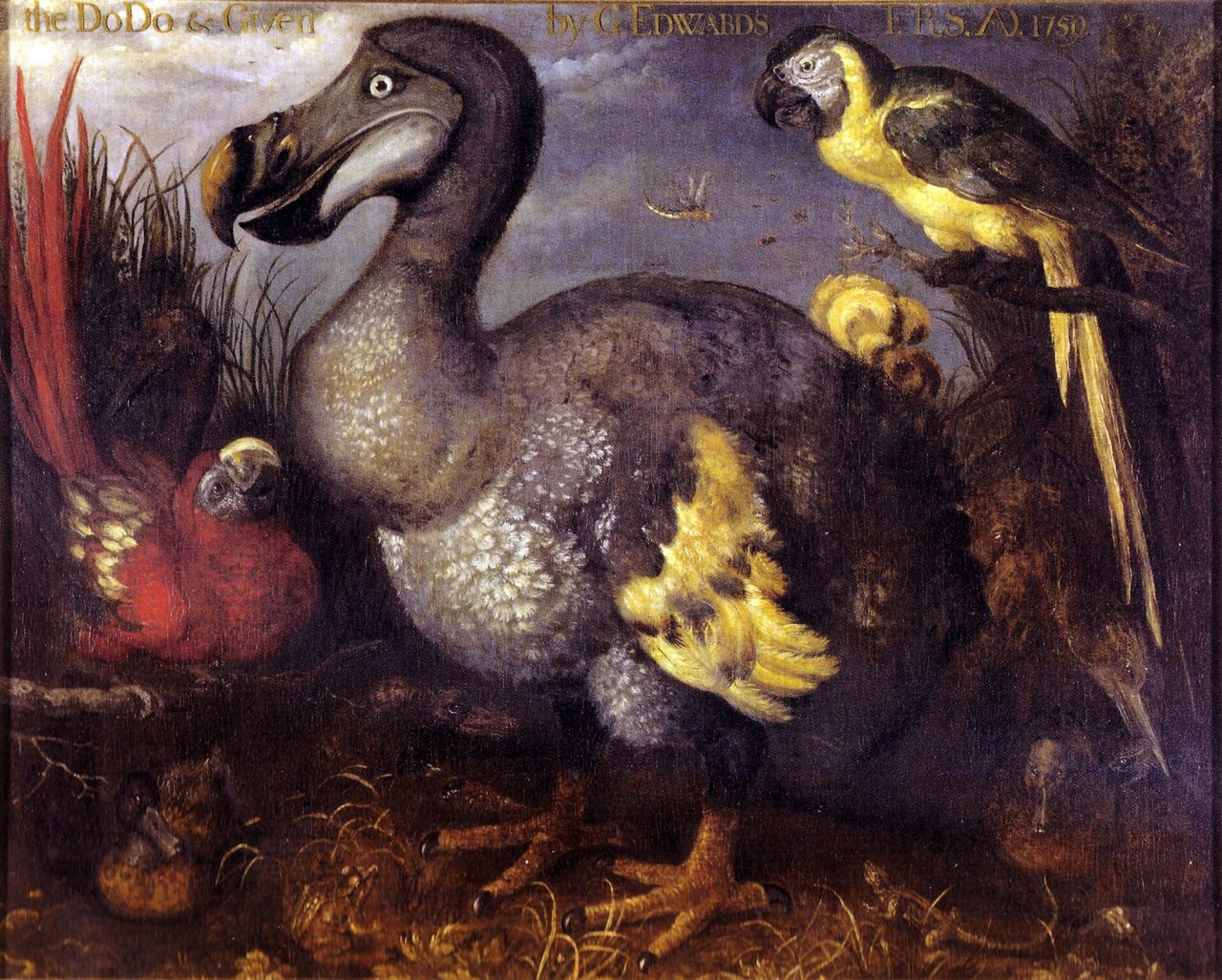
Owen's reading of the skeleton gave that lesson an anatomical basis. He classed the dodo as a heavy ground-bird, and the structure of its skull supported the judgement. The bill muscles in Didus were housed in a bony recess exceeding the diameter of the cranium itself, a proportion that speaks to the force the bird could bring to bear in feeding rather than to any refinement of the senses. The cranium, by contrast, was small: its breadth of an inch and six lines, its height of an inch, and its length of an inch and eight lines together describe a brain-case of modest capacity. Owen compared it with the crown-pigeons, the Goura of New Guinea, and found the dodo wanting. The bird was, in his phrase, a degenerate member of its order, its wings reduced to three or four black little pens and its powers of flight lost through disuse. 1
The loss of the dodo therefore carries a meaning beyond the disappearance of a single species. It marks the point at which island faunas became visible as fragile systems, vulnerable precisely because they had evolved without the pressures that elsewhere keep animals vigilant and mobile. The bird's flightlessness, its diminished brain, and its reliance on a ground existence undisturbed by enemies were not defects but consequences of the same sheltered condition that made its extinction swift once that shelter was removed. What survives of the dodo is thus twofold: a small body of relics and a large idea. The relics preserve the physical evidence; the idea, drawn from Owen's anatomy and his reasoning about the bird's decline, established a pattern that later students of island life would recognise again and again. 1
10. Key Facts
| Attribute | Value |
|---|---|
| First described | 1598 1 |
| Principal surviving relics | head and foot in the Ashmolean Museum at Oxford 1 |
| Skull type | heavy ground-bird 1 |
| Cranium breadth | 3 inches and 8 lines 1 |
| Brain compared with | Crown-pigeons (Goura) 1 |
| Cause of lost flight | disuse of wings in flight 1 |
| Condition permitting size | absence of lethal enemies 1 |
11. Frequently asked questions
What was the dodo?
The dodo was a flightless ground bird of Mauritius, first described in 1598. 1
Who described its anatomy?
Richard Owen described the dodo's skeleton in his 1866 memoir. 1
Why could it not fly?
Owen attributed the loss of flight to disuse of the wings on an island without lethal enemies. 1
How large was its brain?
Owen found the cerebrum barely exceeded that of the Crown-pigeons (Goura). 1
What survives of the bird?
A head and foot preserved in the Ashmolean Museum at Oxford were the principal relics Owen used. 1
12. Timeline
- 1598The first Dutch account describes the bird on Mauritius as large as swans.The first Dutch account describes the bird on Mauritius as large as swans.
- 1866Richard Owen publishes his memoir on the dodo's skeleton.Richard Owen publishes his memoir on the dodo's skeleton.
References (1)
- 1Memoir on the Dodo (Didus ineptus, Linn.) — Taylor and Francis, London (via Biodiversity Heritage Library) Archive↩View source