Megalodon
The giant megatooth shark of the Miocene and Pliocene oceans — its teeth, disputed body size, warm-blooded physiology and extinction, as reconstructed from the fossil record and modern research.
Megalodon, formally Otodus megalodon, was the largest shark and one of the largest fish that ever lived, ranging the world's oceans from about 23 million to 3.6 million years ago. Known mainly from its giant serrated teeth and rare vertebrae, it was a whale-hunting apex predator that may have reached 15 metres or more in length, with a 2025 reassessment proposing up to 24.3 metres. Isotope studies indicate it was regionally endothermic, and its extinction around the Pliocene has been linked to cooling seas, declining prey and competition with the ancestors of the great white shark.
In this article
- 1Overview
- 2Naming and Classification
- 3Evolutionary History
- 4Anatomy and Size
- 5Size Estimates and Reconstructions
- 6Distribution and Habitat
- 7Diet and Feeding
- 8Physiology and Metabolism
- 9Reproduction and Growth
- 10Extinction
- 11Fossil Record and Research
- 12Cultural Depictions and Myths
- 13Timeline of Key Events
- 14Timeline: from the origins of the megatooth lineage to the deep-sea finds of 2026
- 15Knowledge graph
Overview
Otodus megalodon was an extinct mackerel shark.
It is regarded as the largest shark and fish ever known.
Its remains indicate a near worldwide distribution.
1. Naming and Classification
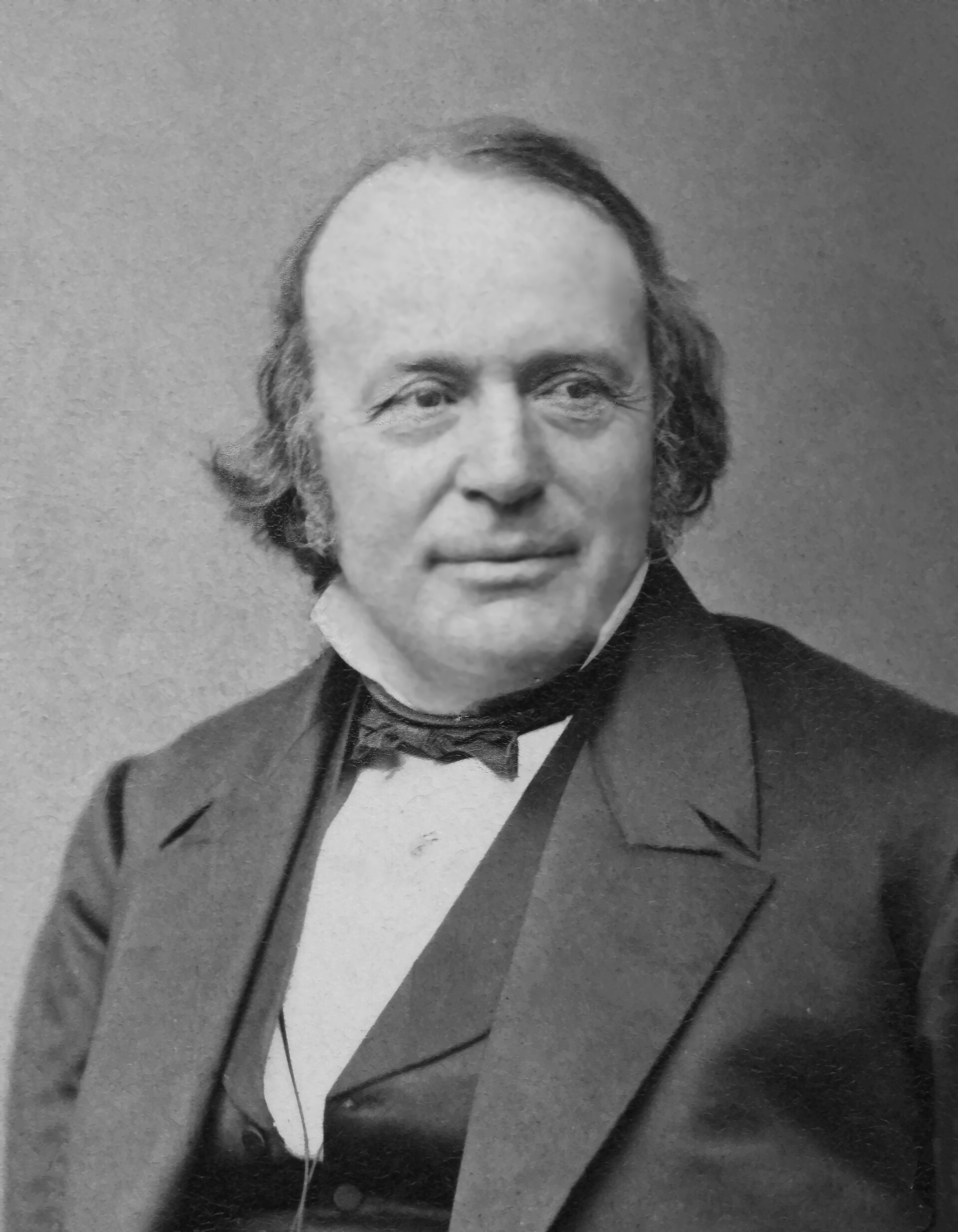
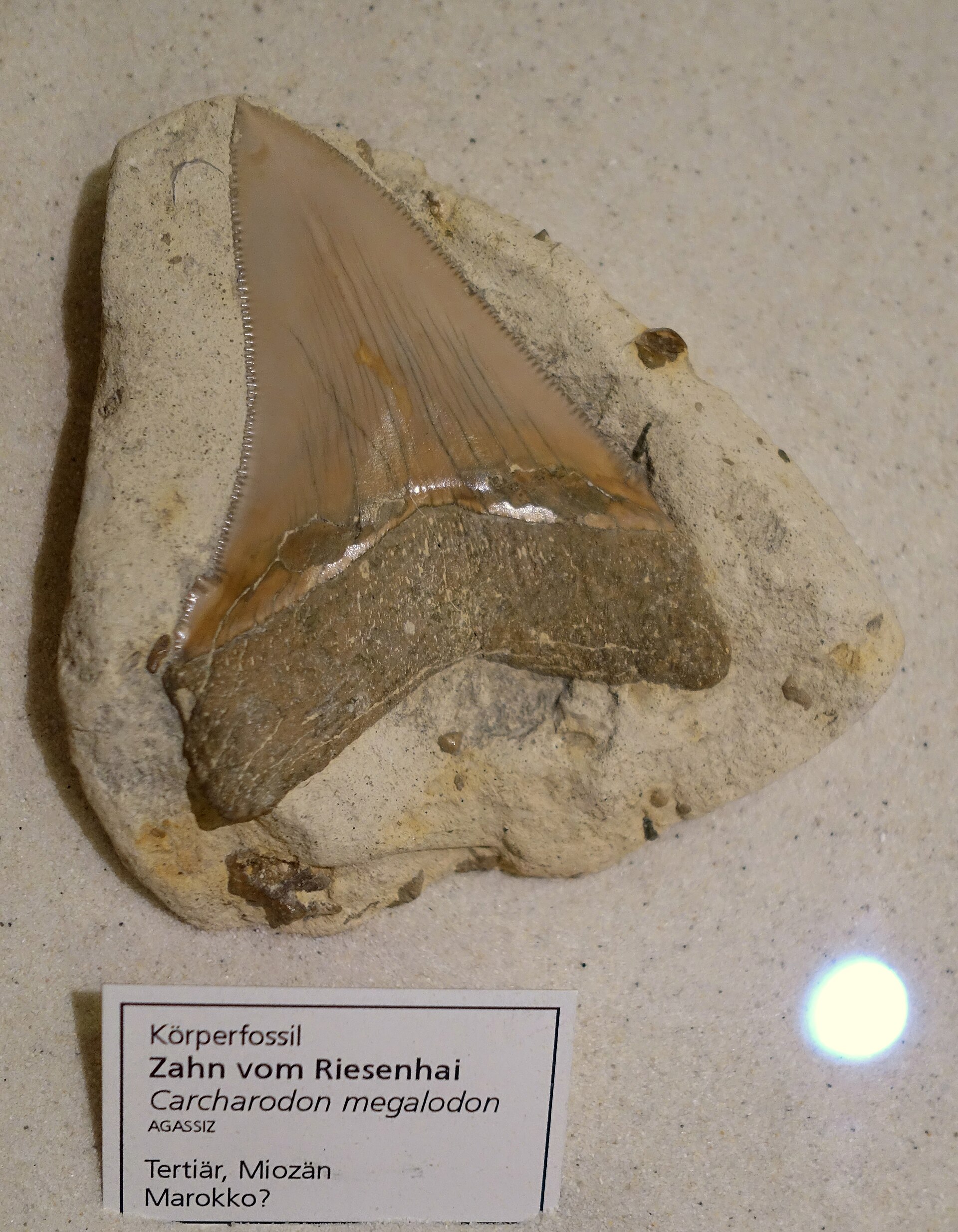
The species is today formally known as Otodus megalodon, a binomial established by Louis Agassiz in 1835. Agassiz, a Swiss naturalist, gave megalodon its scientific name in his work Recherches sur les poissons fossiles, naming it Carcharias megalodon in an illustration of a fossil tooth. The name megalodon means "giant tooth". The species was formerly classified as Carcharodon or Carcharocles megalodon.
Megalodon belongs to the family Otodontidae within the order Lamniformes, and the Australian Museum classifies it in the genus Otodus, species megalodon.
Modern research shows that megalodon is most closely related to mako sharks, not to the great white shark.
2. Evolutionary History
The oldest definitive ancestor of megalodon is the 55-million-year-old Otodus obliquus, and the lineage is thought to stretch back to a species of Cretalamna more than 100 million years ago. Megalodon is formally known as Otodus megalodon, and its earliest fossils date to about 23 million years ago.
Megalodon is believed to have evolved around 20 million years ago during the Neogene Period and was one of the ocean's top predators. Its teeth occur only in marine rocks between 20 million and 3.6 million years old, and no younger teeth have been found as fossils, sub-fossils or freshly fallen teeth.
The ancestor to the great white shark lived alongside megalodon, and some scientists think the two lineages may even have competed with each other. Zinc isotope values from Early Pliocene shark teeth from North Carolina suggest largely overlapping trophic levels of early great white sharks with the much larger megalodon. That overlap may hold clues to megalodon's extinction.
Otodus megalodon lived from about 23 to 3.6 million years ago, spanning the Miocene and Pliocene.
3. Anatomy and Size
Because no complete megalodon skeleton has ever been found, its size must be inferred rather than measured directly; earlier tooth-based reconstructions, using the great white shark as the only modern analogue, calculated a maximum total length of about 15 to 18 metres.
The largest megalodon tooth ever found was 6.9 inches long, almost three times longer than the average tooth of a modern great white shark.
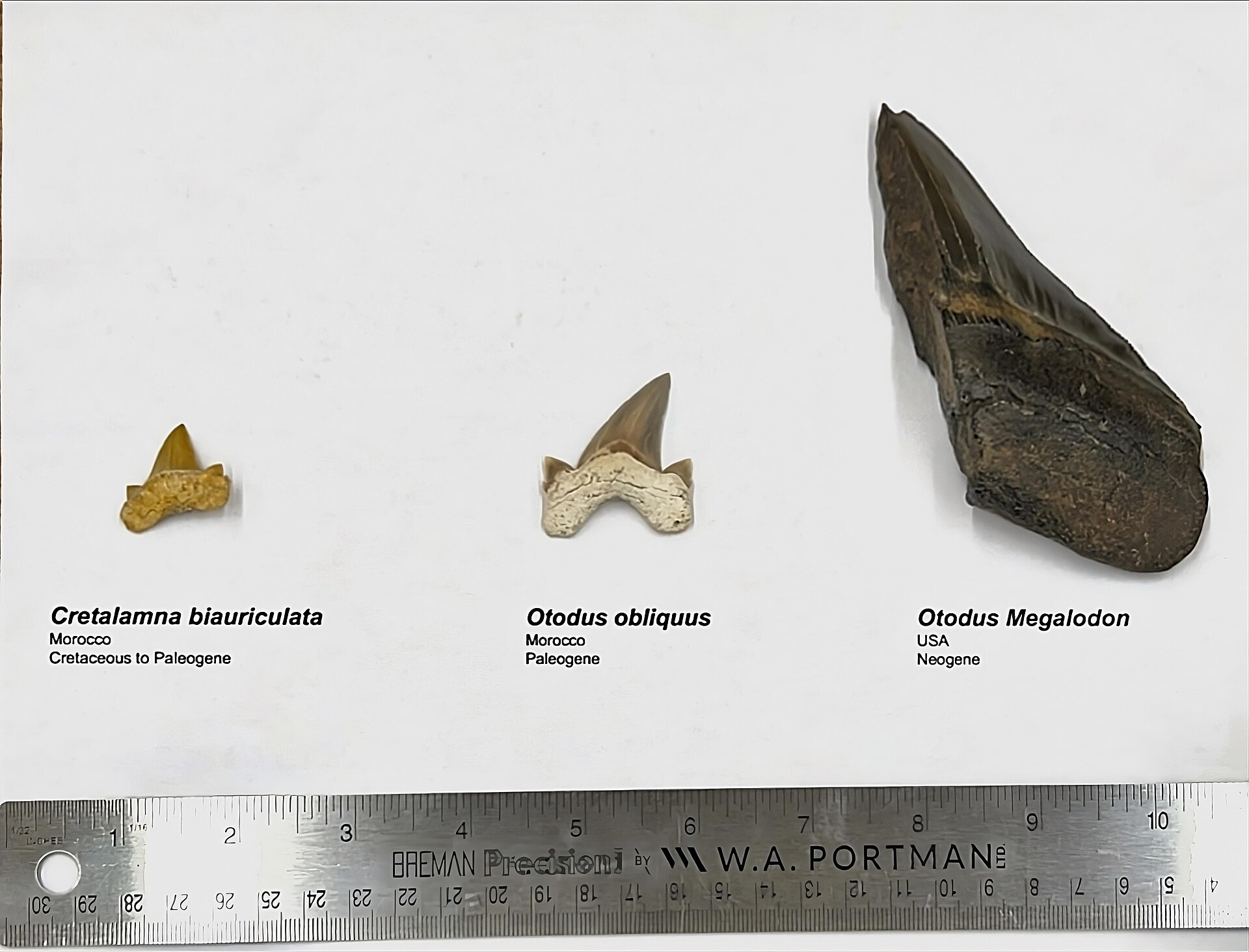
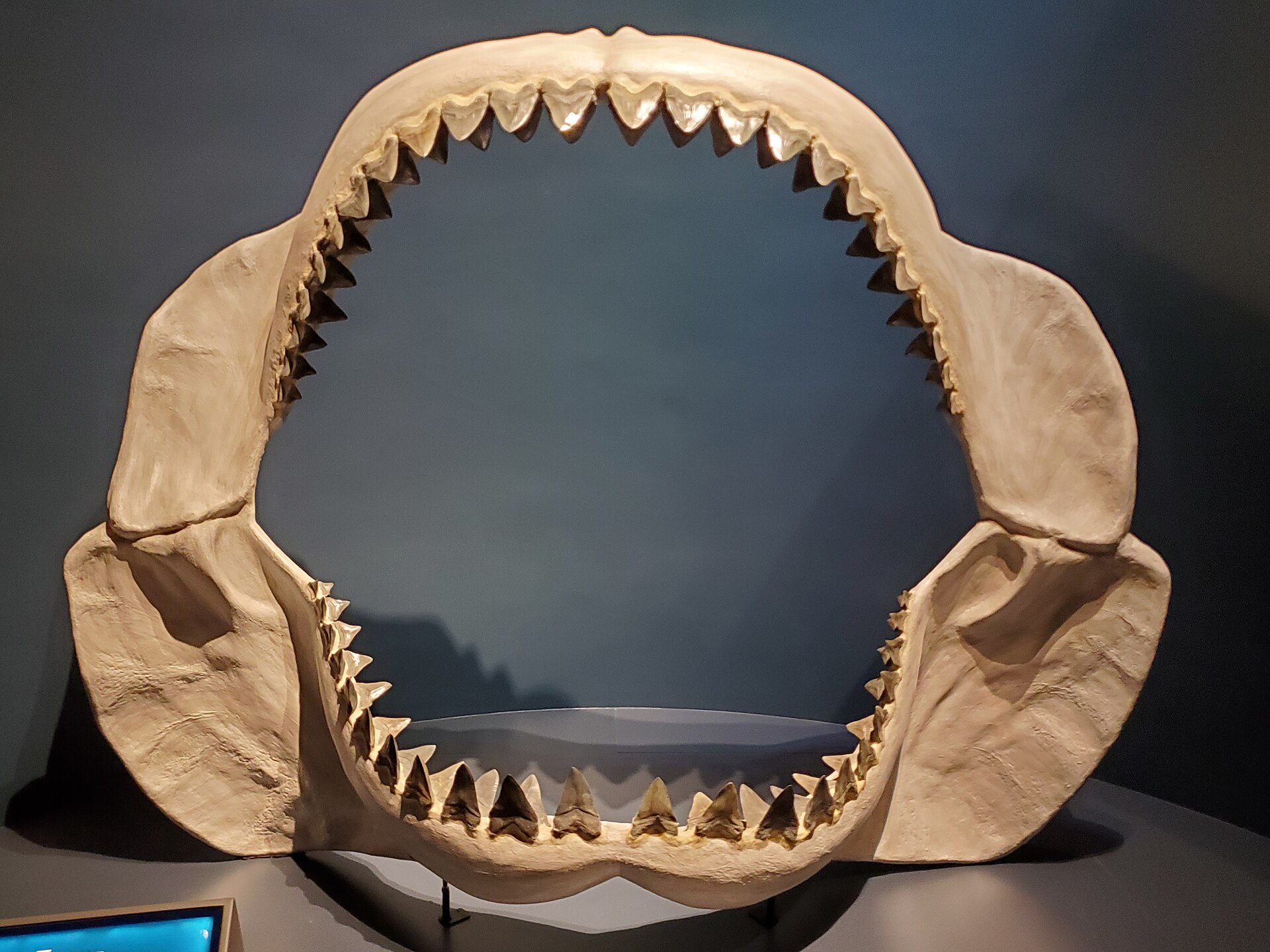
Megalodon had 276 teeth up to 7 inches (18 cm) long, with new teeth constantly growing in to replace broken ones. Sharks constantly shed and replace their teeth, losing and replacing thousands over a lifetime, which is why megalodon teeth are common as fossils. Its bite force reached up to 41,000 pounds.
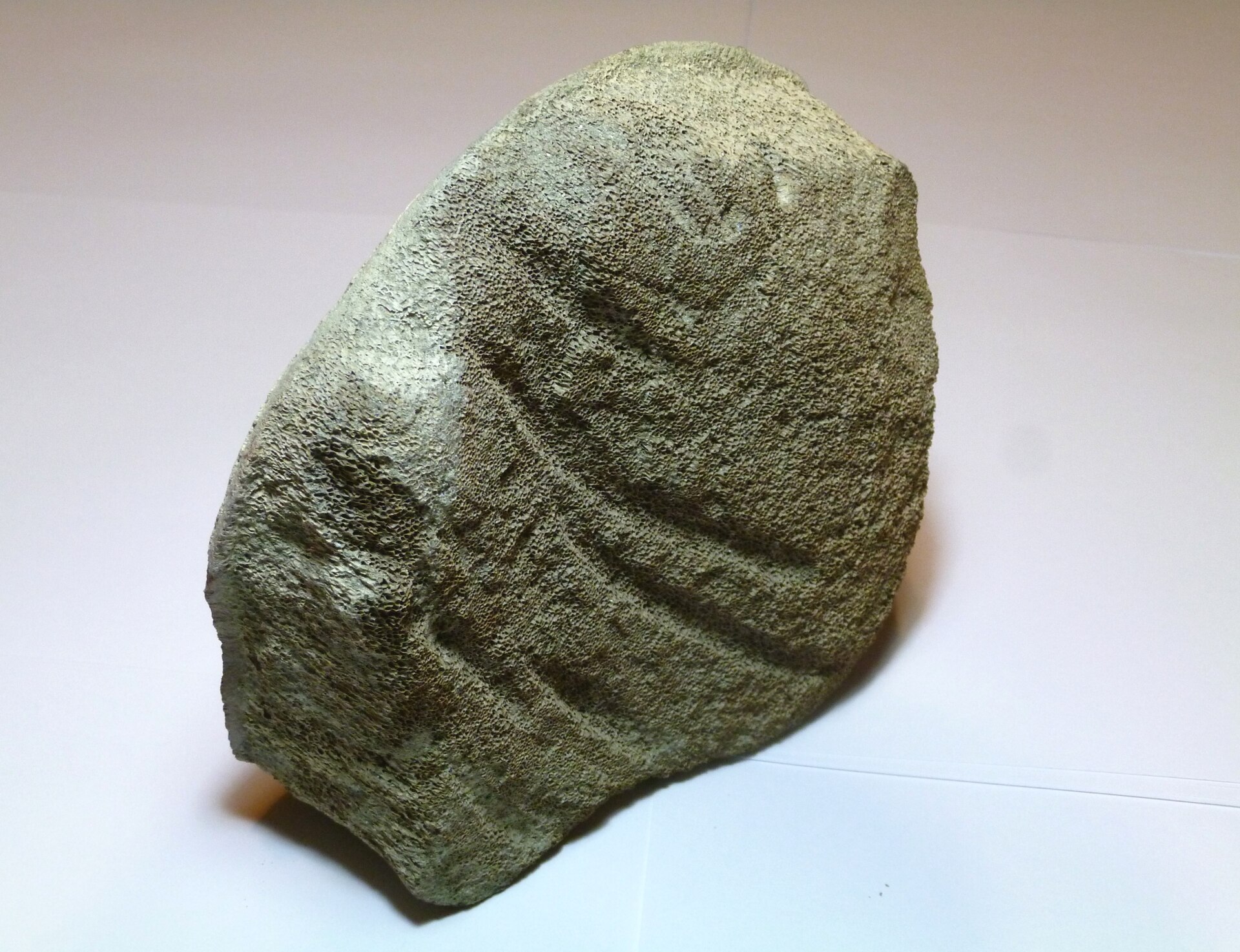
Megalodon may have had a much slenderer body than a scaled-up great white, possibly with lemon-shark proportions, a shorter rostrum and extra-long pectoral fins. The Western Australian Museum reported that megalodon had an unusually slender vertebral column, at odds with previous girthy reconstructions, and evidence from vertebral proportions indicates megalodon had an elongated body relative to the modern white shark.
Shark skeletons, including megalodon's, are rarely preserved because they are cartilaginous, but teeth of resistant dentine and enamel are commonly found as fossils. Museum researcher Mikael Siversson said any meaningful discussion of megalodon anatomy beyond the jaws would require the discovery of more-or-less complete skeletons.
The Australian Museum describes megalodon as the largest shark that ever lived, with adults estimated at 10 to 20 metres, roughly three times the length of a great white.
Bristol-led research reconstructed a 16-metre Otodus megalodon with a head about 4.65 metres long, a dorsal fin around 1.62 metres tall and a tail roughly 3.85 metres high.
4. Size Estimates and Reconstructions
A 2025 study by 29 fossil shark experts found that megalodon may have grown up to 24.3 metres long, about four times the length of the largest recorded great white shark, while estimates suggest adults reached a mean length of 13 to 14 metres 5Megalodon: The truth about the largest shark that ever lived · Natural History Museum, London ↗ 2Megalodon | Size, Fossil, Teeth, & Facts · Encyclopaedia Britannica ↗. A shark this size may have weighed up to 94 tonnes 5.
A nearly complete vertebral column of megalodon from the Miocene of Belgium, catalogued as specimen IRSNB P 9893 and held in Brussels, had a combined trunk length of 11.1 metres 15Reassessment of the possible size, form, weight, cruising speed, and growth parameters of the extinct megatooth shark, Otodus megalodon · Palaeontologia Electronica ↗. Adding head and tail estimates of about 1.8 metres and 3.6 metres to the Belgian trunk yields a total length of about 16.4 metres for that individual 15.
The estimated total body length based on white shark vertebral diameters is much shorter than the summed anteroposterior lengths of the fossil vertebrae 13White shark comparison reveals a slender body for the extinct megatooth shark, Otodus megalodon · Palaeontologia Electronica ↗. The Danish specimen represents the largest shark vertebral specimen known and quite possibly the largest non-tetrapod vertebrae ever recorded 16Rediscovery of the associated gigantic vertebrae of the extinct megatooth shark, Otodus megalodon, from the Upper Miocene Gram Formation in Denmark · Palaeontologia Electronica ↗. A tentative growth model suggests the Danish megalodon individual had the potential to grow slightly larger than the maximum estimate 16.
5. Distribution and Habitat
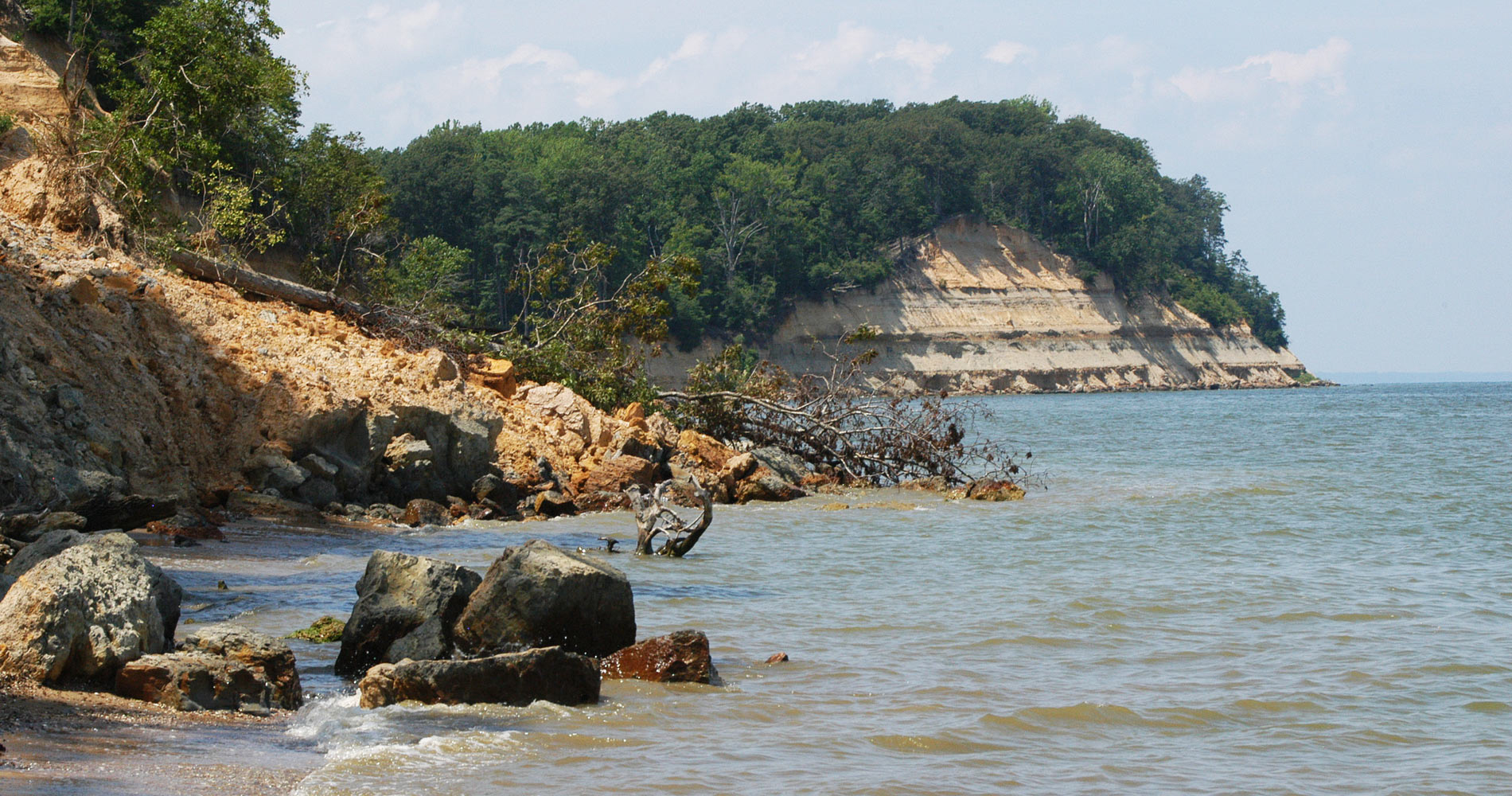
Otodus megalodon ranged across the oceans of the world; its remains, including its teeth, have been reported from Miocene and some Pliocene sediments on all continents except Antarctica, and the species is regarded as having had a near worldwide distribution. The shark was adapted to warm tropical and subtropical locations around the globe.
Juvenile megalodon likely inhabited warm nearshore regions, where food was abundant and large predatory sharks posed less of a threat. Adults, by contrast, preferred open ocean environments.
A 2022 study used around 80 megalodon teeth to estimate body lengths and compare them with sea surface temperatures, and found that sharks in cooler waters tended to be larger. The work concluded that not all megalodon populations grew equally large. It further suggested that localities yielding smaller teeth may simply reflect smaller body sizes in warmer water, potentially undermining the concept of megalodon nursery areas.
6. Diet and Feeding
Megalodon preyed on whales, dolphins, seals, sirenians, fish and other sharks. Evidence of its attacks survives in the form of bite marks on the bones of dolphins, small whales, seals and sirenians, as well as on the remains of sea turtles, fish and other sharks. As an apex predator, it hunted fish, baleen whales, toothed whales, sirenians and seals; adults likely faced no predators of their own, while juveniles were vulnerable to large predatory sharks.
Fossil whale bones bear megalodon tooth marks, and some even contain broken-off tips of megalodon teeth.
When megalodon opened its mouth, it gaped up to 11 feet wide by 9 feet tall, approximately 3.4 by 2.7 metres.
7. Physiology and Metabolism
Across all studied sites, the body temperatures of Otodus species averaged about 7 °C higher than ambient seawater, an offset inferred from comparisons with sympatric ectothermic species. This supports the conclusion that megalodon was a regional endotherm, maintaining a body temperature above that of the surrounding water.
The high metabolic costs of at least partial endothermy may have contributed to megalodon's vulnerability to extinction compared with other shark species that persist today. As an alternative to endothermy, whale sharks — the size equivalent of megalodon — maintain a stable internal body temperature of around 27 °C despite being ectotherms.
Its estimated cruising speed was 2.1 to 3.5 kilometres per hour. This speed was no faster than that of the modern great white shark.
8. Reproduction and Growth
Back-calculation from growth bands, and growth patterns recorded in the Belgian vertebral specimen, place the size of Megalodon at birth at about 3.6 metres, and possibly as much as about 3.9 metres. The large inferred size at birth suggests that Megalodon practiced ovoviviparity with oophagous intrauterine cannibalism for embryonic nourishment, like modern lamniforms.
A 2010 study estimated that Megalodon had a fast growth rate nearly twice that of the great white, with somatic growth slowing around 25 years.
9. Extinction
Megalodon is generally held to have gone extinct about 3.6 million years ago, though some analyses propose a date closer to 2.6 million years ago. It may have vanished as early as 3.5 million years ago, when great whites appeared.
Evidence suggests megalodon's extinction was not due to a single factor: a decline in prey species, a changing climate and increasing competition may have combined to wipe it out. Diet and resource competition have been discussed as drivers of megalodon's evolution and extinction, but its abrupt disappearance from the fossil record remains an enigma.
NSF reports the results appear to support the possibility of dietary competition between megalodon and Early Pliocene great white sharks.
The 2014 analysis concluded that modern gigantic filter-feeding whales became established after megalodon's extinction.
Post-middle Miocene oceanographic change and range fragmentation may have played a part as well, and the extinction could also have been globally asynchronous.
10. Fossil Record and Research
Vertebral material, though far rarer than teeth, has provided some of the most informative specimens. Researchers rediscovered a megalodon vertebral specimen from Denmark's Gram Formation that had been thought lost, confirming a reported maximum vertebra diameter of 23 cm.
New collecting methods continue to add to the record. During the 2026 Cook Islands ROV exploration, NOAA recovered large fossil fish teeth from within polymetallic nodules, many over seven centimetres long and likely from megalodon. Fossilized fish teeth absorb trace and rare earth elements such as neodymium, so analysing them can track past ocean circulation patterns.
11. Cultural Depictions and Myths
Modern belief in megalodon's survival owes much to a 2013 US documentary, Megalodon: The Monster Shark Lives, which advanced the notion with faked photos and hired actors and was swiftly debunked.
Megalodon's standing in popular culture reached an all-time high through films such as Jaws and The Meg. The 2018 film The Meg, in which the shark features widely, grossed over 500 million dollars at the box office.
All the evidence concludes that megalodon is extinct.
12. Timeline of Key Events
-
More than 100 million years agoDeep lineage rootsThe megalodon lineage is thought to stretch back to a species of Cretalamna more than 100 million years ago.5
-
55 million years agoOldest definitive ancestorThe oldest definitive ancestor of megalodon is the 55-million-year-old Otodus obliquus.5
-
About 23 million years agoEarliest fossils and the start of the megatooth span
-
About 20 million years agoEvolution during the NeogeneMegalodon is believed to have evolved around 20 million years ago during the Neogene Period and was one of the ocean's top predators.6Megalodon sharks grew biggest in colder waters · Natural History Museum, London ↗
-
About 10 million years agoNurseries in the late MioceneResearchers presented the first definitive evidence of ancient nurseries for megalodon from the late Miocene of Panama, about 10 million years ago.24Ancient Nursery Area for the Extinct Giant Shark Megalodon from the Miocene of Panama · PLOS ONE ↗
-
About five million years agoA shift in the Atlantic food webMegalodon specimens in the Atlantic saw their Zinc-66 proportion increase around five million years ago, suggesting they were no longer top of the food chain.8Great white sharks could have contributed to megalodon extinction · Natural History Museum, London ↗
-
About 3.6 million years agoExtinctionMegalodon could grow to at least 15 metres and ranked among the largest apex marine predators since the Mesozoic.18Endothermic physiology of extinct megatooth sharks · Proceedings of the National Academy of Sciences ↗ It overlapped in time with Australopithecus afarensis, the species of the famous hominin Lucy.10megalodon (OLOGy card 379) · American Museum of Natural History ↗
13. Timeline: from the origins of the megatooth lineage to the deep-sea finds of 2026
- about 105 million years agoOrigins of the lineageThe evolutionary history of megalodon's lineage is thought to stretch back to a species of Cretalamna dating back about 105 million years.
- about 55 million years agoOtodus obliquus appearsThe oldest definitive ancestor of megalodon is a 55-million-year-old shark known as Otodus obliquus, which grew to around 10 metres in length.
- about 23 million years agoEarliest megalodon fossilsThe earliest megalodon fossils date to about 23 million years ago and the species spans the Miocene and Pliocene epochs.
- about 20 million years agoMegalodon evolvesMegalodon is believed to have evolved around 20 million years ago during the Neogene Period, becoming one of the ocean's top predators.
- about 16 million years agoAn ancestor's diet recordedOtodus chubutensis, believed to have evolved into megalodon, had a low zinc isotope ratio during the Miocene around 16 million years ago.
- about 10 million years agoA nursery in PanamaResearchers presented the first definitive evidence of ancient megalodon nurseries from the late Miocene of Panama, about 10 million years ago.
- about 5 million years agoTop-predator status slipsMegalodon specimens in the Atlantic saw their proportion of Zinc-66 increase around five million years ago, suggesting they were no longer top of the food chain.
- about 3.6 million years agoExtinction near the Pliocene boundaryThe youngest reliable records suggest megalodon went extinct at the early-late Pliocene boundary, about 3.6 million years ago.
- about 2.6 million years agoAlternative extinction estimateAn analysis using an optimal linear estimation model suggested a later extinction around 2.6 million years ago, and the exact date remains debated.
- 1835Species namedSwiss naturalist Louis Agassiz gave megalodon its scientific name, calling it Carcharias megalodon in an 1835 illustration of a fossil tooth.
- 2018The Meg releasedThe film The Meg, based on a 1997 book, grossed over $500 million at the box office and further raised megalodon's profile in popular culture.
- 3 September 20202D body reconstructionBristol-led research reconstructed a 16-metre megalodon with a head about 4.65 metres long and a dorsal fin about 1.62 metres tall.
- 31 May 2022Zinc isotope studyA Nature Communications study found Early Pliocene great white sharks and megalodon occupied largely overlapping trophic levels, suggesting dietary competition.
- 26 June 2023Endothermy supportedA PNAS study found Otodus species ran body temperatures averaging about 7 °C above ambient seawater, evidence of regional endothermy.
- March 2025Maximum size reassessedA study by 29 experts in Palaeontologia Electronica suggested megalodon could have reached about 24.3 metres and weighed around 94 tonnes.
- 2026New finds from the deepNOAA's 2026 Cook Islands expedition recovered fossil megalodon teeth from the abyssal seafloor among polymetallic nodules.
References (24)
- 1Megalodon, Otodus megalodon — Australian Museum WebView source
- 2Megalodon | Size, Fossil, Teeth, & Facts — Encyclopaedia Britannica Web↩View source
- 3Megalodon — Wikipedia WebView source
- 4The Megalodon — Smithsonian Ocean (Smithsonian Institution) WebView source
- 5Megalodon: The truth about the largest shark that ever lived — Natural History Museum, London Web↩View source
- 6Megalodon sharks grew biggest in colder waters — Natural History Museum, London 2022 Web↩View source
- 7Is megalodon still alive? — Natural History Museum, London WebView source
- 8Great white sharks could have contributed to megalodon extinction — Natural History Museum, London 2022 Web↩View source
- 9Trophic position of Otodus megalodon and great white sharks through time revealed by zinc isotopes — Nature Communications JournalView source
- 10megalodon (OLOGy card 379) — American Museum of Natural History Web↩View source
- 11Body dimensions of the extinct giant shark Otodus megalodon: a 2D reconstruction — Scientific Reports JournalView source
- 12New scientific paper disputes body shape of extinct megalodon shark — Western Australian Museum WebView source
- 13White shark comparison reveals a slender body for the extinct megatooth shark, Otodus megalodon — Palaeontologia Electronica 2024 Web↩View source
- 14True size of prehistoric mega-shark finally revealed — University of Bristol 2020 WebView source
- 15Reassessment of the possible size, form, weight, cruising speed, and growth parameters of the extinct megatooth shark, Otodus megalodon — Palaeontologia Electronica 1502 Web↩View source
- 16Rediscovery of the associated gigantic vertebrae of the extinct megatooth shark, Otodus megalodon, from the Upper Miocene Gram Formation in Denmark — Palaeontologia Electronica 1674 Web↩View source
- 17The Early Pliocene extinction of the mega-toothed shark Otodus megalodon: a view from the eastern North Pacific — PeerJ WebView source
- 18Endothermic physiology of extinct megatooth sharks — Proceedings of the National Academy of Sciences Journal↩View source
- 19Megalodon's body size and form uncover why certain aquatic vertebrates can achieve gigantism — DePaul University 2025 WebView source
- 20Great white sharks may have helped drive megalodons to extinction — Science News Web↩View source
- 21Great white sharks may have contributed to megalodon extinction — U.S. National Science Foundation WebView source
- 22When Did Carcharocles megalodon Become Extinct? A New Analysis of the Fossil Record — PLOS ONE JournalView source
- 23A Mega Find: Shark Teeth from the Deep Waters of the Cook Islands — NOAA Ocean Exploration WebView source
- 24Ancient Nursery Area for the Extinct Giant Shark Megalodon from the Miocene of Panama — PLOS ONE Journal↩View source
 Gray Wolf
 Penguin
 Dolphin

