Giant Panda
The bamboo-eating bear of China's mountain forests — its biology and diet, its reserves and breeding programmes, and its journey from endangered icon to conservation recovery.
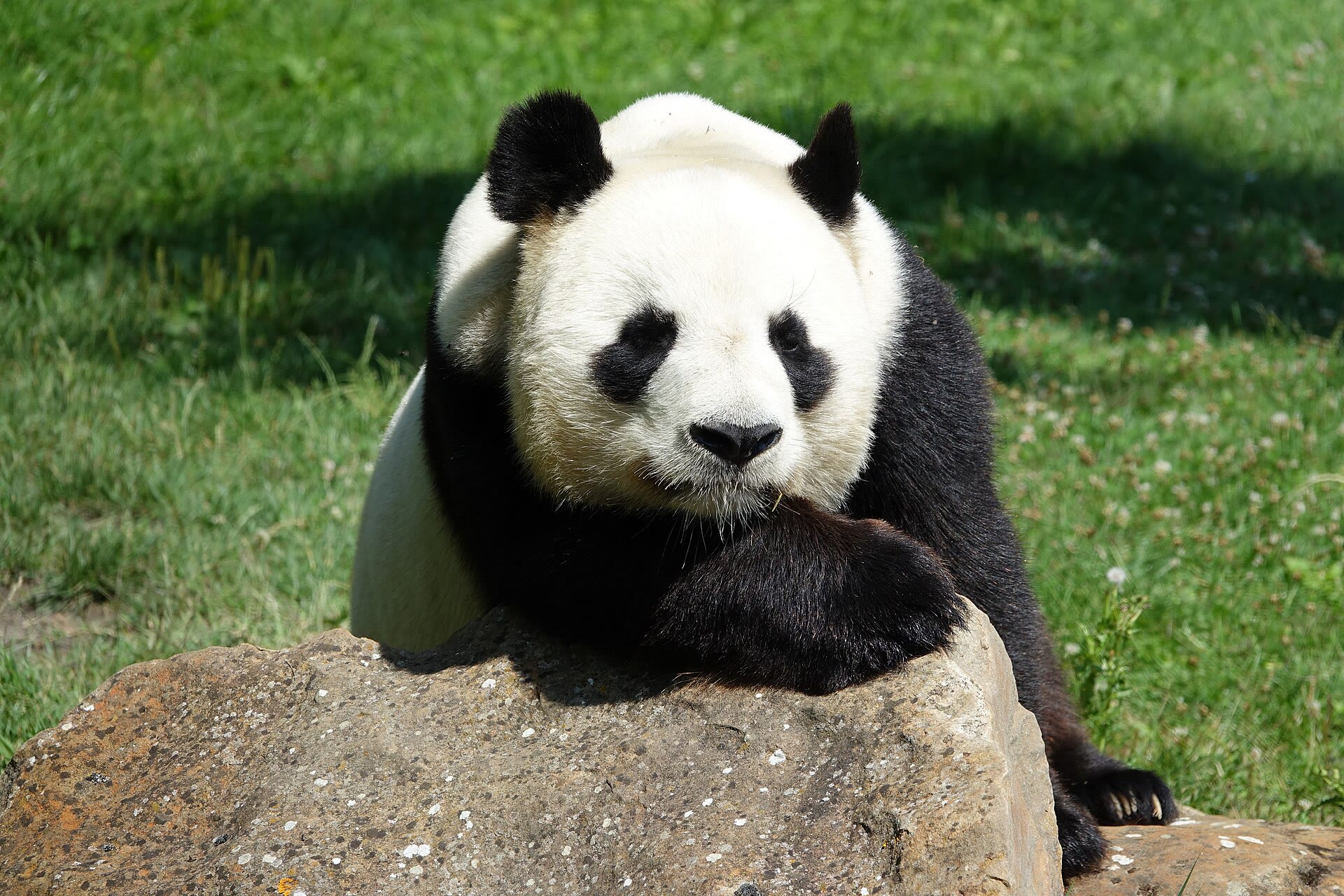
The giant panda (Ailuropoda melanoleuca) is a bear endemic to the mountain forests of Sichuan, Shaanxi and Gansu in central China, where it subsists almost entirely on bamboo and can spend up to 16 of every 24 hours feeding. Once widespread across southern China and into Southeast Asia, it was reduced to fragmented highland populations; the Fourth National Survey of 2011–2014 counted 1,864 wild pandas. The IUCN reassessed the species from Endangered to Vulnerable in 2016, and by 2024 China reported about 1,900 wild pandas and a global captive population of 757, protected by 67 nature reserves and the Giant Panda National Park established in 2021.
In this article
- 1Overview
- 2Taxonomy and Evolution
- 3Description and Anatomy
- 4Distribution and Habitat
- 5Diet and Feeding Behaviour
- 6Behaviour and Ecology
- 7Reproduction and Life Cycle
- 8Conservation Status and Population
- 9Protected Areas and Legal Protection
- 10Captive Breeding and Research
- 11Cultural and Historical Significance
- 12Timeline: from 1869 to 2025
- 13Knowledge graph
Overview
The giant panda, Ailuropoda melanoleuca (David, 1869), is adapted to temperate montane forests with a bamboo understory.
The IUCN Red List classifies the giant panda as Vulnerable.
1. Taxonomy and Evolution
The giant panda is placed in the family Ursidae, within the order Carnivora. Its position there was not always taken for granted: whether the animal belonged with the bears or with the raccoons was once a matter of debate, and genetic evidence has since settled the question in favour of the bear family. That evidence is not contradicted by the panda's unusually small chromosome complement of 42, against 74 for ursine bears, since the Andean bear also carries fewer chromosomes and is unambiguously a true bear.
The panda's separation from the rest of the bear lineage is an ancient one, occurring early in the family's evolutionary history with a divergence dated to roughly 8 million years ago, in the Miocene. Its commitment to a bamboo diet is likewise deep in time, for fossilized dental remains show that bamboo had become its principal food source at least three million years ago. The dietary shift is also written into its genome, where the umami taste receptor gene T1R1 has been identified as a pseudogene with an estimated mutation time of about 4.2 million years, coinciding with that change in diet.
2. Description and Anatomy
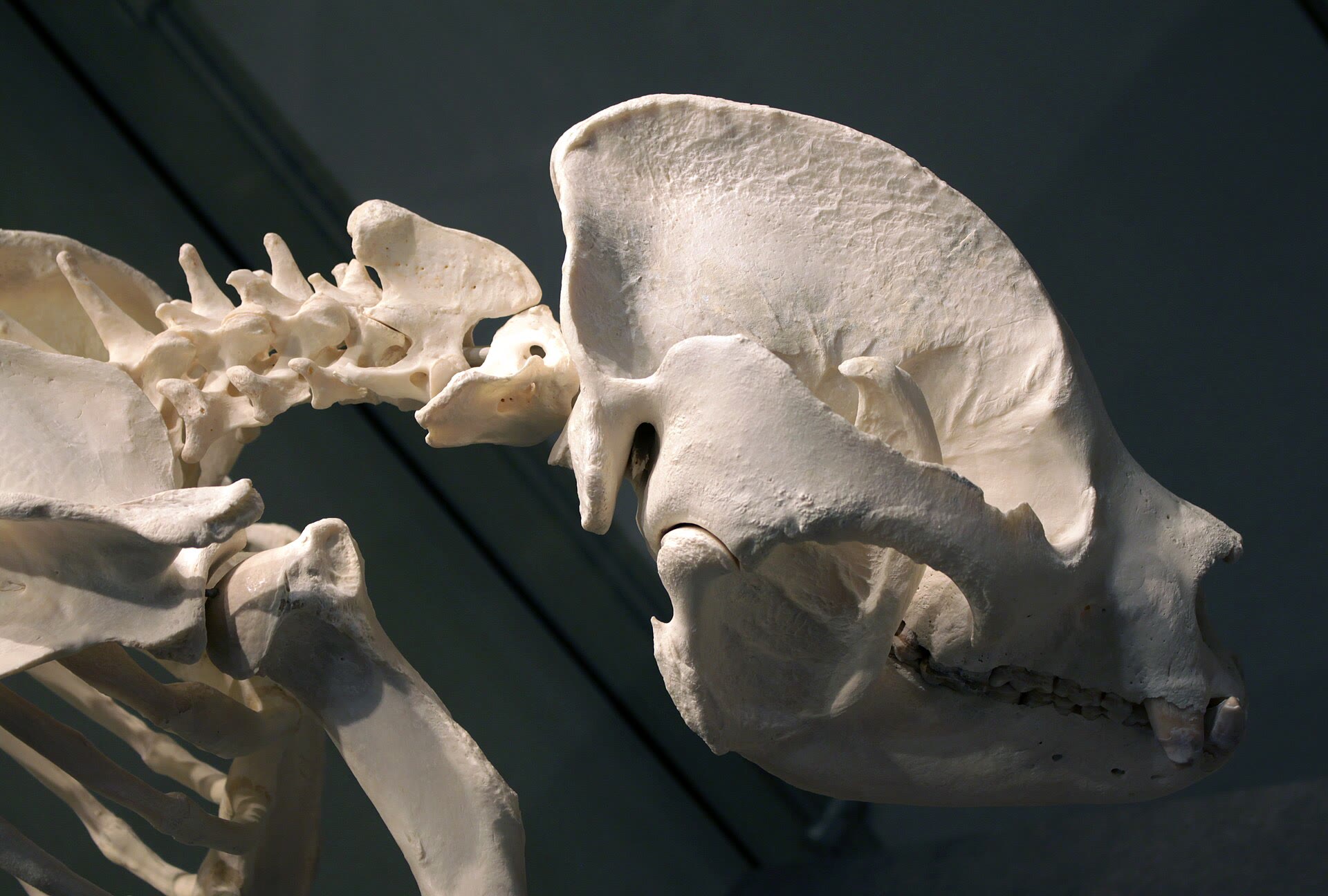
The giant panda has a body length of 1.5–1.8 m and a shoulder height of 65–70 cm. Its build is stocky, with a round head and a short tail. Females weigh 70–100 kg (155–220 lb), while males weigh 86–125 kg (190–275 lb). Large males may attain 1.8 metres in length and weigh more than 100 kg, whereas females are usually smaller.
The panda's extra opposable digit is not a true thumb but a pad of skin overlying a radial sesamoid structure, a wrist bone.
The giant panda has exceptionally low daily energy expenditure, linked to low levels of physical activity and low levels of thyroid hormones probably caused by a genetic mutation in the thyroid hormone production pathway. GPS tracking showed that pandas rested for more than half of the day and on average travelled just 20 metres per hour. Despite their low metabolism, pandas keep warm because their exceptionally thick fur traps body heat inside, making their surface temperatures much lower than those of zebras or Dalmatian dogs.
3. Distribution and Habitat
The giant panda is a creature of temperate montane forest, living where a bamboo understory grows beneath the canopy at elevations of 1,200–4,100 m. Its stronghold lies in the temperate forests high in the mountains of southwest China, where it subsists almost entirely on bamboo. Dense bamboo and coniferous forests at altitudes of 5,000 to 10,000 feet form the setting in which wild giant pandas are found in the mountains of central China. The species is adapted to high-altitude forests in the mountains of central China, so wintry weather is easy for it while summer heat and humidity are more difficult.
It once ranged throughout southern and central China and into northern parts of Southeast Asia. The giant panda was already considered rare in ancient China; its range covers 29,500 sq. km in total, but only 5,900 sq. km of that is panda habitat. One-third of wild pandas are found outside of protected areas, and WWF is working to create bamboo corridors that link existing panda populations across China.
Protection of this habitat has expanded considerably. The national park spans parts of Sichuan, Shaanxi and Gansu provinces and is home to 1,340 wild pandas; one of its key missions is creating ecological corridors to facilitate genetic exchange among panda groups. The State Council asked Sichuan, Shaanxi and Gansu provinces to improve organization and cooperation to step up recovery of wild pandas and their habitats and to formulate a general plan for the national park.
4. Diet and Feeding Behaviour
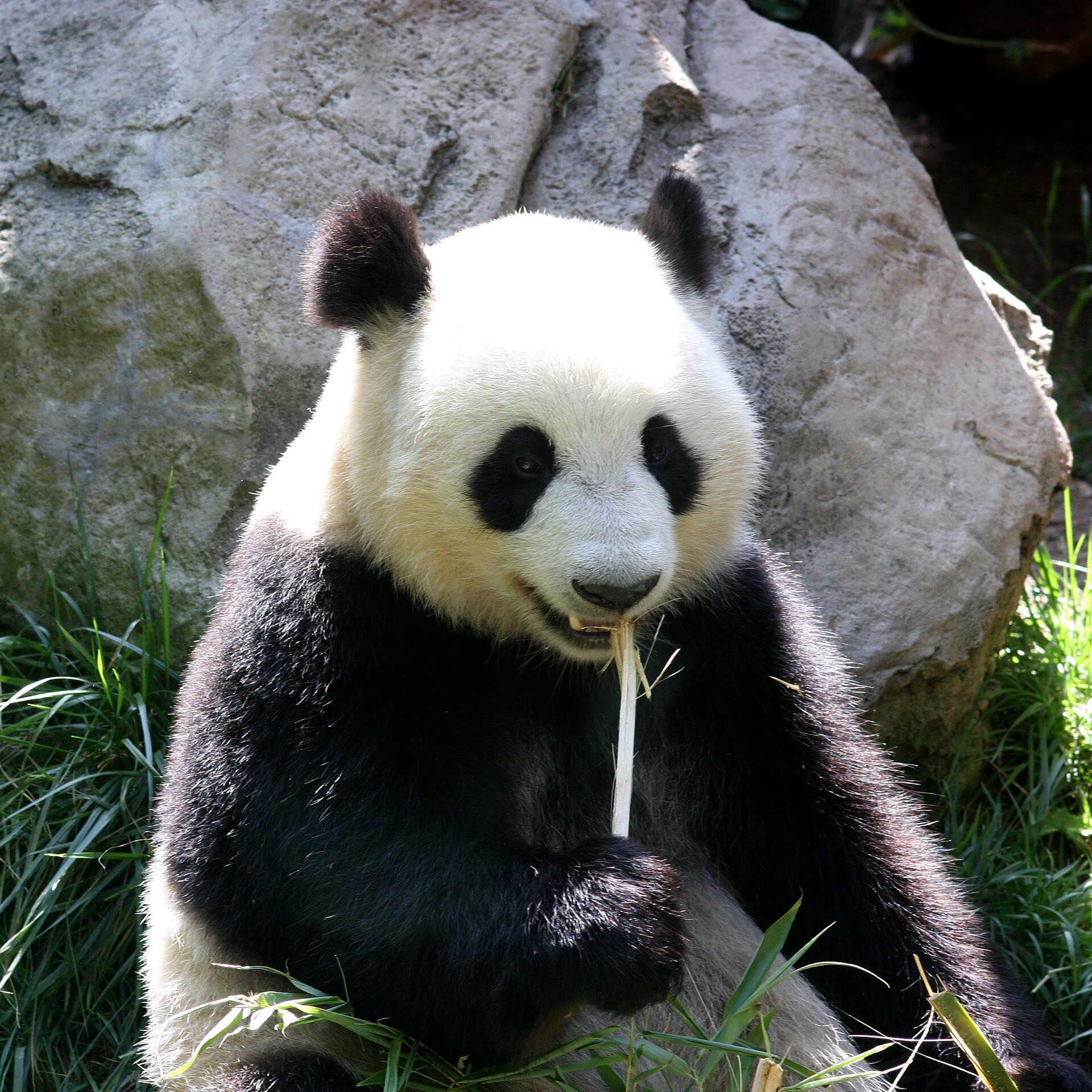
The giant panda's diet is almost entirely bamboo, and in the wild an individual may consume up to 12.5 kg per day. As much as 90 to 98 percent of the diet consists of the leaves, shoots, and stems of bamboo, a large grass available year-round in much of China's forested regions. The animal's capacity to extract nourishment from this material is limited: wild giant pandas can digest only an average of 17 percent of dry matter and about 27 percent of hemicellulose. Despite adaptations in the forepaws, teeth, and jaws for bamboo consumption, the giant panda retains the digestive system of its carnivore ancestry and cannot digest cellulose.
The consequences of this inefficiency shape the panda's daily routine. A panda may spend as much as 16 out of every 24 hours feeding, and elimination of wastes occurs up to 50 times per day. Giant pandas spend approximately 10-16 hours a day foraging, using their elongated wrist bones, which resemble opposable thumbs, and their strong jaws to feast primarily on bamboo. In the wild, giant pandas almost exclusively eat bamboo; at the Zoo they are fed bamboo as well as highly nutritious biscuits, carrots and apples.
Research into the panda's dietary switch has examined the molecular basis of its food choice. A systematic analysis of appetite-reward genes revealed dopamine metabolic involvement in the food choice of the giant panda, suggesting a new direction for molecular evolution studies of its dietary switch.
5. Behaviour and Ecology
The giant panda communicates through a repertoire of vocalizations that includes a friendly bleat along with honks, huffs, barks, and growls. Scent marking forms a further channel of exchange, and males often perform handstands so that a scent mark is left higher up a tree, placed where other pandas will notice it. In winter the species departs from the habits of other bears: rather than entering torpor, giant pandas migrate short distances to lower elevations.
Analysis of habitat use has revealed that pandas rely on a broader range of habitat characteristics than was previously understood, particularly steep slopes and non-forest areas. At the at-home range level, pandas selected against low terrain position and against the highest clumped forest, while no significant factors were identified within the home range. Their protection therefore carries consequences beyond the species itself: where pandas are protected, other animals living around them are protected as well, among them multicolored pheasants, the golden monkey, takin, and crested ibis.
6. Reproduction and Life Cycle
Reproduction in the giant panda is marked by a gestation that lasts between 84 and 184 days, a span that reflects delayed implantation rather than the growth of the fetus itself; true gestation of the fetus takes only about 50 days. A newborn panda weighs 3 to 5 ounces (85 to 142 grams) and is about 1,000 times smaller than its mother. Females give birth to a cub or two, though they cannot care for both twins. Studies of giant pandas in captivity showed that they have twins roughly half the time; the mother usually selects one and the other dies shortly after.
Pandas reach maturity at 4.5–6.5 years of age. In the wild, a giant panda lives about 20 years. In captivity, the normal maximum lifespan is about 26 years, though one individual reached about 34 years.
7. Conservation Status and Population
The giant panda is listed as Vulnerable on the IUCN Red List under criteria C2a(i) and D1, an assessment dated 11 April 2016. The species had earlier been regarded as Endangered, and its downgrading to Vulnerable in 2016 reflected China's success in restoring bamboo forest habitat. The change followed evidence from a series of range-wide national surveys indicating that the previous population decline had been arrested and that the population had begun to increase.
China's Fourth National Survey, carried out from 2011 to 2014, produced a range-wide estimate of 1,864 giant pandas, excluding dependent young under 1.5 years of age. By January 2024 the National Forestry and Grassland Administration put the wild population at about 1,900. Mature adults are estimated to make up 50.5 percent of the total population, yielding an estimate of about 1,040 mature individuals. The wild population is composed of as many as 33 subpopulations, 18 of which contain fewer than 10 individuals.
The assessors warned that climate change is predicted to eliminate more than 35 percent of the panda's bamboo habitat in the next 80 years, so the population is projected to decline.
8. Protected Areas and Legal Protection
China has established 67 giant panda nature reserves and the Giant Panda National Park, covering a combined area of 2. 58 million hectares and connecting the habitats of 85 percent of the country's wild panda population. The park integrated 73 isolated nature reserves, expanding the protected area to 22,000 square kilometers. It spans parts of Sichuan, Shaanxi and Gansu provinces.
The species is also included in CITES Appendix I. Fish and Wildlife Service listed the giant panda as an endangered species under the Endangered Species Act in 1984.
9. Captive Breeding and Research
The global captive population of giant pandas stands at 757, a figure given by Guan Zhi'ou, head of the National Forestry and Grassland Administration, at the Global Panda Partners 2024 conference in Chengdu. A scientific assessment holds that this captive population can maintain 90 percent genetic diversity for up to 200 years. The Chengdu Research Base of Giant Panda Breeding is a world-renowned base for giant panda ex-situ conservation, scientific research and breeding, and science popularization education. Panda Valley, the affiliated field research centre of the Chengdu base, opened to the public on 20 April 2015 and focuses on giant panda prerelease training and reintroduction. In 2021 the Chengdu base completed and opened the first interactive, themed museum dedicated to giant pandas.
Under the terms of the loan arrangements, any cub born to the Zoo's pandas belongs to China, and the Zoo sends the offspring to China at about age 4 so it can become part of the breeding population there. Mei Xiang gave birth to a cub on 9 July 2005; the cub was named Tai Shan at 100 days old after a public vote of more than 200,000 votes, and he left the Zoo for China on 4 February 2010 to join the breeding population there.
10. Cultural and Historical Significance
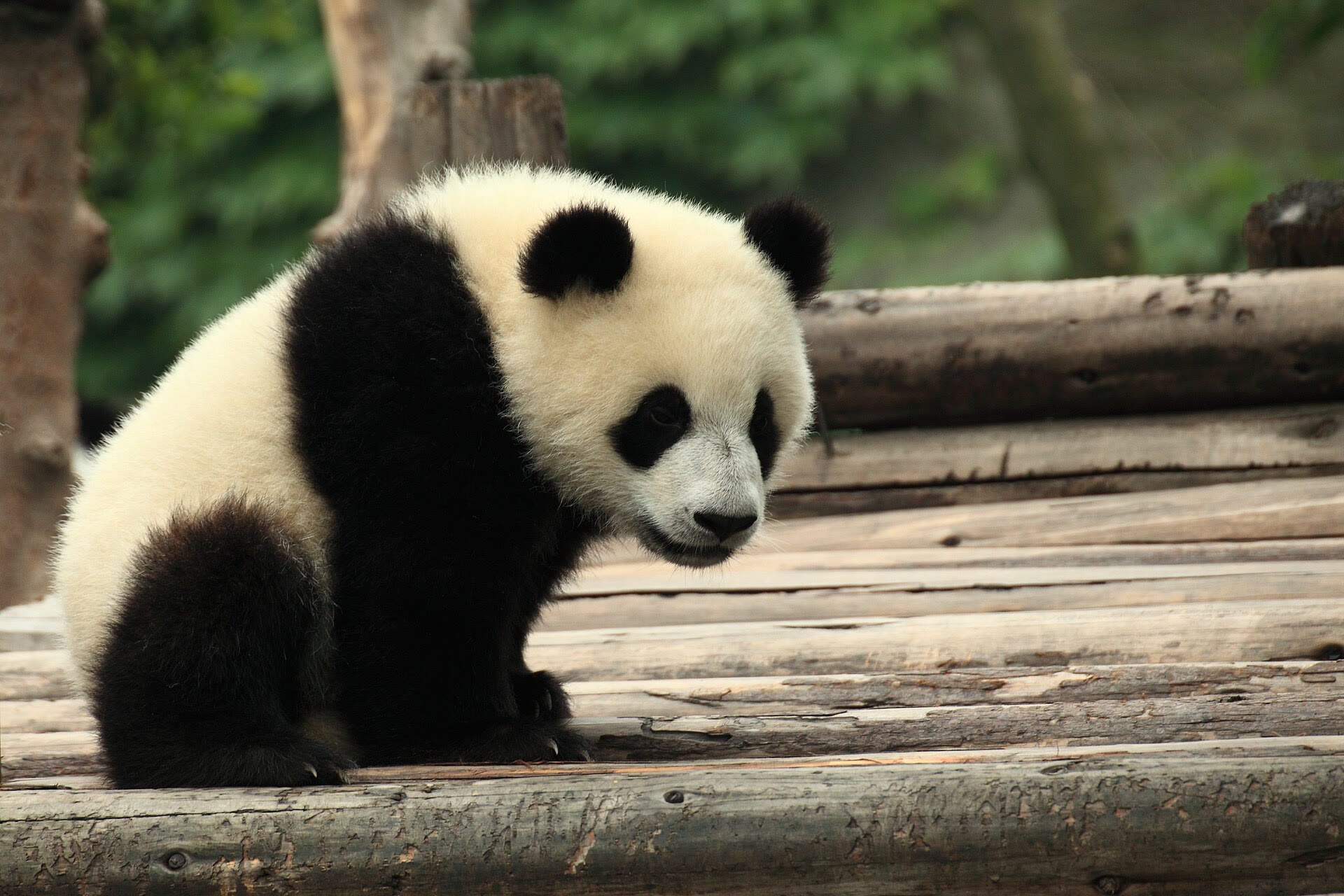
The giant panda's hold on the Western imagination is inseparable from a small number of individual animals whose lives were followed far beyond the forests of southwestern China. Su-Lin, the first giant panda exhibited in the West, reached the United States as an infant in 1936 and died at the Brookfield Zoo near Chicago in 1938 after two years as a popular attraction. Decades later, the giant pandas Ling-Ling, a female, and Hsing-Hsing, a male, arrived at their new home on 16 April 1972 as a gift from China to the American people. Over the next 20 years, Ling-Ling and Hsing-Hsing produced five cubs, but none of the offspring survived for more than a few days.
The terms on which pandas travelled abroad later changed, and so did the arrangements under which they were displayed. Mei Xiang and Tian Tian came to the Zoo on 6 December 2000 on loan rather than as a gift; in exchange the Zoo contributes funds and expertise toward conservation efforts in China. A later chapter opened when the pandas Qing Bao, a female, and Bao Li, a male, made their official public debut at the newly refurbished David M. Rubenstein Family Giant Panda Exhibit on 24 January 2025 under a new agreement with China.
Beyond any single zoo or exhibit, the panda became a global emblem of conservation itself. WWF's panda logo was designed by the organisation's founding chairman Sir Peter Scott in 1961; twenty years later WWF became the first international organisation to work in China. Since WWF was formed in 1961 the panda has been the symbol of the organisation and its work to protect biodiversity.
11. Timeline: from 1869 to 2025
- 1869The giant panda is introduced to scienceThe French missionary Père Armand David obtained specimens of a black-and-white bear in China and sent them to Paris; he named it Ursus melanoleucus, and it was later placed in the genus Ailuropoda.
- 1936Su-Lin reaches the WestSu-Lin, the first giant panda to be exhibited in the West, arrived in the United States as an infant and lived at the Brookfield Zoo near Chicago until 1938.
- 1961WWF is founded with the panda as its symbolWWF was formed in 1961 and adopted the giant panda as the symbol of the organisation; the logo was designed by founding chairman Sir Peter Scott.
- 16 April 1972Ling-Ling and Hsing-Hsing arrive in WashingtonAfter President Nixon's visit to China, Premier Zhou Enlai gifted two giant pandas to the American people; the pair arrived at the Smithsonian's National Zoo on April 16, 1972.
- 1984The United States lists the giant panda as endangeredThe U.S. Fish and Wildlife Service listed the giant panda as an endangered species under the Endangered Species Act.
- 1988China bans panda poachingChina's Wildlife Protection Law banned poaching and conferred Category I protected status, the highest level of protection, on the giant panda.
- 1990The IUCN lists the panda as EndangeredThe IUCN Red List assessment of 1990 recorded the giant panda as Endangered, a status repeated in the assessments of 1994, 1996 and 2008.
- 1992China launches the National Conservation ProjectThe National Conservation Project for the Giant Panda and its Habitat laid out a masterplan for panda conservation and established the reserve system.
- 6 December 2000A new pair arrives on loanGiant pandas Mei Xiang and Tian Tian came to the Smithsonian's National Zoo on Dec. 6, 2000, on loan rather than as a gift.
- 9 July 2005Tai Shan is bornMei Xiang gave birth on July 9, 2005, to Tai Shan, the National Zoo's first surviving giant panda cub.
- 2015Fourth National Survey reports 1,864 wild pandasChina's Fourth National Giant Panda Survey, released in 2015, estimated that there were 1,864 wild pandas, a 17% increase in a decade.
- September 2016IUCN downgrades the panda to VulnerableThe IUCN reassessed the giant panda from Endangered to Vulnerable, citing recovery and conservation efforts, while warning that climate change threatens bamboo habitat.
- 14 October 2021China approves the Giant Panda National ParkThe State Council approved a proposal by the Ministry of Natural Resources to establish a national park for pandas in Sichuan, Shaanxi and Gansu.
- January 2024Wild population reported near 1,900China's National Forestry and Grassland Administration said the wild panda population is around 1,900, up from about 1,100 in the 1980s.
- November 2024Captive population hits 757The global captive population of giant pandas reached 757, reported at the Global Panda Partners 2024 conference in Chengdu.
- 24 January 2025New pandas debut in WashingtonQing Bao and Bao Li made their official public debut at the Smithsonian's National Zoo on Jan. 24, 2025, under an agreement running through April 2034.
References (20)
- 1Ailuropoda melanoleuca (Giant Panda) — 2016 assessment — The IUCN Red List of Threatened Species 2016 WebView source
- 2Ailuropoda melanoleuca (Giant panda) — IUCN SSC Bear Specialist Group WebView source
- 3giant panda — Encyclopaedia Britannica WebView source
- 4Why Does the Giant Panda Eat Bamboo? A Comparative Analysis of Appetite-Reward-Related Genes among Mammals — PLOS ONE JournalView source
- 5Ailuropoda melanoleuca (giant panda) — Animal Diversity Web, University of Michigan Museum of Zoology WebView source
- 6Giant Panda — San Diego Zoo Wildlife Alliance WebView source
- 7COOL PANDAS — Institute of Zoology, Chinese Academy of Sciences WebView source
- 8Giant Panda — World Wildlife Fund (WWF) WebView source
- 9Giant Panda — U.S. Fish & Wildlife Service WebView source
- 10Giant Panda FAQs — Smithsonian's National Zoo and Conservation Biology Institute WebView source
- 11Giant panda — WWF-Australia WebView source
- 12Xinhua Headlines: National park boosts panda population, exploring harmony between humans and nature — Xinhua News Agency WebView source
- 13State Council approves establishing national panda park — The State Council of the People's Republic of China (english.www.gov.cn) WebView source
- 14Habitat Use and Selection by Giant Pandas — PLOS ONE JournalView source
- 15Giant Panda — National Geographic WebView source
- 16China's wild panda population nears 1,900 — The State Council of the People's Republic of China (english.www.gov.cn) WebView source
- 17World's captive panda population hits 757 — Xinhua News Agency WebView source
- 18Brief Introduction — Chengdu Research Base of Giant Panda Breeding WebView source
- 19The History of Giant Pandas at the Smithsonian's National Zoo and Conservation Biology Institute — Smithsonian's National Zoo and Conservation Biology Institute WebView source
- 20Giant panda no longer 'endangered' but iconic species still at risk — WWF International (wwf.panda.org) WebView source
 Lion
 Marco Polo
 Airplane