Blue Whale
The largest animal ever known — its record size, krill feeding and lunge diving, its songs and migrations, and the whaling history and conservation effort behind its slow recovery.
The blue whale (Balaenoptera musculus) is the most massive animal known to have lived, reaching up to 33 metres in length and 330,000 pounds in weight. It feeds almost exclusively on krill, filtering seawater through baleen plates, and sings some of the loudest and lowest-frequency sounds made by any animal. Commercial whaling killed more than 360,000 blue whales before complete protection in 1966; the species remains endangered, and ship strikes, entanglement and noise are the main modern threats.
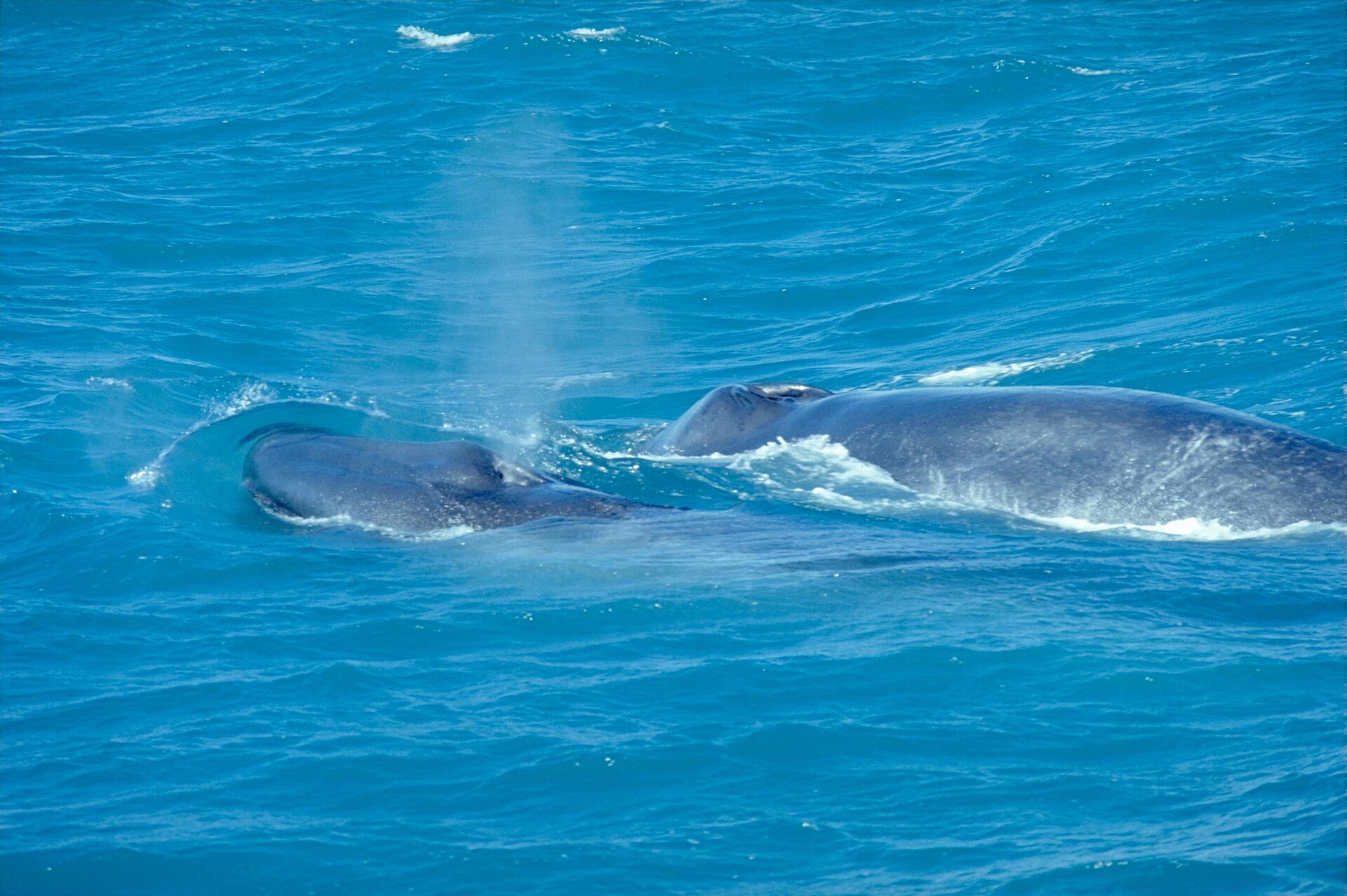
In this article
- 1Overview
- 2Taxonomy and Subspecies
- 3Size and Physical Characteristics
- 4Distribution and Habitat
- 5Behavior and Diet
- 6Reproduction and Life Cycle
- 7Conservation Status
- 8Threats
- 9Historical Whaling
- 10Population and Recovery
- 11Research and Conservation Efforts
- 12Timeline: from Linnaeus to the 2018 IUCN assessment
- 13Knowledge graph
Overview
Females are generally larger than males, and the largest blue whales live in the Southern Ocean around Antarctica.
1. Taxonomy and Subspecies
The blue whale is a cetacean classified within the order Cetacea as a rorqual, family Balaenopteridae, related to the gray whale and the right whales. The CMS taxonomy places the blue whale in the class Mammalia, order Cetacea and family Balaenopteridae. Its scientific name is Balaenoptera musculus (Linnaeus, 1758). Balaenoptera musculus is the largest metazoan ever to exist on Earth, with a global distribution and three widely recognized subspecies.
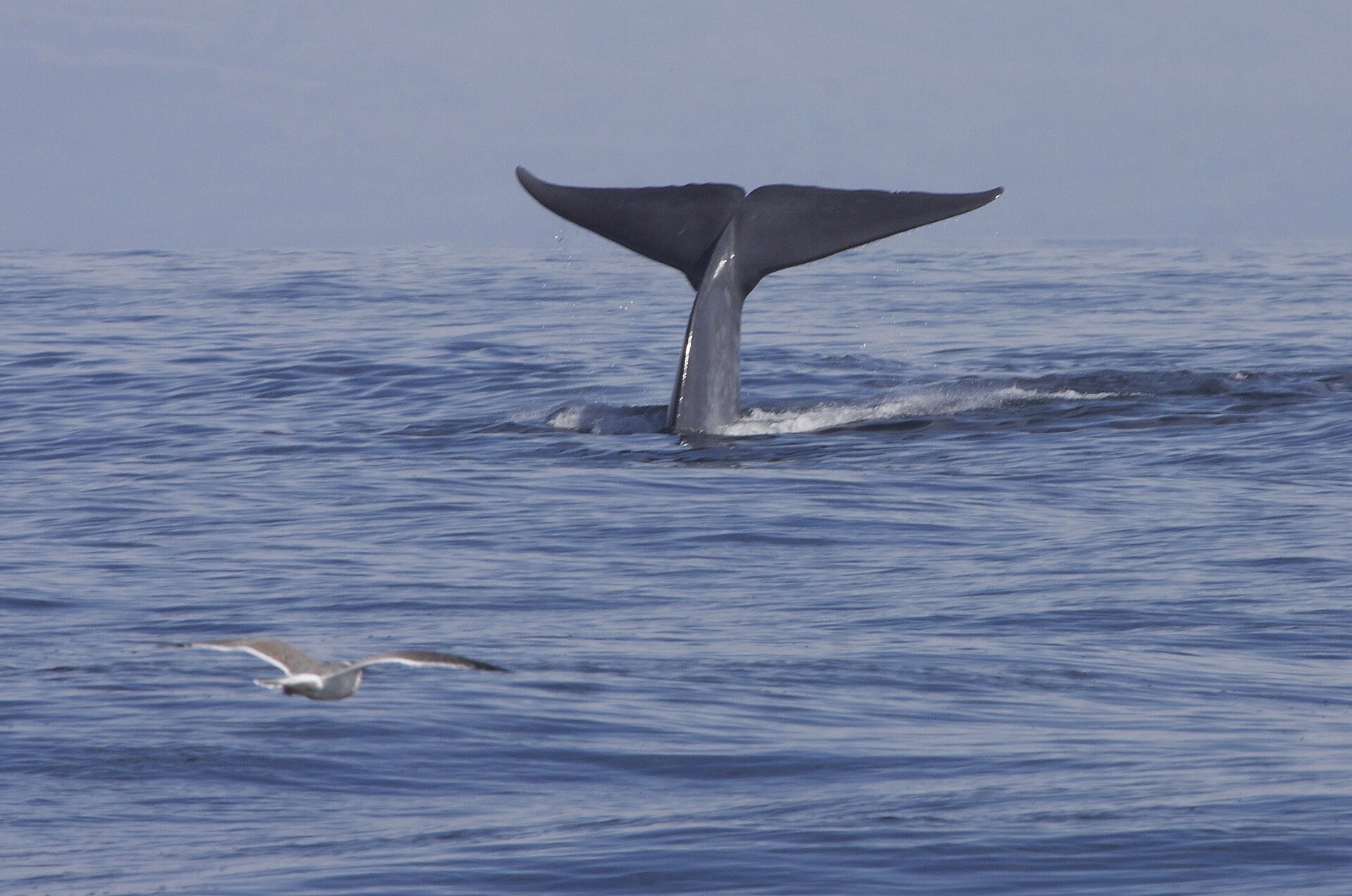
Antarctic blue whales, B. intermedia, are known to be the largest subspecies, with catches exceeding 27.1 m at the 95th percentile. Pygmy blue whales, B. brevicauda, have a maximum length of 24.1 m. There are two sub-species of blue whales in the Southern Hemisphere: the Antarctic (or true) blue whale and the slightly smaller pygmy blue whale. Pygmy blue whales are never found south of 50 degrees south and grow to only about 25 metres.
2. Size and Physical Characteristics
The blue whale is the most massive animal ever to have lived, weighing approximately 150 tons and attaining a length of more than 30 metres 1blue whale | Facts, Habitat, Size, & Pictures · Encyclopaedia Britannica ↗.
NOAA's quick facts give a maximum weight of 330,000 pounds and a length of up to 110 feet 6Blue Whale | NOAA Fisheries · NOAA Fisheries (National Oceanic and Atmospheric Administration) ↗. The largest accurately measured blue whale was a 29.5-metre female that weighed 180 metric tons, though there are reports of 33-metre catches 1. The largest blue whale ever recorded was 33 m long 7Blue whale · International Whaling Commission ↗. Early blue whale length measurements in excess of 30.5 m should be treated with suspicion 3Sizing ocean giants: patterns of intraspecific size variation in marine megafauna (PeerJ 3:e715) · PubMed Central / National Library of Medicine ↗.
Blue whale hearts typically weigh about 180 kg, the largest of any animal 1. A blue whale's heart weighs about 400 pounds, the same as a piano, and its heartbeat can be heard 2 miles away 8The Big-Hearted Blue Whale | NOAA Fisheries · NOAA Fisheries (National Oceanic and Atmospheric Administration) ↗.
3. Distribution and Habitat
Blue whales inhabit all oceans, with the largest populations found in the Southern Hemisphere. They undertake long seasonal migrations each year, moving from wintering areas in equatorial latitudes to summer feeding grounds in temperate to subarctic latitudes. During the summer months, blue whales of the Northwest Atlantic population probably range between Davis Strait off western Greenland and New England. Most recent sightings of that population have been made in the Gulf of St. Lawrence, around the Mingan Islands, Anticosti Island and off the Gaspe Peninsula.
Blue whale sightings, strandings and acoustic detections have been reported from the Gulf of Aden, the Arabian Sea and across the Bay of Bengal. The species spends the summer in polar waters feeding on krill, engaging in turns and 360-degree rolls during dives to sweep up large concentrations of prey in a single open-mouthed lunge.
4. Behavior and Diet
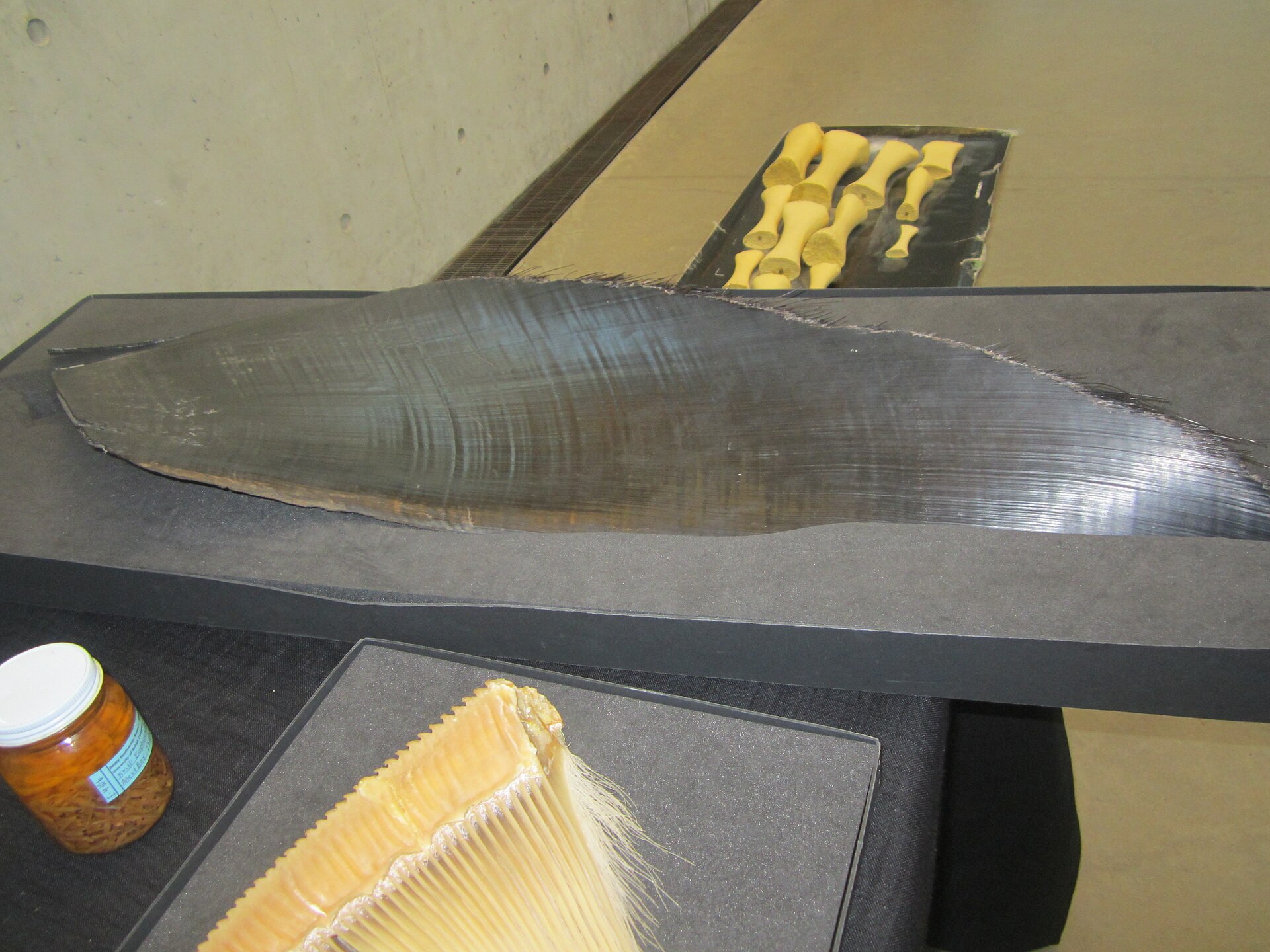
The blue whale feeds almost exclusively on krill, which it strains from huge volumes of seawater through baleen plates that work like a sieve. In southern waters, the main species eaten is Euphausia superba. In a single feeding mouthful, a blue whale gulps up to 50 tonnes of water and krill but swallows only the krill. Blue whales and other large baleen whales are important predators of krill.
Blue whales migrate long distances, travelling alone or in small groups called pods; they breed in warm southern waters during the winter and feed in polar seas during the spring and summer. Only male blue whales sing, and scientists believe their song is a mating call; blue whales have been singing at lower frequencies over the past 50 years. Their calls are among the most powerful and lowest-frequency sounds made by any animal, at 188 dB and 16-100 Hz. The blue whale's low-frequency whistle can be heard for hundreds of miles and is probably used to attract other blue whales.
5. Reproduction and Life Cycle
Gestation in the blue whale lasts approximately 10 to 12 months, a span that is unusually short for an animal of its size. After this period, a single calf about 8 metres long is born in temperate waters. The young are weaned after seven to eight months, by which point they have reached a length of about 15 metres. A newborn calf weighs 2.5 tonnes and can put on 100 kg per day during the latter stages of suckling.
Blue whales reach sexual maturity at 5-15 years of age, and females give birth every 2-3 years. Their lifespan is estimated at around 80 to 90 years.
6. Conservation Status
The blue whale is assessed as Endangered under criterion A1abd on the IUCN Red List, in an assessment published in 2018 by the IUCN. 15Balaenoptera musculus (Blue Whale) — The IUCN Red List of Threatened Species, assessment T2477A156923585 · International Union for Conservation of Nature (IUCN) ↗
It is also listed as endangered throughout its range under the Endangered Species Act and under Annex II of the SPAW Protocol throughout the Wider Caribbean Region. 6
The Antarctic subspecies is included in the global assessment but is also separately listed as Critically Endangered. 15
The population reduction was estimated at 89 to 97 percent, overlapping the boundary between Critically Endangered and Endangered under the past-reduction criterion. 15 The IUCN notes that the cause of the blue whale population reduction — commercial whaling — is reversible, understood and not currently operating. 15
7. Threats
The threats now arrayed against the blue whale are chiefly entanglement in fishing gear, ocean noise and vessel strikes, with vessel strikes and entanglements in fishing gear regarded as the primary dangers the species currently faces. On the west coast of North America, nine deaths of blue whales and some serious injuries were attributed to ship strikes during 2007-13. Among the blue whales entered in the Gulf of Saint Lawrence photo-identification catalogue, 16 percent appear to have scars or wounds resulting from ship strikes. Tracking data led researchers to conclude that blue whales do not demonstrate effective avoidance behaviour when ships are near, and the animals may fail to perceive vessels — or interpret them as a threat — at limited distances, which leaves them vulnerable to ship strikes.
Anthropogenic noise levels originating from seismic noise, shipping traffic, explosions, low frequency sonar, industrial and military activities in the oceans have been increasing over the last 50 years.
8. Historical Whaling
For most of the age of sail, the blue whale was effectively beyond the reach of whalers. Before the 1880s, the animals were too fast to be tracked down by sail-powered vessels, and the technology of the day was insufficient to prevent their carcasses from sinking after death. Consequently, blue whales were not hunted until the 1920s, their speed making them harder to catch than sperm, right and humpback whales.
Once industrial methods closed the gap, the hunt escalated with extraordinary speed. Between 1921 and 1935, blue whales were the primary species taken in the Southern Hemisphere. In the 1930-31 season alone, the worldwide kill exceeded 29,000 animals, and at South Georgia 30,000 blue whales were killed in that same season. The scale of the wider industry is measured in millions: nearly 2.9 million large whales were killed and processed during the period 1900–99, of which the Southern Hemisphere alone accounted for 2,053,956.
Protection arrived in the mid-1960s, but it was neither immediate nor complete in practice. They have been protected from whaling since 1966 by the International Whaling Commission, though some were hunted illegally until 1972 despite the ban. Even after blue whales were protected and commercial whaling stopped in 1966, the exploitation efforts of the former Soviet Union persisted, and 98 percent of the blue whales killed globally after the ban in 1966 were killed by Soviet whalers. Since 1979 the blue whale has been listed on Appendix I of the Convention on Migratory Species.
-
Prior to the 1880sBeyond the reach of sailBlue whales were too fast to be tracked down by sail-powered vessels, and the technology was insufficient to prevent their carcasses from sinking after death 3.
-
1921–1935The primary targetBlue whales were the primary species taken in the Southern Hemisphere 17Emptying the Oceans: A Summary of Industrial Whaling Catches in the 20th Century (Marine Fisheries Review 76(4)) · NOAA Scientific Publications Office ↗.
Populations appear to be recovering and are estimated worldwide at between 10,000 and 25,000 animals, with the California population at about 97 percent of pre-whaling numbers.
9. Population and Recovery
Populations of blue whales appear to be recovering and are estimated worldwide at between 10,000 and 25,000 animals. A study of population trends found the California blue whale population is at about 97 percent of pre-whaling numbers, with at least 10,000 blue whales worldwide.
Before whaling, about 300,000 blue whales populated the oceans, including 240,000 in the Antarctic alone.
10. Research and Conservation Efforts
The OSU Marine Mammal Institute has tagged 184 blue whales from the eastern North Pacific population since 1993 in an effort to more fully understand their critical habitat requirements, migration routes and destinations, seasonal movements, and diving behavior. Acoustic recording of songs offers a relatively cost-effective means of obtaining samples of sufficient size for population structure analyses.
Size data were obtained from the International Whaling Commission catch records, with detailed individual data available for 84 percent of all recorded blue whale catches. NOAA Fisheries scientists helped produce the first global estimate of the number of whales killed by industrial hunts in the 20th century: an astounding 3 million. The estimate drew on the records of the International Whaling Commission, which maintains the worldwide database on whale catches.
11. Timeline: from Linnaeus to the 2018 IUCN assessment
- 1758Linnaeus describes the blue whaleThe blue whale was first described by Linnaeus; its scientific name and authority remain Balaenoptera musculus (Linnaeus, 1758).
- 1860sSteam-powered whaling arrivesThe Norwegian whaler and sealer Svend Føyn introduced the steam-powered whale catcher and the exploding harpoon gun, the technology behind industrial whaling.
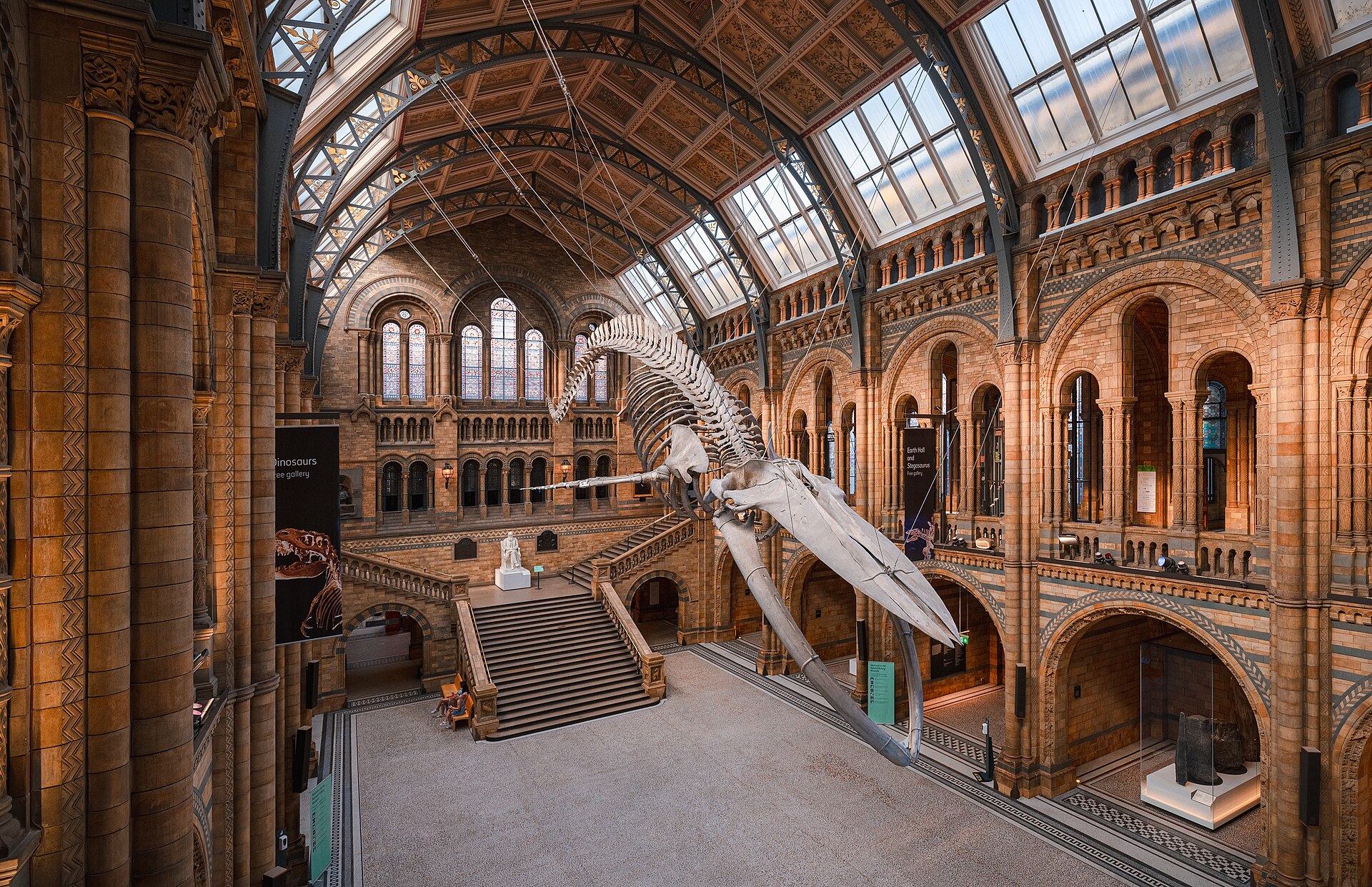
- 25 March 1891A future museum icon is strandedA blue whale migrating up the east coast of Ireland was stranded on a sandbar near Wexford; its skeleton would eventually become Hope at the Natural History Museum.
- 1930-31Record season in the AntarcticIn one area, South Georgia, 30,000 blue whales were killed in the 1930-31 season alone.
- 1932The Blue Whale UnitThe IWC introduced the Blue Whale Unit as a measure of oil yield; two fin whales were considered the equivalent of one blue whale.
- 1937First international regulationAn international agreement for the regulation of whaling was signed in London, but many parts of the measure were ignored.
- 1946The ICRW is createdAfter a 1945 international whaling conference hosted by the United States, the International Convention for the Regulation of Whaling was created in 1946.
- 1966Complete protection from commercial whalingBlue whales received complete legal protection from commercial whaling in 1966 under the International Convention for the Regulation of Whaling.
- Until 1972Illegal hunting continuesAlthough protected by the International Whaling Commission from 1966, some blue whales continued to be hunted illegally until 1972.
- 1979CMS Appendix I listingThe blue whale was listed on Appendix I of the Convention on the Conservation of Migratory Species of Wild Animals.
- May 2002Canada up-lists the Atlantic populationCOSEWIC up-listed the Atlantic blue whale population to Endangered in May 2002, citing fewer than 250 mature individuals.
- January 2005Canadian legal protectionThe Northwest Atlantic blue whale population was listed as Endangered under Canada's Species at Risk Act in January 2005.
- March 16, 201520th-century catch talliedNOAA Fisheries scientists and colleagues produced the first global estimate of whales killed by industrial hunts in the 20th century — an astounding 3 million.
- 2017Hope goes on displayThe Natural History Museum's blue whale, Hope, went on display in Hintze Hall, where she has greeted visitors since 2017.
- March 16, 2018IUCN re-assessmentThe IUCN published its current global assessment of the blue whale on 16 March 2018, keeping the species listed as Endangered (A1abd).
References (20)
- 1blue whale | Facts, Habitat, Size, & Pictures — Encyclopaedia Britannica Web↩View source
- 2Balaenoptera musculus (Blue Whale) — Convention on the Conservation of Migratory Species of Wild Animals (CMS/UNEP) WebView source
- 3Sizing ocean giants: patterns of intraspecific size variation in marine megafauna (PeerJ 3:e715) — PubMed Central / National Library of Medicine Web↩View source
- 4Blue whales — Department of Conservation, New Zealand Government WebView source
- 5Blue whale — Australian Antarctic Division (Department of Climate Change, Energy, the Environment and Water) WebView source
- 6Blue Whale | NOAA Fisheries — NOAA Fisheries (National Oceanic and Atmospheric Administration) Web↩View source
- 7Blue whale — International Whaling Commission Web↩View source
- 8The Big-Hearted Blue Whale | NOAA Fisheries — NOAA Fisheries (National Oceanic and Atmospheric Administration) Web↩View source
- 9Blue whale (Balaenoptera musculus) northwest Atlantic recovery strategy: chapter 1 — Government of Canada, Species at Risk Public Registry WebView source
- 10Blue Whale | National Geographic Animals — National Geographic WebView source
- 11Balaenoptera musculus (blue whale) — Animal Diversity Web, University of Michigan Museum of Zoology WebView source
- 12Blue Whale | Hall of Ocean Life — American Museum of Natural History WebView source
- 13Biogeographic characterisation of blue whale song worldwide: using song to identify populations (J. Cetacean Res. Manage. 8(1):55-65, 2006) — Scripps Institution of Oceanography, University of California San Diego 2006 WebView source
- 14Blue Whale | Species — World Wide Fund for Nature (WWF) WebView source
- 15Balaenoptera musculus (Blue Whale) — The IUCN Red List of Threatened Species, assessment T2477A156923585 — International Union for Conservation of Nature (IUCN) Web↩View source
- 16A Case Study of a Near Vessel Strike of a Blue Whale: Perceptual Cues and Fine-Scale Aspects of Behavioral Avoidance (Front. Mar. Sci. 6:761) — Frontiers in Marine Science 2019 JournalView source
- 17Emptying the Oceans: A Summary of Industrial Whaling Catches in the 20th Century (Marine Fisheries Review 76(4)) — NOAA Scientific Publications Office Web↩View source
- 18Blue Whale | Whale Telemetry Group, Marine Mammal Institute — Oregon State University WebView source
- 19First Estimate of Number of Whales Killed During Industrial Whaling 1900-1999 | NOAA Fisheries — NOAA Fisheries (National Oceanic and Atmospheric Administration) 1900 WebView source
- 20Hope the blue whale: How the largest animal in the world came to the Natural History Museum — Natural History Museum, London WebView source
 Penguin
 Orca
 Woolly Mammoth