Monarch Butterfly
The orange-and-black butterfly of North America whose multi-generational migration to Mexico and California — and the milkweed it depends on — has made it a flagship of insect conservation.
The monarch butterfly (Danaus plexippus) is a milkweed-feeding butterfly of the Americas, famous for a multi-generational migration in which eastern monarchs fly up to 3,000 km from Canada and the United States to overwintering colonies in the oyamel fir forests of central Mexico, while a smaller western population winters along the California coast. Its larvae sequester milkweed cardenolides that make them toxic to many predators, and the bright orange wings with black veins advertise that defence. Population declines — about 80% for the eastern and more than 95% for the western population — led to the IUCN listing the migratory subspecies as Endangered in 2022 (changed to Vulnerable in December 2023) and to a U.S. proposal to list the species as threatened in December 2024.
Overview
The monarch butterfly, Danaus plexippus, is a pollinator well known for its impressive long-distance migration and its recent declines. Linnaeus described the species in 1758 as Papilio plexippus, a name now recorded as a synonym of Danaus plexippus. It belongs to the family Nymphalidae.
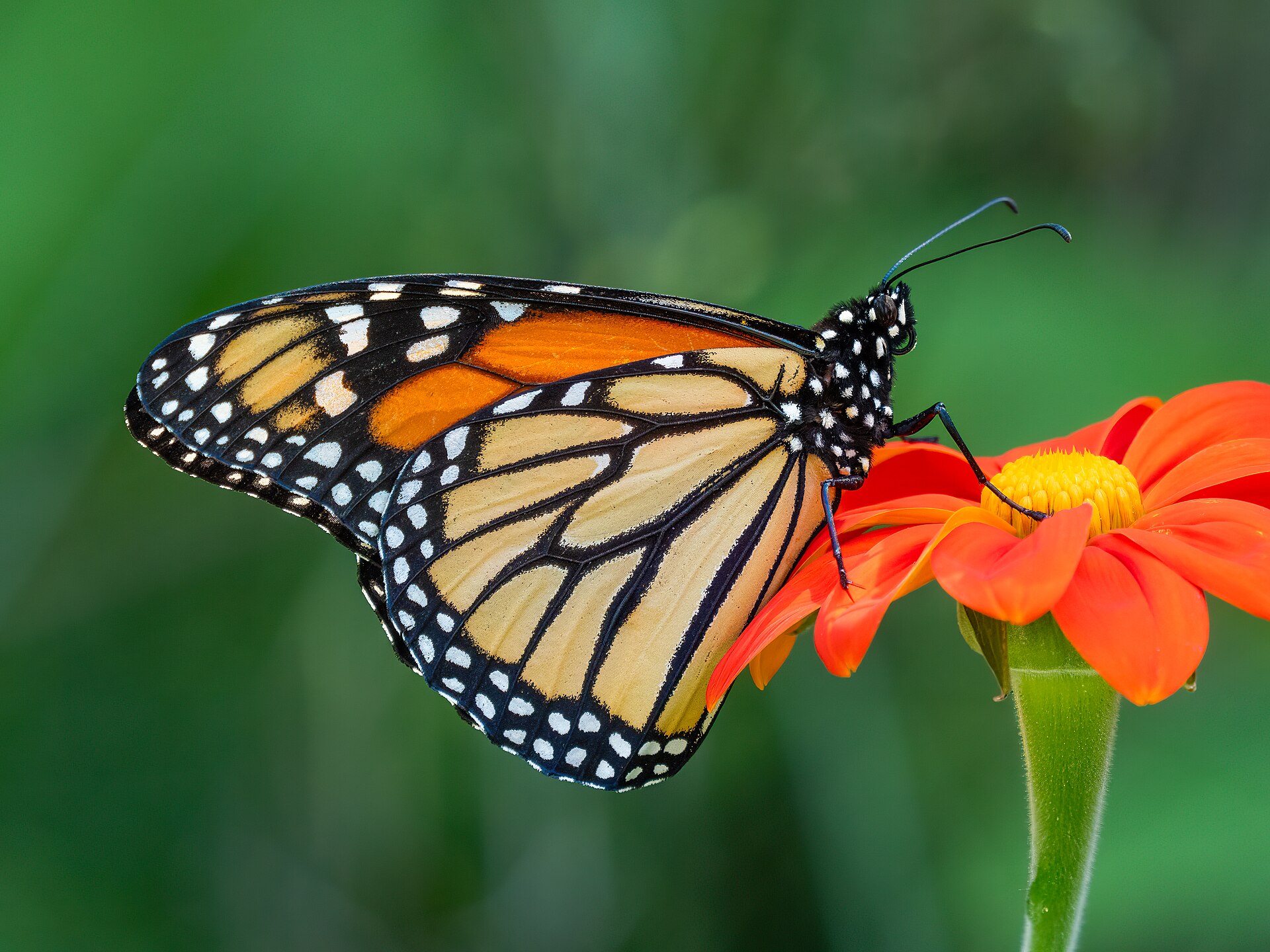
Both male and female monarchs are bright orange with black borders and black veins; the female's veins are thicker, while males have a swollen pouch and a black scent gland on each hind wing.
The monarch's bright orange and black coloration serves as a warning to predators, since monarchs obtain toxins called cardenolides by consuming milkweed plants. Most milkweed species are toxic to vertebrate herbivores because of cardenolide alkaloids, and monarch larvae ingest these toxins, called cardiac glycosides, and sequester them in their exoskeletons, making larvae and adults toxic to many potential predators. Larval monarch butterflies feed almost exclusively on milkweed plants.
The monarch's wingspan is 8.6–12.4 cm (3.39–4.88 in). Its weight is 0.0095–0.026 ounces.
1. Distribution and Habitat
The monarch is a new-world species whose distribution extends from at least 50N in Canada to Colombia, Venezuela, and coastal Ecuador and Peru. It is native to the Americas, and introductions linked to colonists and steamships established it in Australia, New Zealand, Hawaii and other Pacific islands. The species is likewise established in Mauritius, the Canary Islands and Western Europe.
The monarch is a predominantly open-country, frost-intolerant species whose breeding range depends greatly on milkweeds. It requires dense tree cover for overwintering, and most present California sites are associated with blue gum eucalyptus.
North American migratory monarchs are divided into eastern and western populations separated generally by the Rocky Mountains, and the two occasionally interbreed. Non-migratory monarchs also remain year-round at the southern end of the breeding range, including parts of Florida, the Gulf Coast and California.
2. Life Cycle and Reproduction
A female monarch lays each egg individually on a milkweed leaf, attaching it with a bit of glue she secretes, and usually lays between 300 and 500 eggs over a two- to five-week period. About 400 eggs per female is the average.
The egg and larval period lasts about two weeks, after which pupation lasts 9 to 15 days before an adult butterfly emerges. Generation length from egg to adult is 25 to 50 days. Monarchs are multigenerational, cycling through four to five generations that play different roles depending on the time of year they emerge; first generations feed and reproduce locally, while later generations migrate north or south.
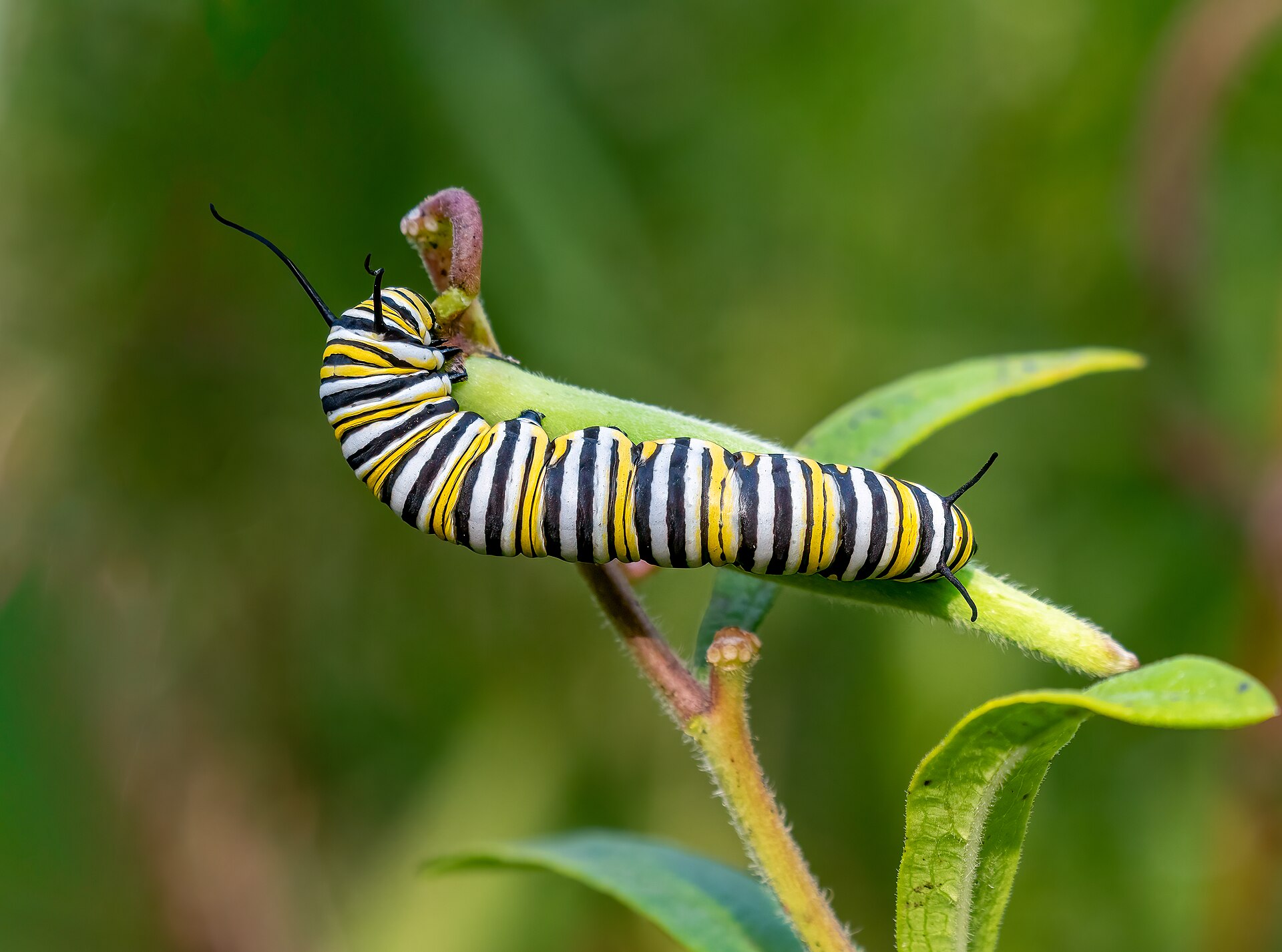
Summer breeding monarchs live only 2 to 5 weeks. Migratory monarchs that survive the winter in Mexico are 8 to 9 months of age and may be the longest lived of all butterflies.
Mating monarchs remain together from one afternoon until early the next morning, often up to 16 hours, and females immediately begin to lay eggs after their first mating, with both sexes able to mate several times.
Monarchs utilize about 30 milkweed species as larval hosts, with common milkweed (Asclepias syriaca) predominant; estimates are that 90% of the monarchs that overwinter in Mexico each year fed on that species as larvae.
The protozoan parasite Ophryocystis elektroscirrha is the most-studied monarch parasite; infections occur when larvae consume spores on milkweed and, while not typically fatal, negatively impact monarchs' survival, size, and life span.
3. Migration
Each autumn the eastern population of monarchs undertakes a southward journey of more than 2,000 miles (3,000 km) to reach overwintering sites in central Mexico. The fall migration begins in mid-August in the north and in September at mid-latitudes, advancing at a pace of 25 to 30 miles per day when conditions are favourable. The movement appears to last about 2 to 2.5 months, and most monarchs originate from locations more than 1,500 linear miles from the overwintering sites. Only monarchs that emerge in late summer or early fall make the annual migration south, huddling together on oyamel fir trees to wait out the winter.
Western monarchs follow a shorter route, migrating annually 300 to 1,000 miles (about 500 to 1,600 km) and overwintering in hundreds of groves along the California coast and into northern Baja California, Mexico.
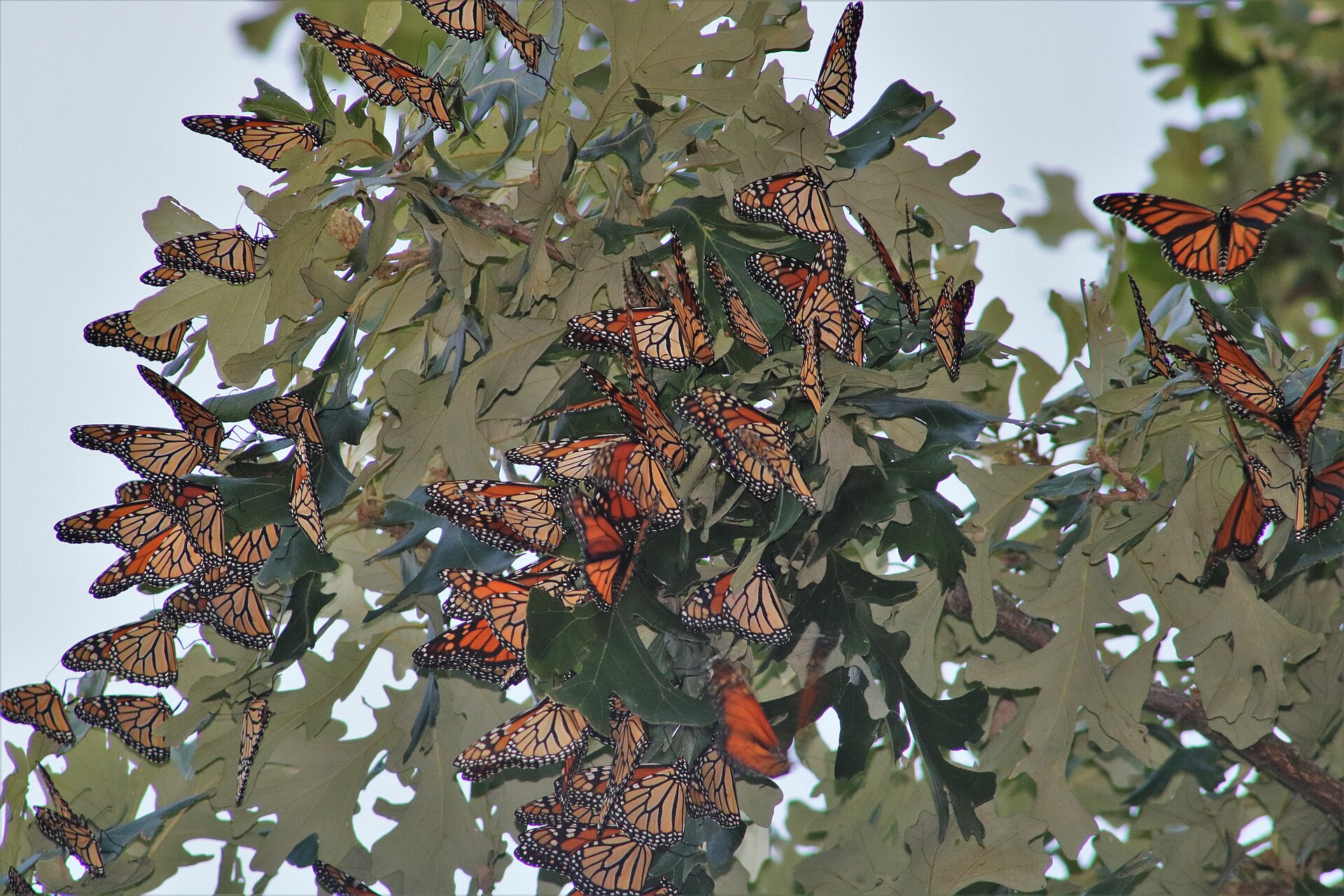
Migratory monarchs are non-reproductive and generally remain so until mid-February, a state of suspended reproduction termed "reproductive diapause".
Monarchs use the sun to stay on course and also have a magnetic compass to help them navigate on cloudy days, plus a special gene for highly efficient muscles that gives them an advantage for long-distance flight. Similar migratory behaviour has been observed in Costa Rican and Australian populations.
The eastern population is the largest in both individuals and range, encompassing upwards of 70% of the total North American monarch range.
4. Overwintering Sites
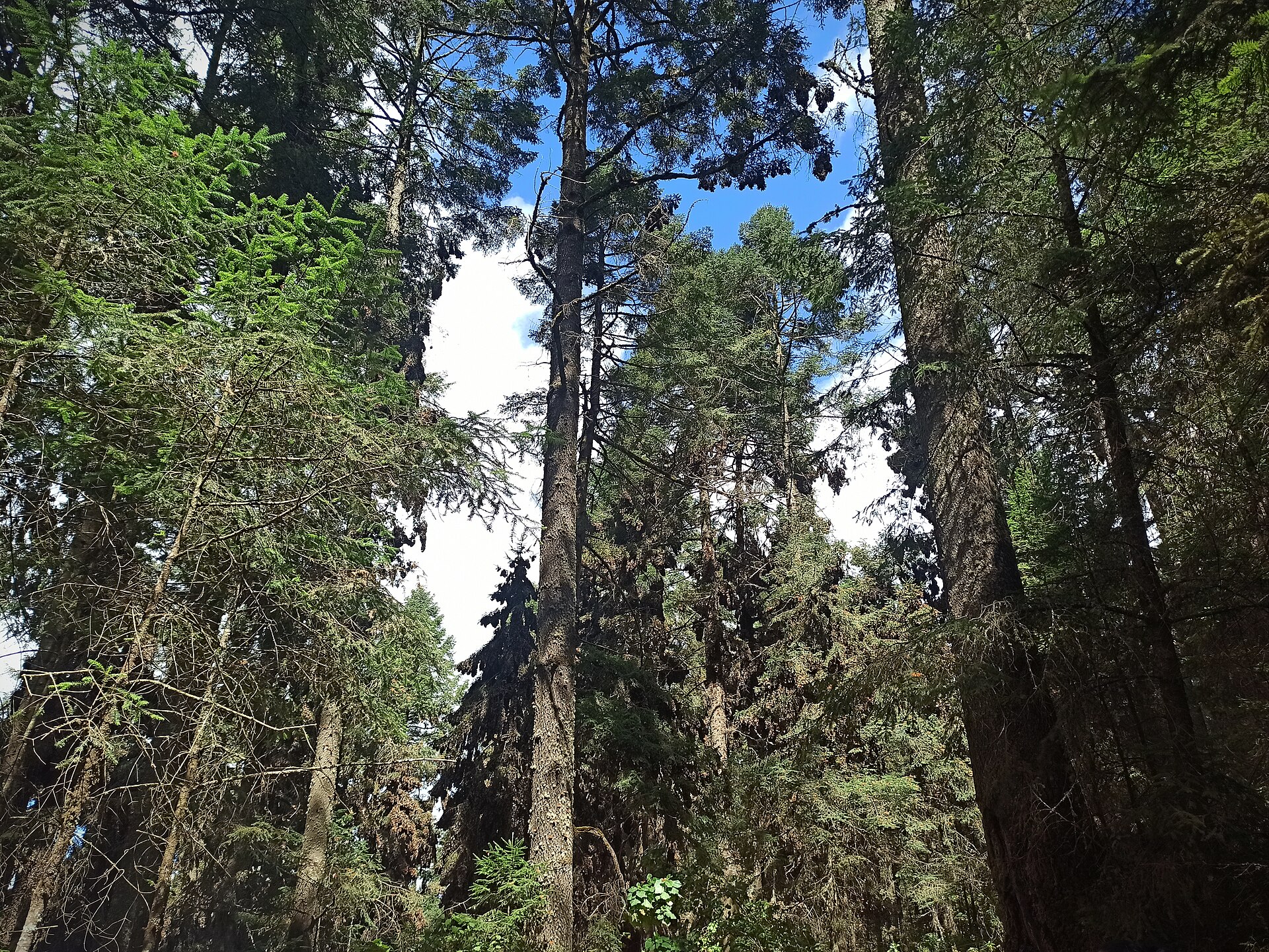
The winter destination of the eastern monarch population remained unknown until the overwintering colony was finally located in January 1975, after which the Urquharts joined an expedition in January 1976 to view the final southern destination of the eastern population. The colony stood on the slope of a volcanic mountain in the northern part of Michoacan, Mexico, at a height of slightly over 3,000 m, with a predominant tree averaging 26 m in height. It occupied an area of roughly 20 acres, its oyamel trunks and branches completely covered with monarchs so closely packed that it was impossible to see even a small portion of the underlying bark. In January 1976 the Urquharts climbed into the Sierra Madre, reached the fir forests of remote Michoacan, and found butterflies covering thousands of trees so thickly that branches broke beneath their weight.
Fred and Norah Urquhart started tracking monarchs with tags in 1950; their tags asked finders to report locations to the University of Toronto, an early exercise in classic citizen science. Because monarchs weigh less than a gram, they were too delicate for typical animal trackers, and the solution was a small sticker with instructions asking finders to return tagged monarchs to the University of Toronto. Over 300,000 monarchs had been alar tagged over the course of the investigation, and by the report the project had travelled more than 100,000 miles in field expeditions during a 25-year period.
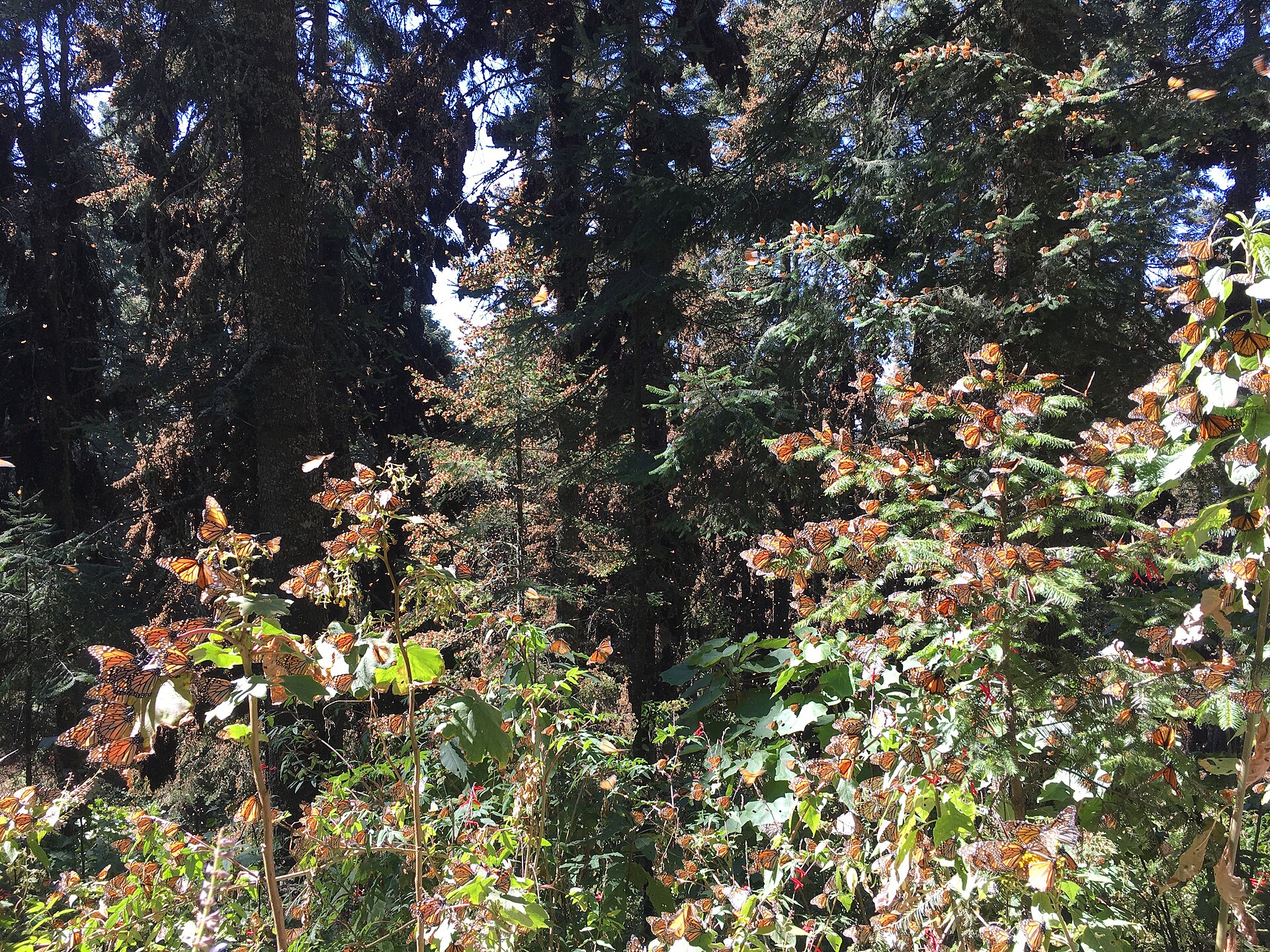
The 56,259-hectare biosphere lies within rugged forested mountains about 100 km northwest of Mexico City, where every autumn millions, perhaps a billion, butterflies cluster and bend the branches under their collective weight. The Bruggers' multi-year tracking led them to mountainous oyamel fir trees where roughly 60 million semidormant butterflies clustered — the winter home of the monarchs.
During the 2024-2025 overwintering season eight colonies of monarch butterflies — three in Michoacán and five in the State of Mexico — were recorded occupying a total of 4.42 acres of forest, an increase of 99% over the 2023-2024 winter. Three colonies were located inside the Monarch Butterfly Biosphere Reserve, occupying 3.01 acres of forest, and five were outside it, occupying 1.42 acres. The largest colony, 2.46 acres, was recorded in the ejido El Rosario in Michoacán, and the smallest, 0.005 acres, in San Andrés in the Los Azufres sanctuary.
The highest recorded overwintering area was 44.95 acres in the 1996-1997 winter, while the lowest historical occupation was 1.65 acres in the 2013-2014 winter. The second lowest overwintering area of the last 30 years was in the 2023-2024 winter with 2.22 acres.
CONANP and WWF have been monitoring the monarch overwintering sites in Mexico since the 2004-2005 winter.
Approximately 12,260 monarchs were recorded across 249 sites during the peak overwintering period of late November through early December 2025 — the third-lowest tally since the count began in 1997 and another sign of a historically low population.
5. Population Status and Decline
In the 1980s over 4.5 million western monarchs flocked to overwintering grounds in coastal California, and in the mid-1990s an estimated 380 million eastern monarchs made the long-distance journey to Mexico — one of the longest insect migrations in the world.
The eastern migratory population has declined by about 80% over the decade preceding a 2016 modelling study, and the population of monarch butterflies has declined by more than 80% within the last two decades, with one possible cause the loss of 1.3 billion or more stems of milkweed that monarchs require for reproduction. Western monarch populations have declined steadily since the 1980s, with an abrupt drop of 86% between 2018 and 2019; counts in 2020 indicated fewer than 2,000 migratory monarchs in California, but the 2021 count exceeded 200,000 butterflies. Population declines, mostly attributed to climate factors, host plant declines in summer breeding areas, and habitat loss in overwintering sites, have been observed in both the eastern and western migratory populations.
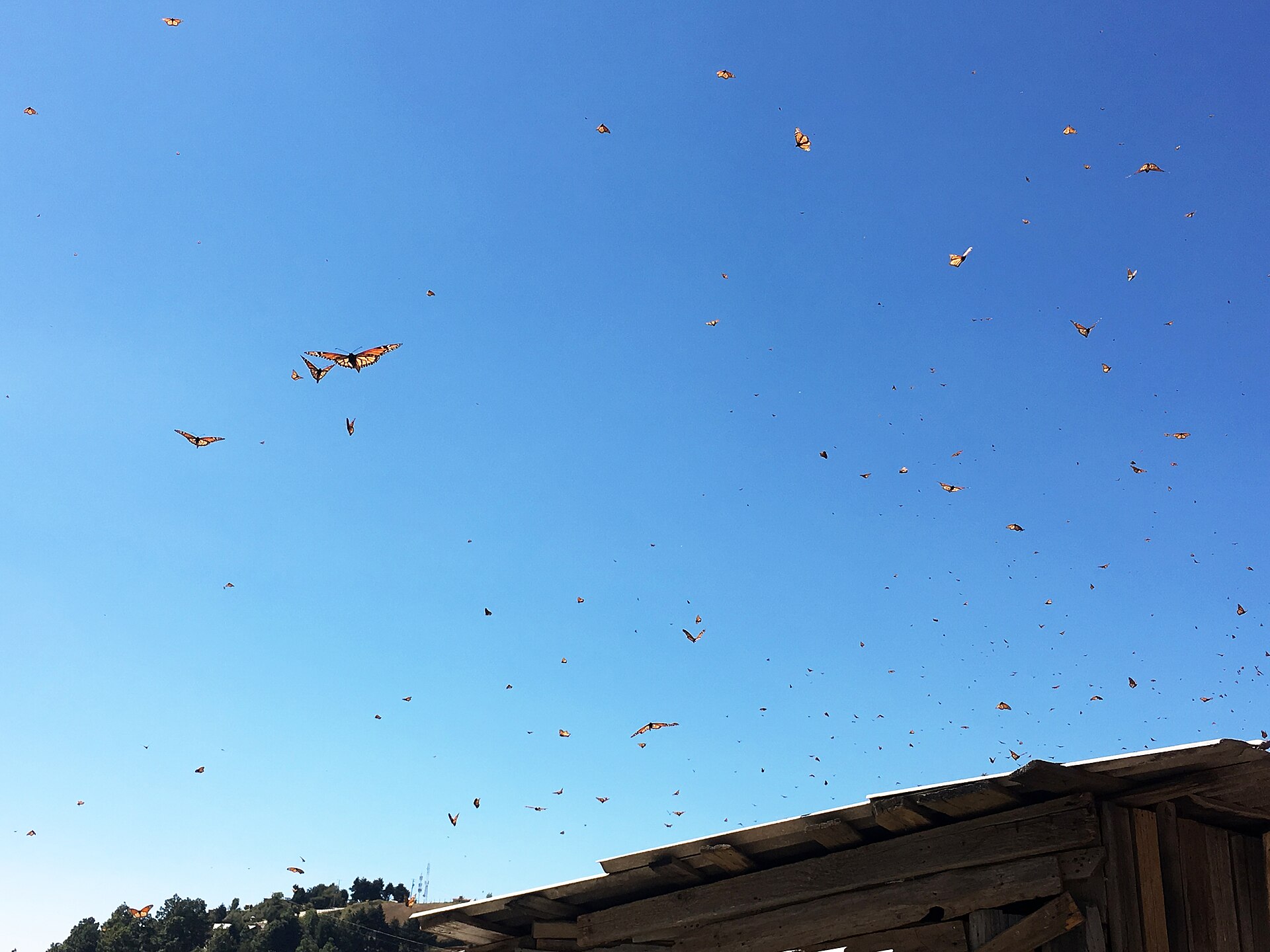
The Service estimated the western population's chance of extinction by 2080 at greater than 99%, while the probability of extinction for eastern monarchs ranged from 56 to 74%. An approximately five-fold increase of the monarch population size relative to the winter of 2014-15 would be necessary to halve the risk of quasi-extinction across all thresholds considered.
The 27th annual Western Monarch Count tallied 233,394 butterflies at 256 overwintering sites, slightly lower than the previous year's total of over 330,000 butterflies. The largest count at a single location was 33,080 monarchs at a Santa Barbara County site owned by The Nature Conservancy, with 16,038 at the Pismo State Beach Monarch Butterfly Grove.
The January 2025 Western Monarch Count recorded just over 9,000 monarchs overwintering in coastal California — the second lowest number ever recorded, far below the millions of the 1980s that scientists consider a stable population.
The three lowest counts in the programme's history have all occurred in recent years (1,901 monarchs in 2020; 9,119 in 2024; 12,260 in 2025), reflecting the increasing frequency of record-low years. Despite the low overall numbers, Natural Bridges State Beach in Santa Cruz recorded the season's highest count with 2,500 monarchs in early December.
The Service determined that the monarch meets the definition of a threatened species due to ongoing loss and degradation of breeding, migratory, and overwintering habitat — including conversion of grasslands and shrublands to agriculture, herbicide use, logging in Mexico and urban development in California — as well as exposure to insecticides and the effects of climate change. Since 1997 the use of Roundup Ready soybeans engineered to resist glyphosate has resulted in the loss of at least 100 million acres of monarch habitat in row crops of corn and soybeans.
Because a near doubling of average abundance would require roughly a doubling of stems, researchers calculated that 1.6 billion additional stems of milkweed were needed in the Midwest to reach the 6-hectare overwintering goal.
Forest degradation in the core zone of the Monarch Butterfly Biosphere Reserve decreased by 10%: between April 2023 and February 2024 the damage amounted to 9.14 acres, down from 10.13 acres the previous year. The main causes of forest degradation were illegal logging (6.17 acres), natural causes primarily drought (2.47 acres), and removal of trees to prevent disease spread (0.45 acres).
6. Conservation Status
The migratory monarch subspecies was listed as Endangered under criterion A2ab in the IUCN's 2022 Red List publication, following an assessment dated December 30 of 2021. On December 11 of 2023 the IUCN changed the listing of the migratory monarch from endangered to vulnerable, following a petition that challenged the population models used in its assessment. In contrast to the Endangered status of the migratory subspecies, the IUCN classified the full species Danaus plexippus as Least Concern in its 2022 assessment.
The change stemmed from IUCN criteria based on population reduction over the past ten years or three generations; the ten-year decline did not match the longer-term trend, though both methods of evaluation were considered scientifically valid. The Monarch Joint Venture notes that the IUCN Red List provides international recommendations and no legal implications in the United States, where the authority to classify the migratory monarch lies with the U.S. Fish and Wildlife Service.
On December 15 of 2020 the USFWS concluded that listing the monarch under the Endangered Species Act is "warranted but precluded", making monarch butterflies a candidate species. On December 17 of 2020 the Service published a 12-month finding that listing the monarch as an endangered or threatened species is warranted but precluded by higher priority actions, and the species remained a candidate in the 2022 and 2023 notices of review. On December 10 of 2024 the Service proposed listing the monarch as threatened with species-specific protections and flexibilities under section 4(d) of the Endangered Species Act and opened a public comment period on the proposal.
The Service proposed to designate approximately 4,395 acres (1,778 hectares) of critical habitat in Alameda, Marin, Monterey, San Luis Obispo, Santa Barbara, Santa Cruz, and Ventura Counties, California.
7. Timeline: from 1758 to the 2026 Western Monarch Count
- 1758Linnaeus names the monarchCarl Linnaeus described the species in 1758; the name Papilio plexippus Linnaeus, 1758 is recorded as a synonym of Danaus plexippus in the IUCN assessment.
- January 1975Overwintering colony locatedIn January 1975 the overwintering colony of the monarch was finally located in Mexico, following a decades-long tagging programme run by Fred and Norah Urquhart with volunteer helpers.
- January and August 1976The discovery announcedThe Urquharts visited the colony in January 1976, and the discovery that nearly the entire eastern population overwintered in one remote mountain range was announced to the world in the August 1976 issue of National Geographic.
- 1996–97 winterRecord overwintering area recordedThe highest overwintering area recorded in Mexico was 44.95 acres of forest in the 1996–97 winter.
- 1997Western Monarch Count beginsThe Western Monarch Count in California began in 1997 and has tracked overwintering monarch numbers every season since.
- 2004–2005 winterSystematic monitoring in Mexico beginsCONANP and WWF have monitored the monarch overwintering sites in Mexico since the 2004–2005 winter.
- 2013–14 winterLowest recorded overwintering areaThe lowest historical occupation occurred in the 2013–2014 winter, with 1.65 acres of forest occupied in Mexico.
- 26 August 2014Listing petition filedThe Center for Biological Diversity, Center for Food Safety, the Xerces Society and Dr. Lincoln Brower petitioned the U.S. Fish and Wildlife Service to list the monarch as a threatened species.
- 17 December 2020Warranted but precludedThe Service published a 12-month finding that listing the monarch was warranted but precluded by higher priority actions, making it a candidate species.
- 21 July 2022IUCN lists the migratory monarch as EndangeredThe July 2022 IUCN Red List update entered the migratory monarch butterfly as Endangered, threatened by habitat destruction and climate change.
- 11 December 2023IUCN status changed to VulnerableAfter a petition challenged the population models used in its assessment, the IUCN changed the migratory monarch's listing from endangered to vulnerable.
- 10 December 2024Threatened listing proposed in the United StatesThe U.S. Fish and Wildlife Service proposed listing the monarch as threatened with a 4(d) rule and proposed critical habitat in California.
- 6 March 2025Mexico census nearly doublesThe annual WWF-Mexico and CONANP census found eastern monarchs occupying 4.42 acres of forest in Mexico, a 99% increase over the previous winter.
- 29 January 202629th Western Monarch CountThe 29th annual Western Monarch Count recorded approximately 12,260 monarchs at 249 sites, the third-lowest tally since the count began in 1997.
References (24)
- 1Monarch (Danaus plexippus) — U.S. Fish & Wildlife Service WebView source
- 2Danaus plexippus (Monarch Butterfly) — assessment T159971A219149911 — The IUCN Red List of Threatened Species WebView source
- 3Danaus plexippus (monarch butterfly) — Animal Diversity Web, University of Michigan WebView source
- 4Monarch Butterfly (Danaus plexippus) — Minnesota Department of Natural Resources WebView source
- 5Milkweed (biology and monarch feeding) — Monarch Watch, University of Kansas WebView source
- 6Danaus plexippus ssp. plexippus (Migratory Monarch Butterfly) — assessment T194052138A219151401 — The IUCN Red List of Threatened Species WebView source
- 7Monarch butterfly — National Geographic WebView source
- 8Monarch Press Materials (migration, biology, population and threats) — Monarch Watch, University of Kansas WebView source
- 9Monarch Butterfly — San Diego Zoo Wildlife Alliance WebView source
- 10The overwintering site of the eastern population of the monarch butterfly (Danaus p. plexippus; Danaidae) in southern Mexico — Journal of the Lepidopterists' Society 30(3), 1976 (Urquhart & Urquhart; Yale Peabody Museum scan) 1976 WebView source
- 11The Case Of The Disappearing Butterflies — National Geographic Education Blog 2016 WebView source
- 12A discovery of Monarchs — Royal Ontario Museum WebView source
- 13Monarch Butterfly Biosphere Reserve — UNESCO World Heritage Centre WebView source
- 14Area of Forest Occupied by the Colonies of Monarch Butterflies in Mexico during the Overwintering Period 2024-2025 — WWF-México / CONANP (Rendón-Salinas et al.) 2024 WebView source
- 15Western Monarch Numbers Remain at Historic Low — Xerces Society for Invertebrate Conservation WebView source
- 16Endangered Species Act protection for monarch butterfly (press release, Dec 10, 2024) — U.S. Fish & Wildlife Service 2024 WebView source
- 17Quasi-extinction risk and population targets for the Eastern, migratory population of monarch butterflies (Danaus plexippus) — Scientific Reports (Semmens et al., 2016) JournalView source
- 18Restoring monarch butterfly habitat in the Midwestern US: 'all hands on deck' — Environmental Research Letters (Thogmartin et al., 2017) 1748 JournalView source
- 19Western Monarch Count Tallies 233,394 Butterflies — Xerces Society for Invertebrate Conservation WebView source
- 20Number of Monarchs Overwintering in Mexico Increases, Still Well Below Historic Norms — Xerces Society for Invertebrate Conservation WebView source
- 21Endangered and Threatened Wildlife and Plants; Threatened Species Status With Section 4(d) Rule for Monarch Butterfly and Designation of Critical Habitat (Proposed Rule, 89 FR) — Federal Register / U.S. Fish and Wildlife Service 2024 WebView source
- 22Monarch Butterfly Numbers Nearly Double in 2025 — World Wildlife Fund 2025 WebView source
- 23IUCN Changes Migratory Monarch Status from Endangered to Vulnerable — Monarch Joint Venture WebView source
- 24IUCN Red List: migratory monarch butterfly now endangered — IUCN National Committee of the Netherlands WebView source