Elephant
The world's largest living land animals — the African savanna and forest elephants and the Asian elephant — their anatomy, cognition, habitats and conservation.
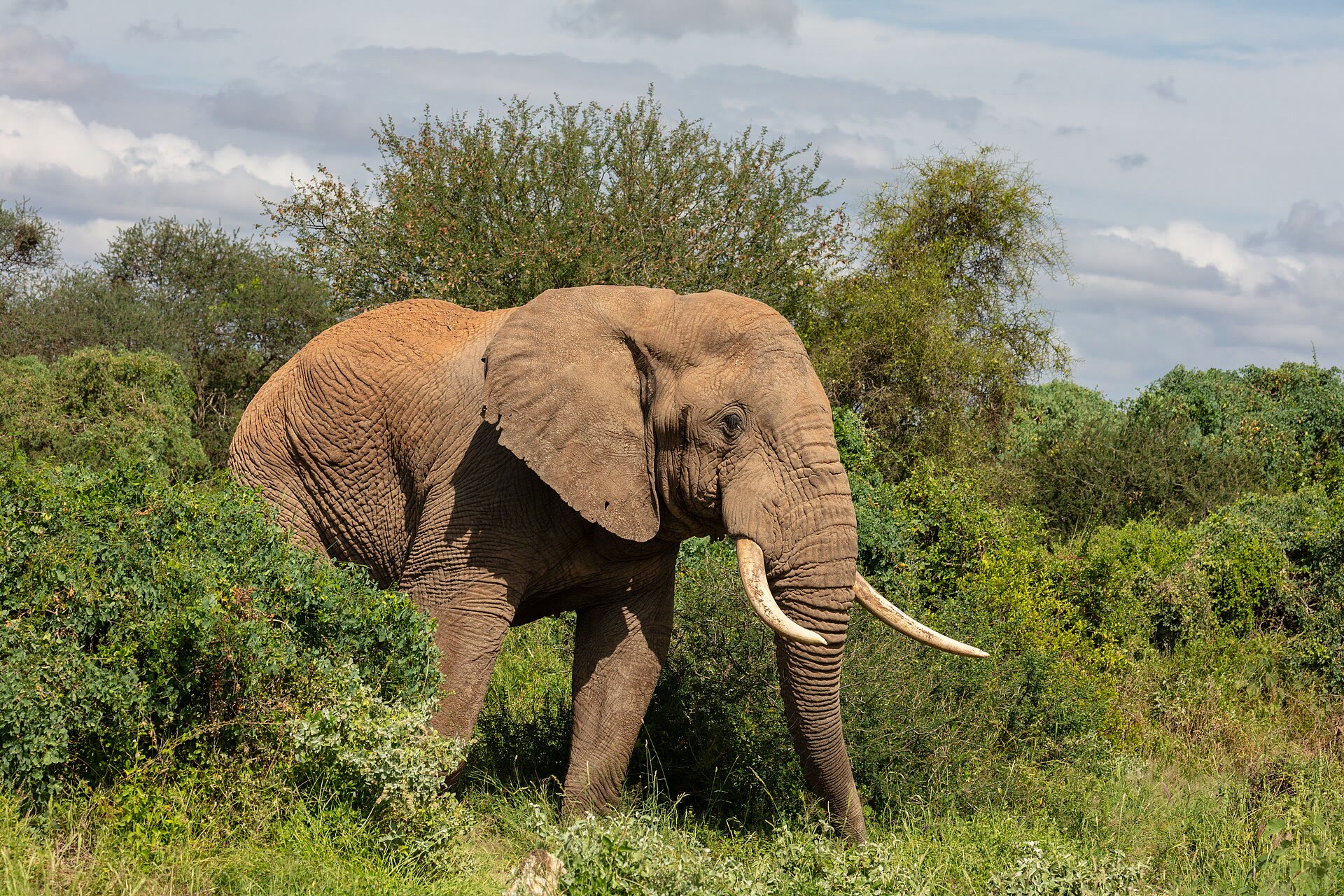
Elephants are the three living species of the family Elephantidae: the African savanna elephant (Loxodonta africana) and African forest elephant (Loxodonta cyclotis) of sub-Saharan Africa, and the Asian elephant (Elephas maximus) of South and Southeast Asia. They are long-lived, highly social herbivores, distinguished by a muscular trunk, tusks and large ears, and by complex behaviours such as mirror self-recognition and individually specific calls. Poaching for ivory, habitat loss and human-wildlife conflict have reduced their numbers, and all three species are now listed as Endangered or Critically Endangered on the IUCN Red List.
In this article
- 1Classification and Species
- 2Physical Characteristics
- 3Distribution and Habitat
- 4Behavior and Social Structure
- 5Diet and Feeding
- 6Reproduction and Life Cycle
- 7Conservation Status
- 8Population Estimates
- 9Threats and Declines
- 10Evolutionary History
- 11Timeline: from the first proboscideans to modern conservation
- 12Knowledge graph
Classification and Species
Elephants are placed in the family Elephantidae, within the order Proboscidea. The African bush elephant is classified in the genus Loxodonta.
African elephants were formerly treated as a single species listed as Vulnerable. The two species were then assessed separately for the IUCN Red List for the first time, following the emergence of new genetic evidence.
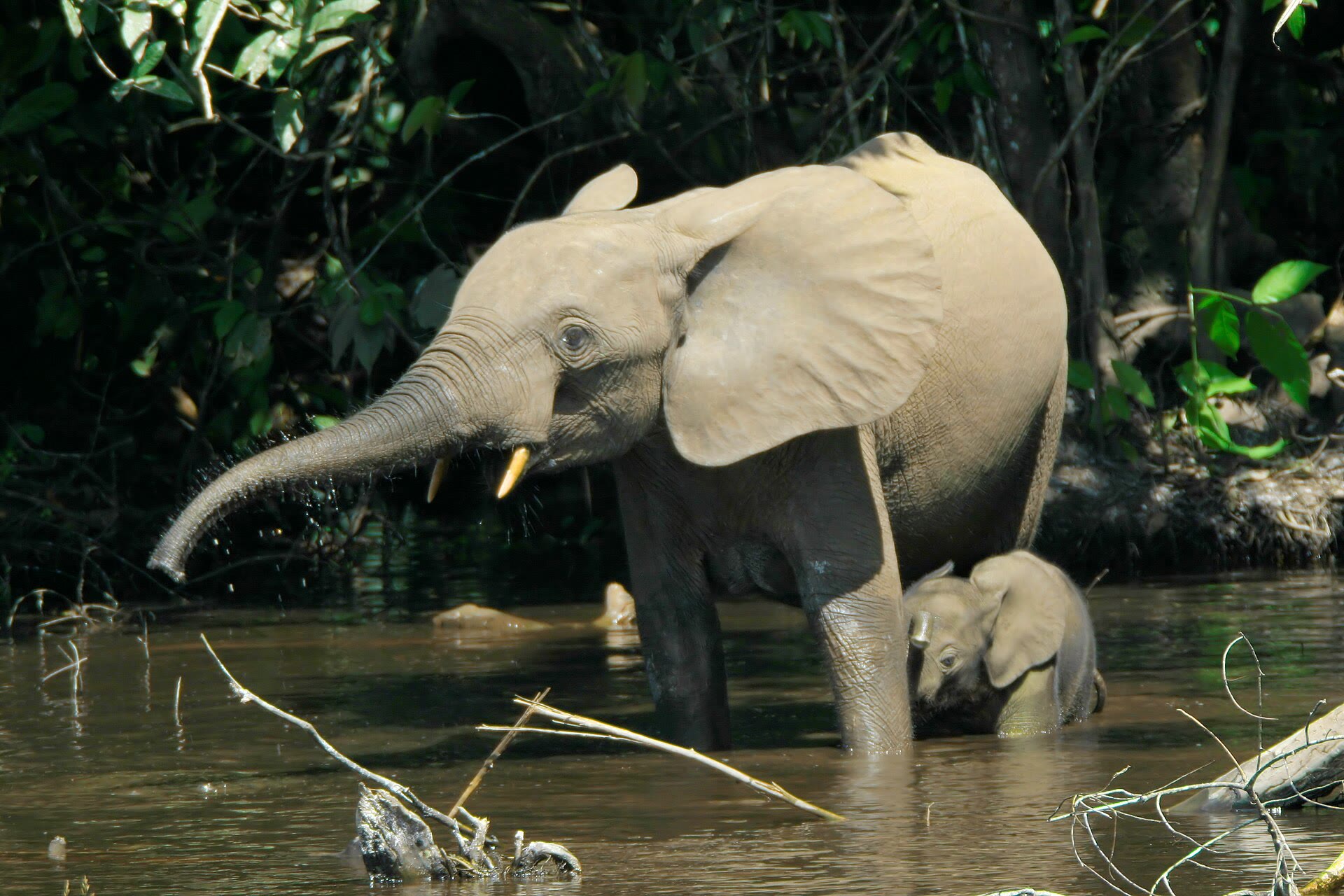
Fish and Wildlife Service lists the African forest elephant under the scientific name Loxodonta cyclotis. The same agency lists the Asian elephant under the scientific name Elephas maximus and categorizes it as a mammal.
1. Physical Characteristics
| Species | Weight | Shoulder Height | Tusk Presence |
|---|---|---|---|
| African savanna elephant | Females 2,000–3,500 kg; males 4,500–6,100 kg | Females 2.2–2.6 m; males 3.2–4 m | Both sexes have tusks |
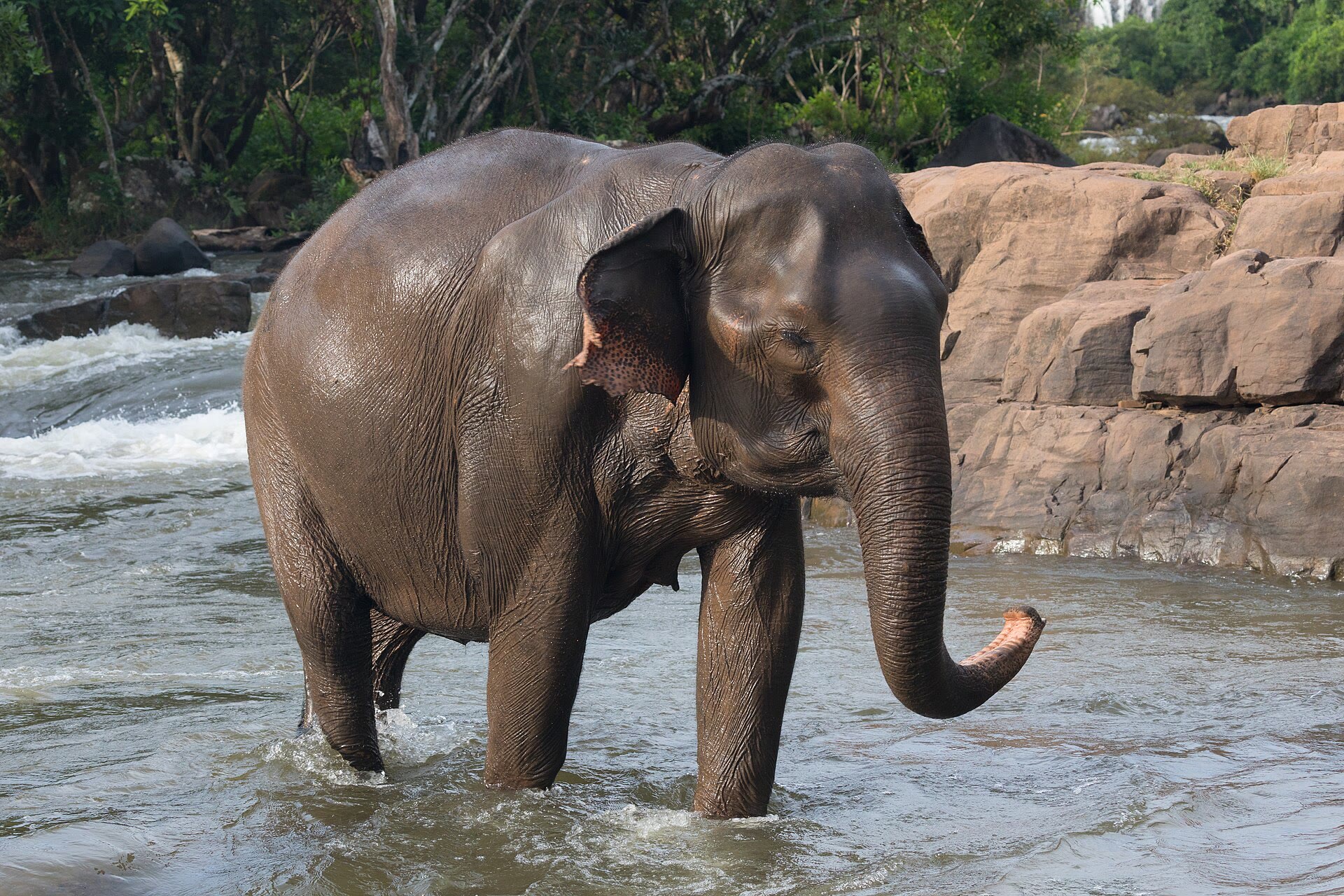
| Asian elephant | About 5,500 kg | Male about 2.7 m on average (up to 3.4 m); female about 2.4 m | Mainly males have tusks |
| African forest elephant | — | Mean shoulder height 144–155 cm | Straighter, thinner tusks |
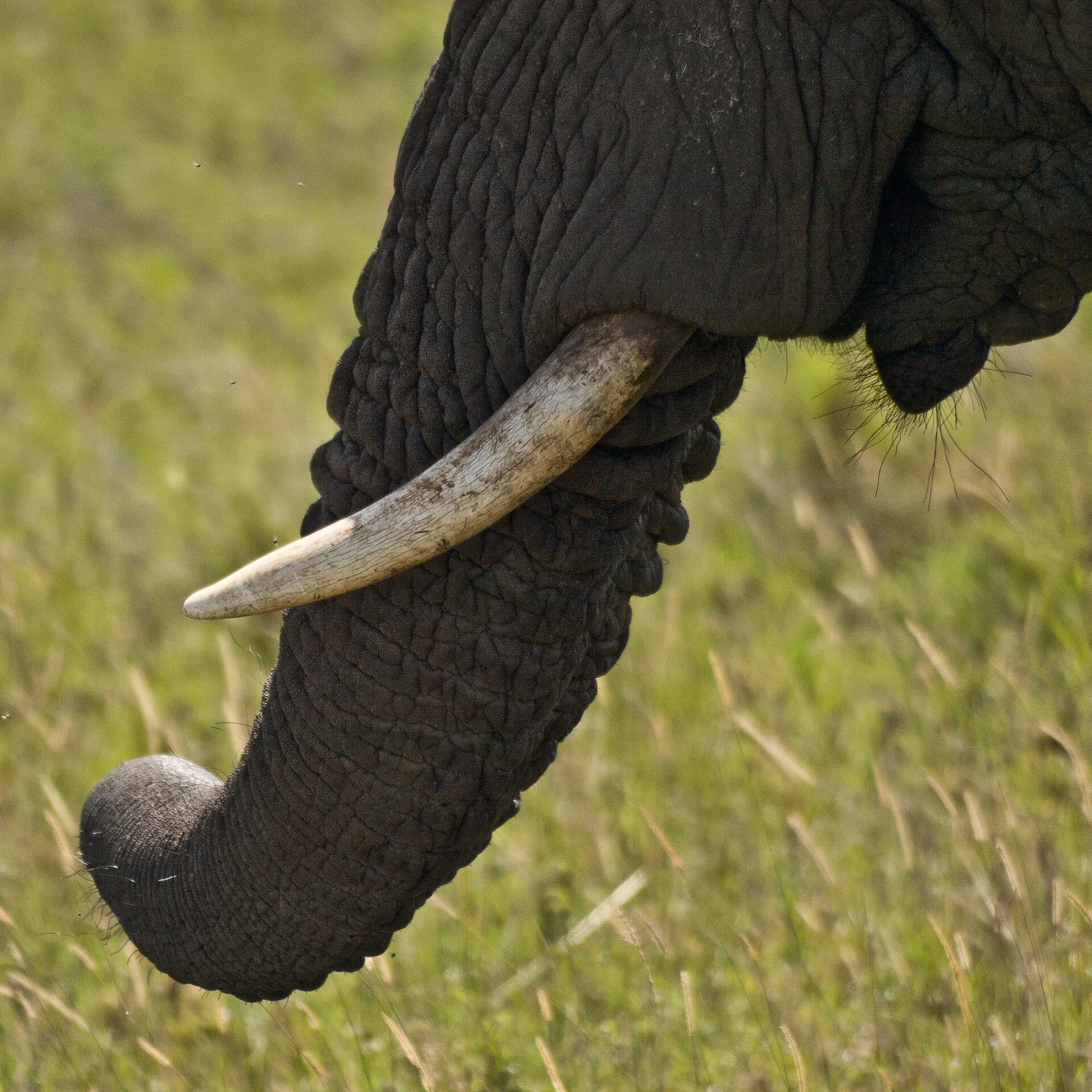
Tusks are a conspicuous feature of elephant anatomy, though their distribution varies by species. In the African bush elephant, both sexes carry two thick, ivory tusks that are curved and can reach up to 350 cm in length 1Loxodonta africana (African bush elephant) · Animal Diversity Web, University of Michigan Museum of Zoology ↗.
The trunk of an adult male elephant weighs about 130 kg and is capable of lifting a load of about 250 kg 5Elephant · Encyclopaedia Britannica ↗. Its tip differs between the two genera: Asian elephants have one fingerlike projection at the tip of the trunk, while African elephants have two 6Elephas maximus (Asiatic elephant) · Animal Diversity Web, University of Michigan Museum of Zoology ↗.
2. Distribution and Habitat
The African elephant's range extends across 37 countries in sub-Saharan Africa. Within this vast area, the population is unevenly distributed: an estimated 70% of the animals are found in Southern Africa, 20% in Eastern Africa, 6% in Central Africa and 3% in West Africa. The African savanna elephant, one of the three living species, is currently found in 23 countries. The forest elephant, by contrast, has a more restricted natural distribution and is thought to occupy only a quarter of its historic range today, with the largest remaining populations found in Gabon and the Republic of the Congo.
The Asian elephant, the largest land mammal on the Asian continent, inhabits dry to wet forest and grassland habitats in 13 range countries spanning South and Southeast Asia. Its habitats are varied, including grasslands, tropical evergreen forests, moist deciduous forests, and scrub forests. An average of 70% of Asian elephants are found outside protected areas today.
Rapid land use change by humans is driving the direct loss and fragmentation of habitat for African savanna elephants and is an increasing threat to populations across their range.
3. Behavior and Social Structure
Among African elephants, females are social animals that live in herds of 6 to 70 members, ordered along matriarchal lines, and the alpha elephant tends to be the biggest and most dominant. The social unit of the Asian elephant takes a different shape: clans consist of related females and their offspring bound by strong social bonds, usually numbering between 5 and 20 individuals. These Asian clans are not fixed in size, as larger groups form and break apart depending on the season, habitat, and other conditions.
Males enter a distinctive reproductive condition. Male elephants experience a unique, rut-like sexual state called musth, which allows them access to females and reduces aggression among males. In the African forest elephant, males compete for access to estrus females, and musth is a hormonal state marked by increased aggression during which the male secretes a fluid from the temporal gland between the eye and ear.
Elephant society extends well beyond the animals immediately in view. Like other elephants, African forest elephants communicate among widely dispersed social groups through low-frequency sounds of 5 Hz. Communication is also individual in character: wild African elephants address one another with individually specific calls, probably without relying on imitation of the receiver. Evidence for this comes from experiments in which elephants responded differently to playbacks of calls originally addressed to them compared with calls addressed to a different individual.
4. Diet and Feeding
The Asian elephant is a generalist feeder, capable of consuming more than 100 species of plants. Its diet spans bamboo, sugarcane, crops, the roots of trees, flowers, fruit, seeds, grains, and the bark of trees. The trunk is the instrument of this varied feeding, allowing the animal to grasp many types of food.
In the African elephant, the muscular trunk is able to grab objects. The trunk is not merely a grasping limb but a suction device as well. Elephants filmed at Zoo Atlanta were shown to use suction to grab food, a behaviour previously thought to be restricted to fishes.
The mechanics of this suction are remarkable. Experiments on liquid suction showed that elephants can expand the volume of their trunk by up to 64% in order to carry more water. On the basis of the pressures applied, the same study estimated that elephants can inhale at speeds of over 150 metres per second, nearly 30 times the speed of a human sneeze.
5. Reproduction and Life Cycle
The length of pregnancy differs somewhat between the major elephant groups. For the African bush elephant, the gestation period is about 22 months, though it is strongly influenced by environmental factors. In the Asian elephant, gestation runs approximately 20 to 23 months on average.
Newborn African elephants weigh between 90 and 120 kg, with 100 kg being the average birth weight. Among Asian elephants, calves do not require nursing for survival after 2 years of age, but weaning does not occur until about 4 years of age. The typical age of independence for the Asian elephant is 5 years.
African elephants live an average of 60 to 70 years in the wild. The expected lifespan of the Asian elephant is about 60 to 70 years in both the wild and in captivity. For the Asian species, tooth wear limits the lifespan.
6. Conservation Status
| Species | IUCN Status | Criteria | Assessment Year |
|---|---|---|---|
| African savanna elephant | Endangered | A2abd | 2021 |
| African forest elephant | Critically Endangered | Not specified | 2021 |
| Asian elephant | Endangered | A2c | 2019 |
The three living elephant species — the African savanna elephant, the African forest elephant and the Asian elephant — are each assessed on the IUCN Red List of Threatened Species, and none is free of threat. Within the Asian elephant, the Sumatran subspecies is listed as Critically Endangered 14Elephas maximus (Asian Elephant) — IUCN Red List assessment 2019 · IUCN Red List of Threatened Species ↗.
For the Asian elephant, the Endangered listing rests on a population size reduction inferred to be at least 50% over the last three generations, based on a reduction in its area of occupancy and the quality of its habitat 14.
Protective measures have been applied at the international and national levels. Under the U.S. Endangered Species Act, African elephants are classified as threatened and Asian elephants as endangered 15Elephant Ivory FAQs · U.S. Fish & Wildlife Service ↗. For intrastate sales of African elephant ivory under U.S. federal law, the ivory must be shown to have been lawfully imported before January 18 1990, when the species was listed in CITES Appendix I 15. Citing a rise in international trade in live African elephants, the U.S. Fish and Wildlife Service proposed amending the 4(d) rule of the Endangered Species Act to benefit conservation in the wild and improve the welfare of captive elephants 16African Savannah Elephant (Loxodonta africana) · U.S. Fish & Wildlife Service ↗.
Conservation action on the ground has produced some grounds for measured optimism. Anti-poaching measures, together with more supportive legislation and land use planning that seeks to foster human-wildlife coexistence, have been key to successful elephant conservation 2African elephant species now Endangered and Critically Endangered · IUCN (news release, Gland) ↗.
7. Population Estimates
| Region | Estimate | Year/Source |
|---|---|---|
| Africa | 415,428 estimated in the African Elephant Status Report 2016 for both African species combined | African Elephant Status Report 2016 |
| Asia | 48,323–51,680 individuals in the wild | estimates collated in 2018 |
The number of African elephants fell from an estimated 1.3 million in 1979 to 750,000 in 1987, and estimates from the review suggested about 625,000 remained 17The Ivory Trade and the Future of the African Elephant (Ivory Trade Review Group) · Pachyderm — Journal of the African Elephant Specialist Group ↗. The African Elephant Status Report 2016 estimated a continental population of 415,428 elephants for both African elephant species combined and reported a decline of approximately 111,000 elephants from 2006 onward 8Loxodonta africana (African Savanna Elephant) — IUCN Red List assessment 2021 · IUCN Red List of Threatened Species ↗. Population size estimates collated across all range countries as of 2018 suggest a global Asian Elephant abundance of 48,323–51,680 individuals in the wild 14.
8. Threats and Declines
The decline of the African forest elephant has been severe: its numbers fell by more than 86% over a period of 31 years. The African savanna elephant fared little better, with its population decreasing by at least 60% over the last 50 years. An analysis of estimates drawn from 334 localities indicates a reduction of more than 50% of the continental African savanna elephant population over the past three generations of 75 years, a reduction understood to be continuing and likely irreversible. A generation length of 25 years is used for the African savanna elephant, based on life-table analysis of culled family groups in South Africa and a 14-year study of savanna elephants in Kenya.
Habitat loss has been especially acute on Sumatra, where over 69% of potential elephant habitat has been lost within just one generation, the last 25 years.
9. Evolutionary History
The proboscideans, the order of animals that includes elephants, were a diverse and widespread group of herbivores that first appeared in Africa about 60 million years ago. Among the elephant ancestors discovered, Eritherium is the smallest, oldest and most primitive, growing to about 60cm and feeding on wet vegetation during the Paleocene epoch in what is now Morocco. The living elephants belong to the family Elephantidae, within the order Proboscidea.
Proboscideans that expanded from Africa into new habitats evolved 25 times faster than the relatives they left behind, resulting in three to four different species sometimes coexisting in one space. Early humans became effective hunters of large animals around 1.5 million years ago, but the final peak of proboscidean extinction came much earlier, at around 2.4 million years ago.
The elephants of north-east Borneo are genetically distinct from all other living elephant populations and may have been isolated on the island for hundreds of thousands of years, since Borneo was connected to the mainland during the ice ages. Fossils from Bethlehem excavated in the 1930s are probably more than three million years old and may be the earliest record of the mammoth and Asian elephant lineage outside Africa. Remains of Elephas hysudricus, considered ancestral to the living species Elephas maximus, have been identified from sites in Jordan and Israel, some of them dating to as late as 300,000 years ago.
10. Timeline: from the first proboscideans to modern conservation
- c. 60 million years agoFirst proboscideans appear in AfricaProboscideans, the order of animals that includes elephants, were a diverse and widespread group of herbivores that first appeared in Africa about 60 million years ago.
- c. 3 million years agoMammoth lineage reaches beyond AfricaFossils from Bethlehem excavated in the 1930s, probably more than three million years old, may be the earliest record of the mammoth and Asian elephant lineage outside Africa.
- c. 2.4 million years agoPeak of proboscidean extinctionAnalysis of the proboscidean fossil record shows that the final peak of extinction came around 2.4 million years ago, long before early humans became effective hunters of large animals about 1.5 million years ago.
- by 4,000 years agoLast woolly mammoths disappearWoolly mammoths roamed parts of the northern hemisphere for at least half a million years and were still in their heyday 20,000 years ago, but by 4,000 years ago they were gone.
- 1758Linnaeus names the Asian elephantCarl Linnaeus gave the Asian elephant its scientific name Elephas maximus in 1758; museum researchers have since designated a lectotype for the species.
- 1 July 1975Asian elephant listed in CITES Appendix IThe Asian elephant was listed in CITES Appendix I on July 1 1975, the pre-Convention date used for the species under the treaty.
- 1989Global ivory trade bannedIn 1989 CITES banned the international commercial trade of ivory in response to a steep decline in African elephants across a substantial portion of their range.
- 2000Forest elephant recognized as a separate speciesThe African forest elephant, Loxodonta cyclotis, which lives in rainforests, was recognized as a separate species in 2000.
- 2006Elephants pass the mirror testResearchers exposed three Asian elephants at the Bronx Zoo to a large mirror; the mark-touching by one elephant, Happy, was compelling evidence that the species can recognize itself in a mirror.
- 6 July 2016United States brings in near-total ivory banOn July 6 2016 a near-total ban on commercial trade in African elephant ivory went into effect in the United States.
- 18 September 2019Asian elephant assessed as EndangeredThe Asian Elephant was assessed for the IUCN Red List in 2019 and listed as Endangered under criteria A2c, based on a population size reduction inferred to be at least 50% over the last three generations.
- 25 March 2021African elephants reclassified as two species on the Red ListThe African forest elephant was listed as Critically Endangered and the African savanna elephant as Endangered in the first separate IUCN Red List assessments of the two species.
- 6 June 2022UK Ivory Act takes effectThe UK Ivory Act brought a near total ban on elephant ivory sales into force on 6 June 2022, with penalties including an unlimited fine or up to five years in jail.
- 10 June 2024Name-like calls in African elephantsA study published in Nature Ecology & Evolution presented evidence that wild African elephants address one another with individually specific calls, and that elephants responded differently to playbacks of calls originally addressed to them.
References (22)
- 1Loxodonta africana (African bush elephant) — Animal Diversity Web, University of Michigan Museum of Zoology Web↩View source
- 2African elephant species now Endangered and Critically Endangered — IUCN (news release, Gland) Web↩View source
- 3African Forest Elephant (Loxodonta cyclotis) — U.S. Fish & Wildlife Service WebView source
- 4Asian Elephant (Elephas maximus) — U.S. Fish & Wildlife Service WebView source
- 5Elephant — Encyclopaedia Britannica Web↩View source
- 6Elephas maximus (Asiatic elephant) — Animal Diversity Web, University of Michigan Museum of Zoology Web↩View source
- 7African elephant — WWF-UK WebView source
- 8Loxodonta africana (African Savanna Elephant) — IUCN Red List assessment 2021 — IUCN Red List of Threatened Species 2021 Web↩View source
- 9Asian Elephant — World Wildlife Fund (US) WebView source
- 10Asian Elephant (Elephas maximus) Fact Sheet — San Diego Zoo Wildlife Alliance Library WebView source
- 11Loxodonta cyclotis (African forest elephant) — Animal Diversity Web, University of Michigan Museum of Zoology WebView source
- 12African elephants address one another with individually specific name-like calls — Nature Ecology & Evolution JournalView source
- 13Suction feeding by elephants (Journal of the Royal Society Interface, 2021) — The Royal Society / PubMed Central 2021 WebView source
- 14Elephas maximus (Asian Elephant) — IUCN Red List assessment 2019 — IUCN Red List of Threatened Species 2019 Web↩View source
- 15Elephant Ivory FAQs — U.S. Fish & Wildlife Service Web↩View source
- 16African Savannah Elephant (Loxodonta africana) — U.S. Fish & Wildlife Service Web↩View source
- 17The Ivory Trade and the Future of the African Elephant (Ivory Trade Review Group) — Pachyderm — Journal of the African Elephant Specialist Group Web↩View source
- 18The rise and fall of elephant ancestors — Natural History Museum, London 2021 WebView source
- 19Evolution and taxonomy of Asian elephants — Natural History Museum, London WebView source
- 20The last of the mammoths — Natural History Museum (London) WebView source
- 21Self-recognition in an Asian elephant (PNAS, 2006) — Proceedings of the National Academy of Sciences / PubMed Central 2006 WebView source
- 22Cruel trade in ivory to be illegal from today as world leading ban takes effect — GOV.UK — Department for Environment, Food & Rural Affairs WebView source