Kenya
East Africa's Rift Valley republic — its geography from Mount Kenya to the Indian Ocean, its people and economy, and its course from Swahili coast and colony to independent state.
Kenya is a country in East Africa lying on the equator, bordered by the Indian Ocean and five states and home to 47 counties with Nairobi as its capital. The 2019 census counted 47,564,296 people, and the economy — led by agriculture, services, tourism and geothermal power — grew 4.6 per cent in 2025. From the Swahili coast and Fort Jesus through British colonisation and the Mau Mau insurgency, Kenya gained independence in 1963 and today hosts United Nations headquarters in Nairobi and eight UNESCO World Heritage sites.
Geography and Landscape
Kenya's eastern half slopes gently toward a coral-backed seashore, while the west rises through hills and plateaus to the Eastern Rift Valley, known within the country as the Central Rift; west of the Rift, a plateau drops toward Lake Victoria. Situated on the equator, the East African Rift Valley has yielded some of the earliest evidence of the ancestors of humankind. The Kenya Lake System in the Great Rift Valley comprises three inter-linked shallow lakes — Bogoria, Nakuru and Elementaita — across 32,034 hectares, and hosts 13 globally threatened bird species.
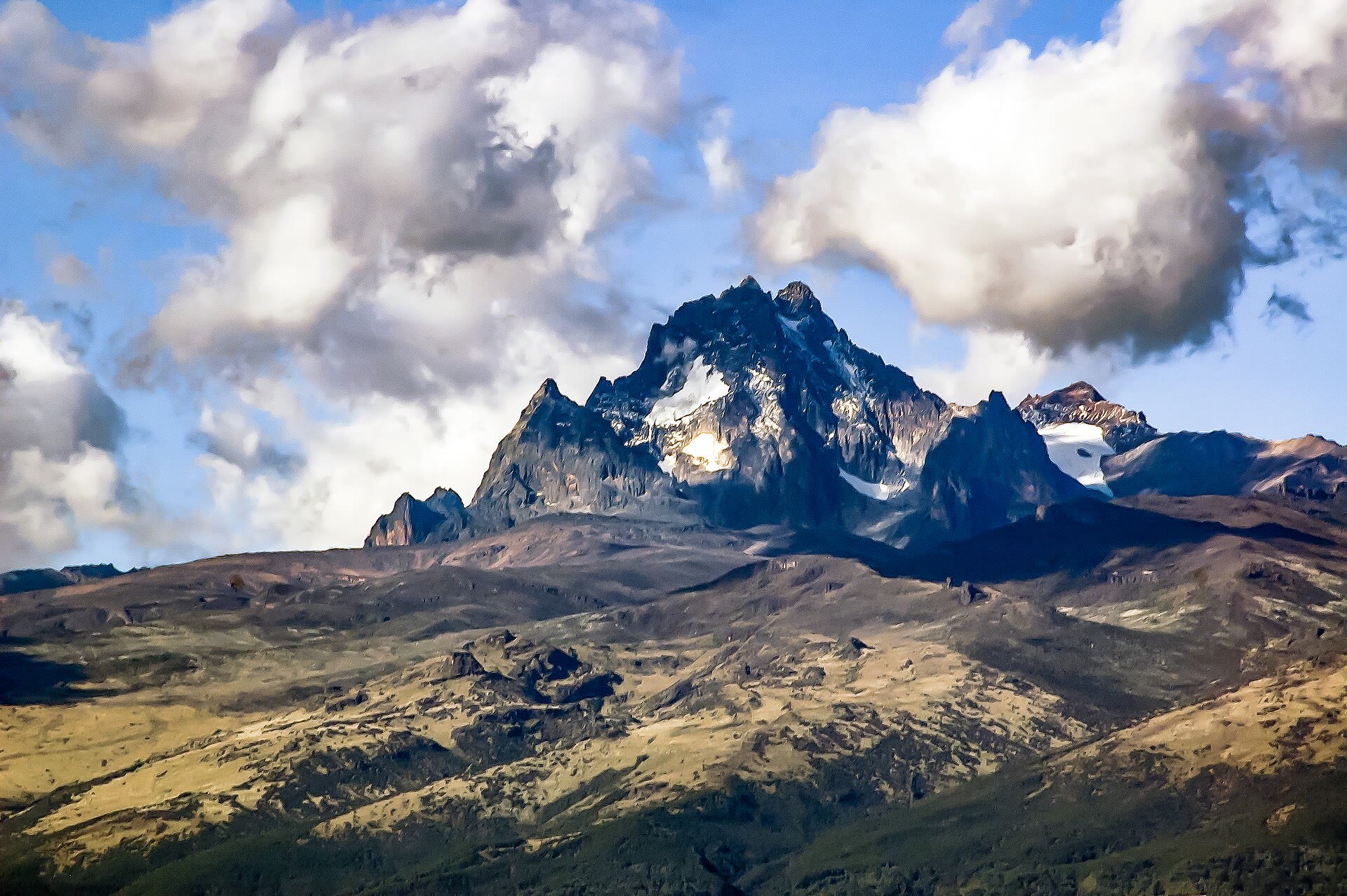
Mount Kenya is the country's highest peak, at 5,199 meters. It is the second highest peak in Africa, an ancient extinct volcano thought to have risen to 6,500 m, with 12 remnant glaciers receding rapidly.
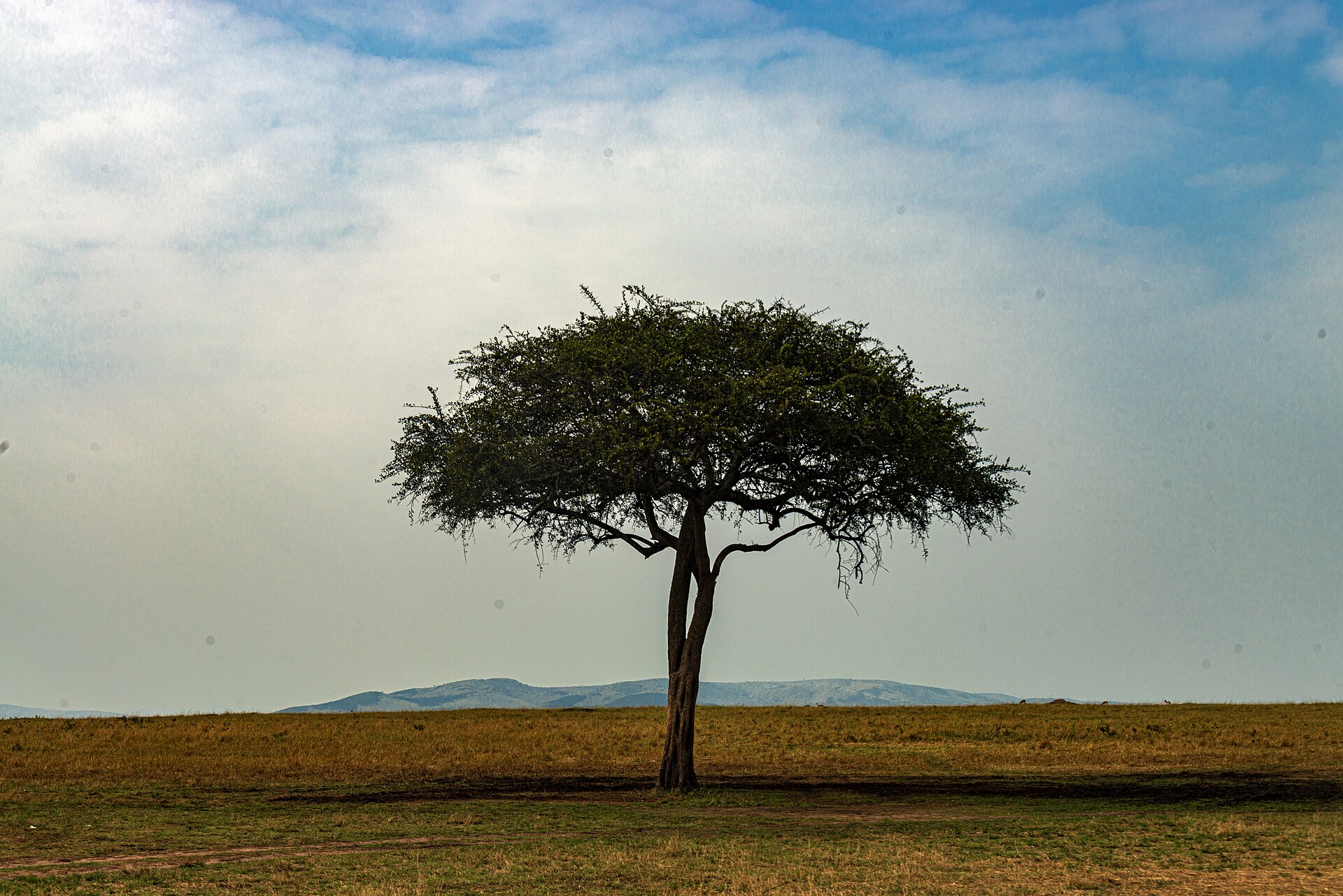
Inland lies a populous highland region famed for tea plantations and for animal species including lions, elephants, cheetahs, rhinoceroses and hippopotamuses. The coast holds some of the finest beaches in Africa and predominantly Muslim Swahili cities such as Mombasa, a historic centre that has contributed much to Kenya's musical and culinary heritage. Lamu Old Town is the oldest and best-preserved Swahili settlement in East Africa, built in coral stone and mangrove timber with inner courtyards, verandas and elaborately carved wooden doors.
Kenya is bordered by South Sudan to the north-west, Ethiopia to the north, Somalia to the east, Uganda to the west, Tanzania to the south and the Indian Ocean to the south-east. The country covers 580,367 square kilometres, the world's 48th largest country by area. Its Indian Ocean coast provided historically important ports used by Arabian and Asian traders for many centuries.
1. People and Demography
The 2019 Kenya Population and Housing Census enumerated a total population of 47,564,296 people, of whom 23,548,056 were males and 24,014,716 were females. These people were counted across 12,143,913 households, giving an average household size of 3.9 persons. The inter-censal population growth rate reported in the 2019 census was 2.2 per cent.
Census counts rose across the series, from 10.9 million people in 1969 to 47.6 million in the 2019 count. Kenya runs decennial population and housing censuses on a de facto basis, with midnight of 24th/25th August as the reference point.
With more than 52.2 million people, Kenya is the 27th most populous country in the world. Life expectancy at birth was 64.4 years for males and 69.2 years for females in 2021 estimates.
The 2019 Kenya Population and Housing Census enumerated 47,564,296 people—23,548,056 males and 24,014,716 females—across 12,143,913 households, giving an average household size of 3.9 persons. Population density stood at 82 persons per square kilometre, with an inter-censal growth rate of 2.2 per cent.
2. Government and Administration
Kenya is a unitary multiparty republic with two legislative houses, a Senate of 68 members and a National Assembly of 350. Below the national level, the country is organized into 47 semiautonomous counties, each governed by an elected governor. Nairobi is the capital and largest city, while Mombasa is the oldest city and first capital.
3. History
Trading relations had existed for centuries between southern Arabia and the Kenyan coastline, and some Arab traders settled and contributed to the Swahili language. In the 19th century Arab and Swahili caravans in search of ivory penetrated the interior, one route running from Mombasa to Kilimanjaro and Lake Victoria. Johann Ludwig Krapf and Johannes Rebmann of the Church Missionary Society established a mission station at Rabai; in 1848 Rebmann became the first European to see Kilimanjaro and in 1849 Krapf saw Mount Kenya. Cattle disease in 1883 and the late 1880s, smallpox epidemics and the death of the laibon Mbatian broke Maasai power, and European traders and administrators eventually gained control of the region.
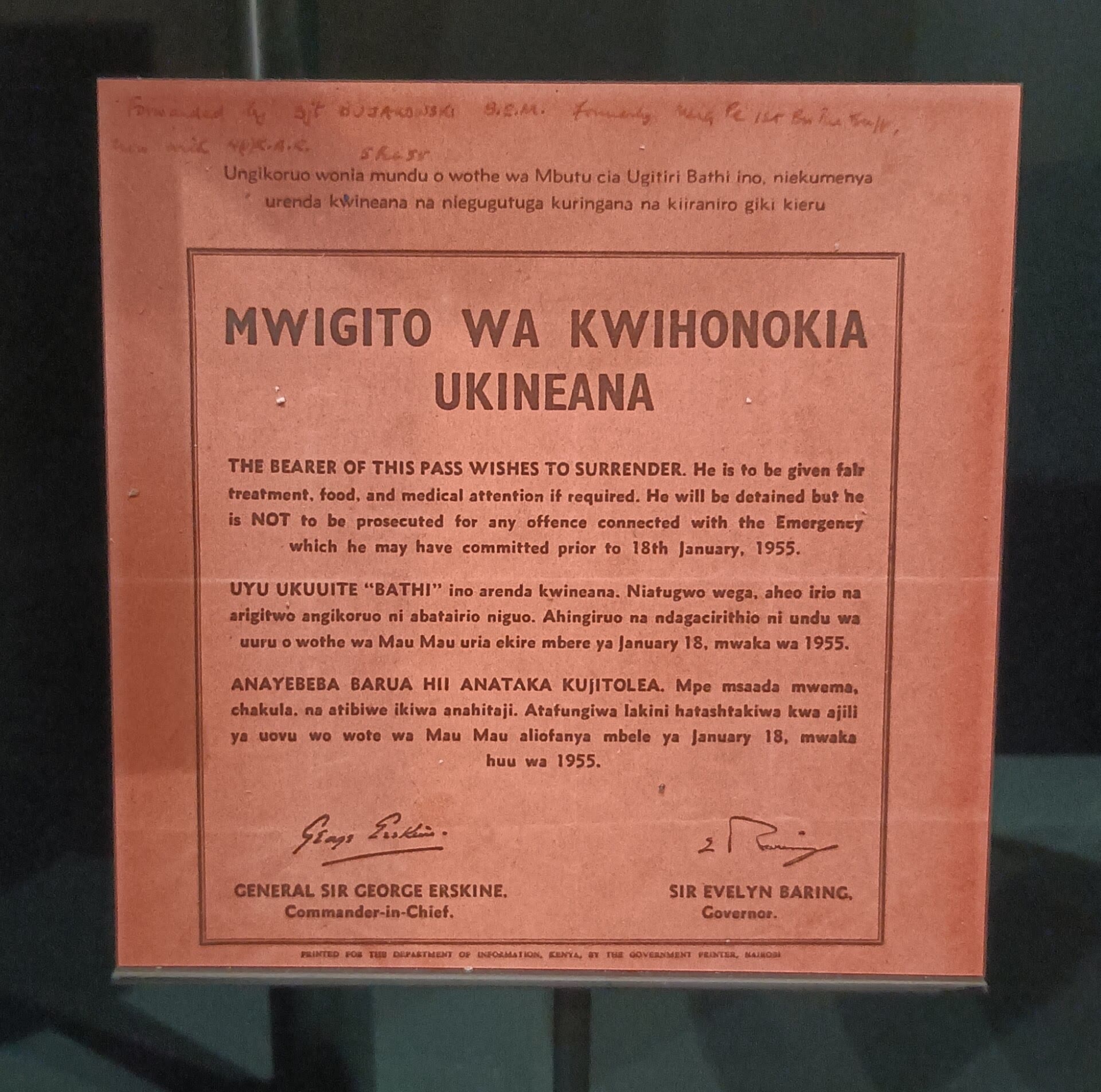
In 1952-53 the secret Kikuyu guerrilla group known as Mau Mau began a violent campaign against white settlers; a state of emergency was declared, Jomo Kenyatta jailed and the KAU banned. A former British colony, Kenya gained independence after the Mau Mau insurgency of the 1950s, whose origins remain disputed and whose conduct became a controversial legacy. Jomo Kenyatta was freed in 1961 and assumed the presidency of Kanu, and Kenya gained independence in 1963 with Kenyatta as prime minister.
In 1964 the Republic of Kenya was formed, with Jomo Kenyatta as president and Oginga Odinga as vice-president. Kenyatta died in office in 1978 and was succeeded by Vice-President Daniel arap Moi. In June 1982 Kenya was officially declared a one-party state by the National Assembly, and a special conference of Kanu in December 1991 agreed to introduce a multi-party political system.
In December 2002 Mwai Kibaki won a landslide victory, ending Daniel arap Moi's 24-year rule and Kanu's four decades in power. Disputed presidential elections in December 2007 led to violence in which more than 1,500 people died, followed by a power-sharing agreement and a new cabinet the following year. In July 2010 Kenya joined its neighbours in forming a new East African Common Market intended to integrate the region's economy, and a new constitution designed to limit the powers of the president and devolve power to the regions was approved by referendum in August 2010 — a redesign of the presidency and of regional power.
In March 2012 President Kibaki hailed the discovery of oil as a major breakthrough. A new railway line linking Mombasa to Nairobi opened in May 2017 as the country's biggest infrastructure project since independence. In August 2022 Deputy President William Ruto narrowly won the presidential election, beating his main rival Raila Odinga.
Fossil discoveries by Richard Leakey and others in the Koobi Fora area along Lake Turkana include portions of Australopithecus boisei and Homo habilis skeletons. In 1984 Kamoya Kimeu discovered Turkana Boy — KNM-WT 15000 — at Nariokotome, West Turkana; the specimen belongs to Homo erectus and is about 1.6 million years old, with a cranial capacity at death of 880 cubic centimetres, estimated to have reached 909 cubic centimetres in adulthood. The Koobi Fora deposits have contributed more to the understanding of palaeo-environments than any other site on the continent.
In 2013 the British government paid compensation to claimants who said they had been victims of abuses by colonial forces fighting the Mau Mau rebellion. The Mau Mau uprising was a significant turning point in Kenyan history and a key element in Kenya's path to independence from British colonial rule.
Kenya marks independence day on 12 December 1963 and joined the OAU on 13 December 1963 — one day after becoming independent.
4. Economy
Kenya's real GDP grew by 4.6 per cent in 2025, a slight deceleration from the 4.7 per cent recorded in 2024. Agriculture, forestry and fishing — a sector accounting for over a fifth of the economy — expanded by 3.1 per cent during 2025. Construction rebounded from a 0.7 per cent contraction in 2024 to 6.8 per cent growth in 2025, while mining and quarrying recovered to 14.9 per cent. The expansion was broad-based, with accommodation and food service growing 15.6 per cent, public administration 8.3 per cent and financial and insurance 6.5 per cent.
Public debt, however, is elevated at 70.6% of GDP, with about one-third of government revenues absorbed by interest payments. Despite strong economic growth over the past two decades, weak productivity growth and a narrow export base have left most workers in low-productivity informal activities. The poverty rate reached 43.3% in 2025 — a decline of only 2 percentage points over the previous 3 years.
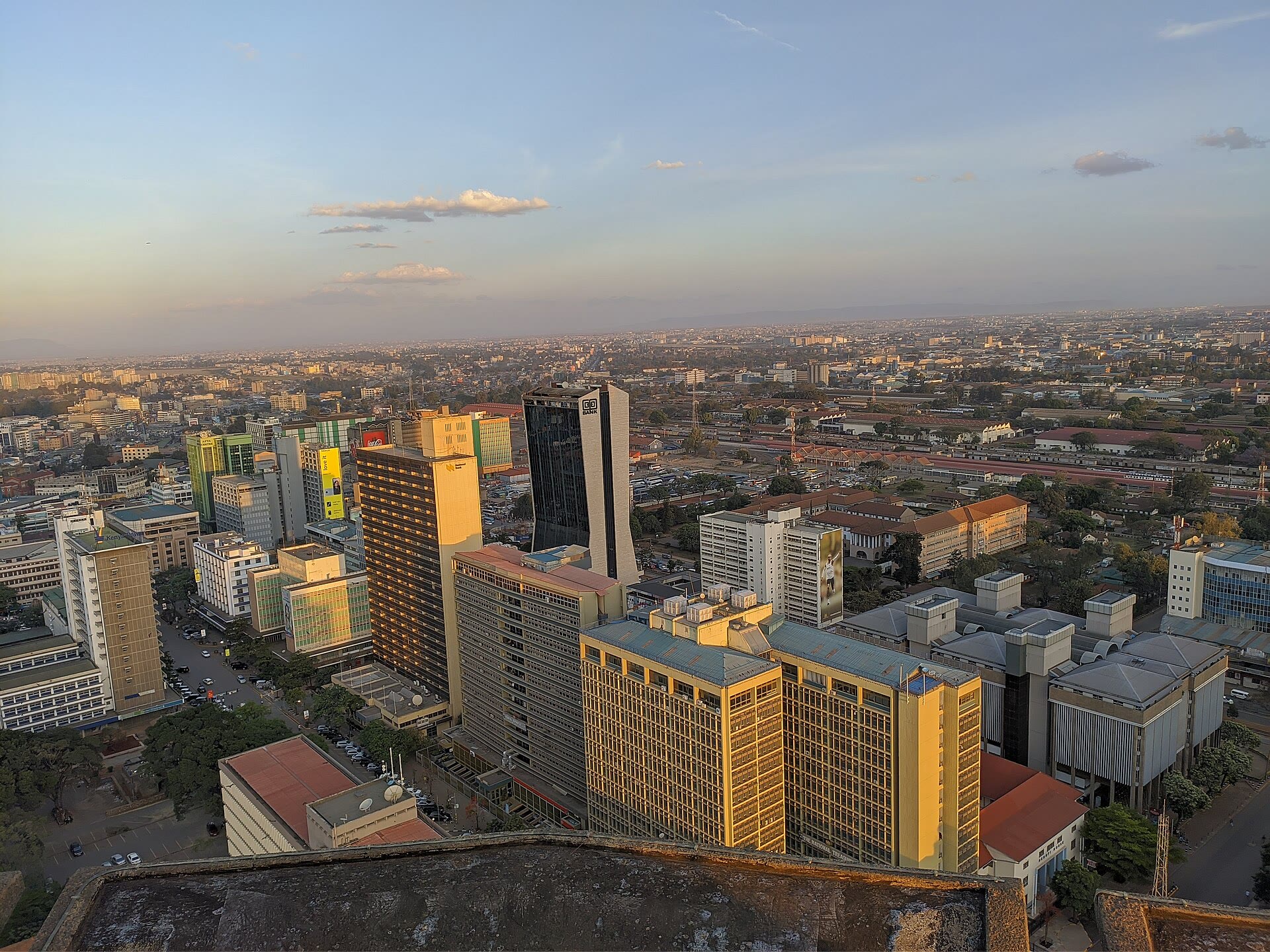
The official unemployment rate for 18 to 34-year-olds is nearly 40 per cent, and the economy does not create enough jobs to absorb the 800,000 young people joining the workforce each year.
A 2024 survey found 52.6 per cent of Kenyans using mobile money daily, more than doubling the 23.6 per cent share recorded in 2021 across the country. Credit usage rose to 64.0 per cent while the share of savers declined to 68.1 per cent, the first such decline since the 2009 baseline. The government's Hustler Fund saw rapid uptake, with 28 per cent of the population borrowing from it.
5. Energy
Olkaria I holds the distinction of being the first geothermal power plant in Africa, having begun generating electricity with a unit commissioned in June 1981. The station subsequently reached its full capacity of 45 MW across three phases by the mid-1980s. Through KenGen's geothermal portfolio, Kenya has been propelled to a position among the top ten geothermal producers in the world.
The Olkaria geothermal project lies within Hell's Gate National Park, 120 kilometres from Nairobi and adjacent to Lake Naivasha, a Ramsar site. From 1967, surveys by UNDP and partners identified Olkaria as the most prospective area for development.
6. Wildlife and Natural Heritage
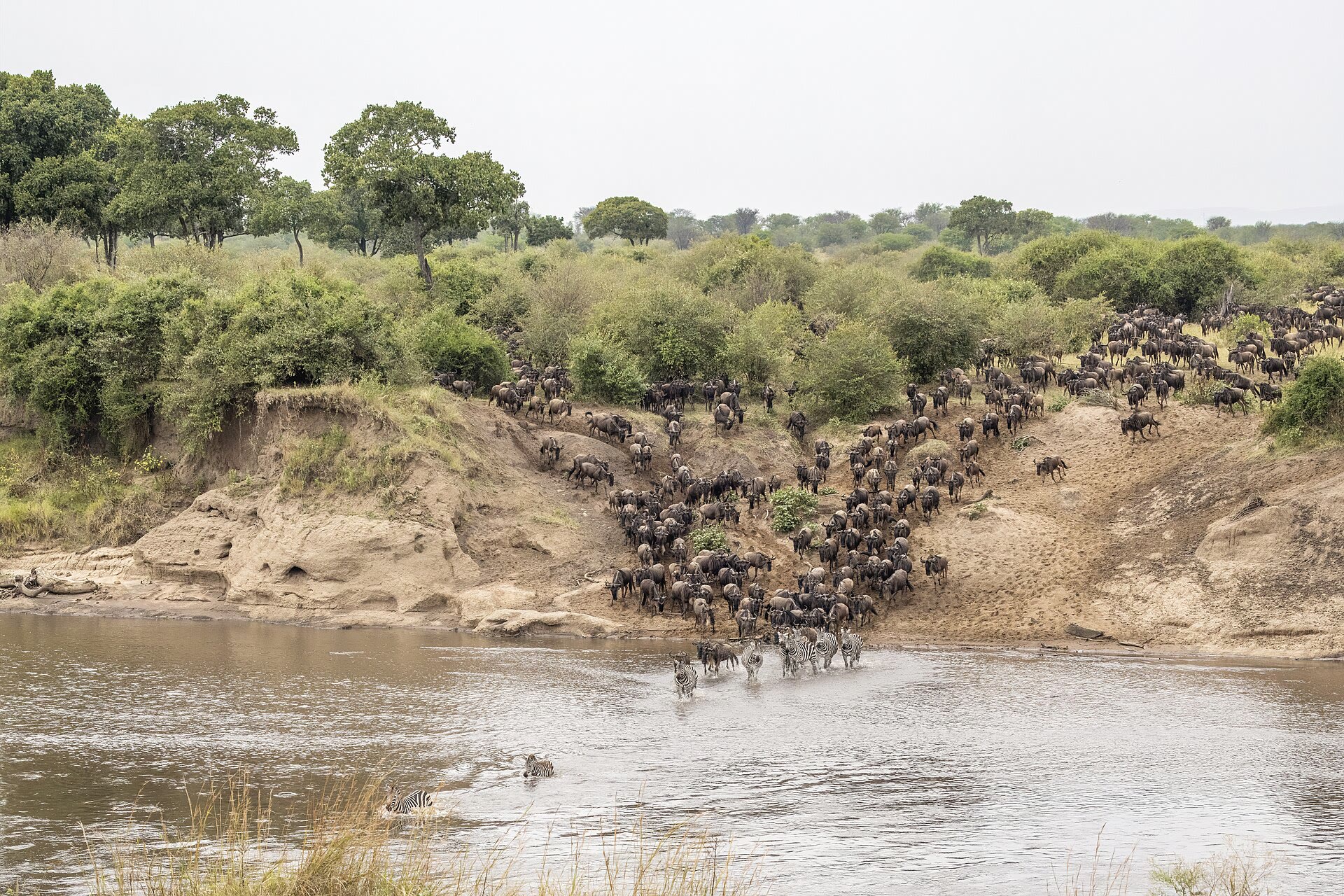
Kenya is presented by its national tourism board as an unparalleled nature and wildlife destination, its savannahs teeming with the Big Five.
Amboseli National Park is presented by the Kenya Wildlife Service as a premier destination for close encounters with large elephant herds. Its grass plains, acacia woodlands, swamps and marshes lie beneath the backdrop of Mount Kilimanjaro. Amboseli is one of Kenya's 60 Important Bird Areas, hosting over 400 bird species including 40 birds of prey.
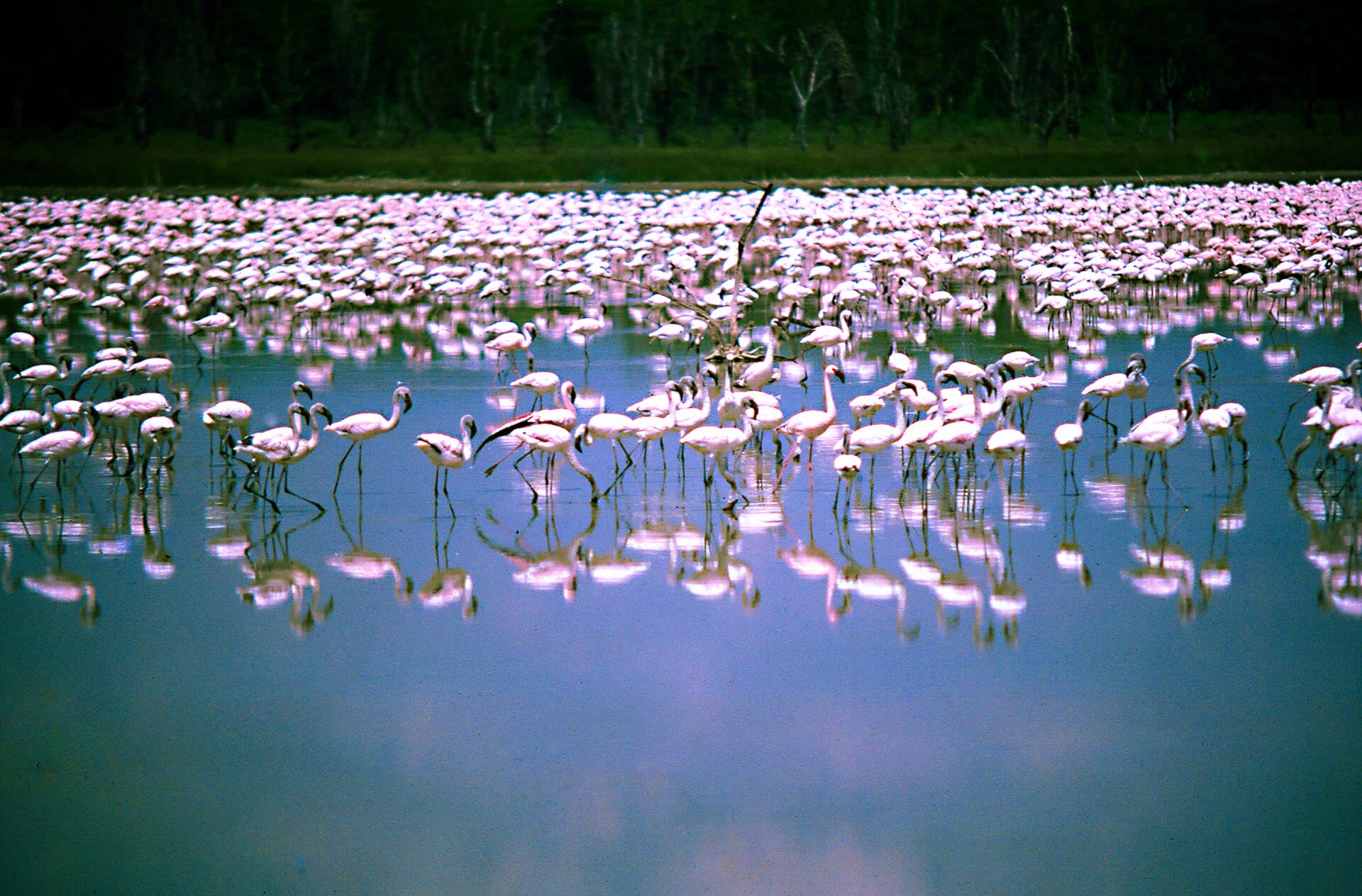
Lake Turkana is the most saline of Africa's large lakes. The three national parks around the lake are a stopover for migrant waterfowl and major breeding grounds for the Nile crocodile, hippopotamus and a variety of venomous snakes.
It is the single most important foraging site for the lesser flamingo anywhere, and a major nesting and breeding ground for great white pelicans. The property supports notable mammal populations including black rhino, Rothschild's giraffe, greater kudu, lion, cheetah and wild dogs.
7. UNESCO World Heritage Sites
| Site | Description |
|---|---|
| Fort Jesus | A 16th-century Portuguese fort in Mombasa 19Fort Jesus, Mombasa · UNESCO World Heritage Centre ↗ |
| Thimlich Ohinga | Stone-walled settlements in the Lake Victoria basin 20Celebrating Kenya's Eight UNESCO World Heritage Site · National Museums of Kenya ↗ |
| Mijikenda Kaya forests | Sacred forests included among Kenya's World Heritage Sites 20 |
| Lamu Old Town | 5Lamu Old Town · UNESCO World Heritage Centre ↗ |
| Mount Kenya | 4Mount Kenya National Park/Natural Forest · UNESCO World Heritage Centre ↗ |
| Kenya Lake System | 3Kenya Lake System in the Great Rift Valley · UNESCO World Heritage Centre ↗ |
| Lake Turkana | 11Lake Turkana National Parks · UNESCO World Heritage Centre ↗ |
| Gedi | The historic town and archaeological site inscribed on 27 July 2024 20 |
8. Culture and Institutions
The National Museums of Kenya is a state corporation established under the Museums and Heritage Act of 2006 as the custodian of the country's heritage. It collects, preserves, studies, documents and presents Kenya's past and present cultural and natural heritage. It also manages many regional museums, sites and monuments of national and international importance.
Kenya's intangible cultural heritage entries include the Mwazindika spiritual dance of the Daida community, the rituals and practices of Kit Mikayi shrine, the Maasai Enkipaata, Eunoto and Olng'esherr rites of passage and the Isukuti dance.
9. International Role
The United Nations Office at Nairobi is the only UN headquarters office in Africa and the global south, and it serves as the representative office of the UN Secretary-General in Kenya. Nairobi also hosts the headquarters of the United Nations Environment Programme and of UN-Habitat.
Kenya joined the Organisation of African Unity one day after gaining independence.
UN-Habitat supports Kenya's human settlements and sustainable urbanisation priorities under Vision 2030 and frameworks such as the Big Four agenda on affordable housing.
10. Timeline: from Fort Jesus to the 2022 election
- 1593-1596Construction of Fort JesusThe Portuguese built Fort Jesus at Mombasa between 1593 and 1596 to designs by Giovanni Battista Cairati, to protect the port.
- 1848-1849First Europeans reach Kilimanjaro and Mount KenyaJohannes Rebmann saw Kilimanjaro in 1848 and Johann Ludwig Krapf saw Mount Kenya in 1849, both from the Church Missionary Society station at Rabai.
- 1895British East African Protectorate formedBritain formed the British East African Protectorate over the region.
- 1920Kenya becomes a crown colonyThe East African Protectorate became the crown colony of Kenya, administered by a British governor.
- 1952-53Mau Mau rebellion and state of emergencyThe Mau Mau guerrilla campaign against white settlers began; a state of emergency was declared, Jomo Kenyatta jailed and the KAU banned.
- 1961Kenyatta freedJomo Kenyatta was freed from house arrest and assumed the presidency of Kanu.
- 12 December 1963IndependenceKenya gained independence, with Jomo Kenyatta as prime minister.
- 12 December 1964Republic of KenyaThe Republic of Kenya was formed, with Kenyatta as president and Oginga Odinga as vice-president.
- 1978Kenyatta dies; Moi takes overKenyatta died in office and was succeeded by Vice-President Daniel arap Moi.
- December 1991Multi-party politics agreedA special conference of Kanu agreed to introduce a multi-party political system.
- December 2002Kibaki ends Kanu's ruleMwai Kibaki won a landslide victory, ending Daniel arap Moi's 24-year rule.
- December 2007Disputed elections and violenceDisputed presidential elections led to violence in which more than 1,500 people died, followed by a power-sharing agreement.
- August 2010New constitutionA new constitution limiting presidential powers and devolving power to the regions was approved in a referendum.
- May 2017Mombasa–Nairobi railway openedA new multi-billion-dollar railway line linked Mombasa to Nairobi, the country's biggest infrastructure project since independence.
- August 2022Ruto elected presidentDeputy President William Ruto narrowly won the presidential election, beating Raila Odinga.
References (24)
- 1Kenya | Currency, Map, Population, Capital, Religion, Flag, People, & Photos — Encyclopaedia Britannica WebView source
- 2Kenya country profile — BBC News WebView source
- 3Kenya Lake System in the Great Rift Valley — UNESCO World Heritage Centre Web↩View source
- 4Mount Kenya National Park/Natural Forest — UNESCO World Heritage Centre Web↩View source
- 5Lamu Old Town — UNESCO World Heritage Centre Web↩View source
- 6Republic of Kenya — AU Member State profile — African Union WebView source
- 72019 Kenya Population and Housing Census Volume I: Population by County and Sub-County — Kenya National Bureau of Statistics (KNBS) 2019 WebView source
- 8Kenya — History (Colonialism, Independence, Wildlife) — Encyclopaedia Britannica WebView source
- 9Kenya profile — BBC News WebView source
- 10KNM-WT 15000 (Turkana Boy) — Smithsonian Institution — Human Origins Program WebView source
- 11Lake Turkana National Parks — UNESCO World Heritage Centre Web↩View source
- 12The Mau Mau Rebellion — Boston University — African Studies Center WebView source
- 132026 Economic Survey — Kenya National Bureau of Statistics (KNBS) 2026 WebView source
- 14Kenya Overview: Development news, research, data — World Bank WebView source
- 152024 FinAccess Household Survey — Main Report — Central Bank of Kenya 2024 WebView source
- 16Geothermal Power Generation — KenGen (Kenya Electricity Generating Company PLC) WebView source
- 17Nature & Wildlife — Magical Kenya — Kenya Tourism Board WebView source
- 18Amboseli National Park — Kenya Wildlife Service (KWS) WebView source
- 19Fort Jesus, Mombasa — UNESCO World Heritage Centre Web↩View source
- 20Celebrating Kenya's Eight UNESCO World Heritage Site — National Museums of Kenya Web↩View source
- 21About Us — National Museums of Kenya WebView source
- 22Kenya — Intangible Cultural Heritage — UNESCO Intangible Cultural Heritage WebView source
- 23United Nations Office at Nairobi — United Nations Office at Nairobi (UNON) WebView source
- 24Urbanization in Kenya: Building inclusive and sustainable cities — UN-Habitat WebView source