Tea
The story of tea: the Camellia sinensis plant and its processing into green, black and oolong teas; the drink's spread from China across Asia, Europe and the world; and the ceremonies and trade wars it inspired.
Tea is the beverage made by steeping the leaves and buds of Camellia sinensis, a plant native to southwestern China that is now grown commercially in about three dozen countries. Chinese legend dates its discovery to around 2700 BCE, and by the Tang dynasty it had become the national drink; Buddhist monks carried it to Japan and Korea, Dutch and English traders brought it to Europe in the 17th century, and the trade it generated led to the Boston Tea Party of 1773 and the Opium Wars. Today tea is the world's most consumed drink after water, with world production of 6.7 million tonnes in 2022 and elaborate ceremony cultures in China, Japan, Azerbaijan and Türkiye recognised by UNESCO.
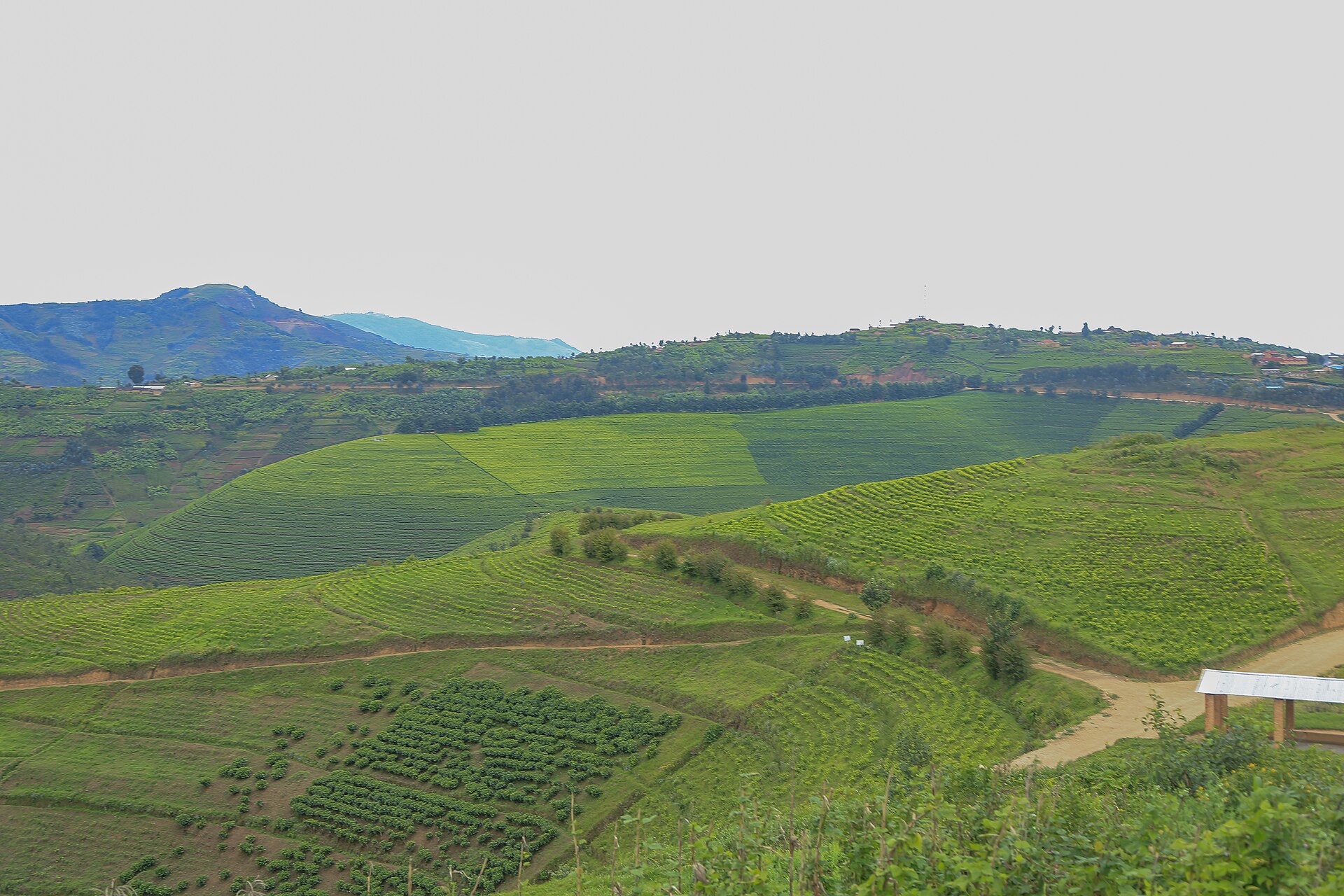
In this article
Overview
Tea is the beverage produced by steeping the young leaves and leaf buds of the tea plant Camellia sinensis in freshly boiled water. Next to water, it is the world's most consumed drink. The two principal varieties are the small-leaved China plant and the large-leaved Assam plant, and hybrids of the two are also grown.
1. The Tea Plant
The tea plant belongs to the family Theaceae and is an evergreen shrub distinguished by bright green, shiny leaves that are often hairy on their underside. Its white scented flowers are borne singly or in clusters of two to four, and its brownish-green fruits contain one to four seeds. Native to south-central and south-eastern China, the plant has been introduced to India, Japan, Sri Lanka, Turkey, Vietnam and many other regions. It grows best beneath the canopy of taller trees in evergreen forests on acid soil. Its conservation status is assessed as Data Deficient on the IUCN Red List.
There are approximately 1,500 different cultivars of tea, all offering interesting and varied styles, taste and colour. In China, 112 cultivated varieties of tea plant have been officially approved.
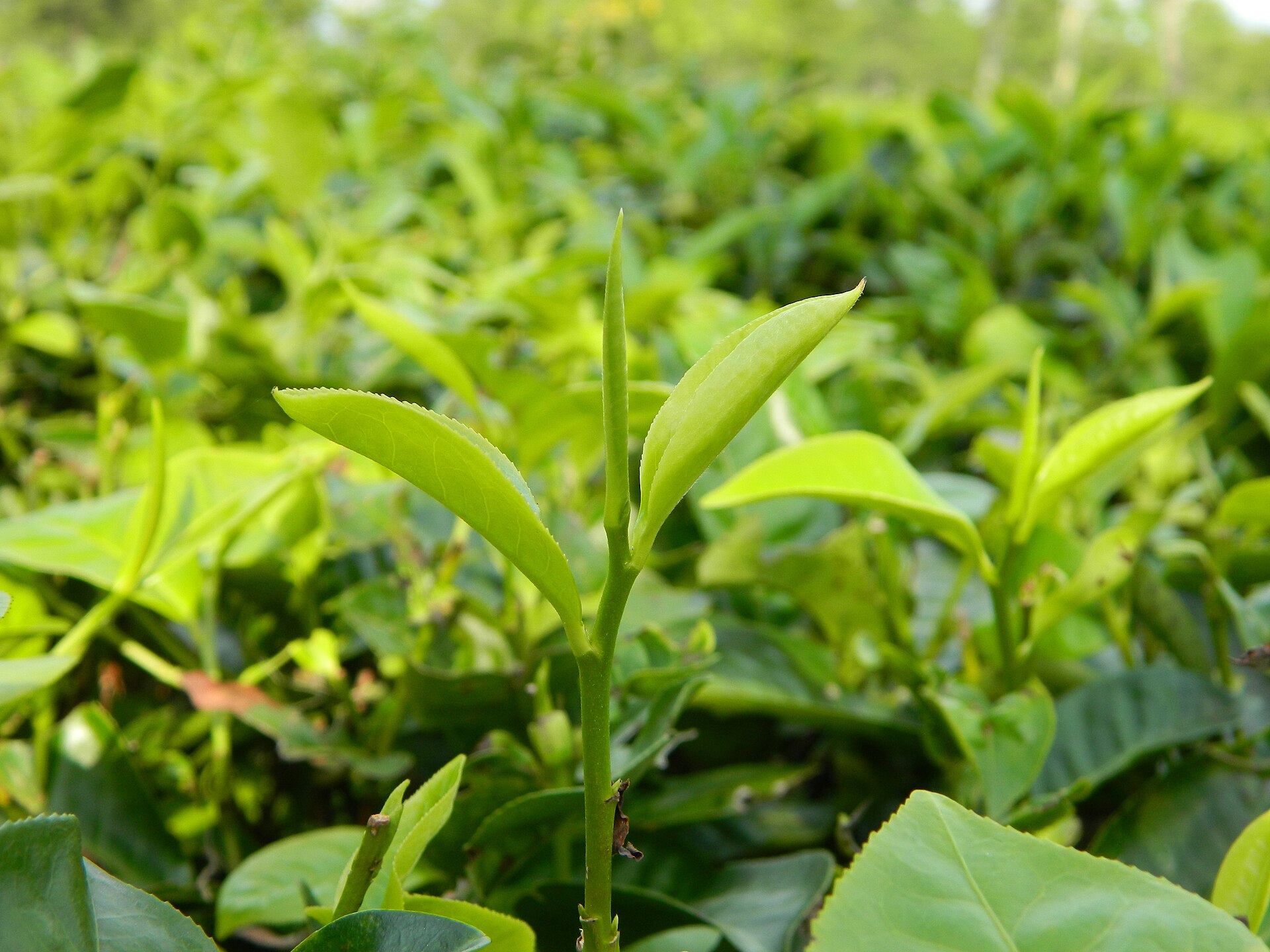
The tannins, or polyphenols, are colourless, bitter-tasting substances that give tea its astringency; when acted upon by the enzyme polyphenol oxidase they acquire a reddish colour and form the flavouring compounds of the beverage. Scientists at Kew studied the chemicals in 21 tea plant cultivars harvested at different times of year and found variation among cultivars, work that may inform breeding programmes and decisions on when to harvest tea for optimal flavour. Caffeine, the best-known constituent of tea, gives the beverage its stimulating character; about 4 percent of the solids in fresh leaf is caffeine, and one teacup of the beverage contains 60 to 90 milligrams of caffeine.
2. Processing and Types
In tea manufacture the leaf goes through some or all of the stages of withering, rolling, fermentation and drying, both to dry the leaf and to let its chemical constituents produce the quality peculiar to each type of tea. The most important classification is by manufacturing process, dividing teas into fermented, unfermented and semifermented groups. Only black tea passes through every stage, while green and oolong acquire their qualities through variations in the crucial fermentation stage. The length or absence of oxidation is responsible for the distinctive flavours of black, green, oolong and white teas.
Black tea is by far the most common type produced, best made from Assam or hybrid plants. Its infused leaf is bright red or copper coloured, and the liquor is bright red and slightly astringent but not bitter. The largest producers of black tea today include Africa, India and Sri Lanka. Growers found that more oxidized black tea retained freshness and flavour better over long journeys than minimally oxidized green tea.
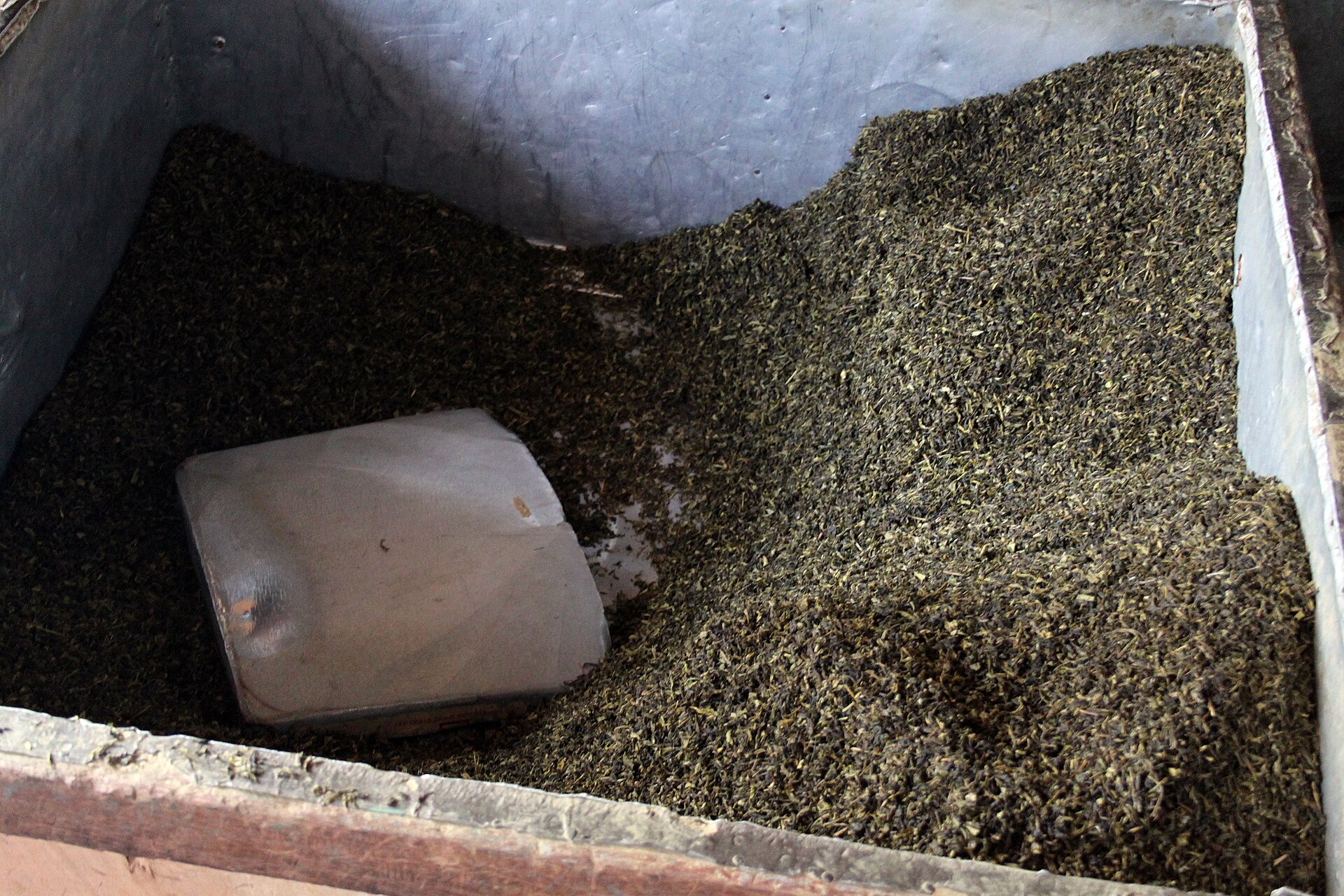
Green teas are totally unoxidised, and the first stage of their manufacture kills the enzymes by steaming freshly plucked leaves or tumbling them in a wok or panning machine. Japanese leaves are picked through May and then steamed for up to 20 seconds, originally with bamboo sieves over tanks of boiling water, to avoid fermentation and keep the fresh green colour. White teas traditionally come from China's Fujian province and are made from the leaf buds and leaves of the Da Bai varietal by the simplest process, with young buds and baby leaves gathered and dried, often in the sun.
Oolong means 'black dragon', and oolongs are partially oxidised teas ranging from 10% to almost 80%, with three styles: traditional dark oolongs, lightly oxidised Bao Zhongs and Jade oolongs rolled into tight balls. Pu Erh is named after Pu Erh city in Yunnan province, and the official Chinese definition describes products fermented from green tea of big leaves picked within Yunnan, with naturally fermented raw (Sheng) tea withered, de-enzymed in a wok, twisted and rolled by hand, sun-dried, steamed and compressed to age, and artificially fermented ripe (Shou) tea. Yellow tea is the least known and least practised style, accounting for significantly less than 1% of China's total production, and its methodology was reputedly lost for a century before rediscovery in the 1970s. Flavoured and scented teas include jasmine, Rose Congou and Earl Grey.
Chinese producers developed six categories of tea based on natural conditions and local customs: green, yellow, dark, white, oolong and black. When these are added to reprocessed teas such as flower-scented teas, they result in over 2,000 Chinese tea products with a variety of colours, aromas, flavours and shapes.
3. History and Spread of Cultivation
The drink was first used by Buddhist monks from around the 2nd century BCE to support them while they meditated and to ward off sleep. Tea is ubiquitous in Chinese daily life, served steeped or boiled in homes, workplaces, tea houses, restaurants and temples, and it is an important part of socialisation and of ceremonies such as weddings and sacrifices. China's traditional tea processing techniques and associated social practices were inscribed on UNESCO's Representative List of the Intangible Cultural Heritage of Humanity in 2022.
For millennia tea remained a medicinal beverage made by boiling fresh leaves in water, and only around the 3rd century CE did it become a daily drink as cultivation and processing began. The first published account of methods of planting, processing and drinking tea appeared in 350 CE. The first tea seeds reached Japan around 800, and cultivation there became established by the 13th century. Chinese traders from Amoy brought tea cultivation to the island of Formosa (Taiwan) in 1810, while cultivation in Java began under the Dutch with seeds from Japan in 1826 and with seeds, workers and implements from China from 1833 onward. In 1824 tea plants were discovered in the hills along the frontier between Burma and Assam, and the British introduced tea culture into India in 1836 and into Ceylon in 1867, first using seeds from China and later seeds from the Assam plant. By the late 19th and early 20th centuries tea growing had spread to Russian Georgia, Sumatra and Iran and extended to non-Asian countries in Africa, South America and Australia.
From the early 19th century the East India Company financed the tea trade with illegal opium exports to China, whose opposition precipitated the first Opium War. In spring 1839 the Chinese government confiscated and destroyed more than 20,000 chests of opium, some 1,400 tons of the drug, that were warehoused at Canton (Guangzhou) by British merchants.
In 1784 the Commutation Act slashed British tea taxes from 119 percent to 12.5 percent, effectively ending the smuggling of tea into Britain.
The Dutch East India Company carried the first consignment of China tea to Europe in 1610, and in 1669 the English East India Company brought China tea from ports in Java to the London market. The marriage of Charles II to Catherine of Braganza, a Portuguese princess and a tea devotee, proved a turning point in the history of tea in Britain: her love of the drink established tea as a fashionable beverage first at court and then among the wealthy classes, prompting the East India Company to place its first tea order in 1664.
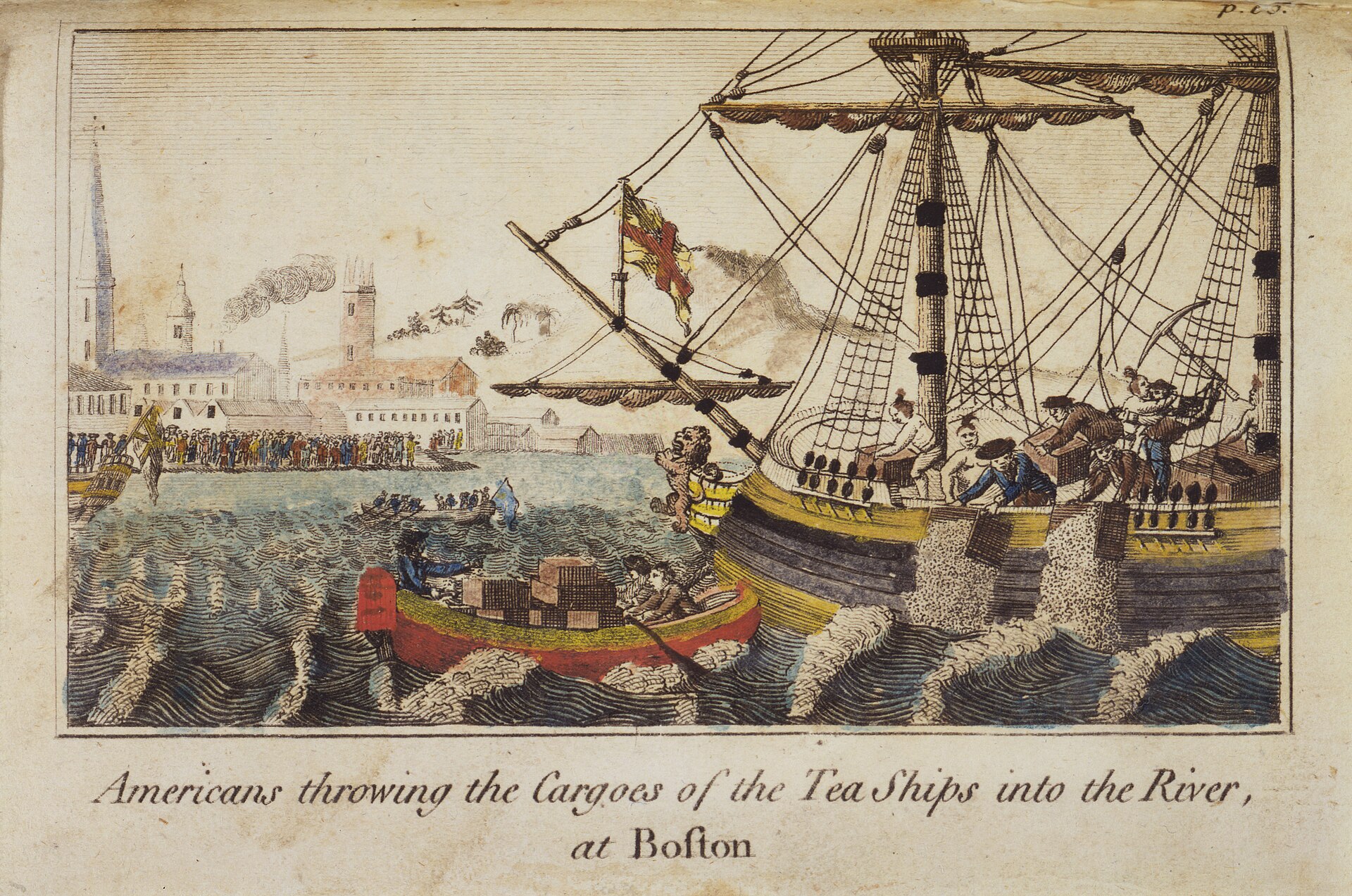
The dispute over British tea policy culminated in December 1773 in the Boston Tea Party in Boston harbor.
The character of tea, like wine, is influenced by the elevation of the garden, the soil, wind conditions and temperature, and by the quality of the plucking.
The culture of cay in Azerbaijan and Türkiye was inscribed in 2022 on UNESCO's Representative List of the Intangible Cultural Heritage of Humanity.
4. The Boston Tea Party
In May 1773 the British Parliament passed the Tea Act, which allowed the British East India Company to sell tea to the colonies duty-free and much cheaper than other tea companies, though the tea was still taxed when it reached colonial ports. The company behind this arrangement had been incorporated by royal charter on 31 December 1600 and would cease to exist in 1873.
Led by Samuel Adams, the Sons of Liberty protested the arrival at Griffin's Wharf of the Dartmouth, a company ship carrying tea. By December 1773 the Dartmouth had been joined by its sister ships Beaver and Eleanor, all three loaded with tea from China. On the night of 16 December 1773 a large group of men, many reportedly Sons of Liberty, disguised themselves in Native American garb, boarded the docked ships and threw the chests into the water. In all, 342 chests valued at about £18,000 were destroyed; the tea was Bohea, a black tea associated with the Wuyi Mountain region of China.

5. Tea Culture and Ceremony
By the Tang Dynasty, which ruled from 618 to 907 CE, tea had spread beyond the monasteries to become a popular drink among the gentry and an important element of the economy, whose large estates provided the government with tax revenue, while merchants exporting it ranked among the richest businessmen in China.
Communities in Azerbaijan and Türkiye primarily harvest and consume black tea, brewing it in a wide variety of kettles produced using traditional craftsmanship and serving it freshly brewed and hot in pear-shaped cups made from glass, porcelain, faience or silver. Tea culture there is an essential part of daily life for all layers of society and provides a strong sense of cultural identity. Its bearers include tea farmers and harvesters, tearoom owners, tea makers and the artisans who make the associated tools, utensils and sweets.
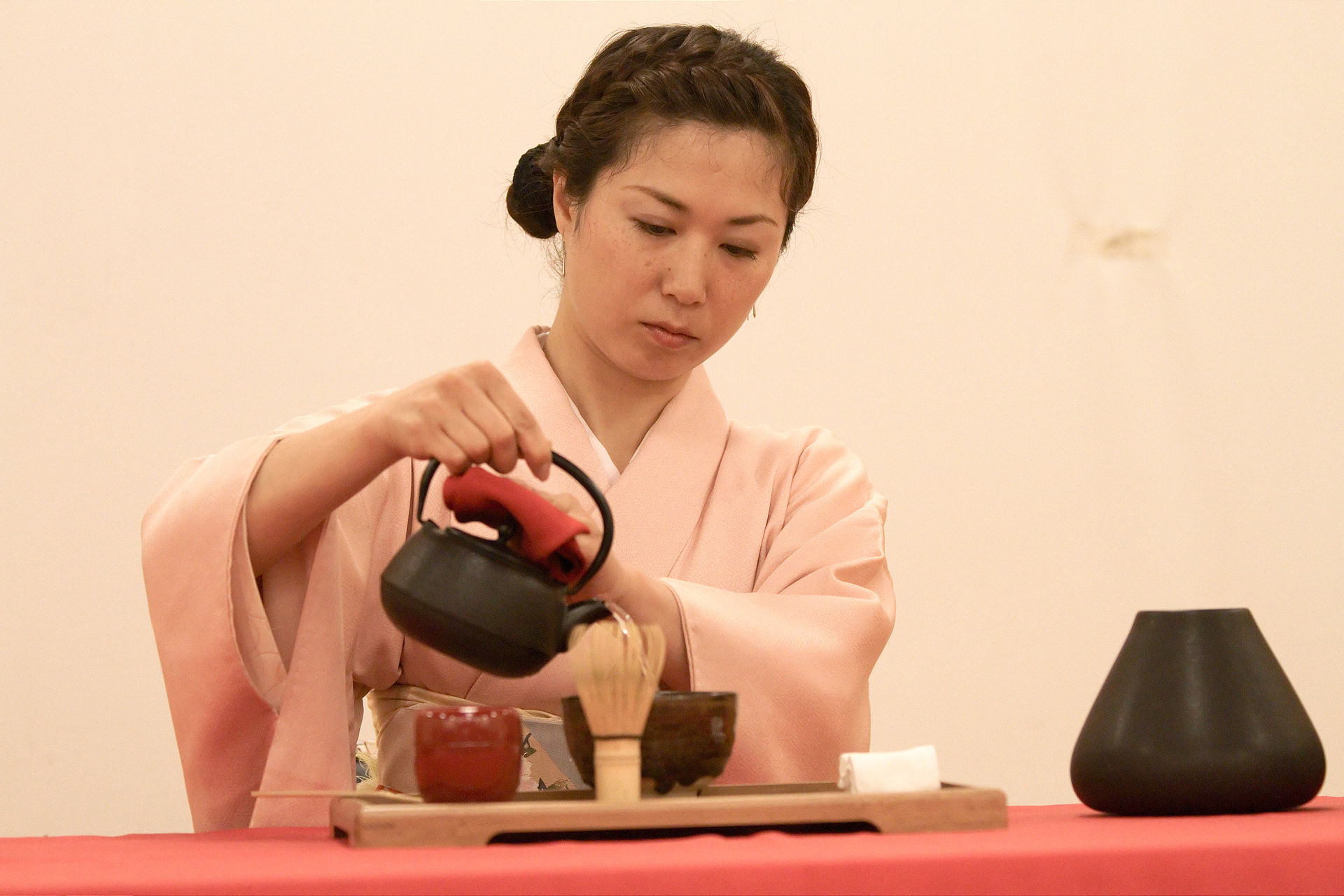
Tea drinking was passed on from China to neighbouring East Asian countries such as the Silla kingdom of Korea, but nowhere did it become more popular than in Japan from the 8th century CE, where Buddhist monks first drank it and it became fashionable around 1200 CE. The priest Eisai of the Rinzai Zen Buddhist sect is credited with bringing to Japan the practice of drinking tea in its powdered form, which became an important feature of the Zen monastic tradition and was used as an aid for staying alert during long periods of meditation. The Japanese tea ceremony, called chanoyu, meaning 'hot water for tea', or chado or sado, meaning 'way of the tea', is a time-honoured institution rooted in the principles of Zen Buddhism and founded upon the reverence of the beautiful in the daily routine of life. Tea parties began as rowdy affairs where guests tried to guess the type of tea they were drinking, until the 15th-century shogun Ashikaga Yoshimasa made the event much more sober and subdued. The most famous exponent of the ceremony was Sen Rikyū, an aesthete at the 16th-century court of the military dictator Toyotomi Hideyoshi, who codified the ceremony into a style known as wabi-cha. The ceremony typifies the Japanese aesthetic principle of wabi, the value given to the appreciation of beauty and simplicity in everyday things. For the Japanese the right place to drink tea was the dedicated chashitsu or tea room, also known as a sukiya or 'house of the imperfect', with roofs of bamboo and thatch, unworked supporting columns and walls made of earth. The doorways of tea rooms were usually small, only around 90 cm (3 ft) high, which was meant to show that all were of equal status once inside and, some historians believe, to prevent swords being taken into the room.
6. Jingmai Mountain and Heritage Recognition
The Cultural Landscape of Old Tea Forests of the Jingmai Mountain in Pu'er, in southwestern China, was developed over a thousand years by the Blang and Dai peoples following practices that began in the 10th century. It is a tea production area of traditional villages within old tea groves surrounded by forests and tea plantations. The Blang and Dai peoples sustained their traditions for over a thousand years through a tripartite social governance system of tribe, government and religion based on the Tea Ancestor belief, which protected the natural resources and preserved the old tea forests.
UNESCO's criterion (v) cites the Jingmai landscape as an outstanding example of a sustainable land-use system combining horizontal and vertical land-use patterns, permitting complementary use of natural resources in a mountainous environment vulnerable to modernisation, urban development and climate change.
7. Production, Trade and Consumption
World tea production increased by 3.2 percent annually over the last decade to reach 6.7 million tonnes in 2022, with China remaining by far the largest producer at nearly 50 percent of world output, followed by India with a 20.5 percent share. In 2018 China produced 2.5 million metric tons, 42.6% of the world's tea. World tea consumption reached 6.5 million tonnes in 2022.
People in Britain drink 62 billion cups of tea a year. The global tea market is worth about £40 billion. Tea made up 80% of China's total exports to Europe in the early 19th century.
8. Timeline
-
about 2700 BCETea placed in China by legendLegend places tea in China from about this time.1Tea | Definition, Types, & History · Encyclopaedia Britannica ↗
-
around the 3rd century CETea becomes a daily drinkAfter millennia as a medicinal beverage made by boiling fresh leaves in water, tea became a daily drink as cultivation and processing began.1
-
1610First China tea consignment reaches EuropeThe Dutch East India Company carried the first consignment of China tea to Europe.1
-
1669China tea reaches the London marketThe English East India Company brought China tea from ports in Java to the London market.1
-
1824Tea plants discovered on the Burma–Assam frontierTea plants were discovered in the hills along the frontier between Burma and Assam.1
-
1836Tea culture introduced into IndiaThe British introduced tea culture into India, first using seeds from China and later seeds from the Assam plant.1
-
1867Tea culture introduced into CeylonThe British introduced tea culture into Ceylon, first using seeds from China and later seeds from the Assam plant.1
9. FAQ
What plant does tea come from, and what are its principal varieties?
Tea comes from Camellia sinensis, a plant the taxonomist Carl Linnaeus once categorized as Thea sinensis before it was reclassified as a Camellia 16A Tempest in a Teapot: Alternative Plants to Traditional Tea · Smithsonian Gardens ↗.
Which varieties of the tea plant are used for which teas?
The var. sinensis variety is used to make green tea and China black tea, while var. assamica is used to make Assam (Indian) black tea 3Tea plant - Camellia sinensis · Royal Botanic Gardens, Kew ↗.
How long has tea been used in traditional Chinese medicine?
Who is credited with the discovery of tea in Chinese and Japanese tradition?
In both Chinese and Japanese tradition the discovery of tea is credited to the Indian sage Bodhidharma, founder of Chan Buddhism 4Tea in Ancient China & Japan · World History Encyclopedia ↗. According to the legend he tore off his own eyelids and threw them to the ground, from which the tea plant grew 4.
Where does the English word "tea" come from?
What is International Tea Day?
How large is the international tea trade?
The value of total tea trade is about USD 9.4 billion annually 17. The FAO Tea Composite price stood at USD 2.54 per kg in 2023 15Current global market situation and medium-term outlook (CCP:TE/24/2, 25th Session of the Intergovernmental Group on Tea) · Food and Agriculture Organization of the United Nations (FAO) ↗.
10. Timeline: from legendary origins to UNESCO inscriptions
- c. 2700 BCETea is known in China, by legendLegend places tea in China from about 2700 BCE, when, the story goes, leaves blew into a pot of water being boiled for an emperor.
- c. 2nd century BCEBuddhist monks adopt teaChinese Buddhist monks began using the drink from around the 2nd century BCE to support them while they meditated and to ward off sleep.
- 350 CEFirst published account of teaThe first published account of methods of planting, processing and drinking tea appeared in 350 CE.
- 618-907 CETea spreads under the Tang dynastyBy the Tang Dynasty tea had moved beyond the monasteries to become a popular drink with the gentry, an important element of the economy and a major export.
- c. 800 CETea seeds reach JapanAround 800 the first tea seeds were brought to Japan, where cultivation became established by the 13th century.
- 10th century CEJingmai tea landscape beginsOn Jingmai Mountain in southwestern China, the Blang and Dai peoples began the understorey tea cultivation practices that would shape the landscape for a thousand years.
- 1192-1333 CEZen monks practice tea ritual in JapanRitual tea drinking, which originated in China, was first practiced in Japan during the Kamakura period by Zen monks, who drank tea to keep awake during long sessions of meditation.
- 31 December 1600East India Company incorporatedThe English East India Company was incorporated by royal charter on 31 December 1600, eventually becoming a central player in the tea trade with China.
- 1664England's East India Company places its first tea orderAfter Catherine of Braganza made tea fashionable at the English court, the East India Company placed its first order, for 100 pounds of China tea to be shipped from Java.
- 10 May 1773Parliament passes the Tea ActTo aid the failing East India Company and reassert its authority to levy taxes, Parliament authorized the Tea Act on 10 May 1773: tea sold in America would carry no duty for the company but would be taxed at colonial ports.
- 16 December 1773The Boston Tea PartyColonists disguised as Native Americans boarded three ships at Griffin's Wharf and dumped 342 chests of East India Company tea into Boston Harbor, and the men proceeded to dump the tea into the sea, as John Adams called it, an intrepid exertion of popular power.
- 1784The Commutation Act cuts tea taxesThe British Parliament slashed tea taxes from 119 percent to 12.5 percent, making legal tea affordable and effectively ending smuggling practices.
- 1839-42First Opium WarChina's attempt to suppress the illegal opium trade that British merchants used to pay for tea led to the first Opium War, fought between China and Britain.
- 1869Cutty Sark built as a tea clipperCutty Sark was built in 1869 to win the tea races from China, but the Suez Canal opened in the same week, cutting the journey for steamships and ending the clippers' dominance.
- 2022UNESCO inscribes Chinese tea practicesChina's traditional tea processing techniques and associated social practices were inscribed on UNESCO's Representative List of the Intangible Cultural Heritage of Humanity.
- 2023Jingmai old tea forests become World HeritageThe Cultural Landscape of Old Tea Forests of the Jingmai Mountain in Pu'er was inscribed on the World Heritage List in 2023 under criteria (iii) and (v).
References (19)
- 1Tea | Definition, Types, & History — Encyclopaedia Britannica Web↩View source
- 2Types of Tea, Origins & Varieties — UK Tea & Infusions Association WebView source
- 3Tea plant - Camellia sinensis — Royal Botanic Gardens, Kew Web↩View source
- 4Tea in Ancient China & Japan — World History Encyclopedia Web↩View source
- 5Traditional tea processing techniques and associated social practices in China — UNESCO Intangible Cultural Heritage WebView source
- 6East India Company | History, Definition, & Facts — Encyclopaedia Britannica WebView source
- 7Opium Wars | Definition, Summary, Facts, & Causes — Encyclopaedia Britannica WebView source
- 8Cutty Sark and the Tea Trade — Royal Museums Greenwich WebView source
- 9History of Tea — UK Tea & Infusions Association WebView source
- 10Boston Tea Party - Definition, Dates & Facts — HISTORY (A&E Television Networks) WebView source
- 11Culture of Cay (tea), a symbol of identity, hospitality and social interaction — UNESCO Intangible Cultural Heritage WebView source
- 12Chanoyu: The Japanese Art of Tea — Asian Art Museum WebView source
- 13Tea ceremony | Description, History, & Facts — Encyclopaedia Britannica WebView source
- 14Cultural Landscape of Old Tea Forests of the Jingmai Mountain in Pu'er — UNESCO World Heritage Centre 1665 WebView source
- 15Current global market situation and medium-term outlook (CCP:TE/24/2, 25th Session of the Intergovernmental Group on Tea) — Food and Agriculture Organization of the United Nations (FAO) Web↩View source
- 16A Tempest in a Teapot: Alternative Plants to Traditional Tea — Smithsonian Gardens Web↩View source
- 17International Tea Day | 21 May — Food and Agriculture Organization of the United Nations (FAO) Web↩View source
- 18Boston Tea Party History — Boston Tea Party Ships & Museum WebView source
- 19Coming of the American Revolution: Boston Tea Party — Massachusetts Historical Society WebView source