India
The world's most populous country and its largest democracy — from the Indus Valley and the Maurya and Gupta empires through the Mughals, the British Raj and independence in 1947, to a global power in IT and space.
India is a republic in South Asia, the world's most populous country (about 1.4 billion people, ahead of China since 2023) and its largest democracy. The subcontinent is walled by the Himalayas in the north and drained by the Ganges, and it was home to the Indus civilization, whose cities flourished about 2600-1900 BCE. The Mauryan empire under Chandragupta and Ashoka unified most of the subcontinent from about 322 BCE, and the Gupta period became known as India's classical age. Mughal rule opened with Babur's victory at Panipat in 1526 and produced the Taj Mahal; after the 1857 revolt, Britain ruled directly as the British Raj from 1858. Gandhi's non-violent movement led to independence on 15 August 1947, and the constitution adopted in 1949 and in force from 1950 made India a republic. Today the country is the world's fifth-largest economy, its IT industry earned US$315.4 billion in the 2025-26 financial year, and ISRO's Chandrayaan-3 soft-landed on the Moon in 2023; Bollywood releases as many as a thousand films a year and yoga, inscribed by UNESCO in 2016, is a global practice.
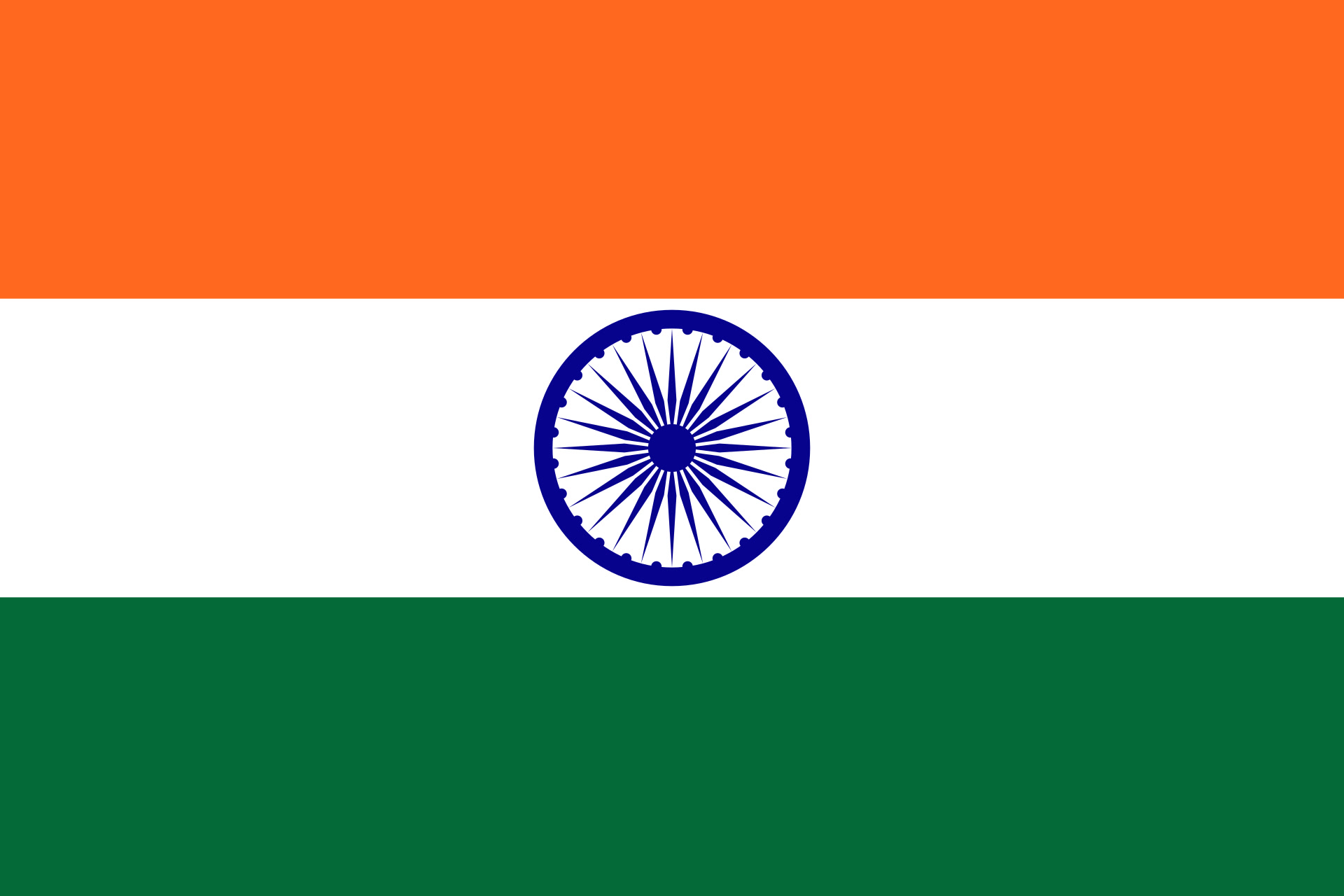
In this article
Overview
India is a country of South Asia whose total area is 3,287,263 square kilometres. Its population stands at about 1.4 billion, according to the United Nations. India and China each have about 1.4 billion people, making them the world's two most populous countries.
The country is made up of 28 states and eight union territories, and its national capital is New Delhi. India's land frontier abuts six countries and is roughly one-third coastline, bordering Pakistan, Nepal, China, Bhutan, Myanmar and Bangladesh.
India is home to hundreds of languages and dialects from four main language families, with Hindi and English as lingua francas and 22 scheduled languages recognised by the constitution.
1. Land and Rivers
The Himalayas began rising about 50 million years ago, when the northward-moving Indian plate collided with the Eurasian plate. They stretch uninterruptedly for about 2,500 kilometres from west to east, forming a barrier between Tibet and the Indian subcontinent. Within this range stands Mount Everest, the world's highest peak, soaring 8,849 metres above sea level.
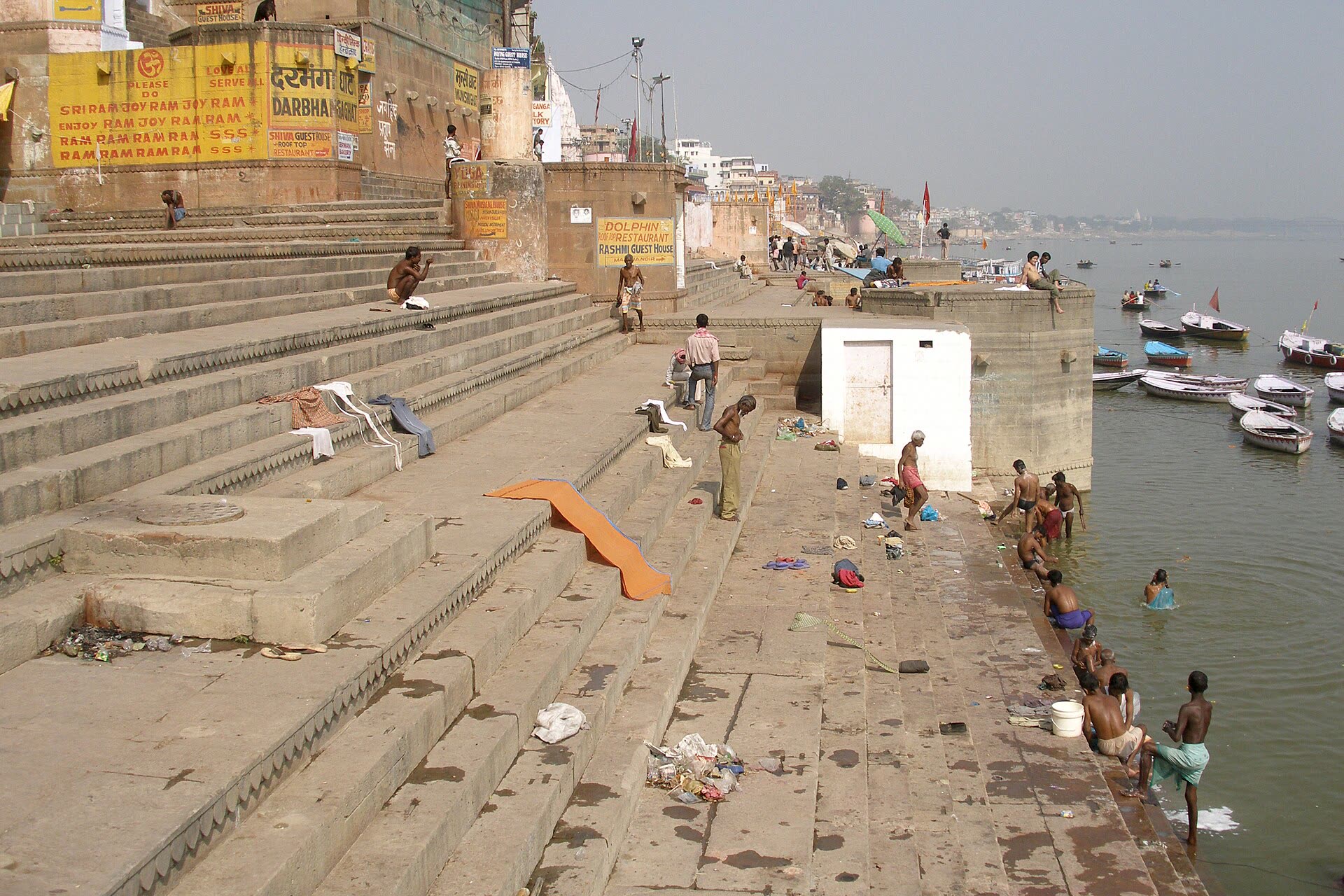
The Ganges rises in the southern Great Himalayas, its Bhagirathi headstream emerging from a meltwater cave at the base of the Gangotri glacier. It runs about 2,510 kilometres, drains a fourth of India's territory, and reaches the sea through the Ganges-Brahmaputra delta. The river has been revered as the holy river of Hinduism since time immemorial.
The Ganges is polluted by untreated sewage, industrial waste, agricultural runoff and the remains of partially burned funeral pyres.
2. People and Society
India's population stands at about 1.4 billion according to the United Nations. India and China each have about 1.4 billion people, making them the world's two most populous countries.
Hindus make up about 79.8 per cent of India's population and Muslims about 14.2 per cent. Christians, Sikhs, Buddhists and Jains account for most of the remainder.
Census 2011 provisionally counted India's population at 1,210.2 million people, including 623.7 million males and 586.5 million females.
3. Early Civilizations and Empires
The earliest of India's urban civilizations reached its mature phase between about 2600 and 1900 BCE. It was first identified in 1921 at Harappa and then in 1922 at Mohenjo-daro, both of which lie in present-day Pakistan. In the lower city of Moenjodaro, buildings were laid out along streets intersecting at right angles, in a plan incorporating systems of sanitation and drainage. The remarkable uniformity of weights and measures across the Indus lands, along with civic works such as great granaries, implies strong political and administrative control over a wide area. Because no Indus inscriptions can be read or interpreted, far less is known of this civilization's society than of contemporaneous Mesopotamia. Its decline was probably not uniform; Mohenjo-daro was already dying and was dealt a final blow by invaders from the north.
The Mauryan empire was founded by Chandragupta Maurya after Alexander the Great's death in 323 BCE and lasted about 321–185 BCE. Centred at Pataliputra near the junction of the Son and Ganges rivers, it was the first empire to encompass most of the Indian subcontinent. The Mauryan state was an efficient autocracy with a standing army and civil service, and its bureaucracy was the model for the Artha-shastra. Ashoka's rock and pillar edicts, including the lion capital from Sarnath that became India's national emblem, contain statements about his thoughts and actions. The inception of Sanchi as a sacred centre is attributed to Ashoka, whose reign is considered instrumental to the spread of Buddhism. After Ashoka's death the empire shrank through invasions, defections and quarrels over succession; its last ruler, Brihadratha, was killed in 185 BCE by Pushyamitra, who founded the Shunga dynasty.
Historians once regarded the Gupta period as India's classical age, and the decimal system of notation and advances in astronomy and mathematics are traditionally attributed to it. The astronomer and mathematician Aryabhata lived and worked near Pataliputra, then the Gupta capital, and composed the Aryabhatiya about 499 CE. Under Kumara Gupta and Skanda Gupta the empire declined amid invasion by the Hunas, a branch of the Hephthalites, and had dwindled to a small size by the mid-sixth century.
4. Mughal Era and British Rule
The Mughal Empire was opened by Babur, whose victory at the First Battle of Panipat in 1526 established the dynasty. By April 1526 he controlled Delhi and Agra, having defeated Ibrahim Lodi's army. By the late 16th century the Mughal ruler Akbar had extended the empire across northern India from the Bay of Bengal to the Arabian Sea. Aurangzeb's conquest of the Deccan sultanates brought the empire to its greatest extent, and late 17th-century Mughal India produced roughly 24 percent of world GDP. The Mughal state endured in name until 1857, when the British deposed the last emperor, Bahadur Shah II.
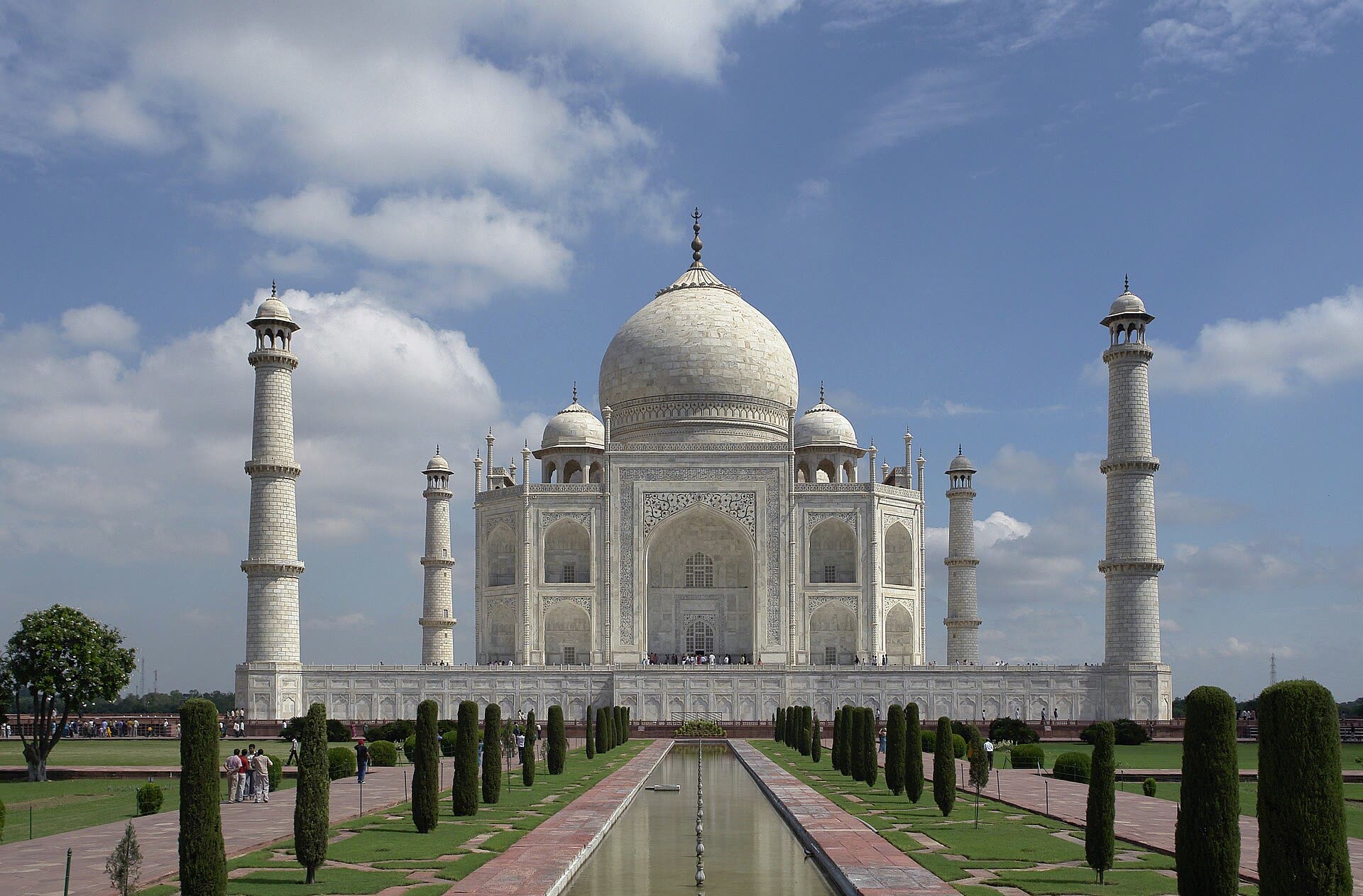
Among the enduring monuments of the period is the Taj Mahal, built at Agra between 1631 and 1648 by order of Shah Jahan for his favourite wife and called the jewel of Muslim art in India.
Crown rule began in 1858, following the 1857 revolt. From 1858 until the independence of India and Pakistan in 1947 the subcontinent was under direct British rule, a period called the British raj. In 1876 Queen Victoria added the title Empress of India to her regality at the prompting of Prime Minister Benjamin Disraeli. British railroad companies expanded India's network to some 25,000 miles of track by 1900 from more than 5,000 miles in 1869 and boosted the extraction of raw materials.
5. Independence and Republic
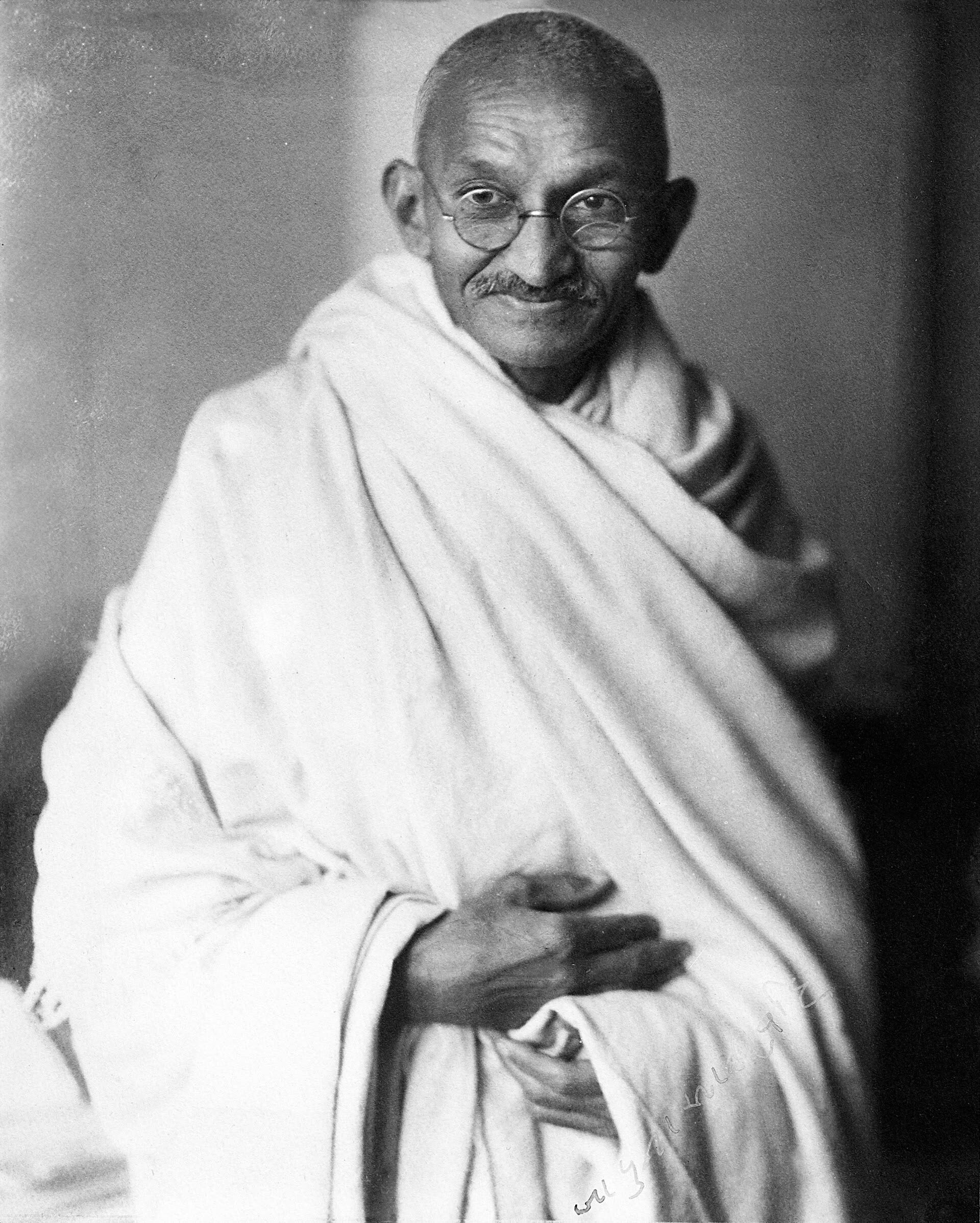
The Indian Independence Movement was led by Gandhi, who is best known for his use of nonviolent resistance, or satyagraha, and for his methods of peaceful protest. He organized mass campaigns, among them the Salt March, the Quit India Movement and noncooperation, to disrupt British rule and press for self-governance. Gandhi was assassinated in Delhi on January 30 in 1948 by Nathuram Godse while on his way to an evening prayer meeting.
The Indian Independence Act 1947 provided for two independent Dominions to be set up in India from 15 August 1947, to be known as India and Pakistan. The Constituent Assembly of India adopted the Constitution on 26 November 1949. It came into effect on 26 January 1950, and India became a republic. The Constitution of India is the world's lengthiest written constitution; at its commencement it had 395 articles, 22 parts and 8 schedules.
Nehru became the first prime minister of independent India. He established parliamentary government and pursued neutralist, nonaligned policies in foreign affairs.
6. Economy
India ranks as the world's fifth-largest economy, a position it held in 2023. Its share of global output doubled between 2000 and 2023, reaching 3.4 percent. The country continued to be the fastest-growing major economy, recording growth of 6.5 percent in the fiscal year 2024-25 despite a challenging global environment.
India's nominal GDP was estimated at ₹ 345.47 lakh crore for the fiscal year 2025-26 under Second Advance Estimates.
The country's IT and BPM industry revenue reached an estimated US$ 315.4 billion in FY26, while exports contributed US$ 246.4 billion. The IT services and BPO/ITeS segment provided direct employment to an estimated 5.4 million people in the fiscal year to March 2023, according to industry estimates. Global Capability Centres helped drive a 16 percent year-on-year rise in IT industry hiring in April 2025 alongside rising AI adoption.
7. Space Program
The Indian Space Research Organisation was formed on 15 August 1969 by superseding the Indian National Committee for Space Research.
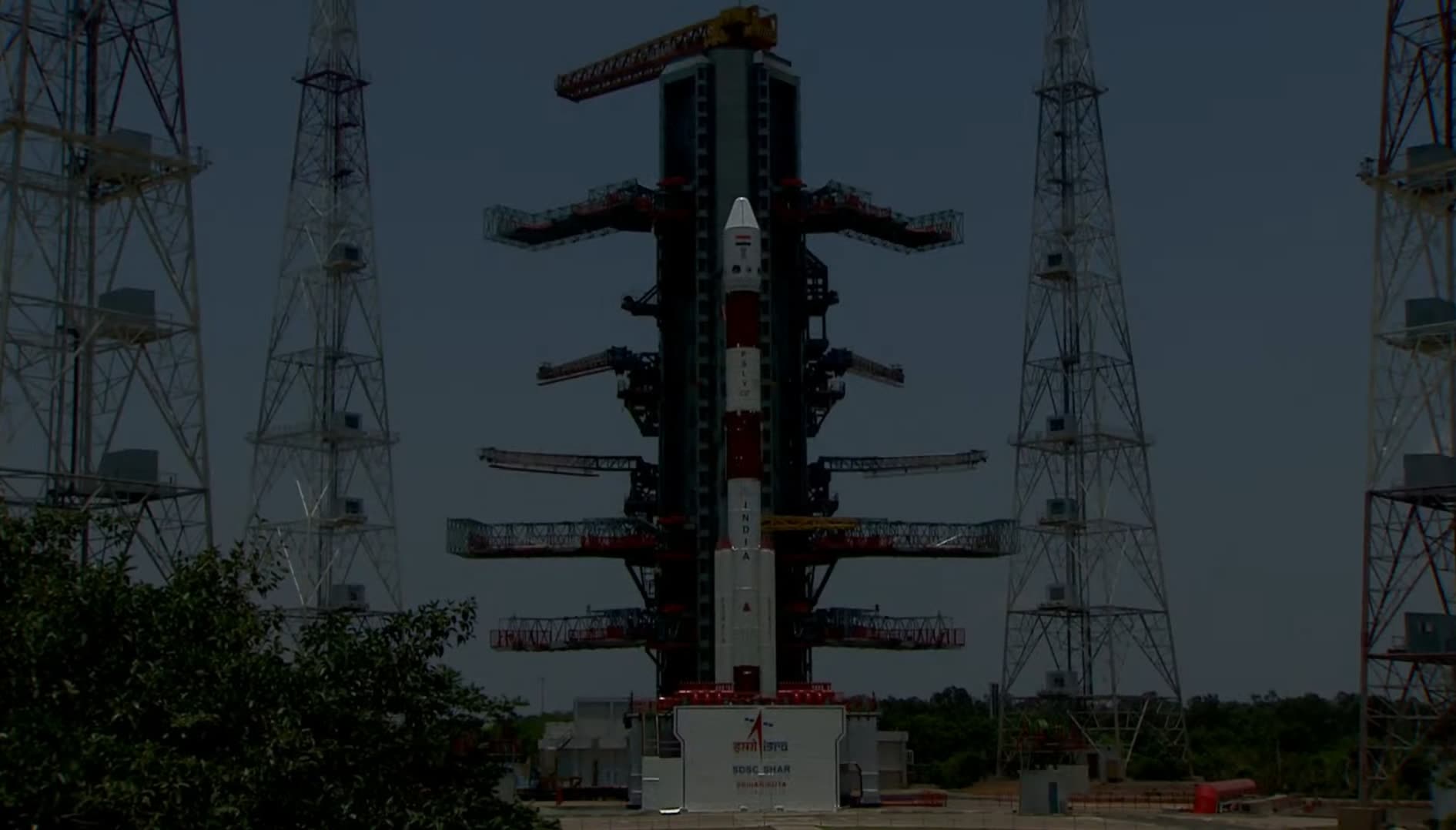
Chandrayaan-3 was launched on 14 July 2023 by the LVM3 M4 vehicle from Sriharikota, beginning its journey to the Moon. On 23 August 2023 the mission successfully soft-landed on the lunar surface, a milestone celebrated across India.
India's Mars Orbiter Mission, also known as Mangalyaan, was launched on 5 November 2013 from the Satish Dhawan Space Centre. After a journey of about ten months, it entered Mars orbit on 24 September 2014. The mission succeeded on its first attempt, a cost-effective achievement that ISRO says captured world attention.
The organisation's launch record includes the PSLV-C37 mission, which lifted off from Sriharikota and placed 104 satellites in orbit in a single flight in February 2017.
8. Culture
Yoga is an ancient physical, mental and spiritual practice that originated in India, its Sanskrit name meaning to join or to unite body and consciousness. It combines poses, meditation, controlled breathing and chanting to help practitioners achieve self-realization, ease suffering and reach a state of liberation. Traditionally, yoga was passed down through the Guru-Shishya (master-pupil) model, with gurus as the main custodians of its knowledge and skills. UNESCO inscribed yoga in 2016 on the Representative List of the Intangible Cultural Heritage of Humanity. By resolution 69/131 adopted on 11 December 2014 the UN General Assembly proclaimed 21 June the International Day of Yoga; India proposed the resolution, which a record 175 member states endorsed.
Bollywood is the Hindi-language film industry based in Mumbai, a portmanteau of Bombay and Hollywood and the largest component of the Indian moviemaking industry. At the turn of the twenty-first century the Indian film industry, with Bollywood remaining its largest component, was producing as many as 1,000 feature films annually. Bollywood films are known for spectacular song-and-dance routines, choreographed fight scenes, emotion-charged melodrama and larger-than-life heroes. Aamir Khan's Dangal (2016) is Indian cinema's top-grossing film worldwide, with lifetime earnings of more than 2000 crore rupees ($260 million).
9. Key Dates
India's recorded past begins with the mature urban phase of the Indus civilization, which is dated to about 2600–1900 BCE. That civilization was first identified in 1921 at Harappa and then in 1922 at Mohenjo-daro, both of which lie in present-day Pakistan. Its remarkable uniformity of weights and measures, together with civic works such as great granaries, implies strong political and administrative control over a wide area. No Indus inscriptions can be read or interpreted, so far less is known of this civilization's society than of contemporaneous Mesopotamia.
The Mauryan empire was founded by Chandragupta Maurya after Alexander the Great's death in 323 BCE and lasted about 321–185 BCE. Centred at Pataliputra near the junction of the Son and Ganges rivers, it was the first empire to encompass most of the Indian subcontinent. After Ashoka's death the empire shrank through invasions, defections and quarrels over succession; its last ruler, Brihadratha, was killed in 185 BCE by Pushyamitra, who founded the Shunga dynasty.
Babur's victory at the First Battle of Panipat in 1526 opened the Mughal Empire. By April 1526 he controlled Delhi and Agra, founding the Mughal dynasty. By the late 16th century the Mughal ruler Akbar had extended the empire across northern India from the Bay of Bengal to the Arabian Sea. The Mughal state endured in name until 1857, when the British deposed the last emperor, Bahadur Shah II.
Crown rule began in 1858 after the 1857 revolt. From 1858 until the independence of India and Pakistan in 1947 the subcontinent was under direct British rule, a period called the British raj. The Indian Independence Act 1947 provided for two independent Dominions to be set up in India from 15 August 1947 to be known as India and Pakistan.
The Constituent Assembly of India adopted the Constitution on 26 November 1949; it came into effect on 26 January 1950 and India became a republic. The Indian Space Research Organisation was formed on 15 August 1969 by superseding the Indian National Committee for Space Research. On 23 August 2023 Chandrayaan-3 successfully soft-landed on the Moon, a milestone celebrated across India.
10. Demographic and Economic Indicators
India's demographic scale is matched by few nations: together with China it accounts for roughly 1.4 billion people, placing the two countries as the world's most populous.2Population · United Nations ↗ The country's religious profile is overwhelmingly Hindu, with Hindus making up about 79.8 per cent of the population and Muslims about 14.2 per cent, while Christians, Sikhs, Buddhists and Jains account for most of the remainder.5Key findings about the religious composition of India · Pew Research Center ↗ These shares derive from the 2011 census, which provisionally counted India's population at 1,210.2 million people, including 623.7 million males and 586.5 million females.6Census of India 2011 - Provisional Population Totals (presentation) · Office of the Registrar General & Census Commissioner, India (Ministry of Home Affairs) ↗
Economically, India ranks as the world's fifth-largest economy, with its share of global output doubling between 2000 and 2023 to reach 3.4 percent.21India Overview · World Bank Group ↗ Nominal GDP was estimated at ₹ 345.47 lakh crore for the fiscal year 2025-26 under Second Advance Estimates.22PIB releases - PSLV-C37 104-satellite launch and MoSPI Second Advance Estimates for FY 2025-26 · Press Information Bureau, Government of India ↗ The country continued to be the fastest-growing major economy, recording growth of 6.5 percent in the fiscal year 2024-25 despite a challenging global environment.21
The IT and BPM industry reached an estimated revenue of US$ 315.4 billion in FY26, with exports contributing US$ 246.4 billion.23IT & BPM Industry in India · India Brand Equity Foundation (IBEF) ↗ Its services and BPO/ITeS segment provided direct employment to an estimated 5.4 million people in the fiscal year to March 2023 according to industry estimates.23 Global Capability Centres helped drive a 16 percent year-on-year rise in IT industry hiring in April 2025 alongside rising AI adoption.23
At the turn of the twenty-first century the Indian film industry, with Bollywood remaining its largest component, was producing as many as 1,000 feature films annually.29Bollywood: Hindi film industry, history and facts · Encyclopaedia Britannica ↗ Bollywood is the Hindi-language film industry based in Mumbai, a portmanteau of Bombay and Hollywood and the largest component of the Indian moviemaking industry.29 Its films are known for spectacular song-and-dance routines, choreographed fight scenes, emotion-charged melodrama and larger-than-life heroes.29
| Indicator | Value | Source |
|---|---|---|
| Total area | 3,287,263 square kilometres | brit-india |
| Population | about 1.4 billion | un-population |
| Religious composition | Hindus 79.8%, Muslims 14.2% (2011 census) | pew-religion-in |
| Nominal GDP | ₹ 345.47 lakh crore (FY 2025-26 Second Advance Estimates) | pib |
| Global GDP ranking | World's fifth-largest economy (2023) | worldbank-india |
| IT & BPM industry revenue | US$ 315.4 billion; exports US$ 246.4 billion (FY26) | ibef-it |
| ISRO founding year | 1969 | isro-about |
| Chandrayaan-3 lunar landing date | 23 August 2023 | isro-chandrayaan3 |
| Yoga's UNESCO inscription year | 2016 | unesco-yoga |
| Bollywood film output | as many as 1,000 feature films annually | bollywood |
11. Timeline: from the Indus Valley to orbit
- About 2600 BCEIndus civilization reaches its mature urban phaseThe Indus (Harappan) civilization flourishes in its mature urban phase, dated by Britannica to about 2600–1900 BCE, with its great cities Harappa and Mohenjo-daro.
- About 322 BCEChandragupta Maurya founds the Mauryan empireIn the wake of Alexander the Great's death in 323 BCE, Chandragupta Maurya conquered the Punjab and founded the Mauryan empire, which Britannica dates from about 321 to 185 BCE.
- About 261 BCEAshoka conquers Kalinga and renounces armed conquestAshoka conquered Kalinga, modern Odisha, in the eighth year of his reign, conventionally dated about 261 BCE; remorse over the suffering caused by the war led him to renounce armed conquest and adopt a policy he called conquest by dharma.
- About 320 CEChandra Gupta I founds the Gupta empireChandra Gupta I united the Guptas with the Licchavis by marriage as the first ruler of the Gupta empire, whose rise is conventionally dated about 320 CE; Britannica dates the empire from the early fourth century CE.
- April 1526Babur wins the First Battle of PanipatBabur's victory over Ibrahim Lodi at Panipat opened the way to Delhi and Agra, and he went on to found the Mughal Empire.
- 1631–1648The Taj Mahal is built at AgraShah Jahan built the white-marble mausoleum for his wife Mumtaz Mahal; UNESCO calls it the jewel of Muslim art in India.
- 1857The Indian Rebellion of 1857A widespread mutiny of Indian soldiers, known as sepoys, led the British to reconsider the structure of governance in India.
- 2 August 1858Direct crown rule beginsParliament passed the first Government of India Act, transferring power over India from the East India Company to the crown; crown rule lasted until 1947.
- 12 March – 6 April 1930Gandhi's Dandi march against the salt taxGandhi began the Dandi March from Sabarmati Ashram against the Salt Laws with 81 padyatris, breaking the Salt Act on 6 April morning.
- 18 July – 15 August 1947Independence for India and PakistanThe Indian Independence Act received Royal Assent on 18 July, and from 15 August 1947 two independent Dominions, India and Pakistan, were set up.
- 24 September 2014Mars Orbiter Mission enters Mars orbitIndia's Mars Orbiter Mission (Mangalyaan), launched on 5 November 2013 from Sriharikota, was inserted into Mars orbit, making ISRO the fourth space agency to reach the planet and the first to succeed on its first attempt.
- 11 December 2014The UN proclaims 21 June as the International Day of YogaOn 11 December 2014 the UN General Assembly adopted resolution 69/131 designating 21 June as the International Day of Yoga, a proposal by India endorsed by a record 175 member states.
- 15 February 2017PSLV-C37 launches 104 satellites in a single flightISRO's Polar Satellite Launch Vehicle PSLV-C37 launched the 714 kg Cartosat-2 series satellite together with 103 co-passenger satellites, a record for a single launch.
- 2023India becomes the world's most populous countryUnited Nations estimates indicate that India became the world's most populous country in 2023 by overtaking China.
- 23 August 2023Chandrayaan-3 soft-lands on the MoonChandrayaan-3, launched on 14 July 2023, successfully soft-landed near the lunar south pole; its Vikram lander and rover then began surface operations.
12. Frequently asked questions
How large is India, and how many people live there?
What is India's religious makeup?
How old is Indian civilization, and which empires shaped its early history?
The mature urban phase of the Indus civilization dates to about 2600–1900 BCE 7Indus civilization · Encyclopaedia Britannica ↗. The Mauryan empire was founded by Chandragupta Maurya after Alexander the Great's death in 323 BCE and lasted about 321–185 BCE 9Mauryan empire · Encyclopaedia Britannica ↗. Historians once regarded the Gupta period as India's classical age, and the decimal system of notation and advances in astronomy and mathematics are traditionally attributed to it 12Gupta dynasty · Encyclopaedia Britannica ↗.
When did the Mughals rule, and when did British rule begin and end?
Babur's victory at the First Battle of Panipat in 1526 opened the Mughal Empire 14Mughal dynasty · Encyclopaedia Britannica ↗. Crown rule began in 1858 after the 1857 revolt 16British raj · Encyclopaedia Britannica ↗, and two independent Dominions, India and Pakistan, were set up in India as from 15 August 1947 18Indian Independence Act 1947 · The National Archives (legislation.gov.uk) ↗.
How is India governed today, and how did it become a republic?
The Constitution of India was adopted on 26 November 1949 and brought into force on 26 January 1950 as India became a republic 19Constitution of India (Interesting Facts) · Press Information Bureau, Government of India ↗. India is made up of 28 states and eight union territories, and its national capital is New Delhi 1.
What is India's economy like, and what has it achieved in space and culture?
India is the world's fifth-largest economy as of 2023 21, and its nominal GDP was estimated at ₹ 345.47 lakh crore for the fiscal year 2025-26 under Second Advance Estimates 22. The Indian Space Research Organisation was formed on 15 August 1969 24About ISRO - Profile · Indian Space Research Organisation (ISRO) ↗, and on 23 August 2023 Chandrayaan-3 successfully soft-landed on the Moon 25Chandrayaan-3 - Mission Updates · Indian Space Research Organisation (ISRO) ↗. UNESCO inscribed yoga in 2016 on the Representative List of the Intangible Cultural Heritage of Humanity 28Yoga · UNESCO Intangible Cultural Heritage ↗, and the Indian film industry, with Bollywood remaining its largest component, was producing as many as 1,000 feature films annually at the turn of the twenty-first century 29.
References (30)
- 1India — Encyclopaedia Britannica Web↩View source
- 2Population — United Nations Web↩View source
- 3Himalayas — Encyclopaedia Britannica WebView source
- 4Ganges River — Encyclopaedia Britannica WebView source
- 5Key findings about the religious composition of India — Pew Research Center 2021 Web↩View source
- 6Census of India 2011 - Provisional Population Totals (presentation) — Office of the Registrar General & Census Commissioner, India (Ministry of Home Affairs) 2011 Web↩View source
- 7Indus civilization — Encyclopaedia Britannica Web↩View source
- 8Archaeological Ruins at Moenjodaro — UNESCO World Heritage Centre WebView source
- 9Mauryan empire — Encyclopaedia Britannica Web↩View source
- 10Ashoka — Encyclopaedia Britannica WebView source
- 11Buddhist Monuments at Sanchi — UNESCO World Heritage Centre WebView source
- 12Gupta dynasty — Encyclopaedia Britannica Web↩View source
- 13Aryabhata — Encyclopaedia Britannica WebView source
- 14Mughal dynasty — Encyclopaedia Britannica Web↩View source
- 15Taj Mahal — UNESCO World Heritage Centre WebView source
- 16British raj — Encyclopaedia Britannica Web↩View source
- 17Mahatma Gandhi — Encyclopaedia Britannica WebView source
- 18Indian Independence Act 1947 — The National Archives (legislation.gov.uk) 1947 Web↩View source
- 19Constitution of India (Interesting Facts) — Press Information Bureau, Government of India Book↩View source
- 20Jawaharlal Nehru — Encyclopaedia Britannica WebView source
- 21India Overview — World Bank Group Web↩View source
- 22PIB releases - PSLV-C37 104-satellite launch and MoSPI Second Advance Estimates for FY 2025-26 — Press Information Bureau, Government of India 2025 Book↩View source
- 23IT & BPM Industry in India — India Brand Equity Foundation (IBEF) Web↩View source
- 24About ISRO - Profile — Indian Space Research Organisation (ISRO) Web↩View source
- 25Chandrayaan-3 - Mission Updates — Indian Space Research Organisation (ISRO) Web↩View source
- 26Mars Orbiter Mission (Mangalyaan) - FAQ and spacecraft pages — Indian Space Research Organisation (ISRO) WebView source
- 27International Day of Yoga, 21 June — United Nations WebView source
- 28Yoga — UNESCO Intangible Cultural Heritage Web↩View source
- 29Bollywood: Hindi film industry, history and facts — Encyclopaedia Britannica Web↩View source
- 30Shri Prahlad Singh Patel will lead the Dandi Padyatra ... 'Azadi Ka Amrut Mahotsav' — Press Information Bureau, Government of India BookView source
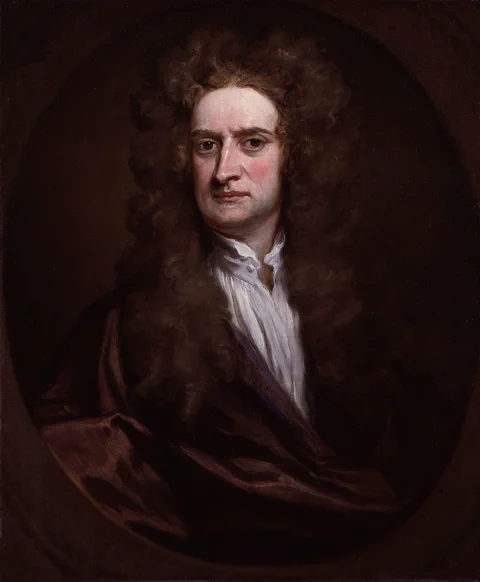 Isaac Newton
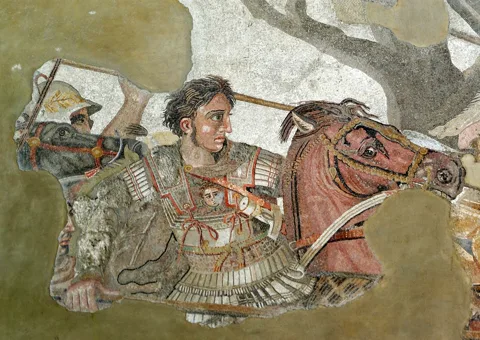 Alexander the Great
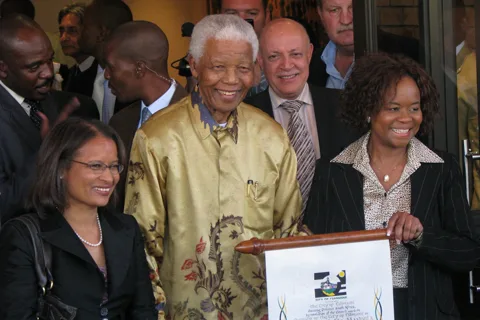 Nelson Mandela