Mughal Empire
The South Asian empire founded by Babur in 1526 that grew under Akbar, Jahangir, Shah Jahan and Aurangzeb into one of the richest states of the early modern world — and dissolved in the British takeover that followed 1857.
The Mughal Empire was founded by Babur, a Central Asian prince who defeated the Delhi sultanate at the First Battle of Panipat in 1526. Under Akbar it gained a centralized administration of provinces and mansabdars, and under Shah Jahan it produced the Taj Mahal and the Red Fort. At its greatest extent under Aurangzeb it encompassed most of the Indian subcontinent and accounted for roughly a quarter of world GDP, before decline, invasion and finally the events of 1857 ended the dynasty.
In this article
- 1Overview
- 2Foundation and Early Expansion
- 3Akbar's Reign and Administrative Reforms
- 4Capitals and Court Culture
- 5Later Emperors: Jahangir, Shah Jahan, and Aurangzeb
- 6Economy and Society at the Peak
- 7Art, Architecture, and Cultural Legacy
- 8Decline and British Ascendancy
- 9End of the Dynasty
- 10Timeline: from the First Battle of Panipat to 1857
- 11Frequently asked questions
- 12Knowledge graph
Overview
The Mughal Empire was a Muslim dynasty of Turkic-Mongol origin, belonging to the Timurid line and founded by a Chagatai Turkic prince.
1. Foundation and Early Expansion
The dynasty that would become the Mughal Empire was founded by Babur, born Zahir al-Din Muhammad Babur on 15 February 1483 in the principality of Fergana, now in Uzbekistan. He was a Chagatai Turkic prince descended from Timur and Genghis Khan. Through his mother's side his lineage went back to the Chagatai line, making him a descendant of the Mongol conqueror Genghis Khan. The dynasty he founded was thus of Turkic-Mongol origin, belonging to the Timurid line.
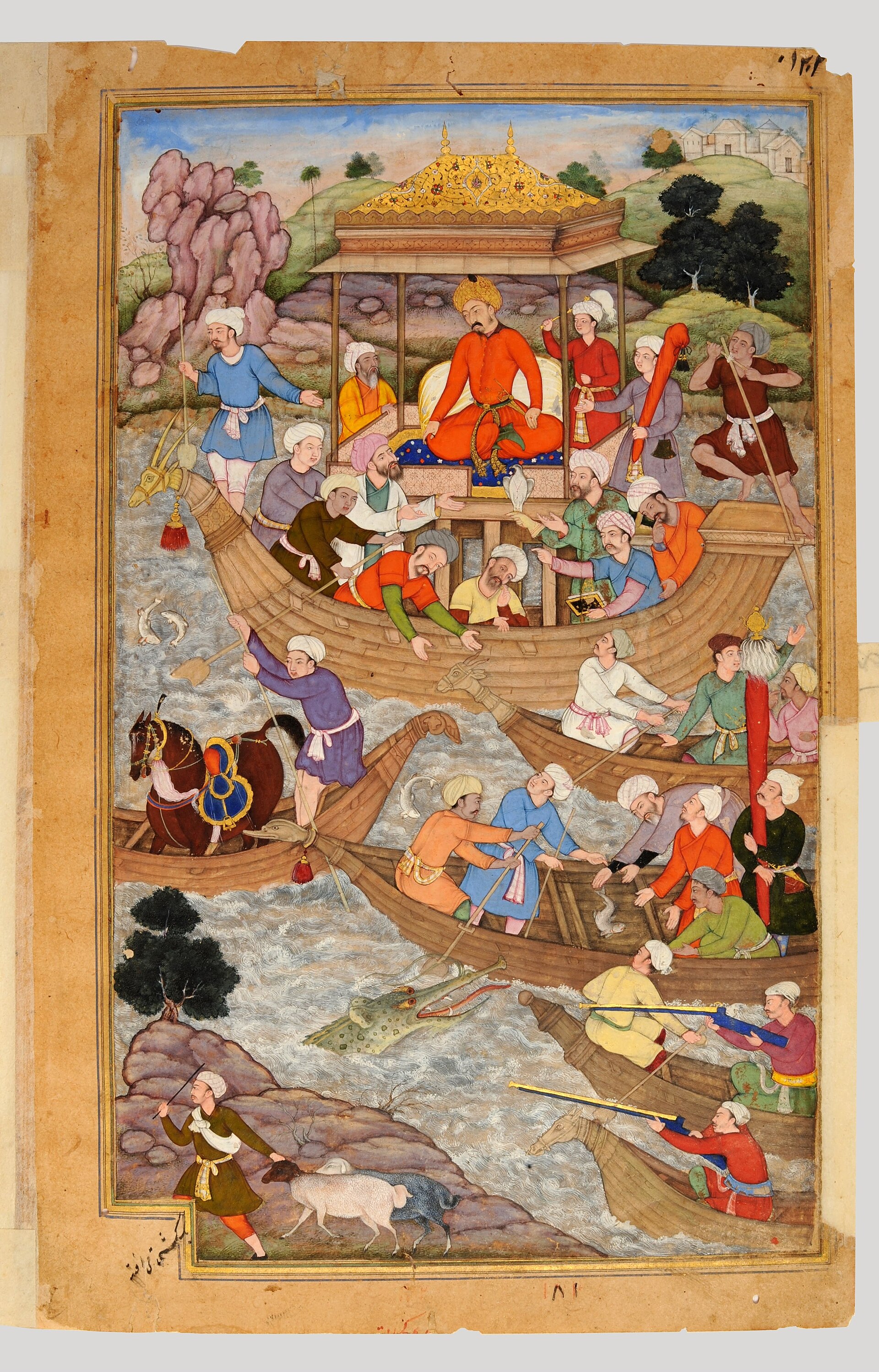
In April 1526 Babur defeated the Delhi sultanate ruler Ibrahim Lodi at the First Battle of Panipat, laying the foundations of the Mughal Empire. The engagement took place on 21 April 1526. Babur had invaded the land he knew as Hindustan and seized the Delhi Sultanate from its ruler. In doing so he wrested Delhi from the Lodi Sultans to found the Mughal empire.
Babur made Agra the capital of his new realm. He died in Agra in December 1530 after a reign of four years. At his death his kingdom incorporated the major cities of Kabul, Lahore, Agra and Delhi, but his control remained fragile. He had kept writing his memoirs, begun at the age of twelve, until 1530 shortly before his death.
Humayun was forced out of Hindustan by the Afghan Sher Shah Suri, who took over Mughal territory and ruled from Delhi and instituted an extremely effective administrative system that was his lasting legacy. Humayun regained his former territories after nearly 17 years but died only months later after falling down the stone steps of his library. He was succeeded in 1556 by his 13-year-old son Akbar. In November 1556 a Mughal force defeated Hemu at the Second Battle of Panipat, which commanded the route to Delhi and thus ensured Akbar's succession.
2. Akbar's Reign and Administrative Reforms
Akbar reigned from 1556 to 1605 and is remembered as the greatest of the Mughal emperors of India, extending Mughal power over most of the Indian subcontinent. He was born during October 1542 in Umarkot, now in Sindh province of Pakistan, and died in October 1605 in Agra. His reign of nearly fifty years, from 1556 to 1605, can be credited with the real foundation of the Mughal empire, establishing dominion over northern and central India as far east as Bengal.
His conquest of Gujarat in 1573 gave him an area with many ports that dominated India's trade with western Asia. Toward the end of his reign Akbar subjugated the Kashmir region in 1586 and Sindh in 1591 as his troops moved toward the Deccan.
It was under Akbar that Mughal governance reached its most systematic imperial framework, with the empire reorganized into provinces (subas) and the mansabdari system tying rank, salary and military obligation directly to imperial service. His revenue administration was rationalized with systematic land measurement and assessment, notably under the Hindu minister Todar Mal, balancing imperial income with agrarian stability.
Akbar adopted a policy of conciliation and conquest toward the Rajputs, accepting an offered marriage alliance in 1562 and allowing chiefs to hold their ancestral territories in return for tribute, troops and marriage alliances. Rajput princes attained the highest ranks as generals and provincial governors in the Mughal service, and discrimination against non-Muslims was reduced by abolishing the taxation of pilgrims and the tax payable in lieu of military service.
The Ibadat Khana, or House of Worship, was established by the Mughal emperor Akbar for conducting religious debates and discussions among theologians and professors of different religions. Construction of the Ibadat Khana started in early 1575 at Fatehpur Sikri, then the capital of the Mughal Empire; the complex was completed in 1576 and discussions were held every Thursday evening, sometimes continuing through the night. Theologians and intellectuals belonging to various religions and sects such as Hinduism, Islam, Christianity, Buddhism, Jainism, Zoroastrianism and atheists were invited to the discussions, which culminated in the creation of Akbar's new faith Din-i-Ilahi.
3. Capitals and Court Culture
The seat of Mughal power shifted repeatedly across the dynasty's first century and a half. Akbar established Fatehpur Sikri as his capital, and in 1585 the capital was moved to Lahore. Shah Jahan later moved the capital from Agra to Delhi in 1648.
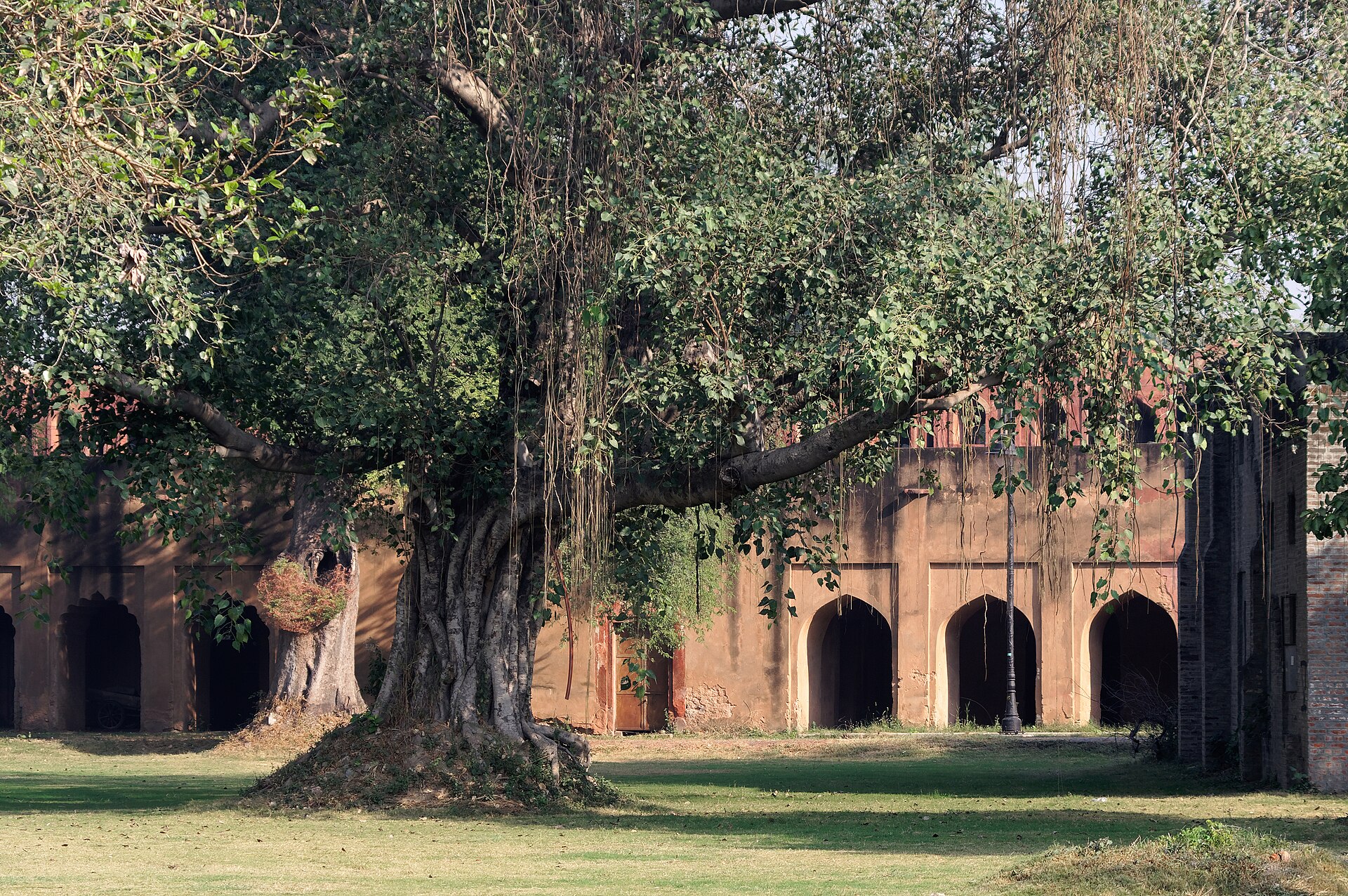
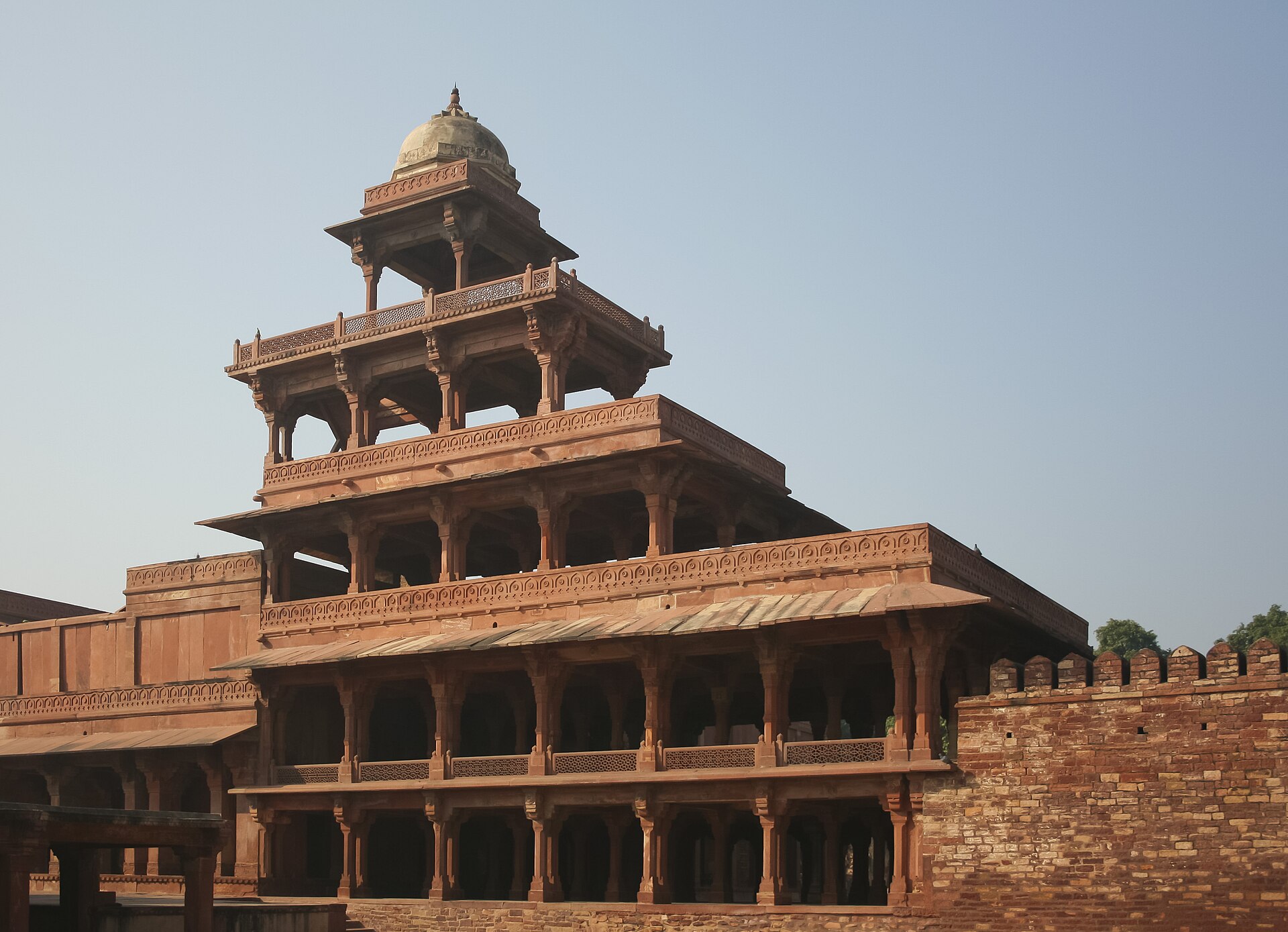
Fatehpur Sikri, known as the city of victory, was constructed between 1571 and 1573 as the first planned city of the Mughals. The Jama Masjid there, the earliest building constructed on the summit of the ridge, was completed in 1571–72 and incorporates the tomb of Shaikh Salim Chisti. The Buland Darwaza, or Lofty Gate, standing 40 m high, was completed in 1575 to commemorate the victory of Gujarat in 1572, and is by far the greatest monumental structure of Akbar's entire reign.
Persian served as the official language of the court and administration. Mughal rulers synthesized Persian, Turkish and indigenous Indian styles, producing iconic structures such as the Taj Mahal, the Red Fort, Humayun's Tomb and Fatehpur Sikri. The palace buildings at Fatehpur Sikri, built mostly between 1571 and 1585, reflect a synthesis of Timurid traditions of Iran and Central Asia with indigenous traditions of Hindu and Muslim India.
Royal Mughal women were actively engaged in both harem and court politics, and their ideas hugely impacted the rulers, with many even ruling the Empire behind the curtains on behalf of the rulers. Nur Jahan, the most influential woman at the time of the Mughal emperor Jahangir, was an intelligent and elegant lady who became very active in court politics, wielding power through her clique known as the Nur Jahan junta.
4. Later Emperors: Jahangir, Shah Jahan, and Aurangzeb
Jahangir reigned from 1605 to 1627, inheriting an empire that was stable and immensely wealthy, with an efficient administration that ensured cash flowed from every province into the twelve separate treasuries of the royal household. Between 1556 and 1650 the greatest Mughal patrons — the emperors Akbar, Jahangir and Shah Jahan — formed grand workshops that brought together and nurtured India's leading painters, calligraphers and illuminators.
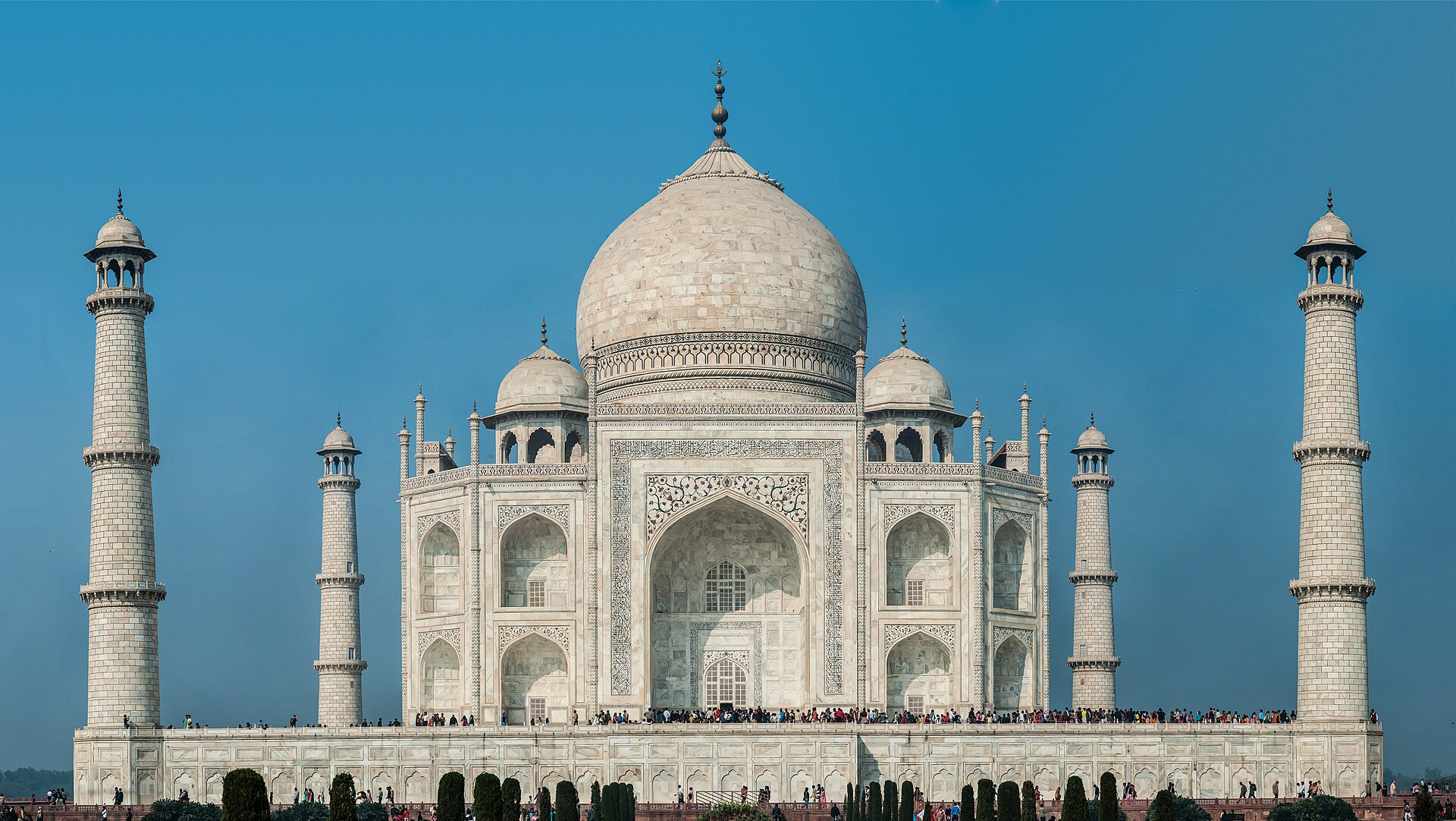
Shah Jahan was Mughal emperor from 1628 to 1658 and is perhaps best remembered for the grand monuments constructed during his reign, especially the Taj Mahal and the Moti Masjid in Agra and the Jami Masjid and Red Fort in Delhi.
Aurangzeb was born on 3 November 1618 in Dhod, Malwa, and was emperor of the Mughal Empire from 1658 to 1707 as the last of the great Mughals. He emerged triumphant in the war of succession, deposed his father and proclaimed himself emperor with the title Alamgir in 1658, ruling until 1707 while extending the Mughal empire to its greatest size. He dethroned Shah Jahan despite his recovery from illness and confined him in Agra Fort until he died in 1666 after a long captivity. Under Aurangzeb the Mughal Empire reached its greatest extent, although his policies helped lead to its dissolution.
The reimposition of the jizya, or poll tax, on non-Muslims in 1679 — a tax that had been abolished by Akbar — was followed by a Rajput revolt in 1680–81 which shook the empire. The Deccan kingdoms of Bijapur and Golconda were conquered in 1686–87, but the insecurity that followed precipitated a long-incipient economic crisis deepened by warfare with the Marathas. Years of almost constant warfare under Aurangzeb drained the wealth of the empire, and his absence from the northern cities for nearly three decades left them in economic decline. When Aurangzeb died in 1707 the great Mughal Empire that had controlled most of India for 180 years quickly fell apart and dissolved into many smaller independent states that were picked off by the English.
5. Economy and Society at the Peak
In the seventeenth century the Mughal economy was among the richest in the world, accounting for roughly 24 percent of global gross domestic product. Historians estimate that the empire's population stood at between 100 million and 150 million in the late seventeenth century.
6. Art, Architecture, and Cultural Legacy
The planning and design of the Red Fort represents a culmination of architectural development initiated in 1526 by the first Mughal emperor and brought to splendid refinement by Shah Jahan with a fusion of Islamic, Persian, Timurid and Hindu traditions. Although the peak of Mughal power lasted for the first 180 years of its rule, Mughal influence left a long-lasting imprint on systems of governance in India and on language, art, architecture and food.
The Taj Mahal was built by the Mughal emperor Shah Jahan in memory of his wife Mumtaz Mahal, with construction starting in 1632 and completed in 1648 during the reign of Shah Jahan. Masons, stone-cutters, inlayers, carvers, painters, calligraphers and dome builders were requisitioned from the whole empire and also from Central Asia and Iran, and Ustad-Ahmad Lahori was the main architect of the Taj Mahal.
The Red Fort has been a symbol of power since the reign of Shah Jahan, witnessed the change in Indian history to British rule, and was the place where Indian independence was first celebrated.
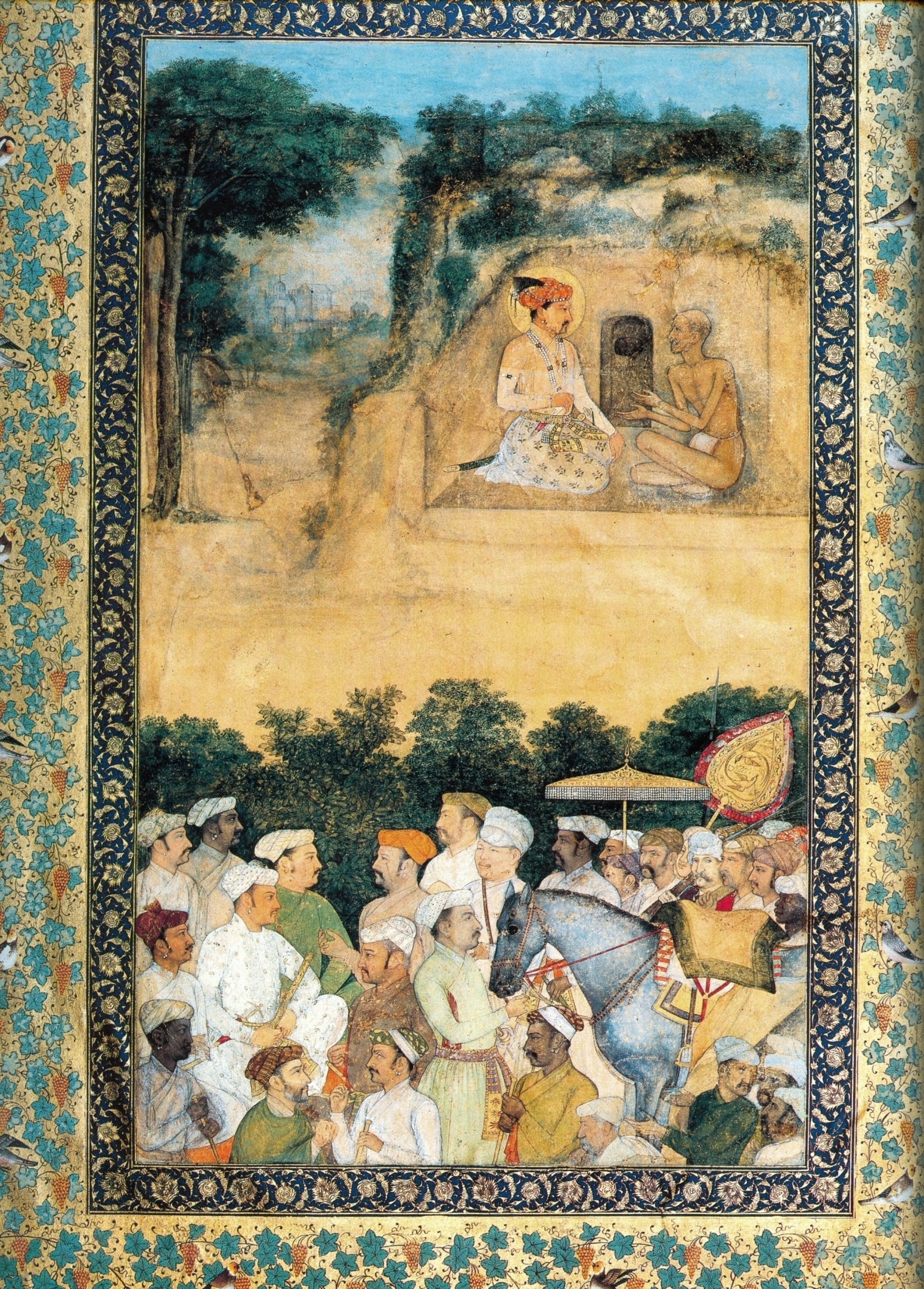
The Mughals affirmed their legitimacy as the rightful heirs of the Timurids through artistic, literary and architectural patronage, avidly collecting Timurid manuscripts, paintings and calligraphy. Although he is said to have been illiterate, Akbar assembled a royal atelier first at Fatehpur Sikri and then at Lahore, commissioning illustrated manuscripts that incorporated Persian, Indian and even European elements. Akbar sponsored the writing of new imperial histories and ordered that the Baburnama, which Babur had written in his native Turkish dialect (Chagatai), be translated into Persian, the language of the Mughal court. Like his great-grandfather Babur, Jahangir wrote his memoirs, entitled the Jahangirnama or Tuzuk-e Jahangir, and he commissioned his leading artists to paint some of the events, people, birds and animals he described.
Aurangzeb held increasingly orthodox Sunni beliefs, and his reign saw the decline of Mughal patronage of the arts; in 1680 he banned music and painting from his court.
7. Decline and British Ascendancy
The British East India Company's transformation into a colonial power gained momentum as the Mughal Empire weakened.
The Company became India's dominant power following victories at the Battles of Plassey in 1757, Wandewash in 1760 and Buxar in 1764, and its supremacy was confirmed in 1765 when it secured from the weak Mughal Emperor the right to gather tax and customs duties in Bengal.
The Regulating Act of 1773 and Pitt's India Act of 1784 established government control of political policy through a regulatory board responsible to Parliament. The East India Company was deprived of its role after the Indian Rebellion and in 1873 it ceased to exist as a legal entity.
8. End of the Dynasty
The Indian Rebellion began in earnest at Meerut, near Delhi, on 10 May 1857, when eighty-five members of the 3rd Bengal Light Cavalry were broken out of prison by their comrades. In that year Indian soldiers rose up against their British commanders, joined by native rulers and thousands of ordinary people in a struggle that threatened to destroy British colonial power on the Indian subcontinent. Most of the sepoys hoped to restore Mughal rule under Bahadur Shah, while the inhabitants of Oudh wanted their Nawab back and the people of Jhansi wanted their old state restored.
Bahadur Shah II, who reigned from 1837 to 1857, was the last of the Mughals; he was deposed and exiled by the British after the rebellion of 1857. The Mughal rulers of India had reigned from 1526 to 1857, and that long span closed with the fall of the last emperor.
9. Timeline: from the First Battle of Panipat to 1857
- April 21, 1526First Battle of PanipatBabur, a Central Asian prince, defeated the Delhi sultanate ruler Ibrahim Lodi at the First Battle of Panipat, laying the foundations of the Mughal Empire.
- 1540Humayun loses IndiaSher Shah of Sur defeated Humayun and expelled him from India; the Afghan interregnum lasted until Humayun recovered Delhi and Agra in 1555.
- November 5, 1556Second Battle of PanipatA Mughal force defeated Hemu at the Second Battle of Panipat, which commanded the route to Delhi and ensured the succession of Akbar.
- 1561–1576Akbar's conquestsMalwa fell to Akbar in 1561, Gujarat was conquered in 1573, and Bengal was annexed in 1576.
- 1571–1585Fatehpur Sikri builtAkbar's new capital, known as the city of victory, was constructed from 1571; the capital moved to Lahore in 1585.
- December 31, 1600East India Company charteredThe English East India Company was incorporated by royal charter on December 31, 1600 for trade with East and Southeast Asia and India.
- October 1605Death of Akbar; Jahangir accedesAkbar died in Agra and was succeeded by his son Salim, who took the title Jahangir.
- 1615Roe's trade agreementEnglish diplomat Thomas Roe finalized a trade agreement with Emperor Jahangir, and the Company settled into trade in cotton and silk piece goods, indigo and saltpeter.
- 1632Taj Mahal begunShah Jahan began construction of the Taj Mahal in memory of his wife Mumtaz Mahal; the tomb was completed in 1648 and the surrounding complex by 1653.
- 1648Capital moved to DelhiShah Jahan moved the capital from Agra to Delhi and built the new city of Shahjahanabad, with its congregational mosque.
- 1658Aurangzeb seizes powerAurangzeb defeated his rivals in the war of succession, deposed his father and proclaimed himself emperor with the title Alamgir.
- 1679Jizya reimposedAurangzeb reimposed the jizya, the poll tax on non-Muslims abolished by Akbar, and a Rajput revolt followed in 1680-81.
- 1686–1687Deccan conquestsThe Mughal Empire conquered the Deccan kingdoms of Bijapur and Golconda, reaching its greatest territorial extent.
- March 3, 1707Death of AurangzebAurangzeb died after a reign of nearly 49 years; after 1707 the empire began slowly but irreversibly to break up.
- 1757Battle of PlasseyThe victory at Plassey gave the East India Company control of Bengal, and the company effectively reduced Mughal emperors to nominal heads of a limited territory.
- May 1857Indian RebellionThe Rebellion began in earnest at Meerut near Delhi; many sepoys hoped to restore Mughal rule under Bahadur Shah.
10. Frequently asked questions
Who founded the Mughal Empire, and when?
The empire was founded in 1526, when Babur's victory at the First Battle of Panipat on April 21, 1526 laid its foundations 3500 Years of the Mughal Empire | How Long Did Mughals Rule? · Encyclopaedia Britannica ↗. Babur, whose full name was Zahir al-Din Muhammad Babur, was a Chagatai Turkic prince descended from Timur and Genghis Khan 1Mughal dynasty | Map, Rulers, Mughal Empire, Political History, Administration, Decline, & Facts · Encyclopaedia Britannica ↗. He invaded the land he knew as Hindustan and seized the Delhi Sultanate from its ruler 4About The Great Mughals: Art, Architecture and Opulence exhibition · Victoria and Albert Museum ↗.
Where did the Mughals rule from, and what language did their court use?
Babur made Agra his capital 3, while Fatehpur Sikri, the 'city of victory', was constructed as Akbar's capital before the capital moved to Lahore in 1585 10Fatehpur Sikri (World Heritage List, no. 255) · UNESCO World Heritage Centre ↗. Shah Jahan moved the capital from Agra to Delhi in 1648 11The Art of the Mughals after 1600 (Heilbrunn Timeline of Art History) · The Metropolitan Museum of Art ↗. Persian served as the official language of the court and administration 1.
Which emperors are considered the great Mughals, and when did each reign?
Akbar reigned from 1556 to 1605 7Akbar | Biography, History, & Achievements · Encyclopaedia Britannica ↗, Jahangir from 1605 to 1627 3, Shah Jahan from 1628 to 1658 14Shah Jahan | Facts, Taj Mahal, & Family · Encyclopaedia Britannica ↗, and Aurangzeb from 1658 to 1707 as the last of the great Mughals 15Aurangzeb | Biography, Accomplishments, History, Family, & Facts · Encyclopaedia Britannica ↗. Between 1556 and 1650 these emperors — Akbar, Jahangir and Shah Jahan — formed grand workshops that brought together and nurtured India's leading painters, calligraphers and illuminators 13Worlds within Worlds: Imperial Paintings from India and Iran · Smithsonian National Museum of Asian Art ↗.
How large and wealthy was the empire at its height?
Under Aurangzeb the empire reached its greatest extent, after the conquest of the Deccan sultanates of Bijapur in 1686 and Golconda in 1687 15. Its population was estimated at between 100 million and 150 million in the late 17th century 1, and in the 17th century Mughal India accounted for roughly 24 percent of world GDP 1.
What did the Mughals build?
Mughal rulers synthesized Persian, Turkish and indigenous Indian styles, producing iconic structures such as the Taj Mahal, the Red Fort, Humayun's Tomb and Fatehpur Sikri 3. The Taj Mahal was built by Shah Jahan in memory of his wife Mumtaz Mahal, with construction starting in 1632 and completed in 1648 18Taj Mahal (World Heritage List, no. 252) · UNESCO World Heritage Centre ↗. Shah Jahan also built a new city at Delhi called Shahjahanabad and a congregational mosque completed in 1650–56 that was the largest in all of India 11.
How did the Mughal Empire end?
The last emperor was Bahadur Shah II, who reigned from 1837 to 1857 and was deposed and exiled by the British after the rebellion of 1857 3. After the Indian Rebellion the last emperor was deposed and the Mughal state ended in 1857 1. The East India Company was deprived of its role after the Indian Rebellion and in 1873 ceased to exist as a legal entity 20East India Company | History, John Company, Battle of Plassey, Definition, & Facts · Encyclopaedia Britannica ↗.
References (21)
- 1Mughal dynasty | Map, Rulers, Mughal Empire, Political History, Administration, Decline, & Facts — Encyclopaedia Britannica Web↩View source
- 2Babur | Biography & Achievements — Encyclopaedia Britannica WebView source
- 3500 Years of the Mughal Empire | How Long Did Mughals Rule? — Encyclopaedia Britannica Web↩View source
- 4About The Great Mughals: Art, Architecture and Opulence exhibition — Victoria and Albert Museum Web↩View source
- 5Making the Baburnama — Smithsonian National Museum of Asian Art WebView source
- 6The arts of the Mughal Empire — Victoria and Albert Museum WebView source
- 7Akbar | Biography, History, & Achievements — Encyclopaedia Britannica Web↩View source
- 8The Art of the Mughals before 1600 (Heilbrunn Timeline of Art History) — The Metropolitan Museum of Art 1600 WebView source
- 9Ibadat Khana — World History Encyclopedia WebView source
- 10Fatehpur Sikri (World Heritage List, no. 255) — UNESCO World Heritage Centre Web↩View source
- 11The Art of the Mughals after 1600 (Heilbrunn Timeline of Art History) — The Metropolitan Museum of Art 1600 Web↩View source
- 12Royal Women in the Mughal Empire — World History Encyclopedia WebView source
- 13Worlds within Worlds: Imperial Paintings from India and Iran — Smithsonian National Museum of Asian Art Web↩View source
- 14Shah Jahan | Facts, Taj Mahal, & Family — Encyclopaedia Britannica Web↩View source
- 15Aurangzeb | Biography, Accomplishments, History, Family, & Facts — Encyclopaedia Britannica Web↩View source
- 16The English and Dutch East India Companies' Invasions of India — World History Encyclopedia WebView source
- 17Red Fort Complex (World Heritage List, no. 231) — UNESCO World Heritage Centre WebView source
- 18Taj Mahal (World Heritage List, no. 252) — UNESCO World Heritage Centre Web↩View source
- 19Armies of the East India Company — National Army Museum WebView source
- 20East India Company | History, John Company, Battle of Plassey, Definition, & Facts — Encyclopaedia Britannica Web↩View source
- 21Why did the Indian Rebellion happen? — National Army Museum WebView source
 Ibn Battuta