Berlin Wall
The fortified barrier that divided Berlin from 1961 to 1989 — its construction, the death strip, the escapes and the November 1989 opening that ended the Cold War's most potent symbol of division.
The Berlin Wall was a fortified border system that surrounded West Berlin from August 1961 until November 1989, built by the German Democratic Republic to stop the exodus of its citizens to the West. What began as barbed wire and concrete blocks became a multi-layered barrier of walls, watchtowers and a mined 'death strip', at which at least 140 people died and thousands tried to escape. The wall fell on the night of 9 November 1989, when crowds overwhelmed the border crossings after a misstated travel announcement, and the demolition of the barrier was completed in 1991.
In this article
- 1Construction and the Sealing of the Border
- 2The Wall as a Fortified System
- 3Victims and Fatalities
- 4Escapes and the Human Cost
- 5The Fall of the Wall
- 6Aftermath and Dismantling
- 7Historical Context: The Berlin Crises
- 8International Reactions and Diplomacy
- 9Timeline: from the divided city to the fall of the Wall
- 10Knowledge graph
Construction and the Sealing of the Border
In the night of 12 to 13 August 1961 Walter Ulbricht, as SED party leader and Chairman of the National Defence Council of the GDR, gave the order to seal off the sector border in Berlin, having obtained the agreement of the Soviet Union a few days previously. On 7 August 1961 the SED Politburo set the date of the closure of the border for the 12/13 August, at an extraordinary meeting that followed the Warsaw Pact conference in Moscow. Ulbricht finally received Soviet permission and support in late July 1961, just weeks before Operation Rose was implemented on the night of August 12-13.
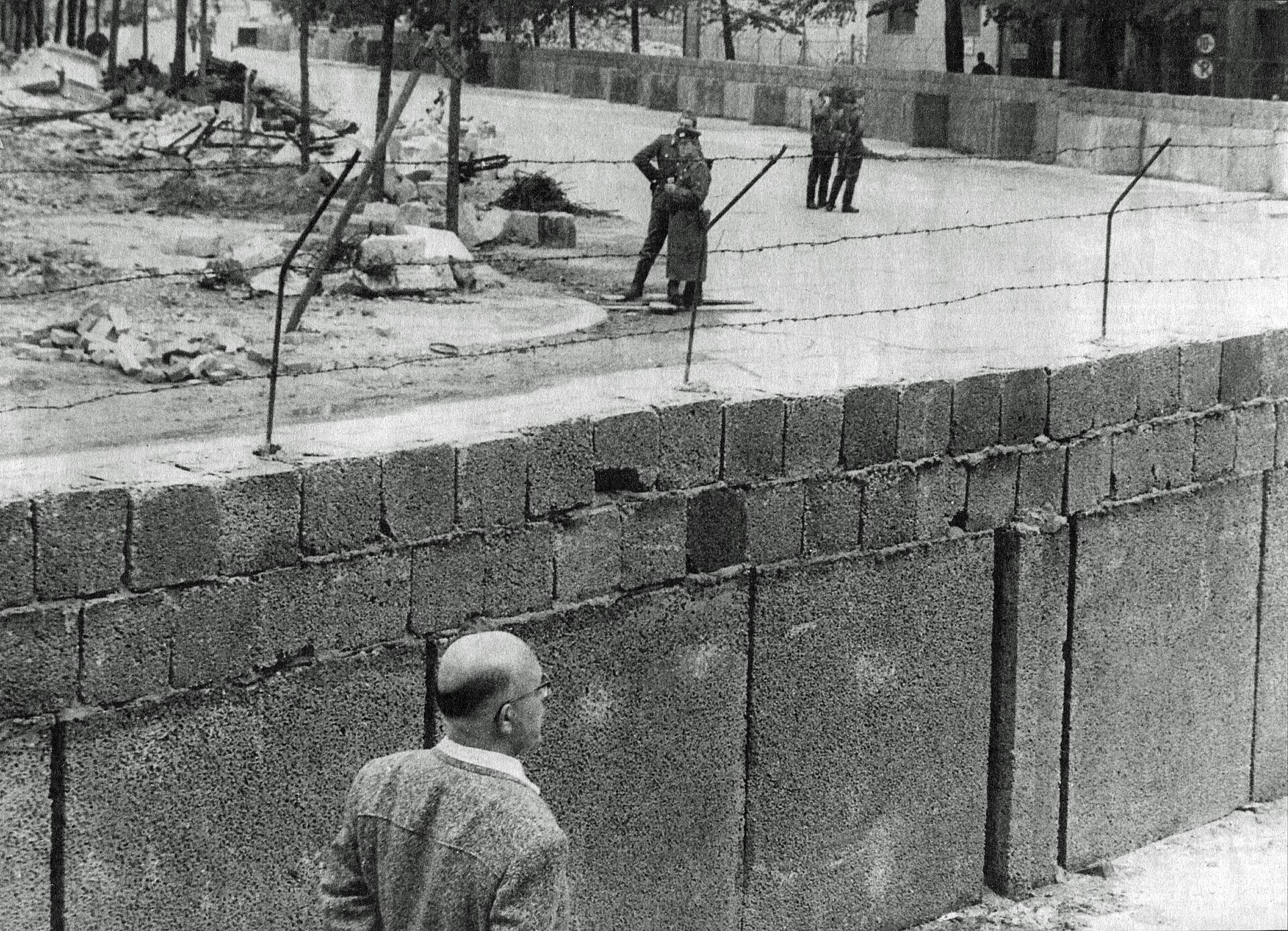
In the early morning of August 13 border police started ripping up streets in the middle of Berlin, piled up asphalt and paving stones to form barricades, drove concrete posts into the ground and strung barbed wire. Units of the East German People's Army, border police, police officers and members of the so-called workers' brigade groups began to close off roads and rail tracks, and construction workers erected barbed wire along the borders between East and West Berlin. Overnight, families, friends, lovers, classmates and others were cut off from each other, and seventeen million East Germans became prisoners; streets, subway lines and waterways were closed off between East and West Berlin and between West Berlin and the surrounding East German countryside.
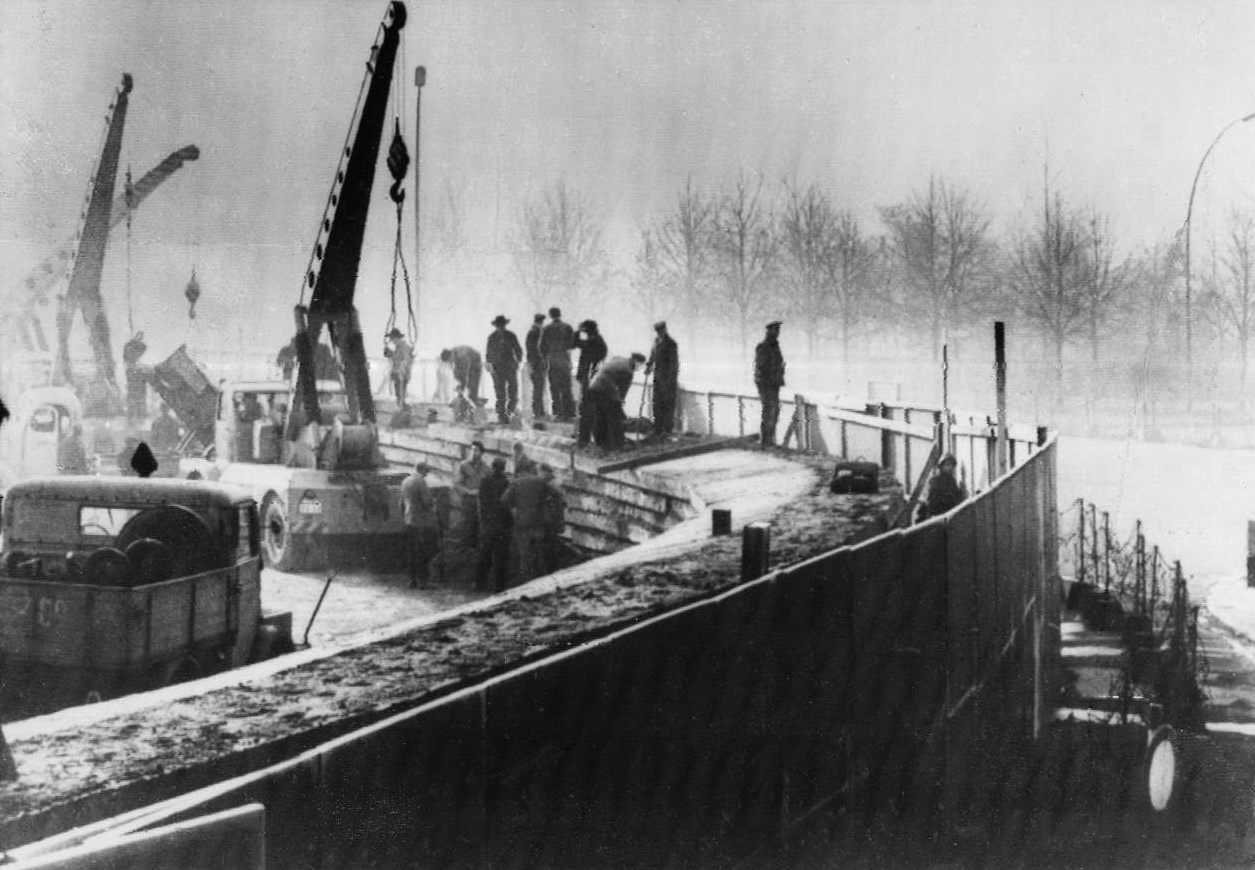
Walter Ulbricht, the GDR Council of State Chairman and SED party leader, said on 15 June 1961 that no one intended to build a wall, and less than two months later construction work began along the Berlin sector and zone border. The exodus continued right up to the sealing of the border: in a single 24-hour period in early August 1961 the Marienfelde refugee centre in Berlin registered 1322 refugees. Since the creation of East Germany in 1949 and until 1961 over two million East Germans had fled communism for freedom in the West, and Walter Ulbricht had been pushing the Soviets for over eight years for permission to close the border.
1. The Wall as a Fortified System
In 1961 the SED began adding obstacles that expanded the Wall into a complex multi-layered system of barriers, and in the West the border strip came to be called the death strip because so many people were killed there while trying to escape. Little by little the barbed wire was replaced by a heavily armed border that ran through and around Berlin for almost 43.1 kilometres.
The Berlin Wall was not one wall but two, measuring 155 kilometres long and four metres tall, separated by a heavily guarded, mined corridor of land known as the death strip. By 1989 it was lined with 302 watchtowers.
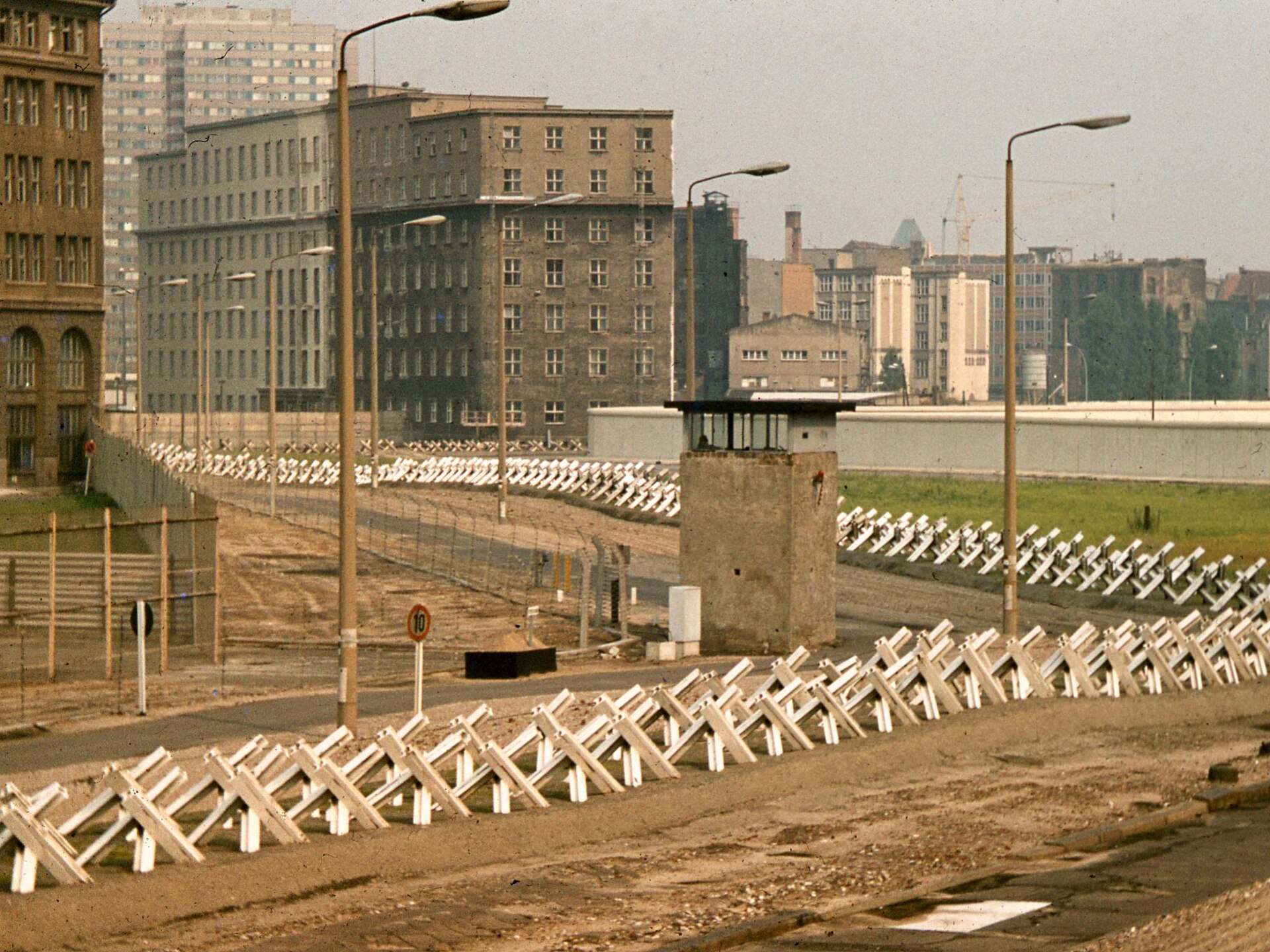
The Wall was only part of the fortifications: the border that ran through the middle of Germany was nearly 1,400 kilometres long and, known as the death strip, was secured with barbed wire, self-firing devices, dogs and guards.
2. Victims and Fatalities
Between 1961 and 1989, at least 140 people were killed or died at the Wall in connection with the GDR border regime — 101 who tried to flee, 30 people from East and West who were not trying to flee, one Soviet soldier, and eight on-duty GDR border soldiers. Of those 140 victims, 91 were shot by GDR border soldiers.
Beginning in 1952, a verbally dictated command required border policemen and border soldiers to shoot at a fleeing person if they were otherwise unable to prevent the escape. That order to shoot was not lifted until April 1989, and it became totally obsolete when the border opened in November. Beyond the deaths at the Wall itself, at least 251 travellers died during or after passing through checkpoints at Berlin border crossings, and before the Wall was built 39 people lost their lives at the sector border between East and West Berlin.
The joint project of the Berlin Wall Memorial and the Centre for Contemporary History recorded and checked altogether 576 cases, starting from the official published lists of victims at the Wall. Its biographical portraits cover the 140 people, as of 9 August 2017, whose deaths are connected with the Wall. The Berlin Wall Foundation believes that at least 260 people died at the inner-German border, alongside the at least 140 who died attempting to flee in Berlin, most shot by GDR border guards.
3. Escapes and the Human Cost
Between 1961 and 1989, over 5000 successful escapes took place through the heavily fortified border system, achieved despite watch towers, alarmed wire mesh fencing and anti-vehicle obstacles. More than 40,000 citizens of the GDR managed to flee over the wall or across the border between the two German states.
Günter Litfin, a 24-year-old tailor's apprentice, was the first would-be escapee shot dead in Berlin, killed by an officer of the People's Police on 24 August 1961 while attempting to escape via the Humboldt Harbour. Only 11 days after the border was sealed off, Litfin attempted to swim across the Osthafen close to Charité Hospital to West Berlin and was discovered and shot by transport police officers.
The last person to be killed by shooting while trying to escape was 20-year-old Chris Gueffroy in February 1989; just nine months later the Berlin Wall fell.
4. The Fall of the Wall
At the end of a press conference in the early evening of 9 November 1989, shortly before 7 p.m., Central Committee member Günter Schabowski made a more or less casual announcement of a new travel regulation for GDR citizens. When a journalist asked him when the regulations were to go into force, he answered: as of now; immediately.
After West Germany's ARD news show had broadcast Schabowski's announcement as its lead story at 8 p.m., more and more East Berliners started turning up at the checkpoints on the border to West Berlin. about 80 East Berliners had gathered at the border crossing points Bornholmer Strasse, Invalidenstrasse and Heinrich-Heine-Strasse, and the border guards were instructed to put the people off till the next day and send them back. the guards at the Bornholmer Strasse checkpoint let the first few people leave for West Berlin, in order to relieve some of the pressure created by the crowds. In a kind of self-fulfilling prophecy reinforced by TV coverage, crowds of East Germans massed at the border crossings and ultimately persuaded the senior official at the largest inner-city checkpoint at Bornholmer Strasse to open the gates.
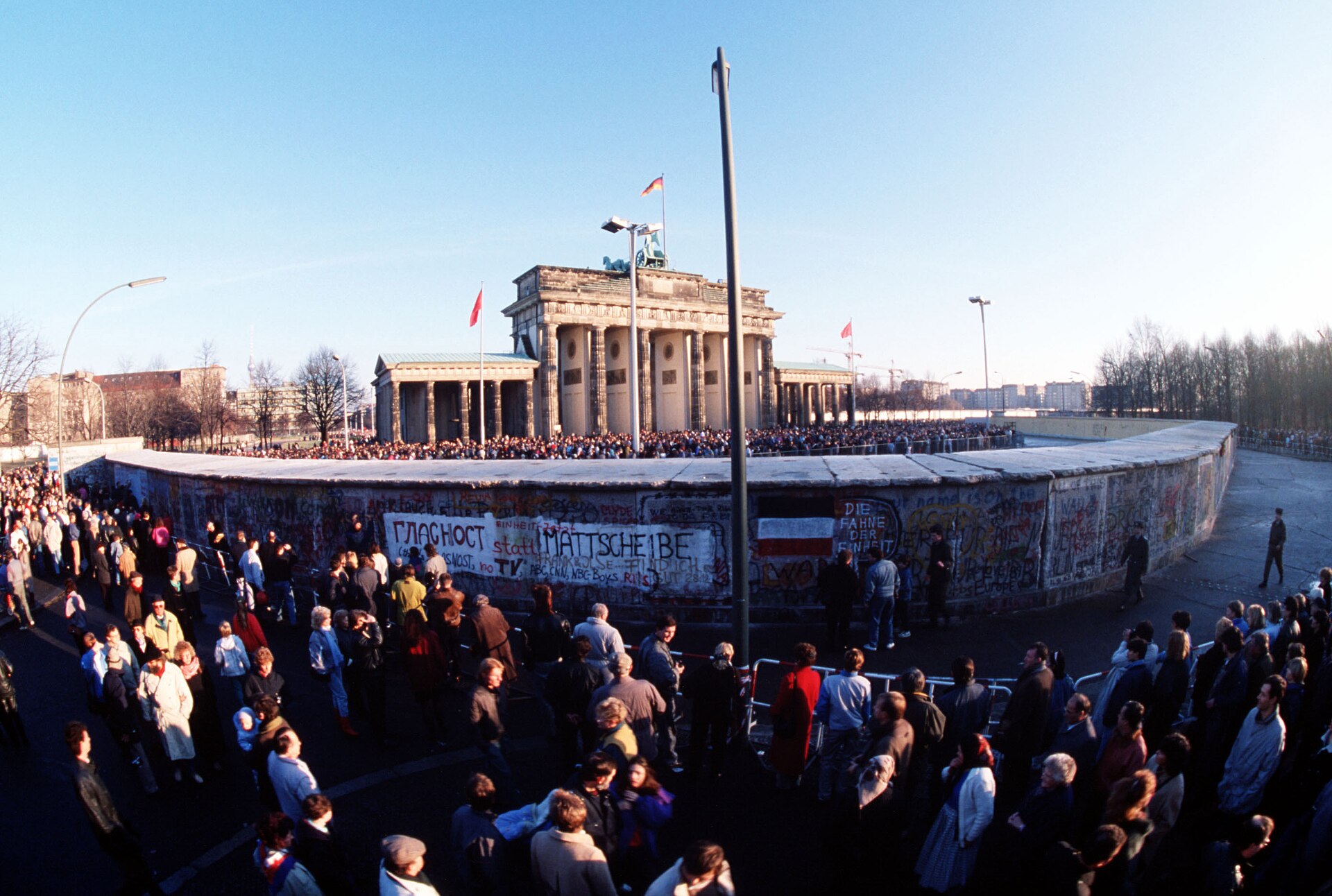
By about 11.30 p.m. on 9 November the situation at Bornholmer Strasse was becoming threatening for the passport inspectors: the valve solution had proved unwise, because when some were allowed to leave the country the others who had to wait pushed and shoved even more. German television declared that this ninth of November was a historic day, announcing that the GDR had declared its borders open to everyone as of now and the gates in the Wall were wide open. After the opening of some of the German-German border crossings on the night of 9/10 November 1989 millions of GDR citizens travelled to the West for a short visit.
5. Aftermath and Dismantling
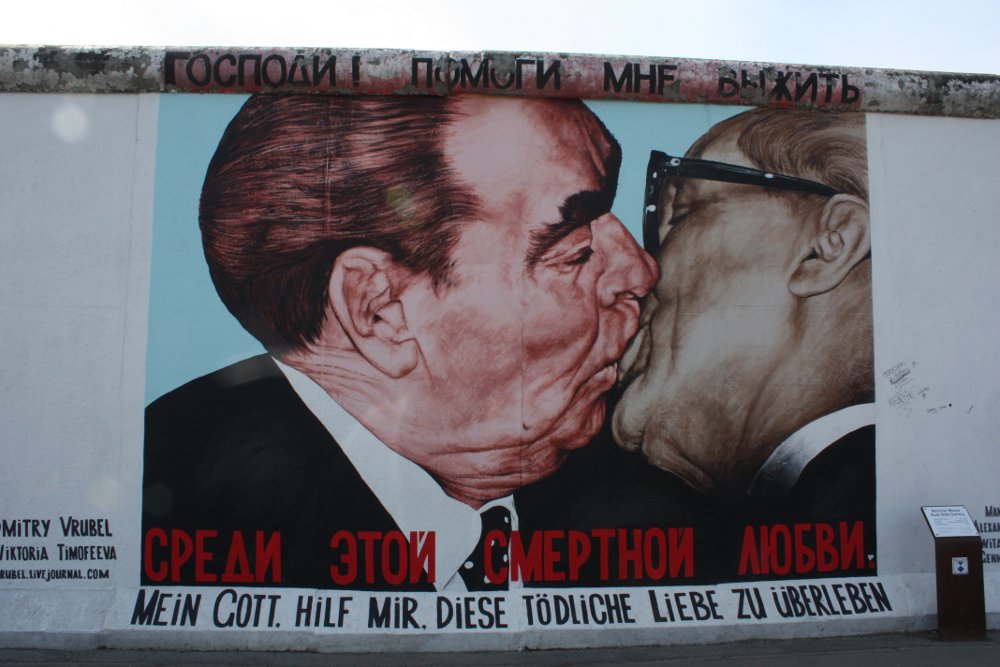
Between July 1990 and November 1991, the Berlin Wall was gradually dismantled. After more than 28 years, the Wall had finally lost its power to terrify. More and more crossing points were created between the two halves of the city, among them the Brandenburg Gate crossing, which opened shortly before Christmas.
In the course of the years, all in all 25 parts of monument sites have been listed, comprising some hundred metres of Wall segments and three watchtowers. The first listings of Wall segments as monuments already took place in 1990/91, against bitter criticism from the public and the political sphere, at a time when the Wall was to be eliminated as fast as possible from sight and experience. The Wall was regarded as a symbol of the 40 years of East-West division and of the GDR's policy against human rights, and Willy Brandt called for the city to grow together, what belonged together.
6. Historical Context: The Berlin Crises
On 10 November 1958, Soviet Premier Nikita Khrushchev delivered a speech demanding that the Western powers pull their forces out of West Berlin within six months; the ultimatum sparked a three-year crisis that culminated in 1961 with the building of the Berlin Wall. By 1958, a renewed cut-off would have doomed the city, which was already too populous and too prosperous to be supplied via air.
7. International Reactions and Diplomacy
When leaders of the former East Germany implemented their dramatic decision to seal off East Berlin from the western part of the city, senior Kennedy administration officials publicly condemned them, yet secretly saw the Wall as potentially contributing to the stability of East Germany and thereby easing the festering crisis over West Berlin. Washington and other Allied governments did not take significant countermeasures against the sector border closings because basic allied rights were not at stake. Secretary of State Dean Rusk expressed the prevailing sentiment when he declared that the wall was not a shooting issue.
Allied inaction and the shock of the border closing caused a significant morale problem in Germany, especially West Berlin, which the Kennedy administration tried to remedy; within a few days a U.S. Army combat brigade arrived in West Berlin and so did Vice President Lyndon Johnson. President Kennedy's feeling that he had not been adequately warned about the imminent East German action to close down the sector borders led him to ask the President's Foreign Intelligence Advisory Board for a report on what advance information the intelligence agencies had. President Kennedy commented to his appointments secretary Kenny O'Donnell that it was not a very nice solution, but that a wall was a hell of a lot better than a war.
8. Timeline: from the divided city to the fall of the Wall
- 1945Germany and Berlin dividedAfter the Second World War Germany and its capital Berlin were divided among the four victorious powers, and the division was frozen in time by the onset of the Cold War.
- 24 June 1948 – 12 May 1949Berlin Blockade and AirliftSoviet forces blockaded rail, road and water access to Allied-controlled areas of Berlin; the United States and United Kingdom responded by airlifting food and fuel until the blockade was lifted.
- 16–17 June 1953East German uprisingWorkers in East Berlin rose in protest against government demands to increase productivity, and within days nearly a million East Germans joined the protests and rioting across hundreds of cities and towns.
- 10 November 1958Khrushchev's Berlin ultimatumSoviet Premier Nikita Khrushchev demanded that the Western powers pull their forces out of West Berlin within six months, sparking a three year crisis that culminated in the building of the Wall.
- 12–13 August 1961The Wall is builtIn the night of 12 to 13 August Walter Ulbricht gave the order to seal off the sector border; border police ripped up streets, piled up paving stones and strung barbed wire, cutting the last escape route.
- 24 August 1961Günter Litfin shotThe first would-be escapee was shot dead in Berlin: Günter Litfin, a 24-year-old tailor's apprentice, was killed by an officer of the People's Police while attempting to escape via the Humboldt Harbour.
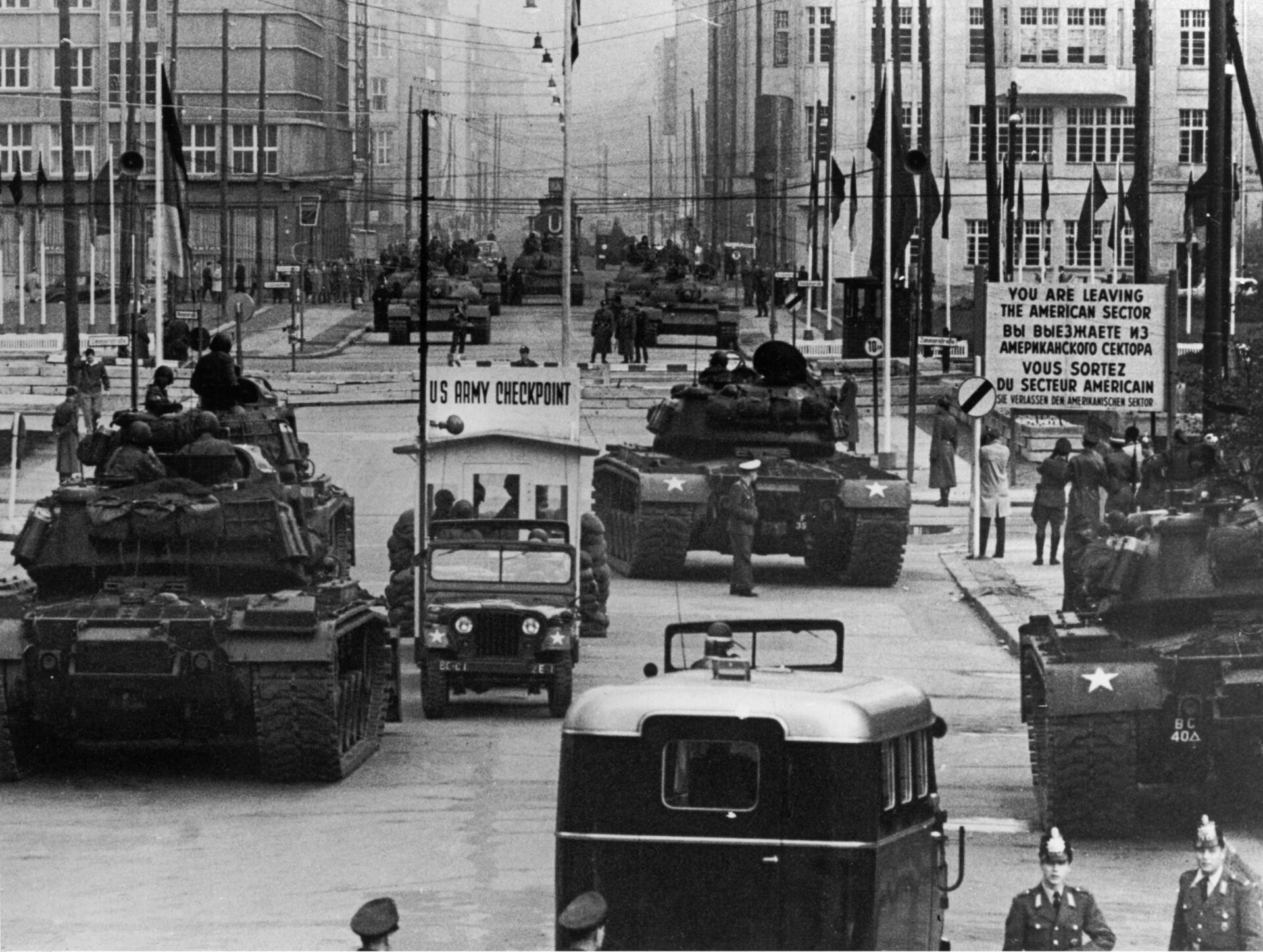
- 27–28 October 1961Tanks at Checkpoint CharlieSoviet and American tanks faced each other at Checkpoint Charlie; by midnight the number of Soviet tanks had grown to 30, and on 28 October they began withdrawing from the checkpoint.
- 26 June 1963'Ich bin ein Berliner'Speaking at the Rudolph Wilde Platz in West Berlin, President Kennedy declared that in the world of freedom the proudest boast is 'Ich bin ein Berliner'.
- 1971Four Power Agreement on BerlinThe Western Allies and the Soviet Union signed the Quadripartite agreement clarifying the status of Berlin, leading to agreements on communications, transportation and visits by West Berliners to East Berlin.
- 12 June 1987'Tear down this wall'At the Brandenburg Gate Ronald Reagan called on Mikhail Gorbachev to open the gate and tear down the wall.
- 5 February 1989Last fatal shots at the WallThe last fatal shots at the Berlin Wall were fired on 5 February 1989, a good nine months before the Wall fell.
- 4 November 1989Mass rally on the AlexanderplatzBetween 250,000 and 500,000 people demonstrated on the Alexanderplatz in East Berlin, calling for freedom of expression, a free press and freedom of assembly.
- 9 November 1989The Wall opensAfter Schabowski's press conference crowds massed at the border crossings, and at Bornholmer Strasse the guards let the first people through; within hours the Wall's checkpoints were open.
- 1990Germany whole againBy 1990 the former communist leaders were out of power, free elections were held, and Germany was whole again.
- July 1990 – November 1991The Wall dismantledAround 155 kilometres of the Wall, 302 observation towers, 20 bunkers and several border crossings were gradually dismantled.
References (22)
- 1Chronicle of the Berlin Wall: August 1961 — Chronicle of the Berlin Wall (Stiftung Berliner Mauer / Centre for Contemporary History Potsdam) 1961 WebView source
- 2New Evidence on the Building of the Berlin Wall — Woodrow Wilson International Center for Scholars WebView source
- 3Construction of the Berlin Wall — Press and Information Office of the Federal Government of Germany BookView source
- 4Berlin Wall — Attractions and Sights — Berlin.de – The Official Website of Berlin WebView source
- 5The Berlin Wall — Stiftung Berliner Mauer (Berlin Wall Foundation) WebView source
- 6What Was The Berlin Wall And How Did It Fall? — Imperial War Museums WebView source
- 7Fall of the Berlin Wall — deutschland.de (Federal Republic of Germany) 1989 WebView source
- 8Victims at the Berlin Wall — Stiftung Berliner Mauer (Berlin Wall Foundation) WebView source
- 9Victims at the Wall — Chronicle of the Berlin Wall (Stiftung Berliner Mauer / Centre for Contemporary History Potsdam) WebView source
- 10Opening and fall of the Berlin Wall — Berlin.de – The Official Website of Berlin WebView source
- 11Chronicle of the Berlin Wall: November 1989 — Chronicle of the Berlin Wall (Stiftung Berliner Mauer / Centre for Contemporary History Potsdam) 1989 WebView source
- 12The Fall of the Berlin Wall, 25th Anniversary (Electronic Briefing Book No. 490) — National Security Archive, George Washington University BookView source
- 13The Berlin Wall — Monuments of the Berlin Wall — Landesdenkmalamt Berlin (Berlin Monument Authority) WebView source
- 14The Berlin Crisis, 1958–1961 (Milestones in the History of U.S. Foreign Relations) — Office of the Historian, U.S. Department of State 1958 WebView source
- 15The Berlin Wall, Fifty Years Ago (Electronic Briefing Book No. 354) — National Security Archive, George Washington University BookView source
- 16The Rise and Fall of the Berlin Wall — National Museum of American Diplomacy, U.S. Department of State WebView source
- 17Foreign Relations of the United States, 1961–1963, Volume XIV: Berlin Crisis, Document 196 (Editorial Note, 27–28 October 1961) — Office of the Historian, U.S. Department of State 1961 WebView source
- 18The East German Uprising, 1953 (Milestones in the History of U.S. Foreign Relations) — Office of the Historian, U.S. Department of State 1953 WebView source
- 19The Berlin Airlift, 1948–1949 (Milestones in the History of U.S. Foreign Relations) — Office of the Historian, U.S. Department of State 1948 WebView source
- 20Remarks in the Rudolph Wilde Platz, Berlin (26 June 1963) — The American Presidency Project, University of California, Santa Barbara 1963 WebView source
- 21Remarks on East-West Relations at the Brandenburg Gate in West Berlin (12 June 1987) — Ronald Reagan Presidential Library & Museum (U.S. National Archives) 1987 WebView source
- 22Fall of Communism in Eastern Europe, 1989 (Milestones in the History of U.S. Foreign Relations) — Office of the Historian, U.S. Department of State 1989 WebView source
 Neil Armstrong
 Katherine Johnson
 United States


