The Cold War
The 1945–1991 superpower rivalry that divided Europe, armed the world with nuclear weapons, and ended without a shot fired between the two main adversaries
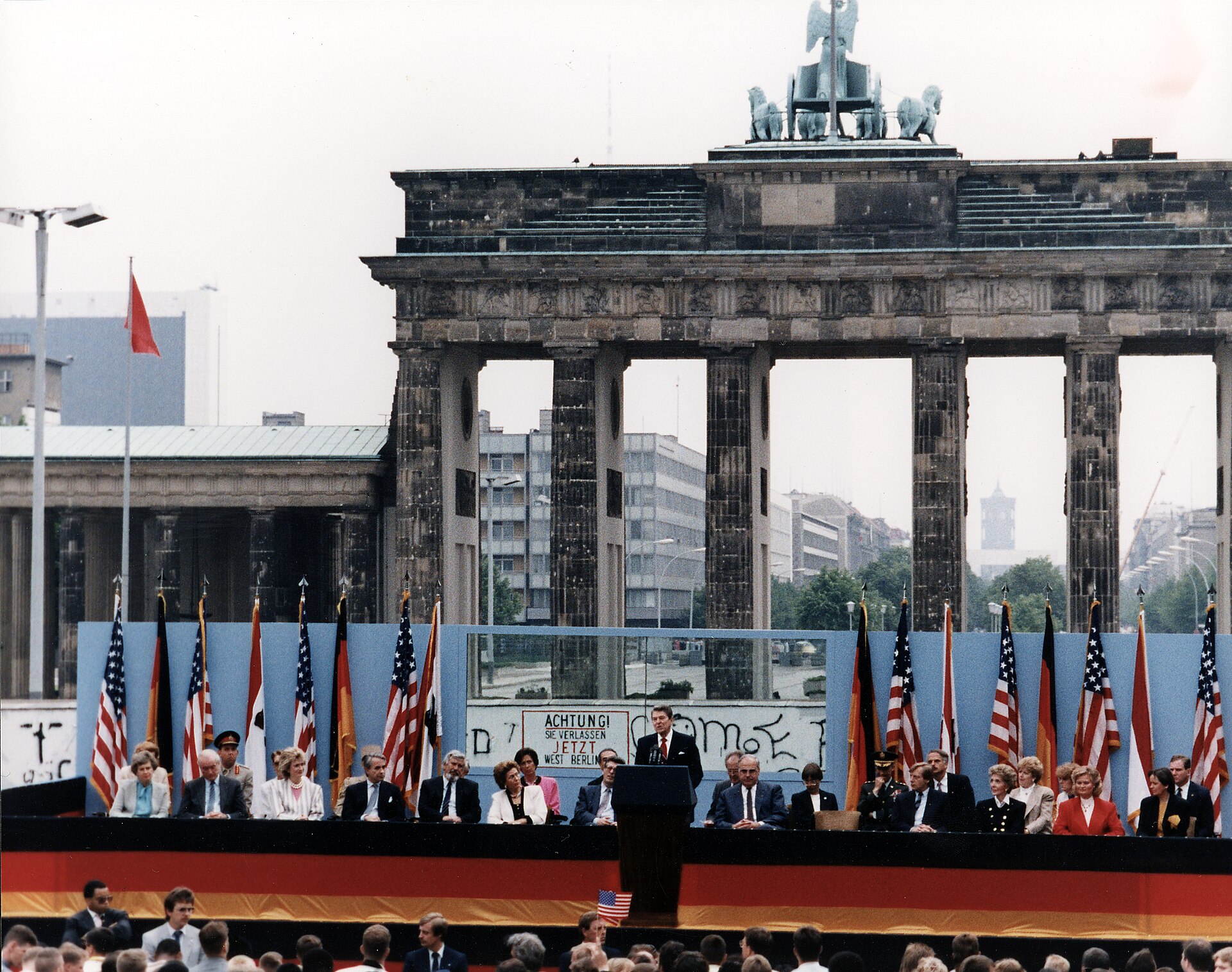
The Cold War was the open yet restricted rivalry between the United States and the Soviet Union and their allies that shaped international politics from the end of World War II until 1991. It was fought on political, economic, and propaganda fronts, with only limited recourse to weapons: the Berlin blockade and airlift, the Marshall Plan, NATO and the Warsaw Pact, the nuclear arms race, the Berlin Wall, the Cuban missile crisis, the proxy wars in Korea, Vietnam and Afghanistan, détente and its collapse, and finally the reforms of Mikhail Gorbachev that allowed the Berlin Wall to fall in 1989 and the Soviet Union to dissolve in 1991.
What the Cold War was
The Cold War was the open yet restricted rivalry that developed after World War II between the United States and the Soviet Union and their respective allies.1 Its principal adversaries were the United States and its allies on one side and the Soviet Union and its allies on the other.1 It was waged on political, economic, and propaganda fronts and had only limited recourse to weapons.1 The rivalry is conventionally dated 1947–1991, and it reached its peak in 1948–1953.1
The term was first used by the English writer George Orwell in an article published in 1945, to describe what he predicted would be a nuclear stalemate between two or three super-states armed with weapons capable of wiping out millions of people in seconds.1 In the United States it was first used by the financier and presidential adviser Bernard Baruch in a speech at the State House in Columbia, South Carolina, in 1947.1 By 1947–1948 the confrontation it named had solidified across a divided Europe.1
Origins: from wartime alliance to rupture, 1945–1947
Following the surrender of Nazi Germany in May 1945, the uneasy wartime alliance between the United States and Great Britain on one side and the Soviet Union on the other began to unravel.1 The partners had been held together by a common enemy rather than by shared aims.1 Historians trace the origins and early development of the Cold War to the years 1941–1949.2
The Cold War had solidified by 1947–1948.1 US aid provided under the Marshall Plan brought the countries of western Europe under American influence.1 On the other side, the Soviets installed openly communist regimes in eastern Europe.1
The rivalry reached its peak between 1948 and 1953.1 In its first years the Soviets blockaded West Berlin, the United States and its European allies formed NATO, and the Soviets exploded their first atomic warhead, ending the American monopoly on the atomic bomb.1 The Chinese communists came to power in mainland China in 1949, and in 1950 the Soviet-supported government of North Korea invaded US-supported South Korea, setting off a war that lasted until 1953.1
Containment: the Truman Doctrine and the Marshall Plan
The Truman Doctrine arose from a speech delivered by President Truman before a joint session of Congress on 12 March 1947.3 In it, Truman established that the United States would provide political, military and economic assistance to all democratic nations under threat from external or internal authoritarian forces.3 He requested that Congress provide $400,000,000 worth of aid to both the Greek and Turkish governments.3
In a speech to the graduating class at Harvard University on 5 June 1947, Secretary of State George Marshall issued a call for a comprehensive program to rebuild Europe.4 Congress answered in March 1948 with the Economic Cooperation Act, approving funding that would eventually rise to over $12 billion for the rebuilding of Western Europe.4 The program set the template for US foreign aid in the decades that followed.4
The Marshall Plan generated a resurgence of European industrialization and brought extensive investment into the region.4 It was also a stimulant to the US economy, establishing markets for American goods.4 Secretary of State Marshall became the only general ever to receive a Nobel Prize for peace.4
Berlin: blockade, wall, and the divided city
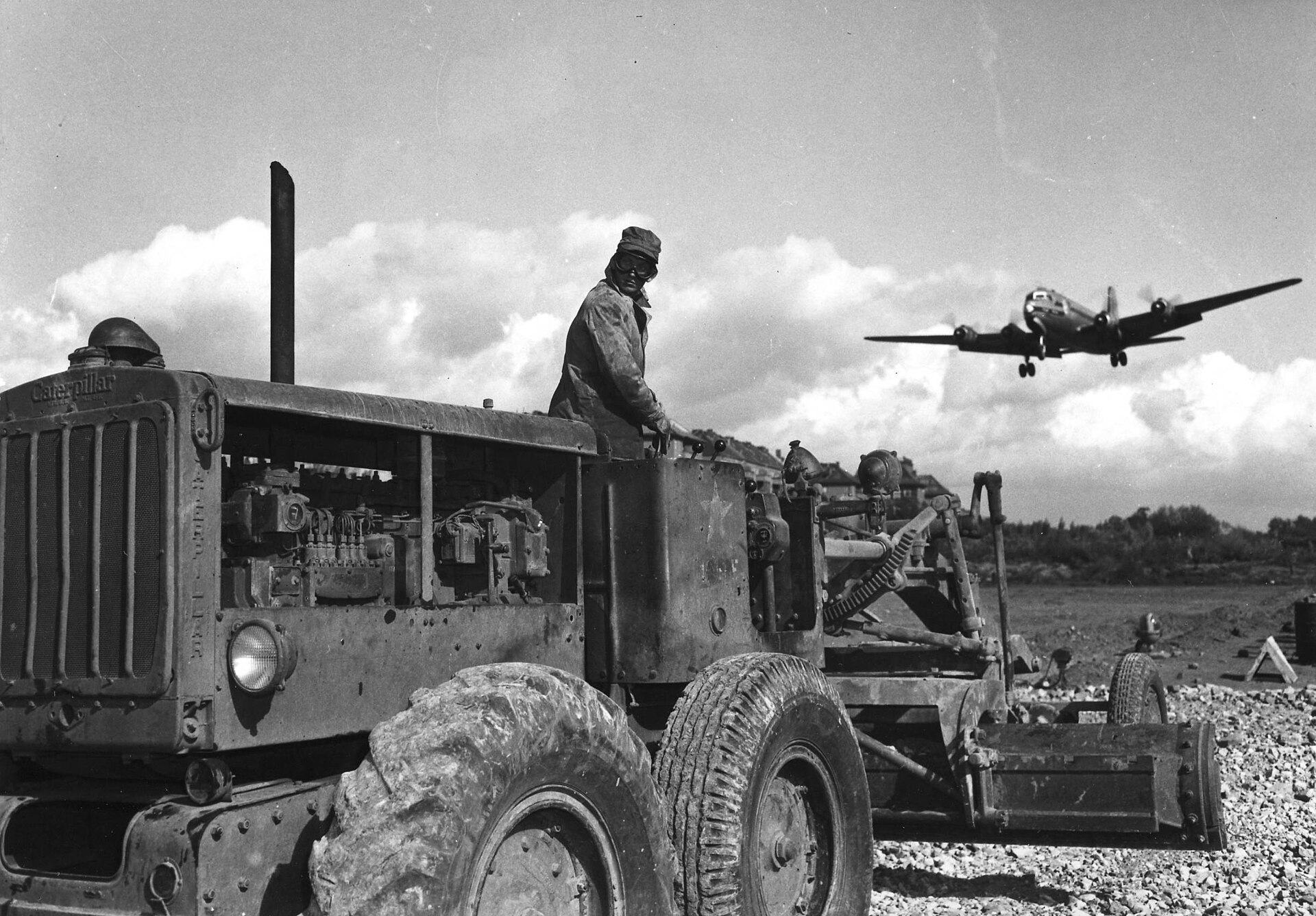
The crisis started on 24 June 1948, when Soviet forces blockaded rail, road, and water access to Allied-controlled areas of Berlin.5 The United States launched Operation Vittles on 26 June, with the United Kingdom following two days later with Operation Plainfare.5 At the height of the campaign, one plane landed every 45 seconds at Tempelhof Airport.5
Fearing that the Western Allies might halt the airlift and cede West Berlin to the Soviets, 300,000 West Berliners gathered at the Reichstag to show their opposition to Soviet domination.5 The crisis ended on 12 May 1949, when Soviet forces lifted the blockade on land access to western Berlin.5 It had been an unsuccessful blockade of the Western-held sectors of West Berlin.1
On 10 November 1958 Soviet Premier Nikita Khrushchev delivered a speech demanding that the Western powers pull their forces out of West Berlin within six months.6 On the morning of 13 August 1961, Berliners awoke to discover that on the orders of East German leader Walter Ulbricht a barbed wire fence had gone up overnight separating West and East Berlin.6 The fence was soon expanded to include cement walls and guard towers, and it would become the most iconic image of the Cold War in Europe.6 A dispute over which guards could patrol the checkpoints led the United States and the Soviet Union to station tanks on their respective sides of a Berlin checkpoint.6 The Berlin Wall remained in place until 9 November 1989, when the border between East and West Berlin was reopened and the wall was finally dismantled.6
Two alliances: NATO and the Warsaw Pact
The North Atlantic Treaty Organization was created in 1949 by the United States, Canada, and several Western European nations to provide collective security against the Soviet Union.7 The North Atlantic Treaty itself was signed in Washington DC on 4 April 1949.8 NATO was the first peacetime military alliance the United States entered into outside of the Western Hemisphere.7
The United States, Canada, Belgium, Denmark, France, Iceland, Italy, Luxemburg, the Netherlands, Norway, Portugal, and the United Kingdom agreed to consider an attack against one an attack against all.7 Under Article 5 of the treaty, an armed attack against one or more of the parties in Europe or North America is to be considered an attack against them all.8 Each party pledged to assist the attacked party with whatever action it deemed necessary, including the use of armed force, to restore and maintain the security of the North Atlantic area.8 In 1952 the members agreed to admit Greece and Turkey, and the Federal Republic of Germany was added in 1955.7
West German entry into NATO led the Soviet Union to retaliate with its own regional alliance, the Warsaw Treaty Organization, which took in the Soviet satellite states of Eastern Europe as members.7 The Warsaw Pact was formed on 14 May 1955.7 In the 1950s one of NATO's first military doctrines emerged in the form of massive retaliation: if any member was attacked, the United States would respond with a large-scale nuclear attack.7 From 1953 to 1957 tensions relaxed somewhat, largely owing to the death of Joseph Stalin in 1953, though the standoff remained.1
The nuclear arms race and deterrence
On 4 October 1957 the Soviet Union launched the earth's first artificial satellite, Sputnik-1.9 At 184 pounds, it was much heavier than anything the United States was developing at the time.9 The US government suffered a severe setback in December 1957 when its first artificial satellite, named Vanguard, exploded on the launch pad.9 On 31 January 1958 the United States succeeded in launching its first satellite, the Explorer.9
Fear of a missile gap between US and Soviet nuclear arsenals was exploited in the 1960 presidential election, which brought Kennedy to power over Richard Nixon.9 The Soviet Union had exploded its first atomic warhead in 1949, ending the American monopoly on the atomic bomb.1 The Cuban missile crisis showed that neither the United States nor the Soviet Union were ready to use nuclear weapons, for fear of the other's retaliation and of mutual atomic annihilation.1
After the crisis the two superpowers signed the Nuclear Test-Ban Treaty of 1963, which banned aboveground nuclear weapons testing.1 But the crisis also hardened the Soviets' determination never again to be humiliated by their military inferiority.1 They began a buildup of both conventional and strategic forces that the United States was forced to match for the next 25 years.1
Crises and flashpoints, 1948–1979
Between the Berlin blockade of 1948 and the Soviet invasion of Afghanistan at the end of 1979, the Cold War ran through a series of crises.1 Some were blockades and confrontations in Europe; others were wars fought through allies in Asia.1 The table below sets out each flashpoint with the dates and outcomes the cited sources give.1
| Crisis and dates | Where | What happened | Outcome |
|---|---|---|---|
| Berlin blockade, 1948–1949 | Berlin5 | Soviet forces blockaded rail, road, and water access to Allied-controlled areas of Berlin on 24 June 1948; the United States launched Operation Vittles on 26 June, with the United Kingdom following two days later.5 | The blockade was lifted on 12 May 1949.5 |
| Korean War, 1950–1953 | Korea1 | The Soviet-supported communist government of North Korea invaded US-supported South Korea in 1950.1 | The war ended indecisively in 1953.1 |
| Soviet intervention in East Germany, 1953 | East Germany1 | Soviet troops were sent to preserve communist rule.1 | Communist rule was preserved.1 |
| Soviet intervention in Hungary, 1956 | Hungary1 | Soviet troops were sent to preserve communist rule.1 | Communist rule was preserved.1 |
| Sputnik and the arms race, 1957 | Soviet Union9 | The Soviet Union launched the earth's first artificial satellite, Sputnik-1, on 4 October 1957.9 | The launch intensified the arms race and raised Cold War tensions.9 |
| Berlin crisis, 1958–1961 | Berlin6 | After Khrushchev demanded in November 1958 that the Western powers leave West Berlin, a barbed wire fence went up overnight on 13 August 1961 and was soon expanded into cement walls and guard towers.6 | The Wall stood until the border was reopened on 9 November 1989.6 |
| Cuban missile crisis, October 1962 | Cuba10 | U-2 photographs of 14 October 1962 revealed Soviet missile sites under construction; Kennedy ordered a naval quarantine on 22 October, and US forces were placed at DEFCON 2.10 | Khrushchev announced on 28 October that the missiles would be dismantled and removed, and the quarantine ended on 20 November 1962.10 |
| Soviet intervention in Czechoslovakia, 1968 | Czechoslovakia1 | Soviet troops were sent to preserve communist rule.1 | Communist rule was preserved.1 |
| Vietnam, 1954–1975 | Vietnam1 | The United States undertook a long effort from 1954 to 1975 to prevent communist North Vietnam from bringing South Vietnam under its rule.1 | The effort was unsuccessful.1 |
| Afghanistan, from December 1979 | Afghanistan11 | At the end of December 1979 the Soviet Union sent thousands of troops in and assumed complete military and political control of Kabul and large portions of the country.11 | After ten years of insurgency Moscow withdrew; the United States enacted sanctions, called for a boycott of the 1980 Moscow Olympics, and SALT II was never ratified.11 |
Proxy wars and the Third World
In Europe the two superpowers avoided direct military confrontation.1 Their actual combat operations were mounted only to keep allies from defecting to the other side, or to overthrow them after they had done so.1 On the Soviet side, troops were sent to preserve communist rule in East Germany (1953), Hungary (1956), Czechoslovakia (1968) and Afghanistan (1979).1
On the American side, the United States helped overthrow a left-wing government in Guatemala in 1954 and supported an unsuccessful invasion of Cuba in 1961.1 It invaded the Dominican Republic in 1965 and Grenada in 1983.1 Its longest effort was Vietnam, where the United States tried from 1954 to 1975 to prevent communist North Vietnam from bringing South Vietnam under its rule; the effort was unsuccessful.1
The competition extended into international organizations as well.12 Reflecting Khrushchev's new policy of peaceful coexistence with the West, the Soviet delegation's 1958 visit to the World Health Assembly marked the first time a Soviet delegation had been sent to that forum since the establishment of the WHO ten years earlier.12 Soviet Deputy Minister of Health Viktor Zhdanov called on the World Health Assembly to launch a global campaign to eradicate smallpox, one of humankind's oldest and deadliest diseases.12
Détente and its limits, 1969–1979
On 17 November 1969 the formal SALT talks began in Helsinki, Finland.13 Nixon and Soviet General Secretary Leonid Brezhnev signed the ABM Treaty and an interim SALT agreement on 26 May 1972 in Moscow.13 For the first time during the Cold War, the United States and the Soviet Union agreed to limit the number of nuclear missiles in their arsenals.13 The ABM Treaty limited strategic missile defenses to 200 interceptors each and allowed each side to construct two missile defense sites, one to protect the national capital and one to protect an ICBM field.13
At the November 1974 Vladivostok summit, Ford and Brezhnev agreed on the basic framework of a SALT II agreement, including a 2,400 limit on strategic nuclear delivery vehicles and a 1,320 limit on MIRV systems.13 On 17 June 1979 Carter and Brezhnev signed the SALT II Treaty in Vienna.13 It limited the total of both nations' nuclear forces to 2,250 delivery vehicles.13
The Helsinki Final Act was an agreement signed by 35 nations that concluded the Conference on Security and Cooperation in Europe, held in Helsinki, Finland.14 The participants met in Helsinki on 1 August 1975 to sign it; every European country except Albania signed, in addition to the United States and Canada.14 Its third basket emphasized human rights, including freedom of emigration and the reunification of families divided by international borders.14 Human rights activists set up Helsinki Monitoring Groups in the Soviet Union and across Europe, tracking violations of the Act and drawing international attention to them.14 The invasion of Afghanistan on 25 December 1979 killed the treaty: on 3 January 1980 Carter asked the Senate not to consider SALT II, and it was never ratified.13
The end: 1979–1991
At the end of December 1979 the Soviet Union sent thousands of troops into Afghanistan and immediately assumed complete military and political control of Kabul and large portions of the country.11 It was a watershed event of the Cold War, marking the only time the Soviet Union invaded a country outside the Eastern Bloc.11 During his State of the Union address, Carter announced his own doctrine, vowing to protect Middle Eastern oil supplies from encroaching Soviet power.11 The United States enacted sanctions and called for a boycott of the 1980 Moscow Olympics.11 It took ten years of grinding insurgency before Moscow finally withdrew, at the cost of millions of lives and billions of dollars.11
In 1985 Gorbachev was elected the new leader of the Soviet Union and introduced the concepts of glasnost, or openness, and perestroika, or change.15 He declared that he would not support communist regimes in other countries if their peoples were opposed to them, starting a chain reaction that led to the fall of communism in Europe.15 The Soviet Union had abandoned the Brezhnev Doctrine, the policy of military intervention in support of communist regimes.16 Gorbachev's decision to loosen the Soviet yoke on the countries of Eastern Europe created an independent, democratic momentum that led to the collapse of the Berlin Wall and then the overthrow of communist rule throughout Eastern Europe.17 In 1990 he received the Nobel Peace Prize for the leading role he played in the radical changes in East-West relations.15
Negotiations between the Polish government and members of the underground labor union Solidarity opened officially in Warsaw on 6 February 1989.16 On 4 June 1989 Solidarity delivered a crushing electoral victory, and by 24 August Tadeusz Mazowiecki had become the first non-communist prime minister in Eastern Europe.16 On 9 November 1989 the East German government announced the opening of all East German borders; in the fluid situation that followed, thousands of jubilant Germans brought down the most visible symbol of division at the heart of Europe, the Berlin Wall.16 Only in Romania did the events turn violent: Nicolae Ceausescu refused any reforms, and he and his wife were executed on 25 December 1989.16 By 1990 the former communist leaders were out of power, free elections were held, and Germany was whole again.16
The unsuccessful August 1991 coup against Gorbachev sealed the fate of the Soviet Union.17 In early December 1991 Yeltsin and the leaders of Ukraine and Belarus met in Brest to form the Commonwealth of Independent States, effectively declaring the demise of the Soviet Union.17 On 25 December 1991 the Soviet hammer and sickle flag lowered for the last time over the Kremlin, thereafter replaced by the Russian tricolor.17 The collapse gave rise to 15 newly independent nations, including a Russia with an anticommunist leader.1
In their own words
The record of the Cold War includes words that set its course: doctrine, treaty, and the citation that marked its end.1 The passages below are given in the exact wording of the cited sources.8
The policy of the United States to support free peoples who are resisting attempted subjugation by armed minorities or by outside pressures.3
President Harry S. Truman, address to a joint session of Congress, 12 March 1947
An armed attack against one or more of them in Europe or North America shall be considered an attack against them all.8
Article 5, North Atlantic Treaty, signed in Washington DC, 4 April 1949
Two or three monstrous super-states, each possessed of a weapon by which millions of people can be wiped out in a few seconds.1
George Orwell, 1945, describing what he predicted would be a nuclear stalemate
For the leading role he played in the radical changes in East-West relations.15
The Norwegian Nobel Committee, Peace Prize citation for Mikhail Gorbachev, 1990
Historians, the archives, and the legacy
The old debates about the Cold War's causes, and about which party was most to blame for its origins, duration and decline, now seem like a thing of the past.18 It is unlikely that many new sources will come to light that would dramatically change the ways in which we approach the Cold War.18 As Vojtech Mastny observed, the greatest surprise to have come out of the Russian archives is that there was no surprise.18 McCauley's survey explores who was responsible for the Cold War, whether it was inevitable or could have been avoided, and whether Stalin was genuinely interested in a post-war agreement.2
The archives that document the rivalry are now open to the public.19 Harry Truman was the first US president to receive a daily intelligence digest; at his direction the Daily Summary began production in February 1946.19 After the changes at the CIA following the Bay of Pigs, the President's Intelligence Checklist was first delivered on 17 June 1961.19 The National Archives of the United Kingdom invites readers to explore the cautious struggle of nuclear powers through its Cold War education resource.20 Martin McCauley's Origins of the Cold War 1941–1949 explains in a clear, concise manner how the Cold War originated and developed between 1941 and 1949.2
Timeline of the Cold War, 1945–1991
Germany surrenders and the wartime alliance unravels
Following the surrender of Nazi Germany in May 1945, the uneasy wartime alliance between the United States and Great Britain on the one hand and the Soviet Union on the other began to unravel.
The Truman Doctrine
In a speech before a joint session of Congress, President Truman asked for $400,000,000 in aid for Greece and Turkey and committed the United States to supporting free peoples resisting subjugation by armed minorities or outside pressures.
Marshall calls for a plan to rebuild Europe
In a speech to the graduating class at Harvard University, Secretary of State George C. Marshall issued a call for a comprehensive program to rebuild Europe; the Economic Cooperation Act followed in March 1948 with funding that rose to over $12 billion.
The Berlin blockade and airlift begin
Soviet forces blockaded rail, road, and water access to Allied-controlled areas of Berlin; the United States launched Operation Vittles on 26 June and the United Kingdom followed with Operation Plainfare, landing a plane every 45 seconds at Tempelhof at the height of the campaign.
NATO is founded
The United States, Canada, Belgium, Denmark, France, Iceland, Italy, Luxemburg, the Netherlands, Norway, Portugal, and the United Kingdom signed the North Atlantic Treaty, agreeing to consider an attack against one an attack against all. The Berlin blockade was lifted on 12 May 1949.
The Korean War begins
The Soviet-supported communist government of North Korea invaded U.S.-supported South Korea in 1950, setting off an indecisive Korean War that lasted until 1953.
The Warsaw Pact is formed
West German entry into NATO led the Soviet Union to retaliate with its own regional alliance, the Warsaw Treaty Organization, which included the Soviet satellite states of Eastern Europe as members.
Sputnik 1 opens the space race
The Soviet Union launched the earth's first artificial satellite, Sputnik-1; at 184 pounds it was much heavier than anything the United States was developing, and the launch intensified the arms race and raised Cold War tensions.
The Berlin Wall goes up
Berliners awoke to discover that on the orders of East German leader Walter Ulbricht a barbed wire fence had gone up overnight separating West and East Berlin; it was soon expanded to include cement walls and guard towers. U.S. and Soviet tanks later faced each other at a Berlin checkpoint.
The Cuban missile crisis
U-2 photographs of 14 October 1962 revealed Soviet missile sites under construction in Cuba. Kennedy ordered a naval quarantine on 22 October, U.S. forces reached DEFCON 2, and on 28 October Khrushchev announced that Soviet missiles would be dismantled and removed; the quarantine ended on 20 November 1962.
The Nuclear Test-Ban Treaty
The two superpowers soon signed the Nuclear Test-Ban Treaty of 1963, which banned aboveground nuclear weapons testing, but the crisis also hardened the Soviets' determination to build up conventional and strategic forces that the United States was forced to match for the next 25 years.
SALT I and the ABM Treaty
Nixon and Brezhnev signed the ABM Treaty and an interim SALT agreement in Moscow, the first time during the Cold War that the two sides agreed to limit the number of nuclear missiles in their arsenals; the ABM Treaty limited missile defenses to 200 interceptors each.
The Helsinki Final Act
Thirty-five nations signed the Helsinki Final Act, concluding the Conference on Security and Cooperation in Europe; its third basket on human rights, including freedom of emigration, later gave dissidents a standard to hold governments to.
The Soviet Union invades Afghanistan
The Soviet Union sent thousands of troops into Afghanistan at the end of December 1979, the only time it invaded a country outside the Eastern Bloc. The United States enacted sanctions, called for a boycott of the 1980 Moscow Olympics, and SALT II was never ratified.
The Berlin Wall falls
The East German Government announced the opening of all East German borders, and in a fluid situation the Berlin Wall came down. By 1990 the former communist leaders were out of power, free elections were held, and Germany was whole again.
The Soviet Union dissolves
After the failed August 1991 coup against Gorbachev and the formation of the Commonwealth of Independent States at Brest, the Soviet hammer and sickle flag lowered for the last time over the Kremlin on 25 December 1991, replaced by the Russian tricolor.
Frequently asked questions
When did the Cold War begin and end?
The rivalry is conventionally dated 1947–1991.1 It reached its peak in 1948–1953, when the Soviets blockaded West Berlin and the Korean War was fought.1
Where does the term Cold War come from?
The English writer George Orwell first used it in an article published in 1945, to describe what he predicted would be a nuclear stalemate.1 In the United States it was first used by the financier and presidential adviser Bernard Baruch in a 1947 speech in Columbia, South Carolina.1
How did West Berlin survive the blockade?
From 24 June 1948 Soviet forces blockaded rail, road, and water access to Allied-controlled areas of Berlin.5 The United States answered with Operation Vittles on 26 June, the United Kingdom followed two days later, and at its height the airlift landed a plane every 45 seconds at Tempelhof.5
How close did the Cuban missile crisis come to war?
US U-2 aircraft photographed Soviet missile sites under construction on 14 October 1962, and on 22 October Kennedy ordered a naval quarantine of Cuba while US forces were placed at DEFCON 2.10 On 28 October Khrushchev announced that the missiles would be dismantled and removed.10
Did the United States and the Soviet Union ever fight each other directly?
No: in Europe they avoided direct military confrontation throughout the Cold War.1 Actual combat operations served only to keep allies from defecting to the other side or to overthrow them after they had done so.1
What happened to the SALT II treaty?
Carter and Brezhnev signed it in Vienna on 17 June 1979, limiting both nations' nuclear forces to 2,250 delivery vehicles.13 After the Soviet invasion of Afghanistan, Carter asked the Senate on 3 January 1980 not to consider it, and it was never ratified.13
How did the Cold War end?
Gorbachev, elected Soviet leader in 1985, introduced glasnost and perestroika and declared that he would not support communist regimes if their peoples opposed them.15 The Berlin Wall fell in November 1989, and the unsuccessful coup of August 1991 was followed by the final lowering of the Soviet hammer and sickle flag over the Kremlin on 25 December 1991.17
Nuclear arsenals and alliances in numbers
Sources & citations
Every factual claim in this article is drawn from the sources below. Bracketed numbers in the text link to the corresponding source.
- 1
- 2
- 3
- 4
- 5
- 6
- 7
- 8
- 9
- 10
- 11
- 12
- 13
- 14
- 15
- 16
- 17
- 18
- 19
- 20