Salt
The history of salt, the mineral that shaped cities and states: salt in antiquity and the Roman salt road, the mines and brine works of Europe, taxes and monopolies such as the gabelle, preservation and trade, and the salt sites inscribed on the World Heritage List.
Salt has been produced, taxed and traded for thousands of years, and its history runs through the ancient world, medieval Europe and the modern state. The Roman Via Salaria carried salt from the Tiber mouth into the Apennines, and salt works from Wieliczka to Hallstatt gave their districts wealth and their names to history. Taxes on salt, such as the French gabelle and the British salt duty in India, provoked revolt and resistance, most famously Gandhi's Salt March in 1930. Salt preserved food before refrigeration, shaped trade routes across the Sahara, and remains an everyday commodity of global industry.
In this article
- 1Overview
- 2Early History and the Earliest Records
- 3Hallstatt and the Alpine Salt Tradition
- 4Dürrnberg and the Salzburg Salt Works
- 5Wieliczka and Bochnia
- 6The Royal Saltworks of Arc-et-Senans and Salins-les-Bains
- 7Salt in the Classical World
- 8Medieval Production and the Domesday Record
- 9Early Modern Changes in Cheshire
- 10Salt Extraction Methods
- 11Trans-Saharan and West African Salt Trade
- 12The Saltmen of Zanjan
- 13Taxation, Protest and the Salt March
- 14Modern Production and Consumption
- 15Timeline: from ancient salt works to the age of industrial salt
- 16Knowledge graph
Overview
Salt is a substance whose human record reaches back far beyond written history, and its story is bound up with trade, industry and political conflict alike. Salt was probably the first traded commodity, and until the 19th century its main use was to preserve food for the winter months.
1. Early History and the Earliest Records
The earliest written records of salt belong to the ancient Chinese tradition, where the Png-tzao-kan-mu catalogued more than 40 types of salt about 4,700 years ago. In Britain the archaeological traces of Iron Age salt-making rest largely on coarse pottery vessels and on supporting pillars known as briquetage. Roman activity left a different signature: lead salt pans were used at Middlewich, Nantwich and Northwich, where excavations have revealed extensive salt-making settlements.
2. Hallstatt and the Alpine Salt Tradition
Hallstatt is the world's oldest salt mine, with a claimed 7,000-year history. People lived in the Hallstatt High Valley and mined salt there as early as 5,000 BC. Systematic salt production in the region began as early as the Middle Bronze Age, when natural brine was captured in vessels and evaporated. Underground mining started at the end of the late Bronze Age and resumed in the 8th century BC, when a flourishing Iron Age society with wide trade links became known as the Hallstatt Culture. The Hallstatt Period is named after the burial grounds.
Europe's oldest wooden staircase was discovered in the prehistoric mine workings, where around 2,800 years ago people carried the precious White Gold out of the mountain. The conserving effects of salt preserved burial offerings, tools and organic remains. The town's name means salt settlement, and its prosperity since mediaeval times has been based on salt mining. Criterion (iii) recognises that human beings have inhabited the valleys among the giant mountains for over three thousand years, and the prosperity and individuality that salt mining and processing gave the region. The Hallstatt-Dachstein / Salzkammergut Cultural Landscape was inscribed on the World Heritage List in 1997 under criteria (iii) and (iv).
3. Dürrnberg and the Salzburg Salt Works
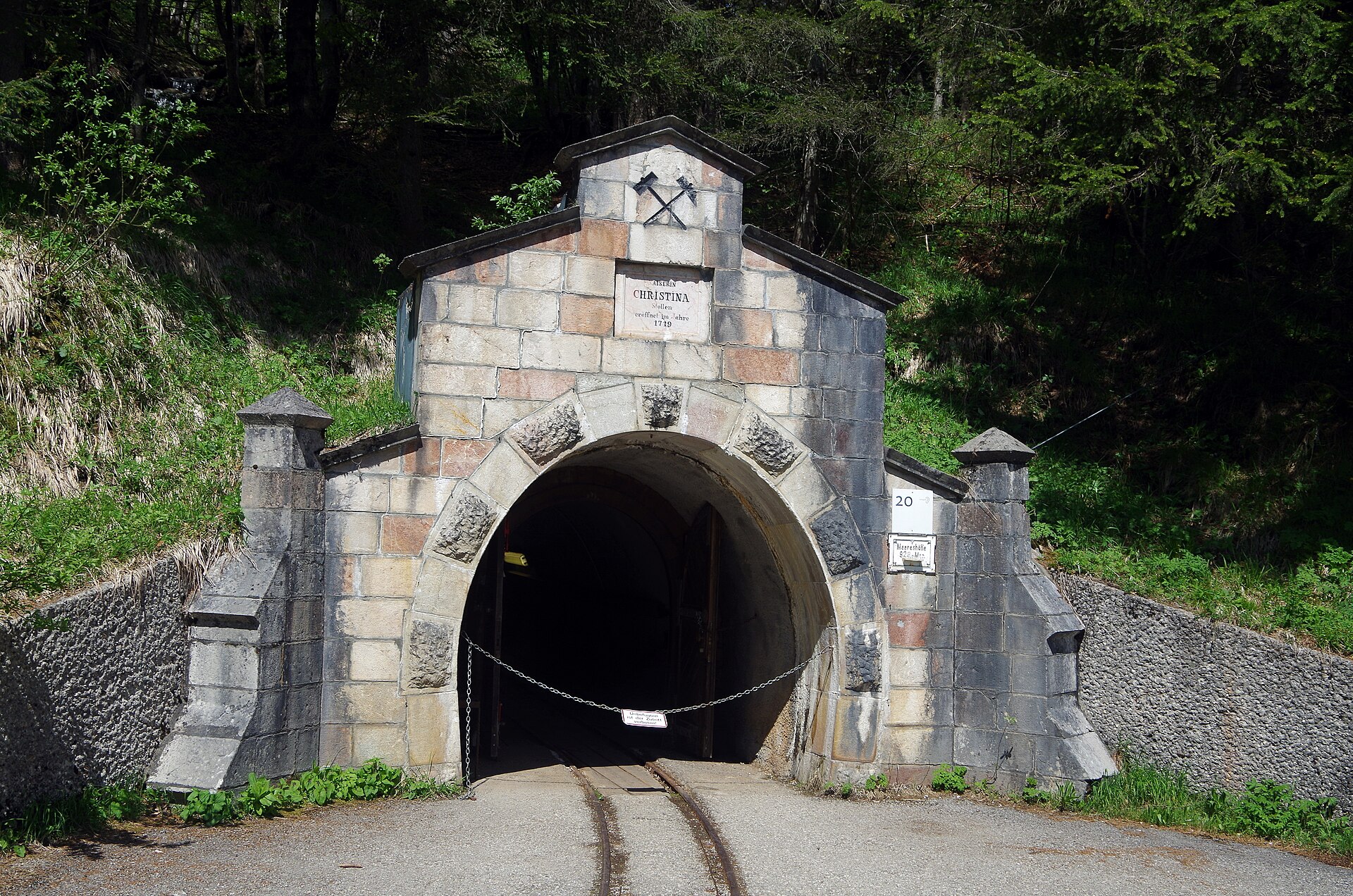
A visit to the salt mine on the Dürrnberg is a journey through 2,600 years of salt mining. The underground route runs through the Middle Ages and ends with the Celtic miners of the Iron Age. Visitors cross the subterranean border between Austria and Germany, ride a mine train and descend two miners' slides.
Above ground, the reconstructed SALINA Celtic Village presents life as it was 2,600 years ago.
Austria's only showcase saltworks turns the natural brine of the Dürrnberg into pyramid-shaped salt crystals under the eye of a master salt-maker.
4. Wieliczka and Bochnia
The Wieliczka and Bochnia salt mines lie on the same geological rock salt deposit in southern Poland and were worked in parallel and continuously from the 13th century until the late 20th century, making them one of the earliest and most important European industrial operations. Residual excavations were altered into chapels, workshops and storehouses. A substantial ensemble of statues and decorative elements sculpted into the rock salt is preserved in both mines, along with tools and machinery.
An underground tourist route through the Wieliczka mine has existed since the early 19th century. The property was inscribed on the World Heritage List in 1978 under criterion (iv), which concerns the historic stages of mining technique in Europe from the 13th to the 20th centuries. It appeared on the List of World Heritage in Danger from 1989 to 1998.
5. The Royal Saltworks of Arc-et-Senans and Salins-les-Bains
The Royal Saltworks of Arc-et-Senans was developed and built by Claude-Nicolas Ledoux as the modern and Utopian extension of the Great Saltworks of Salins-les-Bains. Construction of the Royal Saltworks of Arc-et-Senans began in 1775 during the reign of Louis XVI. The Great Saltworks of Salins-les-Bains had been active for at least 1200 years and kept boiling brine until 1962 before closing for good. From 1780 until 1895 salt water from Salins-les-Bains travelled through 21 km of wood pipes to the Royal Saltworks of Arc-et-Senans. The Great Saltworks of Salins-les-Bains and the Royal Saltworks of Arc-et-Senans were inscribed on the World Heritage List in 1982 under criteria (i), (ii) and (iv).
6. Salt in the Classical World
The Via Salaria was a very ancient road by which the Sabines came to fetch salt from the salt marshes at the mouth of the Tiber. It later acquired importance as the thoroughfare to Reate and through the Apennines to Amiternum and Ausculum, not far from the Adriatic coast. A branch known as the via Salaria vetus diverged to the left from the main Via Salaria and was later cut by the Aurelian wall west of the gate.
7. Medieval Production and the Domesday Record
Before 1066 Droitwich was much the most important centre of inland salt production in England, producing more than the whole of Cheshire. Domesday lists 318 salt houses in Worcestershire and refers to lead pans, a lead smithy, furnaces and the need for firewood. The detailed survey of Nantwich's walling lands made in 1624 showed 216 walling lands of ancient inheritance, each with six lead pans. With the Statute of Rhuddlan in 1284 the river became the boundary with Wales, though the Fulwich name was retained, perhaps because brine pits lay on both sides. The Black Death of 1348 and the other plagues of the mid 14th century almost halved the population and halved domestic salt demand.
8. Early Modern Changes in Cheshire
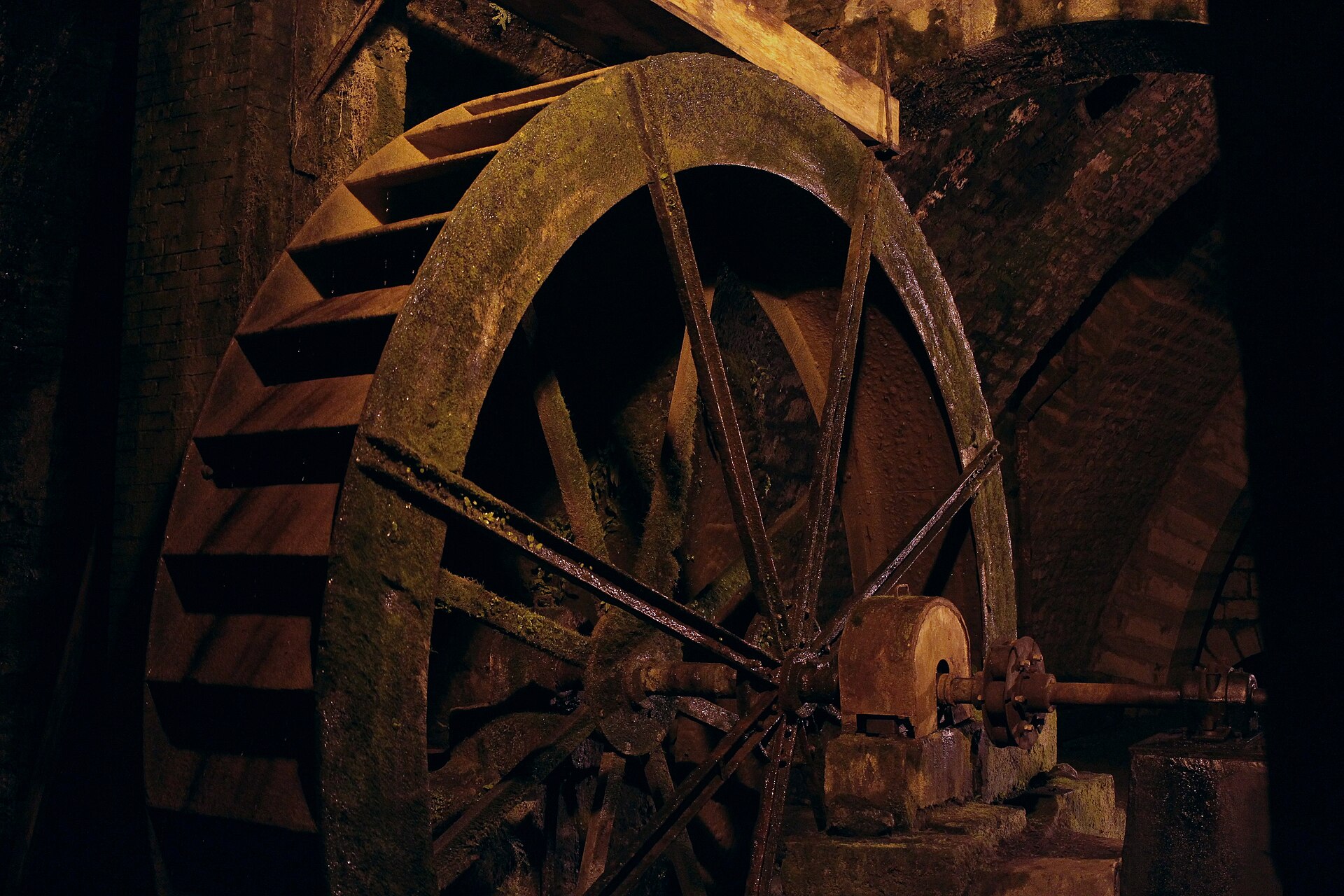
By about the 1620s the cost of wood for firing the pans had become unsustainable, and Cheshire salt makers changed to cheaper coal from Lancashire, East Cheshire and North Staffordshire. Iron pans were introduced into Cheshire between about 1620 and 1630 and gradually replaced the lead pans used since Roman times. While Cheshire salt makers sought a nearer supply of coal, in 1670 rock salt was discovered near Northwich. The 17th century also saw the widespread adoption of the brine pump, worked either by hand, a waterwheel or a horse gin, and further growth of coastal refineries outside Cheshire was prevented by the 1702 Act.
9. Salt Extraction Methods
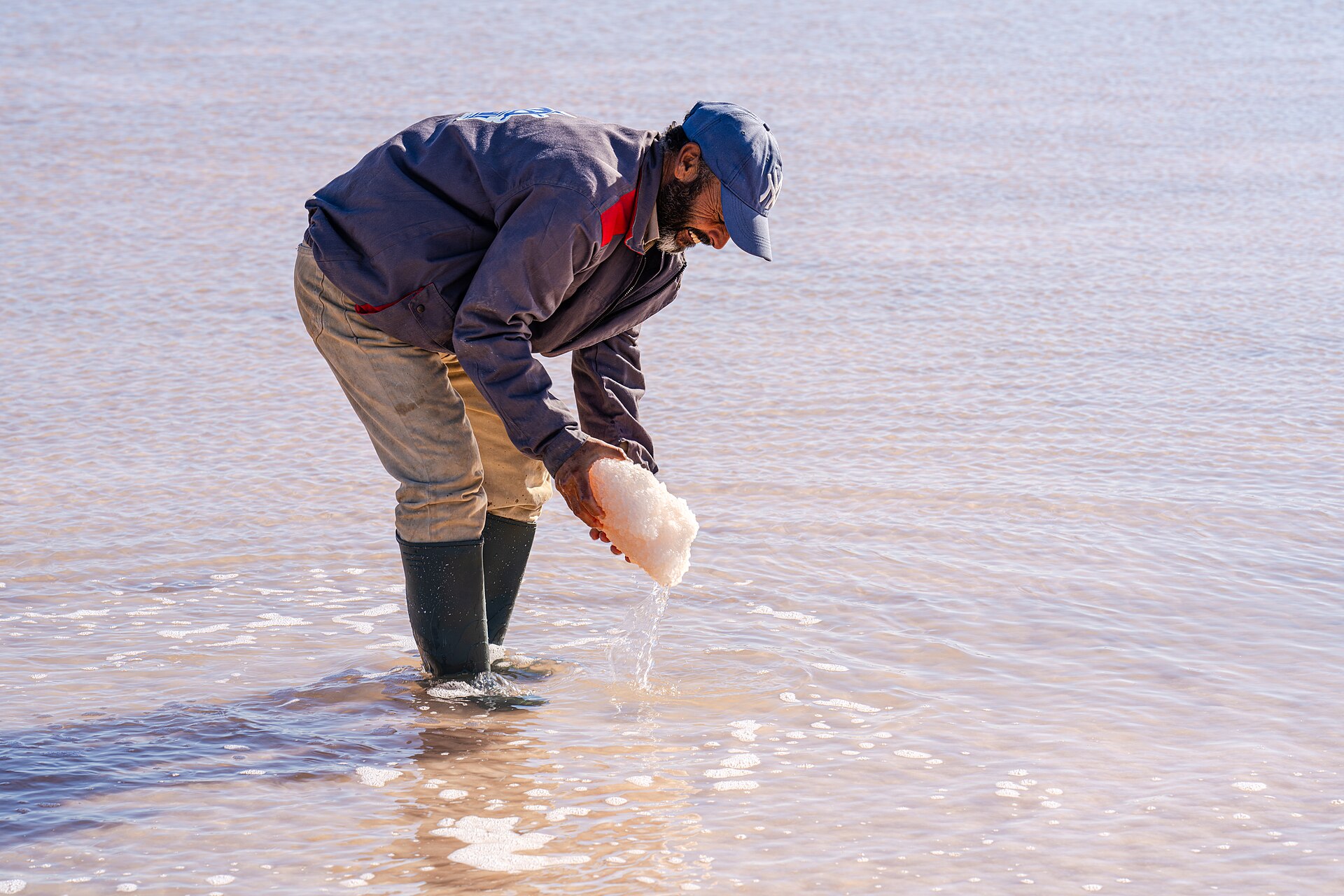
Rock salt mining is the most direct of the extraction methods: the salt is physically dug out of the ground, with enormous machines working in a network of gigantic caverns and tunnels. In hot countries a quite different approach is taken, known as solar salt production, in which the sun is allowed to evaporate seawater in shallow pools. A third technique, solution mining, reverses the order of operations by dissolving the deposit before bringing it up: water is pumped into underground rock salt deposits to create brine, which is pumped to the surface and evaporated in huge vessels. Mines vary in depth from 100 metres to a mile or more underground, and in the salt mines of the United Kingdom there are more than 140 miles of tunnels.
10. Trans-Saharan and West African Salt Trade
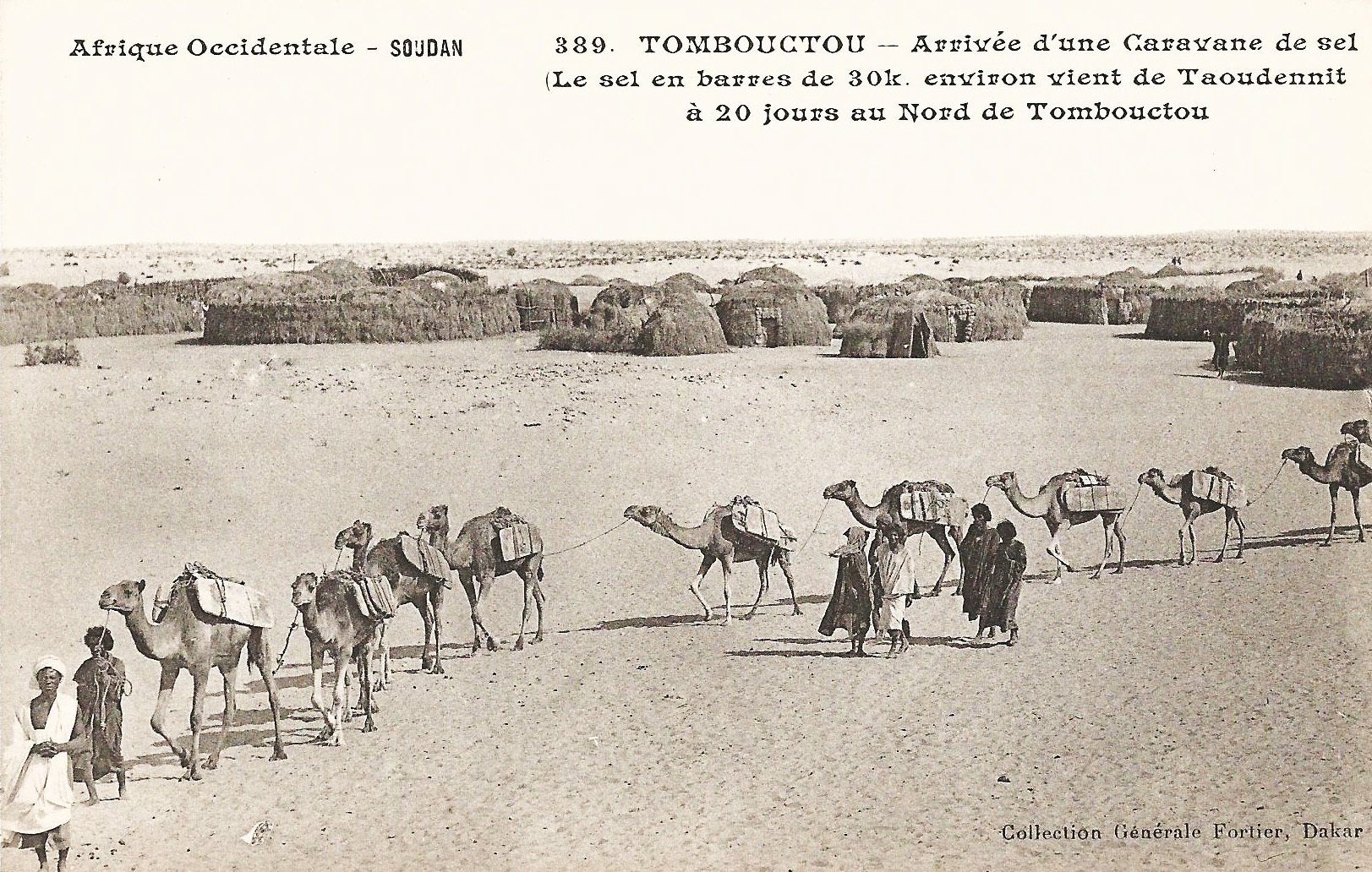
From the seventh to the eleventh century trans-Saharan trade linked Mediterranean economies that demanded gold and could supply salt with sub-Saharan economies where gold was abundant. The savannah region south of the western Sahara and the forests of southern West Africa were poor in salt, and the sea salt available there did not travel or keep well. Camel caravans run by Berbers acted as middle-men, carrying salt as their major trade good together with luxury items. Whoever controlled the salt trade also controlled the gold trade, both being the principal economic pillars of various West African empires.
Desert mining towns such as Taghaza and Taoudenni yielded rock salt in such abundance that slabs of it were used to build homes. In the fourteenth century cowrie shells were introduced from the eastern coast as local currency, but gold and salt remained the principal mediums of long-distance trade. Timbuktu stood as a crossroads and an important market place where manuscripts were traded, salt came from Teghaza in the north, and gold, cattle and grain arrived from the south.
11. The Saltmen of Zanjan
The Saltmen of Zanjan were preserved by a very rare form of natural mummification that had occurred in a salt mine. In 1993 miners in the Douzlakh Salt Mine in Zanjan Province accidentally came across a mummified head. The head was so well preserved that a pierced ear still held its gold earring, and a leather boot still contained parts of his leg and foot.

12. Taxation, Protest and the Salt March
In France the gabelle was the salt tax levied before the Revolution, in particular from the 15th century onward; in the 14th century it denoted any tax on the sale of consumer goods, and an ordinance of 1360 made it a permanent tax. The gabelle represented nearly one-tenth of royal revenue, and its high rate and unequal distribution provoked widespread contraband dealing in salt by smugglers; the lists of grievances drawn up for the Estates-General of 1789 forcefully expressed its unpopularity, and in March 1790 the tax was abolished at last. Britain's Salt Act of 1882 prohibited Indians from collecting or selling salt, forcing them to buy heavily taxed salt from their British rulers. A series of laws prohibited the Indian populace from producing or selling salt independently, requiring them to buy expensive, heavily taxed salt that was often imported. Indian protests against the salt tax began in the 19th century and remained a major contentious issue throughout British rule of the subcontinent.
In March 1930 Gandhi informed the viceroy Lord Irwin of his plan to break the salt laws and set out on the twelfth of that month from his ashram near Ahmedabad. The entourage reached Dandi after a journey of some 240 miles, with hundreds joining the core group of followers along the way. On the morning of April 6 Gandhi and his followers picked up handfuls of salt along the shore, technically producing salt and breaking the law. Police had crushed the salt deposits into the mud so that Gandhi reached down and picked up a small lump of natural salt.
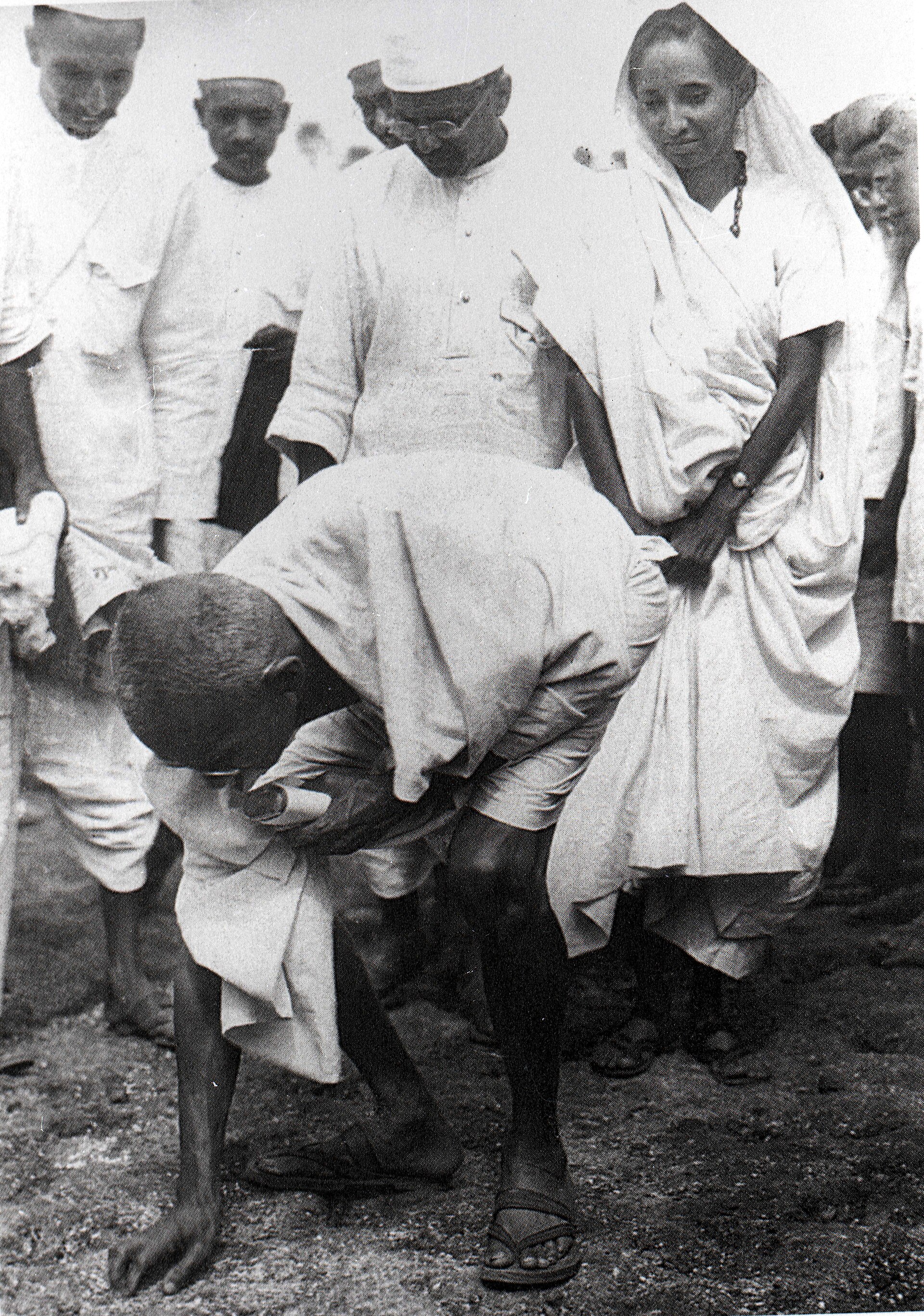
Civil disobedience broke out all across India and British authorities arrested more than 60,000 people, with Gandhi himself taken into custody in May. Thousands were arrested and imprisoned including Jawaharlal Nehru in April and Gandhi himself in early May after he announced his intention to march on the Dharasana saltworks. The poet Sarojini Naidu led 2,500 marchers on the Dharasana Salt Works, where police beat the peaceful demonstrators, prompting an international outcry recorded by the journalist Webb Miller.
13. Modern Production and Consumption
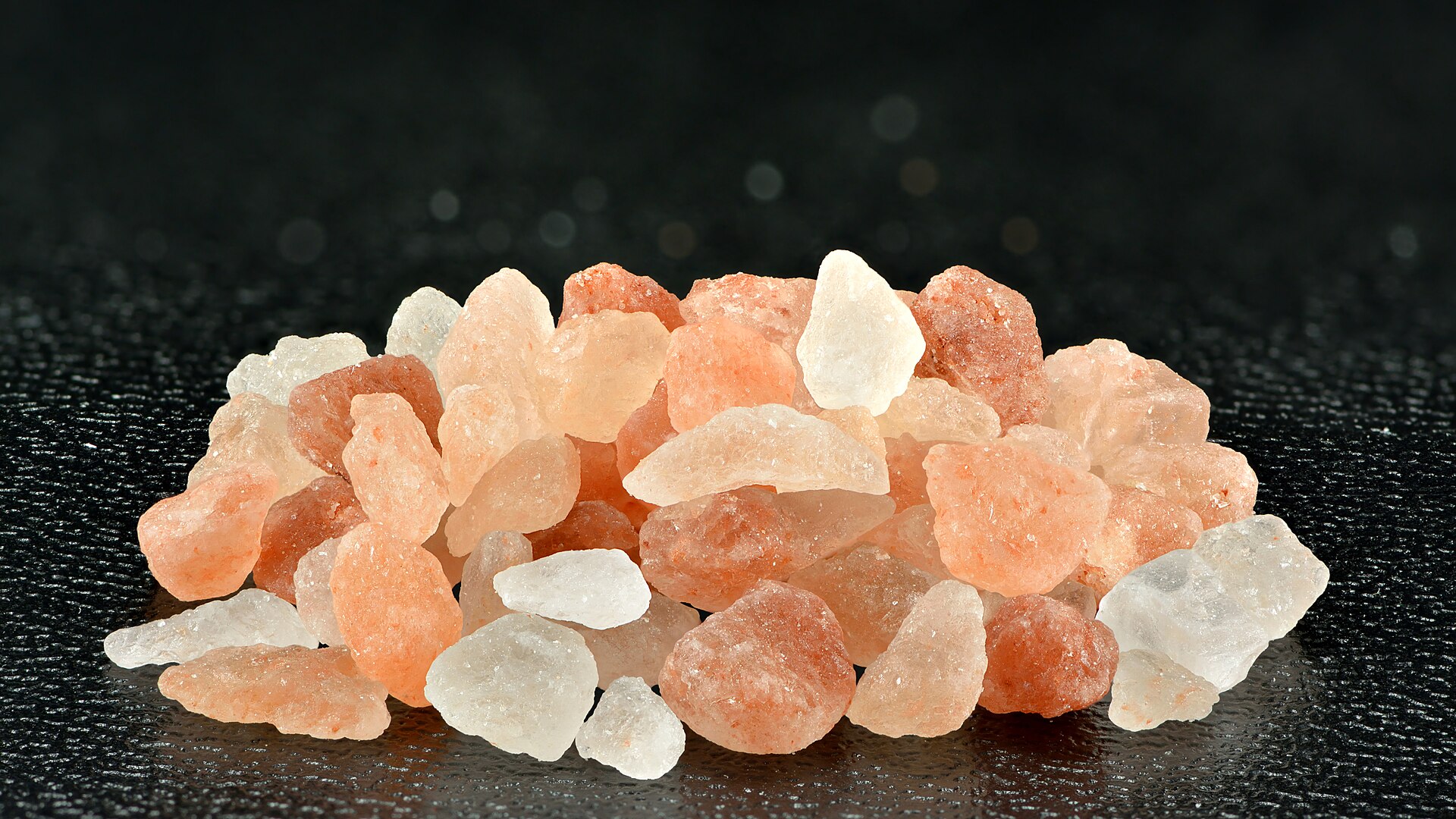
In 2024 world mine production of salt was about 280,000 thousand metric tons, with China the largest producer at 55,000 thousand tons. In 2024 domestic production of salt in the United States was an estimated 40 million tons, from 26 companies operating 64 plants in 16 States. Salt sold or used in the United States in 2024 was an estimated 39 million tons, with a total estimated value of $2.5 billion. The United States Geological Survey reports that no economic substitutes or alternatives for salt exist in most applications.
14. Timeline: from ancient salt works to the age of industrial salt
- About 5000 BCSalt mining begins at HallstattPeople were already living in the Hallstatt High Valley and mining salt as early as 5,000 BC, at what the mine calls the world's oldest salt mine.
- Middle Bronze Age, late 2nd millennium BCSystematic salt production in the SalzkammergutSystematic salt production was being carried out in the region as early as the Middle Bronze Age, when natural brine was captured in vessels and evaporated.
- 8th century BCUnderground mining and the Hallstatt CultureUnderground mining for salt began at the end of the late Bronze Age and resumed in the 8th century BC, when a flourishing Iron Age society known as the Hallstatt Culture traded widely across Europe.
- 1086Domesday records the Cheshire salt townsAccording to Domesday the three Cheshire salt towns were waste in 1071 while the survey of 1086 found them only partly recovered.
- 1348The Black Death cuts salt demandThe Black Death of 1348 and the other plagues of the mid 14th century almost halved the population and halved domestic salt demand.
- 1360The gabelle becomes a permanent taxIn the 14th century the gabelle denoted any tax on the sale of consumer goods, and an ordinance of 1360 made it a permanent tax.
- 1670Rock salt discovered near NorthwichRock salt was discovered near Northwich in 1670 while Cheshire salt makers sought a nearer supply of coal.
- 1775Construction of the Royal Saltworks of Arc-et-SenansIts construction, begun in 1775 during the reign of Louis XVI, was the first major achievement of industrial architecture, reflecting the ideal of progress of the Enlightenment.
- March 1790The gabelle is abolishedThe gabelle, whose high rate and unequal distribution provoked widespread contraband dealing in salt, was abolished in March 1790 after centuries as a royal tax.
- 1882Britain's Salt Act in IndiaBritain's Salt Act of 1882 prohibited Indians from collecting or selling salt, a staple in their diet.
- 12 March 1930Gandhi sets out on the Salt MarchGandhi set out on foot on March 12 in the year 1930 accompanied by several dozen followers, walking towards the coast to break the salt laws.
- 6 April 1930Salt is broken at DandiOn the morning of April 6 Gandhi and his followers picked up handfuls of salt along the shore, technically producing salt and breaking the law.
- 1978Wieliczka and Bochnia inscribed on the World Heritage ListThe Wieliczka and Bochnia Royal Salt Mines entered the World Heritage List in 1978 and later boundary modifications of the property were inscribed in the years 2008 and 2013 respectively.
- 1982Salins-les-Bains and Arc-et-Senans inscribedThe saltworks of Salins-les-Bains and Arc-et-Senans were inscribed on the World Heritage List in 1982 under criteria (i), (ii) and (iv).
- 1997Hallstatt-Dachstein / Salzkammergut inscribedThe Hallstatt-Dachstein / Salzkammergut Cultural Landscape was inscribed on the World Heritage List in 1997 under criteria (iii) and (iv).
- 2024World salt production reaches 280 million tonsWorld mine production of salt was about 280,000 thousand metric tons in 2024 while China remained the largest producer at 55,000 thousand tons.
References (16)
- 1Salt in the Middle Ages — The Salt Association (United Kingdom) WebView source
- 2Salt During Our Early History — The Salt Association (United Kingdom) WebView source
- 3Wieliczka and Bochnia Royal Salt Mines — UNESCO World Heritage Centre WebView source
- 4From the Great Saltworks of Salins-les-Bains to the Royal Saltworks of Arc-et-Senans, the Production of Open-pan Salt — UNESCO World Heritage Centre WebView source
- 5Platner & Ashby, A Topographical Dictionary of Ancient Rome: Via Salaria — LacusCurtius, Bill Thayer WebView source
- 6Early Modern Period: Technology and Change — The Salt Association (United Kingdom) WebView source
- 7How Do You Make Salt? — The Salt Association (United Kingdom) WebView source
- 8The Trans-Saharan Gold Trade (7th-14th Century) — The Metropolitan Museum of Art, Heilbrunn Timeline of Art History WebView source
- 9Timbuktu — UNESCO World Heritage Centre WebView source
- 10Ancient Iranian Salt Mine Mummies — World History Encyclopedia WebView source
- 11Gabelle — Encyclopaedia Britannica WebView source
- 12Salt March — HISTORY (A&E Television Networks) WebView source
- 13Salt March (1930) — Encyclopaedia Britannica 1930 WebView source
- 14Mineral Commodity Summaries 2025: Salt — U.S. Geological Survey 2025 WebView source
- 15Salzwelten Hallstatt: Discover & Experience — Salzwelten GmbH (Hallstatt salt mine) WebView source
- 16Hallstatt-Dachstein / Salzkammergut Cultural Landscape — UNESCO World Heritage Centre WebView source
 Black Holes