Ottoman Empire
A frontier principality that became a transcontinental empire — from Osman’s raids in Anatolia to the last sultan and the republic of 1922.
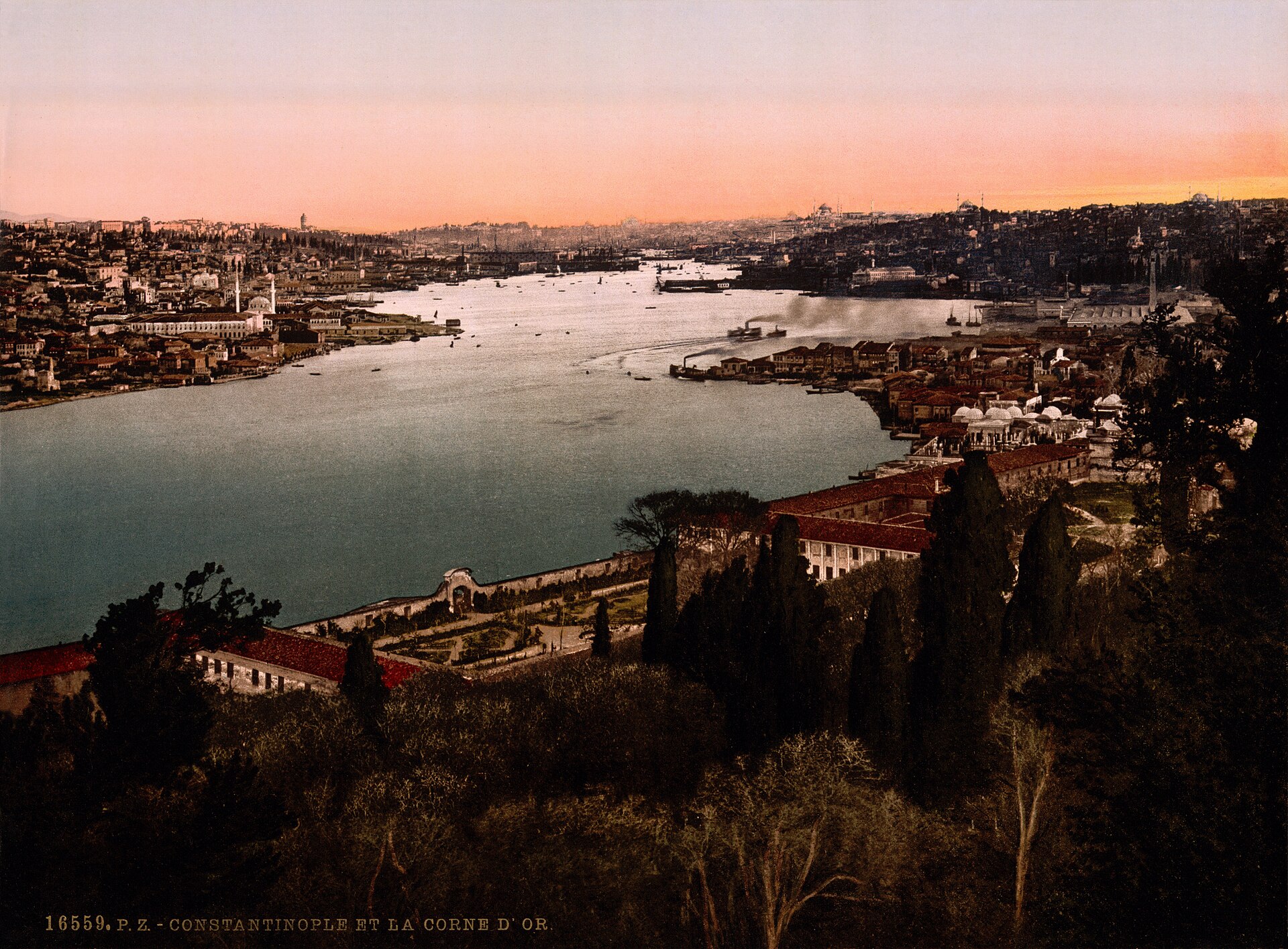

The Ottoman Empire was one of the longest-lived and most powerful states of the early modern world. Founded about 1300 by the Turkmen chief Osman I in northwestern Anatolia, it expanded across southeastern Europe, the Middle East, and North Africa, ruling from three successive capitals — Bursa, Edirne, and Constantinople (Istanbul) — after Mehmed II conquered the Byzantine capital in 1453. At its height under Selim I and Süleyman the Magnificent in the 16th century, it governed an immense multi-religious society through the sultan’s household, the devşirme-trained elite, and the millet system. After centuries of decline, incomplete reform, and defeat in World War I, the empire was partitioned; the Ottoman period came to an end in 1922, replaced by the Turkish Republic and successor states.
Overview: six centuries of Ottoman rule
The Ottoman Empire was one of the longest-lived states of the early modern world: founded about 1300, it spanned more than 600 years and came to an end in 1922 1. At its height the empire encompassed most of southeastern Europe to the gates of Vienna, parts of the Middle East, North Africa as far west as Algeria, and large parts of the Arabian Peninsula 1. It was founded in Anatolia, the region of modern-day Turkey, emerging from Söğüt near Bursa 1. It was replaced in 1922 by the Turkish Republic and successor states in southeastern Europe and the Middle East 1.
The name Ottoman is a dynastic appellation derived from Osman I, the nomadic Turkmen chief who founded both the dynasty and the empire about 1300 1. His father Ertugrul had a power base at Söğüt near Bursa; the empire began at the end of the 13th century with raids by Turkic warriors known as ghazis 1. Osman I is regarded as the founder of the Ottoman Turkish state 2. The dynasty he founded ruled for more than six centuries 1.
Origins: a frontier principality, c. 1300–1453
In their early expansion the Ottomans led the Turkish warriors for the faith of Islam, known by the honorific title ghazi, against the shrinking Christian Byzantine state 1. The dynasty expanded early on through extensive raiding; by about 1300 Osman’s domain stretched from Eskişehir to the plains of İznik 1. Osman I was the ruler of a Turkmen principality in northwestern Anatolia 2.
Osman was succeeded by his son Orhan, who captured Bursa in 1326 2. The capture — dated by some sources to 1324 — gave the principality the means to develop a real state’s administration, economy, and army 1. Bursa became the first capital and the sultan’s seat in the early 14th century 3. Murad I captured Adrianople in 1361; renamed Edirne, it became the new Ottoman capital and a base for the administrative and military control of Thrace 1.
Murad was killed at the Battle of Kosovo in 1389, and his successor Bayezid I could not turn the victory into further European conquest 1. Bayezid beat back the crusade at the Battle of Nicopolis on the Danube in 1396, and Ottoman rule south of the Danube was assured 1. At the Battle of Ankara in 1402 Timur overwhelmingly defeated him, and Bayezid was taken captive and died within a year 1. In the Interregnum of 1402–13 four of his sons competed for the right to rule the entire empire 1. Restoration came under Mehmed I and Murad II, in whose reign the devşirme system was developed: Christian youths were drafted from the Balkan provinces for conversion to Islam and life service to the sultan 1.
The conquest of Constantinople, 1453
Mehmed II, an Ottoman sultan from 1444 to 1446 and from 1451 to 1481, captured Constantinople and conquered the lands in Anatolia and the Balkans that formed the empire’s heartland for the next four centuries 5. He had the Hungarian master gunsmith Urban cast cannon of a size unknown as yet even in Europe 5. Preparations included the Rumeli fortress and a fleet of 31 galleys; the siege that followed lasted 55 days, from April 6 to May 29, 1453 6.
The city’s ancient land wall spanned 4 miles (6.5 km): a double line of ramparts with an outer moat, the higher wall standing as high as 40 feet (12 metres) on a base up to 16 feet (5 metres) thick 6. Against the defenders between 60,000 and 80,000 soldiers fought on land, accompanied by 69 cannon 6. The Ottomans breached the ancient land wall after the 55-day siege, and the dwindling Byzantine Empire came to an end 6. The fall removed a powerful defence for Christian Europe against Muslim invasion and allowed for uninterrupted Ottoman expansion into eastern Europe 6.
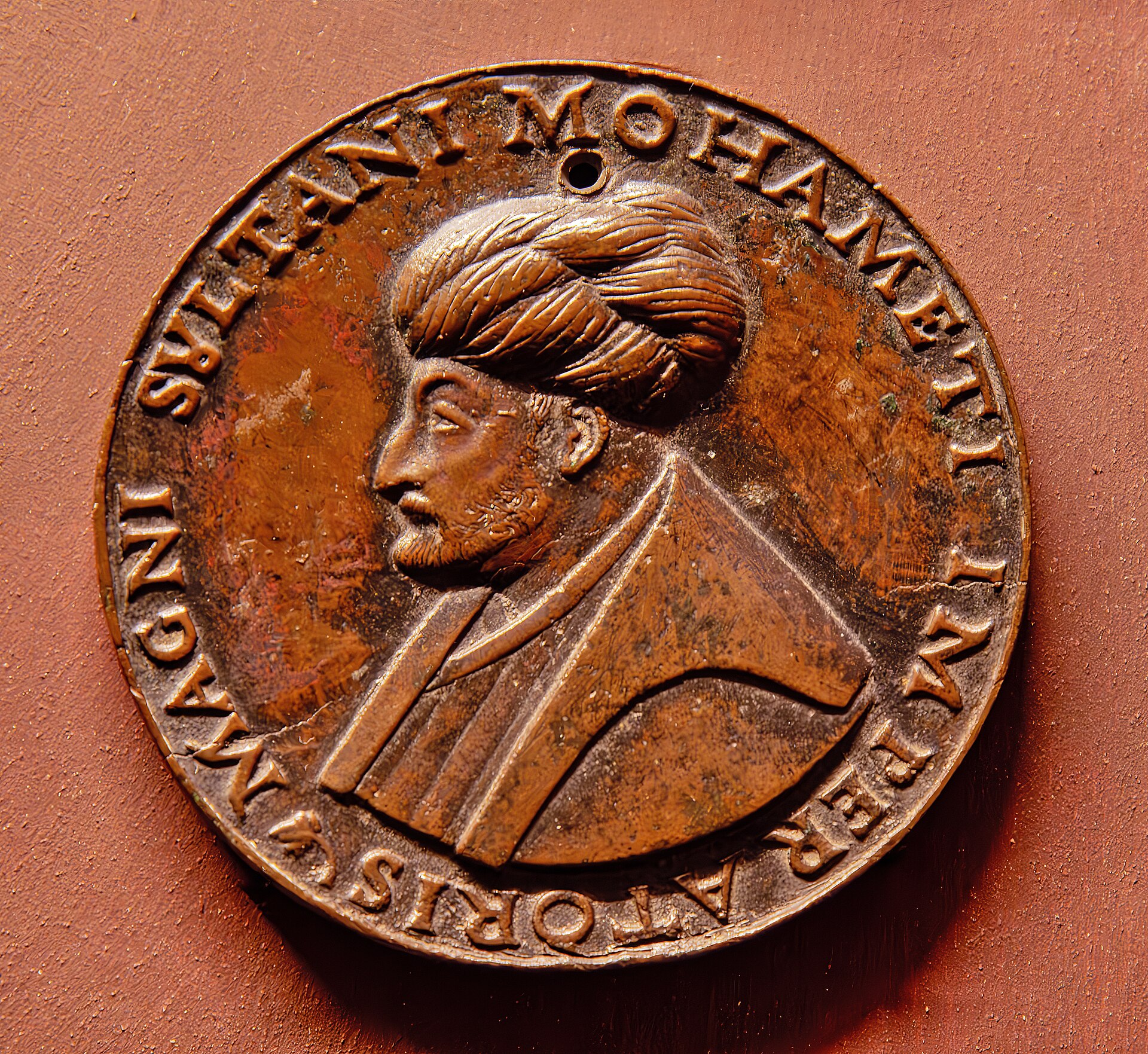
_Maometto_II_-_Gentile_Bellini_-_Museo_Correr.jpg)
Mehmed rode through the streets to the great cathedral of Hagia Sophia, the largest in all of Christendom, and converted it into the mosque Ayasofya 6. He repopulated the city with people of many backgrounds and faiths and moved his capital there from Edirne, a multicultural seat of power for a multicultural empire 6. A survey of 1478 counted 16,324 households and 3,927 shops in Constantinople and neighbouring Galata 5. Internally, the conquest meant the end of power and influence for the old Turkish nobility and the triumph of the devşirme and their supporters 1.
He also began to view himself as Kayser-i Rûm (“Caesar of Rome”), the inheritor of the Roman Empire and all its historical lands6
On Mehmed II’s imperial claim, as recorded by Encyclopaedia Britannica (Fall of Constantinople)
Many modern scholars also agree that the exodus of Greeks to Italy as a result of this event marked the end of the Middle Ages and the beginning of the Renaissance6
On the fall of Constantinople and the Renaissance, as recorded by Encyclopaedia Britannica
The golden age: Selim I and Süleyman the Magnificent
Selim I subdued the Kizilbash and defeated the Safavid ruler Ismāʿīl at the Battle of Chāldirān, on the eastern side of the Euphrates, in August 1514 7. The campaigns of 1516–17 brought Syria, Egypt, and Palestine under Ottoman rule 7. Selim extended the empire to the Hejaz as well and raised the Ottomans to leadership of the Muslim world 7. In Cairo the sharif of Mecca presented him with the keys to the holy city, a gesture acknowledging him as leader of the Islamic world 7.
Süleyman succeeded his father in September 1520 and began his reign with campaigns against the Christian powers in central Europe and the Mediterranean 8. Belgrade fell to him in 1521 and Rhodes, long under the rule of the Knights of St. John, in 1522–23 8. At Mohács in August 1526 he broke the military strength of Hungary, whose king, Louis II, lost his life in the battle 8. In 1529 he laid siege to Vienna to end Habsburg intervention, but time, distance, bad weather, lack of supplies, and Christian resistance forced him to raise it 8. Süleyman’s armies conquered Hungary — held by the Ottomans for over 150 years — and advanced as far west as Vienna 9.
Under Süleyman, popularly known as the Magnificent or the Lawmaker, the Ottoman empire reached the apogee of its military and political power 9. He codified a centralized legal system called kanun, expanded both the territory and the revenue of the empire, and built up Constantinople as the empire’s capital 8. At sea the fleet’s victory off Preveza in 1538 gave the Ottomans the naval initiative in the Mediterranean until the Battle of Lepanto in 1571 8. In architecture the period’s outstanding achievements were the public buildings of Sinan, chief of the Corps of Royal Architects, remembered for his mosque complexes of Süleymaniye in Istanbul and of the later Selimiye in Edirne 99. Süleyman himself died while besieging the fortress of Szigetvár in Hungary 8.
Sultans and periods of the Ottoman Empire
The Ottoman centuries divide into periods that run from the foundation about 1300 to the dissolution in 1922 1. The imperial seat moved from Bursa to Edirne and then, after 1453, to Constantinople (Istanbul), capital until 1923 4. The Cambridge History of Turkey treats the later empire — from the death of Mehmed III in 1603 to the tanzimat of 1839 — as a field of serious study in its own right 10.
| Era | Years | Rulers and defining events |
|---|---|---|
| Foundation | c. 1300–1402 | Osman I (r. 1299–1324), Orhan, Murad I, Bayezid I; Bursa captured 1326, Edirne becomes the capital 1361, Nicopolis 1396 411 |
| Interregnum | 1402–13 | Four of Bayezid’s sons compete for the right to rule the entire empire 1 |
| Restoration | 1413–51 | Mehmed I and Murad II; the devşirme system drafts Christian youths from the Balkans into the sultan’s service 1 |
| Expansion | 1451–1512 | Mehmed II (sultan 1444–46 and 1451–81) takes Constantinople in 1453; Bayezid II; Anatolia and the Balkans form the empire’s heartland 5 |
| Zenith | 1512–66 | Selim I defeats the Safavids at Chāldirān (1514) and annexes the Mamluk lands; Süleyman I (r. 1520–66) brings the empire to its apogee 79 |
| Post-classical era | 1566–1683 | From the death of Süleyman to the second siege of Vienna 11; the Cambridge History covers the later empire from 1603 to 1839 10 |
| Retreat and reform | 1683–1807 | The failed siege of Vienna, 1683, marks the beginning of the end of Ottoman domination in eastern Europe 11; Selim III’s nizam-i cedid attempts reform 1 |
| Long 19th century | 1808–76 | Mahmud II destroys the Janissaries in June 1826 12; the tanzimat is proclaimed in 1839 10; the constitution of 1876 13 |
| Abdülhamid II | 1876–1909 | Autocratic rule as the Tanzimat reform movement reaches its climax; first constitution 1876; parliament dismissed and constitution suspended 1878 1313 |
| CUP era (Young Turks) | 1908–18 | The Young Turk revolution of 1908 restores constitutional rule 13; defeat in World War I follows 1 |
| Dissolution | 1918–22 | Mehmed V (proclaimed 1909) and Mehmed VI; the Ottoman period ends in 1922, replaced by the Turkish Republic and successor states 131 |
Governing the empire: sultan, divan, and devşirme
Only late in the 14th century did Murad I and Bayezid I begin building the sultan’s personal military slave force, the kapıkulu 1. The devşirme system — developed under Murad II — drafted Christian youths from the Balkan provinces for conversion to Islam and life service to the sultan 1. The Janissary corps was originally staffed through this levy: boys taken from the Balkan provinces, converted, and drafted into Ottoman service 12. The Janissaries were an elite corps in the standing army from the late 14th century to 1826 and became a powerful political force within the state 12. During peacetime they garrisoned frontier towns and policed the capital, Istanbul; they constituted the first modern standing army in Europe 12.
Mehmed II consolidated the empire’s political, religious, and legal institutions through secular laws called kanun, compiled by subject into law codes called kanunnames 1. The Ottoman form of fief was the timar, the basis of Ottoman military and administrative organization as the European portions of the empire were conquered 1. Süleyman later codified the centralized legal system that carried the same name, kanun 8. Administration and law were directed from the divan, the council of state led by the grand vizier 1.
Society and religion: millets and communities
Under Ottoman rule the major religious groups were allowed to establish their own self-governing communities, called millets 1. Each retained its own religious laws, traditions, and language under the general protection of the sultan 1. Greeks, Armenians, Jews, and other communities lived under that protection, governed in their internal affairs by their own religious authorities 15.
In the conquered capital Mehmed II restored the Greek Orthodox Patriarchate on January 6, 1454, and established a Jewish grand rabbi and an Armenian Apostolic patriarch in the city 5. The restoration of these communal authorities was part of the wider settlement of the capital’s religious communities after 1453 5. Mehmed’s repopulation of Constantinople had brought people of many backgrounds and faiths into the capital 6.
City life was shaped by the waqf, the public endowment system, which related kulliyes and villages in a single economic and social framework 3. In Bursa the city grew from five focal points, mostly on hills, where five sultans — Orhan Ghazi, Murad I, Yıldırım Bayezid, Çelebi Mehmed, and Murad II — established public kulliyes of mosques, madrasahs, hamams, imarets, and tombs 3. Kulliyes served as nuclei providing public services before neighbourhoods arose, letting a vivid, sustainable new capital take shape quickly 3. Cumalıkızık was a waqf village that permanently belonged to an institution: its purpose was to provide income for the Orhan Ghazi Kulliye, as stated in historical documents 3.
Capitals and architecture: Bursa, Edirne, Istanbul
Bursa and Cumalıkızık embody the urban and rural system that made the city the first Ottoman capital and the sultan’s seat in the early 14th century 3. Founded in 200 BC and ruled for centuries by the Roman and Byzantine empires, it became the first political centre of the Ottomans 14. Cumalıkızık was the system’s rural half — the waqf village providing income for the Orhan Ghazi Kulliye 3. Bursa’s texture came from five sultans’ public kulliyes of mosques, madrasahs, hamams, imarets, and tombs 3.
Edirne, the former Ottoman capital, is dominated by the Selimiye Mosque Complex commissioned by Selim II — Sinan’s ultimate architectural expression of the Ottoman kulliye 15. The great dome, on eight pillars, spans 31.5 metres over a prayer space of 45 by 36 metres, and four soaring minarets dominate the skyline 15. The interior decoration using İznik tiles from the peak period of their production testifies to an art form unsurpassed in this material 15. Sinan himself recognised the complex as his most important architectural work 15.
Istanbul, on the Bosphorus between the Balkans and Anatolia, was successively the capital of the Eastern Roman Empire and of the Ottoman Empire, and has been associated with major events in political, religious, and art history for more than 2,000 years 16. Its skyline, built over many centuries, encompasses Hagia Sophia, the 15th-century Fatih complex and Topkapı Palace, Sinan’s Süleymaniye and Şehzade complexes reflecting the 16th-century climax of Ottoman architecture, and the 17th-century Blue Mosque 16. The historic areas include monuments recognised as masterpieces of the Byzantine and Ottoman periods, among them Hagia Sophia and Sinan’s Süleymaniye complex 16. The vernacular housing around the major religious monuments in the Süleymaniye and Zeyrek quarters provides exceptional evidence of the late Ottoman urban pattern 16.
Decline and reform, 1566–1876
After the peak of Ottoman rule under Süleyman the Magnificent in the 16th century, the empire struggled to maintain its bloated bureaucracy and decentralized political structure 1. Economic strain and a lag in military technique added to the difficulty 1. The failed Ottoman siege of Vienna in 1683 became the turning point: the lifting of the siege marked the beginning of the end of Ottoman domination in eastern Europe 11. With tacit Hungarian support, 150,000 Ottoman troops laid siege to Vienna, captured the outer fortifications, and began tunnelling toward the inner walls; the emperor fled 11. Relief came from a combined force led by John III Sobieski of Poland 11.
Reform attempts began with Selim III’s nizam-ı cedid, the new-order reform of the army 1. Their decisive moment came in June 1826, in the so-called Auspicious Incident: Mahmud II, on learning of new Westernized troops, declared war on the revolting Janissaries and, on their refusal to surrender, had cannon fire directed on their barracks 12. From 1839 the administrative reconstruction of the Ottoman state, the tanzimat, set the agenda 10.
The most far-reaching of the reforms, the Tanzimat, contributed to a debt crisis in the 1870s 1. It was an era of legal, educational, and administrative reconstruction, proclaimed in 1839 10. By 1876 the strain had produced a first constitution and a new sultan’s autocracy 1313.
The last decades: Abdülhamid II, the Young Turks, and World War I
Abdülhamid II was an Ottoman sultan from 1876 to 1909, under whose autocratic rule the reform movement of the Tanzimat reached its climax 13. He adopted a policy of pan-Islamism in opposition to Western intervention in Ottoman affairs 13. The Hejaz Railway, financed by Muslim contributions worldwide, was a concrete expression of that policy 13. He promulgated the first Ottoman constitution on December 23, 1876, primarily to ward off foreign intervention 13. He dismissed the Parliament and suspended the constitution in February 1878, then ruled for 30 years from his seclusion at Yıldız Palace, assisted by secret police, an expanded telegraph network, and severe censorship 13.
Discontent with Abdülhamid’s despotic rule and resentment against European intervention in the Balkans led to the military revolution of the Young Turks in 1908 13. The revolution restored constitutional rule; after a short-lived reactionary uprising in April 1909, Abdülhamid was deposed and his brother was proclaimed sultan as Mehmed V 13. The ascendancy of the Young Turks — remembered as the CUP era — ran on to the First World War 13.
Upon the Ottoman defeat in World War I the empire disintegrated and was partitioned 1. A combination of nationalist movements and partition agreements among the Allied powers forced its disintegration into numerous territories, with Turkey as the empire’s immediate successor 1. Six centuries of Ottoman rule were ending 1.
The end: partition and the republic, 1918–1923
The peace imposed at Sèvres in 1920 abolished the Ottoman Empire 17. Signed on August 10, 1920 between the victorious Allied powers and the Ottoman government, it obliged Turkey to renounce all rights over Arab Asia and North Africa 17. Rejected by the new Turkish nationalist regime, it was replaced by the Treaty of Lausanne in 1923 17.
Lausanne was the final treaty concluding World War I 18. It was signed on July 24, 1923 — after a seven-month conference at Lausanne, Switzerland — by representatives of Turkey, successor to the Ottoman Empire, on one side and by Britain, France, Italy, Japan, Greece, Romania, and the Kingdom of Serbs, Croats, and Slovenes on the other 18. The treaty recognised the boundaries of the modern state of Turkey 18. Turkey made no claim to its former Arab provinces and recognised British possession of Cyprus and Italian possession of the Dodecanese 18.
The Ottoman period spanned more than 600 years and came to an end only in 1922, when it was replaced by the Turkish Republic and various successor states in southeastern Europe and the Middle East1
On the end of the Ottoman period, as recorded by Encyclopaedia Britannica
The history emphasises the political, cultural and artistic accomplishments of the Ottomans in the post-classical period, thus challenging traditional notions that this was a period of stagnation10
The Cambridge History of Turkey, Volume 3: The Later Ottoman Empire, 1603–1839 (publisher’s description)
Legacy: the Ottoman world today
The empire’s cities still carry its architecture: the world heritage sites of Istanbul, Edirne, and Bursa preserve the Ottoman urban and monumental tradition 14. Objects of Ottoman learning survive in museum collections — among them an astrolabic quadrant of lacquered fruitwood in the British Museum, engraved with the name of the maker Muhammad al-Sakkāsi al-Jarkasi 19. The Cambridge History of Turkey emphasises the political, cultural and artistic accomplishments of the Ottomans in the post-classical period 10.
The richest and most valuable archival material inherited from the Ottoman state is held in the Ottoman Archives complex of the State Archives Directorate 20. It reaches back to the Hazine-i Evrak Nezareti, founded in 1846 — the beginning of fully modern archival practice and the core of today’s state archive 20. By the decree of Sultan Abdülmecid, the first modern Hazine-i Evrak building was completed in 1849 20.
Timeline of the Ottoman Empire
Osman Gazi begins his reign
Osman Gazi, a Turkish tribal leader, reigned from 1299 to 1324 and is regarded as the founder of the Ottoman dynasty.
Orhan captures Bursa
Osman was succeeded by his son Orhan, who captured Bursa; Ottoman tradition holds that Osman died just after the capture of Bursa, though some scholars place his death in 1324.
Adrianople falls; Edirne becomes the capital
Murad I captured Adrianople, the second city of the Byzantine Empire; renamed Edirne, it became the new Ottoman capital and a centre for the administrative and military control of Thrace.
Battle of Kosovo
The Ottomans defeated the Balkan allies at the Battle of Kosovo; Murad I was killed during the battle and was succeeded by his son Bayezid I.
Battle of Ankara and the Interregnum
Timur overwhelmed Bayezid I at the Battle of Ankara; the sultan died in captivity within a year, and four of his sons competed for rule during the Interregnum of 1402–13.
Fall of Constantinople
After a 55-day siege, Mehmed II’s forces breached Constantinople’s ancient land walls; the Byzantine Empire ended and the city became the Ottoman capital.
Battle of Chāldirān
Selim I subdued the Kizilbash and defeated the Safavid ruler Ismāʿīl at the Battle of Chāldirān on the eastern side of the Euphrates River.
Conquest of the Mamluk empire
Selim I defeated the Mamluk armies at Marj Dābiq and Raydāniyyah, bringing Syria, Egypt, and Palestine under Ottoman rule; in Cairo the sharif of Mecca presented him with the keys to the holy city.
Battle of Mohács
Süleyman broke the military strength of Hungary at Mohács; King Louis II lost his life in the battle.
Second siege of Vienna
150,000 Ottoman troops besieged Vienna but were defeated by a combined force led by John III Sobieski of Poland; the lifting of the siege marked the beginning of the end of Ottoman domination in eastern Europe.
Auspicious Incident: destruction of the Janissaries
After the Janissaries revolted against new Westernized troops, Sultan Mahmud II had cannon fire directed on their barracks; most of the corps were killed and prisoners were executed.
Proclamation of the Tanzimat
The tanzimat, the administrative reconstruction of the Ottoman state, was proclaimed in 1839, marking the start of the later Ottoman period.
First Ottoman constitution
Abdülhamid II promulgated the first Ottoman constitution in 1876, primarily to ward off foreign intervention; he dismissed parliament and suspended the constitution in 1878.
Young Turk Revolution
The military revolution of the Young Turks in 1908 forced Abdülhamid II to restore constitutional rule; after a reactionary uprising in April 1909 he was deposed and his brother was proclaimed sultan as Mehmed V.
Treaty of Sèvres
The treaty between the Allied powers and the Ottoman government abolished the empire and obliged Turkey to renounce rights over Arab Asia and North Africa; rejected by Turkish nationalists, it was replaced by the Treaty of Lausanne.
The Ottoman period ends
The Ottoman period came to an end in 1922; the empire was replaced by the Turkish Republic and successor states in southeastern Europe and the Middle East.
Frequently asked questions
What was the Ottoman Empire, and when did it exist?
It was one of the longest-lived states of the early modern world, founded about 1300 by the Turkmen chief Osman I and spanning more than 600 years until 1922, when it was replaced by the Turkish Republic and successor states 1. At its height it reached from most of southeastern Europe to the gates of Vienna, through parts of the Middle East and North Africa as far west as Algeria, to large parts of the Arabian Peninsula 1.
Why is the empire called “Ottoman”?
The name is a dynastic appellation derived from Osman I, the nomadic Turkmen chief who founded both the dynasty and the empire about 1300 1. Known in Italy as Ottomano, hence the English term Ottoman 4.
How did the Ottomans take Constantinople in 1453?
After a 55-day siege, the Ottomans breached the city’s ancient land wall and captured it on May 29, 1453, ending the dwindling Byzantine Empire 6. Between 60,000 and 80,000 soldiers fought on land, accompanied by 69 cannon 6.
What was the devşirme system?
It was a system of tribute by which Christian youths were taken from the Balkan provinces, converted to Islam, and drafted into Ottoman service, originally staffing the Janissary corps 12. It was developed under Murad II, who drafted Christian youths from the Balkan provinces for life service to the sultan 1.
What was the millet system?
Under Ottoman rule the major religious groups were allowed to establish their own self-governing communities, called millets 1. Each retained its own religious laws, traditions, and language under the general protection of the sultan 1.
Why was Süleyman called the Magnificent and the Lawmaker?
Under Süleyman, popularly known as the Magnificent or the Lawmaker, the Ottoman empire reached the apogee of its military and political power 9. He codified a centralized legal system called kanun, expanded both the territory and the revenue of the empire, and built up Constantinople as its capital 8.
What happened at Vienna in 1683?
With the tacit support of the Hungarian army, 150,000 Ottoman troops laid siege to Vienna, captured the outer fortifications, and began to tunnel to the inner walls; the emperor fled the city 11. They were defeated by a combined force led by John III Sobieski of Poland, and the lifting of the siege marked the beginning of the end of Ottoman domination in eastern Europe 11.
How did the Ottoman Empire end?
Upon its defeat in World War I the empire disintegrated and was partitioned; a combination of nationalist movements and partition agreements among the Allied powers forced its disintegration into numerous territories, with Turkey as its immediate successor 1. The Treaty of Sèvres of 1920 abolished the empire and obliged Turkey to renounce all rights over Arab Asia and North Africa, but it was rejected by the new Turkish nationalist regime and replaced by the Treaty of Lausanne in 1923 1717. The Ottoman period itself came to an end in 1922, replaced by the Turkish Republic and successor states 1.
Knowledge graph
Sources & citations
Every factual claim in this article is drawn from the sources below. Bracketed numbers in the text link to the corresponding source.
- 1
- 2
- 3
- 4
- 5
- 6
- 7
- 8
- 9
- 10
- 11
- 12
- 13
- 14
- 15
- 16
- 17
- 18
- 19
- 20