Cairo
Egypt's capital on the Nile — founded by the Fatimids in 969 CE, home to al-Azhar and Saladin's Citadel, and today one of the largest cities in Africa.
Cairo (al-Qahirah, "The Victorious") was founded in 969 CE by the Fatimid general Jawhar al-Siqilli on the orders of the caliph al-Mu'izz, northeast of the older Islamic capitals of Fustat, al-Askar and al-Qata'i. Its historic core — al-Azhar Mosque, the walled Fatimid city on al-Muizz Street, and Saladin's Citadel — was inscribed by UNESCO in 1979 as Historic Cairo, which preserves half of the surviving monuments of the Middle Ages. The modern metropolis is Egypt's centre of government, culture and tourism, with an urban agglomeration of some 19 million people, Africa's first metro system, and the Grand Egyptian Museum, which opened in 2025.
In this article
- 1Overview
- 2Name and Foundation
- 3Location and Setting
- 4Historical Development
- 5Historic Cairo
- 6Landmarks and Institutions
- 7The Grand Egyptian Museum
- 8Population and Administration
- 9Climate
- 10Transport
- 11Cultural Life
- 12Timeline: from Fustat to the Grand Egyptian Museum
- 13Frequently asked questions
- 14Knowledge graph
Overview
Cairo is the capital of Egypt and one of the largest cities in Africa, standing on the eastern shore of the Nile River. In Arabic the city is known as Al-Qāhirah, meaning "The Victorious," a name it has carried since its foundation.
The city lies in northeastern Egypt at the apex of the Nile Delta, some 800 km downstream of the Aswan High Dam. Its site has been occupied for more than 1,000 years.
The Arabic dialect spoken in Egypt is the most well-known and most understood in the Arab world, making Cairo a prime language-learning center in the Middle East.
1. Name and Foundation
The name al-Qāhirah is bound up with the circumstances of the city's founding. According to one account, astrologers discovered that the planet Mars — "al-Qahir", the Conqueror — was in the ascendant when the foundations of Cairo's wall were laid, and from this the name al-Qahira was derived. Another account holds that Caliph Al-Mu'izz ordered Gawhar to build "a city called al-Qahira that would conquer the world", and that Gawhar first named the city al-Mansouriya before the caliph changed it to al-Qahira after arriving in Egypt.
Cairo was founded in 969 CE by the Fatimid general Jawhar al-Siqilli, on the orders of caliph al-Mu'izz. It was established as the headquarters of the Fatimid Caliphate, and the Fatimid rulers traced descent from Muhammad's daughter Fatima, hence the dynasty's name, via Isma'il the seventh Shi'i imam, and thus presented a threat to the political and religious authority of the orthodox Sunni Abbasid caliph.
Cairo celebrates its National Day on 6 July, the day on which General Jawhar al-Siqilli laid the foundation stone of Cairo in 969 AD.
2. Location and Setting
Cairo occupies the eastern shore of the Nile at the apex of the river's delta, where the watercourse divides into its two branches before reaching the Mediterranean. The Nile itself runs 6,650 km from its sources to its mouth in the Mediterranean Sea. The city's historic core lies tucked away amid the modern urban area, one of the world's oldest Islamic cities, founded in the 10th century, which became the new centre of the Islamic world and reached its golden age in the 14th century.
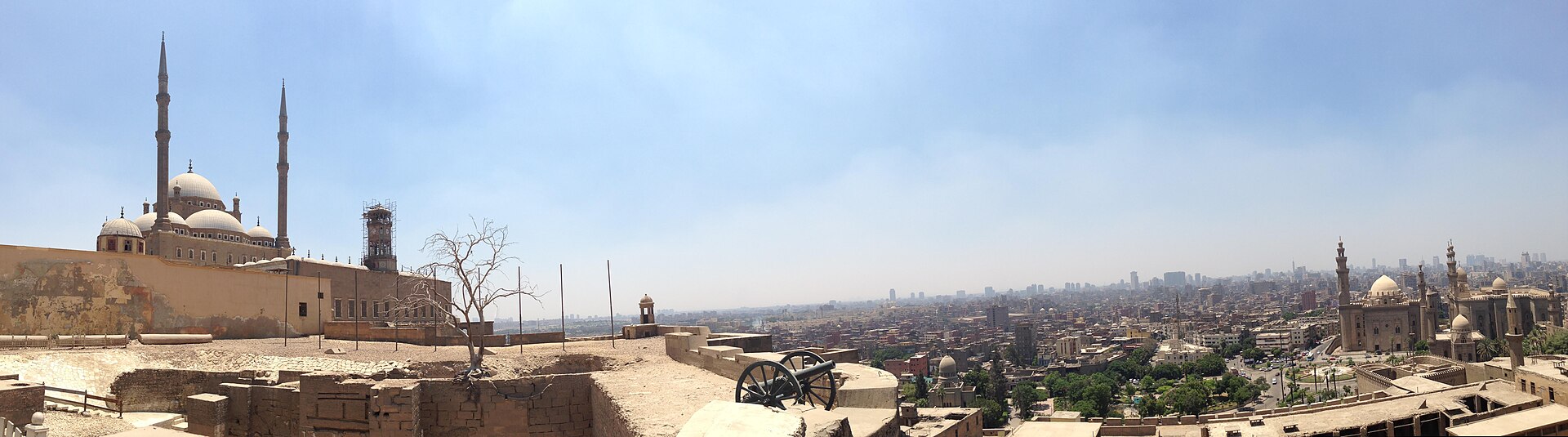
Within the historic centre, the historical street stretches between two gates of Cairo's old city walls, from Bab al-Futuh in the north to Bab Zuwayla in the south, passing along significant surviving streets such as Khan al-Khalili and al-Ghuriyya. The complexes of Sultan Qalawun, Sultan Barquq and Sultan Barsbay, Sultan Hassan Madrassa, Sultan Al-Ghori and Sultan Qaitbay still dominate Cairo's skyline.
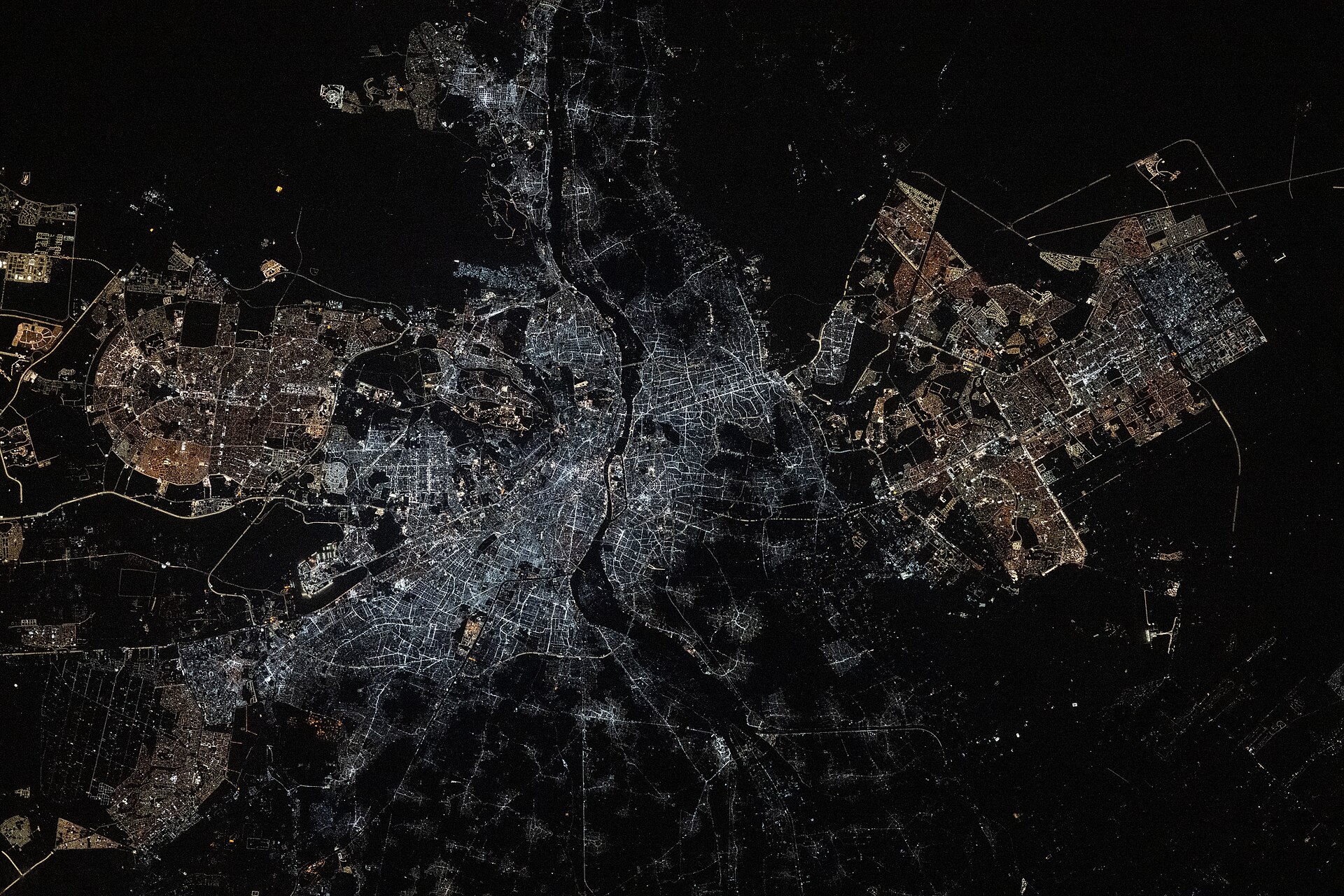

According to the 2018 Revision of World Urbanization Prospects, Cairo, Mumbai, Beijing and Dhaka all have close to 20 million inhabitants.
3. Historical Development
The urban fabric that became Cairo grew through successive foundations. Al-Askar was founded by the commander Salih ibn Ali ibn Abd Allah ibn al-Abbas in 750 AD and served as an extension of Fustat, growing over time into a large city. The distinctive and refined Fatimid architecture includes significant mosques such as Al-Azhar, Al-Hakim, Al-Aqmar and Salih Tala'i, mausoleums, shrines and private dwellings, all of outstanding importance to the history of Islamic art and architecture.
Saladin (1137–93) was the Muslim Sultan of Egypt and Syria who defeated an army of the Christian Crusader states at the Battle of Hattin and captured Jerusalem in 1187 and shocked the western world.
The Mamluk sultanate (1250–1517) emerged from the weakening of the Ayyubid realm in Egypt and Syria, when mamluks of Qipchaq Turkic origin overthrew the last independent Ayyubid sultan in Egypt and established their own rule. Following the defeat of Mongol armies at the Battle of 'Ain Jalut in 1260 AD, the Mamluks created the greatest Islamic empire of the later Middle Ages, which included control of the holy cities Mecca and Medina. Endowed Mamluk foundations included madrasas, mausolea, minarets and hospitals, such as the complex of Qalawun, and the reign of Qalawun initiated the patronage of public and pious foundations.
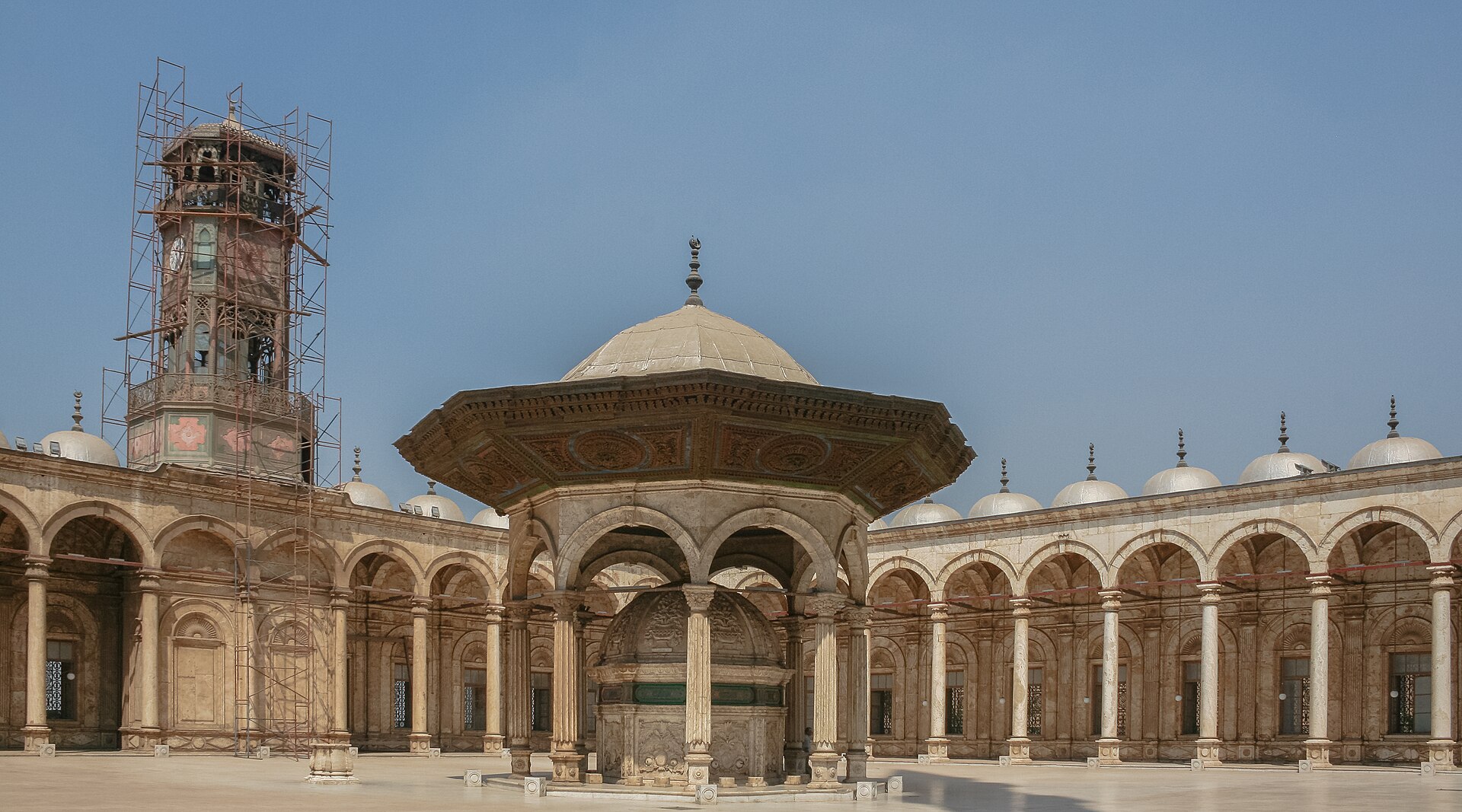
The Ottomans maintained the medieval urban patterns while enriching Islamic architecture, and their style was characterized by decorative ceramic tiles with plant elements, as in the Muhammad Ali Pasha Mosque in the Citadel.
The Abdeen Palace remained the official royal residence and a symbol of power from 1873 until 1952 and witnessed many important historical events in Egypt's modern history, including the Orabi Revolution. Following Egypt's independence in 1922 and the rapid population growth that ensued, housing and shops have sprung up in the City of the Dead, where it is estimated that more than one million Cairenes live, many without municipal utilities or an official address.
4. Historic Cairo
Historic Cairo, the semi-walled medieval city at the heart of the modern capital, is an impressive material witness to Cairo's political, strategic, intellectual and commercial importance during the medieval period. It was inscribed by UNESCO in 1979 under the name Historic Cairo, with criteria (i), (v) and (vi) and a property of 523.66 hectares; its Fatimid nucleus lies within the fortification built by Badr al-Gamali, whose surviving gates are Bab Zuwayla to the south and Bab al-Nasr and Bab al-Futuh to the north. Historic Cairo holds more than 400 registered historic monuments. The building of a new Cairo in the 19th century allowed the old city to remain largely intact as an outstanding example of medieval town planning, and it has been known variously as Al Mahrousa, the City of a Thousand and One Nights and the City of a Thousand Minarets, preserving half of the surviving monuments from the Middle Ages.
5. Landmarks and Institutions
The Citadel, begun by Saladin in 1176 on the Muqattam Hills, served as the residence of rulers from 1207, and many monuments were added to it over the centuries, including the Mosque of Muhammad Ali Pasha which dominates it, the mosque of the Mamluk sultan al-Nasir Muhammad ibn Qalawun, the Ottoman-era Sulayman Pasha al-Khadim Mosque and a number of museums. Al-Muizz Street is named after the Fatimid Caliph al-Muizz li-Din Allah, who first founded this street; it is today the largest open-air museum for Islamic monuments in the world and was added to the UNESCO World Heritage List in 1979 as part of Historic Cairo.
The Corniche, a highway paralleling the Nile, was built in the 1950s; near the Egyptian Museum lies Tahrir Square, the epicentre of the 2011 uprising, overlooked by the Mogamma government building and the Arab League headquarters.
6. The Grand Egyptian Museum
The Grand Egyptian Museum opened to the public in November 2025 after two decades of work. President Abdel Fattah El-Sisi arrived on the evening of 1 November 2025 for the museum's historic inauguration ceremony, with the participation of numerous world leaders, kings, heads of state and government ministers.
Occupying 500,000 square metres, the museum is the largest archaeological museum in the world and hosts over 100,000 Egyptian artifacts, including many newly restored pieces that have never been shown publicly before. It houses the largest collection dedicated to ancient Egyptian civilization, including the complete treasures of Pharaoh Tutankhamun, displayed together for the first time since his tomb's discovery in 1922 and shown to the visiting public.
7. Population and Administration
Cairo City is organised into 4 areas, which are further divided into 38 districts, and it also encompasses three new cities: New Cairo, El-Shorouq and Badr City 3Cairo In Lines — About the Governorate · Cairo Governorate ↗. The governorate covers a total area of 3,085 km² 3. In January 2026 its estimated population stood at more than 10,478,084 3.
Metropolitan Cairo extends beyond the governorate itself, taking in the Cairo governorate together with districts belonging to neighbouring governorates such as Al-Jīzah and Qalūbiyyah 1Cairo | Egypt, Meaning, Map, & Facts · Encyclopaedia Britannica ↗. The 2017 census recorded 9,539,673 inhabitants in the governorate and some 19,295,000 in the urban agglomeration 1.
| Indicator | Value | Source note |
|---|---|---|
| Area of Cairo Governorate | 3,085 km² | cairo-gov-inlines |
| Population of Cairo Governorate, January 2026 | 10,478,084 | cairo-gov-inlines |
| Urban agglomeration | 19,295,000 per Britannica; close to 20 million per UN DESA 2018 | britannica-cairo |
| Administrative structure | 4 areas, 38 districts; three new cities: New Cairo, El-Shorouq, Badr City | cairo-gov-inlines |
8. Climate
Cairo's year divides into only two seasons: a summer lasting approximately eight months and a winter of about four months. Through June, July and August, the average daily maximum temperature reaches 35 °C. In summer the temperature has climbed as high as 47 °C.
9. Transport
Cairo was the first African city to install a metro system in 1987 and pioneered rail transit on the continent. That early investment came after the Cairo fire on 26 January and the 23rd July Revolution in 1952, when the city began a new phase of development and growth. The city's transit ambitions continue today: Cairo is currently implementing several mega development projects, among them the Monorail project and the electric LRT train project. These projects form part of a broader effort that also aims to eradicate informal settlements and restore the capital's aesthetic appearance.
10. Cultural Life
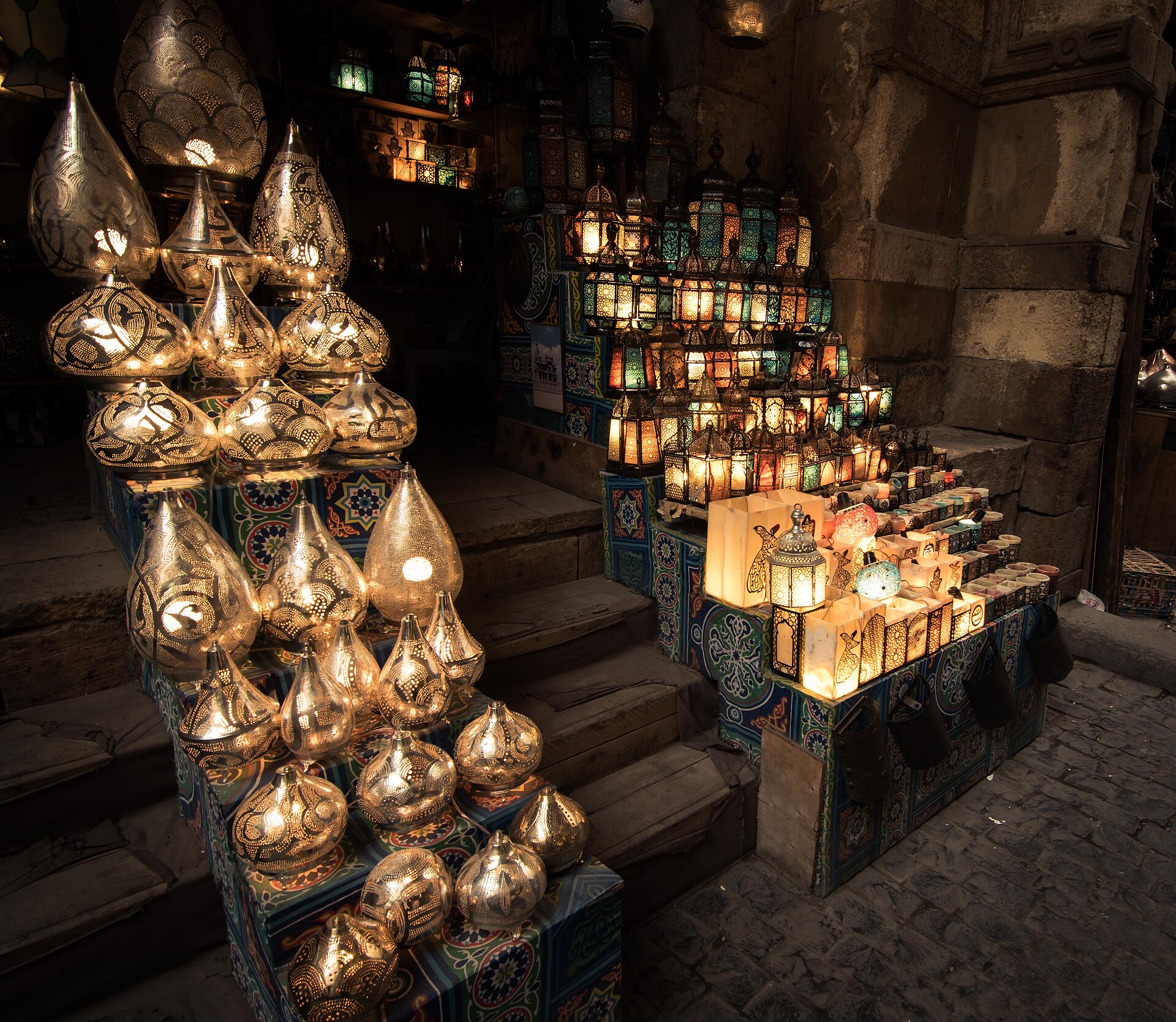
Cairo juxtaposes the old with the new and is often considered the cultural capital of the Arab Middle East, with its massive bazaar, notable mosques and a historically important film industry. The city ranks among the top 100 cities in the world for international students, making it an ideal destination for those who are looking to broaden their understanding of the world.
11. Timeline: from Fustat to the Grand Egyptian Museum
- 641 CE (21 AH)Fustat foundedAmr ibn al-As founded Fustat after the Islamic conquest of Egypt, building there the first mosque in Egypt and Africa.
- 16 July 969 CEFoundation of al-QahiraThe Fatimids invaded Egypt in 969 CE and a new city was established to the northeast of existing settlements, named Al-Qāhirah in celebration of the arrival of the caliph al-Muʿizz.
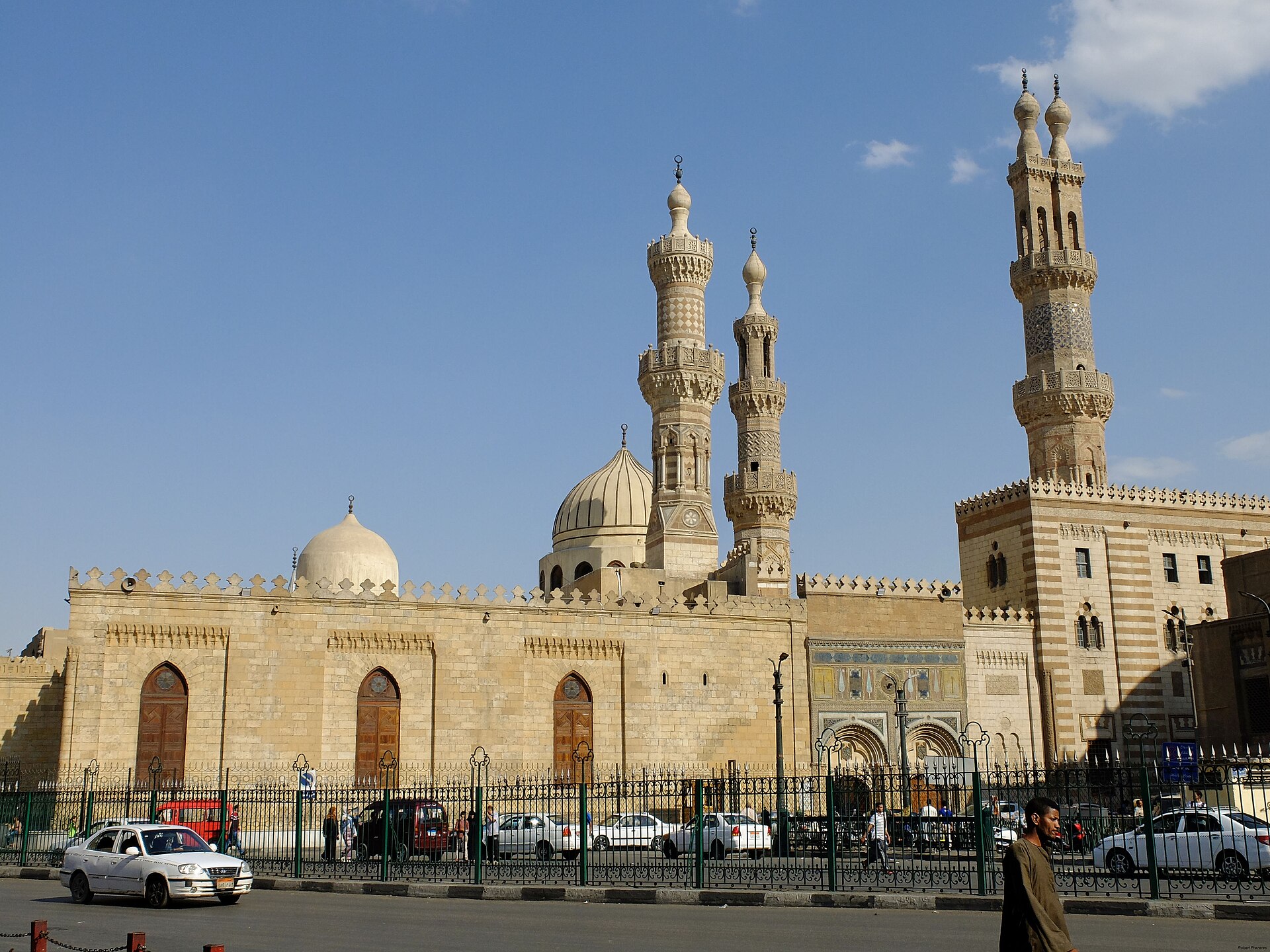
- 970 CEAl-Azhar foundedAl-Azhar, the Fatimids' first congregational mosque in Cairo, was founded along with the city and became a leading theological centre of the Islamic world.
- 1171 CEEnd of the Fatimid caliphateSaladin removed the Shiite caliph in Cairo and reorganised the state under Sunni rule, ending the Fatimid dynasty that had ruled since 909.
- 1176 CE (572 AH)Construction of the Citadel begunSalah al-Din ordered a fortress built over the Muqattam Hills; it was completed under Sultan al-Kamel, who made it the residence of the rulers of Egypt.
- 1250 CE (648 AH)Mamluk rule beginsThe Mamluks took power in Egypt and the Salah El-Din Citadel remained the seat of power as a fortified city inside its walls and towers.
- 1309–1341 CE (709–741 AH)Cairo's great Mamluk expansionUnder Sultan El-Naser Mohammad ibn Qalawun Cairo expanded beyond the Fatimid remnants, a turning point in the history of the city.
- 1517 CE (923 AH)Ottoman conquestThe fall of the Mamluk Sultanate brought Cairo into the Ottoman empire, where it held a special status as the second city after Istanbul.
- 21 July 1798Battle of the PyramidsNapoleon Bonaparte's French army defeated a larger Mamluk force near the Great Pyramid of Giza and occupied Cairo three days later.
- 1805 CEMuhammad Ali ascends the throneWith Muhammad Ali Pasha's rule came a turning point for Cairo: streets were cleaned, the Citadel was renovated, and the Mohammad Ali Mosque and Jawhara Palace were built inside it.
- 1863 CEAbdeen Palace commissionedKhedive Ismail ordered the Abdeen Palace to move the official residence from the Salah El-Din Citadel; it remained the royal residence from 1873 to 1952.
- 1952 CECairo fire and July RevolutionAfter the Cairo fire on 26 January and the 23rd July Revolution, the city entered a new phase of development and growth.
- 1979 CEHistoric Cairo inscribed by UNESCOHistoric Cairo was added to the World Heritage List, recognizing an Islamic city with more than 400 registered historic monuments.
- 1987 CECairo metro opensCairo became the first African city to install a metro system, transforming transport in the growing metropolis.
- 2011 CEUprising in Tahrir SquareTahrir Square, near the Egyptian Museum, became the epicentre of the 2011 uprising that reshaped Egypt's modern history.
- 1 November 2025Grand Egyptian Museum opensPresident El-Sisi inaugurated the Grand Egyptian Museum, the world's largest museum dedicated to a single civilization, in a ceremony attended by delegations from around the world.
12. Frequently asked questions
When was Cairo founded, and by whom?
What does the name "Cairo" mean?
In Arabic the city is Al-Qāhirah, meaning "The Victorious".1
How large is Cairo's urban agglomeration?
Britannica gives the urban agglomeration as 19,295,000, while UN DESA in 2018 put it close to 20 million.1
What is Cairo's climate like?
Cairo has two seasons, and in June through August the average daily maximum is 35 °C, with a record of 47 °C.1
What is Al-Azhar and when was it founded?
Al-Azhar was founded with the city between 969 and 973, and it has been a leading theological centre since 970 AD.4
What can visitors see at the Grand Egyptian Museum?
A visit to the Grand Egyptian Museum includes access to the Tutankhamun Galleries, the Main Galleries, the Grand Hall, the Grand Stairs and Khufu's Boats Museum.14Grand Egyptian Museum — official ticketing website · Grand Egyptian Museum ↗
References (15)
- 1Cairo | Egypt, Meaning, Map, & Facts — Encyclopaedia Britannica Web↩View source
- 2About Cairo — The American University in Cairo WebView source
- 3Cairo In Lines — About the Governorate — Cairo Governorate Web↩View source
- 4Historic Cairo (World Heritage List, no. 89) — UNESCO World Heritage Centre Web↩View source
- 5The Art of the Fatimid Period (909-1171), Heilbrunn Timeline of Art History — The Metropolitan Museum of Art (Suzan Yalman) WebView source
- 6The River Nile (Landmarks, Egypt Tourism) — Egypt State Information Service WebView source
- 7Al-Mu'izz Street — Ministry of Tourism and Antiquities, Egypt WebView source
- 868% of the world population projected to live in urban areas by 2050 (2018 Revision of World Urbanization Prospects) — United Nations Department of Economic and Social Affairs 2018 WebView source
- 9Saladin — World History Encyclopedia WebView source
- 10The Art of the Mamluk Period (1250-1517), Heilbrunn Timeline of Art History — The Metropolitan Museum of Art (Suzan Yalman) 1517 WebView source
- 11Cairo Citadel — Ministry of Tourism and Antiquities, Egypt WebView source
- 12A New Era in Egyptology: The Grand Egyptian Museum Opens its Doors — The American University in Cairo WebView source
- 13President El-Sisi Attends the Historic Opening Ceremony of the Grand Egyptian Museum (GEM) — Egypt State Information Service WebView source
- 14Grand Egyptian Museum — official ticketing website — Grand Egyptian Museum Web↩View source
- 15Battle of the Pyramids — World History Encyclopedia WebView source