Jerusalem
The holy city of Judaism, Christianity and Islam — its ancient origins, its temples and shrines, its walled Old City and the archaeology that keeps rewriting its story.
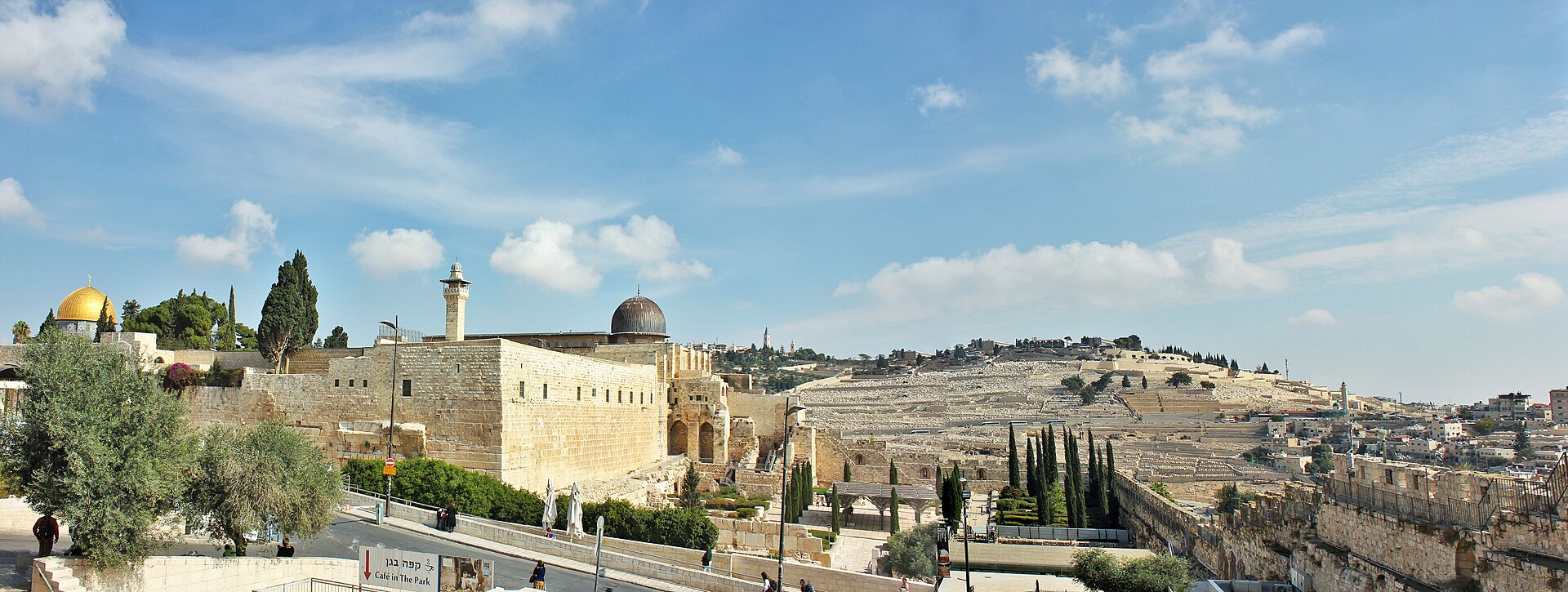
Jerusalem is an ancient city of the Middle East that since 1967 has been wholly under the rule of the State of Israel, and it is a holy city for Judaism, Christianity and Islam. According to biblical accounts it became the capital of the united kingdom of Israel under David about 1000 BCE, and its First and Second Temples made it the centre of Jewish worship until the Romans destroyed the city in 70 CE. Its walled Old City, with its Armenian, Christian, Jewish and Muslim quarters, was designated a UNESCO World Heritage site in 1981 and contains the Temple Mount with the Dome of the Rock and the Al-Aqsa Mosque, the Western Wall and the Church of the Holy Sepulchre.
In this article
- 1Overview
- 2The Old City and Its Walls
- 3The Temple Mount and Its Monuments
- 4Destruction, Exile and the Second Temple
- 5Roman Siege and the Fall of the Second Temple
- 6Roman, Byzantine and Early Islamic Jerusalem
- 7Crusader Rule and the Kingdom of Jerusalem
- 8Christian Holy Sites
- 9Archaeology and Modern Excavations
- 10Key Dates
- 11Key Figures and Measurements
- 12Timeline: from David's capital to the unified city
- 13Knowledge graph
Overview
Jerusalem is an ancient city of the Middle East that since 1967 has been wholly under the rule of the State of Israel, which declared the city its capital in 1949. During the Six-Day War Israel occupied the Jordanian sector of Jerusalem, expanded the city boundaries and extended its jurisdiction over the unified city. The city is a major holy city for the three Western traditions of Judaism, Christianity and Islam. The name of the city, known in its earliest form as Urusalim, is probably of western Semitic origin and apparently means Foundation of Shalem.
1. The Old City and Its Walls
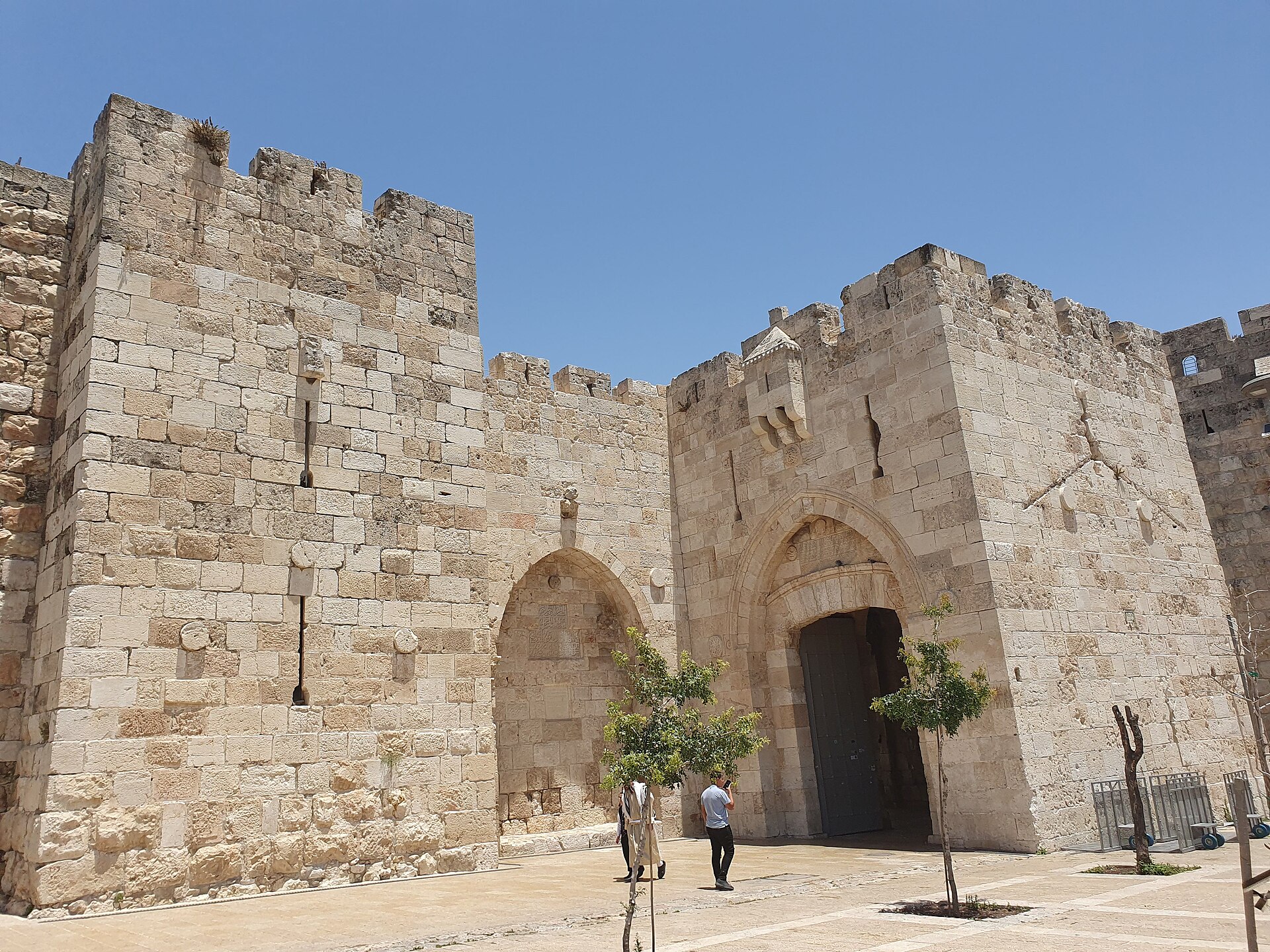
The Old City is a walled quadrilateral, and within its enclosure lie four quarters — Jewish, Christian, Muslim and Armenian. The most conspicuous feature of this walled section is its city wall, erected between 1538 and 1540 by the Ottoman sultan Suleyman the Magnificent, largely on the foundations of earlier walls dating chiefly to the Crusades and in places to Byzantine, Herodian and even Hasmonean times. The Old City is believed to have been continuously inhabited for almost 5,000 years and forms a quadrilateral about 3,000 feet (900 metres) long on each side. Within the walled area stand 220 historic monuments, among which the Dome of the Rock stands out. The Old City of Jerusalem and its Walls was inscribed on the UNESCO World Heritage List in 1981 on criteria (ii), (iii) and (vi) following a nomination by Jordan, and it has been on the List of World Heritage in Danger from 1982 to the present.
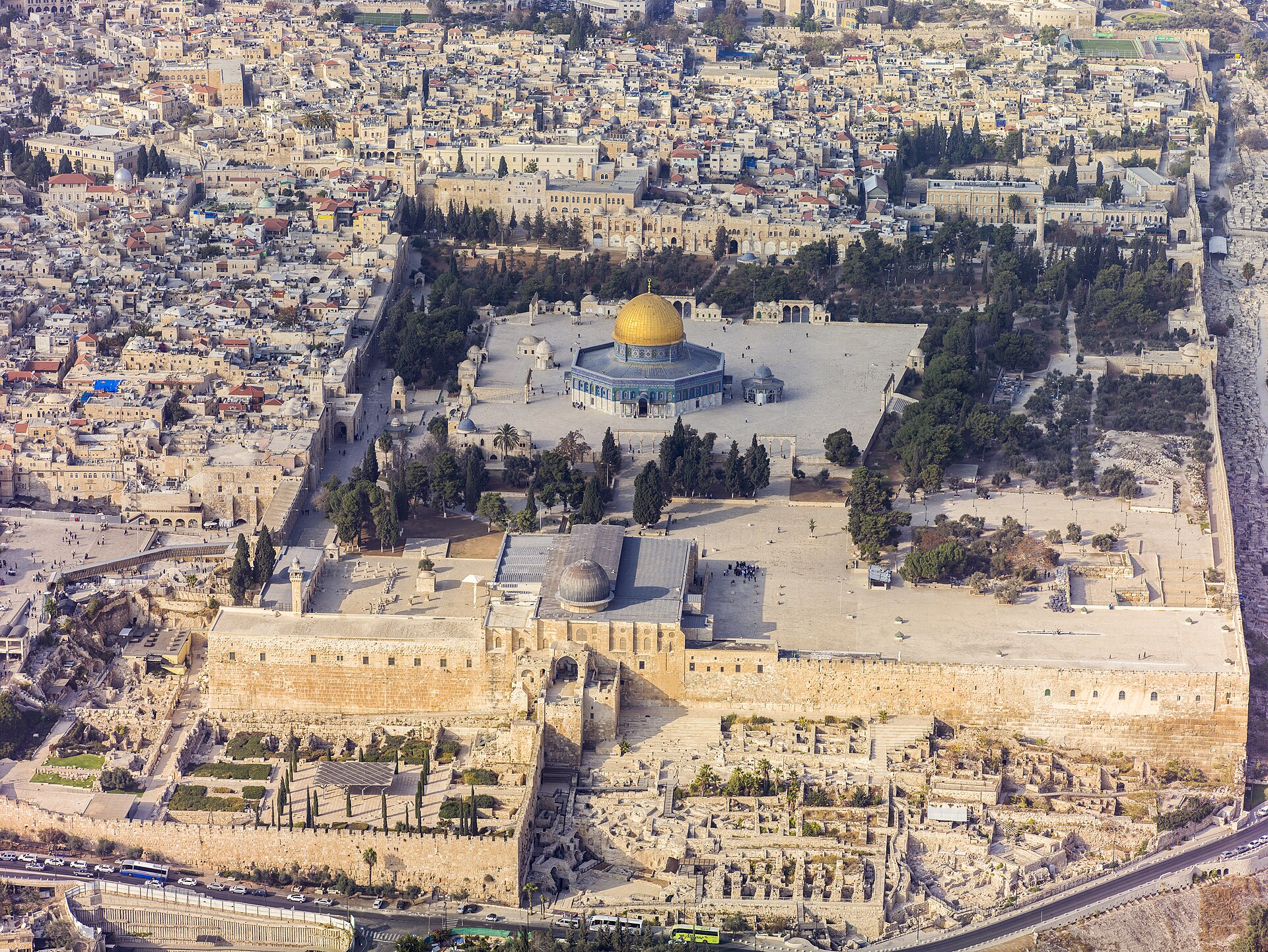
The Temple Mount, called the Noble Sanctuary by Muslims, is a sacred platform of about 35 acres and the home of the Dome of the Rock, the Al-Aqsa Mosque and the Western Wall. The golden Dome of the Rock rises above the Old City walls on Jerusalem's acropolis. The Al-Aqsa Mosque was built in the early 8th century on the southern part of the Temple Mount platform. As it is seen today, the Western Wall measures about 50 metres (160 feet) long and about 20 metres (60 feet) high.
2. The Temple Mount and Its Monuments
The raised platform of the Temple Mount is recognized by all three religions as the place of Abraham's sacrifice. The narrow ridge that was the site of early Jerusalem conceals a subterranean labyrinth of natural caves, Canaanite water channels, Judaean tunnels and Roman quarries. The edifice has served the faithful as a symbol of God's glory for 3,000 years and remains the crossroads of the three great monotheistic religions.
The Dome of the Rock is a shrine built by the Umayyad caliph Abd al-Malik ibn Marwan in the late 7th century CE and completed in 691 on the Temple Mount platform; it is the oldest extant Islamic monument. It is one of the oldest examples of Islamic architecture and, after Mecca and Medina, the third holiest site of Islam. According to Muslims the rock above which the dome is constructed is the spot from which the Prophet Muhammad was taken up into heaven, and nearby on the southern edge of the plaza is the Al-Aqsa Mosque, where he was believed to have been transported from Mecca.
King Solomon, according to the Bible, built the First Temple on the mountaintop around 1000 BCE, only to have it torn down 400 years later by troops commanded by the Babylonian king Nebuchadnezzar, and in the first century BCE Herod expanded and refurbished the Second Temple.
In 2004 a privately funded sifting project began sorting through earth removed from the Temple Mount and has since recovered more than half a million artifacts. The debris trucked out of the Temple Mount was analysed grain by grain in one of Israel's most intriguing archaeological undertakings. The sifting project turned up a lump of black clay with a seal impression inscribed in ancient Hebrew with the name Galyahu son of Immer, a figure connected in the Book of Jeremiah with the First Temple; if the identification holds it is the first Hebrew inscription from the First Temple period found on the Mount itself.
3. Destruction, Exile and the Second Temple
The city and its Temple were completely destroyed in 587 or 586 BCE by Nebuchadrezzar II, and the Hebrew captivity began as many priests and aristocrats were taken captive to Babylon in the Exile. The captivity ended in 538 BCE, when Cyrus the Great of Persia permitted the Jews led by Zerubbabel to return. The Temple was restored in 515 BCE.
Hostility among orthodox Jews to Greek influence burst into armed rebellion in 167 BCE, after the Seleucid Antiochus IV Epiphanes deliberately desecrated the Temple. The revolt was led by Mattathias and continued by his son Judas Maccabeus, and the Hasmoneans expelled the Seleucids. Antiochus outlawed Jewish rites in 167 BCE and ordered Jews to worship Zeus, and a massive fortress, or acra in Greek, was built within the City of David to garrison Seleucid troops and protect Jews who had adopted Greek culture. The Maccabean Jews eventually starved and overwhelmed the Greek garrison in 141 BCE and drove them out, after which they rededicated the Second Temple, a victory celebrated during Hanukkah.
After 40 BCE Herod the Great undertook large construction works, including a splendid temple, a temple terrace and a western palace, and he renamed the fortress Baris as Antonia. Herod renovated the Temple and the platform of the Temple Mount. The city had been captured by Pompey in 63 BCE.
4. Roman Siege and the Fall of the Second Temple
The Second Temple was destroyed in 70 CE by the Romans, ending the era known as the Second Temple Period, and remains found within the precincts of the First Wall in the Jewish quarter bear the imprint of burning and destruction during the sack of the city. By the time the Romans besieged the city, the tyrant Simon, son of Gioras, held the upper city and a great part of the lower and made vehement assaults on the party of John. In the extremity of the siege a medimnus of wheat was sold for a talent, and when it became impossible to gather herbs people searched the common sewers and old dunghills of cattle. Josephus counts ninety-seven thousand captives and eleven hundred thousand who perished in the siege of Jerusalem.
5. Roman, Byzantine and Early Islamic Jerusalem
After the defeat of the Bar-Kochba Revolt, Hadrian built a temple on the site of the ruins of the Second Temple, changed the name of the city to his family name Aelia Capitolina, and forbade Jews to live in the city until the 4th century CE.
The city was captured by the Persian general Shahr-Baraz in 614 and the True Cross seized; the Byzantines recovered it in 630 and Jerusalem passed into Islamic hands in 638 CE. Arab and Jewish sources both confirm that, after the Arab capture of Jerusalem in 638 CE, Jews led the conquerors to the site of the Holy Rock and Temple yard and helped clear away the debris.
6. Crusader Rule and the Kingdom of Jerusalem
The First Crusade was conceived by Pope Urban II following an appeal from the Byzantine emperor Alexios I Komnenos, and it succeeded in bringing Christian forces into control of Jerusalem on 15 July 1099 after a five-week siege. In mid-July Godfrey of Bouillon attacked what looked like a weaker section of the wall. With the crusaders' siege tower in place and Godfrey leading from the front, the attackers scaled the defences and entered Jerusalem on 15 July 1099, bringing the siege to an end.
One account declares that no one had ever seen or heard of such slaughter of pagan people, for funeral pyres were formed from them like pyramids and no one knows their number except God alone. The Crusader kingdom lasted from 1099 until 1187, when the city was retaken by Saladin.
7. Christian Holy Sites
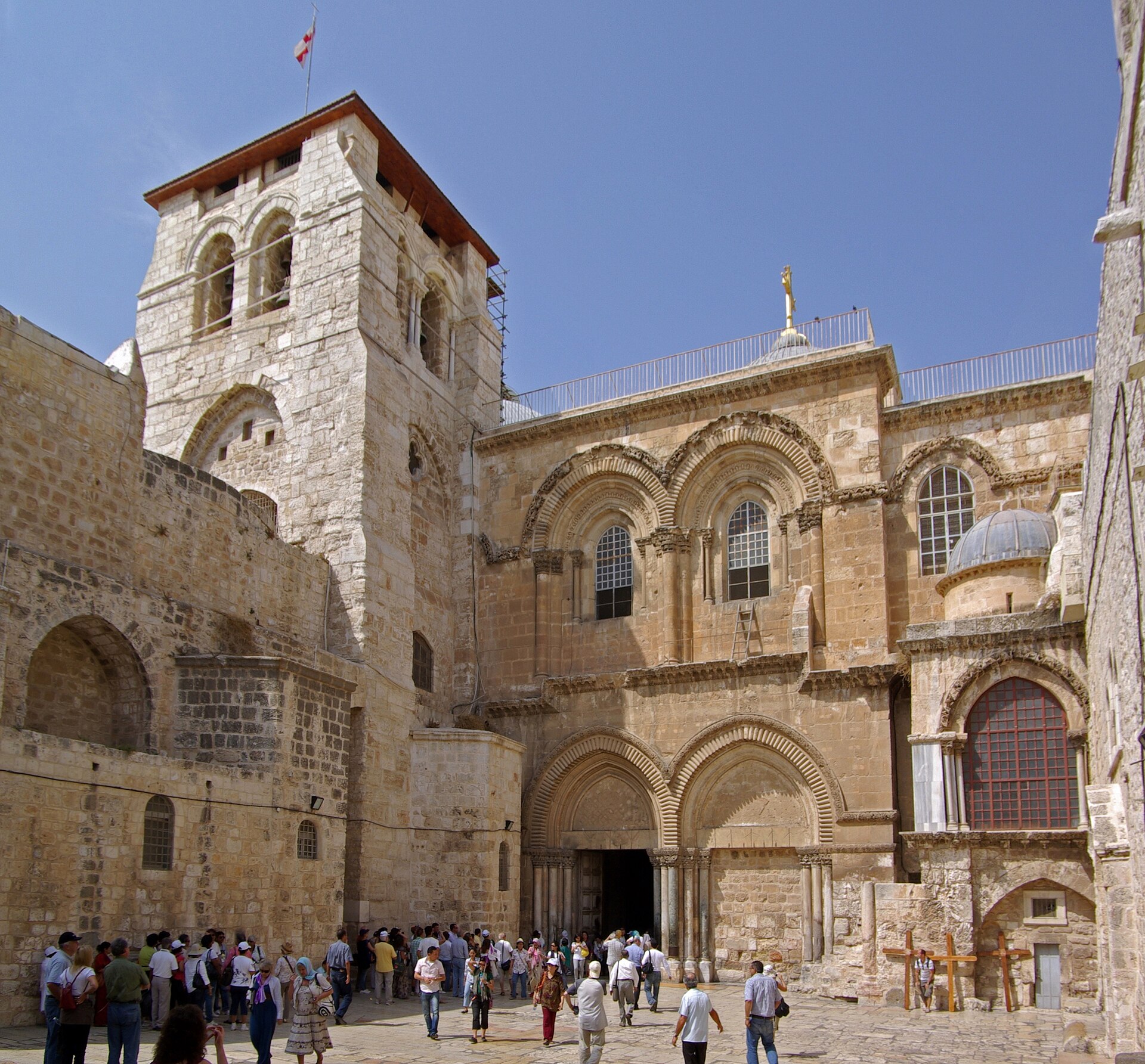
According to most Christian traditions, Jesus was crucified at Golgotha, or the hill of Calvary, and his tomb lies inside the sepulchre of the Church of the Holy Sepulchre, which was also the site of his resurrection.
The Church of the Holy Sepulchre is managed jointly by representatives of different Christian denominations, mainly the Greek Orthodox Patriarchate, Franciscan friars of the Roman Catholic Church and the Armenian Patriarchate, but also by the Ethiopians, Coptics and Syrian Orthodox Church. The major Christian denominations, except the Protestants, share control over the church under a rule known as the status quo, promulgated by the Ottoman sultan in 1852 and observed there ever since.
8. Archaeology and Modern Excavations
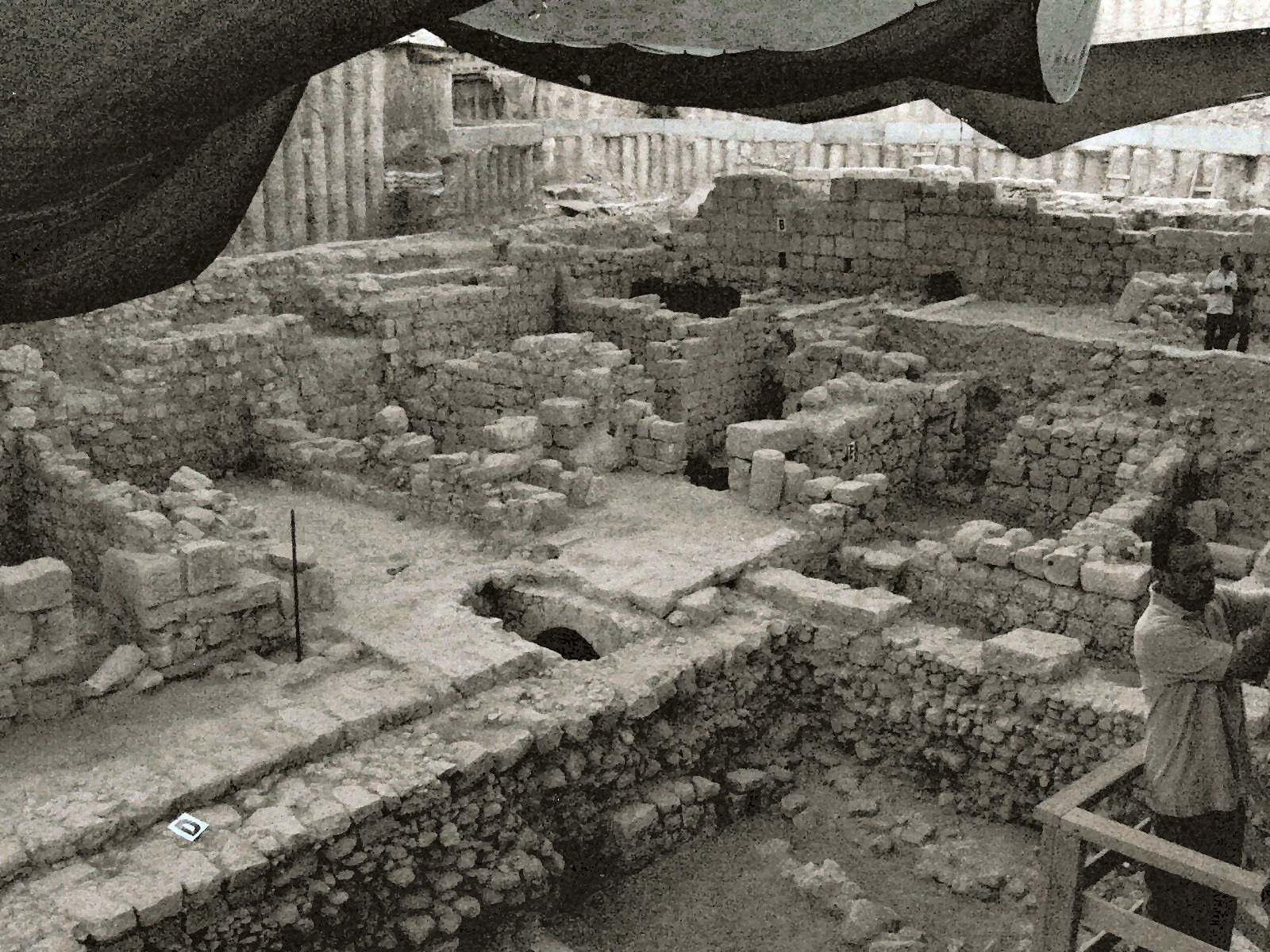
Since 1968 extensive excavations have been carried out in and around the Old City, and the digs around the southern and western walls of the Temple Mount, which have reached the Herodian pavements, revealed the steps leading to the Temple, the priests' underground entrance and many religious objects.
Among the finds in the rock-cut chambers were clay cooking vessels, cores of oil lamps, a stone mug unique to Second Temple period Jewish sites, and a fragment of a large stone basin associated with Jewish practices of ritual purity.
9. Key Dates
-
about 1000 BCEDavid captures Jerusalem and makes it his capitalAccording to biblical accounts, Jerusalem stood on the frontier of Benjamin and Judah and was inhabited by a mixed population described as Jebusites. It was captured by David, founder of the joint kingdom of Israel and Judah, and became the capital of the Jewish kingdom, a development dated to about 1000 BCE. 3History of Jerusalem | Britannica · Encyclopaedia Britannica ↗
-
587 or 586 BCEDestruction of the city and TempleThe city and the Temple were completely destroyed by Nebuchadrezzar II, and the Hebrew captivity began. 3
-
538 BCECyrus permits the returnThe captivity ended when Cyrus the Great of Persia permitted the Jews, led by Zerubbabel, to return. 3
-
515 BCEThe Temple restoredThe Temple was restored. 3
-
614Persian capture and seizure of the True CrossThe city was captured by the Persian general Shahr-Baraz, and the True Cross was seized. 12Jerusalem · Livius.org (Jona Lendering) ↗
-
630Byzantine recovery of the True CrossThe Byzantines recovered the True Cross. 12
-
638 CEJerusalem passes into Islamic handsJerusalem passed into Islamic hands. 12
10. Key Figures and Measurements
| Item | Value |
|---|---|
| Area | 49 square miles (126 square km)1Jerusalem | History, Map, Religion, & Facts · Encyclopaedia Britannica ↗ |
| Population | 981,711 (2022 est.)1 |
| Old City enclosure | A walled quadrilateral about 3,000 feet (900 metres) long on each side1 |
| Dome of the Rock | Central dome about 65 feet (20 metres) in diameter; 16 piers and columns; octagonal arcade of 24 piers and columns9Dome of the Rock | History, Architecture, & Significance · Encyclopaedia Britannica ↗ |
11. Timeline: from David's capital to the unified city
- c. 1000 BCEDavid makes Jerusalem his capitalAccording to biblical accounts David captured Jerusalem, a city on the frontier of Benjamin and Judah inhabited by Jebusites, and made it the capital of the united kingdom of Israel and Judah.
- 597 BCEThe Babylonians capture the cityThe Babylonian king Nebuchadnezzar captured Jerusalem, beginning the series of deportations that led to the destruction of the First Temple.
- 587/586 BCEBabylon destroys the First TempleThe city and its Temple were completely destroyed by Nebuchadrezzar II of Babylon, and the Hebrew captivity began.
- 538–515 BCEReturn from exile and the Second TempleCyrus the Great of Persia permitted the Jews, led by Zerubbabel, to return to Jerusalem, and the Temple was restored in 515 BCE.
- 167 BCEMaccabean revoltThe Seleucid Antiochus IV Epiphanes deliberately desecrated the Temple, and the revolt led by Mattathias and his son Judas Maccabeus expelled the Seleucids; Jerusalem became the capital of an independent Hasmonean state.
- 70 CEThe Romans destroy the Second TempleAfter a long siege the Romans under Titus took Jerusalem, the Temple was destroyed, and Josephus reports ninety-seven thousand captives and about eleven hundred thousand dead.
- 135 CEAelia Capitolina replaces JerusalemAfter the defeat of the Bar-Kochba Revolt, Hadrian built a temple on the site of the ruins of the Second Temple, renamed the city Aelia Capitolina and forbade Jews to live in it.
- c. 326–335 CEThe Church of the Holy SepulchreHelena, the mother of Constantine I, made a pilgrimage to the Holy Land and identified the tomb of Jesus, and Constantine built a church on the site, later expanded in the Crusader period.
- 638 CEIslamic conquestJerusalem was captured by Islamic forces; Arab and Jewish sources record that Jews led the conquerors to the site of the Holy Rock and Temple yard and helped clear away the debris.
- 691 CEThe Dome of the Rock is builtThe Umayyad caliph Abd al-Malik commissioned the shrine known as the Dome of the Rock on the site of the destroyed Second Temple, and the gold-capped structure was completed in 691.
- 15 July 1099Crusaders take JerusalemIn the First Crusade the Christian army besieged Jerusalem and, with Godfrey of Bouillon leading from the front, scaled the defences and entered the city on 15 July 1099.
- 1187 CESaladin retakes the cityThe Kingdom of Jerusalem established by the crusaders lasted until 1187, when the city was retaken by Saladin.
- 1538–1540Suleyman the Magnificent builds the wallsThe Ottoman sultan Suleyman the Magnificent erected the conspicuous city wall of Jerusalem largely on the foundations of earlier walls dating chiefly to the Crusader period.
- June 1967The Six-Day War and the unified cityDuring the Six-Day War Israel occupied the Jordanian sector of Jerusalem, expanded the city boundaries and extended its jurisdiction over the unified city.
References (16)
- 1Jerusalem | History, Map, Religion, & Facts — Encyclopaedia Britannica Web↩View source
- 2Jerusalem — World History Encyclopedia WebView source
- 3History of Jerusalem | Britannica — Encyclopaedia Britannica Web↩View source
- 4Old City of Jerusalem and its Walls — UNESCO World Heritage Centre WebView source
- 5What Is Beneath the Temple Mount? — Smithsonian Magazine WebView source
- 6Jerusalem's sacred sites are a combustible mix of religion and politics — National Geographic WebView source
- 7Western Wall | Definition, History, & Facts — Encyclopaedia Britannica WebView source
- 8Maze of tunnels reveals remains of ancient Jerusalem — National Geographic WebView source
- 9Dome of the Rock | History, Architecture, & Significance — Encyclopaedia Britannica Web↩View source
- 10The Wars of the Jews, Book V — penelope.uchicago.edu, University of Chicago (trans. William Whiston) BookView source
- 11The Wars of the Jews, Book VI — penelope.uchicago.edu, University of Chicago (trans. William Whiston) BookView source
- 12Jerusalem — Livius.org (Jona Lendering) Web↩View source
- 13First Crusade — World History Encyclopedia WebView source
- 14Capture of Jerusalem: Collected Accounts — Internet Medieval Sourcebook, Fordham University WebView source
- 15What makes Jerusalem so holy? — BBC News WebView source
- 16Underground Chambers Discovered Near Jerusalem's Western Wall — Smithsonian Magazine WebView source