Greek Mythology
The gods, Titans, heroes and stories of ancient Greece, from Chaos to the fall of Troy — with the sources, texts and archaeology that preserve them.
Greek mythology is the body of stories concerning the gods, heroes and rituals of the ancient Greeks, rooted in centuries of oral tradition and preserved above all in Homer's Iliad and Odyssey and Hesiod's Theogony. Its cosmos runs from Chaos, Gaia and the Titans to the Olympian gods led by Zeus, and its heroes — Heracles, Perseus, Theseus and Achilles — bridge the gap between mortals and gods. The myths shaped Greek religion, art and theatre, spread through the Mediterranean world, and were rediscovered by modern archaeology at Troy and Mycenae.
In this article
- 1Overview
- 2Origins and Oral Transmission
- 3Theogony and the Birth of the Gods
- 4The Primordial Gods
- 5The Titans and the Titanomachy
- 6Zeus and the Olympian Order
- 7The Olympian Deities
- 8Mount Olympus
- 9Homeric Epics
- 10Heroes and Demigods
- 11Myth, Religion and Cult Practice
- 12The Olympic Games
- 13Archaeology and Decipherment
- 14Scepticism and Later Reception
- 15Key Dates
- 16Timeline: from the Bronze Age to the decipherment of Linear B
- 17Knowledge graph
Overview
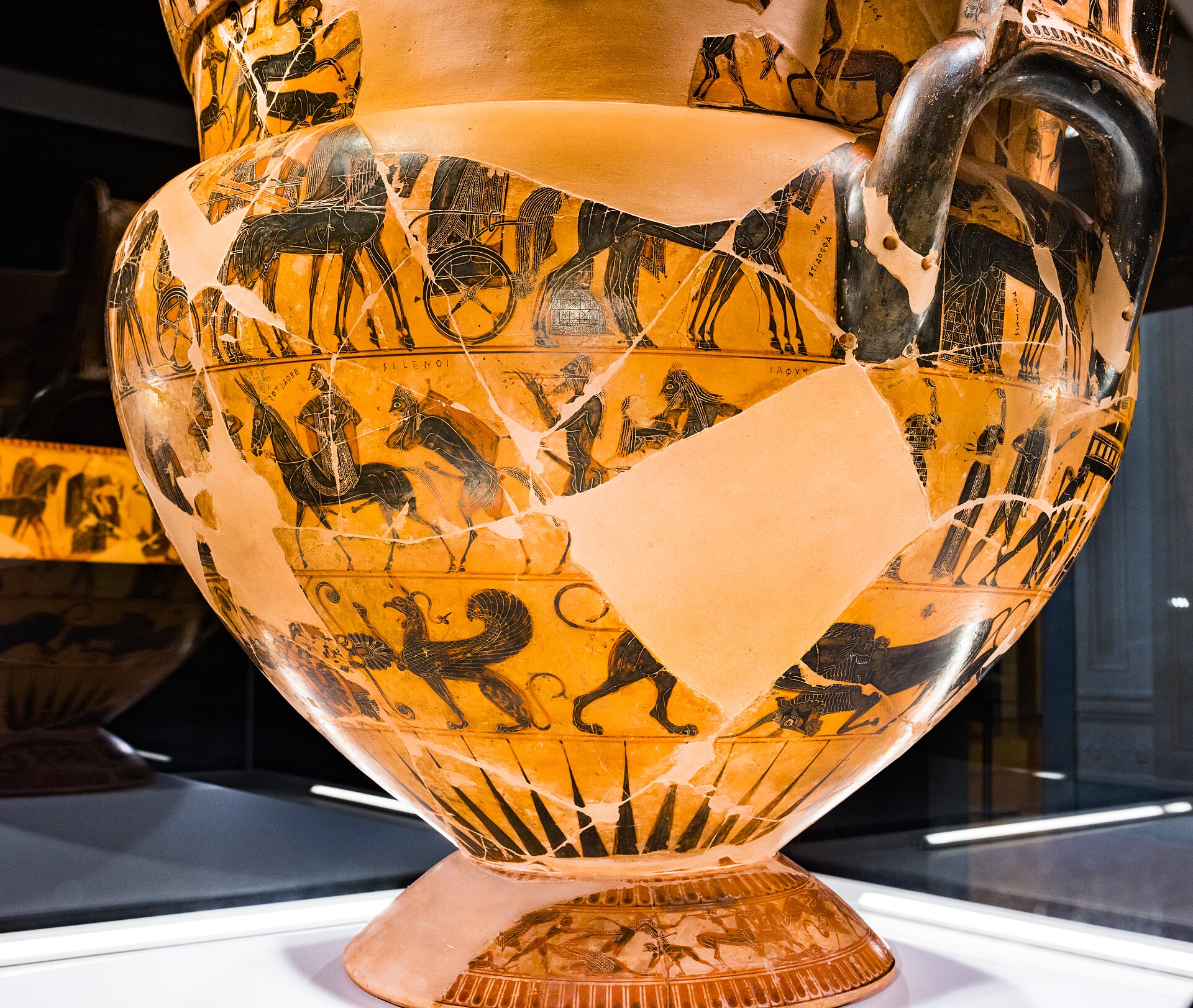
Greek mythology is the body of stories concerning the gods, heroes, monsters and rituals of the ancient Greeks; the myths explained natural events such as seasonal change, helped determine social and moral values, and deeply influenced ancient art and literature. In the popular piety of the Greeks the myths were viewed as true though complex accounts and formed the basis of religious beliefs and practices. Greek myths were intricately connected to religion and explained the origin and lives of the gods, where humanity had come from and where it was going after death; they gave faces and characters to the gods and offered practical advice on how to lead a happy life.
1. Origins and Oral Transmission
Fixing a beginning to Greek mythology is difficult, because it grew out of centuries of oral tradition rather than from a single founding text. Without wide-spread literacy the passing on of myths was first done orally, probably by Minoan and Mycenaean bards from the 18th century BCE onwards. The traditions of Greek religion were first recounted only orally as there was no sacred text, and later attempts were made to put this oral tradition in writing, notably by Hesiod in his Theogony and more indirectly in the works of Homer.
2. Theogony and the Birth of the Gods
The Theogony is an epic poem of 1,022 hexameter lines whose title derives from the Greek theogonia, meaning generations of the gods, and it describes the birth of the gods in the Greek pantheon. It was at first not actually written down but was part of a rich oral tradition, and it traces the history of the world from its creation through the battle between the Olympians and the Titans to the ascension of Zeus as the absolute ruler of the Olympian gods. It is the fullest and most important source of myths about the origin of the gods, including folktales and etiological myths, and Hesiod claims, like many other epic poets, to have been inspired by the Muses. The poem dates to the 8th century BCE. From Mnemosyne came the nine Muses: Clio, Euterpe, Thalia, Melpomene, Terpsichore, Erato, Polyhymnia, Urania and Calliope.
Earth lay with Heaven and bore deep-swirling Oceanus, Coeus and Crius and Hyperion and Iapetus, Theia and Rhea, Themis and Mnemosyne and gold-crowned Phoebe and lovely Tethys; after them was born Cronos the wily, youngest and most terrible of her children. The most important Titan gods were the twelve Uranides, among them Cronus, Oceanus, Iapetus, Hyperion, Crius, Coeus, Rhea, Tethys, Theia, Phoebe, Themis and Mnemosyne. The union of Earth and Sky created the one-eyed Cyclopes, Brontes, Steropes and Arges, and the three Hecatoncheires, Briareos, Cottus and Gyges, giants with 100 hands, 50 heads and a prodigious strength.
Hesiod composed two complete works that have come down to us, the Theogony and the Works and Days, both composed in the oral tradition, with various other works attributed to him including the Shield of Hercules and the Catalogue of Women; the Works and Days is an epic poem on the agricultural arts that includes elements of myth.
3. The Primordial Gods
The primordial gods were for the most part purely elemental beings, and even the few who were shown in anthropomorphic form remained inseparable from their native element. Uranus was the literal sky, and Gaea the body of the earth. Chaos was the Protogenos of the lower air, filling the gap between the bright mists of the heavenly aither and the floor of the earth, and from him were descended Erebus (darkness), Nyx (night), Aether (light) and Hemera (day).
Tartarus was the Protogenos of the great stormy pit which lay beneath the roots of the earth, the anti-heaven arched beneath the earth, and in his depths the Titans were imprisoned.
4. The Titans and the Titanomachy
Cronus was the son of Uranus (Heaven) and Gaea (Earth) and the youngest of the 12 Titans, who on the advice of his mother led his brothers in the ambush and castration of their father Uranus with a harpe, thus separating Heaven from Earth.
Cronus became king of the Titans and took his sister Rhea as consort, and she bore him Hestia, Demeter, Hera, Hades and Poseidon, all of whom he swallowed because his own parents had warned that he would be overthrown by his own child. Cronus had usurped control of the heavens from his father Ouranos and was constantly wary of the same thing happening to him from his own children. When Zeus was born Rhea hid him in Crete and tricked Cronus into swallowing a stone instead, and Zeus grew up, forced Cronus to disgorge his brothers and sisters, waged war on Cronus and was victorious. Cronus was a male deity worshipped by the pre-Hellenic population of Greece but probably not widely worshipped by the Greeks themselves; his functions were connected with agriculture, and in Attica his festival, the Kronia, celebrated the harvest.
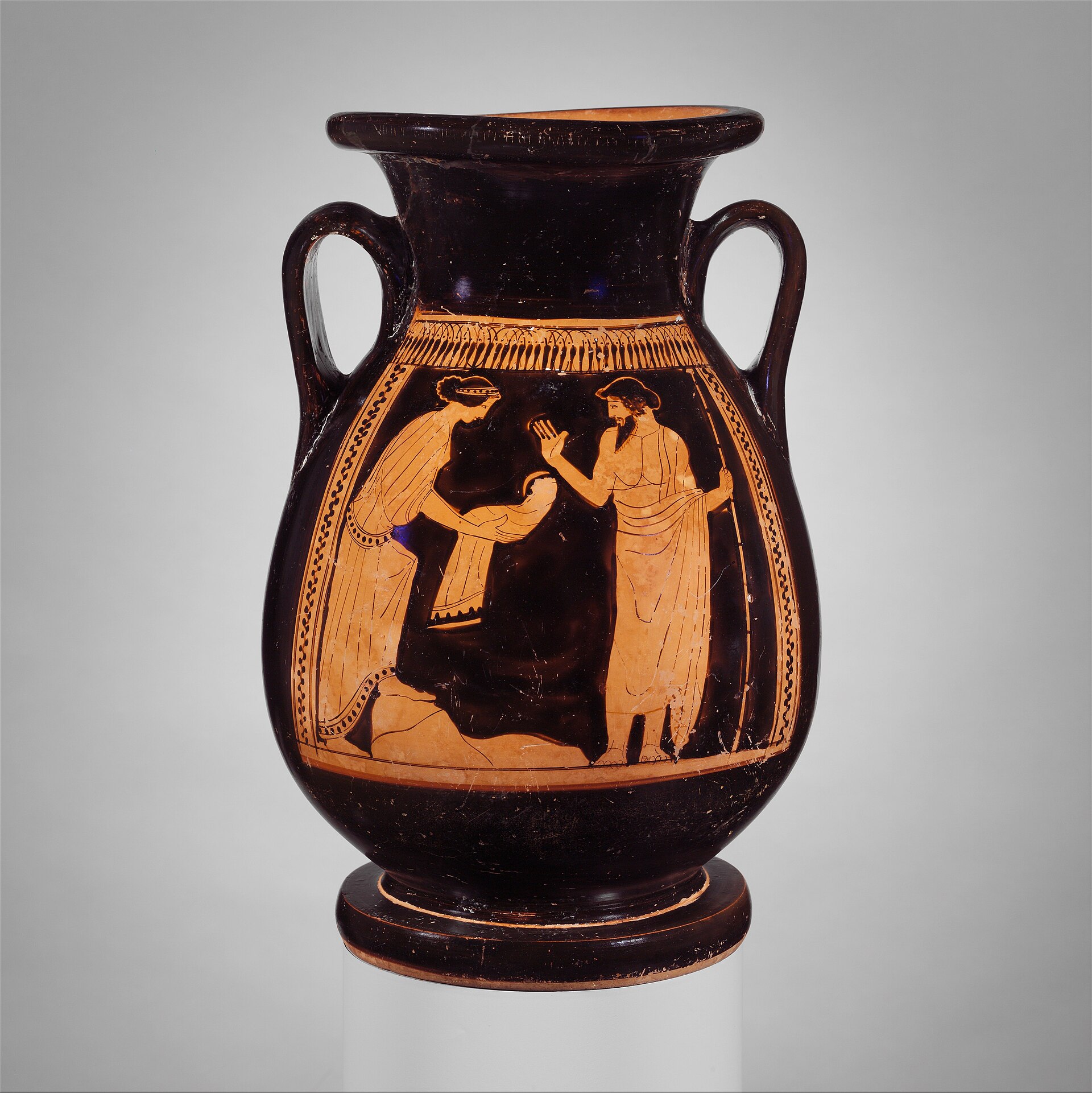
The Titanomachy was a ten-year battle in which the lawless Titans, encouraged by Gaia, immediately tried to wrestle control of the world from the Olympian gods. The eldest of the Titans, Cronus and his four brothers Crius, Coeus, Hyperion and Iapetus, were imprisoned in the stormy pit of Tartarus by Zeus after he was victorious, and some say the old Titan was later released by Zeus and appointed King of the Islands of the Blessed. The Titans were never worshipped as the other gods were, but through contrast they helped clarify the position in the universe of the Olympian gods who defeated the unruly and chaotic Titans.
Throwing the genitalia of Ouranos into the sea led to the birth of the goddess Aphrodite, and from the splashed blood sprang the Erinyes, Giants and Fates. Tartarus, a great chasm in the deepest, darkest part of the Underworld, was deeper than Hades and henceforth became known as a place of punishment.
5. Zeus and the Olympian Order
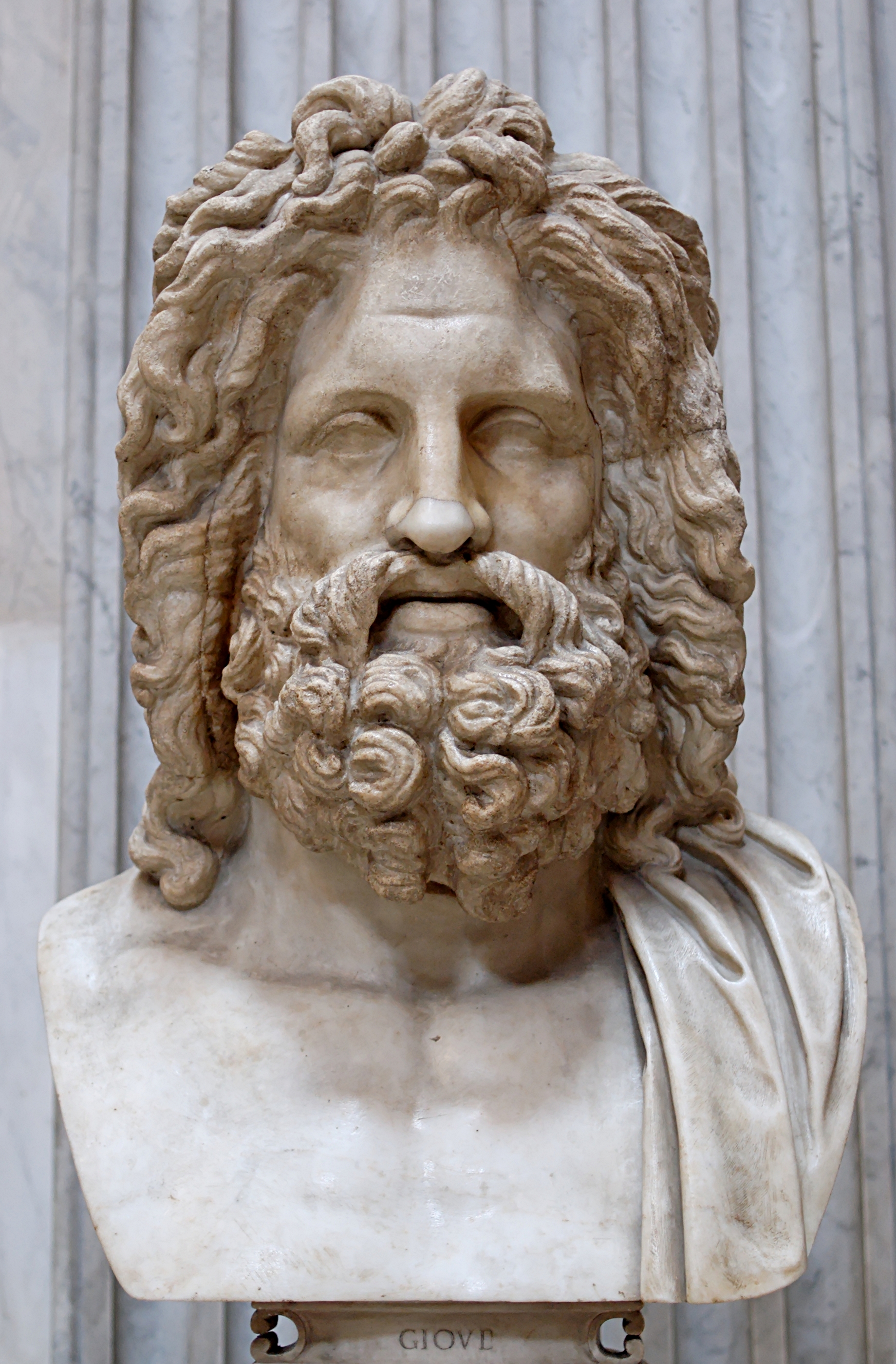
Zeus was the chief deity of the Greek pantheon, regarded as the sender of thunder and lightning, rain and winds, and his traditional weapon was the thunderbolt. He was originally an Indo-European deity, venerated in Mycenaean times. His wife Hera is the mother of Ares, Hebe and Hephaestus. Zeus was a sky and weather god identical with the Roman god Jupiter, and the Capitoline Triad, the main focus of Rome's state cult, consisted of Jupiter, Minerva (Athena) and Juno (Hera).
The 12 Olympians included Zeus and his five siblings, the primordial goddess Aphrodite, and Zeus's divine children Apollo, Artemis, Athena, Hermes and Ares, with Dionysus replacing Hestia in the pantheon.
6. The Olympian Deities
Athena stands among the twelve great Olympians as the goddess of war, fortifications and the defence of towns, and of good counsel and heroic endeavour; she was also a patron goddess of craftsmen. Poseidon held kingship of the sea and ranked as one of the twelve ruling gods of Olympus, lord of rivers, lakes and other sources of fresh-water, and god of horses and chariots; unlike the other Olympians he kept his residence in the sea rather than in heaven. The Olympian gods whom later Greek culture associates with its pantheon — Zeus, Poseidon, Hera, Athena, Artemis, Ares, Hermes and Dionysos — all appear in Mycenaean records.
7. Mount Olympus
Mount Olympus is a mountain in northern Greece, between Thessaly and Macedonia, believed to be the dwelling of the gods. According to Homer, it was the place where Zeus and the other Olympian deities had their palaces, and the words Olympus and Ouranos, or heaven, were synonymous. Its highest summit reaches 2,918 metres, and one of its summits, called the Throne of Zeus, resembles the backrest of a chair.
8. Homeric Epics
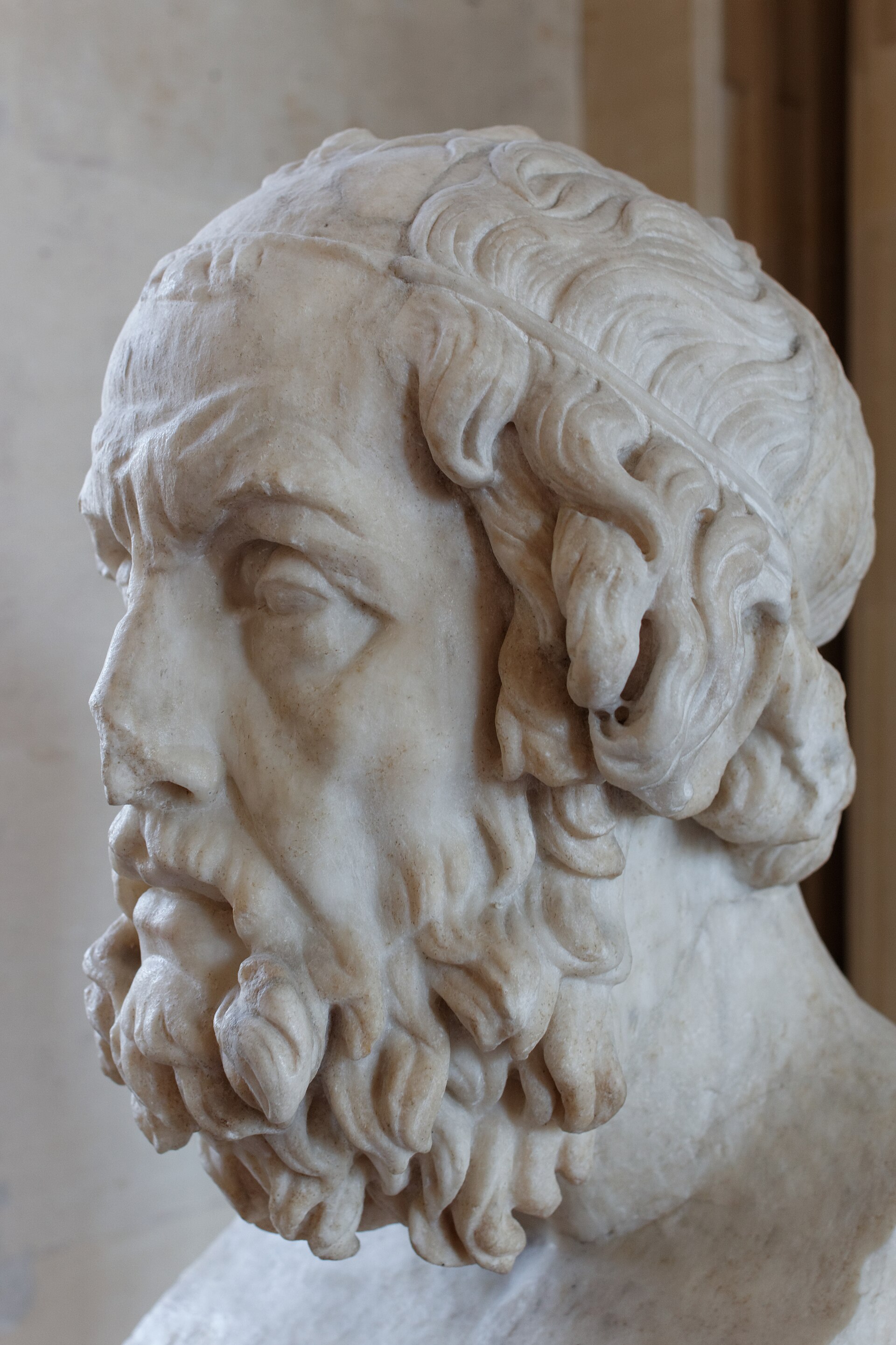
The most important and well-known works of Greek mythology are the epic poems of Homer, the Iliad and the Odyssey, which outline many of the characteristics of the Olympian gods and notable heroes. The Iliad is composed of 15,693 hexameters and is divided into 24 books corresponding to each letter of the Greek alphabet, and it traces the anger of Achilles over 51 days during the tenth and final year of the Trojan War.
Homer's work was hugely influential on Greek culture, and scenes from his works appeared in Greek sculpture, on Greek pottery, and in Greek tragedy and comedy; he was studied as part of Greek education, and his legends influenced Hellenistic and Roman culture.
9. Heroes and Demigods
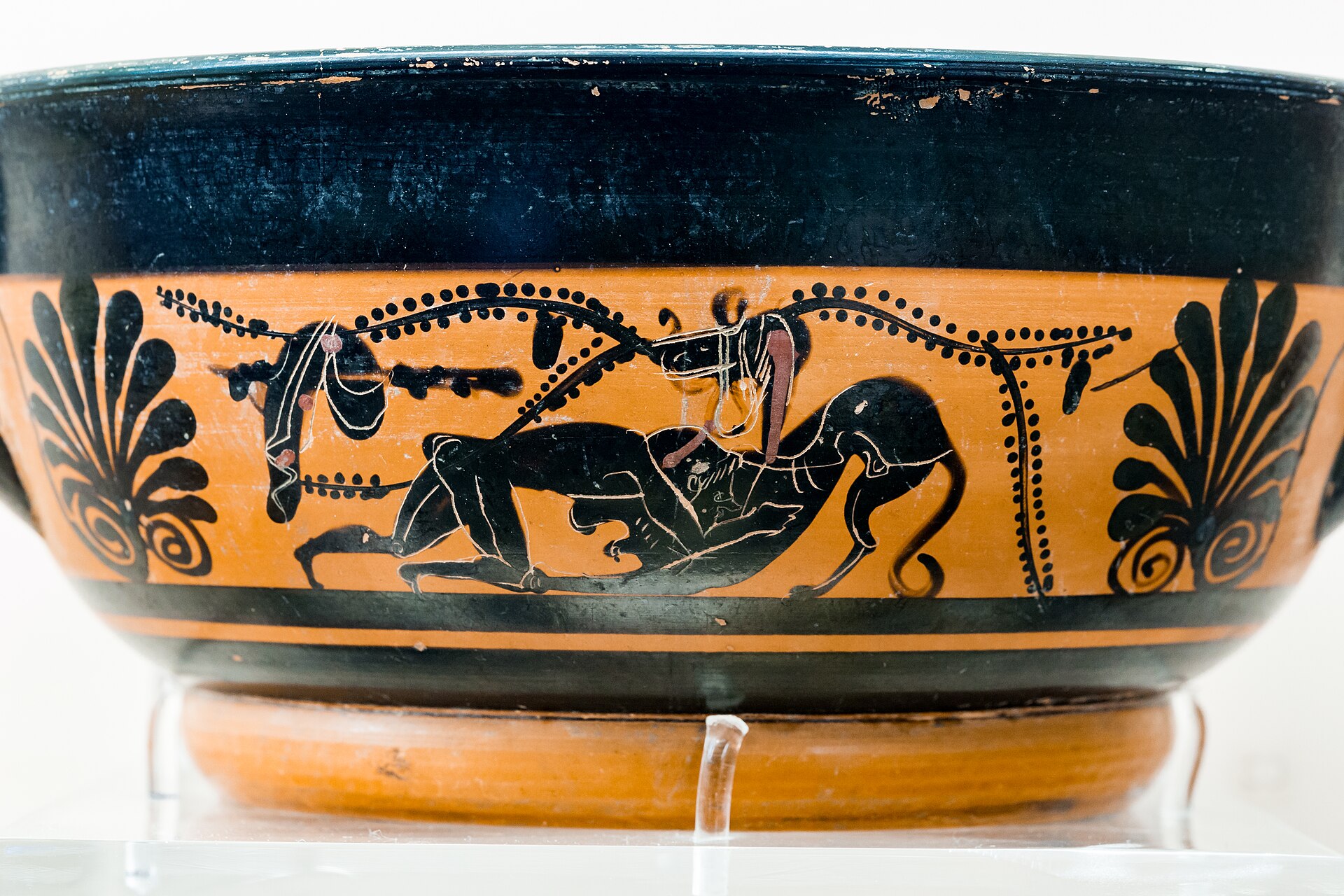
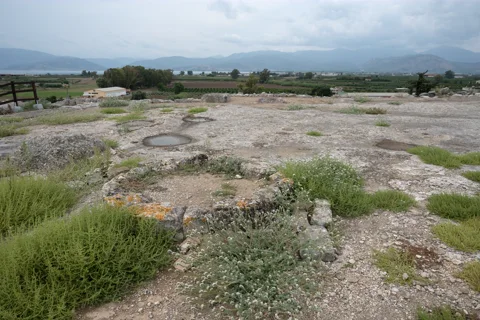
According to the ancient Greeks, the demigod Heracles, or Hercules as the Romans called him, was the son of a mortal woman named Alcmene and the supreme god Zeus. When he had recovered, Heracles consulted the oracle of Delphi, which ordered him to serve his relative Eurystheus, the king of Tiryns, who would order him to perform the twelve labors. The kings of Sparta and Macedonia claimed to be descendants of the demigod, and in the Hellenistic age many Greek colonies in the Eastern Mediterranean claimed Heracles as their founder.
10. Myth, Religion and Cult Practice
The great oracles such as that of Apollo at Delphi and Zeus at Dodona may well have begun as places considered particularly good to receive signs from the gods, and they became hugely important centres consulted by both individuals and city-states.
The four most famous festivals, each with its own procession, athletic competitions and sacrifices, were held every four years at Olympia, Delphi, Nemea and Isthmia; mystery cults such as the one at Eleusis were open only to initiates. The relationship between human beings and deities was based on the concept of exchange, and votive offerings, excavated from sanctuaries by the thousands, were a physical expression of thanks on the part of individual worshippers.
11. The Olympic Games
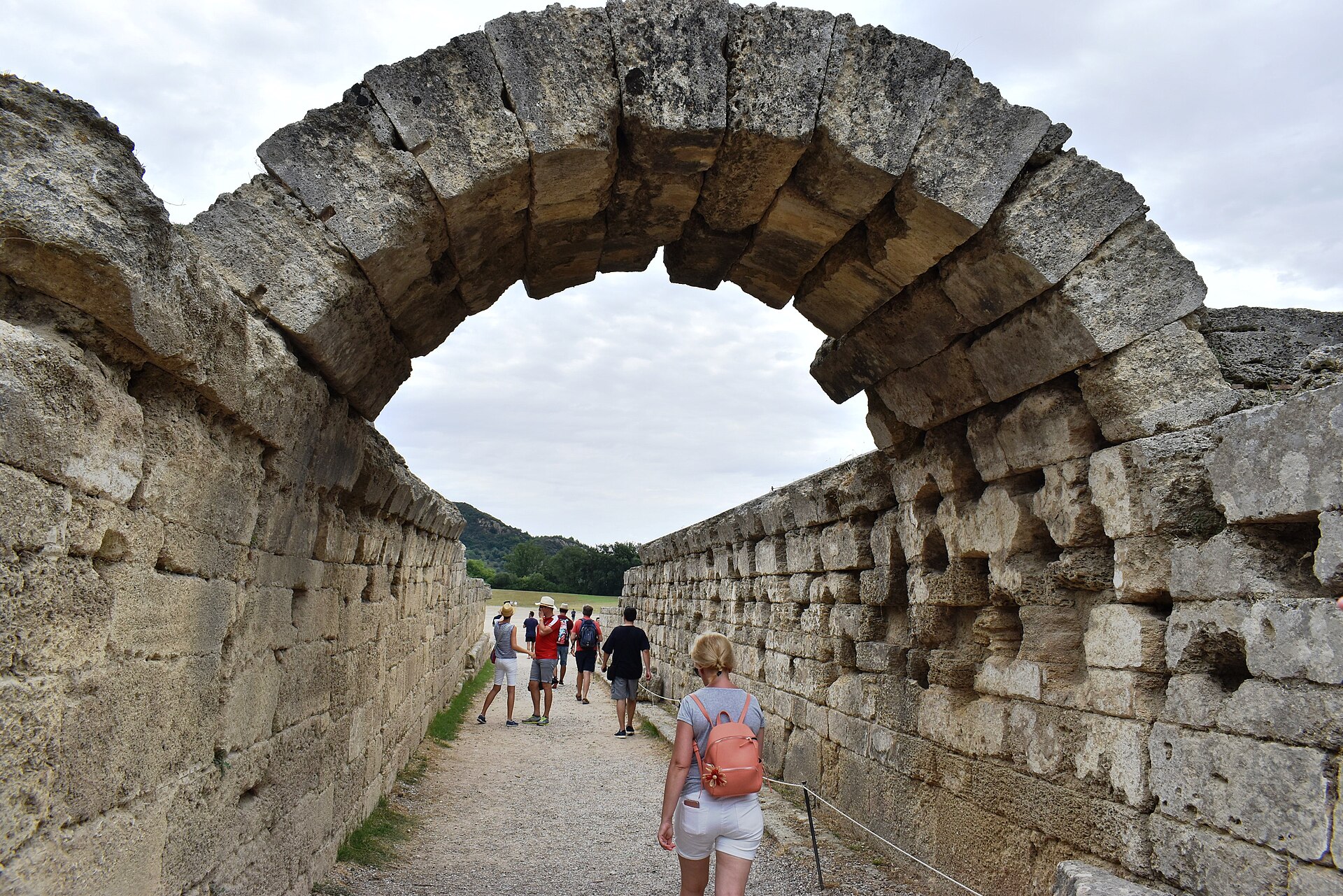
Another great sanctuary dedicated to Zeus stood at Olympia, where every four years from 776 BCE the Olympic Games drew crowds from all parts of the Greek world to honour the father of the gods. The festival was celebrated every fourth summer in honour of the supreme god Zeus. During it, a formal truce held between city states that were at war, allowing the contestants to travel to the sanctuary. Originally, the games consisted of a foot race of one stade, that is the length of the stadium, 192 meters. Theodosius I demanded an end to the Olympic Games, which he considered too pagan, and it was his grandson Theodosius II who really put an end to the games.
12. Archaeology and Decipherment
In May 1873 Schliemann claimed to have discovered Priam's treasure, a hoard of gold, valuable artefacts and jewellery that included the famous golden diadem photographed on his wife Sophia the following year. In 1876 the Turkish government brought a lawsuit against Schliemann, who promptly left the country and headed to Greece, where he began excavations at Mycenae and discovered the Greek Bronze Age Mask of Agamemnon.
The first examples of Linear B script were discovered at Knossos during the excavations made by Arthur Evans in March 1900; the majority of the clay tablets that survive date to the 13th century BCE. The script was deciphered by Michael Ventris in 1952 and has provided invaluable insights into the Mycenaean culture and its interaction with contemporary Mediterranean civilizations.
13. Scepticism and Later Reception
From the 6th century BCE the first documented scepticism and even rejection of the myths began with the pre-Socratic philosophers, while in the 5th century BCE the first historians Herodotus and Thucydides sought to document events as accurately as possible.
Yet Greek mythology continued to be popular through the centuries, and major public buildings such as the Parthenon at Athens, the Temple of Zeus at Olympia and the Temple of Apollo at Delphi were decorated with sculpture representing myths; in the 5th century BCE the myths were presented in the new format of theatre.
14. Key Dates
-
18th century BCE onwardsOral transmission of mythsWithout wide-spread literacy the passing on of myths was first done orally, probably by Minoan and Mycenaean bards from the 18th century BCE onwards.2Greek Mythology · World History Encyclopedia ↗
-
13th century BCESurviving Linear B tabletsThe majority of the clay tablets that survive date to the 13th century BCE.12Linear B Script · World History Encyclopedia ↗
-
6th century BCEFirst documented scepticismFrom the 6th century BCE the first documented scepticism and even rejection of the myths began with the pre-Socratic philosophers.2
-
5th century BCEThe first historiansIn the 5th century BCE the first historians Herodotus and Thucydides sought to document events as accurately as possible.2
-
March 1900Discovery of Linear B at KnossosThe first examples of Linear B script were discovered at Knossos during the excavations made by Arthur Evans in March 1900.12
15. Timeline: from the Bronze Age to the decipherment of Linear B
- c. 1600 BCEMycenaean culture flourishesThe Mycenaean civilization dominated mainland Greece; its palaces and Linear B records preserve some of the earliest evidence of Greek religion.
- c. 1450 BCEMinoan Crete declinesMinoan culture on Crete, from which much of Greek mythology is thought to have evolved, came to an end as Mycenaean influence spread.
- c. 1200 BCECollapse of the Mycenaean palacesNatural disasters, unrest and warfare destroyed the Mycenaean centres, and with them the Linear B script disappeared.
- 776 BCEFirst Olympic GamesAccording to later sources the Olympic Games began at Olympia, celebrated every four years in honour of Zeus.
- c. 750 BCEHomer and the great epicsThe Iliad and the Odyssey took shape, describing the Trojan War and the voyage of Odysseus with the gods intervening at every turn.
- 724 BCEThe games expandThe double stade race was introduced; the long-distance race, wrestling, pentathlon, boxing, chariot racing and further contests followed in the coming decades.
- c. 700 BCEHesiod composes the TheogonyHesiod's poem set out the generations of the gods from Chaos to the triumph of Zeus, becoming the fullest surviving ancient account of Greek cosmogony.
- 460 BCETemple of Zeus at OlympiaThe temple was built at Olympia and housed the gigantic gold and ivory statue of Zeus by Pheidias, one of the Seven Wonders of the ancient world.
- 447 BCEConstruction of the ParthenonThe Parthenon was built in Athens under the direction of Phidias, its sculptures celebrating the city's gods and myths.
- 280 BCEColossus of RhodesA colossal representation of the sun god Helios was built in Rhodes town harbour, one of the Seven Wonders of the Ancient World.
- 1870 CEExcavations begin at HisarlikHeinrich Schliemann, guided by Frank Calvert, began excavations at the mound of Hisarlik in search of Homer's Troy.
- May 1873Priam's Treasure claimedSchliemann claimed to have discovered a hoard of gold and jewellery which he identified with the treasure of Priam, the king of Troy.
- 1876 CEThe Mask of AgamemnonAfter leaving Turkey, Schliemann began excavations at Mycenae, where he discovered a gold funeral mask that he attributed to Agamemnon.
- March 1900Linear B discovered at KnossosArthur Evans found the first examples of the yet-undeciphered Linear B script during his excavations at Knossos in Crete.
- 1952 CELinear B decipheredMichael Ventris deciphered the script, opening a window on Mycenaean Greece, its economy and its worship of gods such as Zeus and Poseidon.
References (20)
- 1Greek mythology | Gods, Goddesses, Stories, Names, & Facts — Encyclopaedia Britannica WebView source
- 2Greek Mythology — World History Encyclopedia Web↩View source
- 3Ancient Greek Religion — World History Encyclopedia WebView source
- 4Theogony — World History Encyclopedia WebView source
- 5Hesiod, Theogony, lines 104-138 (English, trans. Evelyn-White) — Perseus Digital Library, Tufts University WebView source
- 6The Titans & Titanesses (Titanes) — Theoi Project (Aaron J. Atsma) WebView source
- 7Titan: The Gods Defeated by the Greek Olympians — World History Encyclopedia WebView source
- 8Cronus | Father, Myth, Children, & Facts — Encyclopaedia Britannica WebView source
- 9Zeus | Myths, Wife, Children, & Facts — Encyclopaedia Britannica WebView source
- 10Zeus — Livius.org (Jona Lendering) WebView source
- 11The Olympian Gods (Theoi Olympioi) — Theoi Project (Aaron J. Atsma) WebView source
- 12Linear B Script — World History Encyclopedia Web↩View source
- 13Olympus (Mount) — Livius.org (Jona Lendering) WebView source
- 14Homer — World History Encyclopedia WebView source
- 15Heracles — Livius.org (Jona Lendering) WebView source
- 16Greek Gods and Religious Practices — The Metropolitan Museum of Art, Heilbrunn Timeline of Art History WebView source
- 17Zeus — World History Encyclopedia WebView source
- 18Olympic Games — Livius.org (Jona Lendering) WebView source
- 19Discovery of Troy — World History Encyclopedia WebView source
- 20Hesiod — World History Encyclopedia WebView source
 Tiryns
 Alexander the Great