Coffee
How a plant from the Ethiopian highlands became the world's drink — from Yemeni Sufi rituals and Ottoman coffeehouses to a global commodity grown across the Coffee Belt.
Coffee is a beverage brewed from the roasted and ground seeds of Coffea arabica and Coffea canephora, which together supply almost all of the world's consumption. Wild coffee originated in the Ethiopian highlands; cultivation and the coffeehouse tradition took shape in Yemen and the Ottoman world before spreading to Europe, the Americas and Asia. Today coffee is among the most traded agricultural commodities on Earth, produced by millions of farmers across the Coffee Belt and monitored by the International Coffee Organization.

In this article
- 1Overview
- 2The Coffee Plant and Its Two Principal Species
- 3Origins and Early Cultivation
- 4The Coffeehouse and Its Culture
- 5Spread to Europe and the Americas
- 6Coffee in Ethiopia
- 7Coffee in the Americas and the Colonial Plantation Economy
- 8Production, Trade and the Global Market
- 9Governance and International Institutions
- 10Coffee as a Subject of Science and Health
- 11Coffee in Cultural Heritage and Landscape
- 12Timeline of Coffee History
- 13Frequently Asked Questions
- 14Timeline: from the Kaldi legend to International Coffee Day
- 15Knowledge graph
Overview
Coffee is a beverage brewed from the roasted and ground seeds of tropical evergreen plants of African origin, and it ranks among the three most popular beverages in the world. Two plant species, Coffea arabica and Coffea canephora, known as robusta, supply almost all of the coffee consumed worldwide.
1. The Coffee Plant and Its Two Principal Species
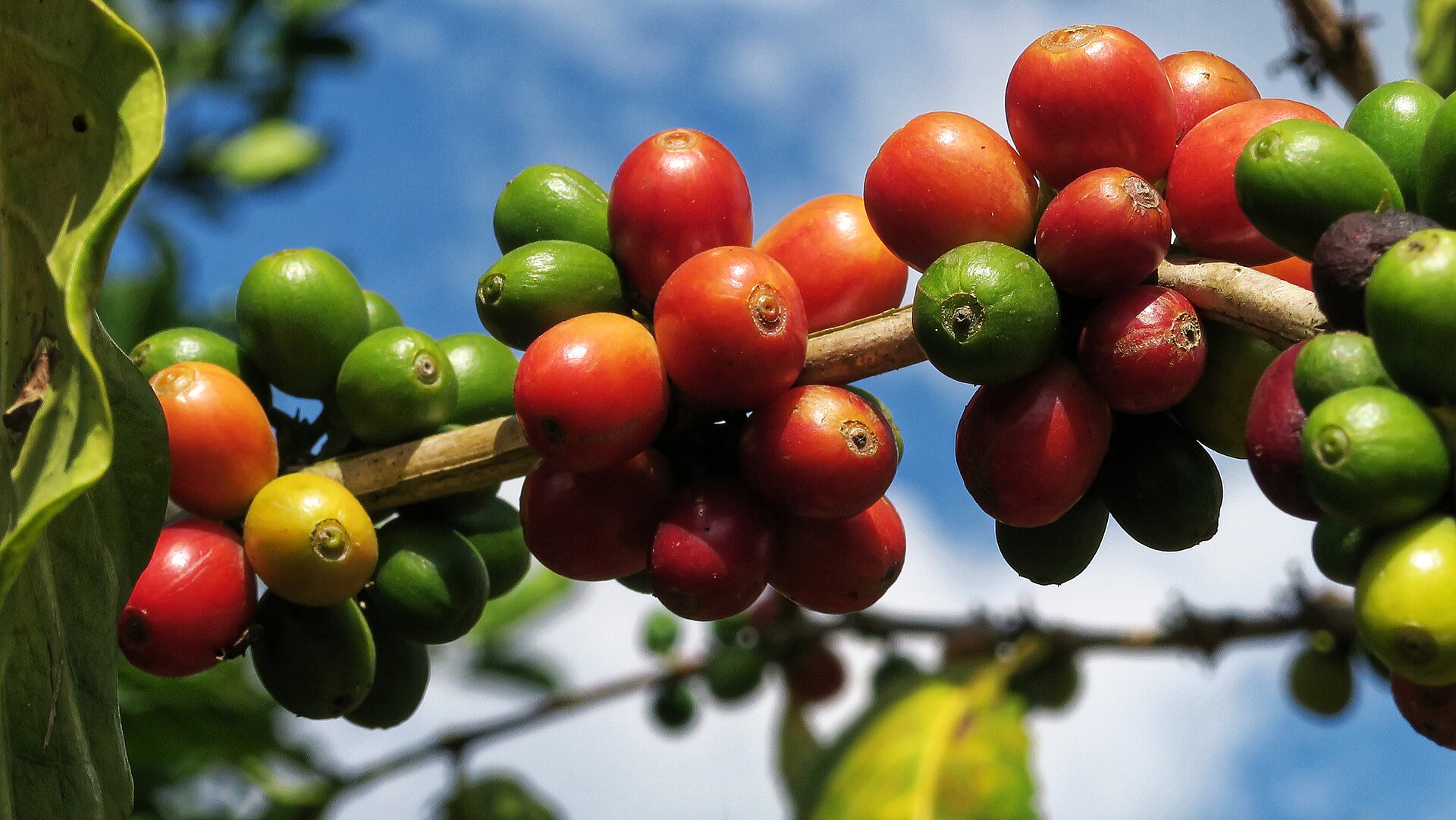
The coffee plant is a woody shrub or small tree distinguished by glossy, elliptical leaves whose veins stand out prominently across the surface. Its flowers are white, star-shaped and fragrant, borne in clusters of two to nine, and they give way to two-seeded berries that ripen through a sequence of green, yellow and red. On older branches the bark develops a fissured texture. The genus name Coffea itself descends from the Arabic word kahwah, meaning beverage.
Coffea arabica is native to Ethiopia, yet it has been cultivated in Arabia for more than a thousand years.
2. Origins and Early Cultivation
The coffee plant is generally thought to be native to the Ethiopian plateau region known as Kefa, or Kaffa, though the precise history of its origin and domestication remains uncertain. A widely told legend concerns Kaldi the goatherd, who around 850 CE is said to have sampled the berries after observing his flock's strange antics. What is documented is that Ethiopian farmers have long used the dry, or natural, method, an ancient technique that dries whole coffee cherries in intense sunlight. After harvesting, many farmers spread the fresh-picked whole cherries on mats in the sun, turning them by hand at regular intervals over four weeks so that the coffee dries evenly.
Coffee was first adopted by members of the Shadhiliyya mystic order, established in Tunisia and then in Egypt in the 13th century, who promoted it as a valuable adjunct to their spiritual exercises. The Italian botanist Prospero Alpini traveled to Egypt in 1580 and, after returning to Europe, published observations that included a peculiar plant, the coffee bush. Alpini recorded that the Arabians and Egyptians made a decoction of coffee which they drank instead of wine, sold in all their public houses as wine was sold in Europe.
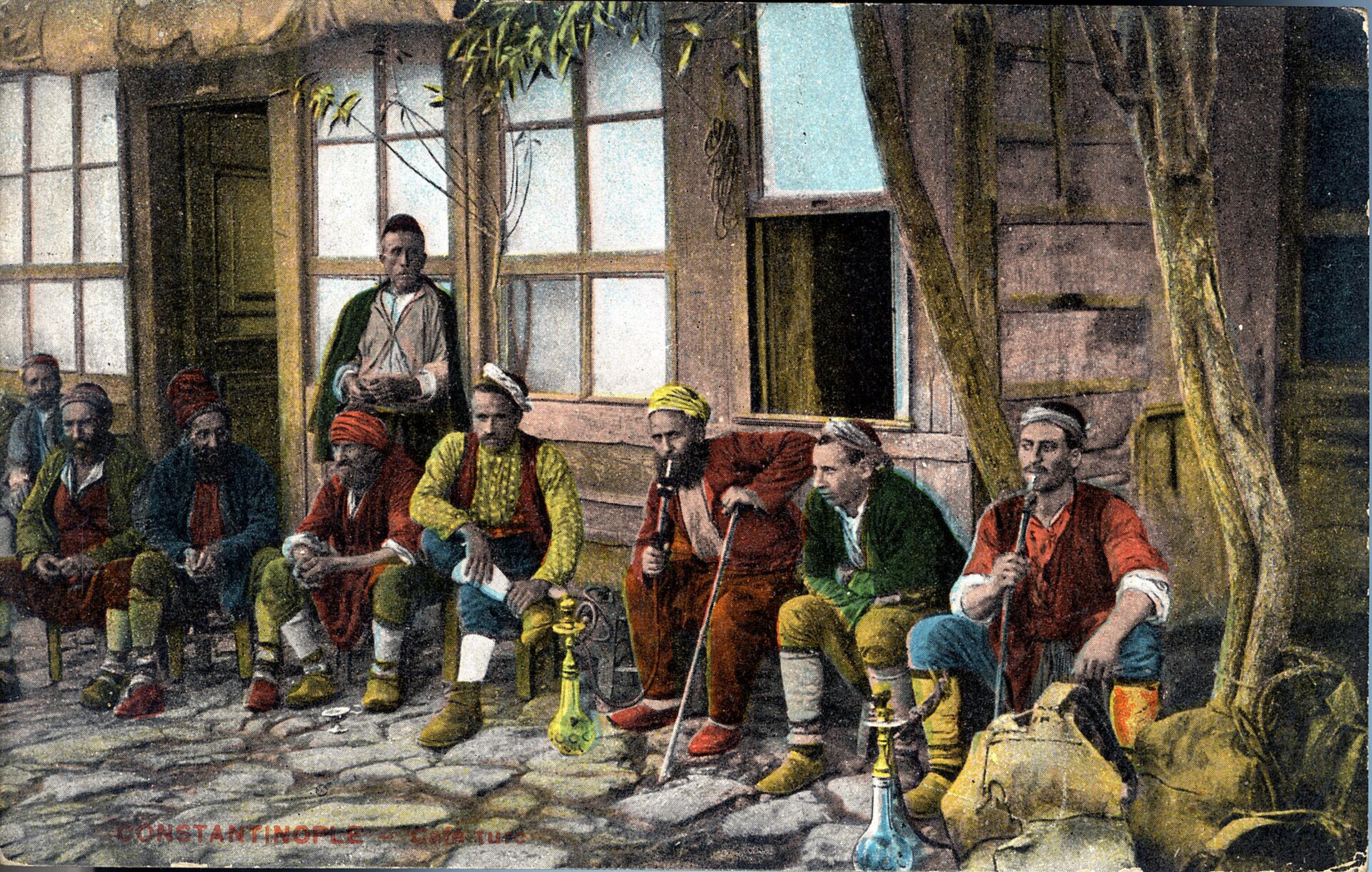
Despite threats of severe penalties, coffee drinking spread rapidly, giving rise to the coffeehouse; called qahveh khanehs, these establishments appeared in Mecca in the 15th century and in Constantinople, now Istanbul, in the 16th. From Yemen, fitfully and partially part of the Ottoman Empire, coffee spread to the overseas possessions of the Dutch, French, British and others, including Java, Surinam, Reunion, Martinique, India and Ceylon. Coffee was so important to Yemen that the national emblem shows an eagle whose chest bears a shield depicting a coffee plant.
3. The Coffeehouse and Its Culture
Coffeehouses were suppressed from time to time on suspicion of being sites of sedition, yet even after repeated efforts they could not be shut down. They created a distinctive culture of intellectual exchange in which artists, craftsmen, poets, performers, merchants and bureaucrats mingled over conversation, board games, music, storytelling and poetry recitation. European coffeehouses, linked to the emergence of the public sphere and modern democratic values, are effectively descendants of this dynamic early modern Islamic coffeehouse culture.
Businesses emerged from specialized coffee houses: Lloyd's of London, the global insurance marketplace, began at Edward Lloyd's Coffee House. Colonial American coffeehouses followed the London model and became powerful social catalysts, providing a forum for the exchange of ideas and the distribution of news.

4. Spread to Europe and the Americas
Until the close of the 17th century the world's limited supply of coffee came almost entirely from Yemen; as the drink grew more popular, the plant spread to Java and the Indonesian archipelago in the 17th century and to the Americas in the 18th.
Coffee, tea and chocolate arrived in 17th-century Europe amid expanding exploration and trade, causing a near revolution in drinking habits and giving rise to social institutions such as the coffeehouse and the ritual of afternoon tea.
Tea remained the favored drink in the New World until King George III imposed a heavy tax in 1773; the protest that followed, the Boston Tea Party, forever changed Americans' beverage preference to coffee.
5. Coffee in Ethiopia
Emperor Menelik, who reigned from 1889 to 1913, drank coffee openly to encourage his Christian subjects to do the same, aiming to stimulate the domestic market and unite the nation; today about 40 per cent of Ethiopia's coffee is consumed locally. In 2010 the Kafa zone was included in the UNESCO World Network of Biosphere Reserves; located about 460 km southwest of Addis Ababa, the Kafa reserve is the birthplace of wild arabica coffee and holds close to 5,000 wild varieties.
6. Coffee in the Americas and the Colonial Plantation Economy
Coffee became a major crop in Brazil about the same time as cotton in the United States; by 1850 it had almost displaced sugar in the Sao Paulo region, and four times more slaves worked on coffee than on sugar. Cheap fertile land and slave labor allowed Brazilian coffee prices to plummet after 1820 and stay low until the last quarter of the century, creating supply-induced demand.
Even after its relative output diminished by the mid-1980s, coffee was the principal export of seven Latin American countries and the second export of another two, making it the continent's most important agricultural export after petroleum.
7. Production, Trade and the Global Market
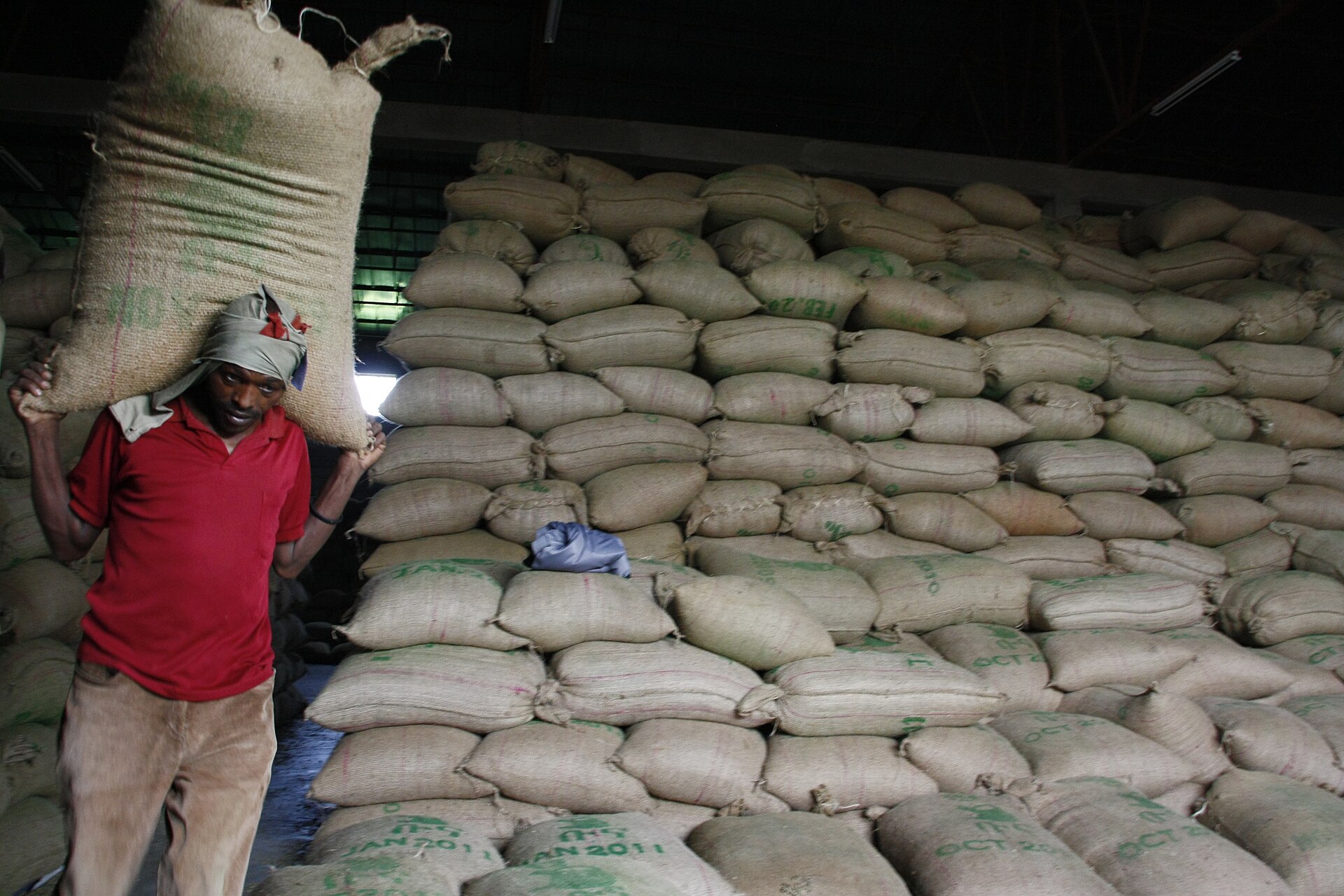
World coffee production for 2026/27 is forecast 10.8 million bags higher than the previous year at a record 189.7 million bags, driven by record output in Brazil, Ethiopia, Uganda and Vietnam. World consumption is forecast at a record 179.7 million 60-kg bags. Brazil's combined arabica and robusta harvest is forecast to rise 8.9 million bags to a record 71.9 million in the 2026/27 season, as arabica output rebounds from five years of underperformance. Vietnam's coffee production is forecast to increase 800,000 bags to a record 32.5 million on expanding area and higher yields. Ethiopia is forecast to increase coffee output by more than 500,000 bags to a record 12.1 million bags, with growth driven by replacing over half the cultivated area with higher-yielding varieties. Coffee prices dropped 25 percent in the seven months to July 2026 as additional supplies became available, as measured by the ICO monthly composite price index.
In 2023 the top coffee-producing countries were Brazil, Vietnam, Colombia, Indonesia and Ethiopia, all lying in the equatorial growing region known as the Coffee Belt.
8. Governance and International Institutions
The 1960s saw the emergence of the International Coffee Organization, a cartel of producing and consuming states that attempted to influence the world price of coffee from the 1960s until 1989 through export quotas. The organization collects and compiles independent official statistics on coffee production, trade and consumption, supports technical cooperation projects and promotes sustainability and coffee consumption. On 10 March 2026 the United Nations General Assembly officially designated 1 October as International Coffee Day through resolution A/RES/80/248 of the General Assembly.
9. Coffee as a Subject of Science and Health
Espresso is a preparation method in which highly pressurized hot water is forced over ground coffee; Illy defines it as hot water at 88-93 degrees Celsius under nine or more atmospheres passing through a seven-gram layer of tamped coffee. Desiderio Pavoni bought Luigi Bezzera's patents in 1903 and improved the design, adding the first pressure release valve and a steam wand; at the 1906 Milan Fair the two men introduced caffe espresso to the world.
The main methods of decaffeination rely on chemical solvents, carbon filtering, carbon dioxide extraction or triglycerides, and the caffeine is always removed in the green bean stage before roasting.
10. Coffee in Cultural Heritage and Landscape
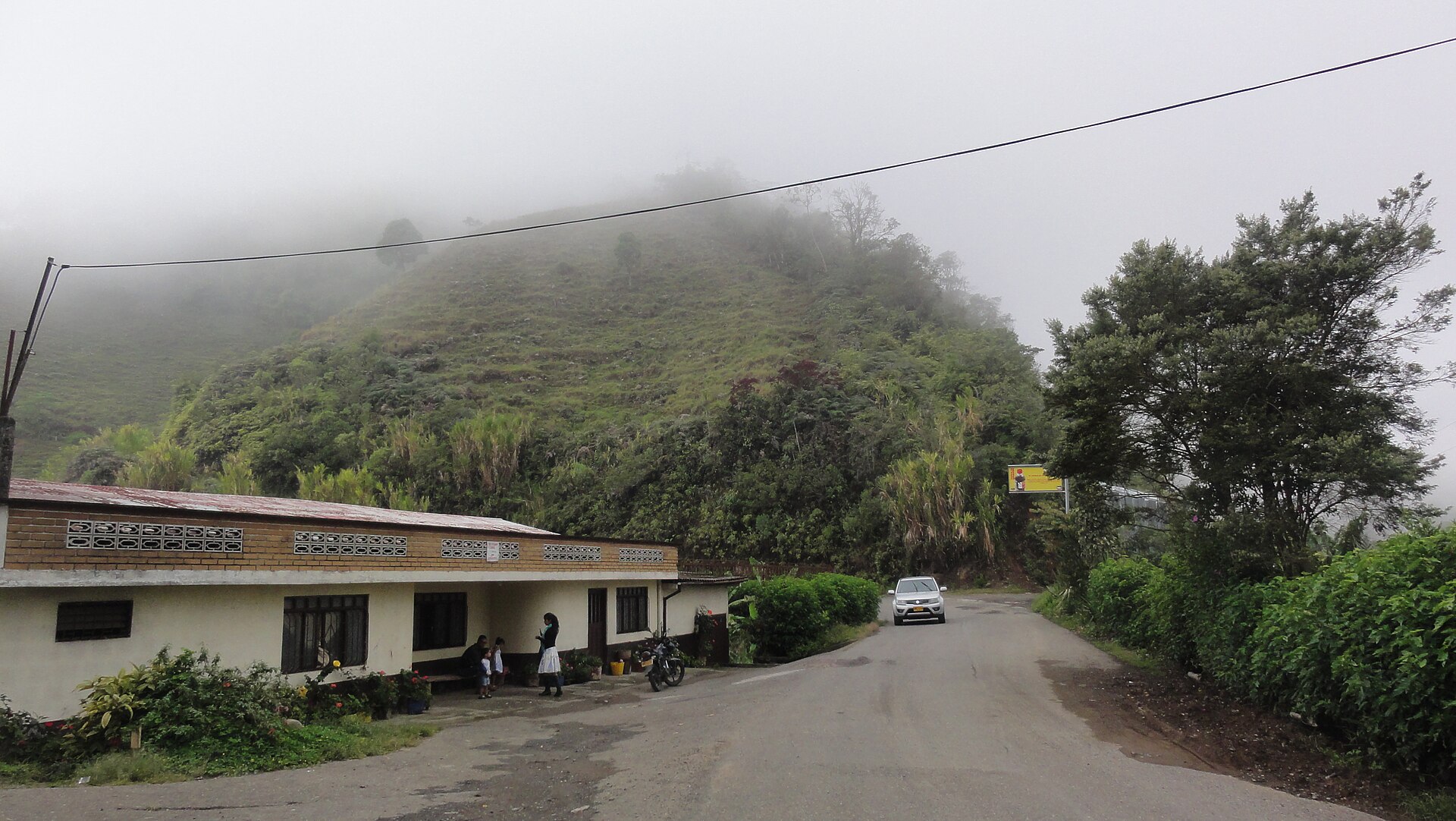
The Coffee Cultural Landscape of Colombia is a continuing productive landscape of six sites that integrate eighteen urban settlements, inscribed in 2011. The landscape results from the adaptation of Antioquian settlers who arrived in the 19th century, creating an economy and culture deeply rooted in coffee production. Coffee farms sit on steep mountain ranges with slopes of over 25 percent, terrain that shapes plot layouts and the lifestyle of the cafeteros.
Mocha, a port on Yemen's Red Sea coast, has been associated with coffee since its founding in the 1300s, though its heyday came with the rise of European coffee culture in the 1700s.
11. Timeline of Coffee History
-
about 850 CEKaldi legendThe traditional account of coffee's discovery by the goatherd Kaldi.
-
13th centuryShadhiliyya orderThe Sufi order is established in Tunisia and later in Egypt.
-
1436Ottoman occupation of YemenOttoman rule begins in Yemen.
-
15th centuryCoffee in Yemen and MeccaCoffee is grown in what is now Yemen; qahveh khanehs appear in Mecca; Sufi saints introduce the hot beverage. 10History of coffee · National Coffee Association of U.S.A. (About Coffee) ↗
-
16th centuryCoffeehouses and regional popularity
-
1580Prospero Alpini in EgyptThe Italian physician travels to Egypt.
-
17th centurySpread to Java and EuropeThe plant spreads to Java and the Indonesian archipelago, and coffee is introduced into one European country after another. 1
-
1690sDutch bring coffee to JavaDutch growers establish coffee on Java.
-
1737Linnaeus names the genusCoffee is placed in the genus Coffea.
-
1773Boston Tea PartyThe protest that shifted American drinking habits toward coffee.
-
1813Count Rumford's essayAn essay on the preparation of coffee is published.
-
1823James Smithson's paperA scientific paper on coffee appears.
-
1850Brazil's dominanceBrazil produces over half the world's coffee.
-
1884Angelo Moriondo patentA patent is granted for an espresso machine design.
-
1889–1913Reign of Emperor MenelikThe Ethiopian emperor's reign, a period tied to the country's coffee culture.
-
1890–1901Brazilian production boomOutput expands under the colono system.
-
1903Pavoni buys Bezzera patentsDesiderio Pavoni acquires Luigi Bezzera's patents and improves the design, adding the first pressure release valve and a steam wand. 17The Long History of the Espresso Machine · Smithsonian Magazine ↗
-
1906Milan Fair and valorizationPavoni and Bezzera introduce caffe espresso to the world at the Milan Fair; Brazil's valorization program begins. 17
-
1962First International Coffee AgreementThe first international agreement governing coffee trade is concluded.
-
1963ICO establishedThe International Coffee Organization is founded.
-
1989End of export quotasThe ICO's export quota system is suspended.
-
2010Kafa zone recognizedThe Kafa zone is included in UNESCO Biosphere Reserves.
-
2011Colombia's coffee landscape inscribedThe Coffee Cultural Landscape of Colombia is inscribed.
-
10 March 2026International Coffee Day designatedThe United Nations designates 1 October as International Coffee Day.
12. Frequently Asked Questions
What is the Coffee Belt?
The equatorial growing region in which the leading coffee-producing countries lie.6History of coffee | Origin, Spread, Ethiopia, Arabia, Facts, & Timeline · Encyclopaedia Britannica ↗
Which countries were the top coffee producers in 2023?
Brazil, Vietnam, Colombia, Indonesia and Ethiopia.6
What are the three services of the Ethiopian coffee ceremony?
They are known by the Arabic loanwords abol, tona and baraka, meaning first, second and blessing.4Ethiopia, the home of coffee · UNESCO ↗
What is the FDA's daily caffeine guidance?
For most adults the FDA cites 400 milligrams a day, about two to three 12-fluid-ounce cups of coffee, as an amount not generally associated with negative effects.19Spilling the Beans: How Much Caffeine is Too Much? · U.S. Food and Drug Administration ↗
How much of the world's coffee production is arabica?
Coffea arabica accounts for roughly 60 percent of global production.16Coffee: facts, data and global perspectives · Food and Agriculture Organization of the United Nations (FAO) ↗
How does robusta's caffeine content compare with arabica's?
Robusta has about twice the caffeine content of arabica.1
At what elevations do the two main coffee species grow?
Arabica requires higher elevations of 600-2,000 metres (2,000-6,500 feet), while robusta grows from sea level to 2,000 feet.1
How much caffeine is in a cup of brewed coffee, and in decaf?
How large is the coffee sector in economic and human terms?
What share of coffee farms are smallholdings, and how much of world production does the ICO represent?
13. Timeline: from the Kaldi legend to International Coffee Day
- c. 850 CEThe legend of KaldiOne of the oldest legends of coffee's discovery tells of Kaldi, a goatherd who sampled the berries of an evergreen bush after noticing his flock's strange antics, and proclaimed the discovery.
- 1436Ottoman rule reached YemenAfter the Ottoman Turks occupied Yemen, coffee's popularity spread with the empire, carried by Muslim pilgrims throughout the Islamic world by the end of the 15th century.
- mid-15th centurySufi saints brew qahwa in YemenCoffee as a hot beverage was introduced to the world by Sufi saints in 15th-century Yemen, who drank qahwa to stay awake during night-long meditation and recitation rituals.
- 1582Coffee sellers honoured in IstanbulDuring the Ottoman imperial circumcision festival in Istanbul, the guild of coffee sellers performed for Sultan Murad III, portraying coffee as a boon for scholars.
- 1615Coffee reaches VeniceCoffee arrived in Venice, where local clergy condemned it and the controversy grew until Pope Clement VIII was asked to intervene; after tasting it he granted papal approval.
- 1690sThe Dutch plant coffee in JavaThe Dutch were the first European colonial power to plant coffee successfully in their colonies, bringing it to Java in the 1690s.
- 1723A seedling for the AmericasGabriel de Clieu carried a coffee seedling from the king's tree in Paris to Martinique; that plant became the parent of the first coffee trees in the Caribbean and South America.
- 1773The Boston Tea Party and American coffeeAfter King George III imposed a heavy tax on tea, the Boston Tea Party protests forever changed Americans' beverage preference from tea to coffee.
- 1825Coffee cultivation starts in HawaiiCoffee cultivation began in the Hawaiian Islands, the only United States state suited to growing the crop.
- 1850Brazil becomes the world's leading producerBy 1850 Brazil was producing over half the world's coffee, and by 1906 it produced almost five times as much as the rest of the world combined.
- 1884Patent for the first espresso machineAngelo Moriondo of Turin was granted a patent in 1884 for new steam machinery for the economical and instantaneous confection of coffee beverage.
- 1906Brazil defends its coffee marketWorld coffee output was transformed by Brazil's valorization program from 1906, which deeply affected the market up to the late 1930s.
- 1963The International Coffee Organization is foundedThe ICO was established in 1963 under the aegis of the United Nations, following the approval of the first International Coffee Agreement in 1962.
- 1989The end of the coffee cartel eraThe ICO, a cartel of producing and consuming states, attempted to influence the world price of coffee from the 1960s until 1989 through export quotas.
- 1 October 2026International Coffee Day established by the UNOn 10 March 2026 the United Nations General Assembly officially designated 1 October as International Coffee Day through resolution A/RES/80/248 of the General Assembly.
References (20)
- 1Coffee | Origin, Types, Uses, History, & Facts — Encyclopaedia Britannica Web↩View source
- 2Coffea arabica (Arabian coffee) — Missouri Botanical Garden, Plant Finder WebView source
- 3Savor the flavors of an ancient coffee — National Geographic WebView source
- 4Ethiopia, the home of coffee — UNESCO Web↩View source
- 5How Coffee, Chocolate and Tea Overturned a 1,500-Year-Old Medical Mindset — Smithsonian Magazine 1500 WebView source
- 6History of coffee | Origin, Spread, Ethiopia, Arabia, Facts, & Timeline — Encyclopaedia Britannica Web↩View source
- 7The Global Coffee Economy in Africa, Asia, and Latin America, 1500-1989 (introduction) — Library of Congress catalog sample / Cambridge University Press (Clarence-Smith & Topik, eds.) 1500 BookView source
- 8Your Mocha is Named After the Birthplace of the Coffee Trade — Smithsonian Magazine WebView source
- 9Early modern coffee culture and history in the Islamic world — Folger Shakespeare Library WebView source
- 10History of coffee — National Coffee Association of U.S.A. (About Coffee) Web↩View source
- 11Coffee, Tea, and Chocolate in Early Colonial America — The Metropolitan Museum of Art, Heilbrunn Timeline of Art History WebView source
- 12Slavery in Plantation Agriculture — World History Encyclopedia 1837 WebView source
- 13The World Coffee Market in the Eighteenth And Nineteenth Centuries, from Colonial To National Regimes — London School of Economics, Global Economic History Network (Working Paper 04/04) WebView source
- 14Coffee: World Markets and Trade (July 2026) — United States Department of Agriculture, Foreign Agricultural Service 2026 WebView source
- 15About the ICO — International Coffee Organization Web↩View source
- 16Coffee: facts, data and global perspectives — Food and Agriculture Organization of the United Nations (FAO) Web↩View source
- 17The Long History of the Espresso Machine — Smithsonian Magazine Web↩View source
- 18Coffee Cultural Landscape of Colombia — UNESCO World Heritage Centre WebView source
- 19Spilling the Beans: How Much Caffeine is Too Much? — U.S. Food and Drug Administration Web↩View source
- 20Coffee — Harvard T.H. Chan School of Public Health, The Nutrition Source Book↩View source