Latin
The classical language of Rome — its origins in Latium, the literature of the Republic and Empire, its spread across the Roman world, its medieval and Church life, and its legacy in the modern languages.
Latin is the Indo-European language of the Italic group spoken by the Romans, ancestral to the modern Romance languages and, for centuries, the scholarly and liturgical language of the West. Its surviving record runs from a four-word inscription on a cloak pin of about the 7th century BCE to the oratory of Cicero, the poetry of Virgil, and the history of Caesar, through Jerome's Vulgate and medieval and Church Latin, to the Romance languages and the Latin alphabet used across the world today.
In this article
- 1Overview
- 2Earliest Attestation and the Alphabet
- 3Structure of the Classical Language
- 4Literary Periods and Early Writers
- 5The Golden Age and Its Authors
- 6Caesar and Cicero: Prose of the Late Republic
- 7Late Latin, the Vulgate, and the Church
- 8After Antiquity: Scholarship, Romance Descendants, and Modern Institutions
- 9Corpus and Reference Resources
- 10Timeline: from the earliest inscription to the Pontifical Academy
- 11Knowledge graph
Overview
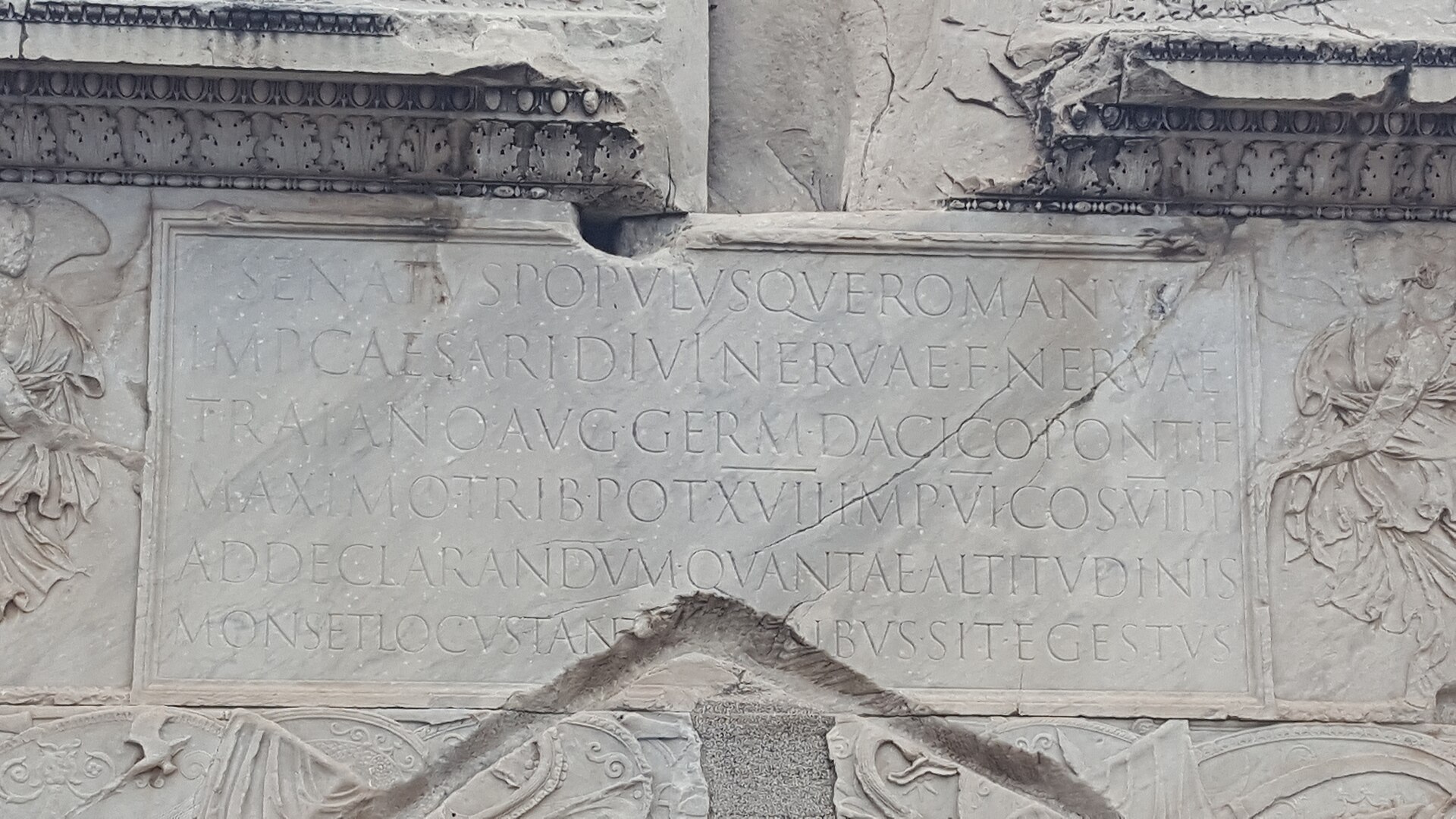
Latin is an Indo-European language of the Italic group and the ancestor of the modern Romance languages. It was originally spoken by small groups of people living along the lower Tiber River. The language is also known as lingua Latina.
1. Earliest Attestation and the Alphabet
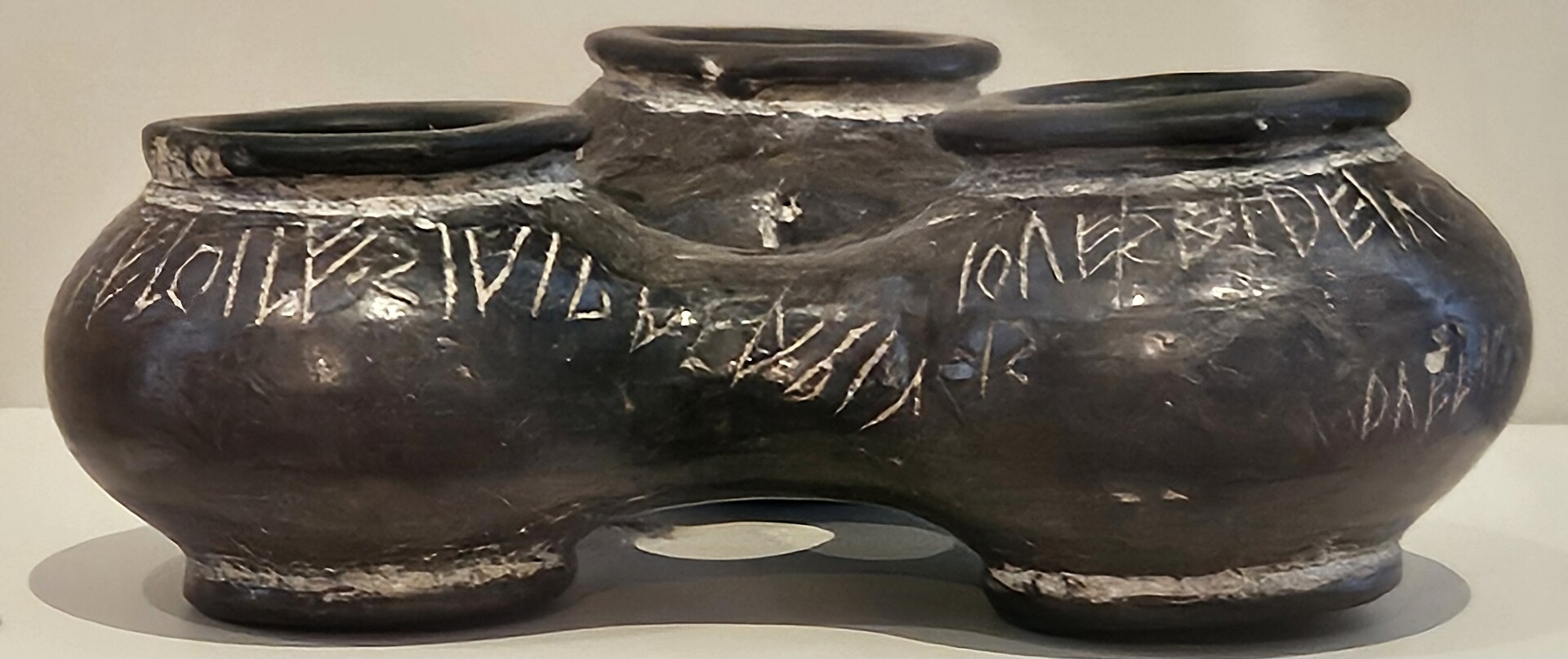
The oldest surviving example of Latin, perhaps dating to the 7th century BCE, is a four-word inscription in Greek characters on a fibula, or cloak pin. The Latin alphabet is derived from the alphabet used by the Etruscans, who had adopted a Western variant of the classical Greek alphabet. It originally contained only 24 capital letters; the modern Latin alphabet owes its appearance to innovations of scribes during the Middle Ages and practices of the early Renaissance printers.
2. Structure of the Classical Language
Latin of the Classical period had six regularly used cases in the declension of nouns and adjectives, with traces of a locative case in some declensions. During the Classical period there were at least three types of Latin in use: Classical written Latin, Classical oratorical Latin, and the ordinary colloquial Latin of the everyday speaker. Classical Latin, the language of Cicero and Virgil, became dead after its form became fixed, whereas Vulgar Latin continued to evolve as it spread across the western Roman Empire.
Evidence for the pronunciation of Classical Latin is difficult to interpret, so scholars extrapolate from the later developments of Romance to describe how the language sounded. The system of syllable quantity gave Classical Latin its distinctive acoustic character: a light syllable ended in a short vowel, and a heavy syllable in a long vowel, a diphthong, or a vowel followed by two consonants.
3. Literary Periods and Early Writers
Ancient Latin literature is divided into four periods: the early writers to 70 BC; a Golden Age from 70 BC to AD 18; a Silver Age from AD 18 to 133; and the later writers who followed. Literature in Latin began as translation from the Greek, and Latin authors used earlier writers as sources of stock themes and motifs. Livius Andronicus, considered the first Latin writer, composed a genuine drama adapted from the Greek in 240 BC to celebrate Rome's victory over Carthage. After the destruction of Carthage and Corinth in 146 BC, prosperity allowed a literature of self-expression and entertainment, and the neōteroi introduced the mentality of art for art's sake.
4. The Golden Age and Its Authors
The Golden Age of Latin literature spanned the last years of the republic and the establishment of the Roman Empire under Augustus. Cicero, a statesman, orator, poet, critic, and philosopher, developed the Latin language to express abstract and complicated thought with clarity. In 38 BC, Virgil and Varius introduced the young poet Horace to Maecenas, and by the final victory of Augustus in 30 BC the circle was consolidated. The decade 29 to 19 BC saw the publication of Virgil's Georgics and the composition of the whole Aeneid by his death in 19 BC, along with Horace's Odes books I to III.
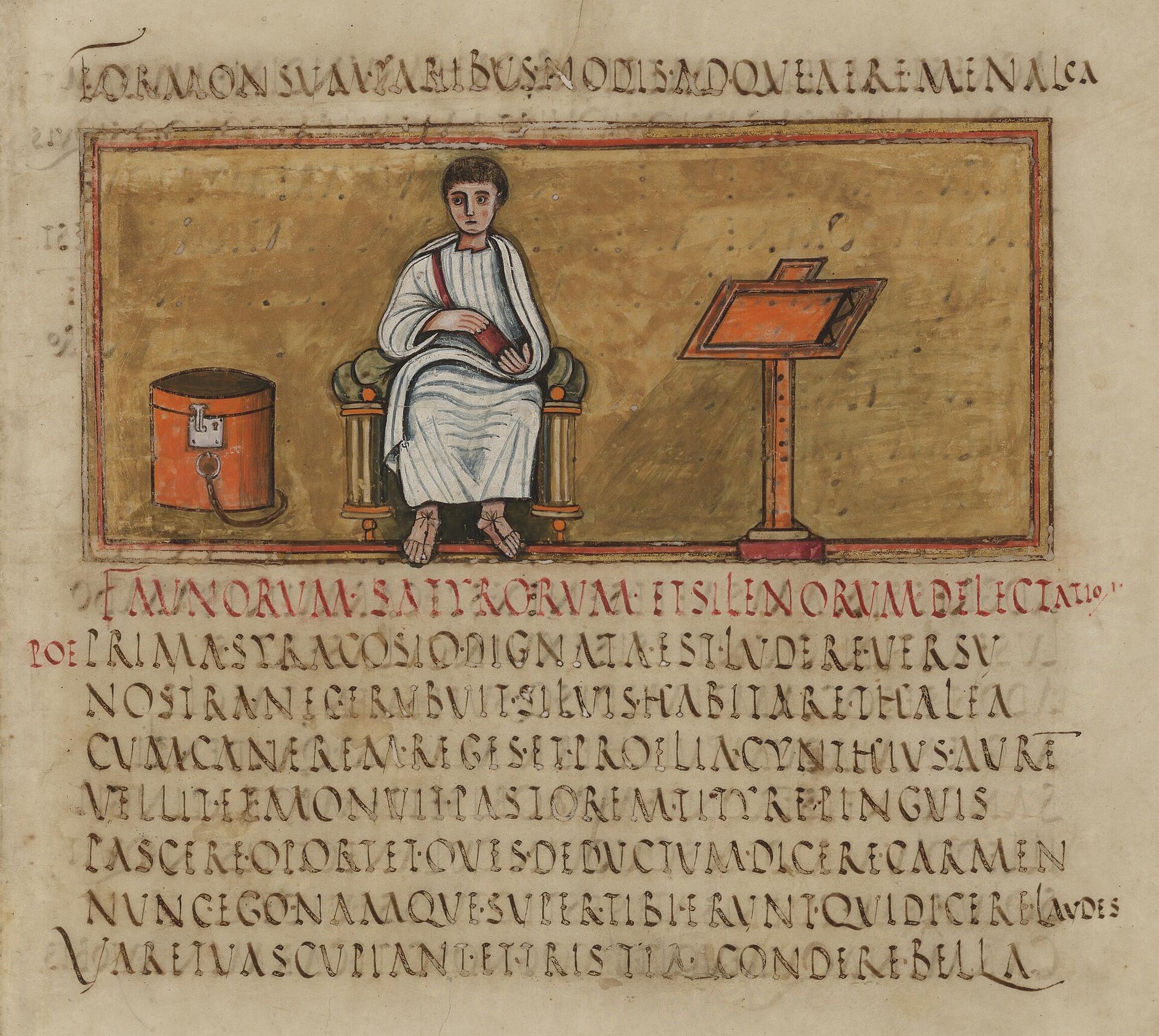
The Aeneid opens with the words Arma virumque canō, I sing of arms and the man, who came first from the shores of Troy to Italy. The invocation asks the Muse to recount the causes of the hero's suffering: Mūsa, mihī causās memorā, Muse, tell me the causes.
The First Catilinarian opens with the famous question Quo usque tandem abutere, Catilina, patientia nostra?, asking how long Catiline will abuse the patience of the senate. The dialogue Cato Maior De Senectute recalls Appius Claudius, to whose old age blindness was added, and who nevertheless did not hesitate to speak when the senate inclined toward peace with Pyrrhus. Cicero's writing ranges from the courtroom to the philosophical dialogue. He tells the famous story of Damocles, a courtier of the tyrant Dionysius II of Syracuse, in his Tusculan Disputations; the anecdote is a reminder that for a powerful man there is always danger. In one speech he exclaims O tempora, o mores!, deploring that the senate understands the danger while the consul still lives.
The English translation of the Institutio Oratoria is that by Harold Edgeworth Butler, first published in 1920 to 1922 as part of the Loeb Classical Library.
5. Caesar and Cicero: Prose of the Late Republic
For centuries the Gallic War has been the first real Latin text for children mastering the language; Caesar's style is bare, straight, and handsome, stripped of rhetorical ornament like an athlete of his clothes. The work comprises seven books, each covering one year of campaigning, with Book Eight added by Aulus Hirtius. The simplicity of Caesar's style does not exclude dazzling phrases: the longest sentence from the Gallic War is one single period that evokes the chaos during the Battle of the Sabis.
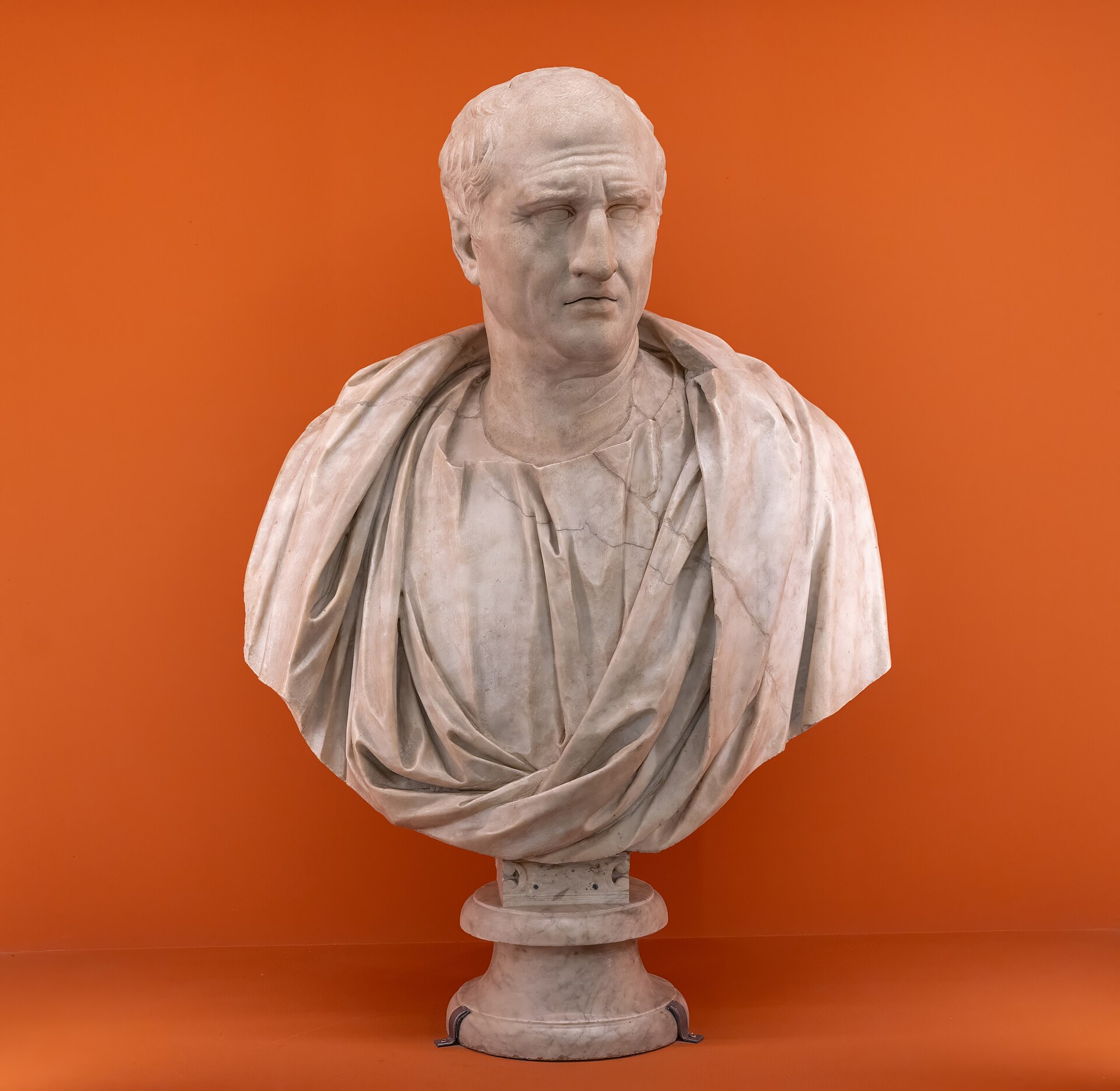
Marcus Tullius Cicero was the eldest son of an equestrian, though not noble, family; he was born in 105 B.C. and was beheaded by Antony's soldiers in 43 B.C. At thirty-two he was elected quaestor to Sicily, and because of his integrity was soon afterwards chosen by the Sicilians to prosecute their former governor Verres for extortion. He was consul in 63 B.C. and put down the conspiracy of Catiline. he was exiled through the efforts of the demagogue Publius Clodius, but he was recalled the next year.
Most of Cicero's letters were written in ink on paper or parchment with a reed pen, a few on tablets of wood or ivory covered with wax; the earlier letters he wrote with his own hand, the later were usually dictated to a secretary. They range from informal communications with his family to elaborate compositions that are practically treatises in epistolary form, and a large proportion of them were written with no thought of publication. The period covered by the letters affords a picture of the chief personages and most important events of that age from the pen of a man who was a consummate literary artist. Others of Cicero's letters, addressed to public characters, are practically of the same nature as his speeches, discussing political questions intended to influence events.
6. Late Latin, the Vulgate, and the Church
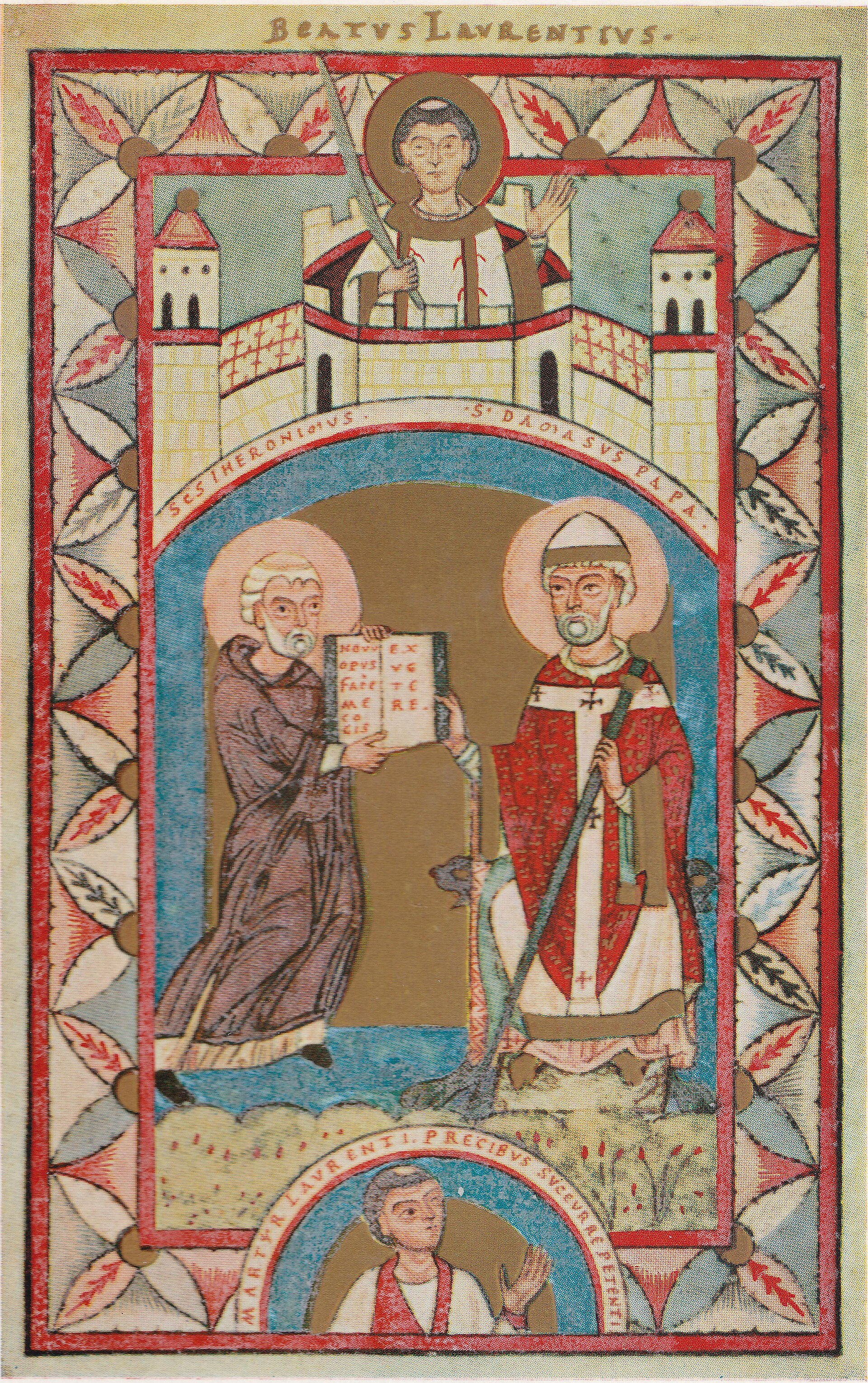
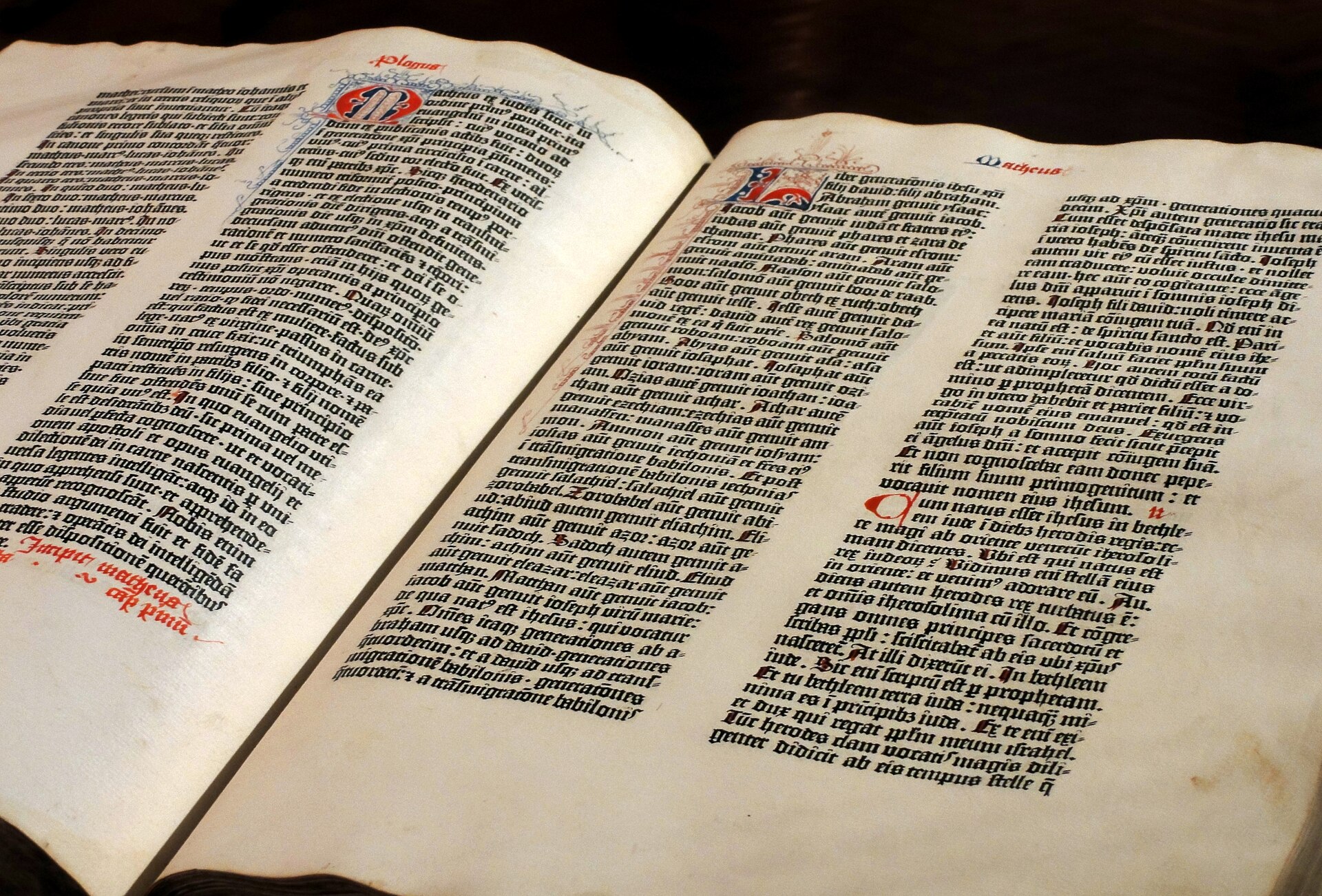
The Vulgate, from the Latin editio vulgata or common version, is the Latin Bible used by the Roman Catholic Church; in 382 Pope Damasus commissioned Jerome to produce an acceptable Latin version. Jerome's revised Latin translation of the Gospels appeared about 383 CE. In the late 4th and early 5th centuries, writers such as St. Augustine wrote good literary Late Latin.
The Latin language has always been held in very high esteem by the Catholic Church and by the Roman Pontiffs, who adopted it as the Church's language, capable of passing on the Gospel message throughout the world. The liturgical books of the Roman Rite, the most important documents of the Papal Magisterium, and the most solemn official Acts of the Roman Pontiffs are written in Latin in their authentic form. After the fall of the Roman Empire of the West, the Church of Rome continued to use Latin and, in a certain way, made herself its custodian and champion in the theological and liturgical sectors. The Latinitas Foundation was erected by Paul VI on 30 June 1976 with the Chirograph Romani Sermonis and was replaced by the Pontifical Academy for Latin. With the Motu Proprio Latina Lingua of 10 November 2012 Benedict XVI established the Pontifical Academy for Latin under the Pontifical Council for Culture.
7. After Antiquity: Scholarship, Romance Descendants, and Modern Institutions
Latin developed in two ways after antiquity: local spoken forms evolved into the modern Romance languages and dialects, while a standardized form continued through the Middle Ages as the language of religion and scholarship. When Rome fell, Latin remained the literary language of the Western medieval world until it was superseded by the Romance languages it had generated; after the Renaissance, writing in Latin was increasingly confined to ecclesiastical and academic publications.
Romanized provincials received Roman citizenship and behaved like other Romans: by wearing a toga, speaking Latin, and sending their children to a Roman school, they showed the rest of the tribe whose power stood behind them. By the beginning of the 21st century, some 920 million people claimed a Romance language as their mother tongue, and 300 million people as a second language.
8. Corpus and Reference Resources
The Corpus Inscriptionum Latinarum is the world's largest collection of Latin inscriptions. Latin inscriptions have been published in the Corpus since its start in 1853 under the direction of the German scholar Theodor Mommsen. The Corpus project is divided into seventeen parts, from the inscriptions of the Republic to the provinces, domestic objects, military diplomas, and milestones, printed in seventy folio volumes and almost 200,000 inscriptions.
The Latin Library collects texts from Alcuin and Ambrose to Caesar and Cicero, with separate sections for Christian Latin, Medieval Latin, and Neo-Latin. The maintainer of the Latin Library, William L. Carey, taught Latin and the Classics for many years at George Mason University as an adjunct professor. Carey's syllabi and supporting materials, including courses on Caesar's Gallic Wars, Cicero's Philippics, and Vergil's Aeneid, remain available at the Latin Library.
9. Timeline: from the earliest inscription to the Pontifical Academy
- perhaps the 7th century BCEEarliest surviving LatinThe oldest example of Latin extant, perhaps dating to the 7th century BCE, is a four-word inscription in Greek characters on a fibula, or cloak pin.
- 240 BCEFirst Latin dramaTo celebrate Rome's victory over Carthage, Livius Andronicus composed a genuine drama adapted from the Greek, establishing a tradition of Latin stage literature.
- 146 BCECarthage and Corinth destroyedWith the destruction of Carthage and Corinth, prosperity and external security allowed the cultivation of a literature of self-expression and entertainment.
- 105 BCEBirth of CiceroMarcus Tullius Cicero was born, the eldest son of an equestrian, though not noble, family.
- 70 BCEThe Golden Age beginsThe Golden Age of Latin literature opened, spanning the last years of the republic and the establishment of the Roman Empire under Augustus.
- 63 BCECicero's consulshipCicero was consul in 63 BCE and put down the conspiracy of Catiline.
- 43 BCEDeath of CiceroCicero, who had delivered his fierce philippics against Antony, was beheaded by Antony's soldiers during the proscriptions.
- 30 BCEThe Augustan circle consolidatedWith the final victory of Augustus in 30 BCE, the circle around Maecenas was consolidated, ushering in the Augustan Age.
- 19 BCEDeath of VirgilVirgil died with the whole Aeneid composed; the decade 29 to 19 BCE had also seen the publication of his Georgics and the first three books of Horace's Odes.
- AD 18The Silver Age beginsThe Silver Age of Latin literature opened, running to AD 133 and producing Seneca, Lucan, and Tacitus.
- 382 CEThe Vulgate commissionedPope Damasus commissioned Jerome, the leading biblical scholar of his day, to produce an acceptable Latin version of the Bible.
- about 383 CEGospels in LatinJerome's revised Latin translation of the Gospels appeared about 383, the first fruit of the Vulgate project.
- 1853Corpus Inscriptionum Latinarum begunThe world's largest collection of Latin inscriptions began publication, directed by the German scholar Theodor Mommsen.
- 30 June 1976Latinitas Foundation erectedPaul VI erected the Latinitas Foundation with the Chirograph Romani Sermonis, dedicated to the study and promotion of Latin.
- 10 November 2012Pontifical Academy for LatinBenedict XVI established the Pontifical Academy for Latin, replacing the Latinitas Foundation and charged with promoting the knowledge and use of Latin.
References (17)
- 1Latin language | Origin, Grammar, Influence & Facts — Encyclopaedia Britannica WebView source
- 2The Unicode Standard, Version 15.1, Chapter 7: European Alphabetic Scripts (PDF) — Unicode Consortium WebView source
- 3Latin literature | History, Characteristics & Facts — Encyclopaedia Britannica WebView source
- 4Vergil: Aeneidos Liber Primus (Latin text) — The Latin Library WebView source
- 5Cicero: In Catilinam I (Latin text) — The Latin Library WebView source
- 6Cicero: Cato Maior de Senectute (On Old Age), English translation — LacusCurtius, University of Chicago (Loeb Classical Library) WebView source
- 7Cicero on Damocles (Tusculan Disputations 5.61, trans. Gavin Betts) — Livius.org (Jona Lendering) WebView source
- 8Quintilian: Institutio Oratoria (trans. H. E. Butler) — LacusCurtius, University of Chicago (Loeb Classical Library) WebView source
- 9Caesar's Gallic War — Livius.org (Jona Lendering) WebView source
- 10Cicero: from On the Republic (Thatcher introduction and excerpts) — Internet Ancient History Sourcebook, Fordham University WebView source
- 11Cicero: Selected Letters — Internet Ancient History Sourcebook, Fordham University WebView source
- 12Vulgate | Description & History — Encyclopaedia Britannica WebView source
- 13Apostolic Letter issued Motu Proprio Latina Lingua establishing the Pontifical Academy for Latin (10 November 2012) — The Holy See (Benedict XVI) 2012 WebView source
- 14Germania Inferior (2): Romanization and the Latin language on the Rhine — Livius.org (Jona Lendering) WebView source
- 15Romance languages | Definition, Origin & Facts — Encyclopaedia Britannica WebView source
- 16Corpus Inscriptionum Latinarum — Livius.org (Jona Lendering) WebView source
- 17The Latin Library — collection of Latin texts — The Latin Library (William L. Carey) WebView source