Greek Alphabet
The 24-letter script of the Greek language — its Phoenician origins, its letters and numerals, its spread into Latin and Cyrillic, and its modern life in science.
The Greek alphabet is the writing system developed in Greece about 1000 BCE and adapted from the Phoenician script; by adding letters for vowels it became the first true alphabet in the narrow sense, the ancestor of the Latin, Cyrillic, Coptic and Gothic scripts. Athens standardized the Ionic form in 403 BCE, giving the 24-letter classical alphabet from alpha to omega, whose letters carried the Greek numerals and still serve as symbols across mathematics and science — from the WHO's Greek-letter variant names to Bayer's star designations.
In this article
Overview
The Greek alphabet is a true alphabet, counted among the earliest scripts to write vowels and consonants as separate letters. It remains the script of the Greek language, and its letters serve as standard symbols in mathematics and science. The alphabet comprises 24 letters, of which 7 are vowels. Its first letter is alpha (Α, α) and its last is omega (Ω, ω).
1. Origins and Adaptation from Phoenician
The Greek alphabet was adapted from the North Semitic alphabet via that of the Phoenicians. The Greeks took over the consonantal alphabetic writing system used by the Phoenicians, whose origins go back to the beginning of the 2nd millennium BCE, and are credited with adding vowel signs to this consonantal script. Greek took over all 22 letters of Phoenician, reassigning five of them to vowel sounds — yod and waw for iota and upsilon, alp for alpha, en for omicron and he for epsilon. Adding vowels and two extra letters brought the total number of Greek letters to 24 from the 22 of Phoenician, though this development may have come later.
The Greek alphabet is a writing system developed in Greece about 1000 BCE; it is the direct or indirect ancestor of all modern European alphabets. At some point between 800 and 700 BCE the alphabet was introduced to the Greeks by the Phoenicians, most likely through Phoenician traders. Scholars continue to debate the date at which the Phoenician script was taken over, the priority of Phrygia or Greece in the process, and whether the adaptation happened once or independently in several places.
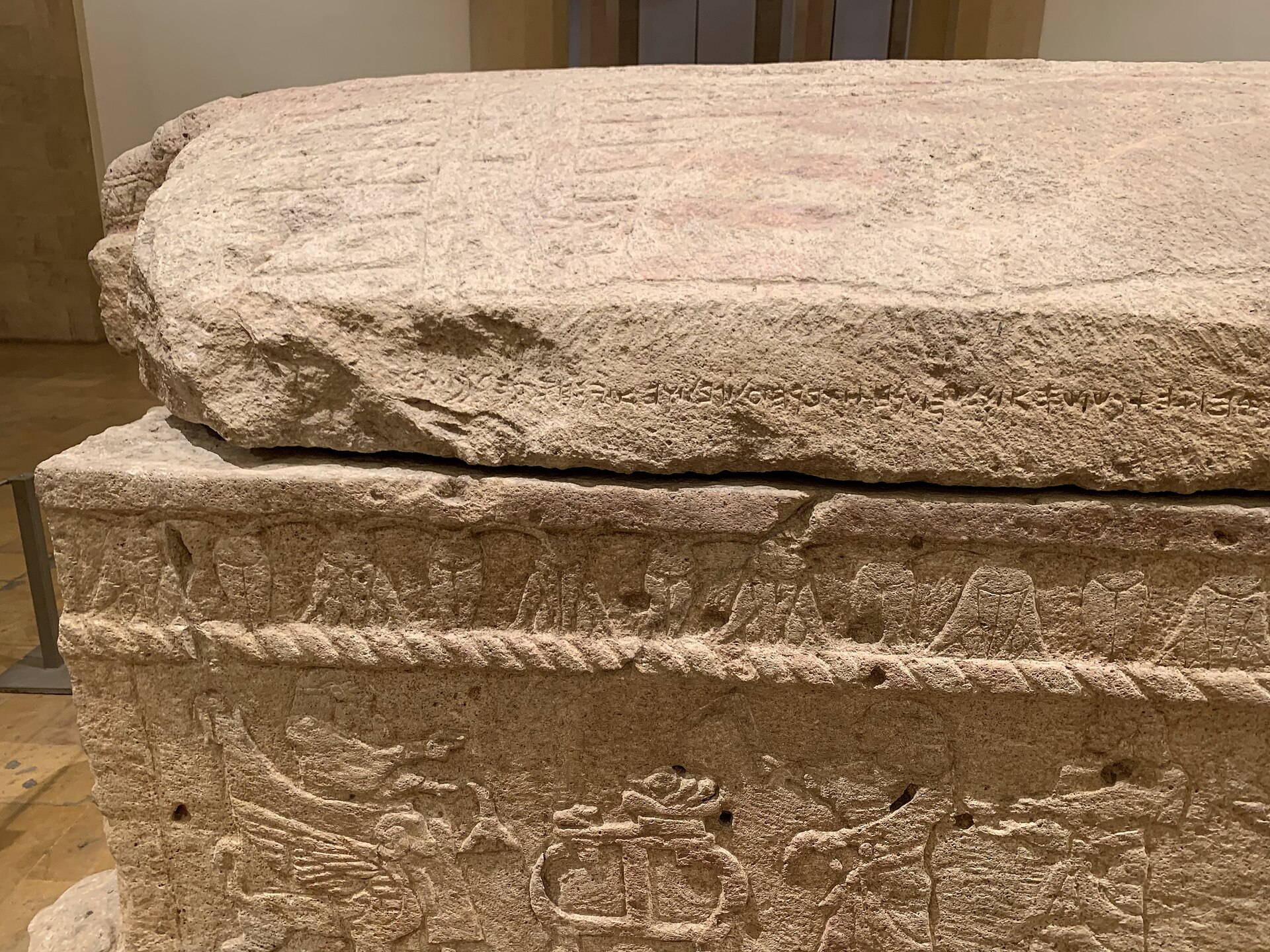
According to Herodotus, the Phoenicians who came with Cadmus brought the alphabet to Hellas, where it had been unknown before, and in time the sound and form of the letters changed. The same passage records that these Greeks used the letters with a few changes of form and gave them the name of Phoenician, because the Phoenicians had brought them into Hellas. The invention of vowels happened just once, and all the various Greek, Phrygian and Italic alphabets ultimately derive from that single moment. New archaeological finds from the Aegean, examined alongside linguistic evidence on Greek and Phrygian vowels, are used to explore the origins and spread of the Greek alphabet.
2. Earliest Inscriptions and Dating
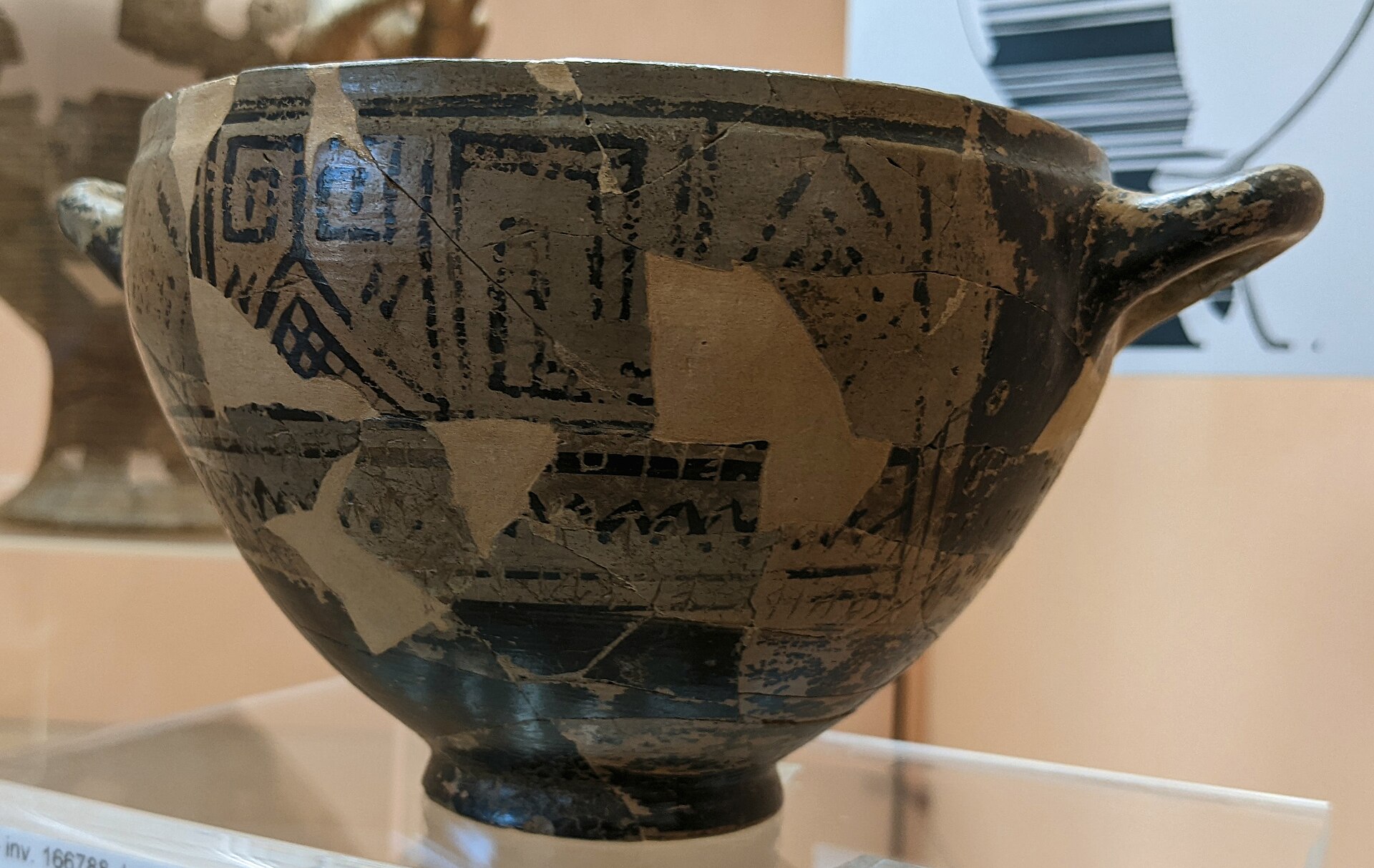
Some of the earliest known Greek inscriptions are literary in character, presenting poetic hexameter verses; among them are the Nestor cup from Pithekoussai, the Dipylon vase from Athens and the Acesander cup from Methone.
The prevalent opinion in classical studies holds that the alphabet reached Greece in or shortly before the 8th century BCE, the period in which the first alphabetic inscriptions on stone and pottery appear. A dissenting argument places the introduction of the alphabet to the Aegean much earlier, around the 11th century BCE, and accounts for the absence of early texts by supposing that the initial writings were set down on perishable materials such as wood, leather or papyrus.
3. Regional Variants and Standardization
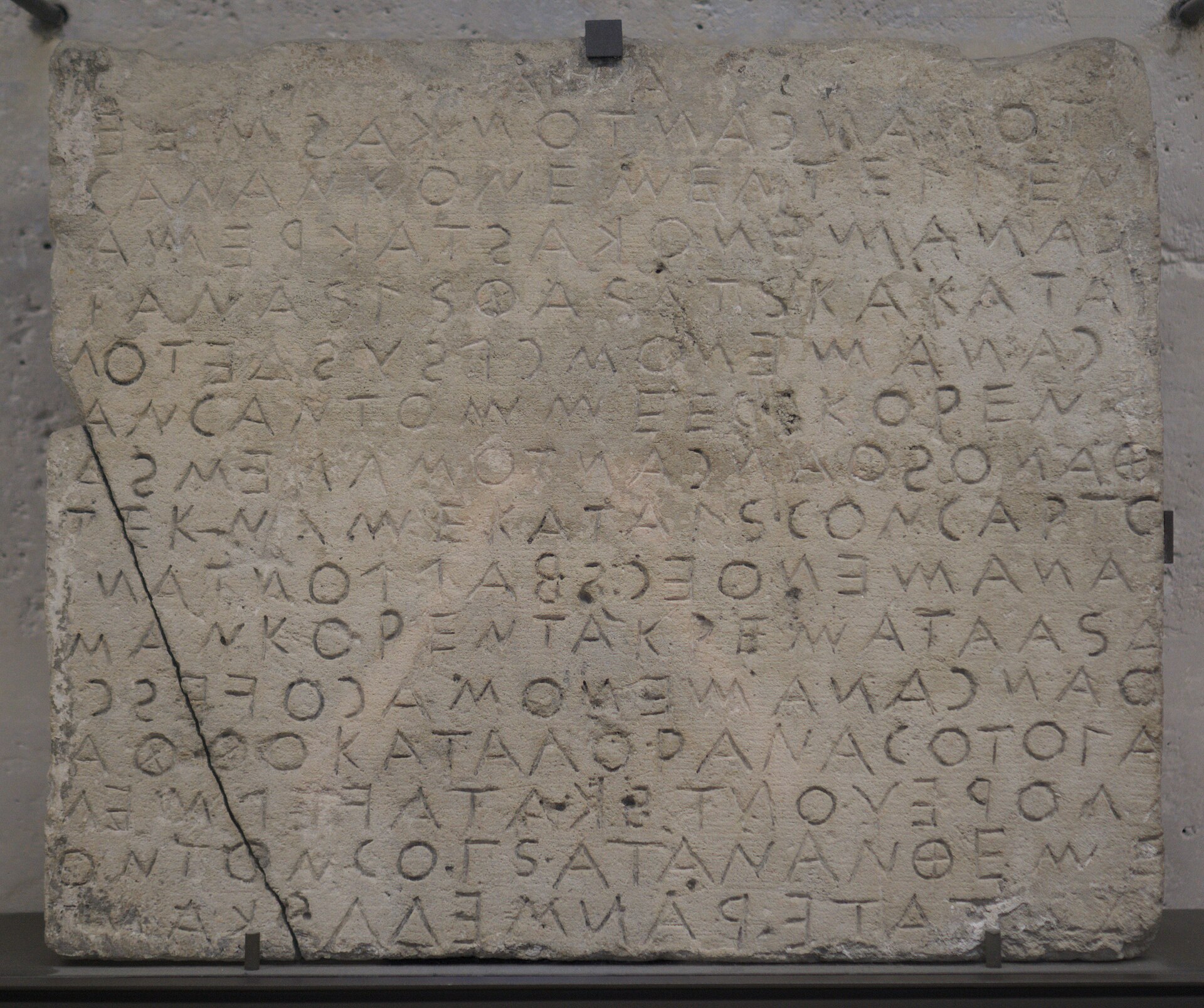
The Greek alphabet did not emerge in a single fixed form. From the outset it existed as a set of local, or epichoric, variants that differed in the use and non-use of additional vowel and consonant symbols and in several other features. Before the 5th century BCE these local scripts fell into two principal branches, the Ionic (eastern) and the Chalcidian (western), whose differences were minor. As soon as the first Greek alphabetic inscriptions appeared, they turned up regularly across the Greek mainland, the Aegean islands, Italy and Sicily, exhibiting no fewer than 33 different regional versions.
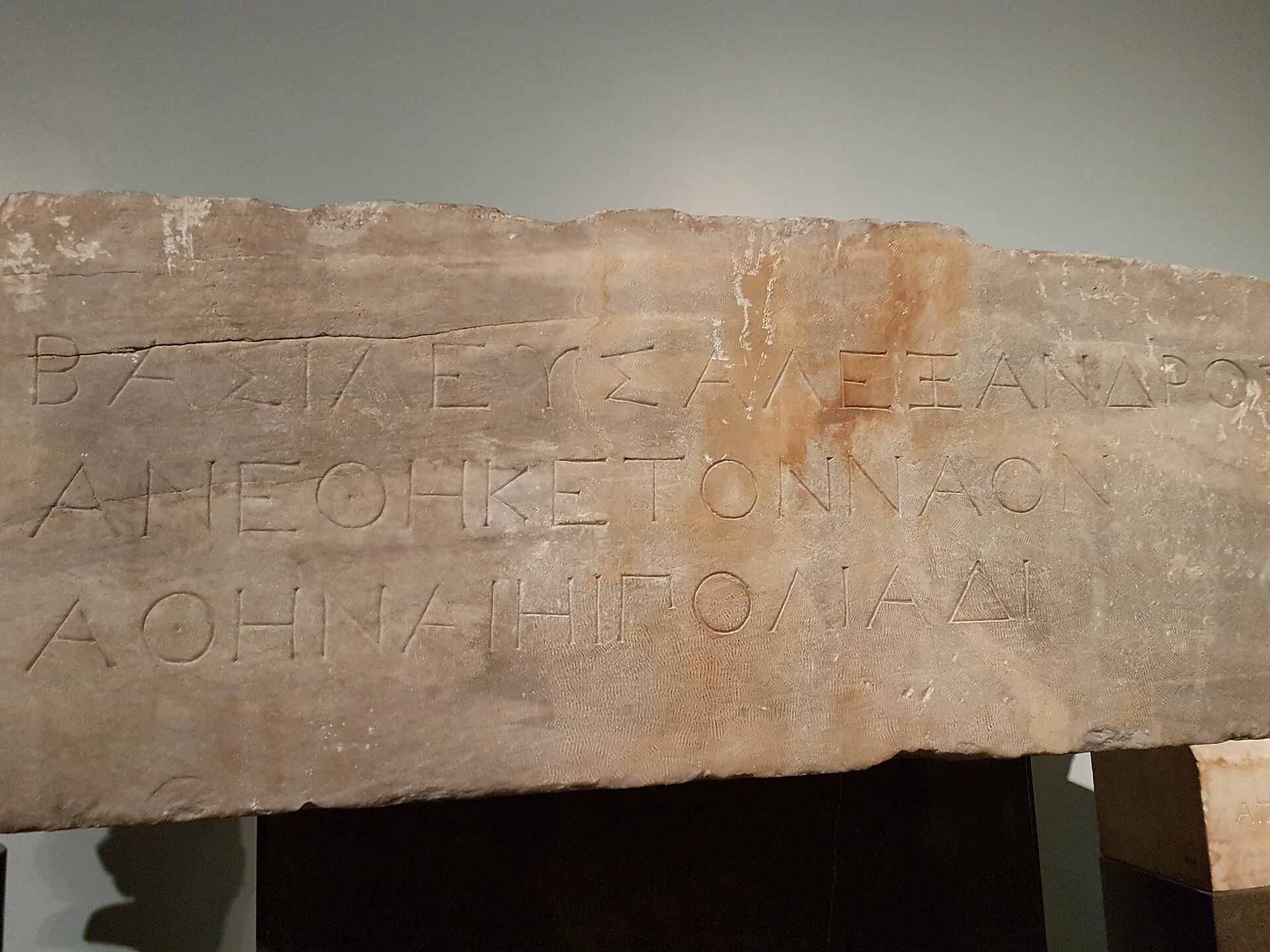
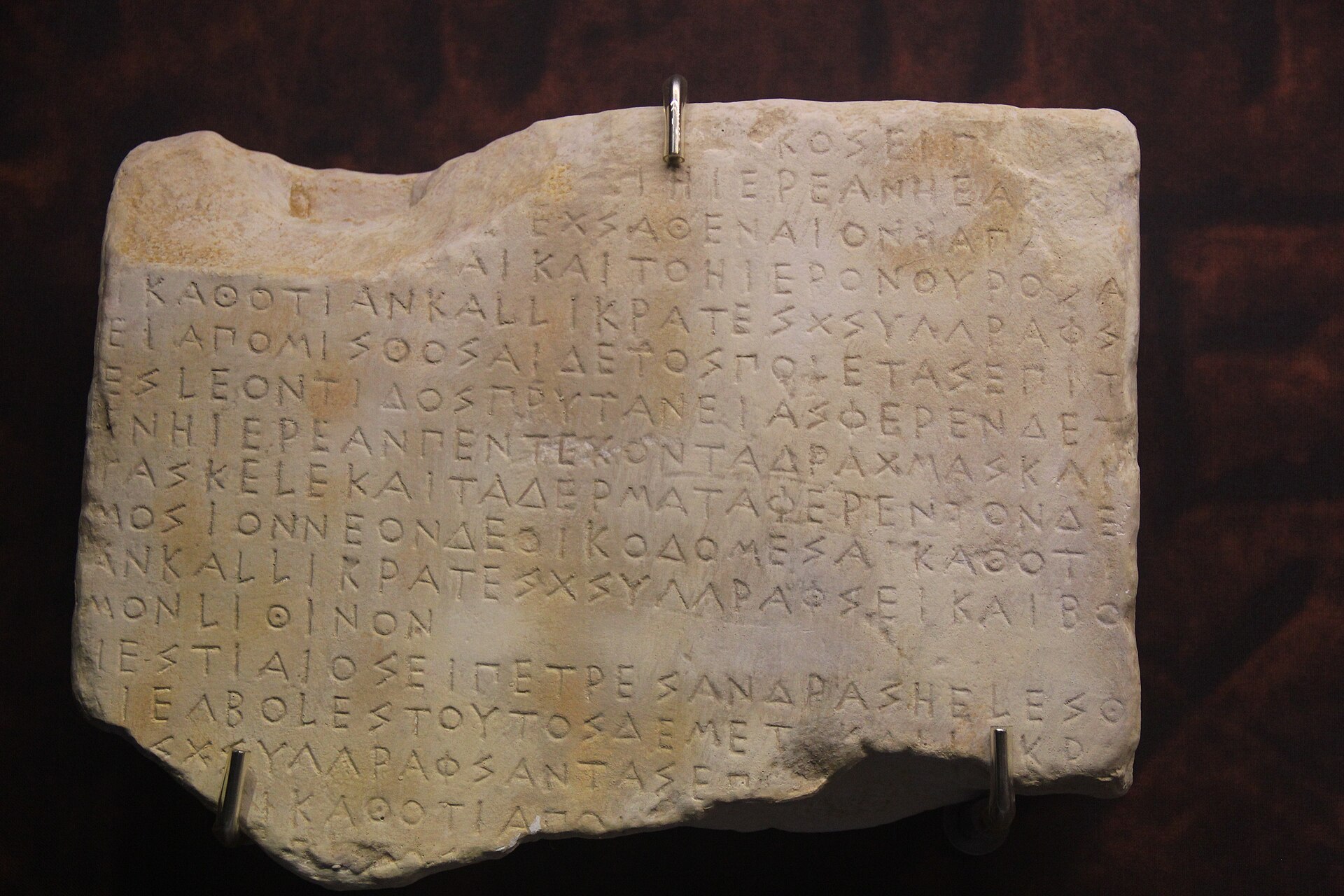
Standardization came from Athens. in 403 BCE the city officially adopted the Ionic alphabet as written in Miletus, and within fifty years almost all local Greek alphabets had been replaced by it, making it the Classical Greek alphabet, the Ionic-based Euclidean alphabet with 24 letters ordered from alpha to omega that is still used today.
4. Writing Direction and Letterforms
The direction in which Greek was written was not fixed in the earliest inscriptions, in contrast to the Phoenician script, which had a settled right-to-left direction and letter forms that had stabilized from at least the 9th century onwards. Greek writing began by running right to left, then passed through a boustrophedon phase in which the line direction alternated, before settling on left to right after 500 BCE.
The Classical Greek alphabet consisted only of capital letters, a form well suited to monuments and inscriptions. From the classical capitals were derived the handwriting scripts known as uncial, cursive and minuscule: uncial fell out of use in the 9th century CE, while minuscule, developed from the cursive styles of the uppercase letters that Byzantine scribes began to employ in that century, became the modern Greek handwriting form.
5. Descendant Scripts
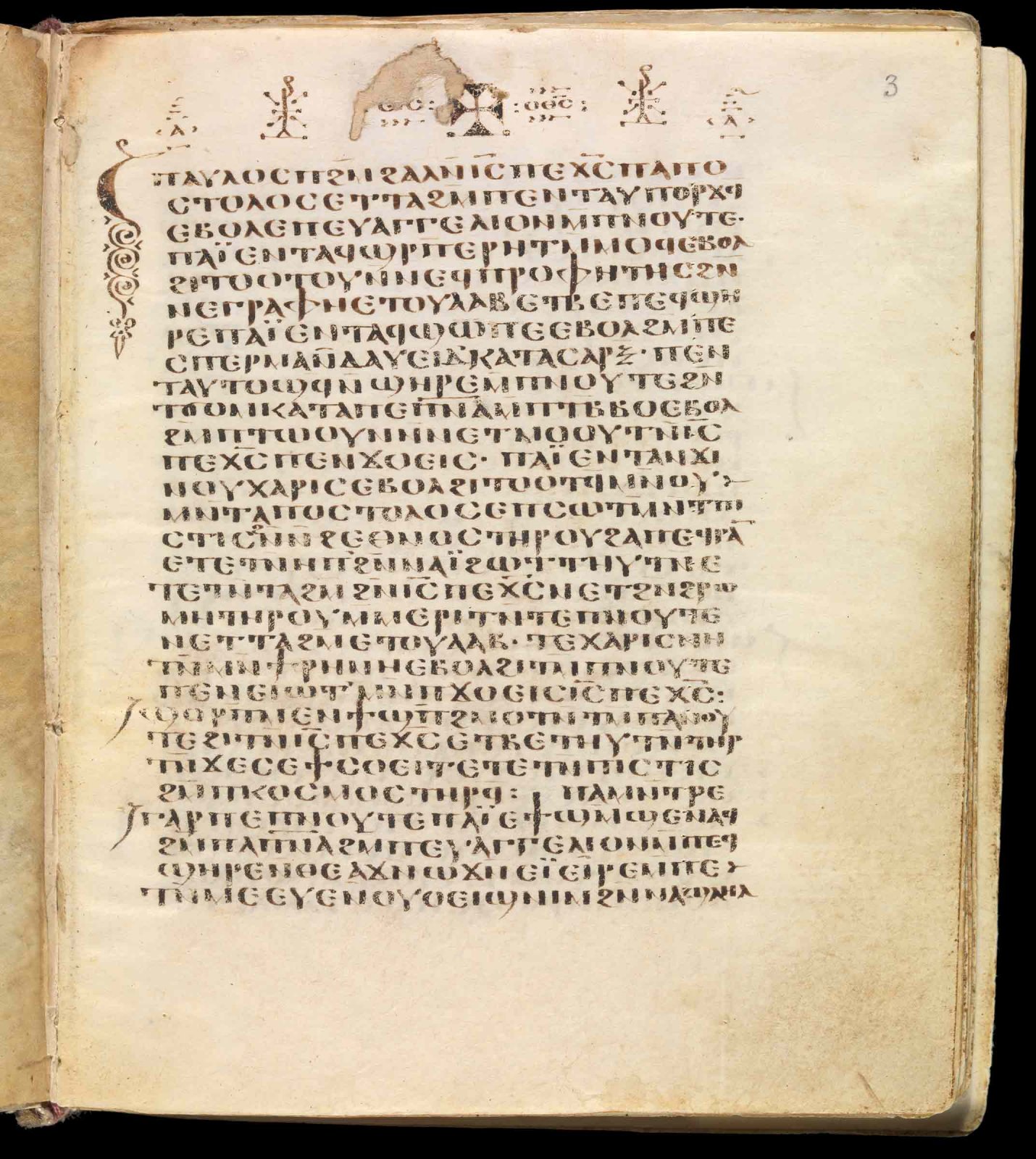
The Greek alphabet stands at the head of a family of scripts that carried its letterforms far beyond the Greek-speaking world. Among its descendants are the Latin, Gothic, Coptic and Cyrillic alphabets. The Chalcidian alphabet probably gave rise to the Etruscan alphabet of Italy in the 8th century BCE and hence indirectly to the other Italic alphabets, including the Latin alphabet.
The Cyrillic alphabet, developed in the ninth century and heavily based upon the Greek alphabet, added letters for Slavic sounds; it is now also used for non-Slavic languages such as Kyrgyz and Tajik, and like Latin it is used to write or transliterate texts in many languages.
6. Numerals
The acrophonic system worked additively and used intermediate symbols for 5 and 50 and 500 and 5000 and 50000 that cut down the number of characters needed and arose from counting on fingers. Because the system had no positional aspect, there was no need for a zero as an empty place holder.
In the alphabetical numerals the first nine letters stood for 1 through 9 and the next nine for 10 through 90 and the last nine for 100 through 900, with a bar sometimes placed over a letter used as a numeral. Larger Greek numbers were built on the myriad or 10000, with small numerals written above or before its symbol to multiply that value.
7. Modern Role in Science and Public Life
The Greek alphabet remains the script of the Greek language today, and its letters continue to serve as symbols for concepts in mathematics and science, with lowercase alpha, for instance, able to represent an angle. The letter pi, written π, denotes the ratio of a circle's circumference to its diameter, a use that has been standard since Euler adopted it in 1737.
In his 1603 atlas Uranometria, Bayer identified many stars in each constellation with lower-case Greek letters, often naming the brightest star Alpha and sorting the rest into brightness classes. These Bayer designations pair a Greek letter with the Latin genitive of the constellation to name a star.
In May 2021 the World Health Organization assigned simple, easy-to-say labels for key variants of SARS-CoV-2 using letters of the Greek alphabet. Greek is also one of the 24 official languages of the European Union, official since 1981.
8. Encoding
The Unicode encoding of Greek rests on the ISO/IEC 8859-7 standard, which is equivalent to the Greek national standard ELOT 928 and was designed for monotonic Greek. Polytonic Greek, the form used for ancient Greek, both classical and Byzantine, and occasionally for modern Greek, may be encoded either through combining character sequences or through precomposed base plus diacritic combinations.
9. Timeline: from the first alphabet to the WHO labels
- early second millennium BCEThe first alphabetAlphabetic writing was invented somewhere in the vicinity of Egypt, Sinai or Byblos in the Levant.
- c. 1700 BCEProto-Sinaitic inscriptionsThe earliest alphabetic components appear in Proto-Sinaitic inscriptions found in Sinai, using a small selection of Egyptian hieroglyphs.
- before c. 1300 BCEAlphabetical order attestedThe first evidence for alphabetical order comes from Ugaritic scribes, so the alphabet had been set in order before the year 1300 or so.
- by the eleventh century BCA fully developed Phoenician scriptA fully developed form of the early alphabet was in use among the Phoenicians.
- between 800 and 700 BCEGreeks adopt the alphabetThe alphabet was introduced to the Greeks by the Phoenicians, most likely through Phoenician traders.
- c. 740 BCEDipylon inscriptionThe Dipylon inscription from Athens is among the earliest datable examples of Greek alphabetic writing.
- by 725 BCWriting in casual useThe new script spread rapidly, reaching casual usage, including jokes, by 725 BC.
- 403 BCEAthens adopts the Ionic alphabetAthens officially adopted the Ionic alphabet as written in Miletus; within fifty years it had replaced almost all local scripts and became the Classical Greek alphabet.
- 9th century CECyrillic developed from GreekThe Cyrillic script was developed in the ninth century and is based on Greek; uncial went out of use in the same century as minuscule replaced it.
- 1603Bayer's star lettersJohann Bayer's star atlas Uranometria identified stars in each constellation with lower-case Greek letters, a system still in use centuries later.
- 1706Pi takes its modern meaningWilliam Jones first used π with its present meaning; Euler adopted the symbol in 1737 and it quickly became standard notation.
- 1981Greek joins the EU languagesGreek became an official language of the European Union as the union's list of official languages grew.
- May 2021WHO Greek-letter labelsThe World Health Organization assigned labels for key SARS-CoV-2 variants using letters of the Greek alphabet.
References (15)
- 1Greek alphabet — Wikipedia WebView source
- 2Greek alphabet | History, Definition, & Facts — Encyclopaedia Britannica WebView source
- 3The Greek Alphabet: Older Than You May Think? — The Ancient Near East Today (ASOR) WebView source
- 4Greek Alphabet — World History Encyclopedia WebView source
- 5The Early Greek Alphabets: Origin, Diffusion, Uses (OUP) — Faculty of Classics, University of Oxford BookView source
- 6Herodotus, The Histories, Book 5, chapter 58 (A. D. Godley, trans.) — Perseus Digital Library, Tufts University BookView source
- 7Herodotus — Book V: Chapters 55-96 — LacusCurtius, University of Chicago BookView source
- 8The early history of the Greek alphabet: new evidence from Eretria and Methone — Antiquity (Cambridge University Press) BookView source
- 9The Unicode Standard, Version 15.1, Chapter 7: European Alphabetic Scripts (PDF) — Unicode Consortium WebView source
- 10Greek number systems — MacTutor History of Mathematics Archive, University of St Andrews WebView source
- 11A history of Pi — MacTutor History of Mathematics Archive, University of St Andrews WebView source
- 12Star Names: Where Do They Come From and What Do They Mean? — Sky & Telescope WebView source
- 13WHO announces simple, easy-to-say labels for SARS-CoV-2 Variants of Interest and Concern — World Health Organization 2021 WebView source
- 14Languages — European Union WebView source
- 15The Alphabet: The First Thousand Years — The Ancient Near East Today (ASOR) WebView source