Paper
The story of paper, from Cai Lun's sheets of bark, hemp and rag in Han China to the water-powered mills of Fabriano, the rag trade of the pre-industrial West, and the wood-pulp revolution that made paper the everyday material of the modern world.
Paper was invented in China, where Cai Lun reported a refined sheet of bark, hemp, rags and fishnets to the emperor in 105 CE, though archaeological finds show hemp paper centuries earlier. The craft travelled east to Korea and Japan and west along the Silk Road to Samarkand, Baghdad, Cairo, Fez and Spain, before Fabriano in Italy added the water-powered multiple hammer mill, gelatine sizing and the watermark. For centuries European paper was made from linen and hemp rags collected by rag-and-bone men, sized with gelatine and marked with mould wire designs that today date and authenticate printed books. The rag shortage, Robert's and the Fourdriniers' paper machines, groundwood pulp, the sulfite and kraft processes, and finally acid-free alkaline sizing transformed paper into the ubiquitous industrial product of the modern world, while Xuan and washi papers keep the hand crafts alive on UNESCO's intangible heritage lists.
Overview
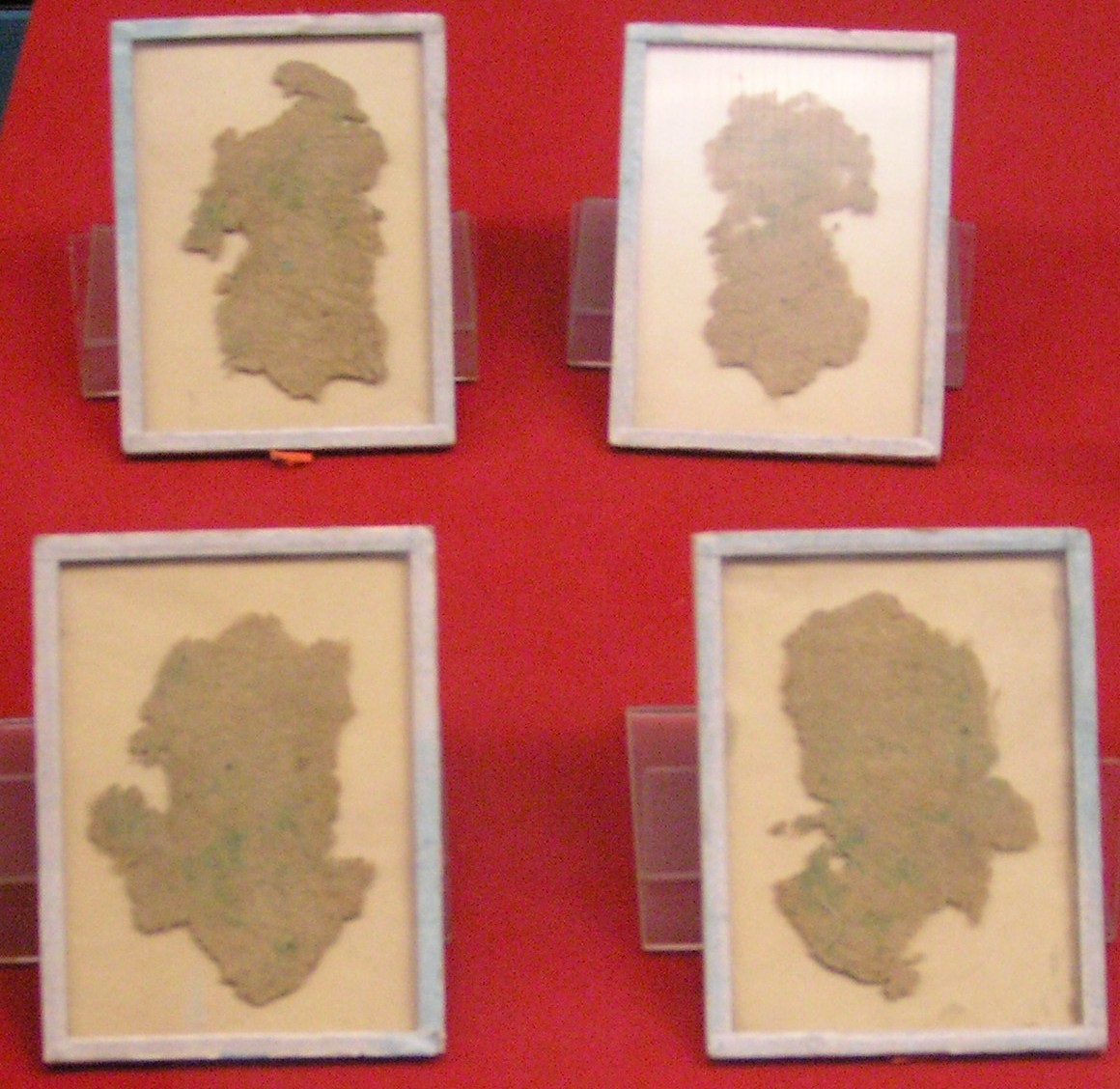
Paper is one of the great inventions of China, taking its place alongside the compass, gunpowder and printing. Its manufacture is traditionally credited to Cai Lun, a court official of the Later Han period, in about 105 CE. Archaeological evidence nevertheless shows primitive hemp paper types from the 2nd century BCE, pushing the material's origins well back before that date.
1. Origins in China
Cumbersome bamboo or wooden strips and expensive silk had served for centuries as writing surfaces before paper scrolls offered a lighter and cheaper alternative. When Muslim armies conquered Central Asia in the late seventh and early eighth centuries they encountered paper for the first time. From Iraq papermaking was carried to Syria, then Egypt, across North Africa to Morocco and eventually to Spain, where its use is first recorded by a tenth-century traveler. Fez was already an important papermaking center in the 11th century, with 400 paper mills reported by the end of the 12th century, and the first Spanish paper mill is documented at Jativa in 1056.
Papermaking was begun in Baghdad itself by the late 8th century. Papermaking and stationery were soon significant businesses there, and the city's Stationers' Market was a street lined with more than 100 paper- and booksellers' shops. Rattan replaced the early hemp paper and was favoured for centuries, until bamboo fibres became the most common raw material from the 8th century CE. From the Song Dynasty the main raw material became the boiled bark of the mulberry tree. Around 1023 CE the Song government issued paper certificates indicating money held on deposit in Szechwan, an ancestor of paper money. Around 1120 CE the Chinese government established a monopoly on the issue of such receipts, in effect creating the world's first banknotes.
2. Spread Across Asia
Paper reached the Korean peninsula and the Japanese archipelago along the routes that carried Buddhist learning and administrative practice. In Japan tradition credits the Korean monk Don-cho with the introduction of papermaking about AD 610. The Japanese first used paper only for official records and documentation, but with the rise of Buddhism the demand for paper grew rapidly.
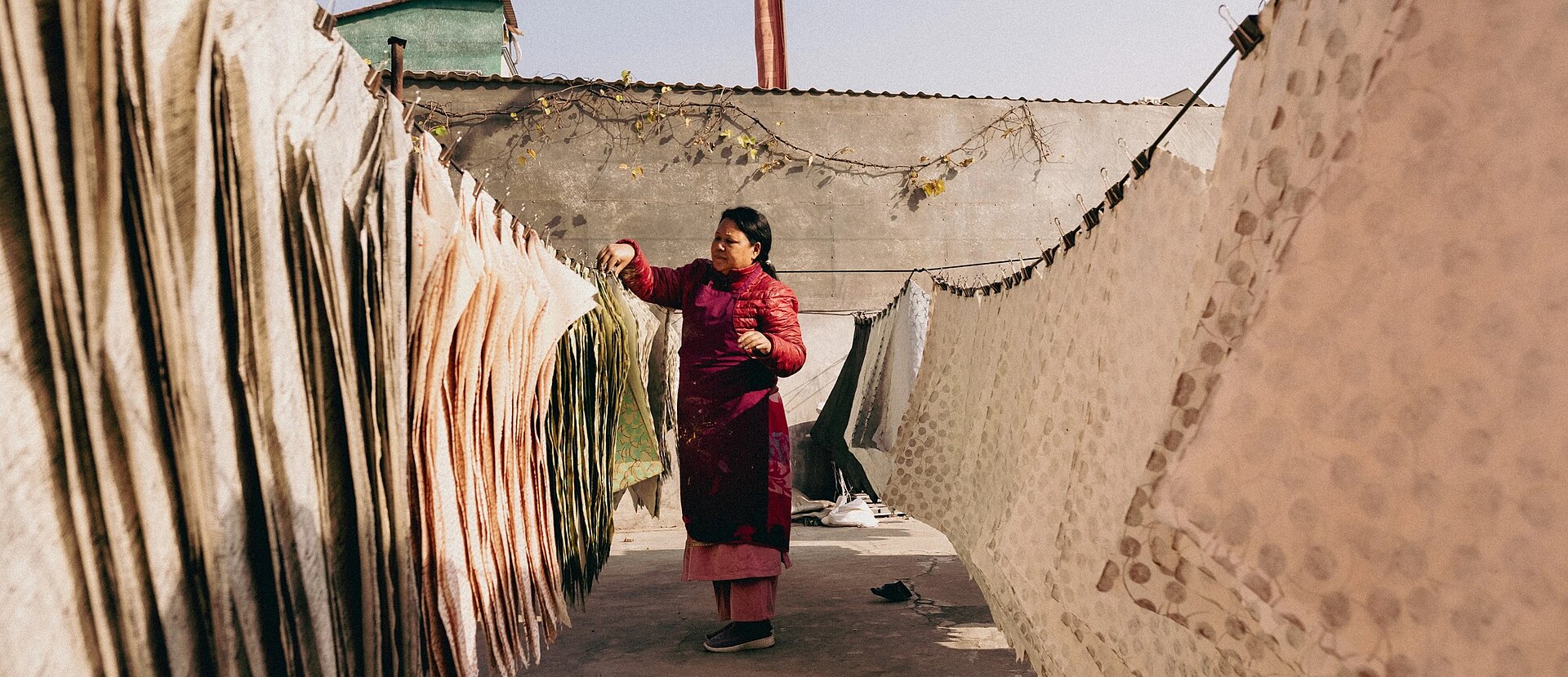
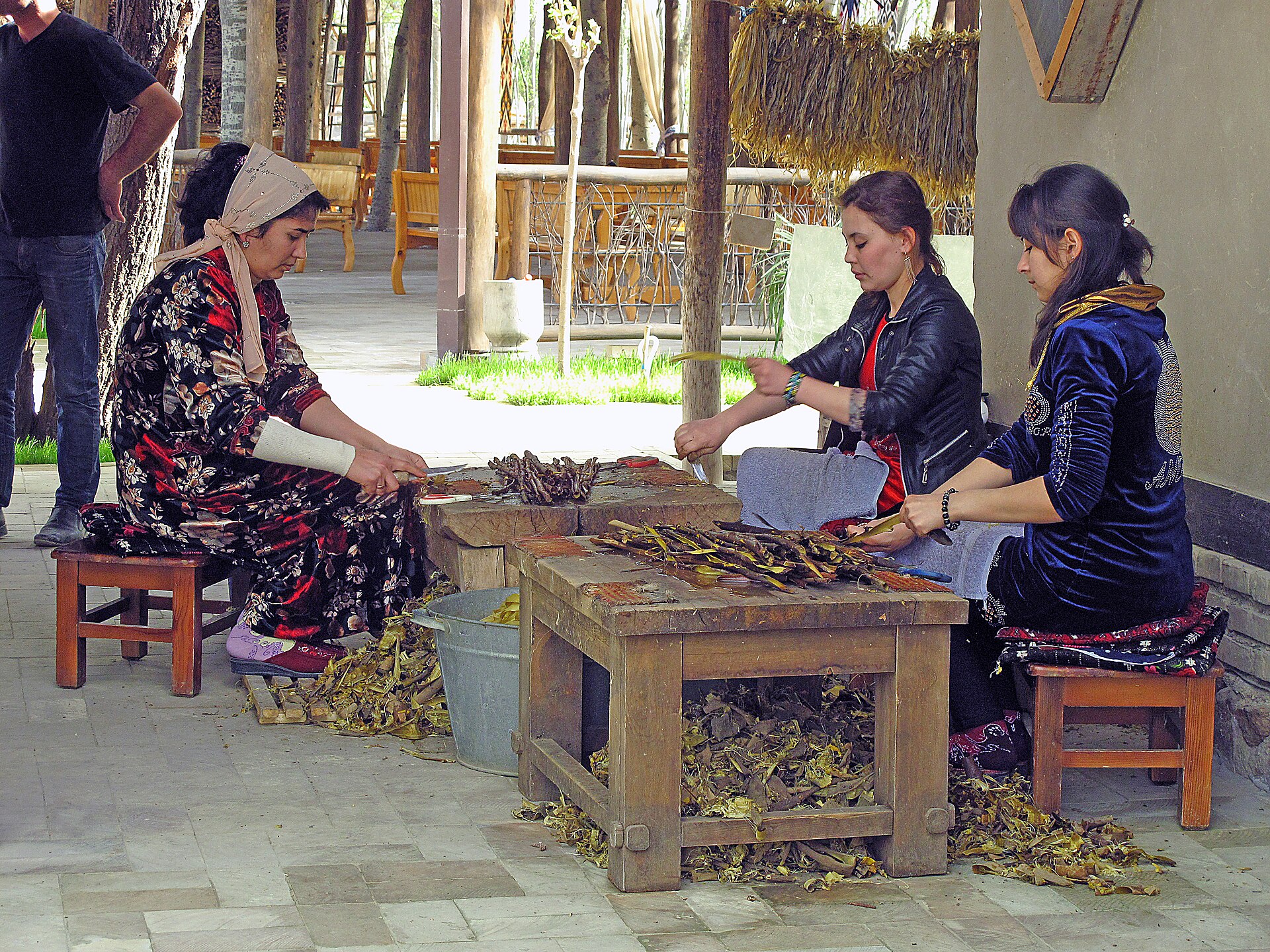
The distinctive Japanese handmade paper known as washi is built from the inner-bark fibres of three plants: kozo, gampi and mitsumata. The highest quality mitsumata fibres are used to make the paper that Japanese bank notes are printed on. Washi serves letter writing, books and documents, and also home interiors such as paper screens, room dividers and sliding doors.

Today most paper in Japan is made in large automated mills, but a few hundred families in rural villages continue to make washi in the traditional way. Washi craftsmanship was inscribed in 2025 on the UNESCO Representative List of the Intangible Cultural Heritage of Humanity.
3. The Islamic World and Europe
By the reign of the Abbasid caliph Harun al-Rashid enough paper was available in Baghdad for bureaucrats to use for record-keeping, and the vizier al-Fadl ibn Yahya introduced the manufacture of paper there. The word for a bundle of sheets carries this commerce into English: paper is still counted in units of 500 sheets called reams, a term that reached English via Old French and Spanish from the Arabic rizmah, meaning a bale or bundle.
European paper-making drew on rag cloth as its raw material, and the transformation of that cloth into paper paste was obtained by the Fabriano paper makers using the hydraulic multiple hammer mill. The multiple hammer hydraulic mill, suggested by the fulling hammers operated by water wheels, eliminated the stone mortar and wooden piston operated by hand that had been used by the Arabs. To eliminate the deterioration of sheets sized with wheat starch, the Fabriano paper-makers substituted gelatine or animal sizing extracted from the discarded meat of the local tanners.
The essential sheet-forming tool was the mould, a rectangular wooden frame covered with a woven brass-wire surface and fitted with an open frame called a deckle that determined the outer dimensions of the finished paper. Modern paper machines use a dandy roller to obtain watermarks, or watermark bodkins for impressed watermarks.
The German Ulman Stromer, who had seen paper mills in Italy, built the first one north of the Alps at Nuremberg in the late 14th century. In England, John Spilman, Queen Elizabeth's jeweller, established a paper mill in Dartford, Kent, in 1588 to manufacture white writing paper, producing the first writing and printing paper in England since John Tate's short-lived paper mill in the late fifteenth century.
The invention of printing in the 1450s brought a vastly increased demand for paper, and through the 18th century paper mills were increasingly plagued by shortages and even advertised publicly for rags.
European resistance to paper is illustrated by a decree of 1221 from Holy Roman Emperor Frederick II, which declared all official documents written on paper to be invalid.
The material of choice for the European papermaker was cotton or linen fiber from rags, sorted, cleaned and heated in a solution of alkali. The rags themselves were collected by rag-and-bone men, a trade in existence in England since the Middle Ages, who led a horse and wagon around villages calling out for rags and bones; the rags were then sold to rag merchants by weight and quality and became an important part of the paper making industry. The major centre of Italian paper manufacture developed after 1276 at Fabriano in central Italy, and European water power made its paper cheaper than that of North Africa and Egypt.
4. Industrialization and Modern Papermaking
After 1800 hand papermaking was rapidly changed by the papermaking machine, chlorine bleach, rosin and alum internal size, and impure wood-pulp fibres substituted for rags. In 1798 Nicolas-Louis Robert in France constructed a moving screen belt that would deliver an unbroken sheet of wet paper, and in 1807 two English engineers built an improved version for Henry and Sealy Fourdrinier. The Fourdriniers had taken out their first patent in 1801 and in 1807 perfected their machine for making continuous paper. Its chief advantages were that it produced paper of any size and with greatly increased rapidity; when the invention was completed the Fourdriniers had expended £60,000 and become bankrupt. William Rittenhouse established British America's first paper mill on the Monoshone Creek in 1690, and it was the only paper mill in the colonies for twenty years. Home to that first mill, Philadelphia went on to be the nation's primary papermaking center through the early nineteenth century. In 1816 Thomas Gilpin patented the nation's first papermaking machine and the following year put it into operation at his family's Brandywine Paper Mill. Groundwood pulp was first made in Germany in 1840 and soda pulp was first manufactured in England in 1852 while in 1867 a United States patent was issued for the sulfite pulping process. By 1875 paper coated by machinery was being made for halftone printing, and in 1884 Carl F. Dahl invented sulfate (kraft) pulp in Danzig, Germany.
Before 1800 paper sheets were sized by impregnation with animal glue or vegetable gums; in 1800 Moritz Friedrich Illig discovered that paper could be sized in vats with rosin and alum. The discovery of the element chlorine in 1774 led to its use for bleaching paper stock. Wood pulp paper produced before the 1980s tends to be acidic because of alum-rosin sizing, which in the presence of moisture generates sulfuric acid. In the 1980s, paper manufacturers began adding alkaline buffers to wood pulp papers intended for lasting use; these buffers retard or prevent acid hydrolysis.
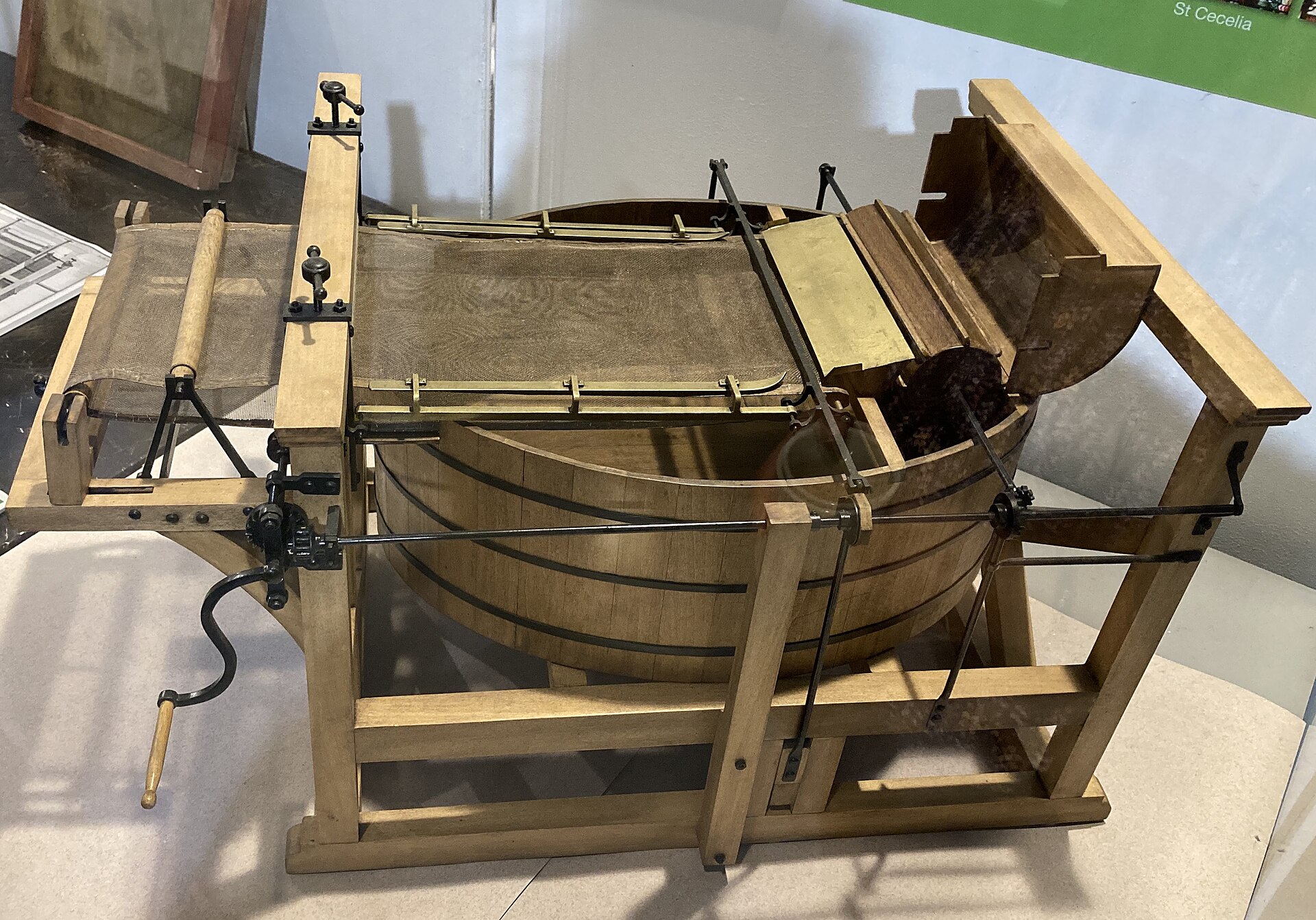
A number of important discoveries were made on the Zaan, including the beater tub known as the Hollander, which reduced the time involved in preparing the pulp by 75 percent. After 1800 the device came into universal acceptance across the trade. At the end of the 17th century there were some 40 paper mills in the Zaan region, all equipped with two or three beater tubs.
5. Xuan Paper
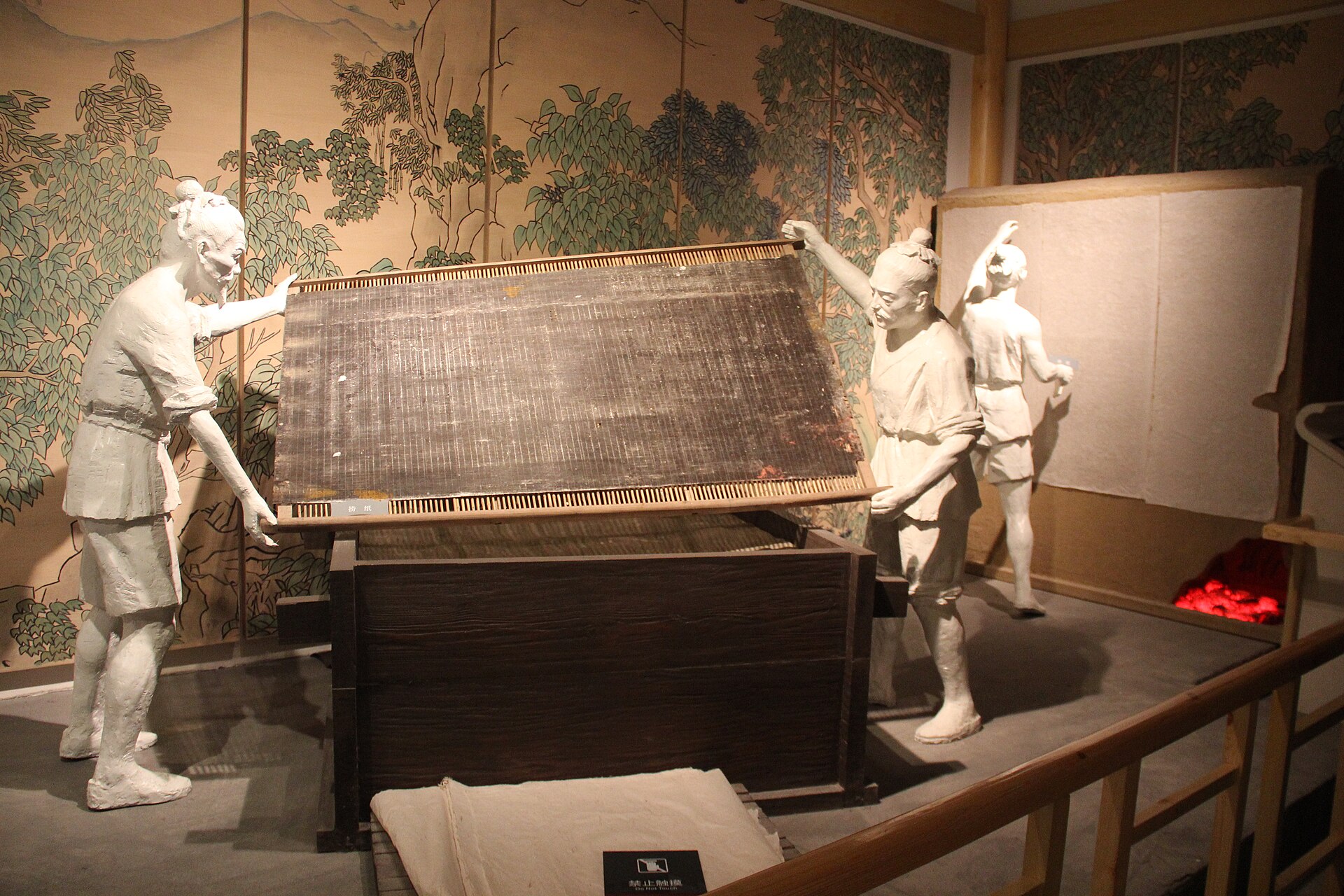
Xuan paper is made by hand from the bark of the Tara Wing-Celtis together with rice straw, and its character is defined by the way it absorbs water and moistens ink. The craft is rooted in Jing County in Anhui Province, where the quality of the water and a mild climate are counted among its essential ingredients. Production follows a strictly manual course of more than a hundred steps and takes more than two years to complete. The industry sustains a substantial share of the local population, employing about one in nine residents of Jing County.
6. Key Dates
-
140–86 BCXuanquanzhi fragmentsEarliest known paper fragments.
-
751TalasPapermaking knowledge spreads beyond China.
-
793Baghdad paperPaper production in Baghdad.
7. Timeline: from Han China to the UNESCO lists
- 2nd century BCEPrimitive hemp paper in ChinaAmple archaeological evidence shows primitive paper types from the 2nd century BCE in China, largely made from hemp, centuries before the traditional invention date.
- 105 CECai Lun reports paper to the emperorAfter some experiments Cai Lun submitted the result to the throne in 105 CE: a refined paper of tree bark, hemp fibres, rag fabric and discarded fishnets.
- about AD 610Papermaking reaches JapanAccording to tradition a Korean monk named Don-cho brought papermaking to Japan by sharing his knowledge at the Imperial Palace in approximately AD 610; this came sixty years after Buddhism was introduced in Japan.
- 751Battle of Talas and the Samarkand workshopsAccording to tradition, after the battle of Talas in 751 Muslim armies took Chinese papermakers prisoner, and Samarkand paper went on to become an important export commodity.
- 793First paper made in BaghdadIn 793 the first paper was made in Baghdad during the time of Harun ar-Rashid, beginning the golden age of Islamic culture that carried papermaking to the frontiers of Europe.
- 1056Spain's first paper mill at JativaThe first Spanish paper mill is documented at Jativa in 1056 as part of the spread of papermaking across North Africa and Spain.
- after 1276Fabriano becomes Italy's paper centreThe major centre of Italian paper manufacture developed after 1276 at Fabriano, in central Italy, where water power made its paper cheaper than that of North Africa and Egypt.
- late 14th centuryFirst paper mill north of the AlpsThe German Ulman Stromer, who had seen paper mills in Italy, built the first one north of the Alps at Nuremberg in the late 14th century.
- 15th century (1450s)Gutenberg's press and the demand for paperThe revolution begun by Johann Gutenberg's printing press in 15th-century Mainz could not have taken place without paper mills such as Stromer's, for even the earliest printing presses had to be fed with reams and reams of paper.
- late fifteenth centuryJohn Tate's short-lived English millJohn Tate's short-lived paper mill in the late fifteenth century gave England its first writing and printing paper, decades before John Spilman established his mill at Dartford in 1588 as the next English maker.
- 1690British America's first paper millIn 1690 William Rittenhouse established British America's first paper mill on the Monoshone Creek, and it was the only paper mill in the colonies for twenty years.
- 1798Robert's moving screen beltIn 1798 Nicolas-Louis Robert in France constructed a moving screen belt that would receive a continuous flow of stock and deliver an unbroken sheet of wet paper.
- 1807The Fourdriniers perfect the paper machineHenry and Sealy Fourdrinier took out their first patent in 1801 and perfected their machine for making continuous paper in 1807 after very costly experiments.
- 1840Groundwood pulp from woodIn 1840 groundwood pulp was first made in Germany, beginning the shift away from rags to wood as the fibre source for paper.
- 1884Kraft (sulfate) pulp inventedIn 1884 Carl F. Dahl invented sulfate (kraft) pulp in Danzig, Germany, the process that made modern large-scale production possible.
- 2009Xuan paper inscribed by UNESCOThe traditional handicrafts of making Xuan paper were inscribed in 2009 on the UNESCO Representative List of the Intangible Cultural Heritage of Humanity.
References (20)
- 1Cai Lun — ChinaKnowledge.de — An Encyclopaedia on Chinese History, Literature and Art WebView source
- 2Cai Lun — Encyclopaedia Britannica WebView source
- 3Paper in Ancient China — World History Encyclopedia WebView source
- 4Silk Road or Paper Road? — The Silk Road, Journal of the Silk Road Foundation (Jonathan M. Bloom) 2017 WebView source
- 5Revolution by the Ream: A History of Paper — Saudi Aramco World (Jonathan M. Bloom, May/June 1999) WebView source
- 6The Invention of Paper — History of Papermaking — Robert C. Williams Museum of Papermaking, Georgia Institute of Technology WebView source
- 7Washi, Japanese Paper — Robert C. Williams Museum of Papermaking, Georgia Institute of Technology WebView source
- 8Washi, craftsmanship of traditional Japanese hand-made paper — UNESCO Intangible Cultural Heritage WebView source
- 9The selection of rags — Museo della Carta e della Filigrana, Fabriano WebView source
- 10Paper and paper mill — Museo della Carta e della Filigrana, Fabriano WebView source
- 11European Papermaking Techniques 1300-1800 — Paper Through Time, University of Iowa Libraries (Timothy Barrett) 1800 WebView source
- 12Watermark technique — Museo della Carta e della Filigrana, Fabriano WebView source
- 13An example of early modern English writing paper — The Collation, Folger Shakespeare Library (Heather Wolfe) WebView source
- 14Papermaking — Encyclopaedia Britannica WebView source
- 15Regulating the Rag and Bone Man — In Custodia Legis, Law Library of Congress 2017 WebView source
- 16Henry Fourdrinier — Dictionary of National Biography (1889) — Today in Science History 1889 WebView source
- 17Paper and Papermaking — The Encyclopedia of Greater Philadelphia (Jack McCarthy) WebView source
- 18The Deterioration and Preservation of Paper: Some Essential Facts — Library of Congress, Preservation Directorate WebView source
- 19De Schoolmeester (The School teacher) — De Zaansche Molen, Zaanse Schans WebView source
- 20Traditional handicrafts of making Xuan paper — UNESCO Intangible Cultural Heritage WebView source