Wheel
The wheel from its earliest potter's turntables and wooden disks to spoked chariot wheels, waterwheels, and the Ferris wheel.
The wheel is a circular frame of hard material that turns on an axle, used in transport, pottery, and machinery. It emerged in the fourth millennium BCE as potter's turntables and solid disk wheels, was transformed by spoked chariot wheels on the Eurasian steppe, and became the basis of the wheel and axle — the simple machine that amplifies force in mills, waterwheels, and engines.
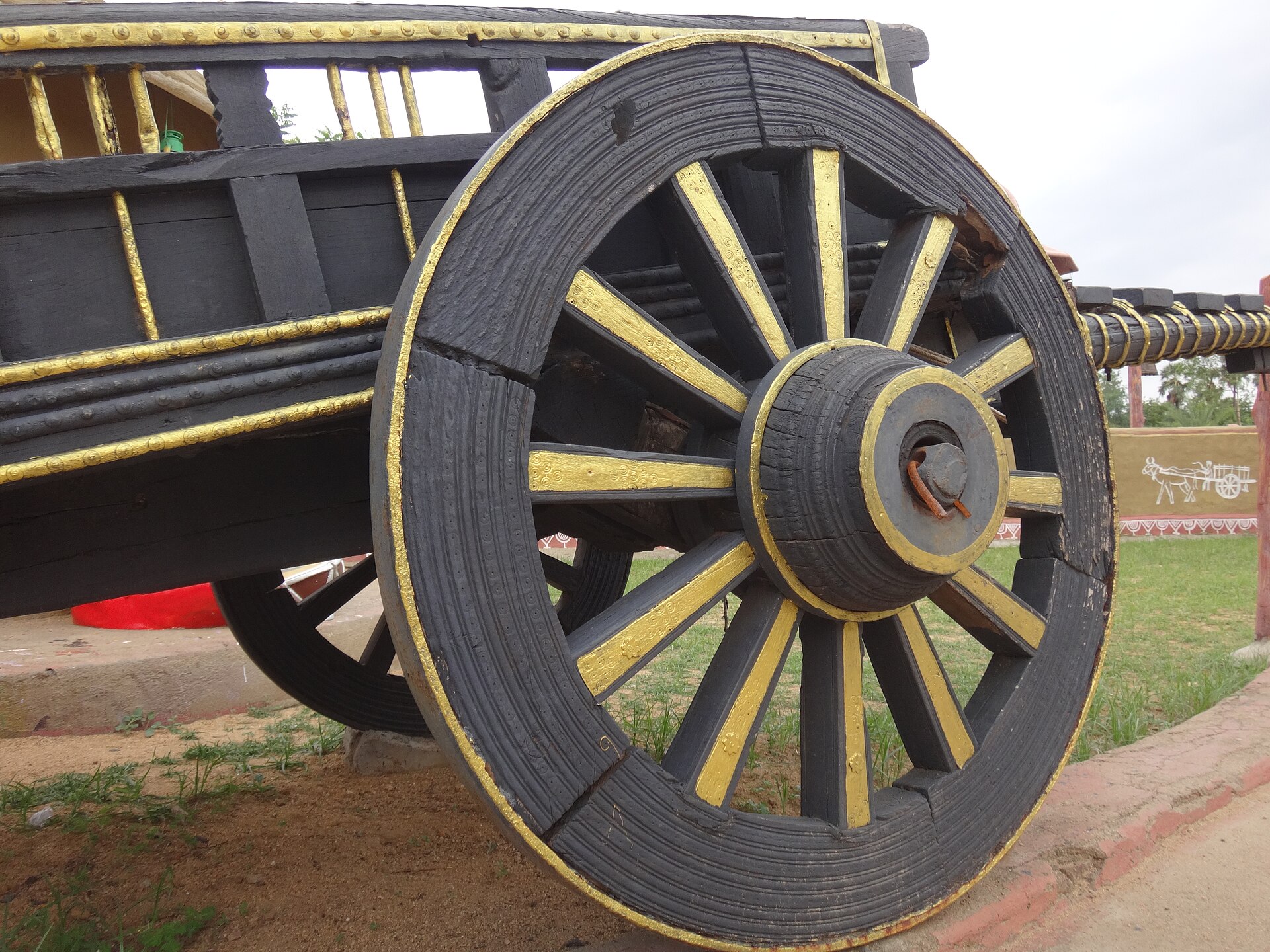
In this article
- 1Definition and Mechanical Principle
- 2Origins and the Problem of the Axle
- 3The Potter's Wheel
- 4Earliest Wheeled Vehicles
- 5The Ljubljana Marshes Wheel
- 6Chariots and Spoked Wheels
- 7Wheel Construction in Antiquity
- 8Wheels, Power and Industry
- 9The Ferris Wheel
- 10Wheels Without Transport: Mesoamerica
- 11Timeline of Wheel and Chariot Development
- 12Timeline: from the first potter's wheels to the Ferris wheel
- 13Frequently asked questions
- 14Knowledge graph
Definition and Mechanical Principle
A wheel is a circular frame of hard material that may be solid, partly solid, or spoked and that is capable of turning on an axle. The wheel and axle is a basic machine component used for amplifying force. A modest force applied at the radius of a large gear can overcome a larger force acting at the radius of a smaller gear on the same shaft. Its mechanical advantage equals the ratio of the two forces involved and also equals the ratio of the radii of the two gears, less friction losses. The actual mechanical advantage of a wheel and axle is less than its velocity ratio because of friction.
In its earliest form the wheel and axle was probably used for raising weights or water buckets from wells. Because the wheel made controlled rotary motion possible, it was of decisive importance in machine design.
1. Origins and the Problem of the Axle
Unlike most inventions, which were inspired by the natural world, the wheel does not exist in nature and is entirely a human innovation. It was also a relative latecomer: sewing needles, woven cloth, rope, basket weaving, boats and even the flute all predated it by thousands of years. The tricky part of inventing the wheel was not conceiving of a cylinder rolling on its edge but connecting a stable, stationary platform to that cylinder. The idea of wheeled transportation may have come from the use of logs as rollers, but the oldest known wheels were wooden disks of three carved planks clamped by transverse struts.
The earliest images of wheeled carts have been excavated in Poland and elsewhere in the Eurasian steppes, and this region is overtaking Mesopotamia as the wheel's most likely birthplace. Computational analysis provides new supporting evidence for the theory that the wheel was invented by Neolithic miners harvesting copper ore from the Carpathian Mountains as early as 3900 BC. The wheel evolved over a period spanning many centuries, and its development was punctuated by discrete innovations; computational structural analysis suggests a probable path along which it evolved through a sequence of three major innovations.
2. The Potter's Wheel
The potter's wheel made an early appearance in southern Mesopotamia within the Uruk cultural sphere and then developed in a widespread and discontinuous way in the Uruk network. In Mesopotamia it was first adopted during the fourth millennium BCE. The Ubaid culture, which arose in southern Mesopotamia, is characterized by distinctive painted pottery made on a slow wheel, while the Uruk culture is characterized by mass-produced pottery made on a fast wheel or in a mold.
The use of the fast wheel became general and imparted a new crispness to pottery profiles. The potter's wheel enabled the mass production of ceramics, giving the lower classes access to affordable items such as jars and bowls.
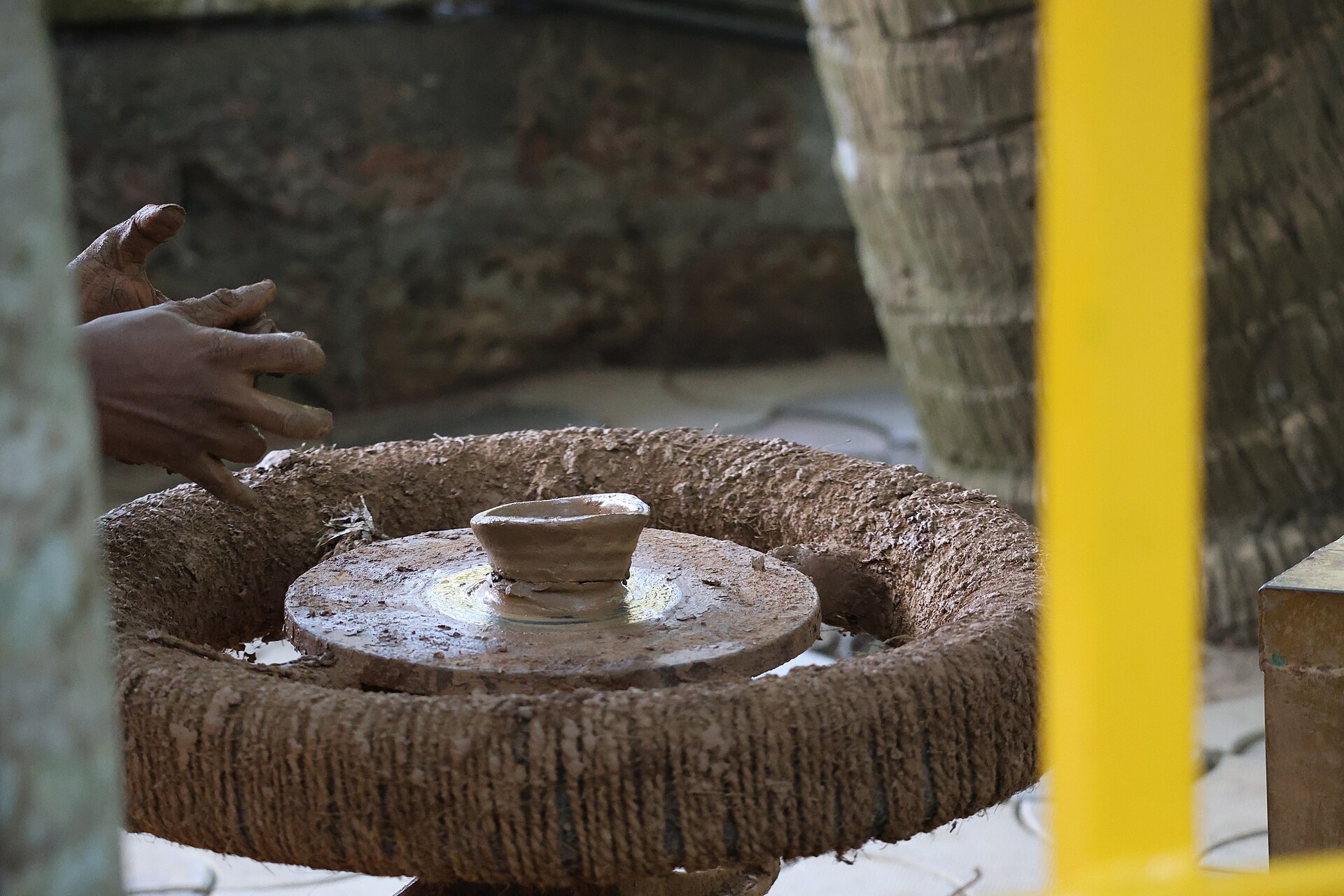
The chronological coincidence between the adoption of wheel-coiling in northern Mesopotamia around 3900 to 3800 BCE and its adoption in the Uruk world suggests that the first adoption of the potter's wheel involved technical borrowing between the two groups. Experimental trials suggest that wheel-coiled containers of north-Mesopotamian tradition were made at around 50 to 60 rpm, while Uruk wheel-coiled containers required roughly 100 rpm.
3. Earliest Wheeled Vehicles
The earliest evidence of wheeled vehicles is dated to the Funnel Beaker (TRB) culture in Europe and the Late Uruk period in the Near East, and excavation results and radiocarbon determinations from Poland, Germany, Iraq, Syria and Turkey indicate that wheeled vehicles appeared contemporaneously in Europe and the Near East. More than 150 clay models of four-wheeled wagons of the Boleraz culture of the Carpathian region are the world's earliest known representations of wheeled transport. The wheel reached the Eurasian steppe around 3100 BCE, imported as an invention from the Middle East.
Early Mesopotamian vehicle wheels were made from two half-discs of solid wood nailed together and covered with leather tires. By around 3000 BCE the Sumerians were using two- and four-wheeled carts and wagons to transport people and goods.
4. The Ljubljana Marshes Wheel
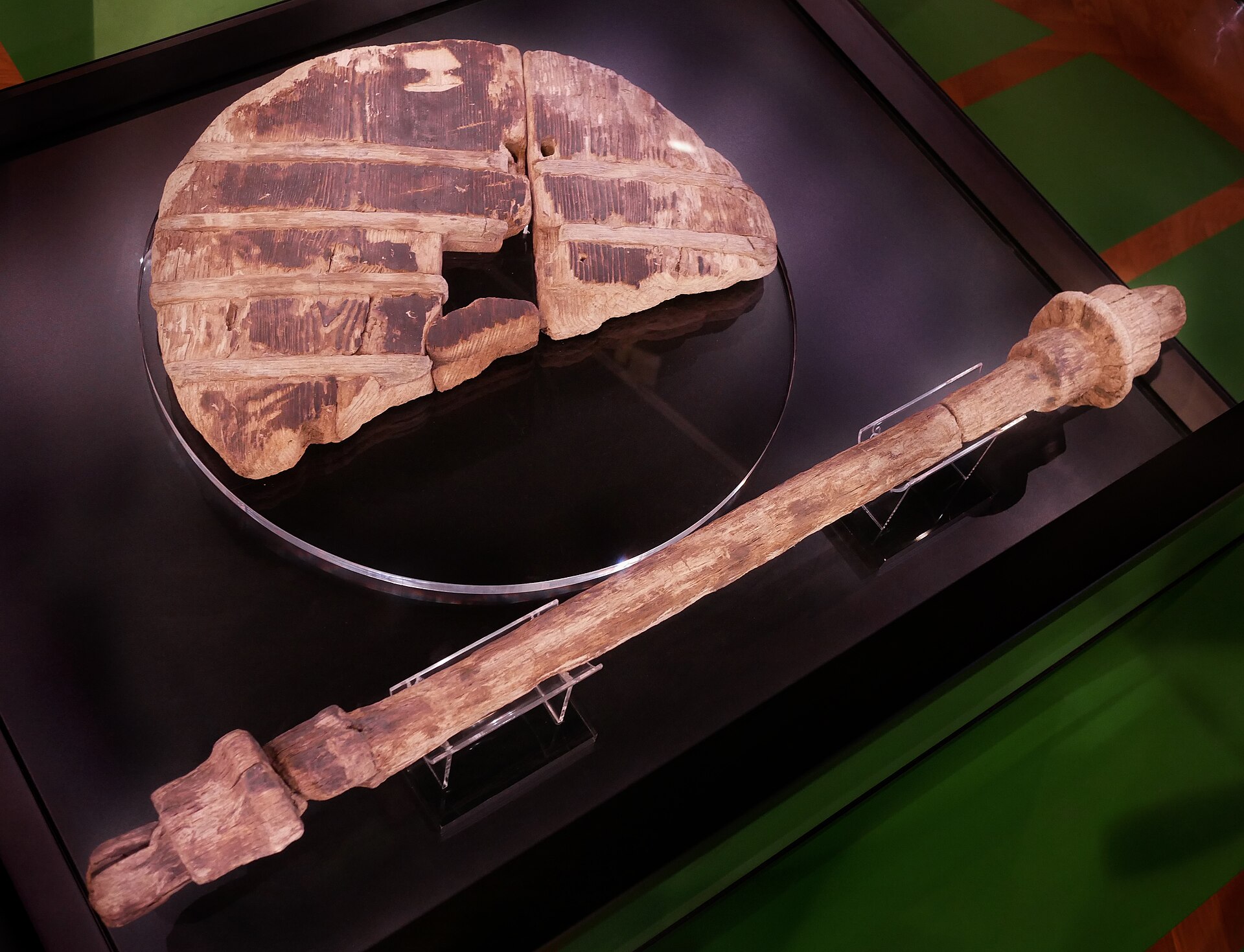
The oldest wooden wheel with an axle, about 5,200 years old, was discovered in Slovenia in the Ljubljana Marshes. The oldest wheel discovered so far comes from Central Europe, although the concept of the wheel is believed to have originated in Mesopotamia earlier. The wheel made its first public appearance in the City Museum of Ljubljana at the exhibition titled THE WHEEL — 5,200 years, which ran from 24 May 2013 to 20 April 2014 and was subsequently showcased in several European cities.
5. Chariots and Spoked Wheels
The chariot was an open, two- or four-wheeled vehicle of antiquity, first used in royal funeral processions and later in warfare, racing and hunting; in its light, usually two-wheeled form it was drawn by one or more horses and often carried a driver together with a fighter armed with bow-and-arrow or javelins. It apparently originated in Mesopotamia in about 3000 BCE, where monuments from Ur and Tutub depict heavy vehicles with solid wheels, and by around 3200 BCE the first chariots were made for the nobility and wealthy as personal transportation, later developed by the Akkadians and Assyrians for military use. Spoked wheels appeared about 2000 BCE, when they were in use on chariots in Asia Minor, and the introduction of the horse as a draft animal in about 2000 BCE was the final step in making the chariot a military arm that gave ancient armies unprecedented mobility.
The chariot was invented in the steppe by roughly 2000 BCE, probably just east of the southern Ural mountains where the oldest chariots have been unearthed. In Eastern Europe, light vehicles with spoked wheels and harnessed horse teams are first evidenced in the early second-millennium BC Sintashta-Petrovka culture of the South-eastern Ural Mountains. The vehicles attested at Sintashta moglia, Krivoe Ozero and Kamennyj Ambar-5 were designed to transport humans rather than goods and developed into horse-drawn chariots during Eastern Europe's Middle Bronze Age. Construction of early horse-drawn chariots with spoked wheels most probably began towards the end of the third millennium BC, and Bayesian modelling of radiocarbon dates from the Kamennyj Ambar-5 kurgan cemetery indicates early European chariots date to no later than the first proto-chariots of the ancient Near East.
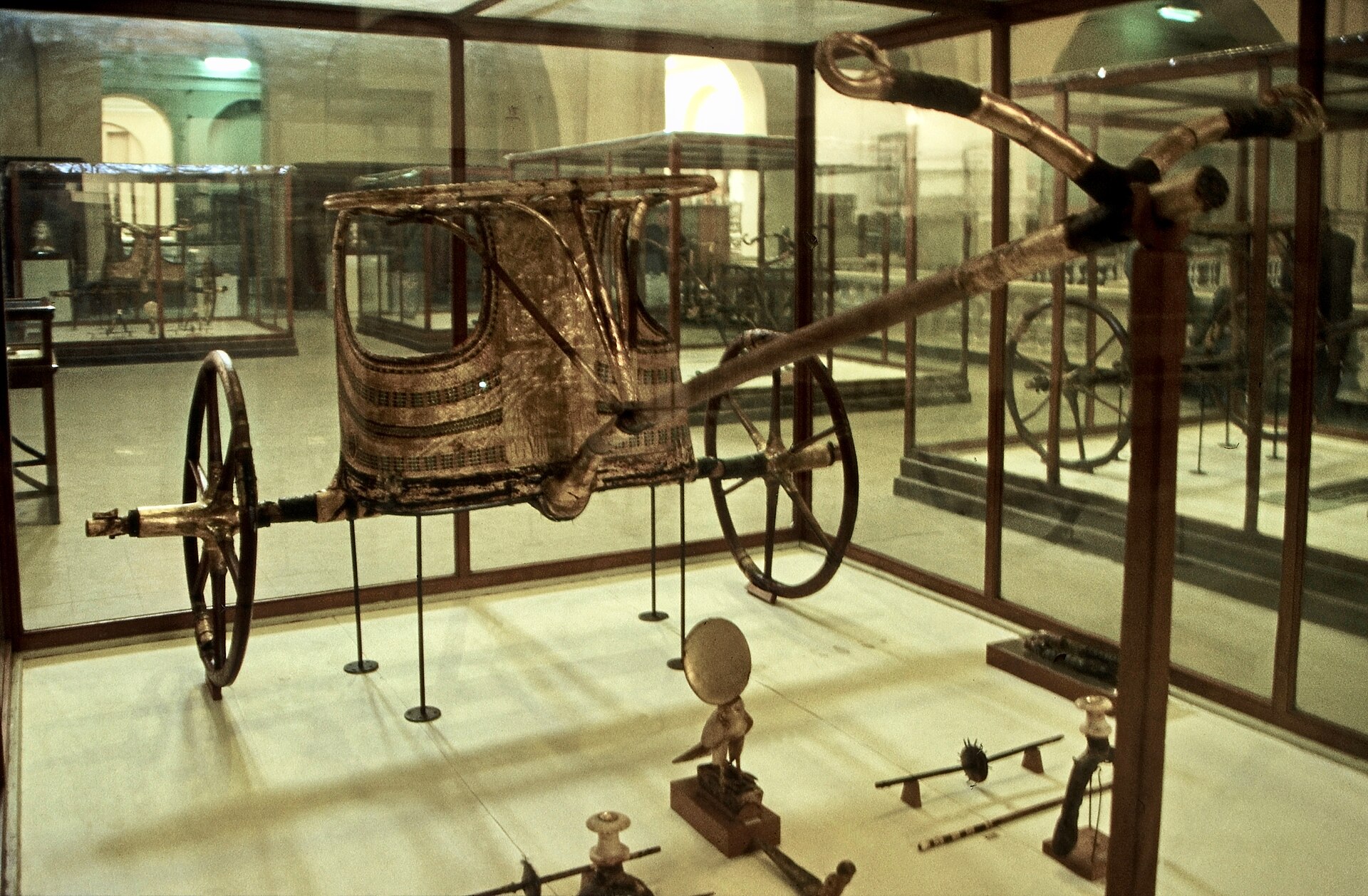
The first reference to charioteers comes from Syria around 1800 BCE, after which chariots advanced into civilization and quickly became the preferred elite weapon, and the chariot served as the supreme military weapon in Eurasia from roughly 1700 BCE to 500 BCE. Chariot conquerors overran the Middle East and then invaded India about 1500 BCE, extinguishing the Indus civilization. By the time of Alexander the Great the war chariot had been superseded by cavalry, while chariot racing had become popular in Greece and a main feature of the Olympic Games; in the Roman circus games chariot racing took the foremost place and chariotry became socially important. Use of the chariot declined slowly from around 500 BCE, mainly because horseback riding, developed in the steppes, gradually replaced the need for chariots.
Numerous representations of horse-drawn chariots appear in the official scenes at Amarna, with the king and queen shown driving themselves, and the Metropolitan Museum of Art's relief Horses Harnessed to a Chariot is dated to the Amarna Period, in the reign of Akhenaten, about 1353 to 1336 B.C. Wheel spokes may be made of steel wire, laced tangentially and kept under tension by threaded nipples in the rims.
Seven AMS-dated Sintashta graves in the associated Kamennyj Ambar-5 cemetery fall between 2040 and 1730 cal BC at 95.4% confidence. For the sampled burials of kurgans 2 and 4 at Kamennyj Ambar-5, the Bayesian radiocarbon model dates chariot grave 8 in kurgan 2 to the range 1950-1880 cal BC at 95.4% confidence.
6. Wheel Construction in Antiquity
The tympanum, the commonest kind of Roman cart-wheel, was nearly a foot in thickness and was made by sawing a tree trunk across or nailing boards together. Besides its wheels and axle, the plaustrum consisted of a strong pole called the temo, to the hinder part of which a table of wooden planks was fastened. Plaustra carried loads of stone, timber, manure, or skins of wine, and their liability to overturn led the emperor Hadrian to prohibit heavily loaded waggons from entering Rome.
7. Wheels, Power and Industry
The three power sources of the Middle Ages — animal, water and wind — were all exploited by means of wheels, and rotating machines performing repetitive operations and driven by steam engines were important elements in the Industrial Revolution. Early waterwheels used for irrigation consisted of pots tied to the rim of a wheel rotated about a horizontal axis by running water or by a treadmill, and more than 2,000 years ago the Greeks were using water wheels to grind wheat into flour. The modern hydropower turbine traces its beginnings to the mid-1700s, when the French engineer Bernard Forest de Bélidor wrote Architecture Hydraulique.
Researchers believe the wheelbarrow first appeared in classical Greece between the sixth and fourth centuries B.C., then spread to China and later to medieval Europe.
The oldest and most common design for a perpetual motion device is the overbalanced wheel, which uses shifting weights to keep rotating. A wheel that is filmed can seem to stand still or even revolve backwards, an optical illusion called the wagon wheel effect that can also occur under a strobe light.
8. The Ferris Wheel
Daniel Burnham, the architect charged with turning a boggy square mile of Chicago into a world-dazzling showpiece, told his designers to make no little plans while he labored in the shadow of the Eiffel Tower. George Washington Gale Ferris Jr., a Pittsburgh engineer whose company inspected the steel used by the fair, quickly sketched a huge revolving steel wheel. More than 100,000 parts went into Ferris's wheel, notably an axle weighing 89,320 pounds that had to be hoisted onto two towers 140 feet in the air.

9. Wheels Without Transport: Mesoamerica
The Aztecs used wheels in children's toys, such as small wheeled dogs made of pottery or occasionally obsidian, yet never considered using wheels for transport. A cart would have been next to useless in Mesoamerica because the Aztecs had no large pack animals, and human porters were more efficient at carrying packs over long distances.
10. Timeline of Wheel and Chariot Development
-
about 3500 BCEWheels at ErechA Sumerian pictograph from Erech shows a sledge already equipped with wheels 1Wheel | Invention, History & Uses · Encyclopaedia Britannica ↗.
-
around 3500 B.C.Potter's wheels in MesopotamiaThe earliest wheels served as potter's wheels, roughly 300 years before anyone put wheels on chariots 3A Salute to the Wheel · Smithsonian Magazine ↗.
11. Timeline: from the first potter's wheels to the Ferris wheel
- about 3900 BCEProposed Carpathian originComputational analysis supports the theory that the wheel was invented by Neolithic miners harvesting copper ore from the Carpathian Mountains.
- about 3500 BCEFirst potter's wheelsEvidence indicates the first wheels were potter's wheels in Mesopotamia, around 300 years before wheels were used for chariots.
- about 3500 BCESledge with wheels depictedA Sumerian pictograph from Erech, dated about 3500 BCE, shows a sledge equipped with wheels.
- about 5,200 years agoLjubljana Marshes wheelThe oldest wooden wheel with an axle, about 5,200 years old, was discovered in Slovenia in the Ljubljana Marshes.
- about 3100 BCEWheel reaches the steppeThe wheel, an invention imported from the Middle East, had arrived in the Eurasian steppe.
- about 3000 BCEChariot origin in MesopotamiaThe chariot apparently originated in Mesopotamia; monuments from Ur and Tutub depict heavy vehicles with solid wheels.
- about 3000 BCESumerian carts and wagonsBy about 3000 BCE the Sumerians were using two-wheeled and four-wheeled carts and wagons to transport people and goods.
- about 2000 BCESpoked wheels on chariotsSpoked wheels appeared about 2000 BCE, when they were in use on chariots in Asia Minor.
- 2040-1730 cal BCSintashta chariot burialsAMS-dated Sintashta graves at Kamennyj Ambar-5 fall between 2040 and 1730 cal BC at 95.4% confidence, dating early horse-drawn chariots.
- about 1800 BCEFirst charioteers recordedThe first reference to charioteers comes from Syria around 1800 BCE, after which chariots quickly became the preferred elite weapon.
- about 1500 BCEChariot invaders reach IndiaChariot conquerors overran the Middle East, and others invaded India about 1500 BCE and extinguished the Indus civilization.
- ca. 1353-1336 BCAmarna chariot reliefThe Metropolitan Museum's relief Horses Harnessed to a Chariot, from the reign of Akhenaten, shows horses at rest; chariots appear throughout the official scenes at Amarna.
- from about 500 BCEChariot declineThe use of the chariot declined slowly from around 500 BCE, mainly because horseback riding, developed in the steppes, replaced the need for chariots.
- 1881Water turbine lights Niagara FallsA dynamo connected to a turbine in a flour mill supplied power to street lights in Niagara Falls, New York.
- 21 June 1893Ferris wheel at the Chicago fairThe world's first Ferris wheel, designed by George Washington Gale Ferris Jr., was launched at the World's Columbian Exposition in Chicago.
12. Frequently asked questions
How old is the Ljubljana Marshes wheel, and where was it found?
The Ljubljana Marshes wheel, about 5,200 years old, was found in Slovenia together with its axle 16THE WHEEL - 5,200 Years · City Museum of Ljubljana (MGML) ↗.
How were the Sintashta chariot graves dated?
The graves were dated by Bayesian modelling of AMS radiocarbon dates from the Kamennyj Ambar-5 kurgan cemetery 10Chariots in the Eurasian Steppe: a Bayesian approach to the emergence of horse-drawn transport in the early second millennium BC · Antiquity (Cambridge University Press) ↗.
How was the Mercurago wheel built?
The Mercurago wheel is tripartite in construction, with two felloes attached to a diametric crossbar by internal dowels and four thinner rods running from the crossbar into the felloes 17An engineering investigation on the Bronze Age crossbar wheel of Mercurago · Journal of Archaeological Science: Reports (Elsevier) ↗. The separate nave inserted into the crossbar was hypothesized to have a role similar to that of modern bushings, making it a very innovative device for its time, and the wheel's constructive complexity and optimized structure make it most probable that it was destined for a war chariot 17.
What were the Roman names for chariot teams of different sizes?
The Latin name for a chariot and pair was bigae, a chariot with a third horse added was called a triga, and a chariot and four was called quadrigae 18Currus - Greek and Roman Chariots (Smith's Dictionary, 1875) · LacusCurtius, University of Chicago ↗. Chariots were not much used by the Romans, but the most splendid kind, the quadrigae, were ridden by generals and emperors in their triumphs and had a cylindrical body 18.
How large was the original Ferris wheel?
Ferris's wheel measured 250 feet in diameter and carried 36 cars, each capable of holding 60 people 14The Brief History of the Ferris Wheel · Smithsonian Magazine ↗.
References (22)
- 1Wheel | Invention, History & Uses — Encyclopaedia Britannica Web↩View source
- 2Wheel and axle | Simple Machines, Mechanical Advantage, Force — Encyclopaedia Britannica WebView source
- 3A Salute to the Wheel — Smithsonian Magazine Web↩View source
- 4Why It Took So Long to Invent the Wheel — Scientific American WebView source
- 5Reconstructing the invention of the wheel using computational structural analysis and design — Royal Society Open Science (PMC) WebView source
- 6How the Uruk Potters Used the Wheel: Technical Transfers and Innovations in 4th millennium BCE Mesopotamia — Interdisciplinaria Archaeologica (IANSA) 2021 WebView source
- 7Mesopotamia, 8000-2000 B.C. (Heilbrunn Timeline of Art History) — The Metropolitan Museum of Art 2000 WebView source
- 8Potter's wheel — Encyclopaedia Britannica WebView source
- 9Mesopotamian Inventions: Creating the Future — World History Encyclopedia 1859 WebView source
- 10Chariots in the Eurasian Steppe: a Bayesian approach to the emergence of horse-drawn transport in the early second millennium BC — Antiquity (Cambridge University Press) Book↩View source
- 11Chariot — World History Encyclopedia WebView source
- 12Plaustrum (Smith's Dictionary of Greek and Roman Antiquities, 1875) — LacusCurtius, University of Chicago 1875 WebView source
- 13History of Hydropower — U.S. Department of Energy WebView source
- 14The Brief History of the Ferris Wheel — Smithsonian Magazine Web↩View source
- 15Just 'toying' with wheels? — Mexicolore WebView source
- 16THE WHEEL - 5,200 Years — City Museum of Ljubljana (MGML) Web↩View source
- 17An engineering investigation on the Bronze Age crossbar wheel of Mercurago — Journal of Archaeological Science: Reports (Elsevier) Web↩View source
- 18Currus - Greek and Roman Chariots (Smith's Dictionary, 1875) — LacusCurtius, University of Chicago 1875 Web↩View source
- 19The earliest evidence of wheeled vehicles in Europe and the Near East — Antiquity (Cambridge University Press) BookView source
- 20Chariot | Ancient Warfare, Racing & Ceremonial Vehicles — Encyclopaedia Britannica WebView source
- 21Spoked wheel | technology — Encyclopaedia Britannica WebView source
- 22Horses Harnessed to a Chariot (New Kingdom, Amarna Period) — The Metropolitan Museum of Art WebView source