Turkey
Turkey from the Anatolian peninsula and the Turkish Straits to the Ottoman centuries and the modern Republic — geography, people, economy, heritage and recent history.
Turkey (Türkiye) is a country that lies partly in Asia and partly in Europe, with Ankara as its capital and Istanbul as its largest city. Successor to the Ottoman Empire, it was founded as a republic in 1923 under Mustafa Kemal Atatürk and is today a multiparty republic with one of the world's larger economies and 22 UNESCO World Heritage Sites. Astride the Turkish Straits and crisscrossed by active fault systems, the country was struck by the devastating Kahramanmaraş earthquakes in February 2023.
Overview
Turkey, also called Türkiye, occupies a unique geographic position, lying partly in Asia and partly in Europe, and has acted as both a barrier and a bridge between the two continents. It is situated at the crossroads of the Balkans, Caucasus, Middle East and eastern Mediterranean. Nearly all of Turkey is in Asia, comprising the oblong peninsula of Asia Minor also known as Anatolia, while the remainder, Turkish Thrace, lies in the extreme southeastern part of Europe.
In the east, Turkey's highest mountain, Mount Ararat (Ağrı), reaches 16,945 feet (5,165 meters) close to the borders with Armenia and Iran.
Turkey is a predominantly mountainous country, with true lowland confined to the coastal fringes; about one-fourth of its surface has an elevation above 1,200 meters and less than two-fifths lies below 460 meters.
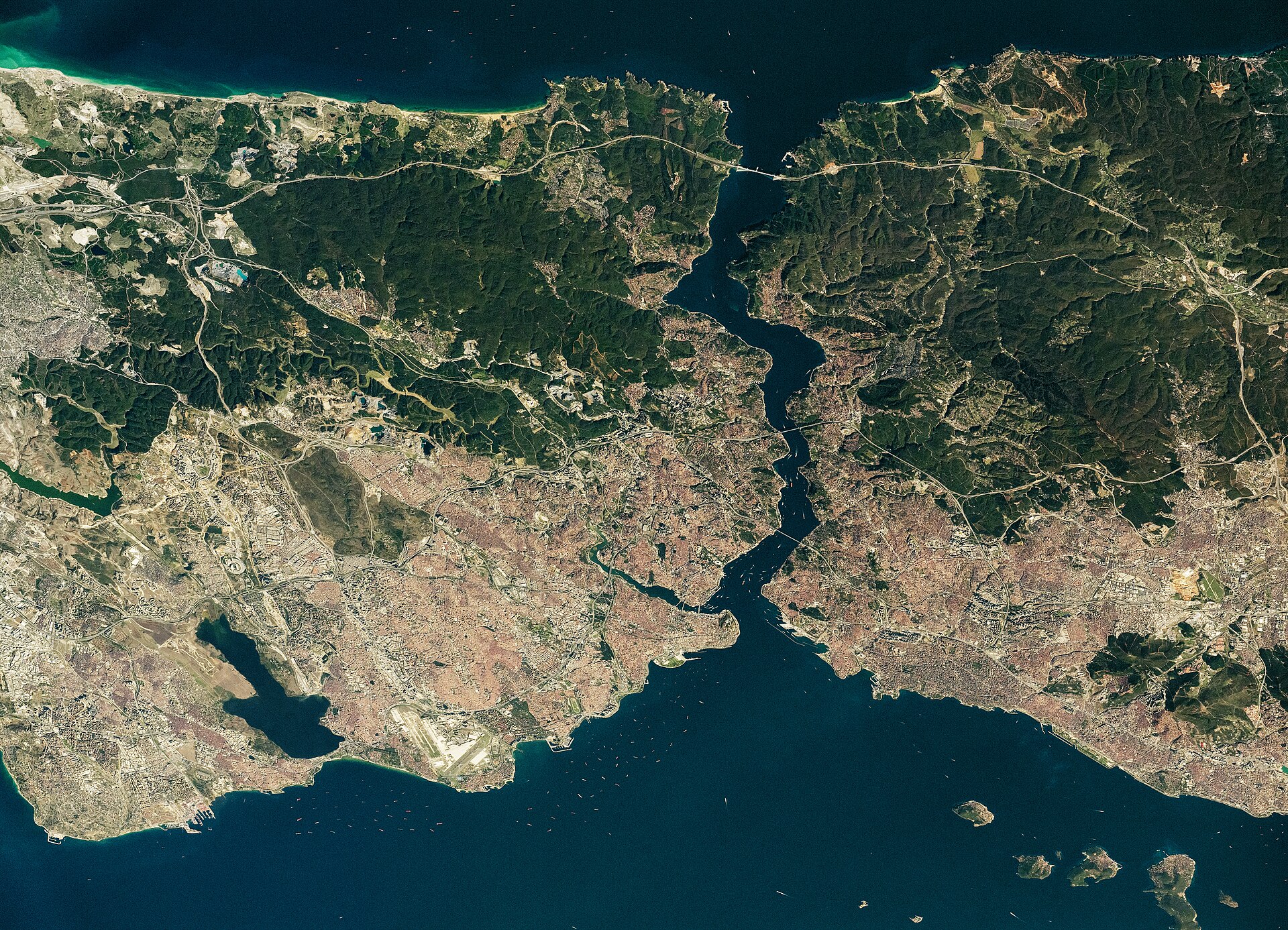
The Bosphorus, also called the Istanbul Strait, divides Europe from Asia, and its narrow waterway is made hazardous by currents reaching 7 to 8 knots and heavy ferry traffic linking the European and Asian shores. To reduce the number of ships and improve safety, officials have proposed the Kanal Istanbul waterway west of Istanbul.
The narrow waterway is just 1050 meters wide at the Bosphorus Bridge.
Turkey's land area is greater than that of any European state.
1. People and Society
Türkiye's population was about 85.5 million in 2024. Its GDP per capita was 15,461 US dollars.
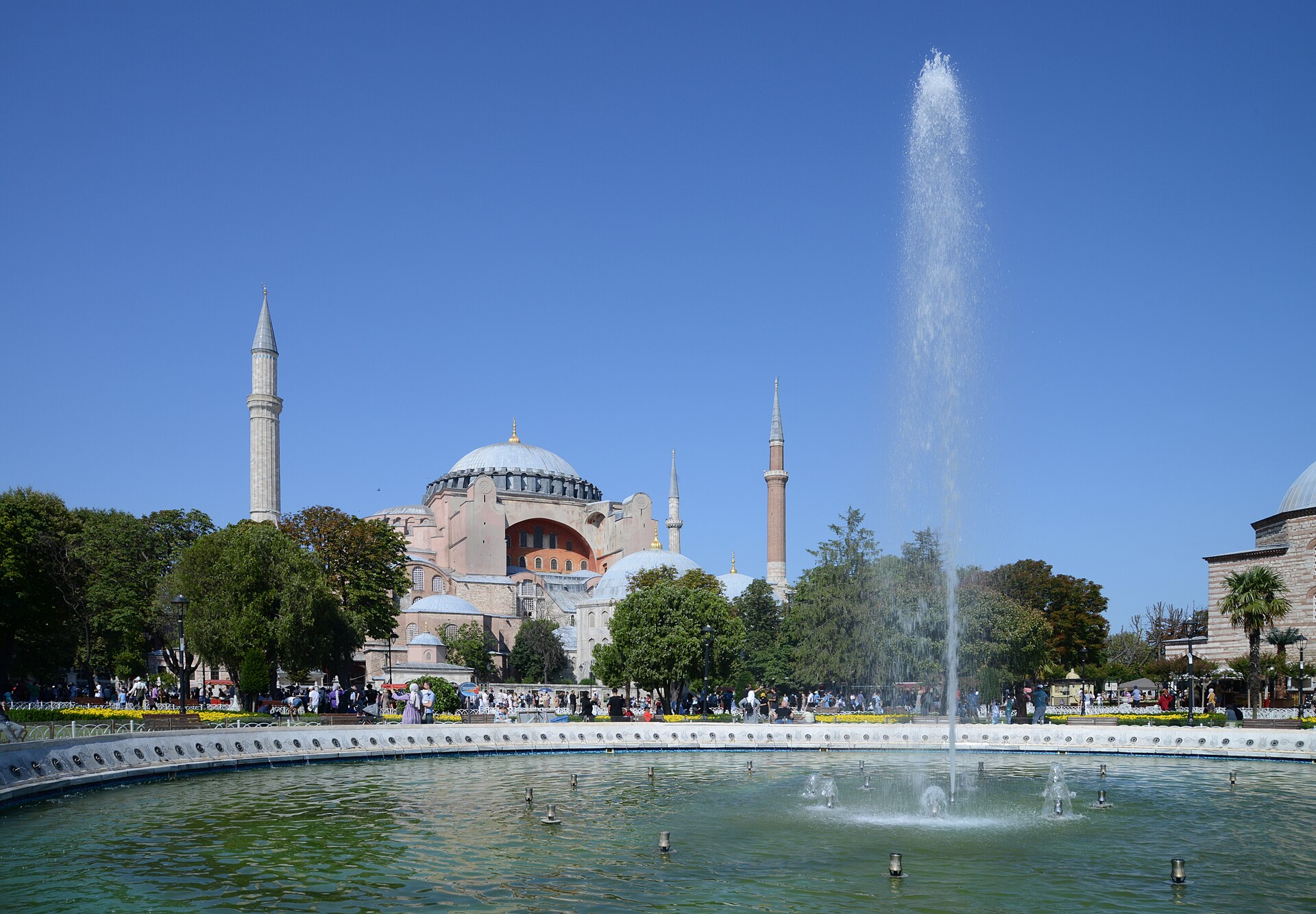
Turkey's life expectancy is 78.5 years. The country also faces population pressure and uncontrolled urbanization, pressures that threaten such landmarks as Istanbul's ancient Hippodrome of Constantine, the 6th-century Hagia Sophia and the 16th-century Süleymaniye Mosque.

2. Government and Politics
Turkey is a multiparty republic with a single legislative house, the Grand National Assembly of Turkey. Its official name is the Republic of Türkiye, rendered in Turkish as Türkiye Cumhuriyeti. The country's official language is Turkish, and its monetary unit is the Turkish lira.
After a period of one-party rule, governments since the 1950s have been produced by multiparty elections.
Amendments to the Turkish constitution passed in April 2017 and implemented in July 2018 eliminated the post of prime minister and expanded the role of the president.
Turkey is divided into 81 provinces for administrative purposes.
3. Economy
More recently, economic expansion was 5.0 percent in 2023, moderated to 3.3 percent in 2024, and settled at 3.6 percent in 2025. Alongside this expansion, poverty fell sharply, declining from above 20 percent in 2007 to 7.6 percent in 2021 and reaching 4.1 percent by 2023.
The primary objective of the Central Bank of the Republic of Turkey is to achieve price stability. Following the May 2023 presidential elections, an economic team launched a comprehensive policy set to address high inflation, and Turkey has been moving to normalize its macroeconomic strategies.
Türkiye is the 17th largest economy in the world, with a GDP of 1.60 trillion US dollars as of 2025 according to the World Bank.
International support for reconstruction included €6 billion in pledges for Türkiye at a donor conference, of which €1 billion came from the EU budget.
4. History
The Seljuq dynasty, established by Turkmen Oğuz nomads who migrated from Central Asia, overwhelmed Byzantium at the Battle of Manzikert in 1071 and occupied eastern and central Anatolia during the 12th century. The term Ottoman derives from Osman I, the nomadic Turkmen chief who about 1300 founded both the dynasty and the empire. That empire, created by Turkish tribes in Anatolia, grew to be one of the most powerful states in the world during the 15th and 16th centuries. In 1453 the Ottoman Empire took control of the city that became Istanbul, and in 1457 it became the Ottoman capital.
The Ottoman period spanned more than 600 years and came to an end only in 1922, when it was replaced by the Turkish Republic and various successor states in southeastern Europe and the Middle East. Kemal Atatürk, born in 1881 in Salonika and died on November 10 1938 in Istanbul, was a soldier, statesman and reformer who became the founder and first president of the Republic of Turkey. Atatürk rescued the surviving Turkish remnant of the defeated Ottoman Empire at the end of World War I, galvanized his people against invading Greek forces and repulsed aggression by British, French and Italian troops. The modern Turkish republic was founded in 1923 after the collapse of the Ottoman Empire and is a nationalist, secular, parliamentary democracy.
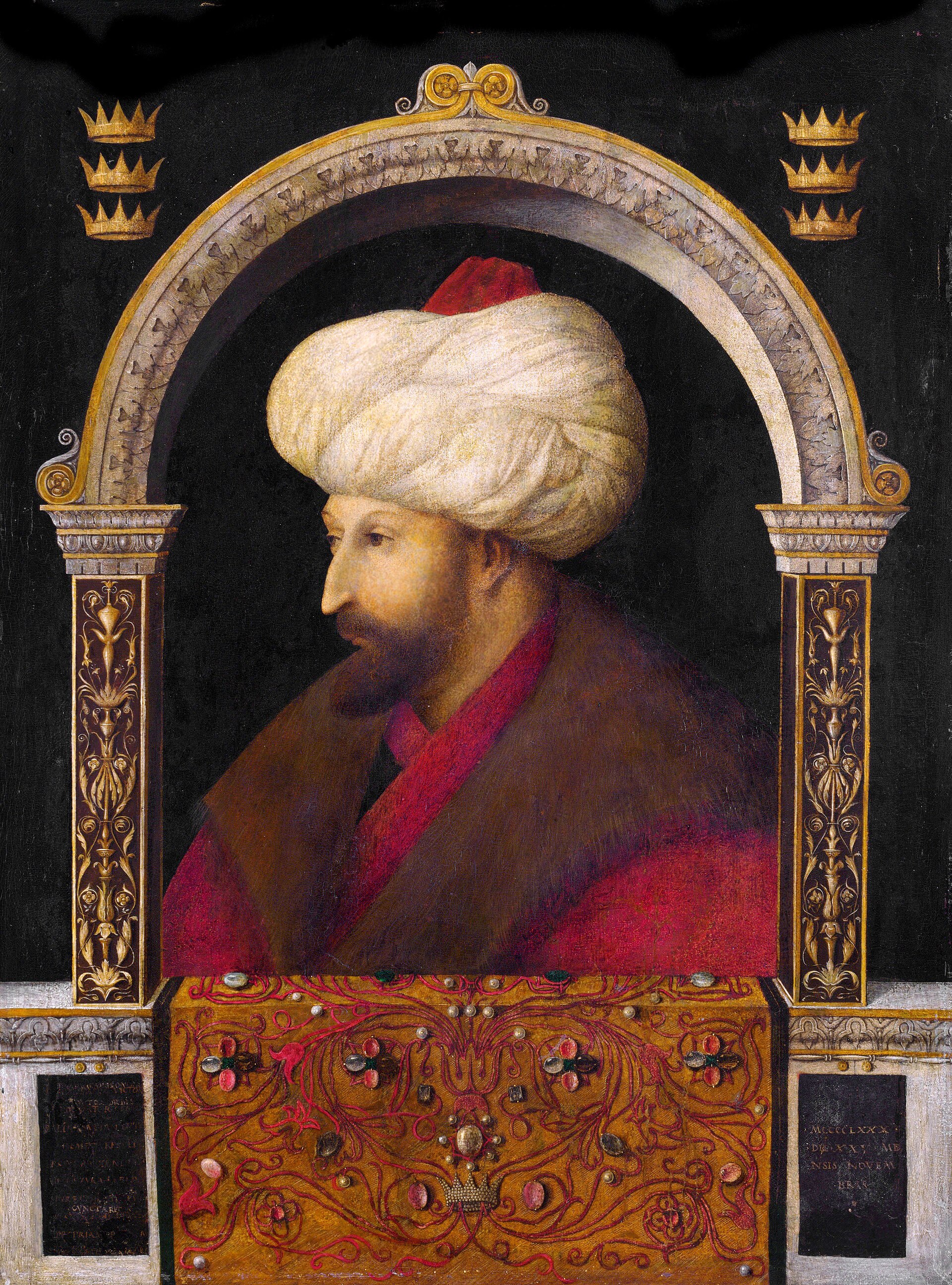

Atatürk modernized the country's legal and educational systems and encouraged the adoption of a European way of life, with Turkish written in the Latin alphabet and with citizens adopting European-style names. The foreign policy vision adopted by Atatürk, with his maxim 'Peace at Home, Peace in the World', has been among the most significant factors that enabled the Republic of Turkey to attain its current position. Turkish foreign policy during the National War of Independence was consistent with the goal of establishing an independent Turkish State within national borders, rejecting adventurous and expansionist inclinations.
Türkiye was non-belligerent during most of the Second World War and later benefited from the support of the Truman Doctrine and the Marshall Plan.
The February 2023 Kahramanmaraş earthquake sequence occurred on the East Anatolian Fault system near a triple plate junction where the Anatolian, Arabian and African plates come together.
The whole Gallipoli operation cost 26,111 Australian casualties, including 8,141 deaths.
The Australians landed at what became known as Anzac Cove on 25 April 1915 and established a tenuous foothold on the steep slopes above the beach.
Atatürk founded the Turkish Republic in 1923 and introduced vast reforms that led to the democratisation and modernisation of society; as early as 1934 women were granted the right to vote.
On 6 February 2023 a magnitude 7.8 earthquake struck south-central Türkiye near the Syrian border, followed 11 minutes later by a magnitude 6.7 aftershock and about 9 hours later by a magnitude 7.5 aftershock. The event caused more than 50,000 casualties, injured 107,000 people, damaged or destroyed 1.9 million housing units, and displaced 3.3 million people, with recovery and reconstruction needs estimated at around 81.5 billion US dollars.
Approximately 70 percent of Türkiye's population resides in first- and second-degree seismic zones.
5. Foreign Relations and International Organizations
Turkey's membership in NATO took effect on 18 February 1952, and the Alliance has since been the cornerstone of the country's defence and security policy. The country was formally welcomed as one of NATO's first two new members, alongside Greece, at the ninth meeting of the North Atlantic Council in Lisbon on 20 February 1952, two days after Turkey had signed its Instrument of Accession.
The narrows linking the Black and Aegean seas — the Bosporus, the Sea of Marmara and the Dardanelles — are known collectively as the Turkish Straits, and Turkey's control of them, the only outlet from the Black Sea, has been a major factor in its relations with other states.
Turkey is a candidate country and a key partner of the EU on issues such as climate, migration, security, counterterrorism and trade. Its involvement with European integration dates back to 1959 and includes the Ankara Association Agreement of 1963 for the progressive establishment of a Customs Union, which was ultimately set up in 1995 as part of the integration process. In 1987 Turkey applied to join what was then the European Economic Community, and in 1999 it was recognised as an EU candidate country. Accession negotiations started in 2005, but until Turkey agrees to apply the Additional Protocol of the Ankara Association Agreement to Cyprus, eight negotiation chapters will not be opened and no chapter will be provisionally closed.
Turkey joined UNESCO in 1946 and remains a member state.
Türkiye is a member of the OECD and the G20 and an increasingly important donor of official development assistance. Türkiye's military and security service personnel strengths are approximately 495,000 active military personnel plus approximately 150,000 Gendarmerie.
6. Culture and Heritage
The country ratified the World Heritage Convention on 16 March 1983 and has served three terms on the World Heritage Committee, most recently on the 2023 to 2027 committee.
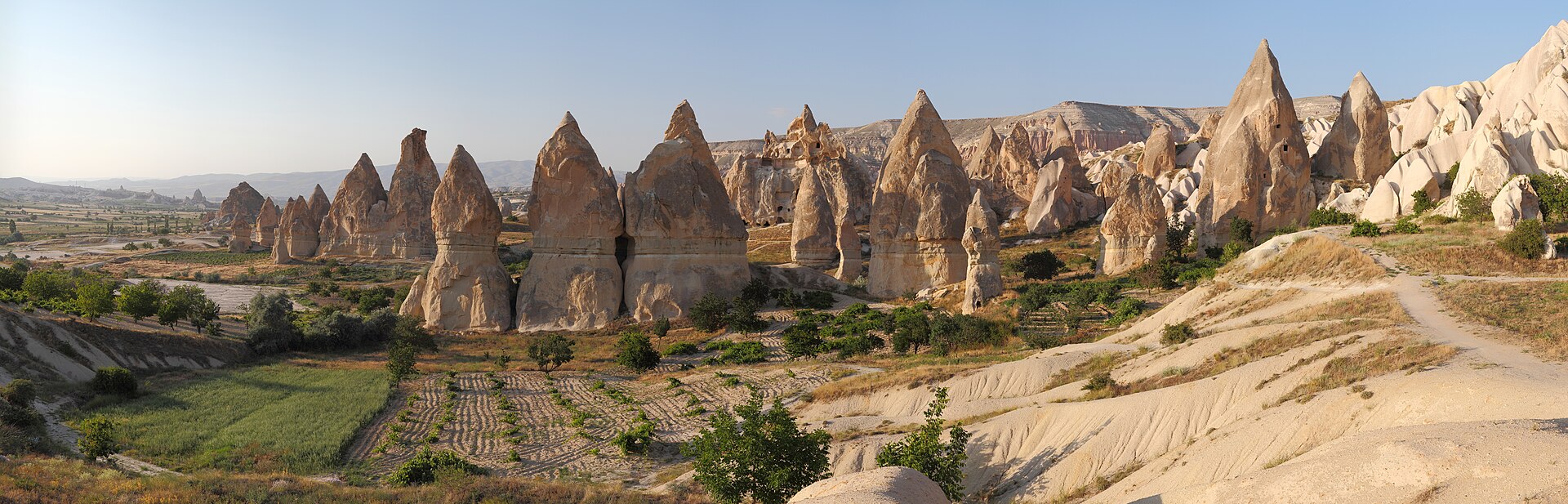
In the Göreme valley, a landscape entirely sculpted by erosion, rock-hewn sanctuaries provide unique evidence of Byzantine art in the post-Iconoclastic period.
Turkish coffee combines special preparation and brewing techniques with a rich communal traditional culture; the beans are ground to a fine powder and the coffee is brewed slowly on a stove to produce the desired foam. The beverage is served in small cups, accompanied by a glass of water, and is mainly drunk in coffee-houses where people meet to converse, share news and read books.
The earliest Turkish entries on the UNESCO lists include the Karagöz shadow play and the tradition of Âşıklık minstrelsy, both recorded as early as 2009 under UNESCO's programme.
Türkiye's World Heritage Sites include Troy, Ephesus, Göbekli Tepe and the Historic Areas of Istanbul. Among the cultural sites are the Historic Areas of Istanbul and the Selimiye Mosque and its Social Complex, inscribed in 1985 and 2011 respectively, while the two mixed properties are Göreme National Park and the Rock Sites of Cappadocia and Hierapolis-Pamukkale, inscribed in 1985 and 1988.
UNESCO's intangible heritage lists for Türkiye include elements such as the Ebru art of marbling, the Turkish coffee culture and tradition, the craftsmanship of Çini-making and the Mesir Macunu festival.
Turkish coffee culture and tradition was inscribed in 2013 on the Representative List of the Intangible Cultural Heritage of Humanity. Across UNESCO's programmes, Türkiye counts 22 World Heritage Sites and 32 cultural practices and expressions of intangible heritage.
7. Cities
Istanbul has three of the world's longest suspension bridges: the Bosporus I (Boğazici) Bridge, completed in 1973; the Fatih Sultan Mehmed Bridge, opened in 1988; and the Yavuz Sultan Selim Bridge, opened in 2016 with a main span of about 1,408 metres.
Istanbul, the largest city and principal seaport of Turkey, is located partly in Europe and partly in Asia, on both sides of the Bosporus and the Sea of Marmara.
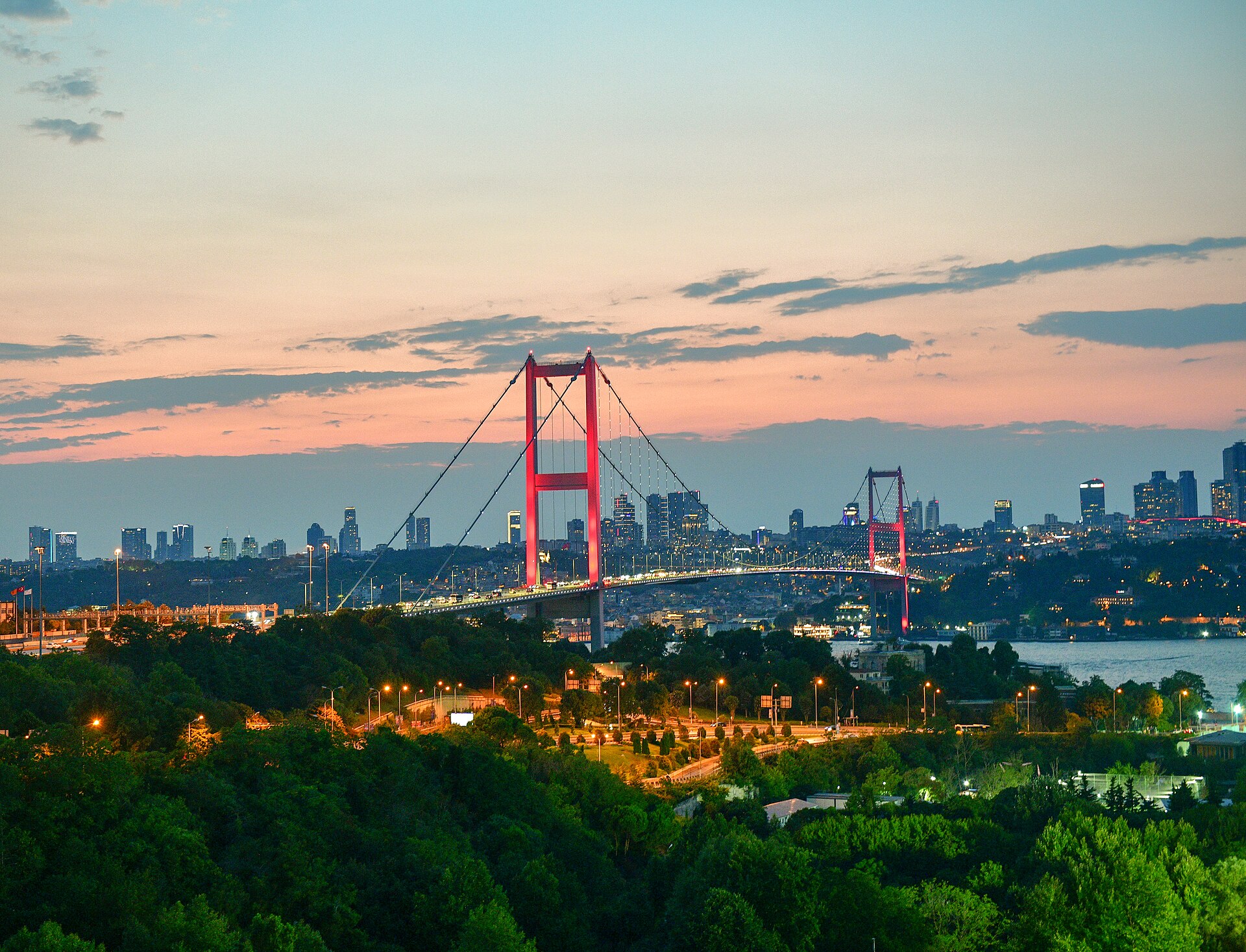
Istanbul had earlier served successively as the capital of the Eastern Roman Empire and of the Ottoman Empire, and has been associated with major events in political history, religious history and art history for more than 2,000 years.
8. Timeline: from the Seljuq victory at Manzikert to the 2023 earthquakes
- 1071Battle of ManzikertTurkmen Oğuz nomads who had established the Seljuq dynasty overwhelmed Byzantium at the Battle of Manzikert and occupied eastern and central Anatolia during the 12th century.
- c. 1300Ottoman dynasty foundedOsman I, a nomadic Turkmen chief, founded both the Ottoman dynasty and the empire in northwestern Anatolia around the year 1300.
- 1453Constantinople taken by the OttomansThe Ottoman Empire took control of Constantinople, renaming it Istanbul and transforming it into the Ottoman capital in 1457.
- 25 April 1915Landing at Anzac CoveDuring the Gallipoli campaign the Australians landed at what became known as Anzac Cove and established a tenuous foothold on the steep slopes above the beach.
- 1923Republic of Türkiye foundedMustafa Kemal Atatürk founded the Turkish Republic in 1923 and became its first president; he introduced vast reforms that transformed society.
- 1934Women granted the voteAs early as 1934, women in Türkiye were granted the right to vote.
- 20 July 1936Montreux Convention signedThe Montreux Convention set the rules governing the passage of vessels of war through the Straits, which Türkiye has implemented in full transparency and impartiality.
- November 10, 1938Death of AtatürkKemal Atatürk, founder and first president of the Republic of Turkey, died in Istanbul.
- 18 February 1952Türkiye joins NATOTürkiye became a member of the North Atlantic Treaty Organization, and NATO has since been the cornerstone of its defence and security policy.
- 16 March 1983World Heritage Convention ratifiedTürkiye ratified the UNESCO World Heritage Convention and has since served three terms on the World Heritage Committee.
- 1995EU customs union establishedThe Customs Union between Türkiye and the European Union was ultimately set up in 1995, following the Ankara Association Agreement of 1963.
- 1999EU candidate status recognisedTürkiye, which had applied to join the European Economic Community in 1987, was recognised as an EU candidate country in 1999.
- 2005EU accession negotiations openAccession negotiations between Türkiye and the EU started in 2005; eight negotiation chapters remain unopened pending the application of the Additional Protocol to Cyprus.
- 6 February 2023Kahramanmaraş earthquakesA magnitude 7.8 earthquake struck south-central Türkiye near the Syrian border, followed 11 minutes later by a magnitude 6.7 aftershock and about 9 hours later by a magnitude 7.5 aftershock.
- May 2023Presidential electionsFollowing the May 2023 presidential elections, an economic team launched a comprehensive policy set to address high inflation and other macroeconomic imbalances.
9. Frequently asked questions
What is Turkey's official name, and what is its capital?
How large is Turkey in area and population?
How many provinces does Turkey have, and what are its largest urban areas?
When did Turkey join NATO, and what rules govern passage through its straits?
How many UNESCO World Heritage Sites does Turkey have, and how many intangible heritage elements?
What is Turkey's monetary unit, and what is the current policy rate set by its central bank?
Turkey's monetary unit is the Turkish lira (TL) 1. The Monetary Policy Committee decided to keep the policy rate, the one-week repo auction rate, at 37 percent, with the overnight lending rate at 40 percent and the overnight borrowing rate at 35.5 percent 7Central Bank of the Republic of Türkiye – English pages · Central Bank of the Republic of Türkiye (CBRT) ↗.
References (20)
- 1Turkey (Türkiye) | Location, Geography, People, Economy, Culture, & History — Encyclopaedia Britannica Web↩View source
- 2Bridging the Bosphorus — NASA Earth Observatory WebView source
- 3Türkiye Overview: Development news, research, data — World Bank WebView source
- 4Historic Areas of Istanbul – UNESCO World Heritage Centre — UNESCO World Heritage Centre WebView source
- 5Turkiye (2025 edition) – CIA World Factbook Archive — CIA World Factbook Archive 2025 Archive↩View source
- 6Türkiye | World Bank Group — World Bank Group WebView source
- 7Central Bank of the Republic of Türkiye – English pages — Central Bank of the Republic of Türkiye (CBRT) Web↩View source
- 8Türkiye – EU enlargement policy — European Commission, DG for Neighbourhood and Enlargement Negotiations WebView source
- 9Ottoman Empire | Facts, History, & Map — Encyclopaedia Britannica WebView source
- 10Istanbul | History, Population, Map, & Facts — Encyclopaedia Britannica WebView source
- 11Kemal Ataturk | Biography, Reforms, Death, & Facts — Encyclopaedia Britannica WebView source
- 12Turkish Foreign Policy During Ataturk's Era — Republic of Türkiye Ministry of Foreign Affairs WebView source
- 13Türkiye and NATO — NATO Web↩View source
- 14Gallipoli — Australian War Memorial WebView source
- 15Frequently Asked Questions about 2023 Earthquakes in Türkiye — U.S. Geological Survey 2023 WebView source
- 16Türkiye | UNESCO — UNESCO Web↩View source
- 17Türkiye – UNESCO World Heritage Convention — UNESCO World Heritage Centre Web↩View source
- 18Göreme National Park and the Rock Sites of Cappadocia – UNESCO World Heritage Centre — UNESCO World Heritage Centre WebView source
- 19Turkish coffee culture and tradition – UNESCO Intangible Cultural Heritage — UNESCO Intangible Cultural Heritage WebView source
- 20Türkiye – UNESCO Intangible Cultural Heritage — UNESCO Intangible Cultural Heritage WebView source