Istanbul
The city on the Bosphorus that lived as Byzantium, Constantinople and Istanbul — capital of two empires, home to Hagia Sophia, and a UNESCO World Heritage site since 1985.
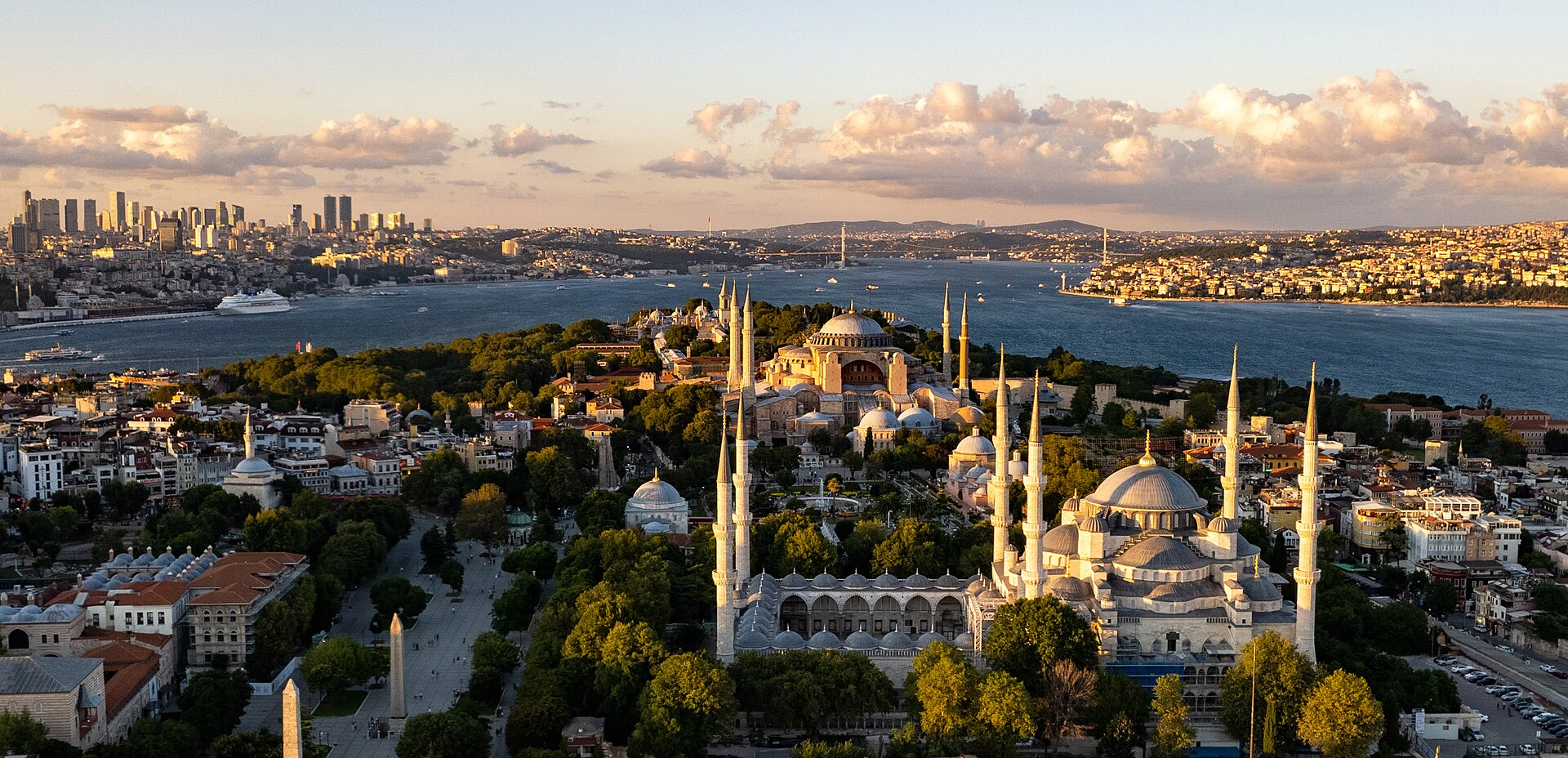
Istanbul is Turkey's largest city and principal seaport, standing on both sides of the Bosphorus strait between the Black Sea and the Mediterranean. Founded as the Greek colony of Byzantium about 657 BCE, it was rebuilt and renamed by Constantine the Great, who dedicated it as New Rome in 330 CE; as Constantinople it served as capital of the Byzantine Empire until the Ottoman conquest of 29 May 1453 and then of the Ottoman Empire until 1922. Its historic peninsula, ringed by the Theodosian land walls and crowned by Hagia Sophia, Topkapi Palace and the Süleymaniye Mosque, was inscribed on the UNESCO World Heritage List in 1985.
In this article
- 1Overview
- 2Names and Identity
- 3Site and Setting
- 4Foundation and Early History
- 5Constantinople: Capital of the Byzantine Empire
- 6Hagia Sophia
- 7Ottoman Conquest and Imperial Capital
- 8Ottoman Architecture and Monuments
- 9World Heritage Inscription and Management
- 10City Walls and Defences
- 11Demography and Transport
- 12Chronology of Key Dates
- 13Timeline: from the founding of Byzantium to the World Heritage listing
- 14Frequently asked questions
- 15Knowledge graph
Overview
Istanbul is the largest city and principal seaport of Turkey, and it served as the capital of two empires in succession. It has been known by several names: Byzantium, Constantinople, New Rome and Augusta Antonina. The city was founded about 657 BCE as the Greek colony of Byzantium. The city has been associated with major events in political history, religious history and art history for more than 2,000 years.
1. Names and Identity
The name Byzantium may derive from Byzas, the leader of the Greeks from Megara who, according to legend, captured the peninsula from pastoral Thracian tribes. The Strait of Bosporus linked the Black Sea with the Mediterranean Sea. Modern historians would later apply the name Byzantium to the Christian, ultimately Greek-speaking state ruled from Constantinople, even though its citizens described themselves as Rhomaioi, Romans.
In 196 CE, having razed the town for opposing him in a civil war, the Roman emperor Septimius Severus rebuilt it and named it Augusta Antonina in honour of his son. Constantine I came into power in the western half of the empire in 312 CE and reunited it by defeating Licinius at the Battle of Chrysopolis in 324 CE.
By the 13th century the Greek phrase eis ten polin, used for trips into the city, had become an appellation for it, Istinpolin, which through speech permutations over centuries became Istanbul.
2. Site and Setting
Istanbul occupies a position at the junction of Europe, Africa and Asia, a circumstance that made it not only a political and military capital but one of the great trade centres of the world. The historic city sits on a peninsula, and the Bosphorus strait divides the city between its European and Asian sides.
The city's walls ran some 19 km in total, a length that the defending army of fewer than 5,000 men, as numbered by the eyewitness historian Georges Sphrantzes, was too few to cover. Before the final siege, Mehmed II built, extended and occupied fortresses along the Bosphorus, notably Rumeli Hisar and Anadolu in 1452 CE. The inscribed World Heritage property is a serial site, dossier 356bis, covering 765.5 hectares.
3. Foundation and Early History
The site's legendary foundation is credited to Byzas, with the alternative legendary date of 667 BCE sometimes given alongside the traditional date of about 657 BCE. The settlement was destroyed by Darius in 513 BCE and incorporated into the Achaemenid Empire. After the Battle of Plataea in 478 BCE, Pausanias became governor of the city. It subsequently played a role in the Delian League before later aligning itself with Sparta.
Around 196 CE Septimius Severus razed the city and then rebuilt it. The reconstruction gave the city the Baths of Zeuxippus, the Hippodrome and a protective wall.
4. Constantinople: Capital of the Byzantine Empire
On 11 May 324 CE Emperor Constantine the Great selected the city to be the new capital of the reunited Roman Empire and called it New Rome. The imperial capital was thus transferred from Rome, and the city served as the seat of the Byzantine Empire for 1,100 years, its citizens calling themselves Rhomaioi. The empire stood as a bulwark against Arab expansion into Europe, with Constantinople twice withstanding determined Arab sieges, from 674 to 678 and again in 717 to 718 CE. The new capital was consecrated on 11 May 330 CE.
In 1204 armies of the Fourth Crusade conquered the Byzantine imperial capital and founded the Latin Empire of Constantinople. The city was retaken by the Palaeologan dynasty in 1261 although it never regained its previous status.
5. Hagia Sophia
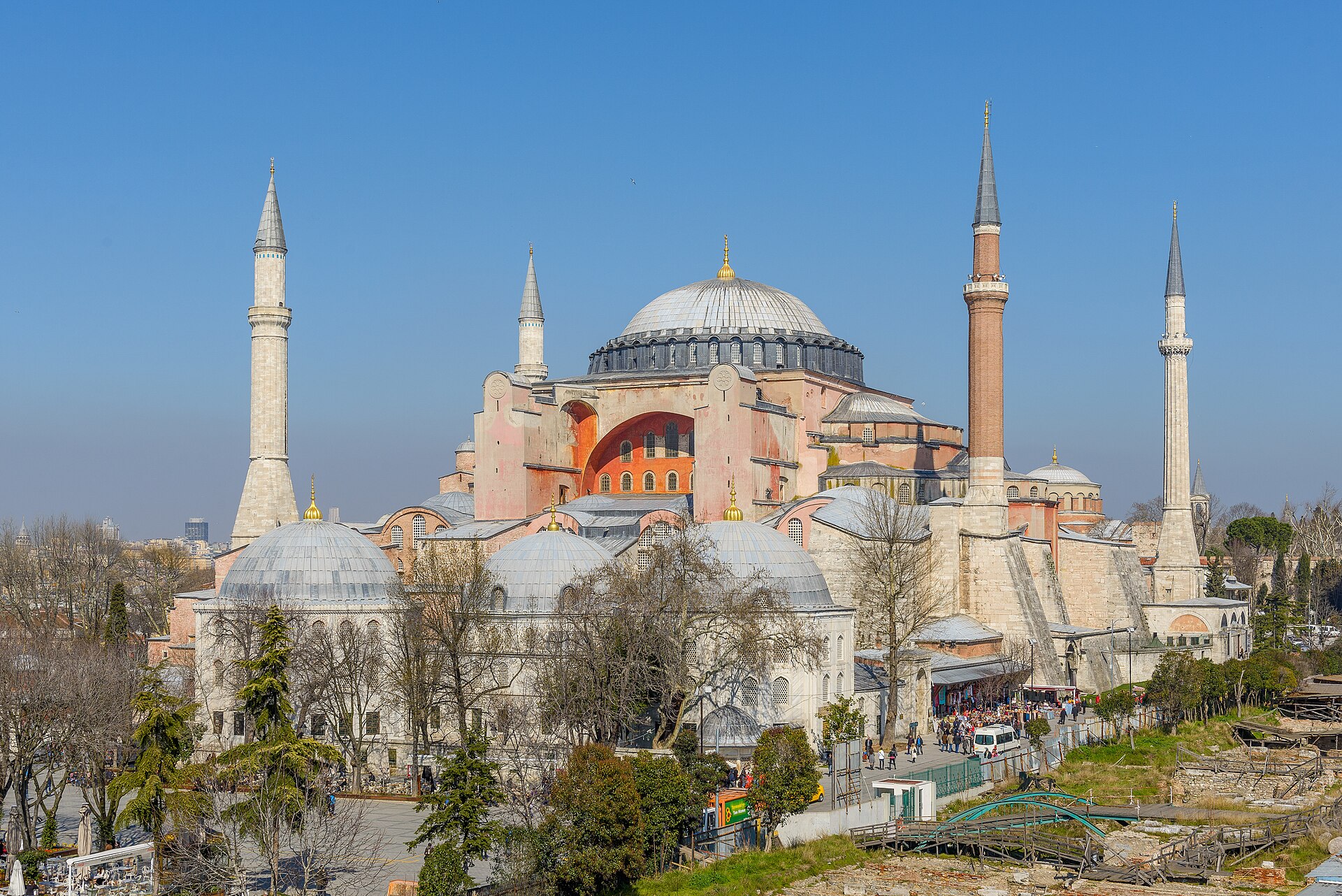
The site's first church, the Megale Ekklesia, was commissioned by Emperor Constantine I in 325 and razed during a public disturbance in 404; a second church, dedicated in 415 by Theodosius II, burned down during the Nika revolt of 532 CE. Justinian I then commissioned the present building, which was completed on 27 December 537 under his rule and designed by the architects Anthemios of Tralles and Isidoros of Miletos. Conceived as the major basilica of the Byzantine Empire, it held the record for the largest dome in the world until the Duomo was built in Florence in the 15th century. Its dome, more than 101 feet (31 m) in diameter and rising to a height of 160 feet (48.5 m), defines the structure's scale. The first dome collapsed in 558 and was rebuilt in 562 to a greater height.
6. Ottoman Conquest and Imperial Capital
The Fall of Constantinople on 29 May 1453 was the conquest of the city by Sultan Mehmed II of the Ottoman Empire. The Ottomans breached the city's ancient land wall after besieging it for 55 days. Most historians consider the conquest the event that terminated the Byzantine Empire. The Ottoman Empire later reached its height under Suleiman the Magnificent, who reigned from 1520 to 1566 and expanded it to cover the Balkans and Hungary and to reach the gates of Vienna. The Ottoman Empire officially ended in 1922 when the sultanate was abolished and Turkey was declared a republic.
7. Ottoman Architecture and Monuments
The Ottoman architectural imprint on the city includes the Topkapi Palace, whose name means Cannon Gate and which served as the imperial residence and headquarters between the 15th and 16th centuries. Among the monuments of the successive imperial periods are the 16th century Sehzade Mosque complex, the Sokollu Mehmet Pasha Mosque, and the 17th century Blue Mosque. The same areas also display the hippodrome of Constantine and the aqueduct of Valens.
The Sultan Ahmed Mosque, known as the Blue Mosque, was completed in 1616 for Sultan Ahmed I and was the work of one of Sinan's disciples.
8. World Heritage Inscription and Management
The Historic Areas of Istanbul were inscribed on the World Heritage List in 1985 under criteria (i)(ii)(iii)(iv), with a minor boundary modification inscribed in the year 2017 by the World Heritage Committee. The inscribed property consists of four areas: the Archaeological Park at the tip of the peninsula, the Suleymaniye quarter, the Zeyrek settlement area and the zone along both sides of the Theodosian land walls. A Site Management Directorate for Cultural and Natural Sites of Istanbul was established within the Istanbul Metropolitan Municipality in 2006 to coordinate management planning for the city's World Heritage sites.
9. City Walls and Defences
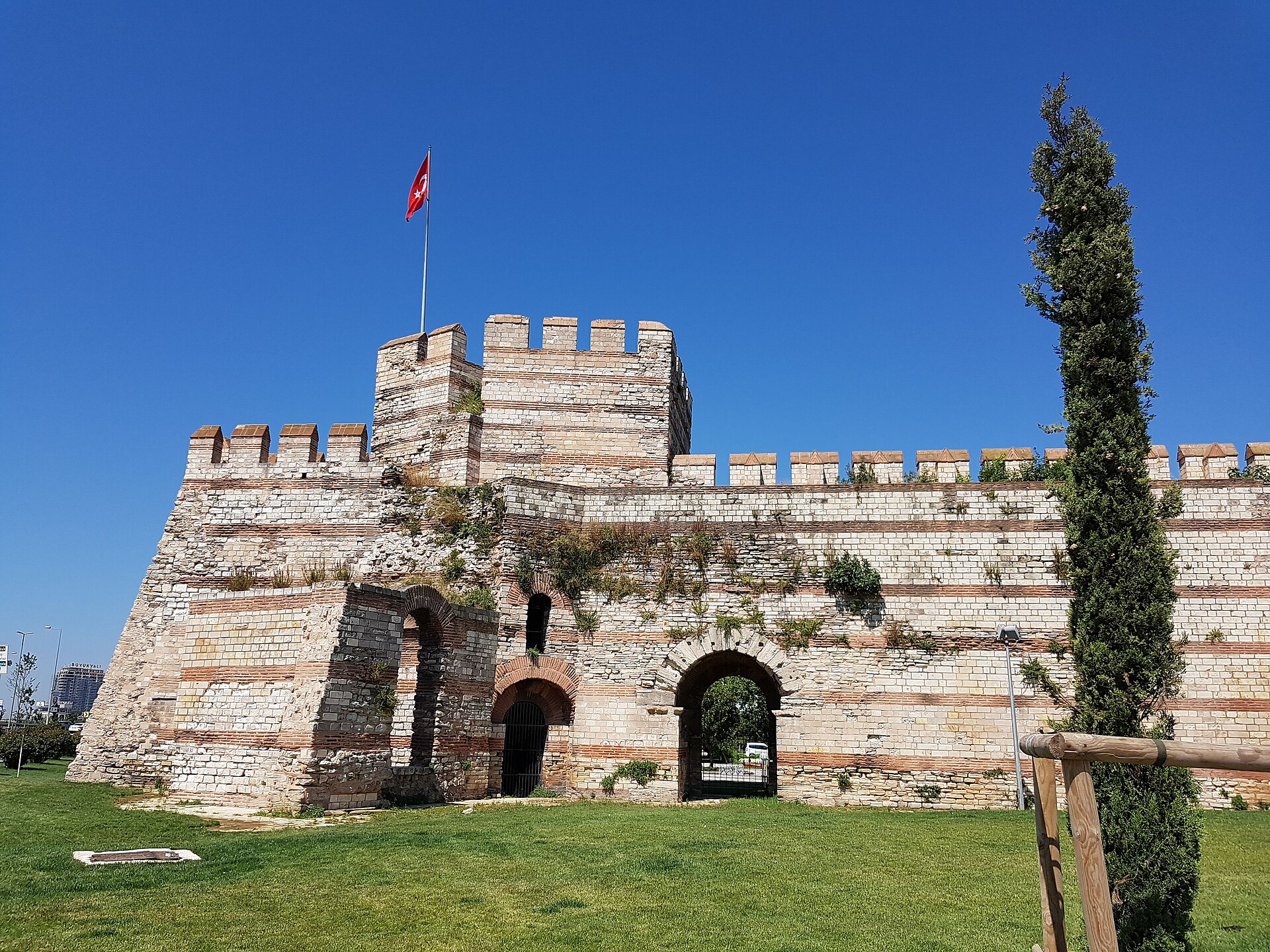
The landward defences of the city were reshaped under Theodosius II, who expanded the walls in 413 CE; the new walls stood forty feet high and sixteen feet thick. The final line of defence was almost 5 metres thick and 12 metres high, and it presented 96 projecting towers to any attacker. Despite the many attacks, prolonged sieges and internal rebellions the city endured, these defences were regarded as the most formidable in both the ancient and medieval worlds. The land walls eventually ran about 4.5 miles (7 km) between an inner and an outer wall protected by a moat. Attackers first faced a ditch 20 metres wide and 7 metres deep, which could be flooded with water fed from pipes when required.
10. Demography and Transport
Istanbul's population stood at 10,757,327 in the 2007 count, and by 2019 the urban agglomeration was estimated at 15,113,808 residents.
Three of the world's longest suspension bridges span the Bosporus: the Bosporus I bridge opened in 1973 and was followed by the Fatih Sultan Mehmed bridge in 1988 and the Yavuz Sultan Selim bridge in 2016 across the same strait.
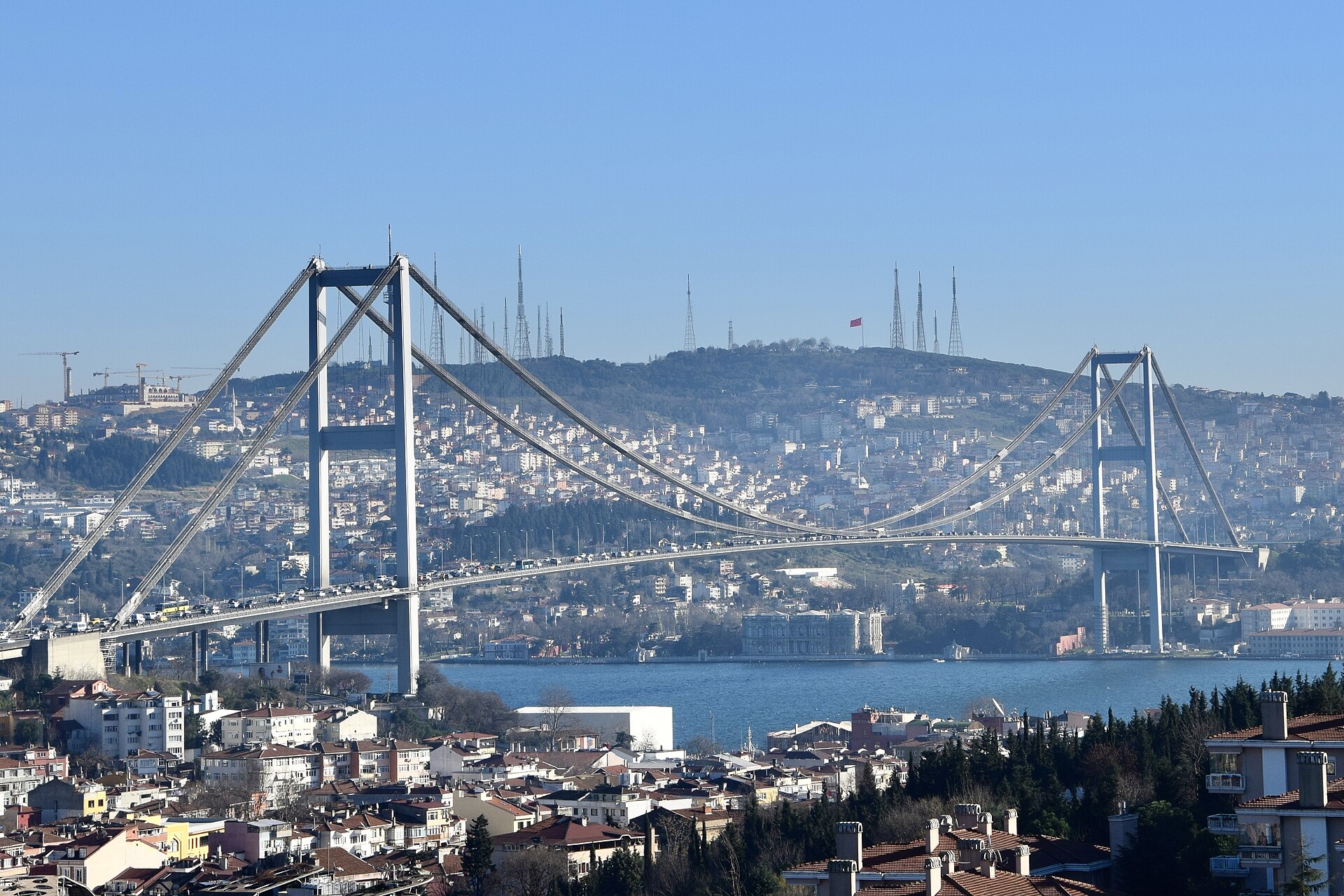
Two tunnels under the Bosporus, one for passenger rail and one for automobile traffic, were opened in 2013 and 2016 respectively.
The urban fabric of the property is reported as threatened by lack of maintenance and pressure for change, while its masterpieces are under threat from population pressure, industrial pollution and uncontrolled urbanization.
11. Chronology of Key Dates
-
1453 CEOttoman conquest and conversion of Hagia SophiaAfter Mehmet II's conquest of the city in 1453 CE Hagia Sophia was converted to a mosque.12Hagia Sophia, 532-37 · The Metropolitan Museum of Art (Heilbrunn Timeline of Art History) ↗
12. Timeline: from the founding of Byzantium to the World Heritage listing
- About 657 BCEByzantium founded on the BosphorusGreek settlers from Megara under Byzas, according to legend, captured the peninsula from pastoral Thracian tribes and built the town of Byzantium on the western shore of the Bosphorus.
- 513 BCEDarius takes the cityThe Persian king Darius destroyed Byzantium and made the whole area part of the Achaemenid Empire.
- 196 CESeverus rebuilds the cityThe Roman emperor Septimius Severus destroyed the city for opposing him in a civil war and subsequently rebuilt it, with structures that survived into the Byzantine Empire including the Baths of Zeuxippus, the Hippodrome and a protective wall.
- 11 May 324 CEConstantine chooses a new capitalEmperor Constantine the Great, having reunited the Roman Empire, selected the city on the Bosphorus as his new capital and called it New Rome.
- 330 CEConstantinople consecratedConstantine dedicated the city as his capital, the city that would one day bear his name.
- 413 CETheodosian land wallsTheodosius II expanded the city's walls, which were forty feet high and sixteen feet thick and protected the landward side of the peninsula.
- 532 CENika revoltA riot at the hippodrome between the Blues and the Greens grew into the Nika Revolt, which burned much of the city, including the earlier Hagia Sophia.
- 27 December 537Hagia Sophia completedJustinian's great church, designed by Anthemios of Tralles and Isidoros of Miletos, was inaugurated after less than six years of building; its first dome was rebuilt to a greater height after collapsing in 558.
- 730 CEIconoclasm beginsEmperor Leo III outlawed the worshipping of religious icons, and Constantinople became the centre of the iconoclast controversy.
- 1204Fourth Crusade sacks the cityThe Crusader army, originally bound for Palestine, turned on Constantinople, occupied and plundered it, and set up the Latin Empire for the next half century.
- 1261Byzantine reconquestThe Palaeologan dynasty retook Constantinople and restored Byzantine rule, although the city never regained its previous status.
- 29 May 1453Ottoman conquestSultan Mehmed II's cannons broke the city's legendary defences, and Constantinople was conquered, smashed and looted, ending the Byzantine Empire.
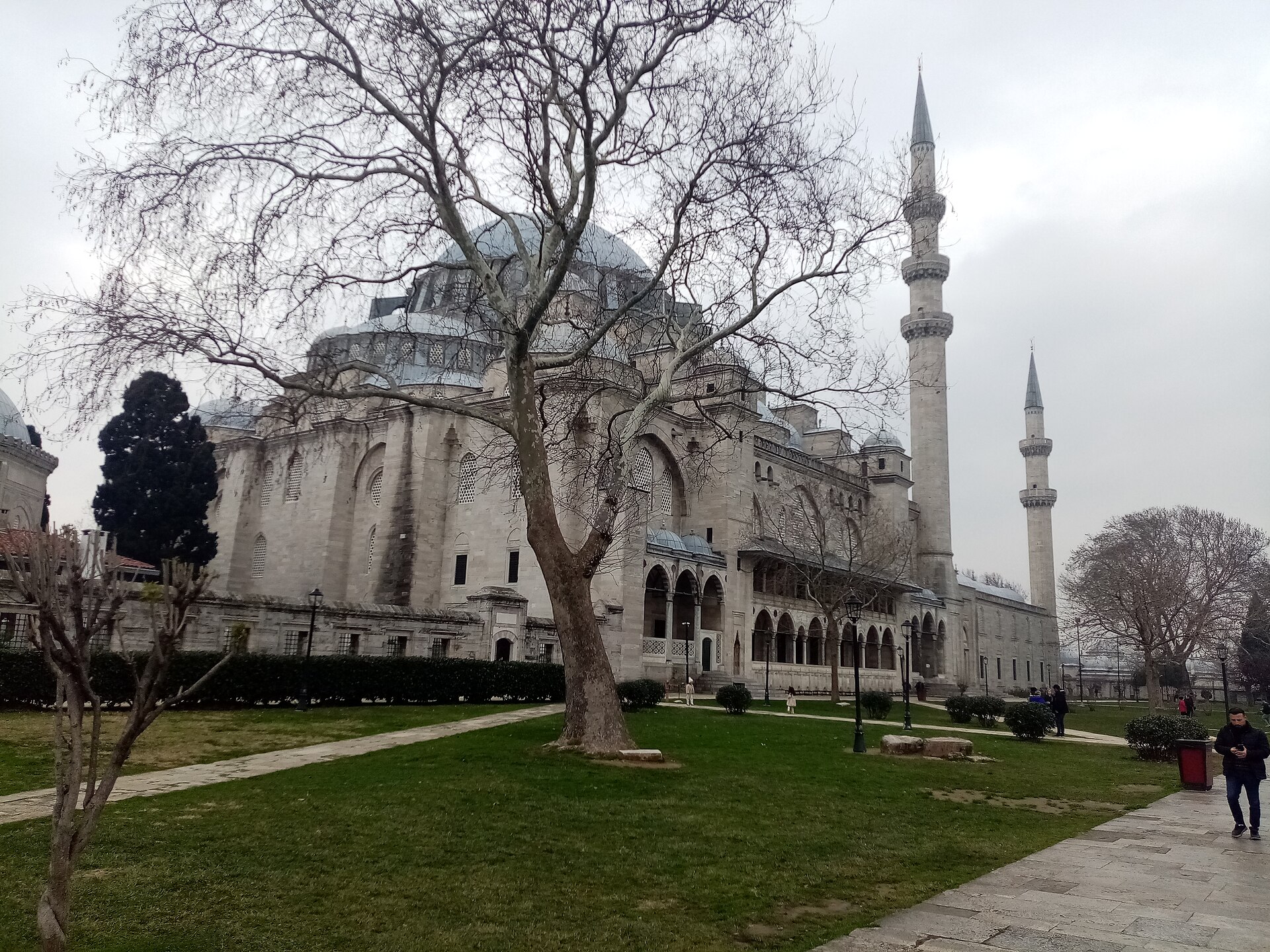
- 1557Suleymaniye Mosque inauguratedThe mosque designed by Mimar Sinan for Sultan Süleyman was inaugurated in 1557 and is counted among the masterpieces of Ottoman architecture.
- 1923Republic of Turkey; capital moves to AnkaraThe Treaty of Lausanne formally established the Republic of Turkey, which moved its capital from Istanbul to Ankara.
- 1930The name Istanbul becomes officialThe city, long known informally as Istanbul, officially adopted the name in 1930.
- 1985UNESCO World Heritage listingThe Historic Areas of Istanbul, covering 765.5 hectares in four zones, were inscribed on the World Heritage List under criteria (i)(ii)(iii)(iv).
13. Frequently asked questions
When did the city officially become known as Istanbul?
Old Constantinople, long known informally as Istanbul, officially adopted the name in 1930 when the Turkish Post Office made the change official.3Constantinople · HISTORY (A&E Television Networks) ↗ Until then the city continued to bear the millenary name of Constantinople.1Istanbul | History, Population, Map, & Facts · Encyclopaedia Britannica ↗
How long did Constantinople serve as an imperial capital?
It was the capital of the Byzantine Empire from 330 to 1453 and of the Ottoman Empire from 1453 to 1922.1
What happened to Hagia Sophia after the Ottoman empire ended?
How did the city's population change between the 12th century and the 1450s?
By the 1450s the city's population had dropped from roughly 400,000 in the 12th century to between 40,000 and 50,000 while vast open fields constituted much of the land within the walls.14Fall of Constantinople · Encyclopaedia Britannica ↗
How did Mehmed II repopulate the city after he took it?
Mehmet II encouraged merchants to move to Istanbul and later forcibly resettled merchants from captured territories such as Caffa, and he also encouraged Jewish traders from Europe to migrate to the city and set up in business there.6Ottoman Empire (1301-1922) · BBC (Religions) ↗
Who was responsible for the Suleymaniye Mosque, and when was it built?
References (15)
- 1Istanbul | History, Population, Map, & Facts — Encyclopaedia Britannica Web↩View source
- 2Historic Areas of Istanbul – UNESCO World Heritage Centre — UNESCO World Heritage Centre Web↩View source
- 3Constantinople — HISTORY (A&E Television Networks) Web↩View source
- 4Byzantium (ca. 330-1453) — The Metropolitan Museum of Art (Heilbrunn Timeline of Art History) WebView source
- 5Byzantium — World History Encyclopedia WebView source
- 6Ottoman Empire (1301-1922) — BBC (Religions) 1922 Web↩View source
- 71453: The Fall of Constantinople — World History Encyclopedia WebView source
- 8The last day of Constantinople — The British Library WebView source
- 9Byzantine Empire — World History Encyclopedia WebView source
- 10Constantinople — World History Encyclopedia WebView source
- 11Hagia Sophia — Encyclopaedia Britannica Web↩View source
- 12Hagia Sophia, 532-37 — The Metropolitan Museum of Art (Heilbrunn Timeline of Art History) Web↩View source
- 13Hagia Sophia — World History Encyclopedia WebView source
- 14Fall of Constantinople — Encyclopaedia Britannica Web↩View source
- 15Ottoman Empire — World History Encyclopedia Web↩View source
 Black Death
 Suez Canal
 Winston Churchill