Automobile
The invention, mass production and worldwide impact of the automobile, from steam carriages and the Benz Patent-Motorwagen to the electric era.
The automobile is a wheeled motor vehicle that carries passengers on roads; it grew from steam and electric experiments into the dominant form of personal transport of the twentieth century. Karl Benz patented the first practical car in 1886, and the moving assembly line at Ford's Highland Park plant from 1913 made cars affordable for millions. More than 1.6 billion cars are in use worldwide, and electric cars now account for one-quarter of new car sales.
In this article
- 1Overview
- 2Definition and Technical Character
- 3Early Steam and Internal-Combustion Experiments
- 4Benz, Daimler and the First Practical Automobile
- 5Bertha Benz and the First Long-Distance Journey
- 6American Pioneers and Early Production
- 7The Mercedes and the Modern Motorcar
- 8The Model T and the Moving Assembly Line
- 9Ford's Wages and the Spread of Automobility
- 10Industry Consolidation and the American Market
- 11Regulation, Oil Shocks and Import Competition
- 12Social and Economic Impact
- 13Global Fleet and Market Segmentation
- 14Diesel Engines
- 15Electric and Hybrid Vehicles
- 16Safety
- 17Environment and Energy
- 18Museums and Preservation
- 19Key Dates
- 20Timeline: from the first steam carriage to the electric era
- 21Knowledge graph
Overview
The automobile is a usually four-wheeled vehicle designed primarily for passenger transportation, commonly propelled by an internal-combustion engine using a volatile fuel. As a machine, the modern automobile is a complex technical system employing subsystems with specific design functions, some of which consist of thousands of component parts that have evolved from breakthroughs in existing technology or from new technologies such as electronic computers, high-strength plastics, and new alloys of steel and nonferrous metals. Its presence is global in scale: over 1.6 billion cars were in use worldwide as of 2025.
1. Definition and Technical Character
An automobile is a motor vehicle that runs on wheels, and most definitions hold that cars operate primarily on roads, seat one to eight people, and carry four wheels. Its principal purpose is the transport of people rather than cargo. The modern car, understood as a practical and marketable automobile for everyday use, was invented in 1886 when the German inventor Carl Benz patented his Benz Patent-Motorwagen.
The automobile was initially perfected in Germany and France toward the end of the nineteenth century by such men as Gottlieb Daimler, Karl Benz, Nicolaus Otto and Emile Levassor, although it was to have its greatest social and economic impact in the United States. All the early Benz cars used the same layout and belt-drive technology for which Benz received patent number DRP37435 in 1886 — hence the Patent-Motorwagen designation.
2. Early Steam and Internal-Combustion Experiments
Long before the automobile took its modern form, inventors experimented with self-propelled road vehicles. In 1769 the French inventor Nicolas-Joseph Cugnot built the first steam-powered road vehicle, a large three-wheeled dray designed to carry artillery pieces at walking pace. Steam remained the only practical motive force for such machines until the nineteenth century, when attention turned to burning fuel inside the engine itself.
The decisive figure in that transition was Nicolaus August Otto, the German engineer who developed the compressed charge internal combustion engine running on petroleum gas. In late autumn of 1860 Otto and his brother learned of a novel gas engine that Jean Joseph Etienne Lenoir had built in Paris; the brothers built a copy and applied in January 1861 for a patent, though the application was rejected. Their persistence produced the Rings-Schumm engine, which appeared in autumn 1876 and was immediately successful as the first commercially successful engine to use in-cylinder compression. The term Otto cycle is now applied to all compressed charge four cycle engines.
3. Benz, Daimler and the First Practical Automobile
Carl Benz built his first prototype car in 1885 in Mannheim and patented it in January 1886. The first modern car — a practical and marketable automobile for everyday use, and the first car in series production — appeared in 1886, when Benz developed a gasoline-powered automobile and made several identical copies. The Benz Patent-Motorwagen designation refers to the first cars produced by Benz & Cie between 1885 and 1893, with three wheels, a single-cylinder four-stroke engine and belt-drive. All early Benz cars used the same layout and belt-drive technology for which Benz received patent number DRP37435 in 1886.
The original Patent-Motorwagen was developed over 1884–1887 and is widely regarded as the first practical automobile. It was also the first car put into production, manufactured and sold between 1887 and 1893, while its engine's output was stabilised by a flywheel. By June 1886 Benz was driving around Mannheim in the Benz Patent-Motorwagen Nr.
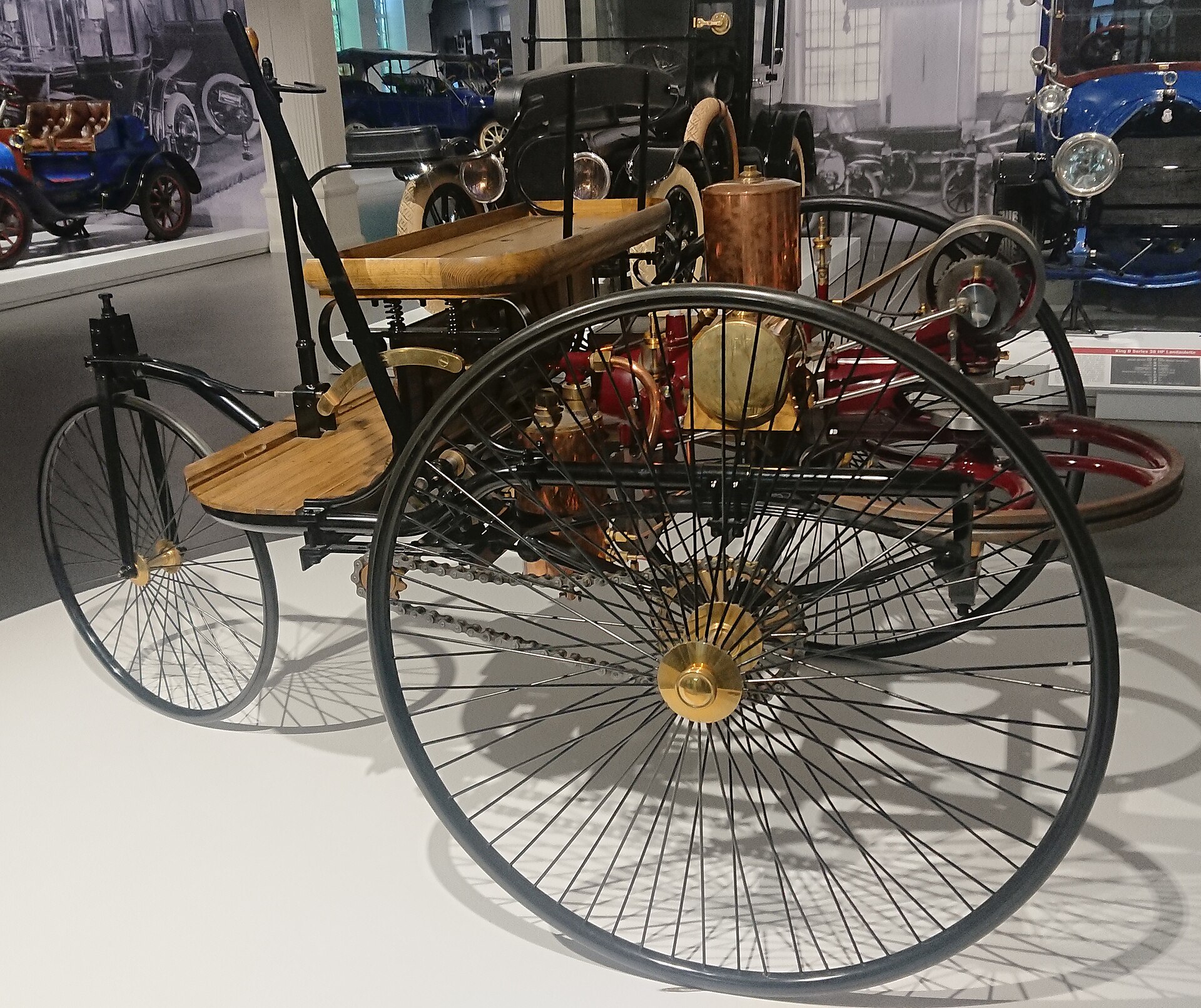
In 1890 Gottlieb Daimler and Wilhelm Maybach formed Daimler Motoren Gesellschaft. In 1926 the company merged with Benz & Cie. to form Daimler-Benz, known for its Mercedes-Benz automobile brand.
4. Bertha Benz and the First Long-Distance Journey
In August 1888 Bertha Benz, without her husband's knowledge, set out with his motor car and her two sons Eugen and Richard in the direction of Pforzheim. After more than twelve hours of driving and over 100 kilometers on mostly unpaved roads they arrived in Pforzheim. The circumstances of this world's first long-distance journey in an automobile have gone down in the annals of automotive history.
The trip proved the motor car capable of extended travel from Mannheim to Pforzheim and back. Since 2008 a Bertha Benz Memorial Route commemorates the event.
5. American Pioneers and Early Production
Frank and Charles Duryea of Springfield, Massachusetts, designed the first successful American gasoline automobile in 1893; they won the first American car race in 1895 and made the first sale of an American-made gasoline car the next year.
Olds founded Oldsmobile in 1897 and introduced the Curved Dash Oldsmobile in 1901; his company pioneered the assembly line using identical, interchangeable parts and by 1903 had produced thousands of Oldsmobiles.
The curved-dash Oldsmobile sold for only $650 and so came within reach of middle-class Americans, and its 1904 output of 5,508 units surpassed any car production previously accomplished.
6. The Mercedes and the Modern Motorcar
The 1901 Mercedes, designed by Wilhelm Maybach for Daimler Motoren Gesellschaft, deserves credit as the first modern motorcar in all essentials: its thirty-five-horsepower engine weighed only fourteen pounds per horsepower and it achieved a top speed of fifty-three miles per hour.
7. The Model T and the Moving Assembly Line
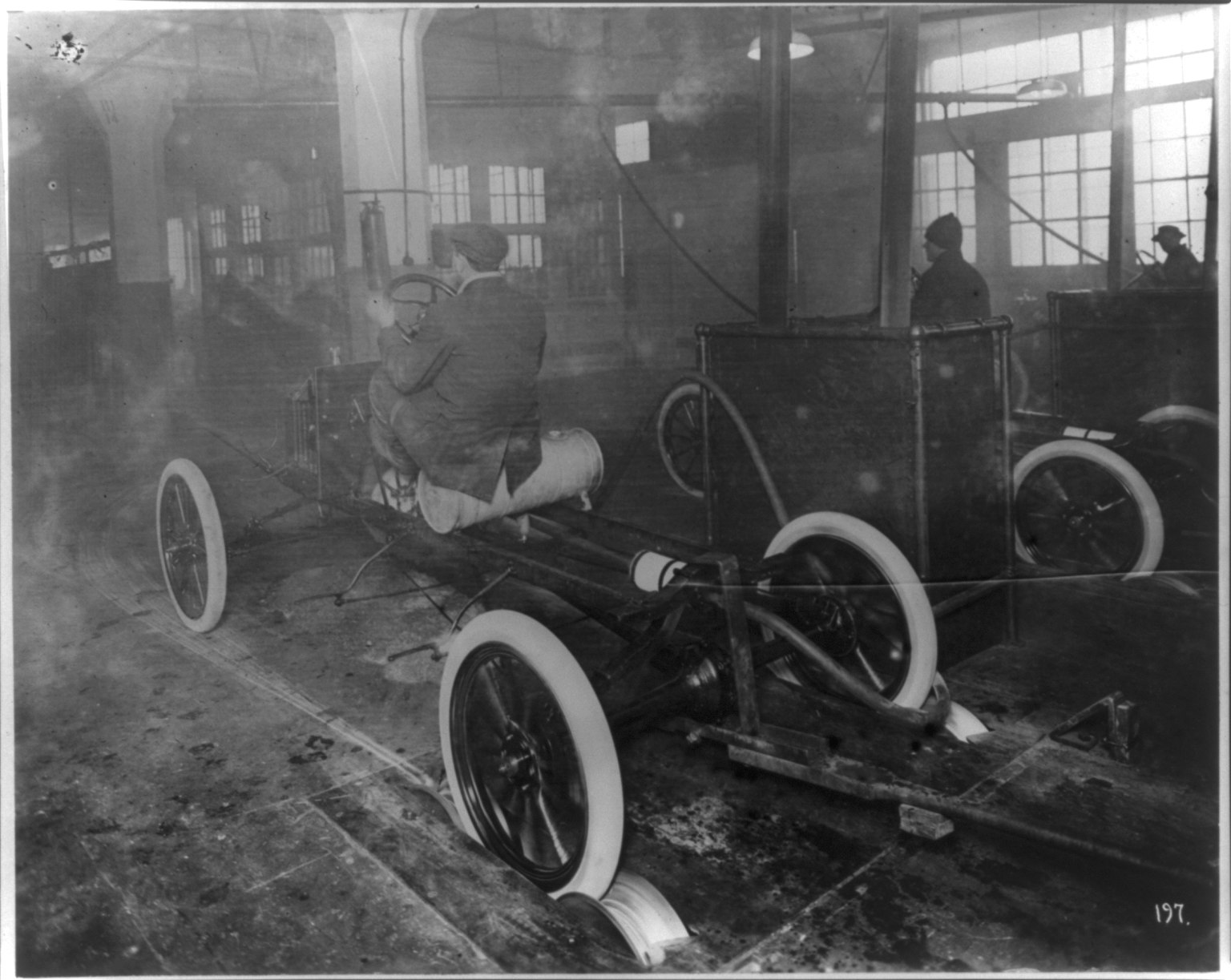
The four-cylinder, twenty-horsepower Model T was first offered in October 1908 for $825, fitted with a two-speed planetary transmission that made it easy to drive, a detachable cylinder head that made it easy to repair, and a high chassis designed to clear the bumps in rural roads. In 1908, when he introduced the Model T, Henry Ford sold 5,986 touring cars at $850 each; by 1916 the moving assembly line had raised his output to 577,036 and reduced his price to $360; it later dropped to $260 in 1924, when production was well over the million mark. The first step in the evolution of moving-line production occurred in the spring of 1913, when a conveyor belt was installed for assembling flywheel magnetos and the average assembly time was cut from 20 to 5 minutes by using 29 workers, each of whom had one simple task to perform.
8. Ford's Wages and the Spread of Automobility
In 1914 the Ford Motor Company announced that it would henceforth pay eligible workers a minimum wage of $5 a day, compared to an average of $2.34 for the industry, and would reduce the work day from nine hours to eight, thereby converting the factory to a three-shift day. By the time the Model T was withdrawn from production in 1927 its price had been reduced to $290 for the coupe, 15 million units had been sold, and mass personal automobility had become a reality. By 1925 about three-quarters of all new American cars were bought on time through credit, and it was installment sales of automobiles during the twenties that established buying expensive consumer goods on credit as a middle-class habit.
9. Industry Consolidation and the American Market
The number of active automobile manufacturers in the United States fell from 253 in 1908 to only 44 in 1929, by which point about 80 percent of the industry's output was accounted for by Ford, General Motors and Chrysler.
General Motors, under the leadership of Alfred P. Sloan, Jr., innovated planned obsolescence of product in the 1920s and 1930s, introducing a largely cosmetic annual model change designed to make consumers trade in long before the useful life of their cars had ended.
The basic differences that distinguish post-World War II American cars from the Model T were in place by the late 1920s: the self-starter, the closed all-steel body, the high-compression engine, hydraulic brakes, syncromesh transmission and low-pressure balloon tires.
10. Regulation, Oil Shocks and Import Competition
The era of the annually restyled road cruiser ended with the imposition of federal standards of automotive safety in 1966; emissions standards followed in 1965 and 1970; energy consumption rules came in 1975; and gasoline prices escalated after the oil shocks of 1973 and 1979 during that decade. After peaking at a record 12.87 million units in 1978, sales of American-made cars fell to 6.95 million in 1982 as imports increased their share of the U.S. market from 17.7 percent to 27.9 percent. According to a study by Ward's Communications Incorporated, the average cost for a new American car increased $4,700 between 1980 and 2001 because of mandated safety and emission-control requirements such as the addition of air bags and catalytic converters, and prices increased by 29 percent between 2009 and 2019 according to the same source.
11. Social and Economic Impact
The automobile ended rural isolation and brought urban amenities, most important better medical care and schools, to rural America (while paradoxically the farm tractor made the traditional family farm obsolete). By 1980 some 87.2 percent of American households owned one or more motor vehicles, 51.5 percent owned more than one, and fully 95 percent of domestic car sales were for replacement. The construction of streets and highways, one of the largest items of government expenditure, peaked when the Interstate Highway Act of 1956 inaugurated the largest public works program in history.
12. Global Fleet and Market Segmentation
Passenger cars have emerged as the primary means of family transportation, with an estimated 1.4 billion in operation worldwide; about one-quarter of these are in the United States, where more than three trillion miles are traveled each year. With some 70 million new units built each year worldwide, automobile manufacturers have been able to split the market into many very small segments that nonetheless remain profitable.
13. Diesel Engines
A diesel engine is an internal combustion engine in which ignition of diesel fuel is caused by the elevated temperature of the air in the cylinder due to mechanical compression, so it is also called a compression-ignition engine. Diesel's first prototype engine was built in Augsburg in 1893 and the first ignition took place on 10 August 1893 using petrol as the fuel. Moritz Schröter's test on 17 February 1897 was the main test of Diesel's engine, rating it 13.1 kW and an effective efficiency of 26.2 percent.
14. Electric and Hybrid Vehicles
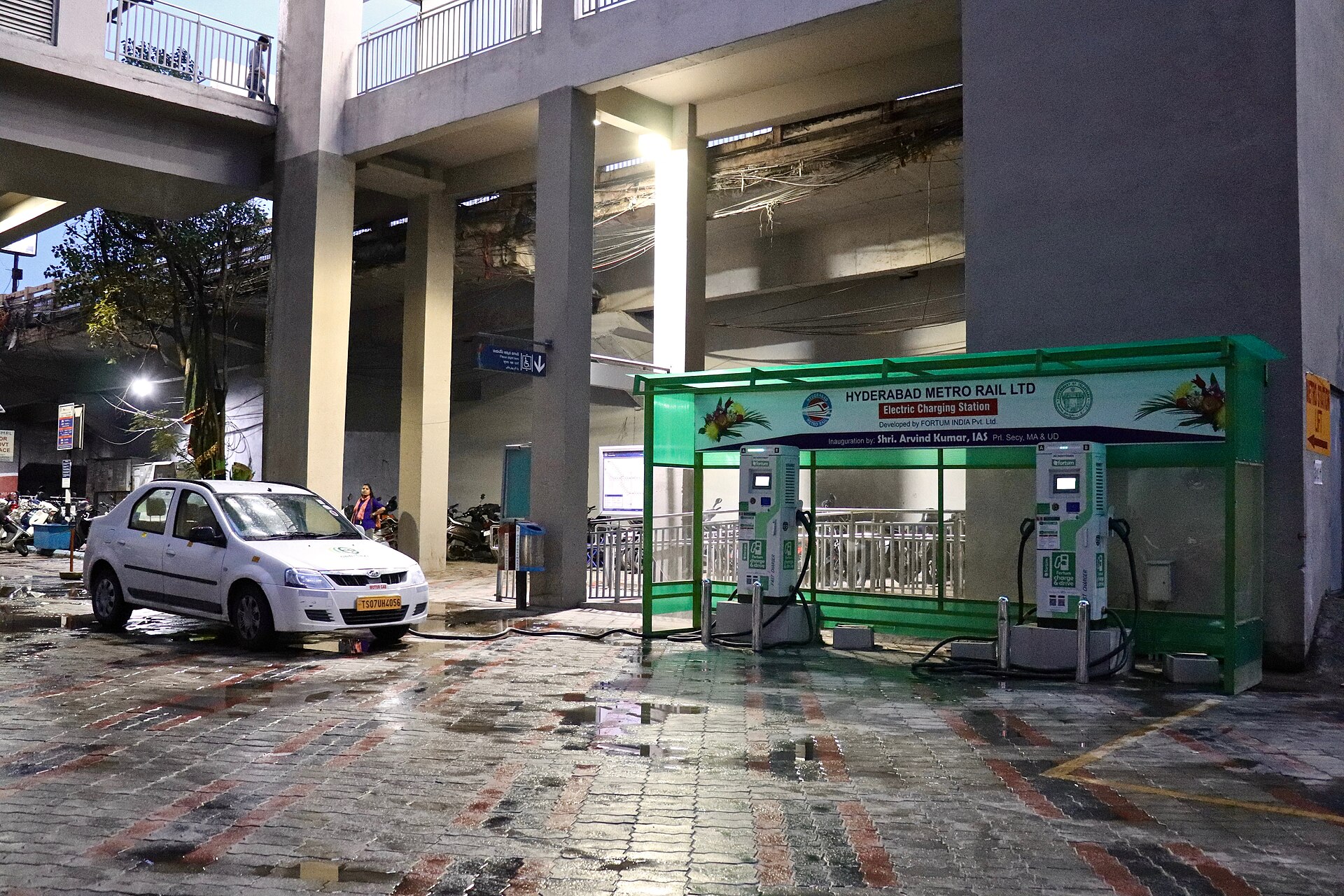
The first successful electric car in the United States made its debut around 1890 thanks to William Morrison, a chemist from Des Moines, Iowa, whose six-passenger vehicle reached a top speed of 14 miles per hour. By 1912 the gasoline car cost only $650 while an electric roadster sold for $1,750; that same year Charles Kettering introduced the electric starter, eliminating the need for the hand crank. Europe saw the strongest growth among major electric vehicle markets, with electric car sales rising by more than 30 percent to reach 28 percent of total sales following tighter European Union CO2 standards for cars.
15. Safety
The modern three-point safety belt was perfected by Volvo engineer Nils Bohlin in 1959, and its patent was given for free to the world; the invention has been credited with saving at least a million lives worldwide.
Approximately 1.16 million people die each year as a result of road traffic crashes, and road traffic injuries are the leading cause of death for children and young adults aged 5 to 29 years. More than half of all road traffic deaths are among vulnerable road users, including pedestrians, cyclists and motorcyclists, and road traffic crashes cost most countries 3 percent of their gross domestic product.

16. Environment and Energy
On an energy content basis, gasoline excluding fuel ethanol accounted for 52 percent of total energy consumption by the U.S. transportation sector in 2025, while distillate fuels accounted for 22 percent and jet fuel accounted for 13 percent.
The Clean Air Act 1970 authorized the establishment of National Ambient Air Quality Standards which State Implementation Plans had to achieve, and required control of motor vehicle emissions. The 1990 Amendments to the Clean Air Act of 1970 authorized programs for Acid Deposition Control and a program to control 189 toxic pollutants, and established permit program requirements.
17. Museums and Preservation
The collections of the Deutsches Museum comprise over 125,000 objects, from the first automobile to the electron microscope. Valuable originals such as the Wright Brothers' first powered airplane, the U1 submarine, the diesel engine and the first program-controlled computer make the collection of the Deutsches Museum one of the most important scientific and technical collections in the world.
18. Key Dates
-
1672Verbiest's small-scale steam vehicleFerdinand Verbiest created a small-scale steam-powered vehicle.7History of the automobile · Wikipedia ↗
-
1769Cugnot's steam-powered automobileNicolas-Joseph Cugnot built the first steam-powered automobile capable of human transportation.7
-
1890Daimler Motoren Gesellschaft formedGottlieb Daimler and Wilhelm Maybach formed Daimler Motoren Gesellschaft.7
-
1901The MercedesWilhelm Maybach designed the Mercedes for Daimler Motoren Gesellschaft; it is credited as the first modern motorcar in all essentials, with a thirty-five-horsepower engine weighing fourteen pounds per horsepower and a top speed of fifty-three miles per hour.3Automobile History · HISTORY (A&E Television Networks) ↗
-
1926Daimler-Benz mergerDaimler Motoren Gesellschaft merged with Benz & Cie. to form Daimler-Benz, known for its Mercedes-Benz automobile brand.7
19. Timeline: from the first steam carriage to the electric era
- 1672Verbiest builds a steam-powered toy vehicleFerdinand Verbiest, a member of a Jesuit mission in China, built a small-scale steam-powered vehicle as a toy for the Kangxi Emperor that could not carry a driver.
- 1769Cugnot builds the first steam-powered road vehicleNicolas-Joseph Cugnot built a large three-wheeled steam dray intended to carry artillery pieces at walking pace.
- Autumn 1876The Otto four-stroke engine succeedsThe Rings-Schumm engine appeared in autumn 1876 as the first commercially successful engine to use in-cylinder compression, the principle later called the Otto cycle.
- 1885Benz builds his first prototype carCarl Benz built his first prototype car, the Benz Patent Motorcar, in 1885 in Mannheim.
- January 1886The Benz Patent-Motorwagen is patentedBenz received patent number DRP37435 for the motor car layout, and the first modern car entered series production with several identical copies built.
- August 1888Bertha Benz makes the first long-distance driveWithout her husband's knowledge, Bertha Benz set out with his motor car and her two sons in the direction of Pforzheim, proving the motor car capable of extended travel.
- 1893The Duryea Motor Wagon Company is foundedBrothers Charles and Frank Duryea founded the Duryea Motor Wagon Company in Springfield, Massachusetts, the first American automobile manufacturing company.
- 17 February 1897Diesel's engine passes its main testMoritz Schroeter's test in Augsburg rated Diesel's engine at 13.1 kW with an effective efficiency of 26.2 percent.
- 1901The Curved Dash Oldsmobile enters productionRansom E. Olds introduced the Curved Dash Oldsmobile, whose production line was running in 1901 using identical, interchangeable parts.
- October 1908The Ford Model T goes on saleThe four-cylinder, twenty-horsepower Model T was first offered in October 1908 for $825, with a two-speed planetary transmission and a high chassis for rural roads.
- October 1913The moving assembly line starts at Highland ParkHenry Ford introduced the moving assembly line at the Highland Park factory in Michigan, a method inspired by processes used in bakeries, mills, breweries and meat packing plants.
- May 1927Model T production ends after 15 million carsBy May of 1927 the Model T was the best-selling car in the world, with over 15 million vehicles sold, and it was withdrawn from production that year.
- 1956The Interstate Highway ActThe Interstate Highway Act of 1956 inaugurated the largest public works program in history, part of the government spending on streets and highways that reshaped travel.
- 1959Volvo perfects the three-point safety beltVolvo engineer Nils Bohlin perfected the modern three-point safety belt in 1959, and its patent was given for free to the world.
- 1997The Toyota Prius launches in JapanReleased in Japan in 1997, the Prius became the world's first mass-produced hybrid electric vehicle.
- 2025Electric car sales pass 20 millionGlobal electric car sales grew by 20 percent to exceed 20 million in 2025, meaning one-quarter of all new cars sold were electric.
References (20)
- 1Automobile — Encyclopædia Britannica WebView source
- 2Car — Wikipedia WebView source
- 3Automobile History — HISTORY (A&E Television Networks) Web↩View source
- 4Benz Patent-Motorwagen — Wikipedia WebView source
- 5Nicolaus Otto — Wikipedia WebView source
- 6Bertha Benz and the first long-distance journey — Mercedes-Benz Group WebView source
- 7History of the automobile — Wikipedia Web↩View source
- 8Highland Park Ford Plant — National Park Service WebView source
- 9Henry Ford — Encyclopædia Britannica WebView source
- 10Diesel engine — Wikipedia WebView source
- 11The History of the Electric Car — U.S. Department of Energy WebView source
- 12Global EV Outlook 2026: Executive Summary — International Energy Agency 2026 WebView source
- 13The three-point safety belt — Volvo Group WebView source
- 14Road traffic injuries — World Health Organization WebView source
- 15Use of energy for transportation — U.S. Energy Information Administration WebView source
- 16Evolution of the Clean Air Act — U.S. Environmental Protection Agency WebView source
- 17Collections — Deutsches Museum WebView source
- 18Ford Implements the Moving Assembly Line — Library of Congress WebView source
- 19NHTSA Launches Put the Phone Away or Pay Campaign; Releases 2023 Fatality Early Estimates — National Highway Traffic Safety Administration 2023 WebView source
- 20Traffic Volume Trends: August 2026 — Federal Highway Administration 2026 WebView source