Niagara Falls
The three waterfalls of the Niagara River on the Canada–United States border — their Silurian rock geology, the retreat of the cataract, the hydroelectric projects that harness it, the daredevils who challenged it and the parks and treaty that manage it.
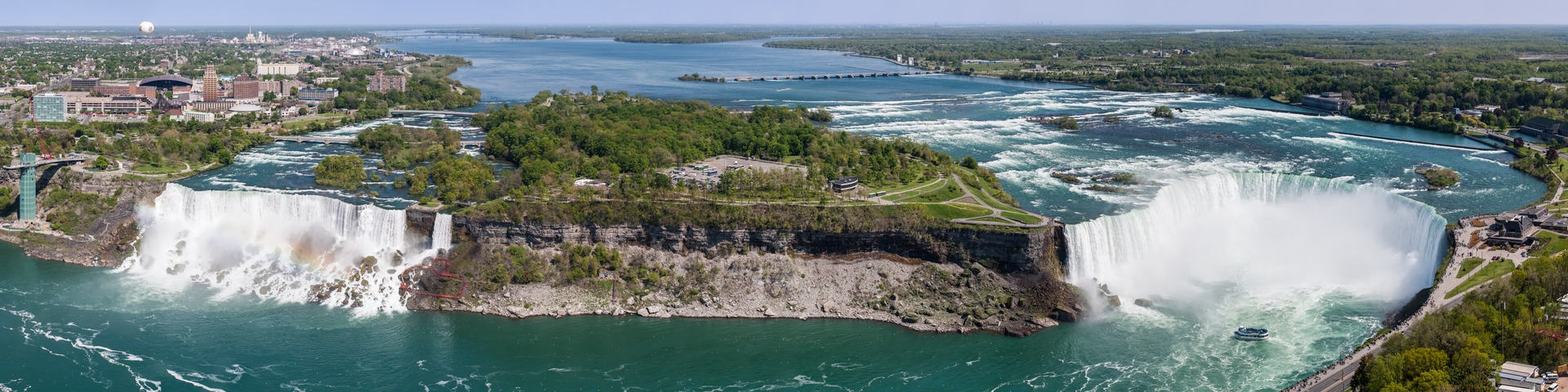
Niagara Falls is a group of three waterfalls on the Niagara River at the border of Ontario, Canada, and New York state, United States: the Horseshoe Falls, about 188 feet (57 metres) high with a curving crest line about 2,200 feet (670 metres) long, and the American Falls and Bridal Veil Falls facing them across Goat Island. The cataract formed roughly 12,000 years ago when glacial meltwater poured over the Niagara Escarpment; layered dolomite over softer shale keeps the falls vertical as they retreat, and water diverted for the Adams plant in the 1890s and the later Niagara Power Project and Sir Adam Beck complex made the region the birthplace of the electric utility industry. A 1950 diversion treaty reserves minimum scenic flows and splits the rest equally between the two countries, while Niagara Falls State Park of 1885 — the oldest state park in the United States — and the transborder parks together draw more than 8 million visitors a year.
In this article
- 1Overview
- 2Physical Description and Dimensions
- 3Geology and Formation
- 4Water Flow and Force
- 5Hydroelectric Power and the 1950 Treaty
- 6History of Power Development
- 7Parks, Preservation, and Public Access
- 8Environmental Remediation
- 9Daredevils and Stunts
- 10Notable Events and Incidents
- 11Cultural and Historical Associations
- 12Timeline: from the Ice Age cataract to the modern high wire
- 13Frequently asked questions
- 14Knowledge graph
Overview
Niagara Falls is a waterfall on the Niagara River in northeastern North America, one of the continent's most famous spectacles, lying on the border between Ontario, Canada, and New York state. The falls are divided into two principal parts separated by Goat Island: the Horseshoe Falls and the American Falls.
1. Physical Description and Dimensions
| Feature | Measurement |
|---|---|
| Horseshoe Falls height | 188 feet / 57 metres |
| Horseshoe Falls curving crest line | about 2,200 feet / 670 metres |
| American Falls height | 190 feet / 58 metres |
| American Falls width | 1,060 feet / 320 metres |
The falls comprise three waterfalls — American Falls, Horseshoe Falls and Bridal Veil Falls — and the main stream flowing south of Goat Island narrows from 3,200 feet at the head of the rapids to 1,100 feet between the gorge walls at the brink of the Horseshoe Falls.
The pool at the base of the Horseshoe Falls is thought to be deeper than the falls are high, and the greatest depth found by sounding was 192 feet a few hundred feet from the foot of the falls 2Description of the Niagara Quadrangle (Geologic Atlas Folio) · U.S. Geological Survey ↗. The Whirlpool is about 1,300 feet in diameter, and its central portion is a great eddy in which floating objects have been carried around for weeks 2.
2. Geology and Formation
The persistence of Niagara Falls as a cataract rests on the near-horizontal disposition of the Silurian rock beneath the river. Water flows over a more resistant layer of Lockport dolomite about 80 feet thick, underneath which lies a softer layer of about 60 feet of Rochester shale. Infiltrating the joints of the dolomite, water exerts hydrostatic pressure and slowly dissolves the caprock, while water from above rapidly erodes the shale beneath it. The shale gives way, the unsupported dolomite blocks fall away, and the brink remains vertical as it retreats upstream.
The falls are about 12,000 years old and originally lay about seven miles down river at Lewiston, New York and Queenston, Ontario. Erosion has since carried the brink to its present site. The Niagara River itself is estimated to be 12,000 years old.
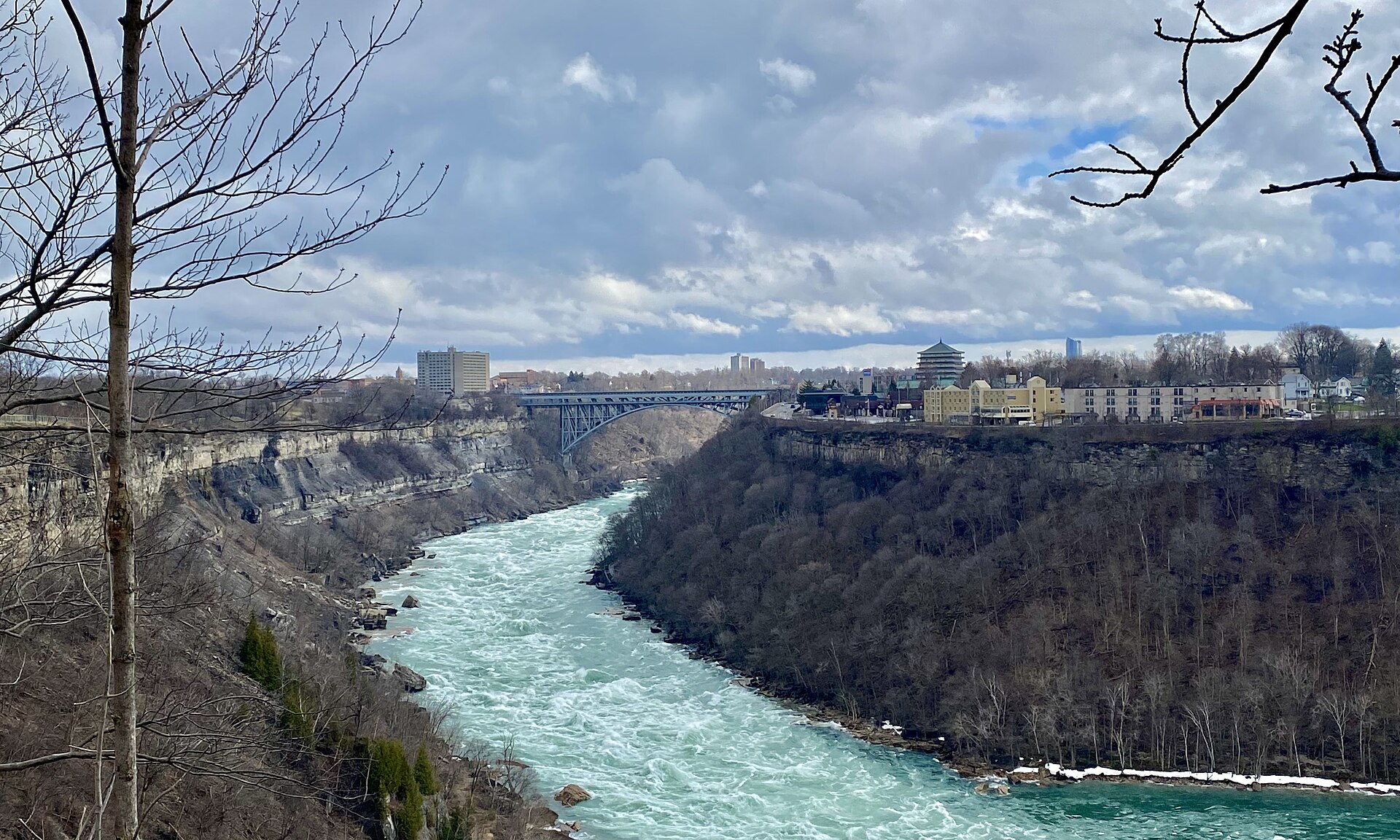
The gorge of the Niagara River begins at the brink of the Horseshoe Falls and extends in a zigzag course to the escarpment at Lewiston, a distance of 7 miles as the river flows.
As the outlet of Lake Erie, the Niagara River carries the discharge of the upper four Great Lakes and descends 326 feet between Lake Erie and Lake Ontario.
Starting about 1.7 million years ago during the last Ice Age, continental glaciers up to two miles thick covered the Niagara Frontier region.
The Horseshoe Falls eroded at a rate of about 5.5 feet (1.7 metres) per year from 1842 through 1905; large diversions of water above the falls for hydroelectric power have since lessened the erosion rate, and control works upstream both reduced the pace of retreat and maintain an even distribution of flow across the American and Canadian cataracts.
3. Water Flow and Force
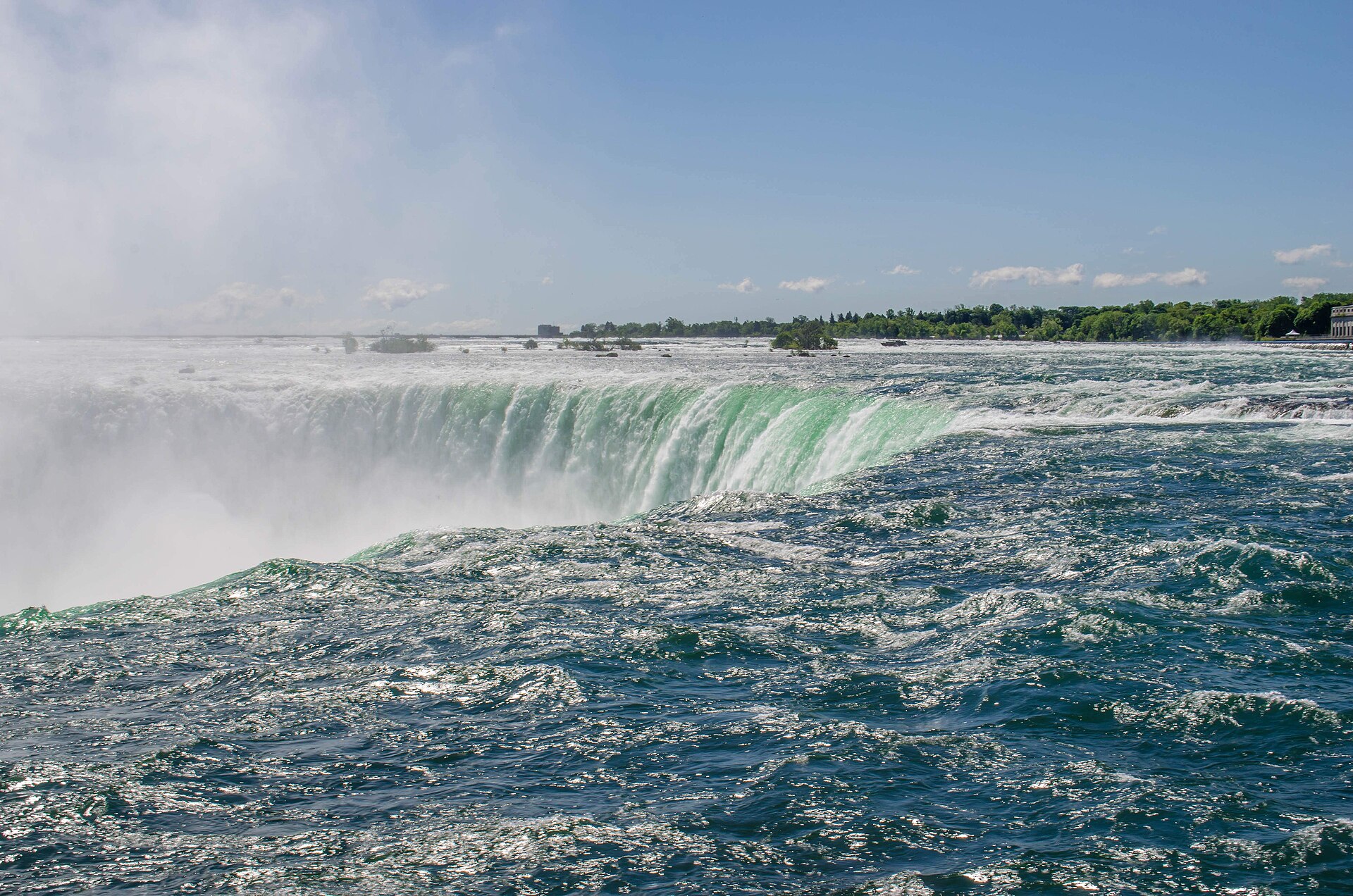
Roughly 3,160 tons of water flow over Niagara Falls every second. Of that volume, 681,750 gallons per second pass over the Horseshoe Falls, while 75,750 gallons per second pass over the American and Bridal Veil Falls. The Horseshoe Falls thus carry about 90 percent of the river's discharge.
The water plunges at 32 feet per second. At the base, it strikes with 280 tons of force at the American and Bridal Veil Falls and with 2,509 tons of force at the Horseshoe Falls.
4. Hydroelectric Power and the 1950 Treaty
The generating complex on the Canadian side of the Niagara River includes the 1,516 MW Sir Adam Beck II GS and the 174 MW Sir Adam Beck Pump GS, and produces about 12,300 gigawatt-hours of energy each year — roughly 40 per cent of OPG's hydroelectric production. The 10-unit, 446-megawatt station first began producing power toward the end of 1921 under its original name, the Queenston-Chippawa Hydroelectric Plant. The station was renamed after Sir Adam Beck in 1950 — the 25th anniversary of his death.
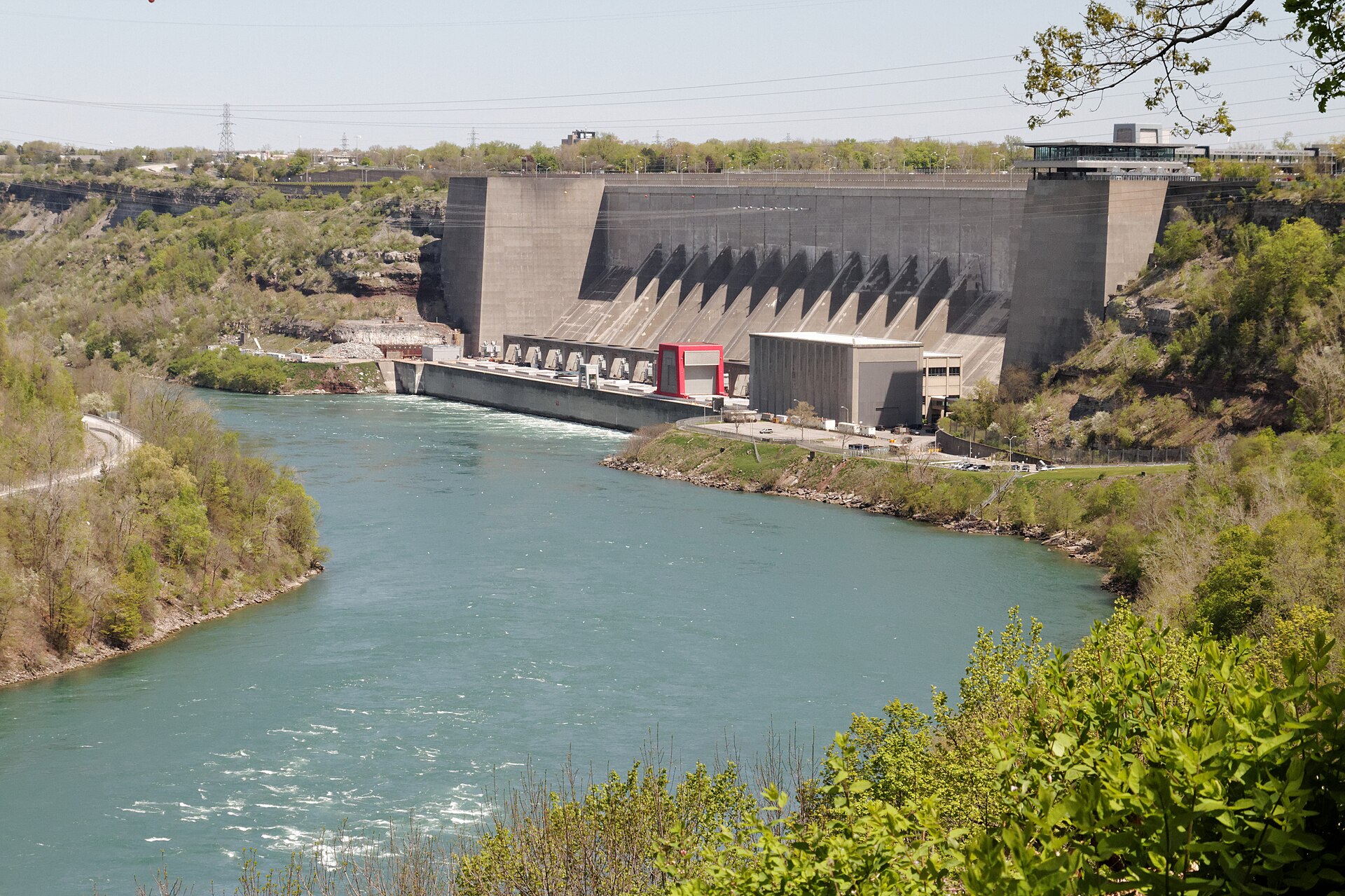
On 7 June 1956 a rockslide destroyed the area's largest privately owned hydroelectric plant, severely limiting the availability of low-cost power in the region. The Niagara Power Project is New York State's biggest electricity producer, providing up to 2.6 million kilowatts of clean electricity. Its clean energy is generated by two facilities, the Robert Moses Niagara Power Plant and the Lewiston Pump Generating Plant, with a combined 25 turbines spun by 748,000 gallons of water per second. The project is located in Lewiston, 4.5 miles downstream from Niagara Falls, and uses a gated tunnel under the city to divert water from the Niagara River into two reservoirs. The 2,400,000-kw Niagara Power Project was the largest hydropower complex in the Western World when it began operating in January 1961 — less than three years after construction began.
The 1950 Niagara Treaty was signed between the United States and Canada on 27 February 1950, recognizing their primary obligation to preserve and enhance the scenic beauty of the Niagara Falls and River. Article II commits the two countries to complete remedial works that enhance the beauty of the falls by distributing the waters to produce an unbroken crestline, while Article VI provides that waters made available for power purposes shall be divided equally between Canada and the United States.
The treaty sets a minimum flow over the falls of 2,832 m³/s (100,000 ft³/s) in daytime from April 1 to September 15, and 1,416 m³/s (50,000 ft³/s) at other times. Article IV bars power diversions that would reduce the flow below these levels, and water in excess of the falls flow minimums and other priority uses is split equally between both countries and can be used for hydropower production.
The treaty establishes an order of precedence of water use, which includes domestic and sanitary purposes and navigation. On-site representatives of the International Niagara Committee conduct weekly inspections to ensure compliance with the treaty's conditions and to investigate violations.
The International Niagara Board of Control was established by the International Joint Commission in 1953 and provides advice on matters related to water levels and flows in the Niagara River. Its main duties are to ensure the operation of the Chippawa-Grass Island Pool upstream of Niagara Falls within the limits of its directive, revised in 2017, and to oversee the Lake Erie-Niagara River Ice Boom.
During the reporting period, diversion from the Niagara River to the Sir Adam Beck I and II plants averaged 1,577 cubic metres per second, while diversion to the Robert Moses Niagara Power Project averaged 2,516 cubic metres per second. Under an international treaty, the flow of water over Niagara Falls is reduced during the night to allow more water to flow into the intakes used for power generation, keeping the falls' natural beauty unaffected during prime viewing hours.
5. History of Power Development
In August 1895 the Adams No. 1 generating station of the Niagara Falls Power Company first supplied electric power to local industries in Niagara Falls, New York, as the first large-scale multiphase power station with commercial operations at the falls. The station's entry into service marked a decisive victory for alternating-current systems over direct-current systems. The following year, in November 1896, electrical power was transmitted from the Adams Power Plant in Niagara Falls to Buffalo, the first long-distance transmission of alternating current. By May 1900 the plant had reached full capacity of ten 5,000-HP generators.
New York's public power movement began when Governor Charles Evans Hughes declared in 1907 that the state's undeveloped waterpower should be preserved and held for the benefit of the people rather than surrendered to private interests. On 18 May 1910 the Niagara Transformer Station of the Hydro Electric Power Commission of Ontario began distributing power from Niagara Falls over a long-distance network of high voltage transmission lines to southern Ontario — the first time power was distributed to an entire region that way.
-
1907Hughes and the public power movementGovernor Charles Evans Hughes declared that the state's undeveloped waterpower should be preserved and held for the benefit of the people rather than surrendered to private interests 6A History of Innovation (NYPA Timeline) · New York Power Authority ↗.
-
18 May 1910Regional distribution in OntarioThe Niagara Transformer Station of the Hydro Electric Power Commission of Ontario began distributing power from Niagara Falls over a long-distance network of high voltage transmission lines to southern Ontario, the first time power was distributed to an entire region that way 8Milestones: Adams Hydroelectric Generating Plant, 1895 · Engineering and Technology History Wiki (IEEE) ↗.
6. Parks, Preservation, and Public Access
The Niagara Parks Commission was created in 1885 to maintain the area around the falls, and in 1887 it removed the existing deteriorating staircase and installed a water-hydraulic-powered elevator.
The first version of the tunnels behind the falls opened in May 1889; because they were pitch black, guides carried lanterns to escort visitors safely to the open portal behind the rushing water.
The Niagara Falls National Heritage Area, designated by the United States Congress in 2008, is a collection of one city, two towns, two villages, parks, sites and attractions along the Niagara River known as the Falls to Fort region. Its mission is to preserve, protect and promote the historic, natural and cultural resources of the area stretching from Niagara Falls to Old Fort Niagara.
7. Environmental Remediation
In 1987 the Niagara River was designated an Area of Concern as part of the Great Lakes Water Quality Agreement, after industrial and municipal discharges degraded water quality, habitat and sediment.
In addition to Great Lakes Restoration Initiative efforts, federal and state governments and responsible parties have collectively spent hundreds of millions to remediate hazardous waste sites in the area. The Black Rock Canal cleanup removed about 180,000 cubic yards of contaminated sediments from the navigation channel in the Niagara River watershed.
8. Daredevils and Stunts
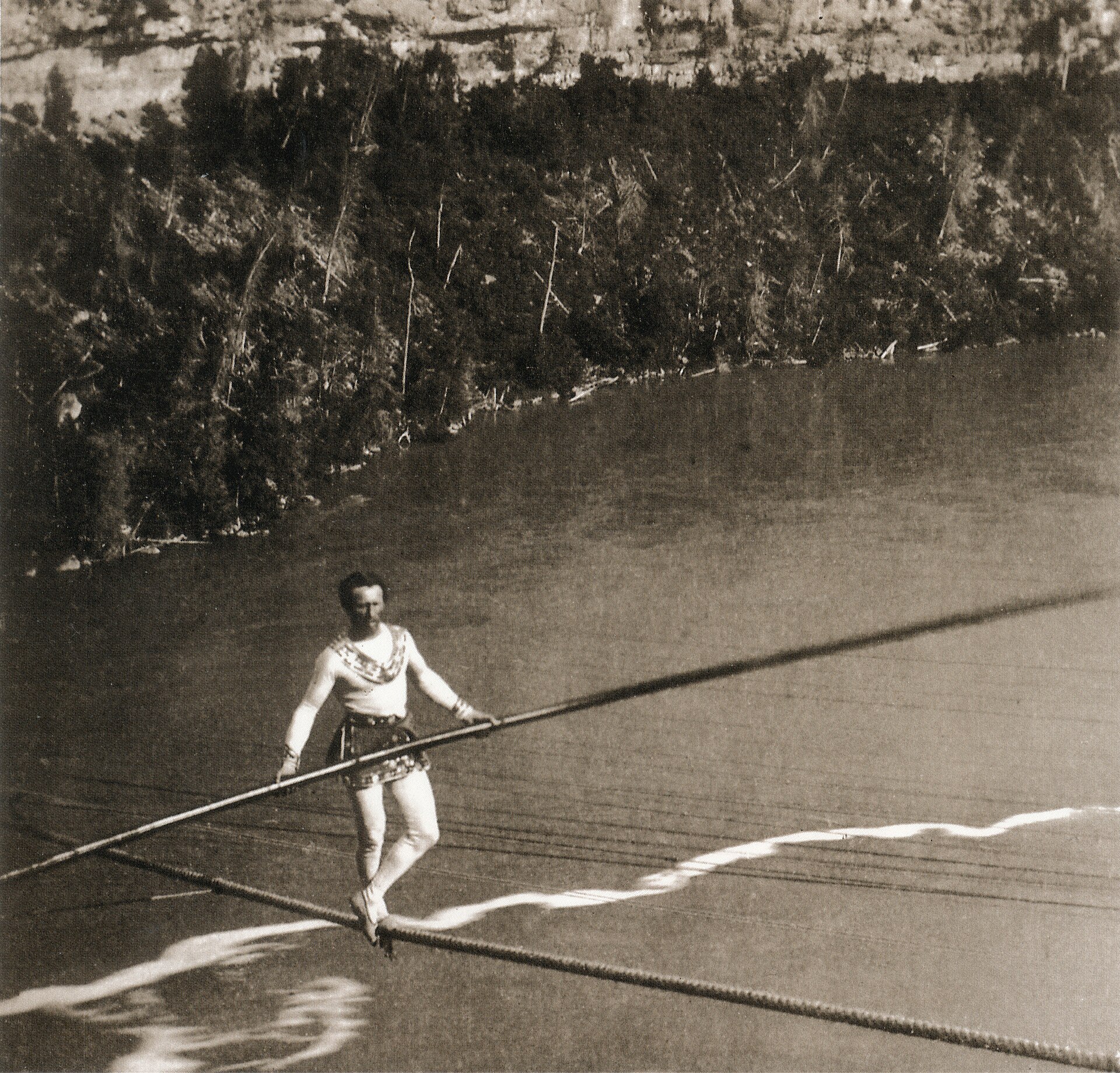
In 1859 Jean François Gravelet, a Frenchman known professionally as Charles Blondin, became the first daredevil to walk across Niagara Falls on a tightrope. His advertised ascensions always had different theatrical variations, including tightrope walks blindfolded, in a sack, with his manager on his back, sitting down midway to cook an omelet, and pushing a wheelbarrow while dressed as an ape.
On 11 July 1886 Carlisle Graham took the first of five barrel trips through the rapids and, after swirling in the intense rapids for 30 minutes, arrived on shore dizzy and ill but alive.

In 1930 George Stathakis went over the falls in a ten-foot, one-ton wooden barrel that was caught behind the falls for 14 hours; he died before he could be rescued, though his 105-year-old pet turtle survived the trip.
On 15 June 2012 aerialist Nik Wallenda became the first person to walk across a high wire stretched directly over Niagara Falls; he started around 10:15 p.m. from the American side and crossed some 200 feet in the air on a 2-inch-wide steel cable strung over the Horseshoe Falls, carrying a 40-pound balance bar.
9. Notable Events and Incidents
On 6 August 1918 a dumping scow with two men aboard broke loose from its towing tug and became lodged in the rapids of the upper Niagara River. The men opened the scow's bottom dumping doors so that it grounded in the shallow rapids only 600 metres from the brink of the Horseshoe Falls. They were rescued the next day by breeches buoy on a line shot out from the roof of the adjacent powerhouse, with the cooperation of Niagara Parks police, fire and police departments and the U.S. The wreckage has remained just above the brink of the falls for over a century, shifting significantly from its spot on 31 October 2019 when high winds forced it further toward the brink.
On 27 January 1938 the Upper Steel Arch Bridge, known locally as the Honeymoon Bridge, collapsed under pressure from the buildup of ice in the gorge below the falls.
In 1969 the American Falls was dewatered: a cofferdam built at the east end of Goat Island, completed on 12 June 1969, diverted the water from the American Falls to the Horseshoe Falls to allow geological surveys to take place. A significant amount of talus had built up under the American Falls from rockfalls, especially major events in 1931 and 1954 that some people thought took away from the aesthetic appearance of the falls. The stability of the area near the falls was in question. The talus at the base of the falls was mapped but ultimately left in place, and the cofferdam was removed on 25 November 1969 and the falls returned to its previous state.
10. Cultural and Historical Associations
Native Americans living in the Niagara region were most likely the first people to behold the power of the falls, and the first European to document the area was the French priest Father Louis Hennepin during a 1678 expedition.
The development of the rail system in the 1800s opened Niagara Falls to throngs of visitors, and in 1804 Jerome Bonaparte honeymooned there with his American bride, credited by lore with starting the honeymoon tradition. Niagara Falls has been one of the most popular destinations for honeymooners in the world since promoters for the area helped institute honeymooning as a tradition in the mid-nineteenth century.
11. Timeline: from the Ice Age cataract to the modern high wire
- About 12,000 years agoThe falls form at the end of the Ice AgeLarge torrents of water released from melting ice drain into what becomes the Niagara River, and water plunges over the Niagara Escarpment, seven miles down river from the present site.
- 1678Father Hennepin describes the fallsThe French priest Father Louis Hennepin accompanies LaSalle's expedition to the Niagara region and becomes the first European to see and describe Niagara Falls in depth, publishing an account that brings the falls to wider attention.
- October 1829Sam Patch survives a jump into the Horseshoe FallsSam Patch, known as the Yankee Leaper, survives jumping down the 175-foot Horseshoe Falls on the Canadian side of the border without any protection.
- 1859Blondin walks the gorge on a tightropeJean François Gravelet, the Great Blondin, becomes the first person to walk across the Niagara Gorge on a tightrope, his first crossing performed 160 feet above the gorge just down river from the falls.
- 1885The Niagara Reservation is establishedNiagara Falls State Park is established as the Niagara Reservation, the first of the reservations that became cornerstones of the New York State parks system.
- August 26, 1895The Adams power plant goes into operationThe Adams Plant goes into operation, a key victory for alternating-current systems over direct-current, and its No. 1 generating station first supplies electric power to local industries in Niagara Falls, New York.
- November 1896Power is transmitted to BuffaloElectrical power is transmitted from the Adams Power Plant in Niagara Falls to Buffalo, the first time in history that alternating current is transmitted over a long distance.
- October 24, 1901Annie Edson Taylor goes over in a barrelThe 63-year-old schoolteacher survives the plunge over Niagara Falls in a custom barrel, becoming the first person to do so; between 1901 and 1995 fifteen people go over the falls and ten survive.
- August 6, 1918The iron scow is stranded above the fallsA dumping scow with two men aboard breaks loose from its tug and lodges in the rapids of the upper Niagara River only 600 metres from the brink; the men are rescued the next day by breeches buoy.
- February 27, 1950The Niagara Diversion Treaty is signedCanada and the United States sign the Niagara Diversion Treaty, which reserves minimum flows over the falls for scenic purposes and divides the water available for power equally between the two countries.
- June 7, 1956A rockslide destroys a major power plantA rockslide destroys the area's largest privately owned hydroelectric plant, severely limiting low-cost power and prompting Congress to pass the Niagara Redevelopment Act in 1957.
- January 1961The Niagara Power Project begins operatingThe 2,400,000-kw Niagara Power Project, the largest hydropower complex in the Western World at the time, begins operating less than three years after construction began.
- June 12 – November 25, 1969The American Falls are dewateredA cofferdam at the east end of Goat Island diverts the American Falls so geologists and engineers can study the rock face and erosion; the cofferdam is removed on November 25 and the falls return to their previous state.
- 2008The Niagara Falls National Heritage Area is designatedThe United States Congress designates the Niagara Falls National Heritage Area, one of 62 National Heritage Areas, to preserve and promote the historic, natural and cultural resources between the falls and Old Fort Niagara.
- June 15, 2012Nik Wallenda crosses on a high wireAerialist Nik Wallenda becomes the first person to walk across a high wire stretched directly over Niagara Falls, crossing on a 2-inch-wide steel cable strung over the Horseshoe Falls.
12. Frequently asked questions
How much hydroelectric potential does Niagara Falls hold, and who shares it?
The falls offer a hydroelectric potential of over 4 million kilowatts, shared by the United States and Canada.4Facts about Niagara Falls · Niagara Falls State Park (Delaware North / New York State Parks) ↗
How much power does the Niagara Power Project produce, and when did it first deliver electricity?
Who was the first person to survive a trip over the falls in a barrel?
Annie Edson Taylor, a 63-year-old schoolteacher, became the first person to successfully take the plunge over Niagara Falls in a barrel on October 24, 1901.19First barrel ride down Niagara Falls (October 24, 1901) · HISTORY (A&E Television Networks) ↗
How many people visit Niagara Falls State Park each year, and how large is the park?
What is the Maid of the Mist?
The Maid of the Mist is a world-famous boat journey that departs from the base of the Observation Tower at Prospect Point for a roundtrip into the churning waters of the American and Horseshoe Falls.20Niagara Falls State Park · New York State Parks, Recreation and Historic Preservation ↗
References (22)
- 1Niagara Falls | Facts, Geology, & History — Encyclopaedia Britannica WebView source
- 2Description of the Niagara Quadrangle (Geologic Atlas Folio) — U.S. Geological Survey Web↩View source
- 3Buffalo District recalls the dewatering of the American Falls — U.S. Army Corps of Engineers, Buffalo District (DVIDS) WebView source
- 4Facts about Niagara Falls — Niagara Falls State Park (Delaware North / New York State Parks) Web↩View source
- 5OPG's Sir Adam Beck I hydro station celebrates a century of clean power — Ontario Power Generation WebView source
- 6A History of Innovation (NYPA Timeline) — New York Power Authority Web↩View source
- 7Niagara Power Project — New York Power Authority Web↩View source
- 8Milestones: Adams Hydroelectric Generating Plant, 1895 — Engineering and Technology History Wiki (IEEE) 1895 Web↩View source
- 9History of Journey Behind the Falls — Niagara Parks (Government of Ontario agency) WebView source
- 10Niagara Falls National Heritage Area — U.S. National Park Service Web↩View source
- 11Niagara River AOC — U.S. Environmental Protection Agency WebView source
- 12Daredevil crosses Niagara Falls on tightrope (June 30, 1859) — HISTORY (A&E Television Networks) 1859 WebView source
- 13Niagara's Daredevils — Niagara Falls National Heritage Area WebView source
- 14A Daredevil History of Niagara Falls — HISTORY (A&E Television Networks) WebView source
- 15Nik Wallenda walks across Niagara Falls on tightrope (June 15, 2012) — HISTORY (A&E Television Networks) 2012 WebView source
- 16The Iron Scow — Niagara Parks (Government of Ontario agency) WebView source
- 17Niagara Falls History — Niagara Falls State Park (Delaware North / New York State Parks) WebView source
- 18Niagara Falls - Location, Height & Origins — HISTORY (A&E Television Networks) WebView source
- 19First barrel ride down Niagara Falls (October 24, 1901) — HISTORY (A&E Television Networks) 1901 Web↩View source
- 20Niagara Falls State Park — New York State Parks, Recreation and Historic Preservation Web↩View source
- 21Section 2: The 1950 Niagara Treaty (Frequently Asked Questions) — International Joint Commission / International Niagara Board of Control 1950 WebView source
- 22Treaty Between Canada and the United States of America Concerning the Diversion of the Niagara River (1950) — International Joint Commission 1950 WebView source