Electricity
The phenomenon of electric charge at rest and in motion — from the first observations of rubbed amber to the voltaic pile, electromagnetic induction, Maxwell's synthesis and the electrification of the modern world.
Electricity is the phenomenon associated with stationary or moving electric charges, carried by elementary particles; its study began with Thales' observation that rubbed amber attracts small objects and advanced through Gilbert, Franklin's kite experiment, Coulomb's inverse-square law and Galvani's animal electricity. Volta's pile of 1800 gave science a continuous current, Faraday's discovery of electromagnetic induction in 1831 made mechanical power convertible into electricity, and Maxwell's equations predicted electromagnetic waves travelling at the speed of light, verified by Hertz. Edison and Tesla built the lamps, motors and central stations that electrified cities, while the ampere, volt and ohm — redefined in 2019 on the elementary charge — form the measurement system of the electric age.
Overview
Electricity is the phenomenon associated with stationary or moving electric charges, a fundamental property of matter borne by elementary particles. The particle involved is the electron, which carries a charge designated by convention as negative.
Electric current is the movement of electric charge carriers such as electrons or ions, and in a wire it measures the amount of charge passing a certain point per unit of time.
1. Historical Development
Around 600 BCE, the ancient Greek thinker Thales noticed that amber attracts small objects when it is rubbed with fur. Many centuries later, William Gilbert produced De Magnete, a full account of his research on magnetic bodies and electrical attractions. Gilbert was the first to use the terms electric attraction, electric force, and magnetic pole, and he is often considered the father of electrical studies.
Charles Coulomb showed that the force of attraction between two charged spheres was inversely proportional to the square of the distance between them, lending precision to the field of electrical studies, and he demonstrated an inverse square law for the forces of attraction and repulsion between bodies of the same and opposite electrical charge. Between 1785 and 1791 Coulomb submitted seven important treatises on electricity and magnetism to the Academie des Sciences.

In 1837 Samuel F.B. Morse invented the telegraph, the first practical application of electricity.
Edison's incandescent lamp of 1878 was followed by the first central generating plant in New York City in 1882.
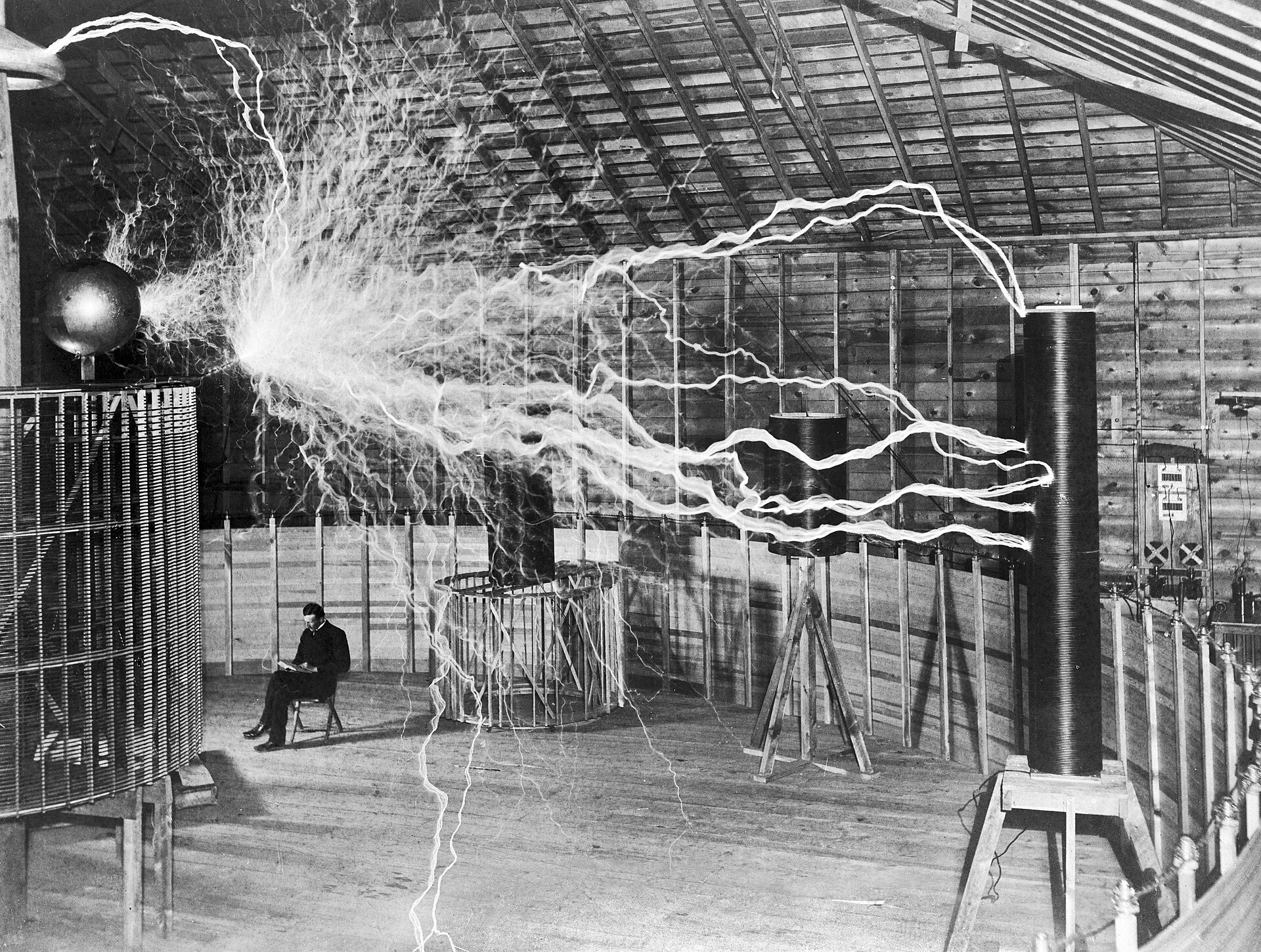
In 1888 Nikola Tesla received patents on a polyphase AC motor, and Westinghouse purchased the patents and hired the inventor. Westinghouse displayed its universal electrical supply system, based on polyphase AC, at the Chicago Exposition of 1893; its extensive AC experience helped it win the Niagara Falls contract, and by 1896 the project was carrying power to Buffalo.
The first major English central station was opened by Edison on Holborn Viaduct in London in January 1882 and supplied 1,000 lamps. Edison's Pearl Street station in New York entered service on 4 September 1882, its machines producing about 700 kW to supply a potential load of 7,200 lamps at 110 V.
A direct and convincing measurement of an electron's charge as a natural unit of electric charge was first made in the Millikan oil-drop experiment. Its fixed numerical value is 1.602176634 × 10^-19 C.
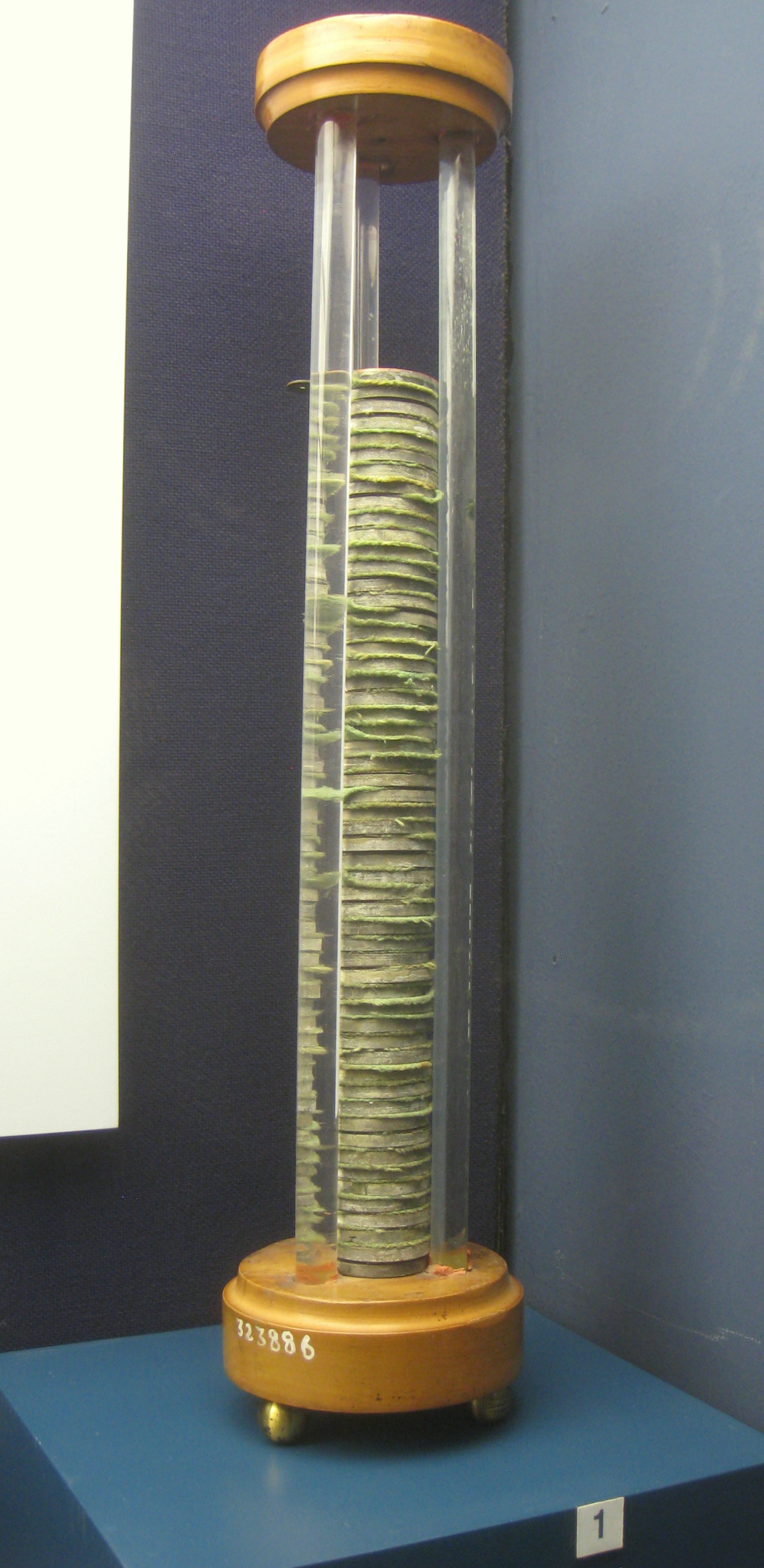
Volta's battery made electricity easily available in the laboratory.
On a June afternoon in 1752, Franklin flew a kite equipped with a house key and a Leyden jar during a thunderstorm, with his son William assisting him; the kite was not struck by lightning but instead picked up the ambient electrical charge from the storm. Franklin's own description of the kite experiment appeared in the Pennsylvania Gazette in October 1752 with instructions for re-creating the experiment.
In two important papers in 1826 Ohm gave a mathematical description of conduction in circuits modelled on Fourier's study of heat conduction. His famous book Die galvanische Kette, mathematisch bearbeitet gave his complete theory of electricity.
Galvani delayed the announcement of his findings until 1791 and then published his essay De Viribus Electricitatis in Motu Musculari Commentarius, or Commentary on the Effect of Electricity on Muscular Motion. He concluded that animal tissue contained an innate vital force he termed animal electricity, which activated nerve and muscle when spanned by metal probes.
In 1799 Alessandro Volta developed the first electrical battery; this first continuous and reproducible source of electrical current was an important step in the study of electromagnetism and in the development of electrical equipment. Volta built his battery, known as the voltaic pile, from alternating copper and zinc discs, with each pair of metals separated by flannel soaked in weak acid. The Voltaic pile stimulated so much scientific inquiry that, by 1831, when Michael Faraday built the first dynamo, the basis of electricity had been established.
The 1830s and 1840s brought the invention of the first electric generator and transformer.
Earlier, he was appointed acting Superintendent of the House at the Royal Institution in 1821 and that same year invented the first electric motor.
2. Fundamental Concepts and Units
| Quantity | Unit | Definition/Relationship |
|---|---|---|
| Charge | coulomb (C) | one coulomb equals 6.24 x 10^18 natural units of charge 7Electric charge · Encyclopaedia Britannica ↗ |
| Current | ampere (A) | the SI unit of electric current 1Electricity · Encyclopaedia Britannica ↗ |
| Voltage | volt (V) | 1 V = 1 W/A 8SI Units - Electric Current · National Institute of Standards and Technology (NIST) ↗ |
| Resistance | ohm (Ω) | 1 Ω = 1 V/A 8 |
The ampere has been an internationally recognized unit since 1908 and has been measured with progressively better accuracy over time 13Ampere: Introduction · National Institute of Standards and Technology (NIST) ↗.
Electric charge is conserved: in any isolated system, in any chemical or nuclear reaction, the net electric charge is constant. 7
Materials such as metals have free electrons that move easily and conduct electricity efficiently, while insulators such as plastics and ceramics have electrons tightly bound in ionic or covalent bonds. 1
In daily life a 60-watt equivalent LED lamp draws a small fraction of an amp, while a lightning bolt can carry 100,000 amps or more.13
Ohm's law states that the current through most materials is directly proportional to the potential difference applied across the material. 10Georg Simon Ohm (1789 - 1854) · MacTutor History of Mathematics Archive, University of St Andrews ↗
Depending on its direction, current can be direct, where the flow of electrons is unidirectional, or alternating, where the flow reverses periodically. 1 This distinction underlay the power struggle between Edison's direct-current systems and the Tesla-Westinghouse alternating-current approach, which eventually won out. 4Archives: History of IEEE Since 1984 - Technical Topics · Engineering and Technology History Wiki (IEEE) ↗
The coulomb is the amount of electric charge that flows through a cross section of a conductor during each second when the current is one ampere 7. Starting on 20 May 2019 the ampere is based on a fundamental physical constant, the elementary charge, the amount of electric charge in a single electron or proton 13.
3. Electromagnetism and the Speed of Light
The link between electricity and magnetism was established experimentally in 1820 when Hans Christian Orsted found that electric currents produce magnetic effects. In his experiment he used a battery to pass current through a wire placed near a compass, and the needle swung to a position at right angles to the wire. This was the first indication that electric current and magnetism were related.
Michael Faraday went on to prove that a changing magnetic field could induce an electric current. James Clerk Maxwell then synthesized these findings into a unified theory that predicted electromagnetic waves, including light and radio waves, and showed that electric and magnetic fields travel together through space as waves of electromagnetic radiation.
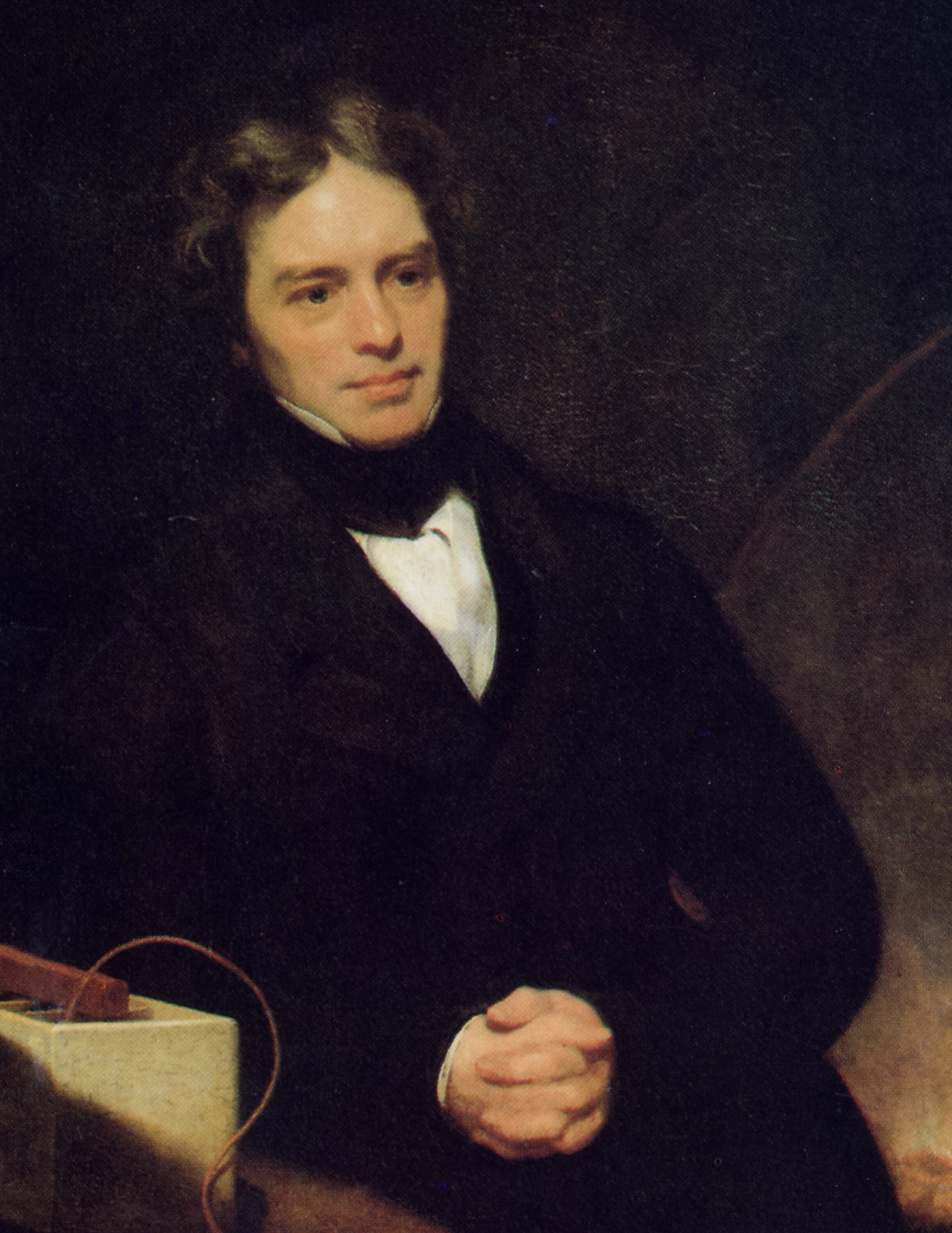

In London around 1862 Maxwell calculated that the speed of propagation of an electromagnetic field is approximately that of the speed of light and proposed that light is therefore an electromagnetic phenomenon.
In 1887 the German physicist Heinrich Hertz fulfilled Maxwell's prediction by experimentally producing radio waves.
The speed of light in a vacuum is now defined as exactly 299,792,458 metres per second. The speed of light is a fundamental constant of nature and the single limiting velocity in the universe, an upper bound to the propagation speed of signals and to the speeds of all material particles.
In 1831 Faraday discovered electro-magnetic induction by showing that a magnet could induce an electrical current in a wire, converting mechanical energy into electrical energy.
4. Key Figures and Their Contributions
Alessandro Volta, professor of physics at the University of Pavia, was not convinced by Galvani's analogy between the muscle and the Leyden jar, and he rejected the idea of an animal electric fluid.
Volta, who coined the term galvanism, said of Galvani's work that it contains one of the most beautiful and most surprising discoveries. The SI unit of electric potential difference is the volt, equal to one watt per ampere. Coulomb's use of the torsion balance gave succeeding physicists a method of accurately measuring extremely small forces.

5. Electricity Generation and Distribution
Solar photovoltaic cells convert sunlight directly into electricity and can be connected to form modules and arrays that power individual homes or form large power plants.
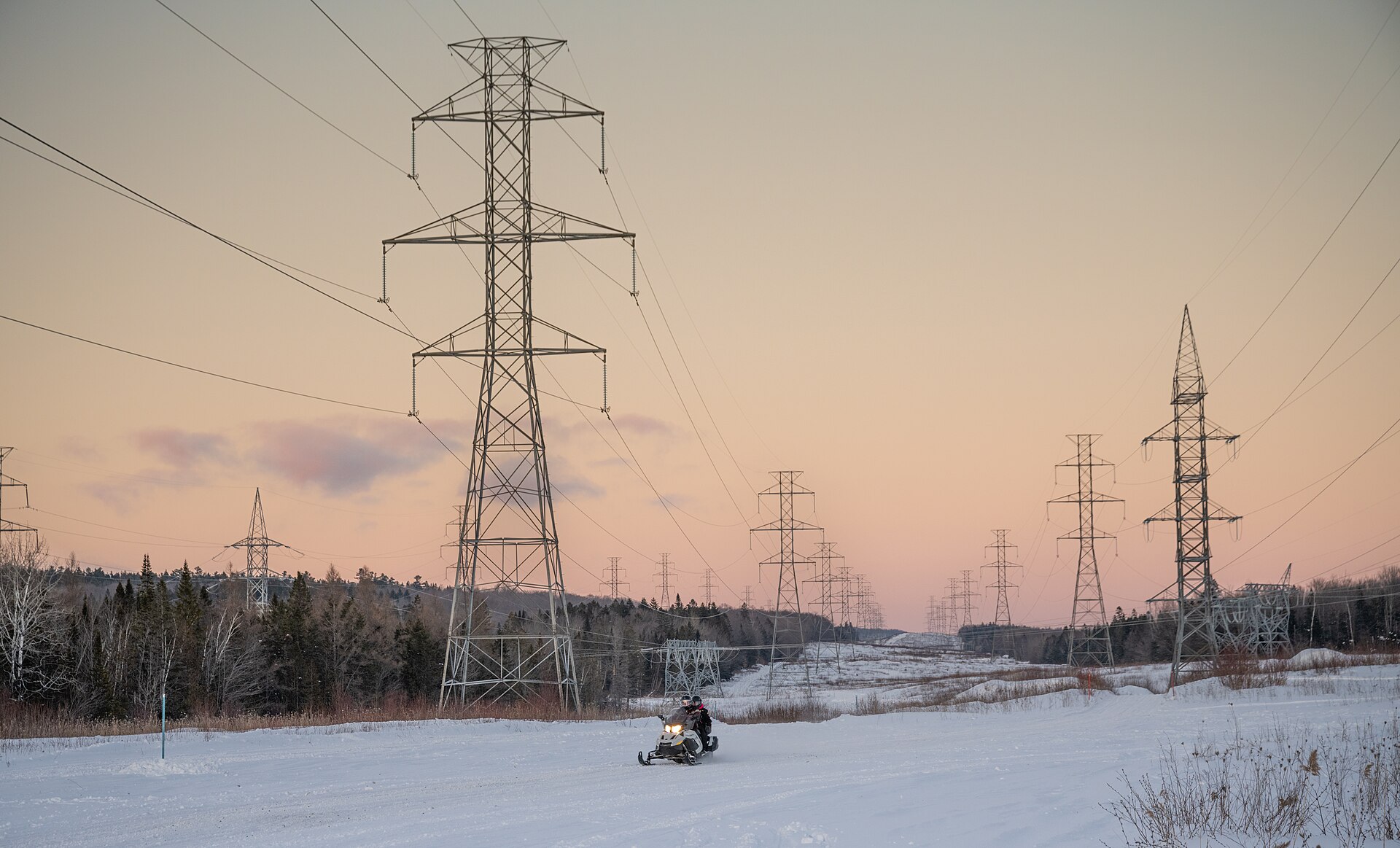
High-voltage transmission lines carry electricity over long distances because higher-voltage transmission is more efficient, while distribution lines carry lower-voltage electricity that is safer to use in homes and businesses. In the United States the electricity grid is made up of thousands of miles of high-voltage power lines and millions of miles of low-voltage power lines, connecting thousands of power plants to hundreds of millions of customers.
The first hydroelectric power plant went into service on 30 September 1882 on the Fox River at Appleton, Wisconsin, with two Edison generators of 12.5 kW each.
6. Timeline: from Thales to the electric age
- Around 600 BCEAmber attractsThales, an ancient Greek thinker, notices that amber attracts small objects when rubbed with fur — the earliest recorded observation of what will be called electricity.
- 1600The term 'electricus' is coinedAn English scientist coins the term electricus to describe the property Thales observed; from the Greek word for amber the word later engenders the terms electricity and electron.
- 1746The Leyden jar stores chargeLeyden jars, invented in 1746, could store charge and produce a spark of electricity, becoming the standard electrical instrument of the mid-18th century.
- June 1752Franklin's kite experimentBenjamin Franklin flies a kite with a key during a thunderstorm in Philadelphia, demonstrating that lightning is electrical in nature; his son William assists him.
- 1780Galvani's frog observationsLuigi Galvani experiments with dissected frogs' legs mounted on iron or brass hooks, observing twitching that he attributes to animal electricity.
- 1791De Viribus Electricitatis publishedGalvani publishes his essay on the effect of electricity on muscular motion, concluding that animal tissue contains an innate vital force he terms animal electricity.
- March 1800Volta reports the electric pileIn a letter to Joseph Banks of the Royal Society, Volta describes the first electric pile, the forerunner of the modern battery and the first source of continuous current.
- 1820Ørsted links electricity and magnetismHans Christian Ørsted's discovery that electric currents produce magnetic effects proves that electricity and magnetism are linked.
- 1827Ohm's lawGeorg Simon Ohm publishes Die galvanische Kette, mathematisch bearbeitet, giving his complete theory of electricity and what is now known as Ohm's law.
- 1831Faraday discovers inductionMichael Faraday shows that a magnet can induce an electrical current in a wire, converting mechanical energy into electrical energy and discovering the first dynamo.
- 1865Maxwell makes wavesJames Clerk Maxwell proposes that electromagnetism exists as waves travelling at the speed of light, backing the idea with his equations.
- 1879Edison's carbon-filament lampAfter trials of many carbonized materials, Edison had success on 21 October 1879 with a lamp filament made from a carbonized cotton thread, on the way to a practical incandescent lamp.
- 1882Central stations openEdison places the Pearl Street station in service in New York on 4 September 1882, and opens the first major English central station on Holborn Viaduct in London.
- May 1888Westinghouse buys Tesla's AC patentsGeorge Westinghouse buys the patent rights to Tesla's polyphase alternating-current system, precipitating the power struggle in which the Tesla-Westinghouse approach eventually wins out.
- 1896Power reaches BuffaloThe Niagara Falls project, bearing Tesla's name and patent numbers, carries power to Buffalo by 1896.
- 1897The electronJ.J. Thomson of England shows that thermionic emission is caused by negatively charged particles, the electrons.
References (22)
- 1Electricity — Encyclopaedia Britannica Web↩View source
- 2Electromagnetism History: Electron Timeline — National High Magnetic Field Laboratory (MagLab), Florida State University WebView source
- 3William Gilbert — Encyclopaedia Britannica WebView source
- 4Archives: History of IEEE Since 1984 - Technical Topics — Engineering and Technology History Wiki (IEEE) 1984 Web↩View source
- 5Charles Augustin Coulomb (1736 - 1806) — MacTutor History of Mathematics Archive, University of St Andrews 1736 WebView source
- 6Electrical and electronics engineering — Encyclopaedia Britannica WebView source
- 7Electric charge — Encyclopaedia Britannica Web↩View source
- 8SI Units - Electric Current — National Institute of Standards and Technology (NIST) Web↩View source
- 9Benjamin Franklin and the Kite Experiment — The Franklin Institute WebView source
- 10Georg Simon Ohm (1789 - 1854) — MacTutor History of Mathematics Archive, University of St Andrews 1789 Web↩View source
- 11Luigi Galvani — Encyclopaedia Britannica WebView source
- 12History of research at the Ri — The Royal Institution of Great Britain WebView source
- 13Ampere: Introduction — National Institute of Standards and Technology (NIST) Web↩View source
- 14Electromagnetism — Encyclopaedia Britannica WebView source
- 15James Clerk Maxwell (1831 - 1879) — MacTutor History of Mathematics Archive, University of St Andrews 1831 WebView source
- 16Speed of light — Encyclopaedia Britannica WebView source
- 17Michael Faraday (1791 - 1867) — MacTutor History of Mathematics Archive, University of St Andrews 1791 WebView source
- 18Electricity explained: How electricity is generated — U.S. Energy Information Administration (EIA) WebView source
- 19Electricity explained: Delivery to consumers — U.S. Energy Information Administration (EIA) WebView source
- 20Milestones: Volta's Electrical Battery Invention, 1799 — Engineering and Technology History Wiki (IEEE) 1799 WebView source
- 21Nikola Tesla — Encyclopaedia Britannica WebView source
- 22This Month in Physics History: March 20, 1800 - Volta Describes the Electric Battery — American Physical Society (APS News) 1800 WebView source