Magnetism
The phenomenon of magnetism — poles and fields, ferromagnetism, the Earth's magnetic field, and the history from Gilbert and Ørsted to Faraday, Maxwell and modern magnet technology.
Magnetism is the force of attraction and repulsion associated with magnets and moving electric charges, produced by electron spins and currents and described by magnetic fields that run from north to south poles. William Gilbert's De Magnete of 1600 described the Earth as a magnetic entity; Ørsted's 1820 discovery that currents deflect compass needles tied electricity to magnetism, Faraday's induction and Maxwell's equations completed the theory, and the electron's spin explains ferromagnetism in iron, cobalt and nickel. The Earth's field generates the magnetosphere that shields the planet from solar particles and drives the aurora, while electromagnets and magnetic materials enable motors, generators, MRI and magnetic data storage.
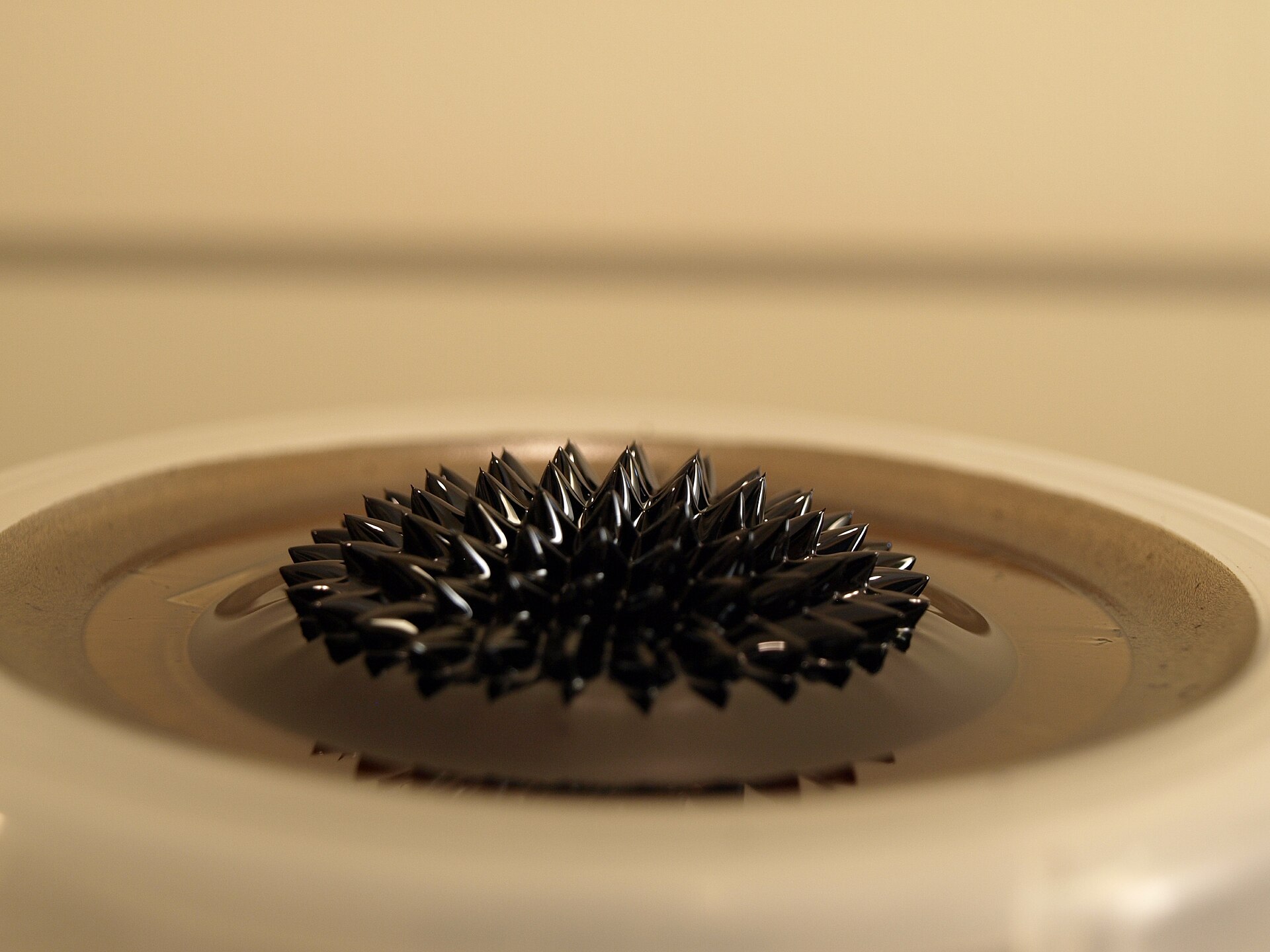
In this article
- 1Overview
- 2Historical Development
- 3Ørsted, Ampère, and the Birth of Electromagnetism
- 4Faraday, Maxwell, and the Unification of Electricity and Magnetism
- 5Gauss and the Measurement of Terrestrial Magnetism
- 6Magnetic Fields and Units
- 7Ferromagnetism and Permanent Magnets
- 8Electromagnets and Superconducting Magnets
- 9Earth's Magnetosphere and Geomagnetic Phenomena
- 10Applications: From Compasses to Magnetic Resonance Imaging and Data Storage
- 11Timeline: from the lodestone to the magnetic age
- 12Knowledge graph
Overview
Magnetism is a force of nature that attracts and repels, and only some materials, mostly metals such as iron and nickel, can be magnetized and affected by magnetic force. A magnet carries a magnetic pole at each end, a north pole and a south pole, and like poles repel while opposite poles attract. The magnetic force around a magnet forms a magnetic field composed of lines of force that run from the north pole to the south pole. The Earth itself is a giant magnet, which is why it has north and south magnetic poles.
1. Historical Development
The earliest recorded reflections on magnetism belong to Greek philosophy. Thales of Miletus, who lived around 624 to 546 BCE, held that the magnet has a soul in it because it moves iron. Empedocles of Akragas proposed that iron is borne toward the lodestone by effluvia emanating from both materials. Plato's Ion records that the lodestone not only attracts iron rings but imparts to them the power of attracting other rings, showing that chains of magnetic induction were known in the 5th century BCE. In the ancient world the basic principles of magnetic induction were known and referenced as early as the 5th century BCE.
The first compasses used for navigation appeared in China by 1088 during the Song dynasty, as described by Shen Kuo, made of iron needles magnetized by striking them with a lodestone. The first recorded use of a compass in Western Europe occurred around 1190 and in the Islamic world in the 13th century.
William Gilbert was born in 1544 and became the most distinguished man of science in England during the reign of Elizabeth I; he was a pioneer researcher into magnetism. After nearly two decades of experimentation, Gilbert completed in 1600 his magnetism opus De Magnete, On the Magnet, Magnetic Bodies, and the Great Magnet of the Earth. In 1635 Henry Gellibrand established that magnetic declination changes over time by comparing new measurements with ones he had obtained 12 years earlier. In 1699 Edmond Halley carried out the first magnetic declination survey and published a chart of his findings two years later.
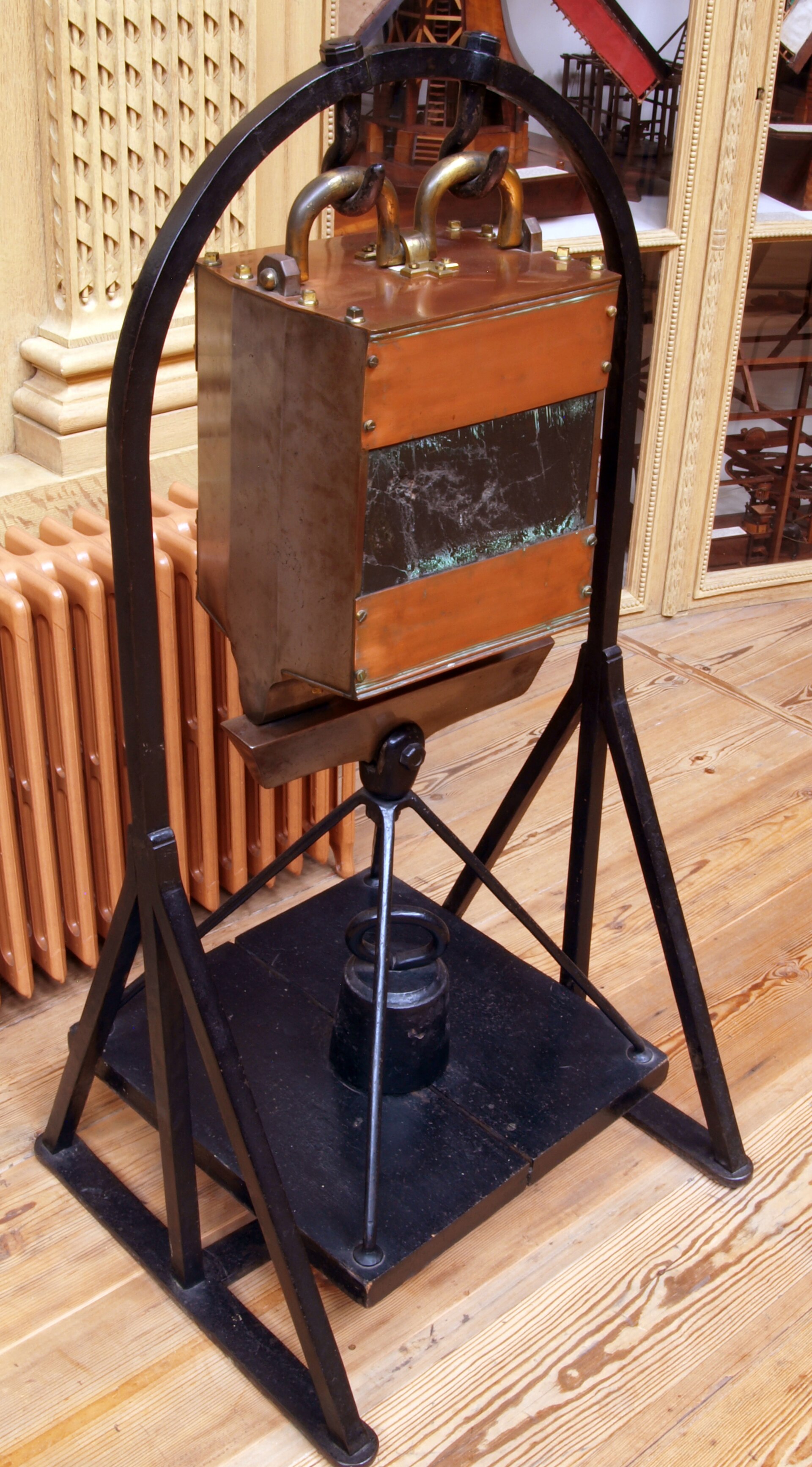
In 1825 William Sturgeon developed and exhibited the first practical electromagnet, strong enough to support 20 times its own weight.
In 1850 William Thomson, later Lord Kelvin, introduced the concepts of magnetic susceptibility and permeability. In 1852 Edward Sabine discovered a correlation between the sunspot cycle and magnetic activity on Earth. Maxwell's first essay on electricity, On Faraday's Lines of Force, related Faraday's conception of lines of force to the flow of a liquid and derived equations for electric and magnetic phenomena. That paper showed that a few relatively simple equations could express the behaviour of electric and magnetic fields and their interrelation.
Michael Faraday's careful copies of Humphry Davy's 1812 Royal Institution lectures became his passport to a scientific career.
Gilbert was the first to use the terms electric attraction, electric force and magnetic pole, and is often considered the father of electrical studies.
2. Ørsted, Ampère, and the Birth of Electromagnetism
In 1820, Hans Christian Ørsted discovered that a wire carrying an electric current produces a magnetic field. His result was reported to the Academy in Paris on 4 September 1820 by Arago, who repeated the experiment at an Academy meeting a week later.
André-Marie Ampère attempted a combined theory of electricity and magnetism after hearing of Ørsted's experimental results. Before the end of September 1820 he had discovered electrodynamical forces between linear wires, and that November he reported his law of addition of these forces to the Academy in Paris. He formulated a circuit force law and treated magnetism by postulating small closed circuits inside magnetised matter, and he showed that parallel wires carrying currents attract each other when the currents flow in the same direction and repel each other when they flow in opposite directions. In 1822 Ampère formulated his fundamental law for the relationship between a magnetic field and the current that is its source.
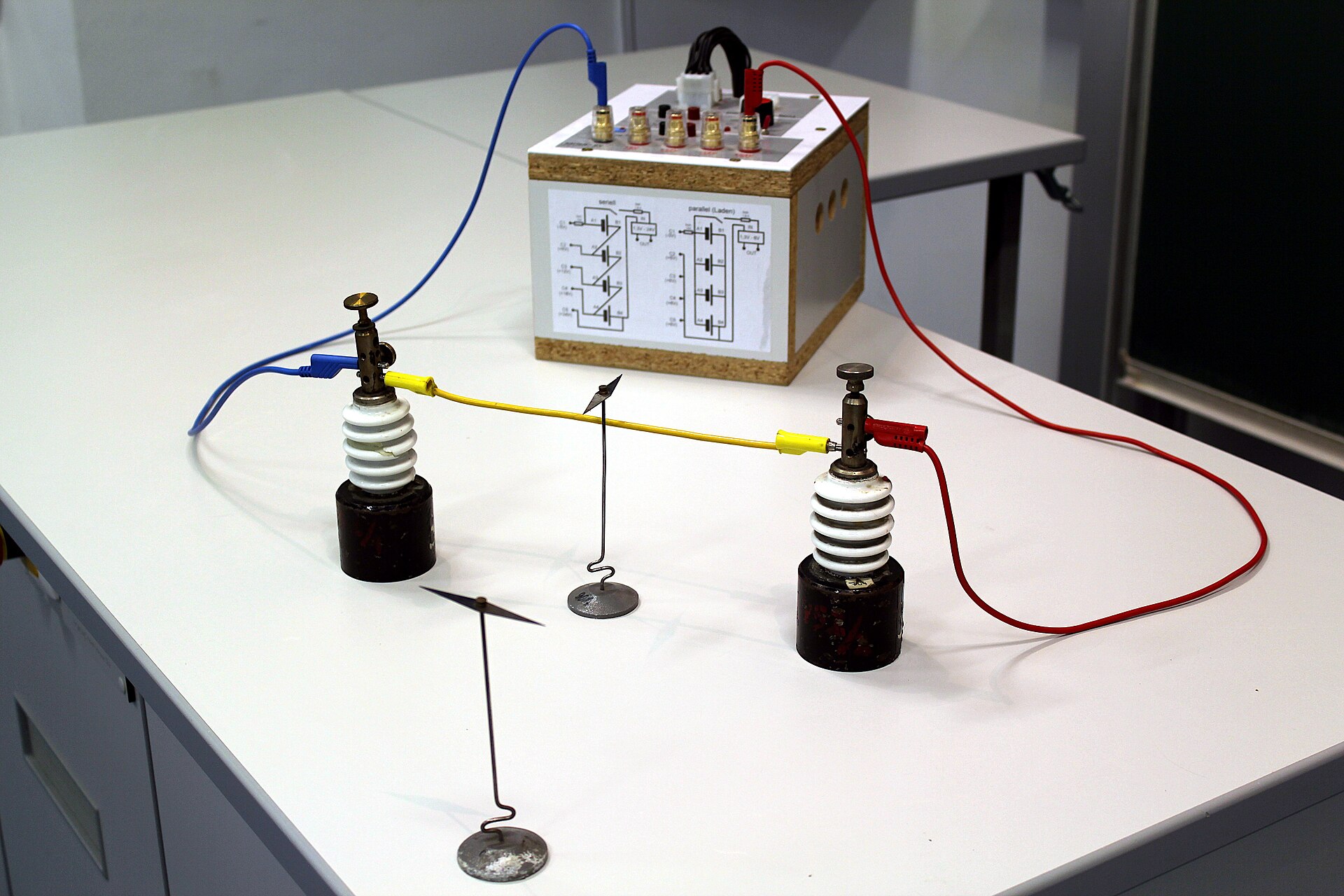
Biot and Savart formulated a law for calculating the magnetic field at a given distance from the electric current that is its source.
In 1821 Faraday discovered that electricity can produce rotary motion and built one of the first primitive electric motors.
Gauss built a new magnetic observatory, completed in 1833 and free of all magnetic metals, and his changes to Humboldt's procedures obtained more accurate results with less effort; in 1834 he established the Göttingen Magnetic Union, a network of magnetic observatories mostly located in Europe.
During one of his lectures, Ørsted noticed that the magnetic needle of a compass aligns itself perpendicularly to a current-carrying wire. A decade later, in 1831, Faraday made what is often called his most important discovery, electro-magnetic induction, by showing that a magnet could induce an electrical current in a wire; Faraday further observed that a current in one circuit can excite a current in a second circuit when the current in the first changes, the basis of Faraday's law of induction, enabling the conversion of mechanical energy into electrical energy and the construction of the first dynamo.
3. Faraday, Maxwell, and the Unification of Electricity and Magnetism
Joseph Henry discovered the principle of self-induction and, with his improved electromagnet design, lifted more than a ton of iron. In 1832 Paul Erman invented a simple magnetometer and used it in the first large-scale survey of the Earth's magnetic field. In 1833 Gauss and Weber built a telegraph line in Göttingen almost a mile long that used a galvanometer as a receiver. In 1856 Weber and Kohlrausch measured the ratio of electrostatic to electromagnetic units and found it analogous to the accepted speed of light.
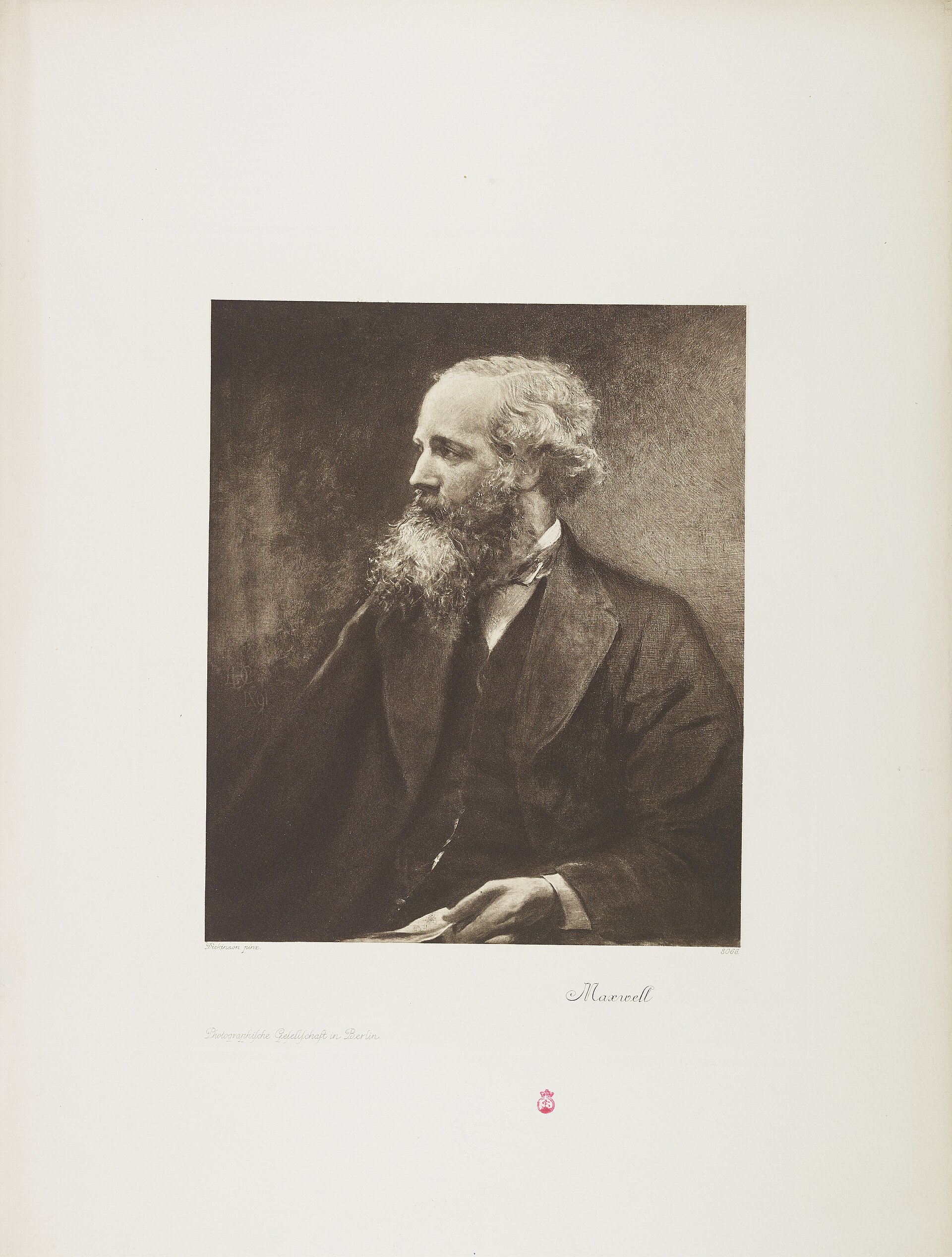
Around 1862 Maxwell calculated that an electromagnetic field propagates at approximately the speed of light and proposed that light is therefore an electromagnetic phenomenon. He concluded that light consists in transverse undulations of the same medium that is the cause of electric and magnetic phenomena. The complete set of Maxwell's equations appeared in 1864 in his paper On a Dynamical Theory of the Electromagnetic Field. In 1865 Maxwell showed that there is really one electromagnetic field and that electricity and magnetism are two aspects of the same phenomenon, with light itself waves of electromagnetic radiation moving through space.
4. Gauss and the Measurement of Terrestrial Magnetism
Carl Friedrich Gauss took up the study of terrestrial magnetism after Alexander von Humboldt sought his help in making a grid of magnetic observation points around the Earth. By 1840 Gauss had written three important papers on terrestrial magnetism, treating absolute measure for magnetic force and giving an empirical definition of the phenomenon. He proved that the Earth can have only two magnetic poles, and he determined the intensity of the horizontal component of the magnetic force together with the angle of inclination. In his calculations Gauss used the Laplace equation and specified a location for the magnetic South pole.
Wilhelm Weber arrived in Göttingen in 1831 as professor of physics; Gauss had known him since 1828 and supported his appointment. Earth's magnetic field strength was measured by Gauss in 1832 and has been repeatedly measured since, showing a relative decay of about 10% over the last 150 years.
5. Magnetic Fields and Units
The SI unit of flux density is the tesla, and the gauss may also be used, with 1 gauss equal to 100 microtesla. The magnetic fields generated by currents and calculated from Ampere's Law or the Biot-Savart Law are characterized by the magnetic field B measured in tesla. B is sometimes called the magnetic flux density or the magnetic induction, and the quantity M in these relationships is called the magnetization of the material. B and H are related by B = mu H, where mu is the product of the relative permeability and the magnetic permeability of space.
| Source | Field strength |
|---|---|
| Earth's magnetic field | weak; aligns compasses15Magnetic Field Definition · National High Magnetic Field Laboratory (NSF) ↗ |
| Refrigerator magnet | about 10,000 microtesla (100 gauss)13Earth's magnetic field · Wikipedia ↗ |
| Strongest permanent magnet | about 8,000 gauss16Permanent Magnet Definition · National High Magnetic Field Laboratory (NSF) ↗ |
| Strongest magnets at the MagLab | 450,000 gauss, almost 50 times the permanent-magnet limit16 |
| LHC dipole field | 8.3 tesla, more than 100,000 times the Earth's magnetic field17Pulling together: Superconducting electromagnets · CERN ↗ |
6. Ferromagnetism and Permanent Magnets
Ferromagnetic materials respond strongly to magnets and can themselves be magnetized, whether induced to become magnetic or made into permanent magnets. Ferromagnetism is associated with iron, cobalt, nickel and some alloys or compounds containing them, and also occurs in gadolinium and a few other rare-earth elements. Such materials are magnetized easily, and in strong magnetic fields their magnetization approaches a definite limit called saturation. When the magnetizing field is applied and then removed, the magnetization does not return to its original value, a phenomenon called hysteresis. The magnetism itself is caused by the alignment patterns of the constituent atoms, which act as elementary electromagnets.
The magnetic fields of permanent magnets arise from nuclear spins, electron spins and the orbits of the electrons themselves. In many materials these fields point in random directions and cancel each other out, so there is no permanent magnetism. In ferromagnets such as iron, cobalt and nickel, by contrast, the spins and orbits of the electrons line up so that the material becomes magnetic. Within a ferromagnetic material the regions called domains act like small bar magnets, and in response to an external field the domains may grow to millimeter size. Alloys of the rare-earth elements are used as strong permanent magnets, a popular one being neodymium.
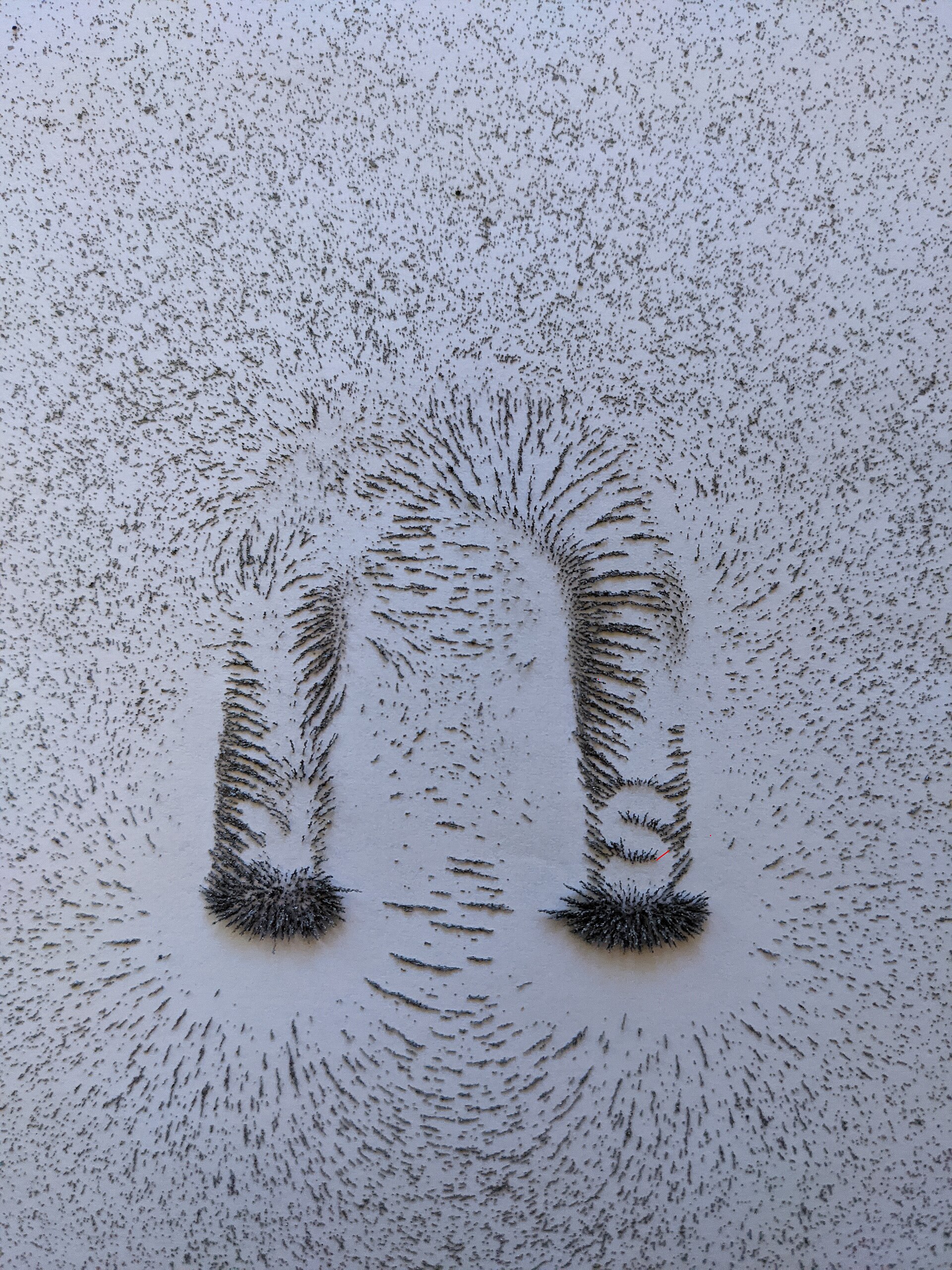
For ferromagnetic materials there is a well-defined temperature, the Curie temperature, above which thermal motion disrupts the domains and the material cannot be magnetized. The Curie temperature of iron is 1043 K (770 degrees C), well above room temperature.
7. Electromagnets and Superconducting Magnets
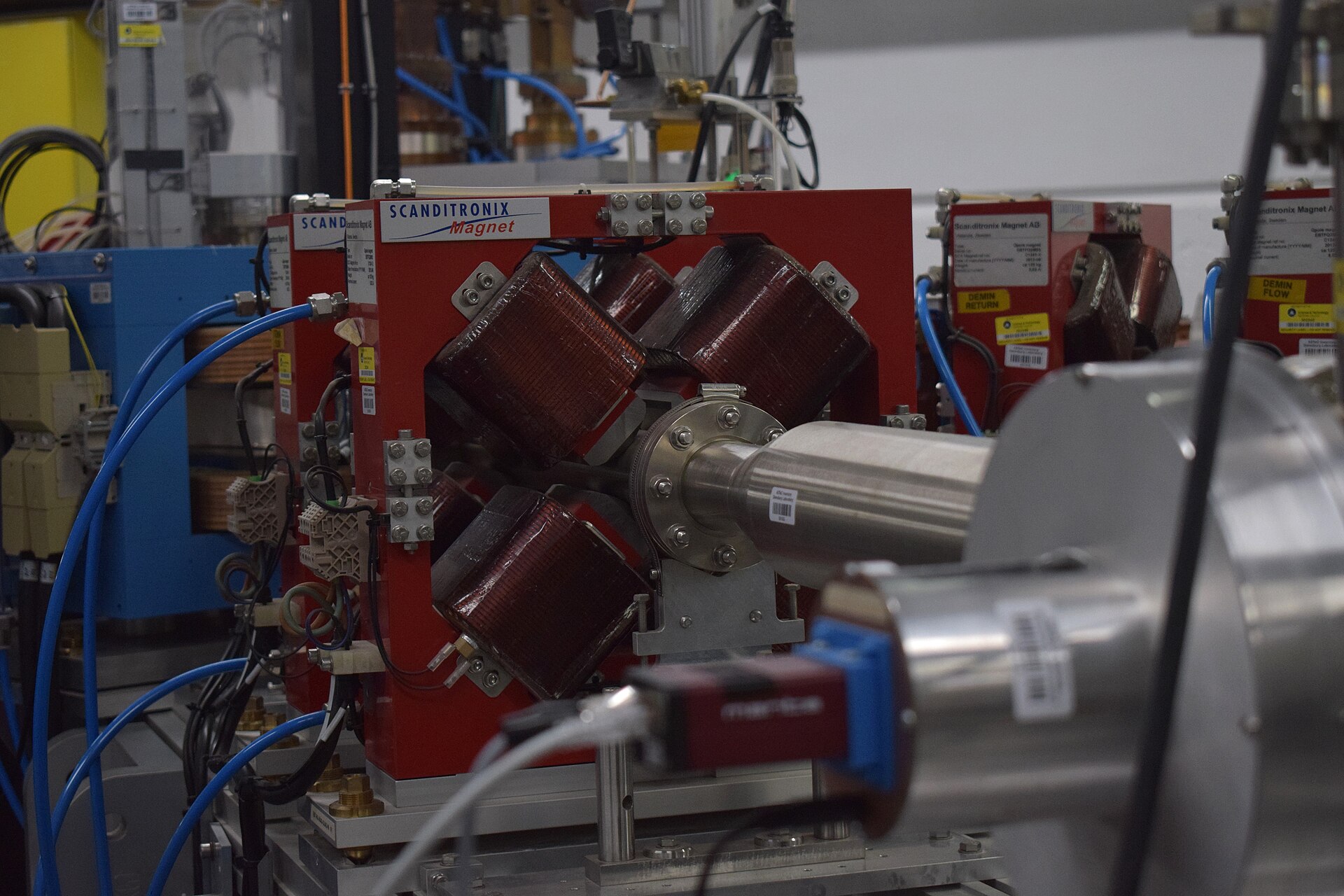
Electromagnetism is the use of electric current to make magnets; these temporarily induced magnets, called electromagnets, are used from scrap-yard cranes to medical imaging machines.
The LHC electromagnets use a current of 11,080 amperes, and a superconducting coil lets the high currents flow without energy loss to electrical resistance. The LHC has 1232 main dipoles, each 15 metres long and weighing 35 tonnes. Without superconducting magnets the 27 km accelerator would have to be 120 kilometres long for the same energy.
8. Earth's Magnetosphere and Geomagnetic Phenomena
Earth is surrounded by a giant bubble of magnetism called the magnetosphere, which deflects most solar material sweeping toward the planet at 1 million miles per hour or more. A magnetosphere is the region around a planet dominated by the planet's magnetic field, and Earth has the strongest magnetosphere of all the rocky planets. It is a vast, comet-shaped bubble that shields the planet from solar and cosmic particle radiation and from erosion of the atmosphere by the solar wind, the constant flow of charged particles streaming off the Sun. Without the magnetosphere, solar particles could strip the Earth of protective layers that shield the planet from the Sun's ultraviolet radiation. Mars lost its magnetosphere about 4.2 billion years ago, and the solar wind is thought to have stripped away most of its atmosphere. Earth's magnetosphere is generated by the convective motion of charged, molten iron far below the surface in the planet's outer core.
The solar wind compresses the dayside of the magnetosphere to about six to ten Earth radii, while the nightside magnetotail stretches hundreds of Earth radii, far past the Moon's orbit. Earth's magnetic intensity tends to decrease from the poles toward the equator, with a minimum in the South Atlantic Anomaly and maxima over northern Canada, Siberia and the coast of Antarctica south of Australia. The past magnetic field is recorded mostly by strongly magnetic minerals, particularly iron oxides such as magnetite, that can carry a permanent magnetic moment. The most recent full reversal of Earth's magnetic field, the Brunhes-Matuyama reversal, occurred about 780,000 years ago.
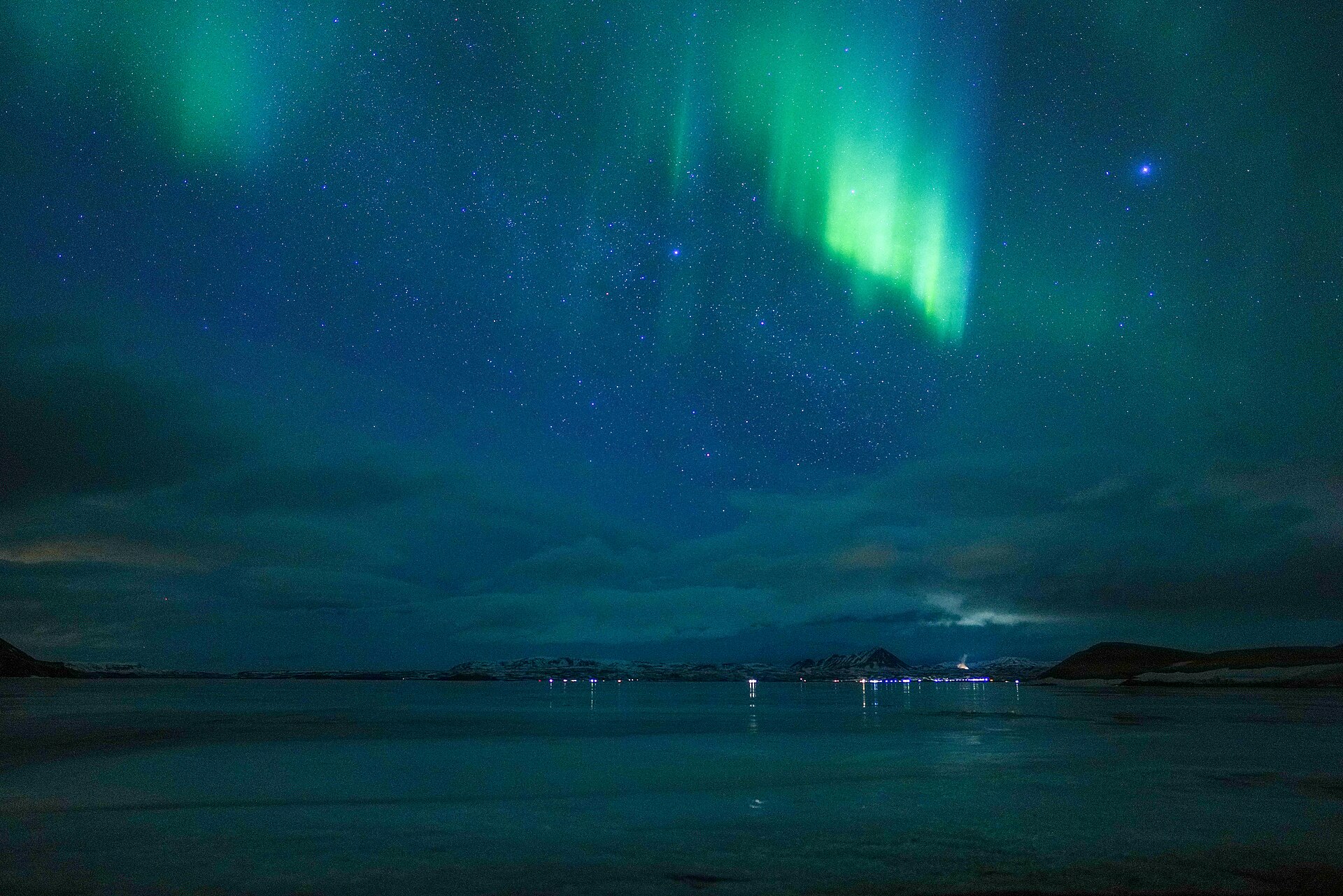
Auroras light up when electrons from the magnetosphere collide with oxygen and nitrogen in the upper atmosphere, exciting the atoms and molecules so that they release energy as light. The aurora typically forms 80 to 500 km above Earth's surface, guided by the magnetic field into two ovals approximately centered at the magnetic poles. During major geomagnetic storms the auroral ovals expand away from the poles and the aurora can be seen over most of the United States.
The USGS Geomagnetism Program monitors the Earth's magnetic field with ground-based observatories and provides continuous records of magnetic field variations. Magnetic storms can generate electric fields in the Earth that can interfere with electric power transmission grids. USGS research into the nature of geomagnetic variations serves scientific understanding and hazard mitigation.
9. Applications: From Compasses to Magnetic Resonance Imaging and Data Storage
Paul Lauterbur discovered how to create a two-dimensional picture by introducing gradients in the magnetic field, making it possible to image structures that other methods could not visualize. In 1973 Lauterbur described how adding gradient magnets to the main magnet allowed a cross section of tubes of ordinary water surrounded by heavy water to be visualized. Peter Mansfield used gradients to sharpen differences in the resonance and showed how extremely rapid imaging could be achieved by fast gradient variations, a technique that became useful in clinical practice a decade later.
In 1988 Albert Fert and Peter Grünberg independently discovered giant magnetoresistance, in which very weak magnetic changes give rise to major differences in electrical resistance. The first read-out head based on the GMR effect was launched in 1997 and soon became the standard technology for reading data on hard disks. A hard disk stores information as microscopically small magnetized areas, and the information is retrieved by a read-out head that scans the disk and registers the magnetic changes.
10. Timeline: from the lodestone to the magnetic age
- c. 600 BCEThales and the lodestoneGreek thinkers led by Thales of Miletus debate why lodestone attracts iron; Thales is recorded as saying the magnet has a soul because it moves iron.
- 1088Navigational compass in ChinaThe first compasses used for navigation appear in China during the Song dynasty, described by Shen Kuo; iron needles are magnetized by striking them with a lodestone.
- 1600Gilbert's De MagneteAfter nearly two decades of experimentation William Gilbert completes De Magnete, describing the Earth as a magnetic entity and coining the term electric from the Greek word for amber.
- 1699Halley's declination surveyEdmond Halley carries out the first magnetic declination survey and publishes a chart of his findings two years later.
- 1820Ørsted links current and magnetismHans Christian Ørsted notices that a compass needle aligns itself perpendicularly to a current-carrying wire, setting off a wave of experiments across Europe.
- 1821Faraday's first electric motorFaraday discovers that electricity can produce rotary motion and builds one of the first primitive electric motors.
- 1825First practical electromagnetWilliam Sturgeon develops and exhibits the first practical electromagnet, strong enough to support 20 times its own weight.
- 1831Faraday's law of inductionFaraday observes that a changing current in one circuit can excite a current in a second circuit, the basis of the electric generator.
- 1832Gauss measures the Earth's fieldGauss publishes Intensitas vis magneticae terrestris, placing the measurement of terrestrial magnetism on an absolute basis.
- 1834Göttingen Magnetic UnionGauss establishes a network of magnetic observatories, mostly in Europe, to track the Earth's magnetic field.
- 1850Susceptibility and permeabilityWilliam Thomson, later Lord Kelvin, introduces the concepts of magnetic susceptibility and permeability.
- 1864Maxwell's equationsThe complete set of Maxwell's equations appears in his paper On a Dynamical Theory of the Electromagnetic Field.
- 1973MRI demonstratedLauterbur describes how gradient magnets added to the main magnet make it possible to visualize a cross section of tubes of ordinary water surrounded by heavy water, a milestone in magnetic resonance imaging.
- 1988Giant magnetoresistanceAlbert Fert and Peter Grünberg independently discover giant magnetoresistance, the effect behind sensitive read-out heads for hard disks.
References (25)
- 1Electromagnetism — Engineering and Technology History Wiki (IEEE) WebView source
- 2Magnetism in the Greco-Roman World — Engineering and Technology History Wiki (IEEE) WebView source
- 3Compass — Wikipedia WebView source
- 4William Gilbert — Encyclopaedia Britannica WebView source
- 5Electromagnetism History: 1600 - 1699 — National High Magnetic Field Laboratory (NSF) 1600 WebView source
- 6Electromagnetism History: 1820 - 1829 — National High Magnetic Field Laboratory (NSF) 1820 WebView source
- 7Electromagnetism History: 1850 - 1869 — National High Magnetic Field Laboratory (NSF) 1850 WebView source
- 8James Clerk Maxwell (1831 - 1879) — MacTutor History of Mathematics Archive, University of St Andrews 1831 WebView source
- 9Michael Faraday (1791 - 1867) — MacTutor History of Mathematics Archive, University of St Andrews 1791 WebView source
- 10Andre-Marie Ampere (1775 - 1836) — MacTutor History of Mathematics Archive, University of St Andrews 1775 WebView source
- 11Johann Carl Friedrich Gauss — MacTutor History of Mathematics Archive, University of St Andrews WebView source
- 12Electromagnetism History: 1830 - 1839 — National High Magnetic Field Laboratory (NSF) 1830 WebView source
- 13Earth's magnetic field — Wikipedia Web↩View source
- 14Magnetic Field Strength H — HyperPhysics, Georgia State University WebView source
- 15Magnetic Field Definition — National High Magnetic Field Laboratory (NSF) Web↩View source
- 16Permanent Magnet Definition — National High Magnetic Field Laboratory (NSF) Web↩View source
- 17Pulling together: Superconducting electromagnets — CERN Web↩View source
- 1822.2 Ferromagnets and Electromagnets — OpenStax College Physics WebView source
- 19Ferromagnetism | Definition, Causes, Examples, Uses, & Facts — Encyclopaedia Britannica WebView source
- 20Earth's Magnetosphere — NASA Science WebView source
- 21Magnetospheres — NASA Science (Heliophysics) WebView source
- 22Aurora — NOAA Space Weather Prediction Center WebView source
- 23Geomagnetism Program — U.S. Geological Survey WebView source
- 24The Nobel Prize in Physiology or Medicine 2003 (press release) — Nobel Prize Outreach 2003 WebView source
- 25The 2007 Nobel Prize in Physics (press release) — Nobel Prize Outreach 2007 WebView source