Speed of Light
The constant c — its exact value, the measurements from Roemer to Michelson, and its role as the speed limit of the universe.
The speed of light in vacuum is the universal constant c, fixed by international agreement at exactly 299,792,458 metres per second since 1983, when the metre was redefined so that light in vacuum travels one metre in 1/299,792,458 of a second. Ole Roemer first showed in 1676 that light has a finite speed by timing eclipses of Jupiter's moon Io, and terrestrial measurements followed with Fizeau's toothed wheel in 1849, Foucault's rotating mirrors and Michelson's long-baseline experiments. In Einstein's special relativity the speed of light is the same for every inertial observer and acts as the absolute speed limit of the universe, and it underlies GPS timing, radar and fiber-optic communication.
Definition and Role in the SI
In 1983 the 17th CGPM defined the metre as the length of the path travelled by light in vacuum during a time interval of 1/299 792 458 of a second. This step abrogated the metre definition that had been in force since 1960 and based on the krypton-86 transition. The 1960 definition had used the krypton-86 isotope, chosen over mercury-198 partly because it was more widely available in Europe and gave higher precision in the laboratory at the time.
The 1983 metre definition was itself abrogated in 2018 by the 26th CGPM, and the change became effective in 2019 under the revised SI. The current SI metre is defined by taking the fixed numerical value of the speed of light in vacuum c to be 299 792 458, with the second itself defined by the caesium frequency. In the revised SI the constant c helps to define the metre and the kilogram.
The CODATA recommended value of the speed of light in vacuum is 299 792 458 metres per second, and its standard uncertainty is listed as exact.
In special relativity, the speed of light in vacuum is an absolute upper speed limit: nothing — matter, information or energy — can travel faster than c, and no object can directly overtake or catch up with light. Einstein's 1905 paper rests on two principles: the principle of relativity, which states that the laws of physics are the same and can be stated in their simplest form in all inertial frames of reference, and the principle of the constancy of the velocity of light. Consequently, every inertial observer who measures the speed of light in vacuum obtains the same constant value, c = 299,792,458 metres per second.
The 1983 international agreement fixed the metre as the distance travelled by light in vacuum in 1/299,792,458 of a second, which implies the exact relation c = 299,792,458 m/s (299,792.458 km/s).
1. Historical Measurements
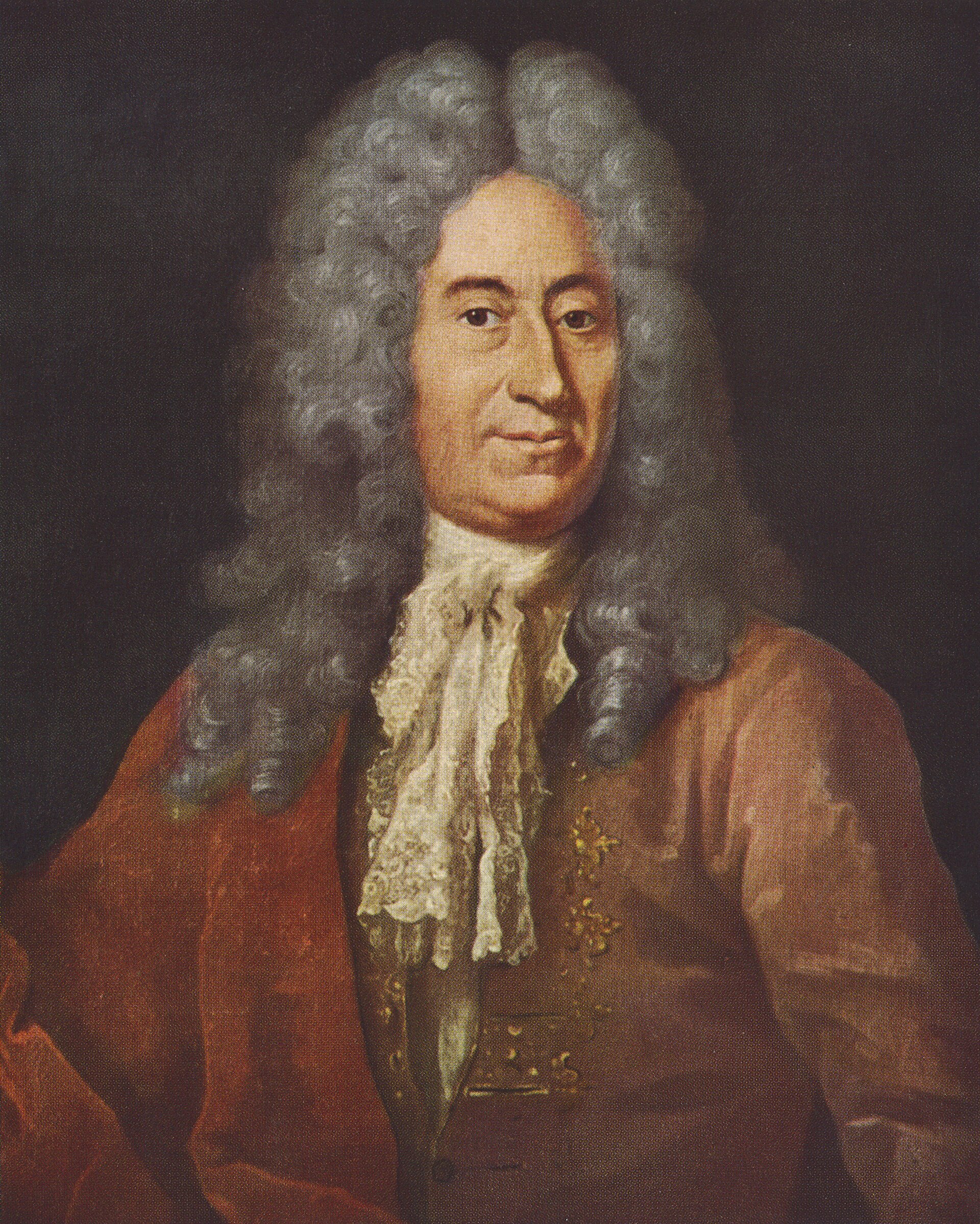
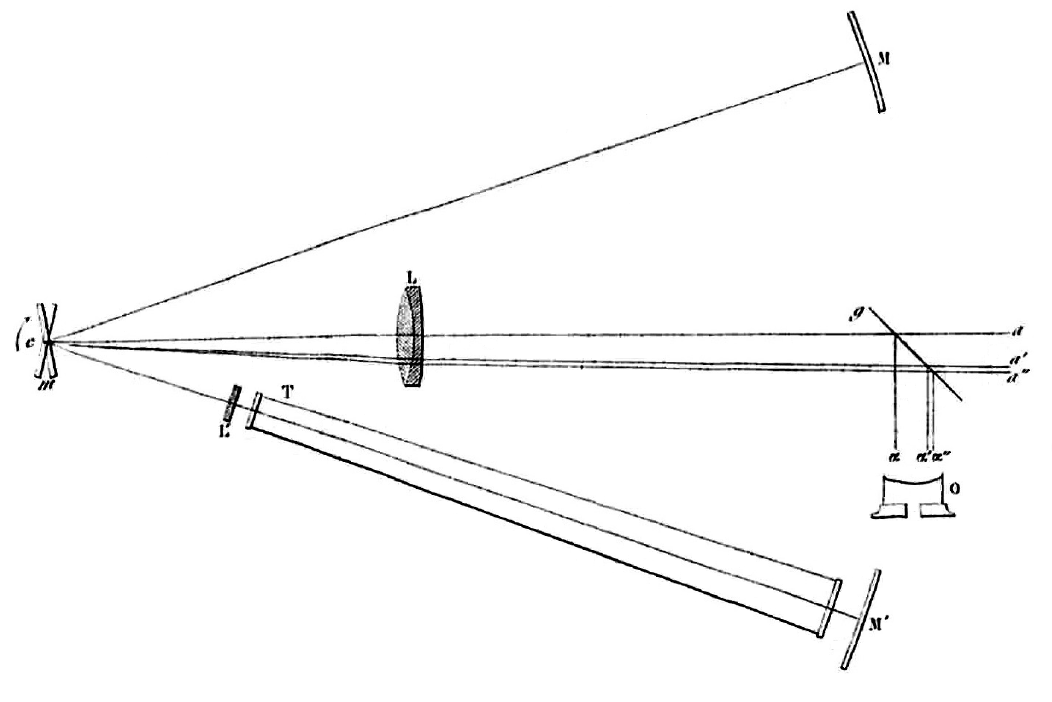
In 1728 James Bradley measured the aberration angle for starlight and, knowing the speed of the Earth around the Sun, found a value for the speed of light of 301,000 km/s. In 1849 Fizeau made the first terrestrial measurement of the speed of light, using a rotating toothed wheel to chop a light beam into pulses projected along a round trip from Suresnes to Montmartre, almost 9 km away.Foucault's rotating mirror produced a result of 298,000 km/s in 1862.
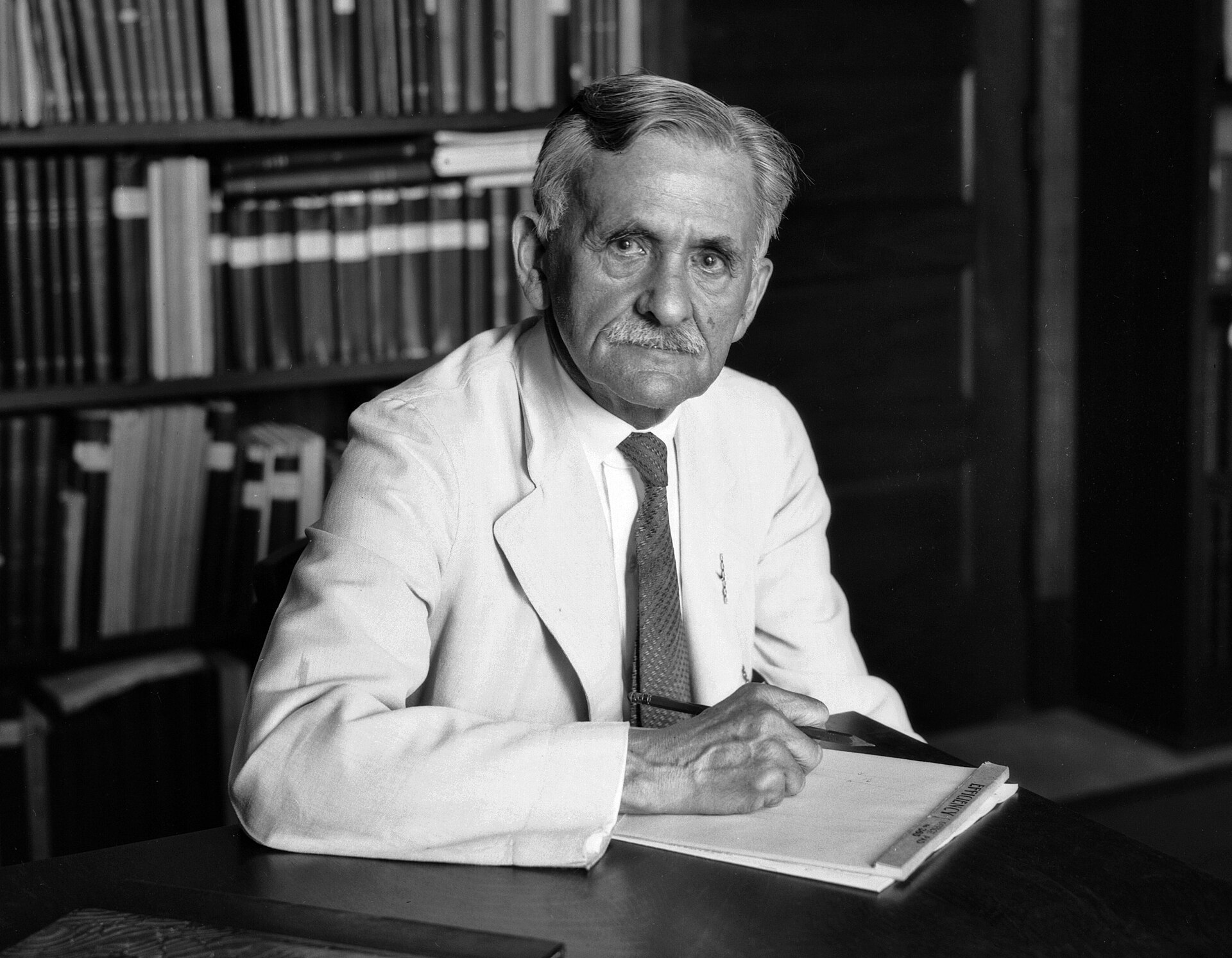
Michelson spent forty years investigating the speed of light, and the November 1926 result came from experiments with light beams shot from Mount Wilson to Mount San Antonio, a distance of 44 miles and back. Mount Wilson served as the launch site for a beam of light that crossed the San Gabriels, bounced from a return mirror on a ridge of Mount San Antonio, and re-traversed the 22 miles between the two mountains. The experiment, devised and carried out during 1924-26 by Albert A. Michelson, provided the first modern and truly accurate measurement of the speed of light, a fundamental physical constant. Five years later Michelson tried another measurement in an evacuated pipe a mile long, and died as he was writing up his results.
NIST physicists led by Ken Evenson, with future Nobel laureate Jan Hall and Don Jennings, measured the speed of light at 299,792,456. 1 metres per second — a hundredfold improvement in the accuracy of the accepted value.
-
1728James BradleyMeasured the aberration angle for starlight and found a value of 301,000 km/s 14July 1849: Fizeau Publishes Results of Speed of Light Experiment · American Physical Society (APS News) ↗.
-
1862Léon FoucaultUsed a rotating mirror to obtain a result of 298,000 km/s 9How is the speed of light measured? · DESY — Deutsches Elektronen-Synchrotron (Physics FAQ) ↗.
The 15th CGPM recommended in 1975 the value c = 299 792 458 m/s, which the 17th CGPM noted in 1983 would take on an exact value under the new definition of the metre.
2. Early Ideas and Roemer's Discovery
Before the seventeenth century, light was generally thought to be transmitted instantaneously, an idea supported by the absence of any noticeable lag in the Earth's shadow during a lunar eclipse. Most scientists of the period, including Johannes Kepler and Rene Descartes, considered the speed of light to be infinite. Galileo, attempting to time the interval between flashes of lamps, could conclude only that light was extraordinarily rapid and at least ten times faster than sound.
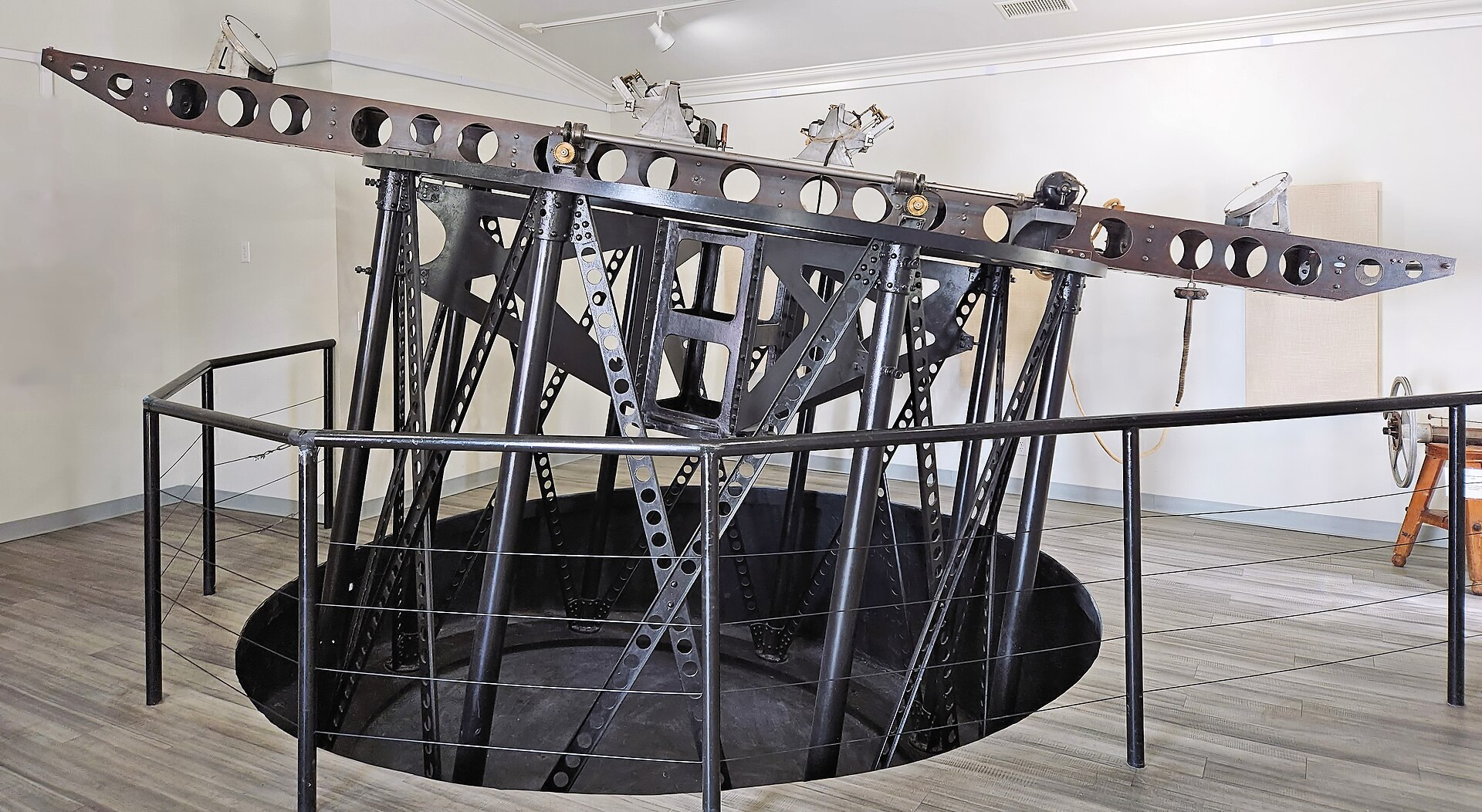
The first serious measurement of the speed of light came in 1676, when the Danish astronomer Ole Roemer observed the moons of Jupiter and noticed that their eclipses seemed to occur at different times — late when Earth was far away and early when Earth was closer to Jupiter. Roemer was not looking for the speed of light when he found it: he was compiling extensive observations of the orbit of Io, the innermost of the four big satellites of Jupiter discovered by Galileo. He noticed that the time interval between successive eclipses of Io became steadily shorter as the Earth moved toward Jupiter and steadily longer as the Earth moved away.
Roemer's 1676 measurement was the first successful measurement of c, made after he noticed differences of up to 1000 seconds between the predicted and observed times of eclipses of Jupiter's moons. He obtained a value equivalent to 214,000 km/s, very approximate because planetary distances were not accurately known at that time. Roemer measured the delay of the eclipses and, knowing approximately the diameter of the Earth's orbit, made the first good estimate of the speed of light.
By 1970 the speed of light was known to within an error of plus or minus 1 m/s, after which it became more practical to fix the value of c in the definition of the metre and measure distances with atomic clocks and lasers instead.
3. Practical Applications
Each GPS satellite carries multiple atomic clocks whose very precise time data let receivers synchronize to within 100 billionths of a second. The system must account for the constancy of the speed of light, the equivalence principle, the Sagnac effect, time dilation, gravitational frequency shifts and relativity of synchronization. Because the signal travels at the speed of light, timing errors of one nanosecond lead to positioning errors of the order of 30 cm. The benefits of this timing extend beyond navigation, including precise synchronization of communications systems, power grids and financial networks, and traceable time tags for financial transactions and billing.
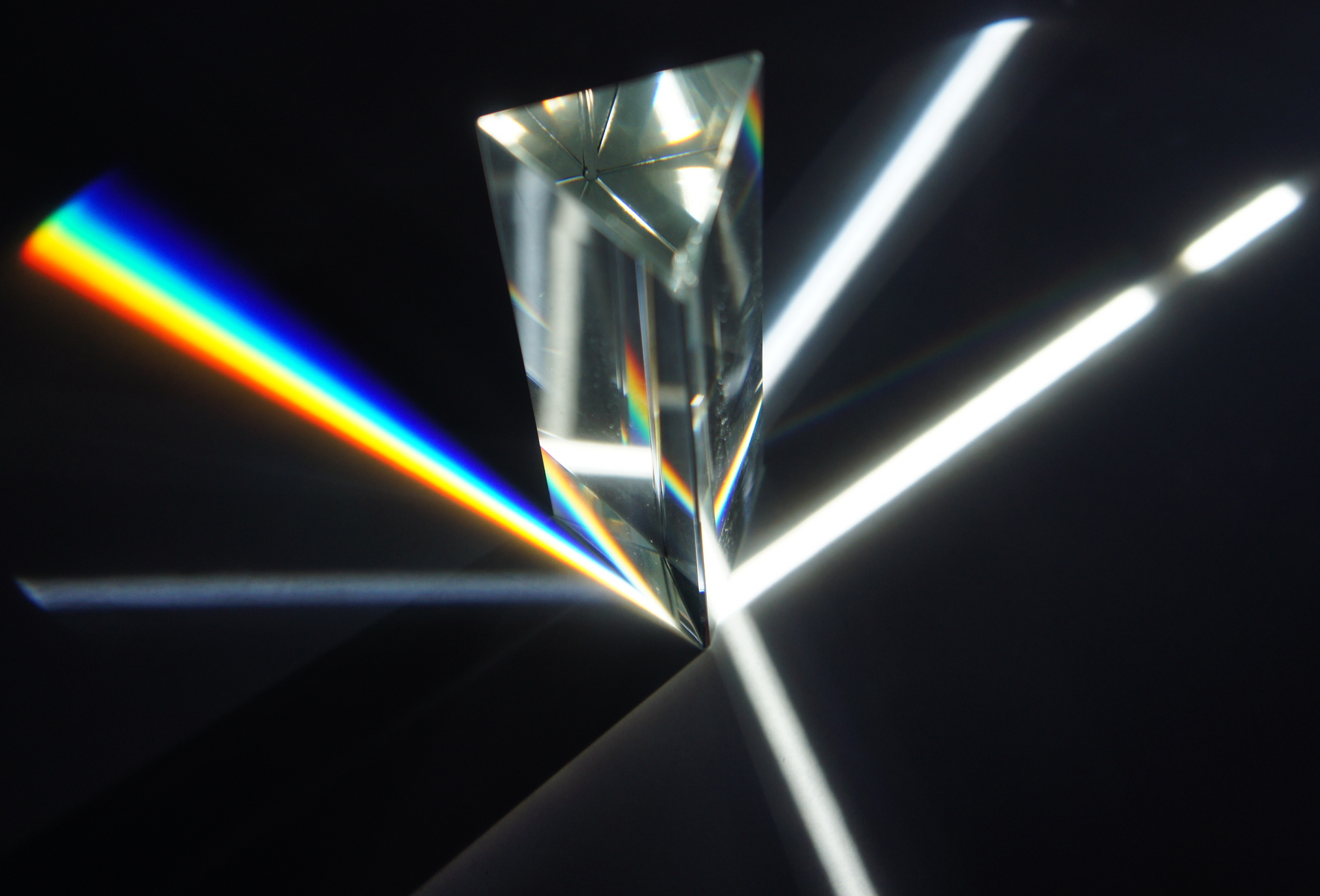
In the Kansas State University capstone project the light is sent through roughly 2 km of single-mode telecommunication-grade optical fiber and detected by a photodiode. The time difference between the two photodiode pulses was found by LabVIEW to be about 10.16 microseconds at the maximum sampling rate of 1.25 MS/s. The speed of light in the optical fiber was calculated to be about 2.054 x 10^8 metres per second, corresponding to a refractive index of about 1.4606 which is typical for the fiber.
Radar pulses are transmitted away from the radar at the speed of light, but they are very short in duration. Each transmitted pulse lasts only 1.57 millionths of a second and is repeated around 1300 times per second, while the radar listens for returns in between.
4. Light-Year and Astronomical Distances
Light-time makes these vast distances legible: the Sun's light takes about 8.3 minutes to reach us. The next closest star to us is about 4.3 light-years away, so seeing it today means seeing it as it was 4.3 years ago. The nearest large galaxy, Andromeda, lies 2.5 million light-years away. On the scale of the Galaxy itself, the Milky Way is about 100,000 light-years across and probably contains 100 to 400 billion stars.
Within the solar system, the light time for 1 au is 499.004783836 s. In the IAU system the parsec is defined in terms of the astronomical unit of length, the appropriate unit for studies of the structure of the Galaxy. The IAU unit recommendations describe the light-year as appropriate to popular expositions on astronomy and sometimes used in scientific papers as an indicator of distance.
NASA defines a light-year as the distance light travels in one year: light zips through interstellar space at 186,000 miles (300,000 kilometers) per second and 5. 88 trillion miles (9. 46 trillion kilometers) per year. NASA Space Place gives the same unit as about 6 trillion miles (9 trillion km).
5. Timeline: from Roemer's measurement to the SI definition
- 1676Roemer's first measurement of the speed of lightWorking at the Paris Observatory, the Danish astronomer Ole Roemer became the first person to measure the speed of light, by timing eclipses of Jupiter's moon Io.
- 1728Bradley's stellar-aberration estimateJames Bradley used stellar aberration to estimate the speed of light at 301,000 kilometres per second.
- 1849Fizeau's toothed-wheel measurementFizeau made the first terrestrial measurement of the speed of light, projecting pulses along a round trip from Suresnes to Montmartre almost 9 km away.
- 1850Light travels slower in waterFoucault demonstrated that light travels slower in water than in air, confirmed seven weeks later by Fizeau — evidence supporting the wave theory of light.
- 1862Foucault's rotating-mirror resultLeon Foucault's rotating-mirror measurements gave 298,000 km/s, far more accurate than Fizeau's toothed wheel.
- 30 June 1905Einstein's special-relativity paperEinstein dated On the Electrodynamics of Moving Bodies, built on the principle of relativity and the principle of the constancy of the velocity of light.
- 1924-26Michelson's Mount Wilson experimentFrom Mount Wilson, Michelson's rotating-mirror experiment sent light 22 miles to Mount San Antonio and back, providing the first modern and truly accurate measurement of c.
- 10 November 1926Michelson announces 299,796 km/sThe Jewish Daily Bulletin reported Michelson's announced result of 299,796 kilometres per second from five series of observations with revolving mirrors.
- 1958Froome's microwave measurementK. D. Froome obtained 299,792.5 km/s using a microwave interferometer and a Kerr cell shutter.
- 1960Metre redefined via krypton-86The 11th CGPM defined the metre using the krypton-86 transition, chosen over mercury-198 for its availability and higher precision.
- 1975CGPM recommends c = 299 792 458 m/sThe 15th CGPM recommended a speed of light value of 299 792 458 m/s, which the 1983 metre definition would make exact.
- 1983The metre is defined from the speed of lightThe 17th CGPM defined the metre as the path travelled by light in vacuum in 1/299 792 458 of a second, making c exact and abrogating the krypton-86 definition.
- 2016Hubble sights GN-z11 at 13.4 billion light-yearsThe farthest galaxy yet seen, GN-z11, lies 13.4 billion light-years away, so we see it as it was 13.4 billion years ago.
- 2019Revised SI keeps c exactThe 1983 definition text was abrogated in 2018 by the 26th CGPM, effective in 2019, with the fixed numerical value of c retained in the revised SI.
References (23)
- 1Resolution 1 of the 17th CGPM (1983): Definition of the metre — Bureau International des Poids et Mesures (BIPM) 1983 WebView source
- 2Meter | NIST — National Institute of Standards and Technology (NIST) WebView source
- 3Metre — BIPM (SI base unit) — Bureau International des Poids et Mesures (BIPM) WebView source
- 4Meet the Constants | NIST — National Institute of Standards and Technology (NIST) WebView source
- 5CODATA Value: speed of light in vacuum — NIST Physical Measurement Laboratory WebView source
- 6Special relativity / Elementary Tour part 4: The speed of light — Einstein Online — Max Planck Institute for Gravitational Physics (Albert Einstein Institute) WebView source
- 7On the Electrodynamics of Moving Bodies (Einstein, 1905) — Fourmilab (English translation of A. Einstein, Annalen der Physik, 1905) 1905 WebView source
- 828.1 Einstein's Postulates — College Physics — OpenStax (Rice University) WebView source
- 9How is the speed of light measured? — DESY — Deutsches Elektronen-Synchrotron (Physics FAQ) Web↩View source
- 10Fizeau, Armand Hippolyte Louis (Biographical Encyclopedia of Astronomers) — University of St Andrews (MacTutor) / Springer WebView source
- 11Michelson's Announcement on Speed of Light Startles Scientists — Jewish Telegraphic Agency (JTA archive, 1926) WebView source
- 12VT Michelson Site — Mount Wilson Observatory — Mount Wilson Institute WebView source
- 13Albert Abraham Michelson 1852-1931 — American Institute of Physics (AIP History Programs) 1852 WebView source
- 14July 1849: Fizeau Publishes Results of Speed of Light Experiment — American Physical Society (APS News) 1849 Web↩View source
- 15Ole Roemer Profile: First to Measure the Speed of Light — American Museum of Natural History WebView source
- 16GPS and Telling Time — GPS.gov — U.S. National Coordination Office for Space-Based PNT WebView source
- 17Relativity in the Global Positioning System (Living Reviews in Relativity) — Springer / Living Reviews in Relativity (Neil Ashby) 2003 JournalView source
- 18Measuring the Speed of Light in an Optical Fiber (capstone poster) — Kansas State University (Department of Physics) 2009 WebView source
- 19How radar works — NOAA National Weather Service — JetStream WebView source
- 20What Is a Light-Year? — NASA Space Place WebView source
- 21What is a light-year? — NASA Science (Exoplanet Exploration Program) WebView source
- 22Astrodynamic Parameters — NASA Jet Propulsion Laboratory — Solar System Dynamics WebView source
- 23Recommendations concerning Units (SI Units) — International Astronomical Union (IAU) — ESO Archive WebView source
 Leonardo da Vinci
 Photosynthesis
 Cleopatra