Clock
The story of the clock: shadow and water timekeeping in the ancient world, the medieval mechanical clock and its escapements, the pendulum and the marine chronometer, and the quartz and atomic clocks that now define the second.
A clock is a device that links a regular movement in equal intervals of time to a counting mechanism that records the number of movements. Timekeeping begins with the gnomon, sundials and water clocks of Egypt, Greece and Rome; the mechanical clock appeared in late 13th-century Europe with the verge escapement, and Huygens' pendulum clock of 1656 made it accurate. The search for longitude at sea produced Harrison's marine chronometer, and timekeeping then passed to quartz oscillators, cesium atomic clocks and Coordinated Universal Time, with the SI second now defined by the cesium-133 transition at 9,192,631,770 hertz.
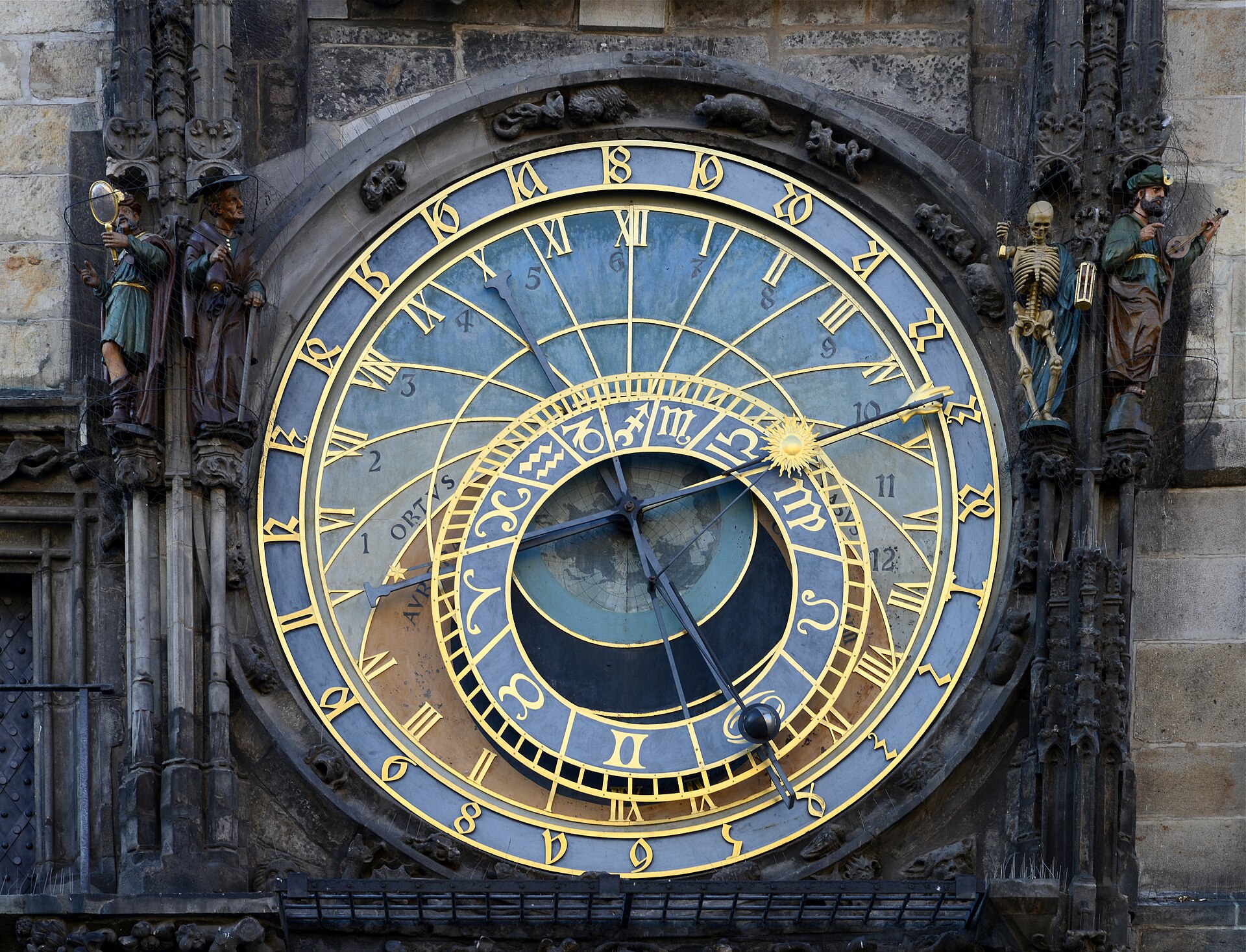
In this article
- 1Overview
- 2Earliest Timekeeping: Shadow and Water
- 3Mechanical Clocks and the Escapement
- 4The Pendulum and Precision Timekeeping
- 5Longitude, Harrison and the Chronometer
- 6Standard Time and the Prime Meridian
- 7Atomic Time and the Modern Second
- 8Key Dates
- 9Frequently Asked Questions
- 10Timeline: from shadow and water to atomic time
- 11Knowledge graph
Overview
A clock is a mechanical or electrical device, other than a watch, for displaying time. It is a machine in which a device that performs regular movements in equal intervals of time is linked to a counting mechanism that records the number of movements.
1. Earliest Timekeeping: Shadow and Water
The first device for indicating the time of day was probably the gnomon, dating from about 3500 BCE, a vertical stick or pillar whose shadow length gave an indication of the time of day. The oldest known sundial is a simple L-shaped piece of stone from the reign of Thutmosis III, who ruled Egypt around 1500 BCE; at dawn it would have been aligned towards the rising Sun so that a bar on the short arm cast a shadow on the first hour line, while at noon the sundial was reversed so the same six hour lines counted out the afternoon hours. Obelisks, the slender tapering four-sided monuments built as early as 3500 BCE, cast moving shadows that acted as a kind of sundial, letting people partition the day into morning and afternoon and showing the year's longest and shortest days at noon. Another Egyptian shadow clock or sundial, possibly the first portable timepiece, came into use around 1500 BCE and divided a sunlit day into 10 parts plus two twilight hours in the morning and evening.
The water clock, or klepsydra, probably developed because the sundial could not work when there was no sun and could not maintain a constant division of time. The first and simplest water clocks were small bowls with a small opening, set in a basin of water so that they sank as water leaked in, and an attendant announced when each interval had passed and reset the bowl to sink again. This kind of clock was used above all for timing speeches in law courts, most notably in Athens, where judicial water clocks were in common usage around 430 B.C.. Vitruvius attributes more elaborate water clocks to Ctesibius of Alexandria, who used an aperture made of gold or a perforated gem to admit water evenly; the water raised an inverted bowl, or phellos, whose bar of teeth engaged a revolving drum. Ctesibius made a perforation in a piece of gold or a smooth gem, because these materials are not worn by the action of the water nor collect filth that might obstruct its passage. The water flowing equably through the hole raises an inverted bowl called by the workmen the phellos, or tympanum, to which are connected a rule and revolving drum wheels with perfectly equal teeth that, acting on one another, produce revolutions and measured motion.
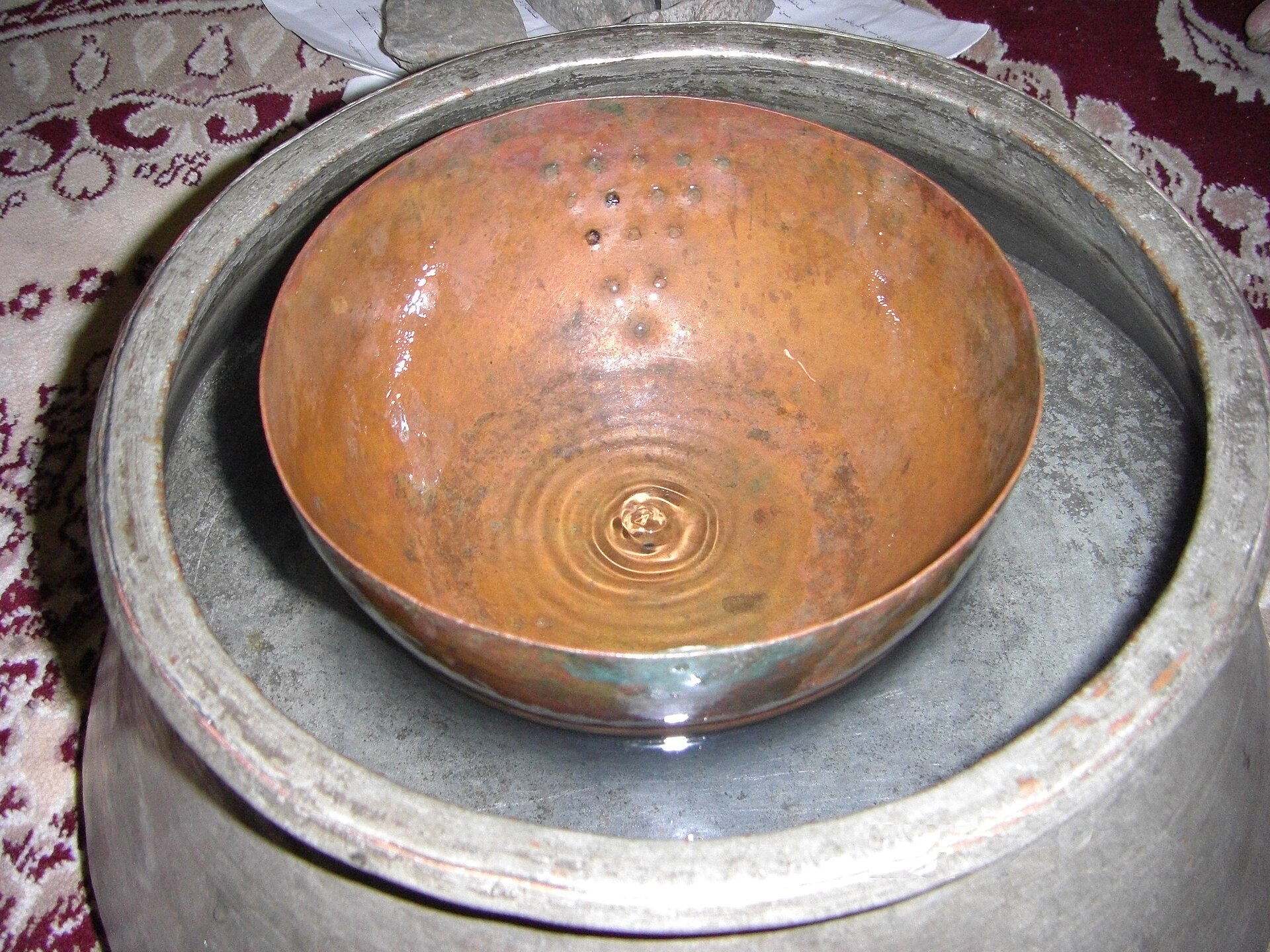
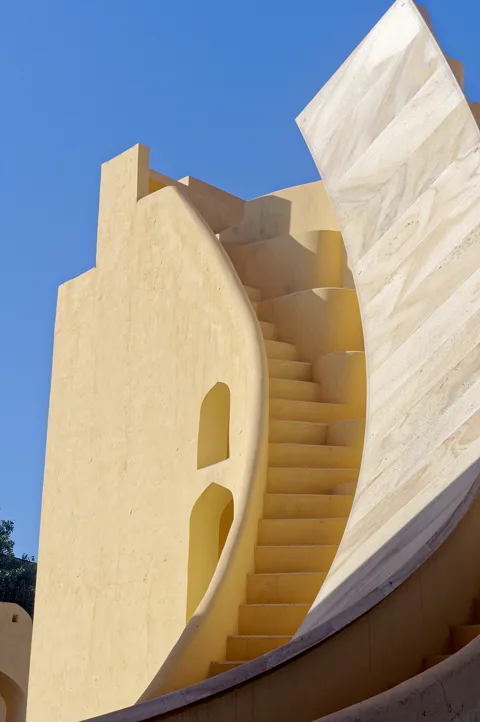
Greek and Roman horologists and astronomers developed more elaborate mechanized water clocks between 100 BCE and 500 CE, regulating the pressure to keep the flow more constant and adding displays such as bells and gongs, moving figures, and astrological models of the universe. The Greeks constructed sundials of considerable complexity; the octagonal Tower of the Winds in Athens, dating from about 100 BCE, contains eight planar sundials facing various cardinal points of the compass. The single greatest literary source for the sundials of Greece and Rome is Vitruvius's Ten Books on Architecture, whose ninth book lists dials such as the semicircular one attributed to Berosus the Chaldaean and the hemisphere, or scaphê, credited to Aristarchus of Samos. The curves traced out by the tip of a gnomon's shadow on the dial may have led to the discovery of the conic sections attributed to Menaechmus, since the shadow path is the intersection of the dial plane with a cone whose vertex is the gnomon's tip. The first official timepiece of Rome was a sundial captured in a war on Sicily in 264 B.C., and although it differed by about four degrees of latitude it served the city for almost one hundred years.
Vitruvius treats the rules of dialling, which are deducible from the shadow produced by the rays of the sun from a gnomon, and explains in what proportions that shadow is lengthened and shortened. The equinoctial gnomons are of different lengths at Athens, Alexandria, Rome and Piacenza, and hence the construction of dials varies according to the places in which they are to be erected; from the size of the equinoctial shadow analemmata are formed, by means of which the shadows of gnomons and the lines which mark the hours are adjusted to the situation of the place. An analemma is a rule deduced from the sun's course and founded on observation of the increase of the shadow from the winter solstice, by means of which, with mechanical operations and the use of compasses, an accurate knowledge of the true shape of the world is reached. At the equinoxes, when the sun is in Aries or Libra, it casts a shadow at Rome equal to eight ninths of the length of the gnomon, at Athens three fourths, at Rhodes five sevenths, at Tarentum nine elevenths and at Alexandria three fifths; elsewhere the shadow of the gnomon at the equinoxes naturally differs. Lines may be projected on the analemma according to the place, as winter lines, summer lines, equinoctial lines or lines of the months, and by this ingenious method as many varieties and species of dials as can be desired may be constructed; in these figures the equinoctial as well as the solstitial days are always divided into twelve equal parts.
A clock needs a regular, constant or repetitive process to mark off equal increments of time, and early examples include the sun's movement across the sky, candles marked in increments, oil lamps with marked reservoirs, sand glasses, knotted cords, and incense mazes burning at a certain pace. Ice-age hunters in Europe more than 20,000 years ago scratched lines and gouged holes in sticks and bones, possibly counting the days between phases of the moon. Five thousand years ago, Sumerians in the Tigris-Euphrates valley in today's Iraq used a calendar that divided the year into 30 day months, the day into 12 periods each corresponding to 2 of our hours, and each period into 30 parts. There are no written records of Stonehenge, built over 4000 years ago in England, but its alignments show that its purposes apparently included determining seasonal and celestial events such as lunar eclipses and solstices. The earliest Egyptian calendar was based on the moon's cycles, but the Egyptians later realized that Sirius, the Dog Star in Canis Major, rose next to the sun every 365 days, and they devised a 365 day calendar that seems to have begun around 3100 BCE.
2. Mechanical Clocks and the Escapement
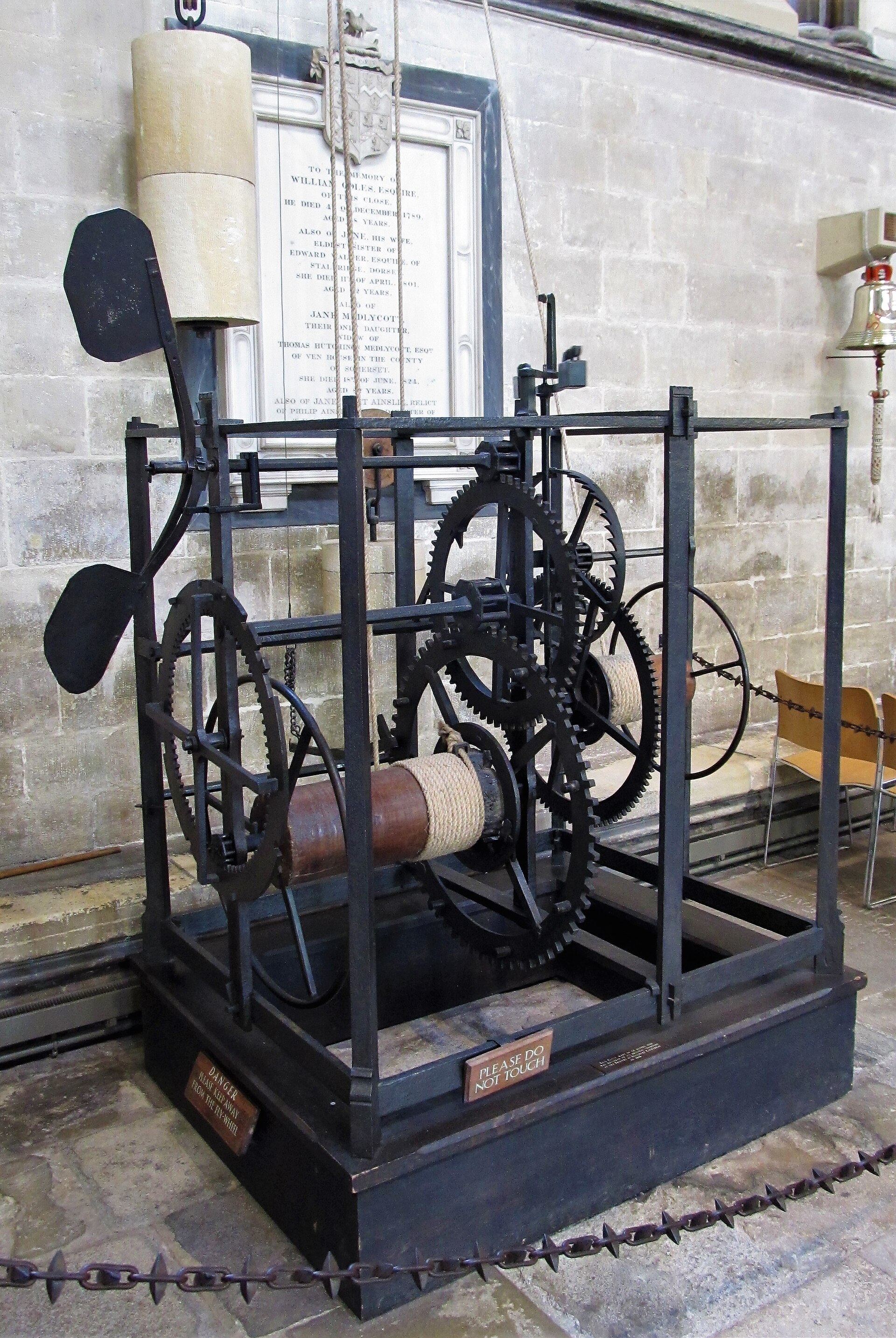
The early tower clocks were large, iron-framed structures driven by falling weights attached to a cord wrapped around a drum and regulated by a mechanism known as a verge, or crown wheel, escapement, and their errors probably were as large as a half hour per day. The oldest surviving clock in England is that at Salisbury Cathedral, which dates from 1386; a clock erected at Rouen, France, in 1389 is still extant, and one built for Wells Cathedral is preserved in the Science Museum in London. Small clocks driven by a spring began to be made around 1450 by clockmakers working probably in southern Germany or northern Italy, and these were the first portable timepieces.
The anchor escapement, an improvement invented in England in the 17th century, works with a pendulum and allows much smaller arcs of swing than the verge escapement; its pallets are shaped like an inverted anchor and lie in the same plane as the wheel. The length of a pendulum with a period of one second is about 39 inches, and an increase in length of 0.001 inch will make the clock lose about one second per day.
3. The Pendulum and Precision Timekeeping
The pendulum's characteristic timekeeping property was noticed as early as about 1581 by Galileo, but it was Christiaan Huygens, the Dutch astronomer and physicist, who made the pendulum a practical controller of clocks from 1656 onward, an invention that greatly increased the importance and extent of clock making. Huygens was a Dutch mathematician, astronomer and physicist who founded the wave theory of light, discovered the true shape of Saturn's rings, and made original contributions to dynamics. He based his explanations of reflection and refraction solely on the principle of secondary wave fronts, which is known as Huygens' principle.
Huygens published his Horologium Oscillatorium in 1673; that work contained a theory of the mathematics of curvatures and complete solutions to problems of dynamics, including the derivation of the formula for the time of oscillation of the simple pendulum. The same work proves that the cycloid is tautochronous, a result of great theoretical importance but of little practical application to the pendulum.
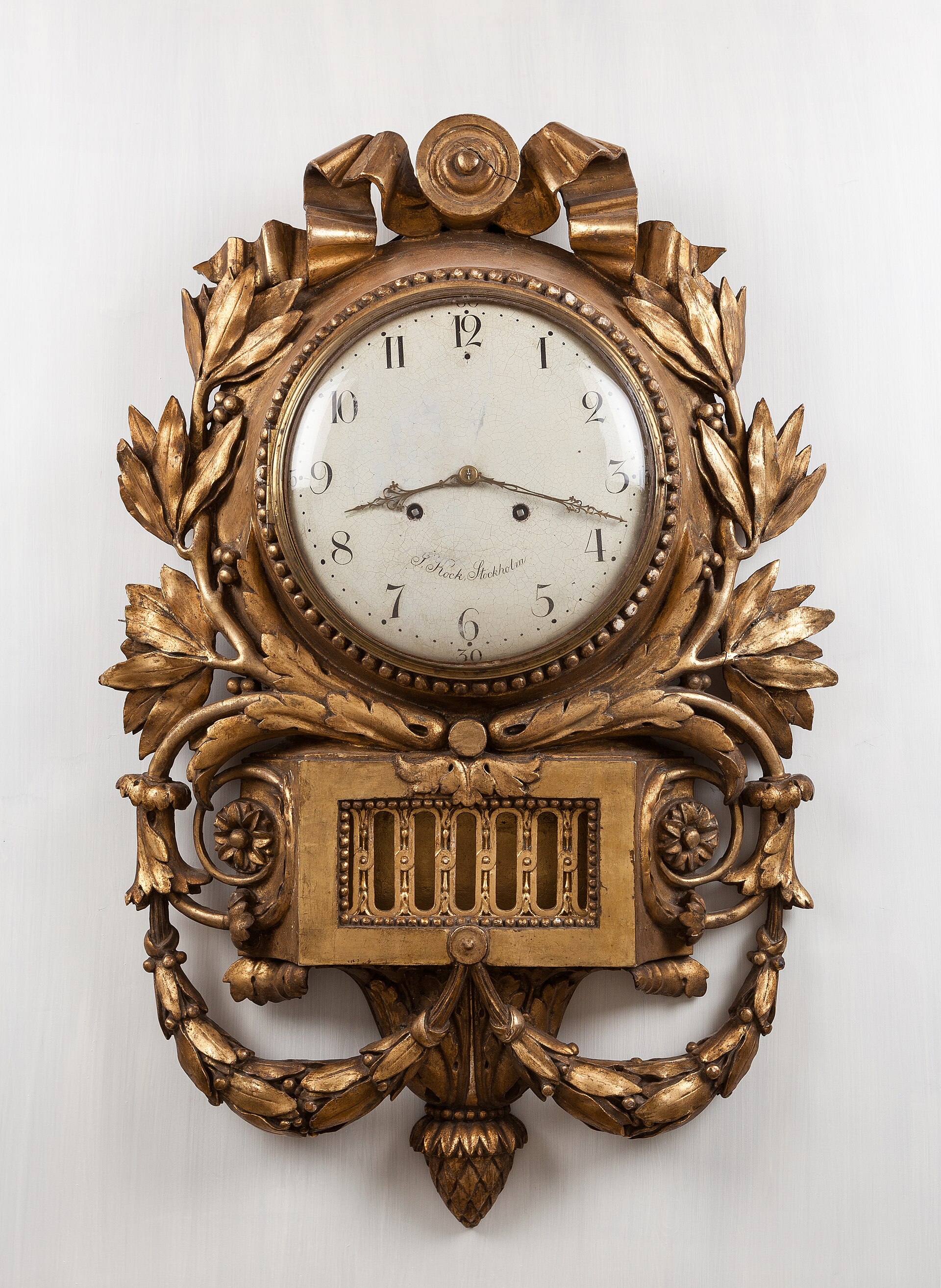
The first pendulum clock, regulated by a mechanism with a natural period of oscillation, kept time with an error of less than one minute a day, the first time such accuracy had been achieved. Around 1675 Huygens developed the balance wheel and spring assembly, still found in some of today's wristwatches, which let portable 17th-century watches keep time to 10 minutes a day. The Shortt clock, demonstrated in 1921, contained a slave pendulum that drove the hands and gave a master pendulum the gentle pushes to maintain its motion, letting the master remain free from mechanical tasks that would disturb its regularity, and it almost immediately replaced Riefler's clock as a supreme timekeeper in many observatories.
Quartz crystal oscillators and clocks, developed in the 1920s and onward, operate on the piezoelectric property of quartz crystals, whose shape changes when an electric field is applied, improving timekeeping far beyond pendulum and balance-wheel escapements. Quartz clocks and watches continue to dominate the market in numbers because their performance is excellent for their price, even though their timekeeping has been substantially surpassed by atomic clocks.
4. Longitude, Harrison and the Chronometer
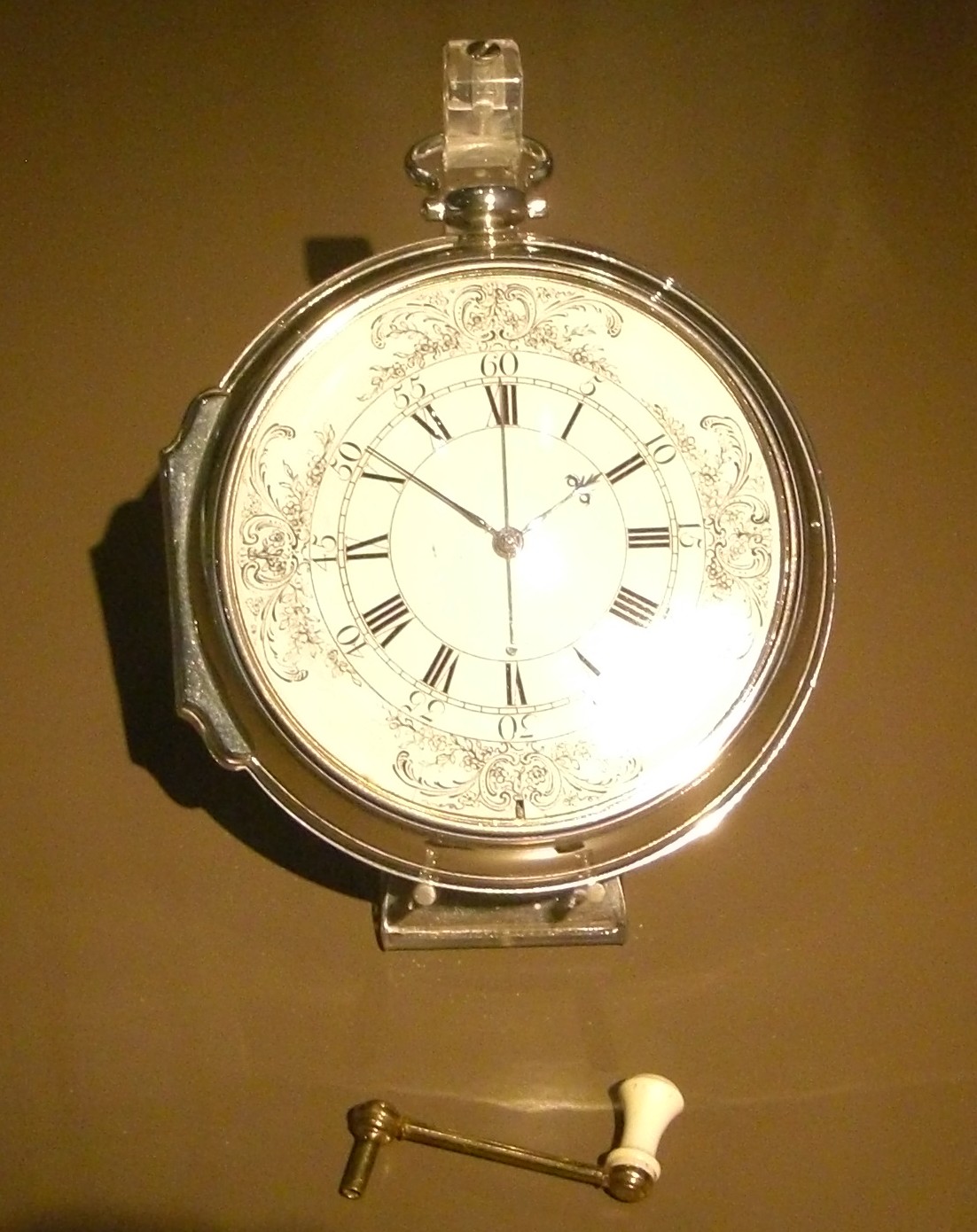
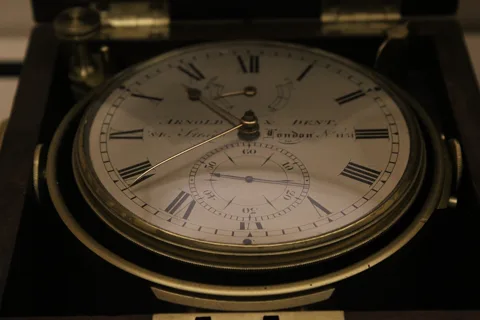
Several unfortunate disasters at sea, caused ostensibly by poor navigation, prompted the British government to create a Board of Longitude, which was empowered to award a prize of GBP 20,000 to the first person who developed a chronometer that could calculate longitude within half a degree at the end of a voyage to the West Indies; Harrison completed his first chronometer in 1735 and submitted it for the prize. John Harrison was a carpenter by trade who was self-taught in clock making, and his precision longcase clocks of the mid-1720s achieved an accuracy of one second in a month. To solve the problem of longitude he set out to build a portable clock that kept time to within three seconds a day.
5. Standard Time and the Prime Meridian
Until the mid-19th century, towns relied on local time set by the Sun, and the time in London was ahead of that of any town further west. A railway network whose trains could cross the country within a day, however, needed standard time to ensure passengers departed on schedule and to avoid collisions. The Royal Observatory at Greenwich provided the standard for London time, counting noon from the Sun's zenith over the 0° meridian, and in 1852 its timekeepers introduced equipment that transmitted accurate time signals across the country over the electric telegraph network, so that by 1855 nearly all public authorities set their clocks to railway time.
Representatives from different nations gathered in Washington D.C. in 1884 to choose one single meridian as a common reference, and after weeks of discussion voted to make the Greenwich Meridian the world's Prime Meridian. Greenwich was chosen as the Prime Meridian because it offered the least disruption, since nearly two-thirds of the world's ships were already using charts based on the Greenwich Meridian. Conference delegates also recommended a new global time zone system based on Greenwich Mean Time.
6. Atomic Time and the Modern Second
Every chemical element and compound absorbs and emits electromagnetic radiation at its own characteristic frequencies, and because such resonances are inherently stable over time and space, atoms offer a potential pendulum whose rate can be reproduced, promising clocks of greater accuracy. Research aimed at developing an atomic clock focused first on microwave resonances in the ammonia molecule; NIST built the first atomic clock based on ammonia in 1949, but its performance was not much better than the existing standards, so attention shifted almost immediately to cesium atomic-beam devices. In 1967 the cesium atom's natural frequency was formally recognized as the new international unit of time, redefining the second as exactly 9,192,631,770 oscillations of the cesium atom's resonant frequency and replacing the old second that was defined in terms of the Earth's motions.
Fountain clocks such as NIST-F3 and NIST-F4 use a fountain-like movement of atoms to calibrate the offset of a microwave frequency from the unperturbed cesium clock transition frequency that defines the SI second. Six infrared laser beams crossing at right angles slow a cloud of cesium atoms to temperatures near absolute zero, and two vertical lasers then toss that cloud upward about a meter high through a microwave-filled cavity.
7. Key Dates
-
about 3500 BCEGnomonThe gnomon, a vertical stick or pillar, is among the earliest devices used to track the Sun's shadow.
-
3500 BCEObelisksObelisks served as monumental shadow-casting markers in ancient Egypt.
-
about 3100 BCEEgyptian 365-day calendarThe Egyptians devised a 365-day calendar after observing that Sirius rose next to the sun every 365 days.
-
around 1500 BCEEgyptian shadow clock and sundial of Thutmosis IIIA portable Egyptian shadow clock divided a sunlit day into 10 parts plus two twilight hours; the oldest known sundial, an L-shaped stone from the reign of Thutmosis III, used a bar's shadow to mark six hour lines, reversed at noon to count the afternoon.
-
264 BCERome's captured sundialRome acquired a sundial as war spoils, marking the city's first known use of such an instrument.
-
about 100 BCETower of the WindsThe Tower of the Winds in Athens was built as a combined sundial and water clock.
-
around 430 B.C.Athenian judicial water clocksAthenian courts used water clocks to time legal proceedings.
-
late 13th centuryFirst mechanical clocksThe earliest mechanical clocks appeared in Europe, marking a shift from shadow and water-based timekeeping.
-
1386Salisbury Cathedral clockThe clock at Salisbury Cathedral is among the oldest surviving mechanical clocks.
-
1389Rouen clockThe Rouen clock was installed, adding to the growing tradition of public mechanical timepieces.
-
around 1450Spring-driven portable clocksThe introduction of spring-driven mechanisms made portable clocks possible.
-
1656Huygens's first pendulum clockChristiaan Huygens built the first pendulum clock, greatly improving timekeeping accuracy.
-
1673Horologium OscillatoriumHuygens published his work on pendulum clocks, detailing the mathematics of their motion.
-
1714Longitude ActThe British Parliament passed the Longitude Act, offering a reward for a practical method of determining longitude at sea.
-
1728Harrison's interest in an accurate chronometerJohn Harrison began pursuing the development of a precise marine chronometer.
-
1735Harrison's first chronometerHarrison completed his first chronometer, a significant step toward solving the longitude problem.
-
1749Copley MedalHarrison was awarded the Copley Medal for his work on timekeeping.
-
1884Prime Meridian voteAn international conference voted to adopt the Greenwich meridian as the prime meridian.
-
1921Shortt clockThe Shortt clock, a highly accurate pendulum clock, was introduced.
-
1949First atomic clockThe first atomic clock was built, using the vibrations of atoms to measure time.
-
1967Redefinition of the secondThe second was redefined in terms of the vibration of the cesium atom.
-
1972UTC effectiveCoordinated Universal Time (UTC) became the international standard for timekeeping.
8. Frequently Asked Questions
What prize did the British government offer for solving longitude at sea?
Prompted by several unfortunate disasters at sea caused ostensibly by poor navigation, the British government created a Board of Longitude empowered to award GBP 20,000 to the first person who developed a chronometer able to calculate longitude within half a degree at the end of a voyage to the West Indies; Harrison completed his first chronometer in 1735 and submitted it for the prize.12John Harrison — British horologist · Encyclopaedia Britannica ↗
What was the first atomic clock based on?
Research aimed at developing an atomic clock focused first on microwave resonances in the ammonia molecule; NIST built the first atomic clock based on ammonia in 1949, but its performance was not much better than the existing standards, so attention shifted almost immediately to cesium atomic-beam devices.16A Walk Through Time — The “Atomic Age” of Time Standards · National Institute of Standards and Technology (NIST) ↗
What is the SI definition of the second?
The second is currently defined using cesium atoms, and atomic clocks count 9,192,631,770 of those microwave oscillations to mark the elapsed interval.18Second · National Institute of Standards and Technology (NIST) ↗
How accurate are commercially available cesium clocks?
Today, commercially available cesium clocks keep time to within 1/3,000,000 of a second per year.18
What distinguishes a clock from a watch?
A clock is defined as a mechanical or electrical device, other than a watch, for displaying time. 1Clock | Mechanical, Digital, and Atomic · Encyclopaedia Britannica ↗
Where did the first mechanical clocks probably appear, and what did they do?
The earliest devices of this kind may have been invented and used in monasteries to toll a bell that called the monks to prayers. 1 The first mechanical clocks to which clear references exist were large, weight-driven machines fitted into towers, known today as turret clocks, which struck only the hours and had neither hands nor a dial. 1
What made the weight-driven clock possible, and what was the classic form of that mechanism?
The true innovation of the weight-driven clock was the escapement, the system that mediated the transfer of the energy of the gravitational force acting on the weights to the clock's counting mechanism. 1 The classic form for a timepiece, which made the mechanical clock possible, was the verge escapement, probably invented in 13th-century Europe, consisting of a crown wheel driven by a weight and repeatedly checked by a pair of metal pallets that alternately stop successive teeth. 9Escapement | Regulator, Pendulum, and Balance Wheel · Encyclopaedia Britannica ↗
Who was John Harrison, and what did he achieve?
John Harrison was born in March 1693 at Foulby in Yorkshire, died in London in 1776, and invented the first practical marine chronometer, which enabled navigators to compute their longitude accurately at sea. 12 The son of a carpenter and a mechanic himself, he became interested in constructing an accurate chronometer in 1728 and was a recipient of the Copley Medal in 1749. 12
How is the second defined today, and how stable are the best cesium standards?
The second is defined by taking the fixed numerical value of the unperturbed ground-state hyperfine transition frequency of the cesium-133 atom to be 9,192,631,770 when expressed in the unit hertz. 19SI Units · National Institute of Standards and Technology (NIST) ↗ NIST-F2 would neither gain nor lose one second in about 300 million years and is about three times as accurate as the earlier NIST-F1 standard. 20NIST Launches a New U.S. Time Standard: NIST-F2 Atomic Clock · National Institute of Standards and Technology (NIST) ↗
What is a leap second, and why is it needed?
Coordinated Universal Time is kept running at the rate of the atomic clocks, and when the difference between that atomic time and Earth-based time approaches one second, a leap second adjustment is made. 21A Walk Through Time — World Time Scales · National Institute of Standards and Technology (NIST) ↗
9. Timeline: from shadow and water to atomic time
- c. 3100 BCEEgypt's 365-day calendarEgyptians realized that Sirius rose next to the sun every 365 days, about when the annual Nile inundation began, and devised a 365-day calendar that seems to have begun around 3100 BCE.
- c. 1500 BCEFirst portable shadow clockAn Egyptian shadow clock that divided a sunlit day into ten parts plus two twilight hours came into use around 1500 BCE, possibly the first portable timepiece.
- c. 430 BCEWater clocks time the courtsJudicial water clocks, the klepsydra, were in common usage at Athens for timing speeches in law courts.
- 264 BCERome's first official timepieceRome acquired its first official timepiece, a sundial captured in a war on Sicily; it differed by about four degrees of latitude yet served the city for almost one hundred years.
- c. 100 BCETower of the Winds at AthensThe octagonal Tower of the Winds in Athens, dating from about 100 BCE, contains eight planar sundials facing various cardinal points of the compass.
- Late 13th centuryFirst mechanical clocksThe first mechanical clocks were made in the late 13th century, most likely by monks who needed timekeeping to regulate religious life.
- 1386Salisbury Cathedral clockThe oldest surviving clock in England is that at Salisbury Cathedral, dating from 1386; such turret clocks struck only the hours and had neither hands nor a dial.
- 1656Huygens builds the pendulum clockThe Dutch scientist Christiaan Huygens made the first pendulum clock, with an error of less than one minute a day, the first time such accuracy had been achieved.
- 1714The Longitude ActAn act of the British parliament offered money in return for the solution to finding a ship's precise longitude at sea, and John Harrison travelled to London seeking the rewards it promised.
- 1735Harrison completes his first chronometerHarrison completed his first chronometer and submitted it for the Board of Longitude prize.
- 1852Time signals over the electric telegraphGreenwich timekeepers introduced equipment that transmitted accurate time signals across the country over the electric telegraph network, so that by 1855 nearly all public authorities set their clocks to railway time.
- 1884Greenwich becomes the Prime MeridianRepresentatives of many nations met in Washington D.C. and voted to make the Greenwich Meridian the world's Prime Meridian, also recommending a new global time zone system based on Greenwich Mean Time.
- 1949First atomic clockNIST built the first atomic clock, based on microwave resonances in the ammonia molecule, but its performance was not much better than existing standards, so attention shifted almost immediately to cesium atomic-beam devices.
- 1967The cesium secondThe cesium atom's natural frequency was formally recognized as the new international unit of time, redefining the second as exactly 9,192,631,770 oscillations of the cesium atom's resonant frequency.
- 1972Coordinated Universal TimeThe compromise time scale known as Coordinated Universal Time became effective internationally, with leap seconds keeping it close to Earth-based time.
- 2014NIST-F2 launchedNIST officially launched the NIST-F2 atomic clock to serve as a civilian time and frequency standard, about three times as accurate as the earlier NIST-F1.
References (22)
- 1Clock | Mechanical, Digital, and Atomic — Encyclopaedia Britannica Web↩View source
- 2Sundial | Definition, History, Types, and Facts — Encyclopaedia Britannica WebView source
- 3Telling the time with the Sun — Science Museum, London WebView source
- 4A Walk Through Time — Early Clocks — National Institute of Standards and Technology (NIST) WebView source
- 5Timekeeping in the Ancient World: Water-clocks — MacTutor History of Mathematics Archive, University of St Andrews WebView source
- 6Vitruvius: De Architectura, Book IX — LacusCurtius (Bill Thayer), University of Chicago BookView source
- 7Timekeeping in the Ancient World: Sundials — MacTutor History of Mathematics Archive, University of St Andrews WebView source
- 8A Walk Through Time — Ancient Calendars — National Institute of Standards and Technology (NIST) WebView source
- 9Escapement | Regulator, Pendulum, and Balance Wheel — Encyclopaedia Britannica Web↩View source
- 10Christiaan Huygens | Dutch Astronomer, Physicist, and Mathematician — Encyclopaedia Britannica WebView source
- 11Christiaan Huygens — MacTutor History of Mathematics Archive, University of St Andrews WebView source
- 12John Harrison — British horologist — Encyclopaedia Britannica Web↩View source
- 13Longitude found — the story of Harrison's timekeepers — Royal Museums Greenwich WebView source
- 14Standardising time: Railways and the electric telegraph — Science Museum, London WebView source
- 15What is the Prime Meridian, and why is it in Greenwich? — Royal Museums Greenwich WebView source
- 16A Walk Through Time — The “Atomic Age” of Time Standards — National Institute of Standards and Technology (NIST) Web↩View source
- 17NIST's Cesium Fountain Atomic Clocks — National Institute of Standards and Technology (NIST) WebView source
- 18Second — National Institute of Standards and Technology (NIST) Web↩View source
- 19SI Units — National Institute of Standards and Technology (NIST) Web↩View source
- 20NIST Launches a New U.S. Time Standard: NIST-F2 Atomic Clock — National Institute of Standards and Technology (NIST) 2014 Web↩View source
- 21A Walk Through Time — World Time Scales — National Institute of Standards and Technology (NIST) Web↩View source
- 22A Walk Through Time — A Revolution in Timekeeping — National Institute of Standards and Technology (NIST) WebView source
 Sundial
 Sextant
 Marine Chronometer