Quantum Mechanics
The theory that describes matter and radiation at atomic scales — from Planck's energy quanta and the 1925–27 formalism of Heisenberg, Schrödinger and Dirac to uncertainty, entanglement, the measurement problem and its technologies.
Quantum mechanics is the physical theory that describes matter and radiation at atomic and subatomic scales, born from Max Planck's energy-quantum hypothesis of 1900 and Einstein's 1905 explanation of the photoelectric effect. Between 1925 and 1927 matrix mechanics, wave mechanics and transformation theory gave it its modern mathematical form, and its probabilistic predictions are confirmed to extraordinary precision. Its counterintuitive features — superposition, entanglement and the uncertainty relations — still fuel debate over the measurement problem and interpretations, while underpinning technologies from semiconductors and lasers to atomic clocks and quantum computers.
In this article
- 1Overview
- 2Historical Development
- 3Planck's Quantum Hypothesis
- 4Early Quantum Models and the Photoelectric Effect
- 5Formulation of Quantum Mechanics
- 6Key Equations and Principles
- 7Mathematical Formalism
- 8Interpretations and the Measurement Problem
- 9Applications and Technologies
- 10Quantum Computing and Information
- 11Timeline: from Planck's quanta to the quantum century
- 12Frequently asked questions
- 13Knowledge graph
Overview
Quantum mechanics is the physical theory of matter and radiation at atomic and subatomic scales, and its probabilistic predictions are confirmed to extraordinary precision.
1. Historical Development
Heisenberg received the 1932 Nobel Prize in Physics for the creation of quantum mechanics, the application of which has, among other things, led to the discovery of the allotropic forms of hydrogen.
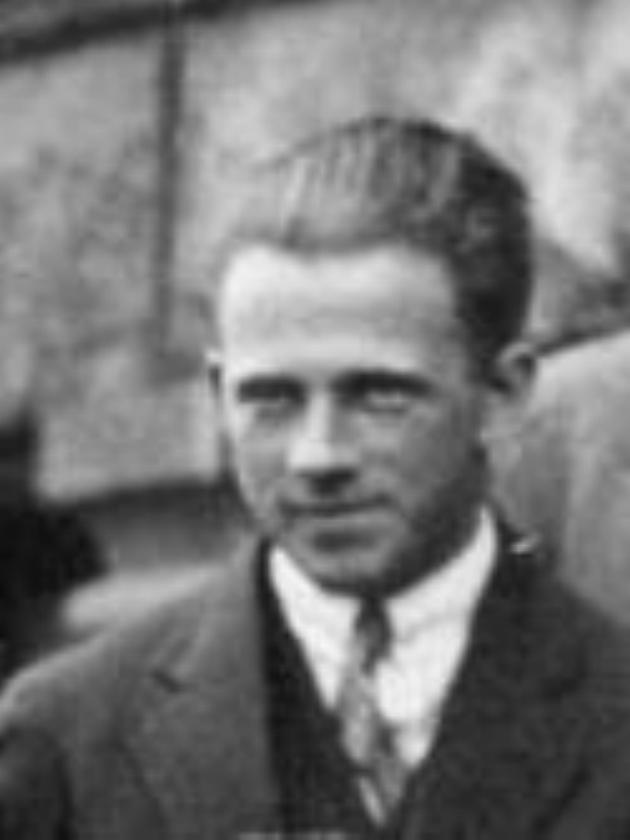
He argued that the agreement between the orders of magnitude of atomic diameters and matter wavelengths is no mere chance, and that it follows automatically from the theory.
Observing an electron's orbit with a microscope would require light of extremely short wavelength, and the first light quantum needed to see the electron would eject it from its path in accordance with the laws of the Compton effect. Each parameter of classical mechanics, such as the momentum or the energy of the electrons, can be assigned a corresponding matrix in quantum mechanics.
In 1928 Dirac formulated a fully relativistic quantum theory whose equation predicted a particle equivalent to the electron but with a positive charge — the positron.
-
1928Dirac equationA fully relativistic quantum theory whose equation predicted the positron 5Paul A. M. Dirac – Facts · The Nobel Foundation ↗.
2. Planck's Quantum Hypothesis
Max Planck solved the black-body problem in 1900 by introducing the theory of quanta, in which radiation consists of quanta with specific energies determined by a new fundamental constant thereafter called Planck's constant. In that same year he discovered that the radiation spectrum of black bodies occurs only with discrete energies separated by the value hν, where ν is the frequency and h is a new constant, the so-called Planck constant. The task of explaining his radiation formula led him automatically to Boltzmann's link between entropy and probability, until after the most strenuous weeks of his life light came into the darkness and a new undreamed-of perspective opened before him.
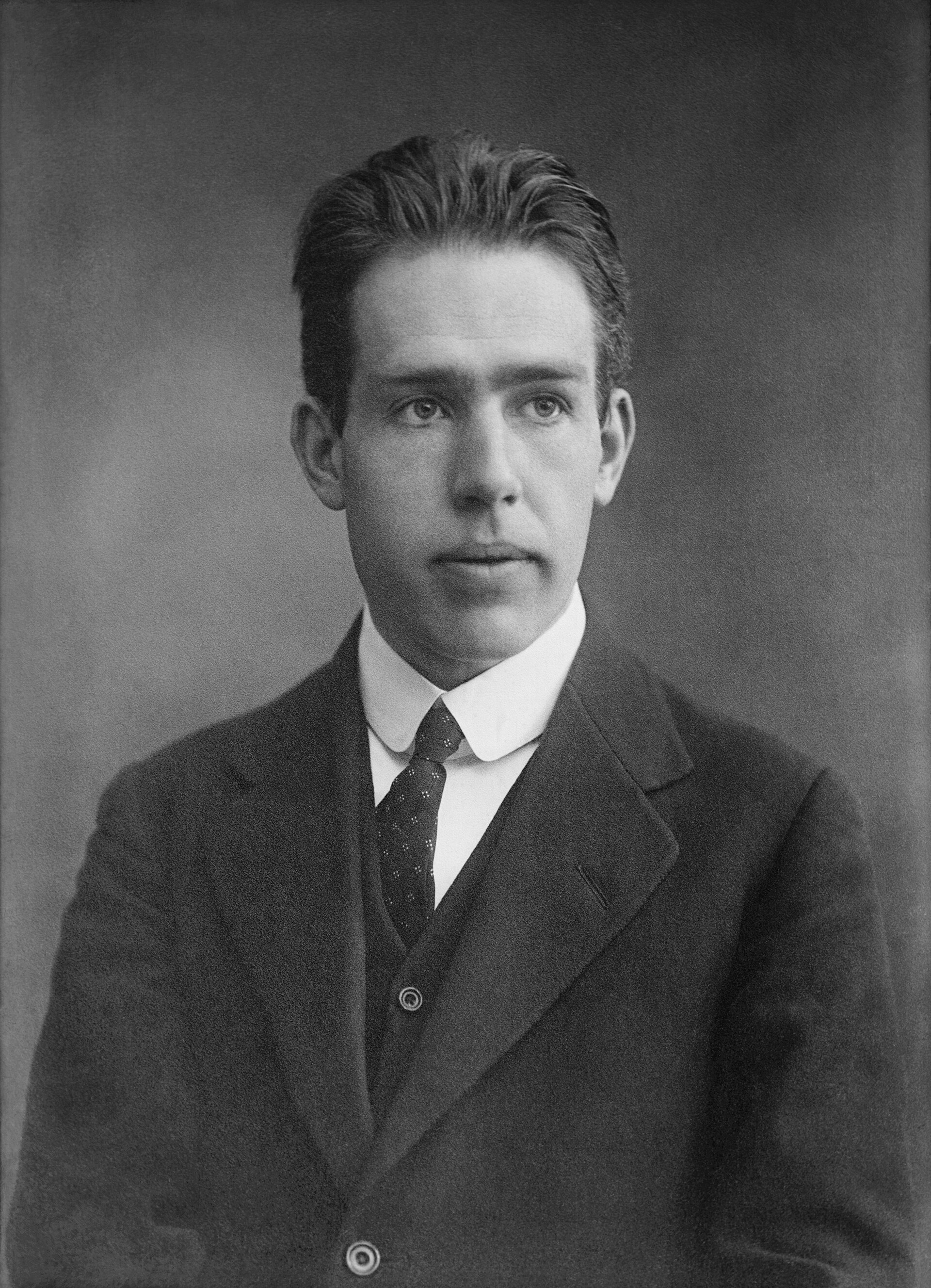
Schrödinger likewise noted that the constant left unknown in his calculation does not have the dimension of a length, but of an action — energy multiplied by time.
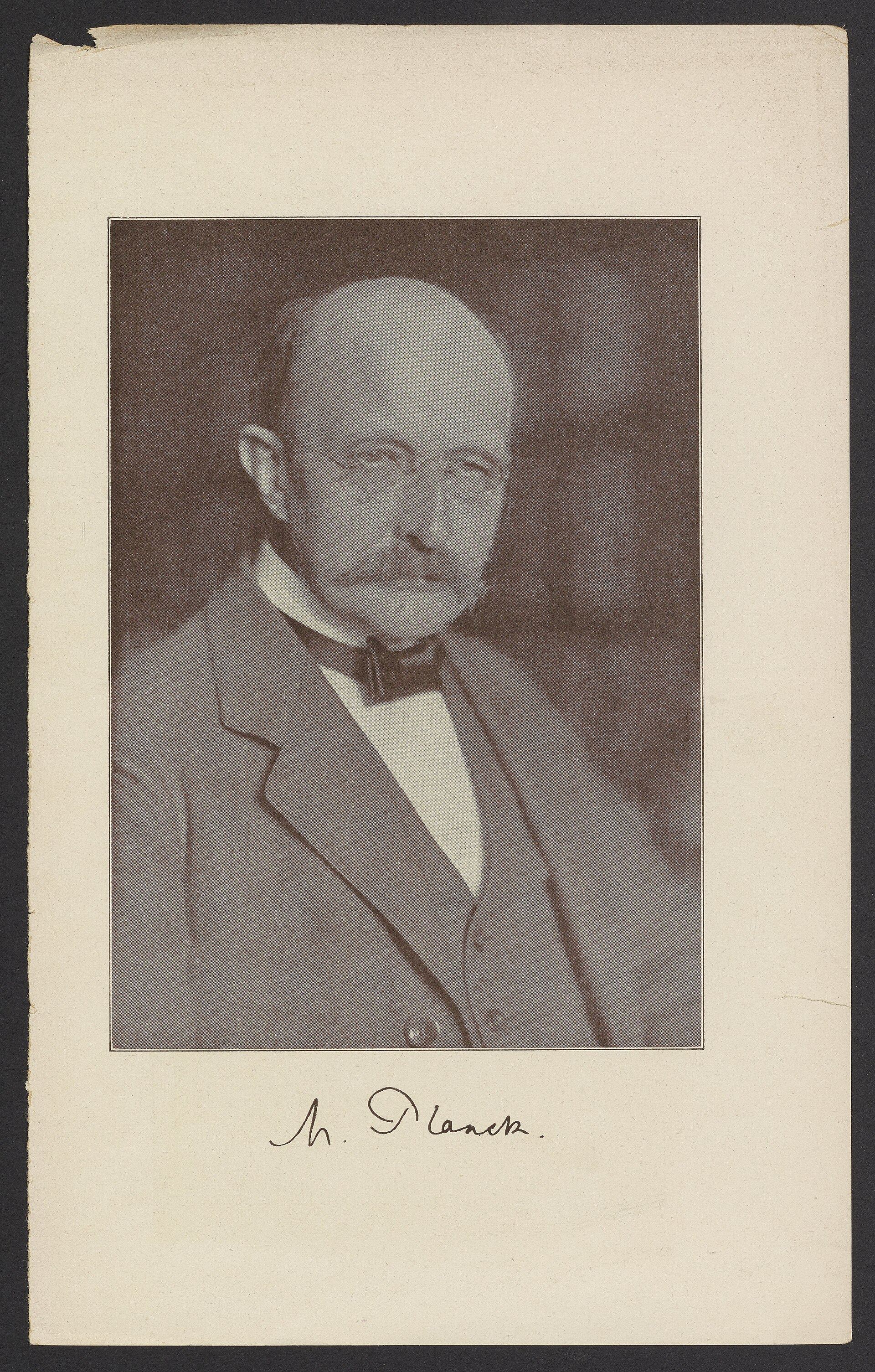
He described how a strange element that once had to be fitted into a fixed frame had gone over to the offensive, so that it became obvious the old framework must somehow or other be burst asunder. He predicted that the problem of the quantum of action would not cease to inspire research, and that the greater the difficulties of its solution the more significant it would prove for the deepening of knowledge in physics.
The proportionality factor in Planck's radiation law had to be regarded as a new universal constant, since termed Planck's constant, similar to the velocity of light and to the charge and mass of the electron.
3. Early Quantum Models and the Photoelectric Effect
Bohr received the 1922 Nobel Prize in Physics for his services in the investigation of the structure of atoms and of the radiation emanating from them.
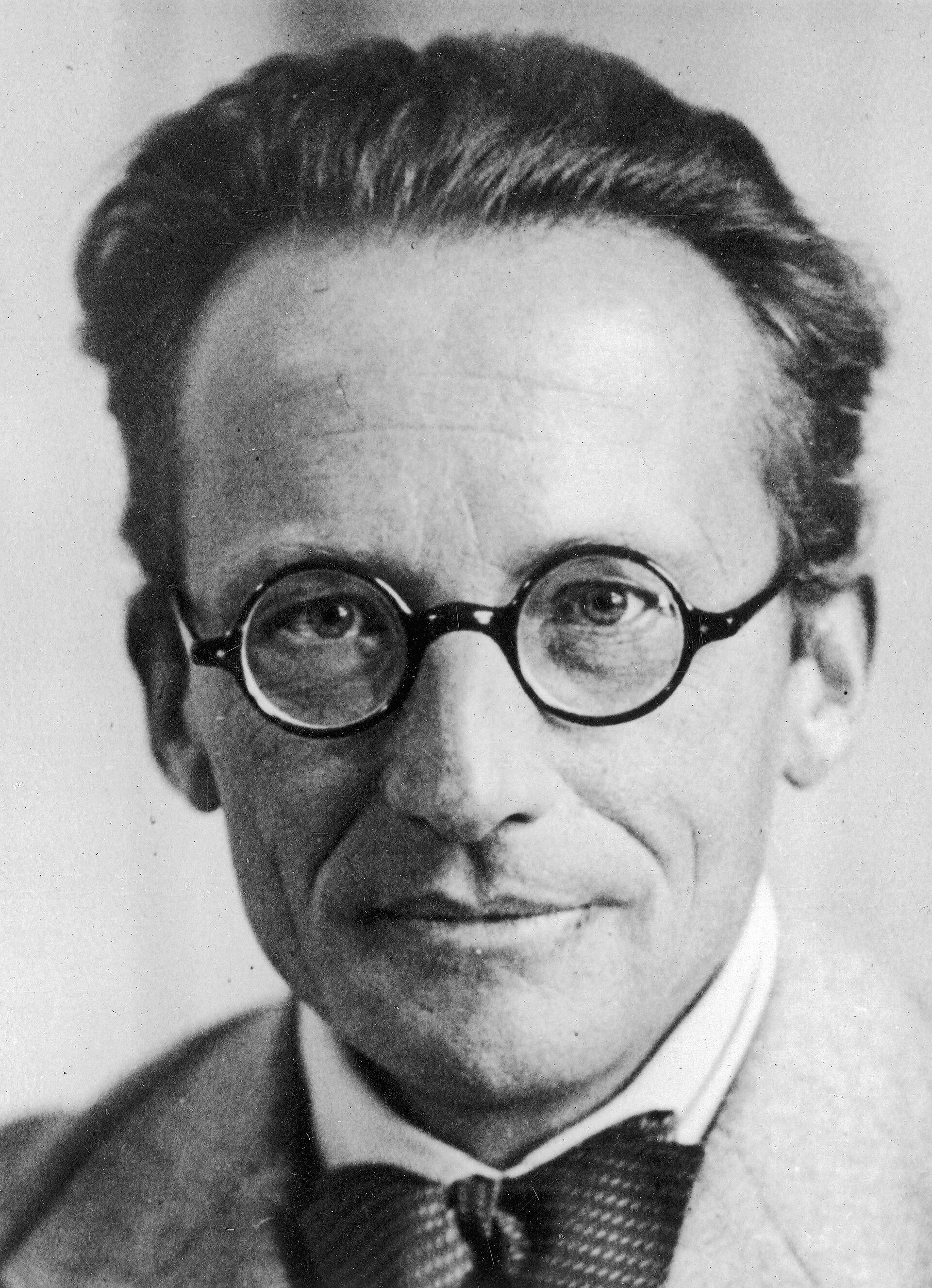
He further pointed out that the energy quanta determined by the quantum of action explained a series of noteworthy observations during the action of light, such as Stokes' Law, electron emission and gas ionization. Albert Einstein received the 1921 Nobel Prize in Physics for his services to Theoretical Physics, and especially for his discovery of the law of the photoelectric effect.
In 1913 Bohr proposed a theory for the hydrogen atom based on quantum theory, in which some physical quantities only take discrete values, electrons move around the nucleus only in prescribed orbits, and a jump to a lower-energy orbit sends out the difference as radiation. The formulation Bohr proposed in 1913 took the form of two postulates, and the theory arrived at a manifold of stationary states in which the major axis of the electron orbit takes on a series of discrete values proportional to the squares of the whole numbers. The explanation of the origin of the hydrogen spectrum led naturally to interpreting it as the manifestation of a process whereby the electron is bound to the nucleus.
4. Formulation of Quantum Mechanics
By 1925 quantum theory was in crisis: physicists' understanding of the structure of atoms and the nature of light was not consistent with experimental observations, and the great physicists of the day could not resolve the problem.
Assuming that matter (e.g., electrons) could be regarded as both particles and waves, in 1926 Schrödinger formulated a wave equation that accurately calculated the energy levels of electrons in atoms.
In the following months Max Born, Pascual Jordan and Wolfgang Pauli helped turn Heisenberg's work into matrix mechanics, the first mature formulation of quantum theory.
Many physicists were drawn to Schrödinger's alternative quantum mechanics, which treated electrons as waves — something people could picture; in May 1926 Schrödinger proved the two formulations equivalent.
On 9 July 1925 Heisenberg wrote a letter to Wolfgang Pauli revealing his new ideas, which were to revolutionise physics; the letter is preserved in the Wolfgang Pauli Archive at CERN. Attached to the letter was the draft of Heisenberg's famous Umdeutung paper, which is often considered the birth certificate of modern quantum theory.
5. Key Equations and Principles
In 1927 Heisenberg proposed the uncertainty relation, setting limits for how precisely the position and velocity of a particle can be simultaneously determined.
6. Mathematical Formalism
The heart and soul of quantum mechanics is contained in the Hilbert spaces that represent the state-spaces of quantum mechanical systems. Every physical system is associated with such a space, and every unit vector within it corresponds to a possible pure state of that system, while every possible pure state corresponds to some vector in the space.
Within the Hilbert space associated with a system, Hermitian operators represent physical quantities, and their eigenvalues represent the possible results of measurements of those quantities. The Hilbert space associated with a complex system is the tensor product of those associated with the simple systems of which it is composed.
Taking vectors and operators in Hilbert space to represent states and observables, and applying Born's Rule, gives empirical meaning to state assignments. In this capacity quantum mechanics functions as a mathematical machine for predicting the behaviors of microscopic particles — or of the measuring instruments used to explore those behaviors — and it is spectacularly successful.
7. Interpretations and the Measurement Problem
There is no consensus on the true meaning of quantum mechanics, and any interpretation of the theory must grapple with the measurement problem. That problem arises because quantum mechanics itself cannot account for why experiments on objects in a state of superposition always produce a definite outcome. The question of what kind of world quantum mechanics describes remains controversial, with very little agreement among physicists and among philosophers about what the world is like according to the theory.
It is often taken to subscribe to a solution to the measurement problem offered in terms of John von Neumann's projection postulate. Bohr's view was that the interpretation of a physical theory has to rely on an experimental practice, which presupposes a pre-scientific practice of description establishing the norm for experimental measurement apparatus and what counts as scientific experience.
In his discussion of the measurement problem, von Neumann distinguished between the system actually observed, the measuring instrument, and the actual observer. An important consequence of von Neumann's solution to the measurement problem is that a type 1-process takes place only in the presence of the observer's consciousness. A common assumption in these investigations is that it is always permissible for one observer to treat systems containing other observers within quantum mechanics and to employ unitary evolution for those systems; this means that collapse is not regarded as a physical process.
Bell's dilemma gives a tidy way of classifying approaches to the measurement problem: some approaches deny that the wave function yields a complete description of a physical system, some modify the dynamics to produce collapse in appropriate circumstances, and some reject both horns. Theories whose structure includes the quantum state but adds additional structure, with the aim of circumventing the measurement problem, have traditionally been called hidden-variables theories. In his doctoral dissertation of 1957 Hugh Everett III proposed that quantum mechanics be taken as it is, without a collapse postulate and without hidden variables; he called the result the relative state interpretation. Everett's work inspired a family of views known as Many Worlds interpretations, on which each of the terms of the superposition corresponds to a coherent world and all of these worlds are equally real.
8. Applications and Technologies
Everyday technologies such as GPS, smartphones, cybersecurity and precision instruments rest on quantum mechanics.
The SI second is defined as the duration of 9,192,631,770 cycles of microwave radiation corresponding to the hyperfine transition in the cesium atom. Thanks to hyper-accurate atomic clocks, the second is now the most accurately realized SI unit, and five of the other six fundamental SI units are defined in part based on it.
NIST-F2 would neither gain nor lose a second in 300 million years. More than 400 atomic clocks in more than 80 labs in more than 60 countries send data to the International Bureau of Weights and Measures, whose weighted average serves as International Atomic Time.
The International Year of Quantum Science and Technology 2025 was proclaimed by the United Nations General Assembly in June 2024 with UNESCO as the lead agency. UNESCO describes quantum science as emerging from the study of nature's smallest objects, deepening understanding of the universe and enabling groundbreaking technologies like quantum computers, ultra-precise measurement devices and next-generation materials.
NIST's basic research on trapped ions, neutral atoms, superconducting circuits and photons has underpinned the development of commercial quantum computing technologies. NIST also develops quantum-enhanced sensors such as atom-based magnetic field sensors and superconducting photon detectors, many of which have been commercialized.
The 1989 Nobel Prize in Physics recognized the separated oscillatory fields method and its use in the hydrogen maser and other atomic clocks, and the development of the ion trap technique.
The 1964 Nobel Prize in Physics honoured fundamental work in the field of quantum electronics, which has led to the construction of oscillators and amplifiers based on the maser-laser principle.
The 2022 Nobel Prize in Physics was shared by Alain Aspect, John Clauser and Anton Zeilinger for experiments with entangled photons, establishing the violation of Bell inequalities and pioneering quantum information science. Serge Haroche and David Wineland shared the 2012 Nobel Prize in Physics for ground-breaking experimental methods that enable measuring and manipulation of individual quantum systems.
The SI second is defined as the duration of 9,192,631,770 cycles of microwave radiation corresponding to the hyperfine transition in the cesium atom, a transition referring to energy jumps made by the atom's outermost electron when it absorbs or emits radiation at specific quantum-mechanically determined energies. Because of hyper-accurate atomic clocks, the second is now the most accurately realized SI unit, and five of the other six fundamental SI units are defined in part based on it. The United Nations General Assembly proclaimed 2025 the International Year of Quantum Science and Technology in June 2024, with UNESCO as lead agency; more than 1200 participants, including several Nobel Prize laureates, gathered at UNESCO Headquarters in Paris on 4-5 February 2025 to launch it, and UNESCO describes quantum science as emerging from the study of nature's smallest objects, deepening understanding of the universe and enabling technologies such as quantum computers, ultra-precise measurement devices and next-generation materials.
In 1967 the CGPM redefined the second in the International System of Units to be the duration of 9,192,631,770 cycles of microwave radiation, corresponding to the hyperfine energy transition in the cesium atom.
The 2000 Nobel Prize in Physics recognized semiconductor heterostructures used in high-speed and opto-electronics, and the invention of the integrated circuit.
9. Quantum Computing and Information
Quantum computers do not store information in classical bits, which always represent either one or zero, but in quantum bits, or qubits, each of which can be in a superposition of one and zero simultaneously until its state is measured. The states of multiple qubits can be entangled, meaning that they are linked quantum mechanically to each other. Together, superposition and entanglement give quantum computers capabilities unknown to classical computing.
General-purpose quantum computers today generally have fewer than 100 qubits, and thousands may be needed for useful work. Large numbers of qubits are harder to isolate, and if they interact with molecules or magnetic fields in their environment they collapse or decohere, losing the fragile properties of superposition and entanglement.
Quantum computers are expected to challenge current cryptography methods and to introduce new possibilities for completely private communication. In 2024 NIST published the first three post-quantum encryption standards to protect data from the threat of a future quantum computer that could break or weaken classical encryption.
10. Timeline: from Planck's quanta to the quantum century
- 1900Planck's quantum hypothesisMax Planck solved the black-body spectrum problem by introducing the theory of quanta: radiation consists of quanta with specific energies determined by a new fundamental constant, thereafter called Planck's constant.
- 1905Einstein's light quantaIn one of several epoch-making studies beginning in 1905 Einstein explained that light consists of quanta, packets with fixed energies; one such quantum must have a certain minimum frequency before it can liberate an electron.
- 1913Bohr's model of the atomNiels Bohr proposed a theory for the hydrogen atom based on quantum theory: electrons move around the nucleus only in prescribed orbits, and a jump to a lower-energy orbit sends out the energy difference as radiation.
- June–July 1925Heisenberg's matrix mechanicsOn 9 July 1925 Heisenberg wrote to Wolfgang Pauli revealing his new ideas; the attached Umdeutung paper is often considered the birth certificate of modern quantum theory, and Max Born, Pascual Jordan and Pauli turned the work into matrix mechanics.
- 1926Schrödinger's wave mechanicsSchrödinger formulated a wave equation that accurately calculated the energy levels of electrons in atoms; in May 1926 he proved that matrix mathematics and wave mechanics were equivalent.
- 1927The uncertainty relationWerner Heisenberg proposed the uncertainty relation, setting limits for how precisely the position and velocity of a particle can be simultaneously determined.
- 1932The projection postulateJohn von Neumann suggested that the entangled state of object and instrument collapses to a determinate state whenever a measurement takes place.
- 1957Everett's relative stateHugh Everett III proposed in his doctoral dissertation that quantum mechanics be taken as it is, without a collapse postulate and without hidden variables; he called the result the relative state interpretation.
- 1964Quantum electronicsCharles Townes, Nicolay Basov and Aleksandr Prokhorov shared the Nobel Prize in Physics for fundamental work in quantum electronics that led to oscillators and amplifiers based on the maser-laser principle.
- 1967The atomic secondThe CGPM redefined the second in the International System of Units as the duration of 9,192,631,770 cycles of microwave radiation corresponding to the hyperfine transition in the cesium atom.
- 1989Atomic clocks and ion trapsNorman Ramsey received half the Nobel Prize in Physics for the separated oscillatory fields method used in the hydrogen maser and other atomic clocks; Hans Dehmelt and Wolfgang Paul shared the other half for the ion trap technique.
- 2000Semiconductor technologyZhores Alferov, Herbert Kroemer and Jack Kilby received the Nobel Prize in Physics for semiconductor heterostructures used in high-speed and opto-electronics, and for the invention of the integrated circuit.
- 2012Individual quantum systemsSerge Haroche and David Wineland shared the Nobel Prize in Physics for ground-breaking experimental methods that enable measuring and manipulation of individual quantum systems.
- 2022Entangled photons and Bell inequalitiesAlain Aspect, John Clauser and Anton Zeilinger shared the Nobel Prize in Physics for experiments with entangled photons, establishing the violation of Bell inequalities and pioneering quantum information science.
- 4–5 February 2025International Year of Quantum Science and TechnologyOver 1200 participants, including several Nobel Prize laureates, came together at UNESCO Headquarters in Paris to launch the International Year of Quantum Science and Technology, proclaimed by the UN General Assembly in June 2024.
11. Frequently asked questions
What was the origin of the quantum idea?
Max Planck's quantum hypothesis of 1900 held that radiation consists of quanta with specific energies determined by a new fundamental constant, Planck's constant 6Max Planck – Facts · The Nobel Foundation ↗. That constant, h, was introduced as the product of energy and time and described as the elementary quantum of action 1The Genesis and Present State of Development of the Quantum Theory (Nobel Lecture, June 2, 1920) · The Nobel Foundation ↗.
What did Einstein contribute to quantum theory in 1905?
Einstein explained the photoelectric effect by proposing that light consists of quanta, with one photon needing a minimum frequency to liberate an electron 10Albert Einstein – Facts · The Nobel Foundation ↗. In one of several epoch-making studies beginning that year, he set out that light consists of packets with fixed energies corresponding to certain frequencies 10.
How did the two early formulations of quantum mechanics relate to each other?
Matrix mechanics appeared in 1925 and wave mechanics in 1926, and the two were proved equivalent in May 1926 11June/July 1925: Werner Heisenberg pioneers quantum mechanics · American Physical Society (APS News) ↗. Heisenberg's Umdeutung paper, received for publication in July 1925, is often considered the birth certificate of modern quantum theory 13A century of quantum mechanics · CERN ↗.
What does the uncertainty relation actually limit?
Proposed by Heisenberg in 1927, it sets limits on how precisely position and velocity can be simultaneously determined 3Werner Heisenberg – Facts · The Nobel Foundation ↗. It affords an instance of how in quantum mechanics the exact knowledge of one variable can exclude the exact knowledge of another 2The development of quantum mechanics (Nobel Lecture, December 11, 1933) · The Nobel Foundation ↗.
Why can't atomic phenomena simply be pictured the way classical physics pictures them?
Heisenberg argued that natural phenomena in which Planck's constant plays an important part can be understood only by largely foregoing a visual description of them 2. Classical physics seemed the limiting case of visualization of a fundamentally unvisualizable microphysics, the more accurately realizable the more Planck's constant vanishes relative to the parameters of the system 2.
Do physicists agree on what quantum mechanics says the world is like?
No consensus exists on the theory's true meaning, and interpretations must grapple with the measurement problem 13. Most mainstream approaches aim to recover our familiar world of ordinary objects behaving classically, and none accord any special physical role to conscious observers 15Philosophical Issues in Quantum Theory · Stanford Encyclopedia of Philosophy (Metaphysics Research Lab, Stanford University) ↗.
References (25)
- 1The Genesis and Present State of Development of the Quantum Theory (Nobel Lecture, June 2, 1920) — The Nobel Foundation 1920 Web↩View source
- 2The development of quantum mechanics (Nobel Lecture, December 11, 1933) — The Nobel Foundation 1933 Web↩View source
- 3Werner Heisenberg – Facts — The Nobel Foundation 1932 Web↩View source
- 4The fundamental idea of wave mechanics (Nobel Lecture, December 12, 1933) — The Nobel Foundation 1933 WebView source
- 5Paul A. M. Dirac – Facts — The Nobel Foundation 1933 Web↩View source
- 6Max Planck – Facts — The Nobel Foundation 1918 Web↩View source
- 7Copenhagen Interpretation of Quantum Mechanics — Stanford Encyclopedia of Philosophy (Metaphysics Research Lab, Stanford University) WebView source
- 8The structure of the atom (Nobel Lecture, December 11, 1922) — The Nobel Foundation 1922 WebView source
- 9Niels Bohr – Facts — The Nobel Foundation 1922 WebView source
- 10Albert Einstein – Facts — The Nobel Foundation 1921 Web↩View source
- 11June/July 1925: Werner Heisenberg pioneers quantum mechanics — American Physical Society (APS News) 1925 Web↩View source
- 12Erwin Schrödinger – Facts — The Nobel Foundation 1933 WebView source
- 13A century of quantum mechanics — CERN Web↩View source
- 14Quantum Mechanics — Stanford Encyclopedia of Philosophy (Metaphysics Research Lab, Stanford University) WebView source
- 15Philosophical Issues in Quantum Theory — Stanford Encyclopedia of Philosophy (Metaphysics Research Lab, Stanford University) Web↩View source
- 16Quantum Science — National Institute of Standards and Technology (NIST) WebView source
- 17Second: The Past — National Institute of Standards and Technology (NIST) WebView source
- 18Second: The Present — National Institute of Standards and Technology (NIST) WebView source
- 19Highlights of the International Year of Quantum Science and Technology 2025 — UNESCO 2025 WebView source
- 20The Nobel Prize in Physics 1989 — The Nobel Foundation 1989 WebView source
- 21The Nobel Prize in Physics 1964 — The Nobel Foundation 1964 WebView source
- 22The Nobel Prize in Physics 2022 — The Nobel Foundation 2022 WebView source
- 23The Nobel Prize in Physics 2012 — The Nobel Foundation 2012 WebView source
- 24The Nobel Prize in Physics 2000 — The Nobel Foundation 2000 WebView source
- 25What Is Quantum Computing? — California Institute of Technology (Caltech Science Exchange) WebView source
 Antarctica
 Ada Lovelace
 DNA
