Kuwait
A small constitutional monarchy on the Persian Gulf, built on a trading and pearling past and one of the world's largest oil economies.
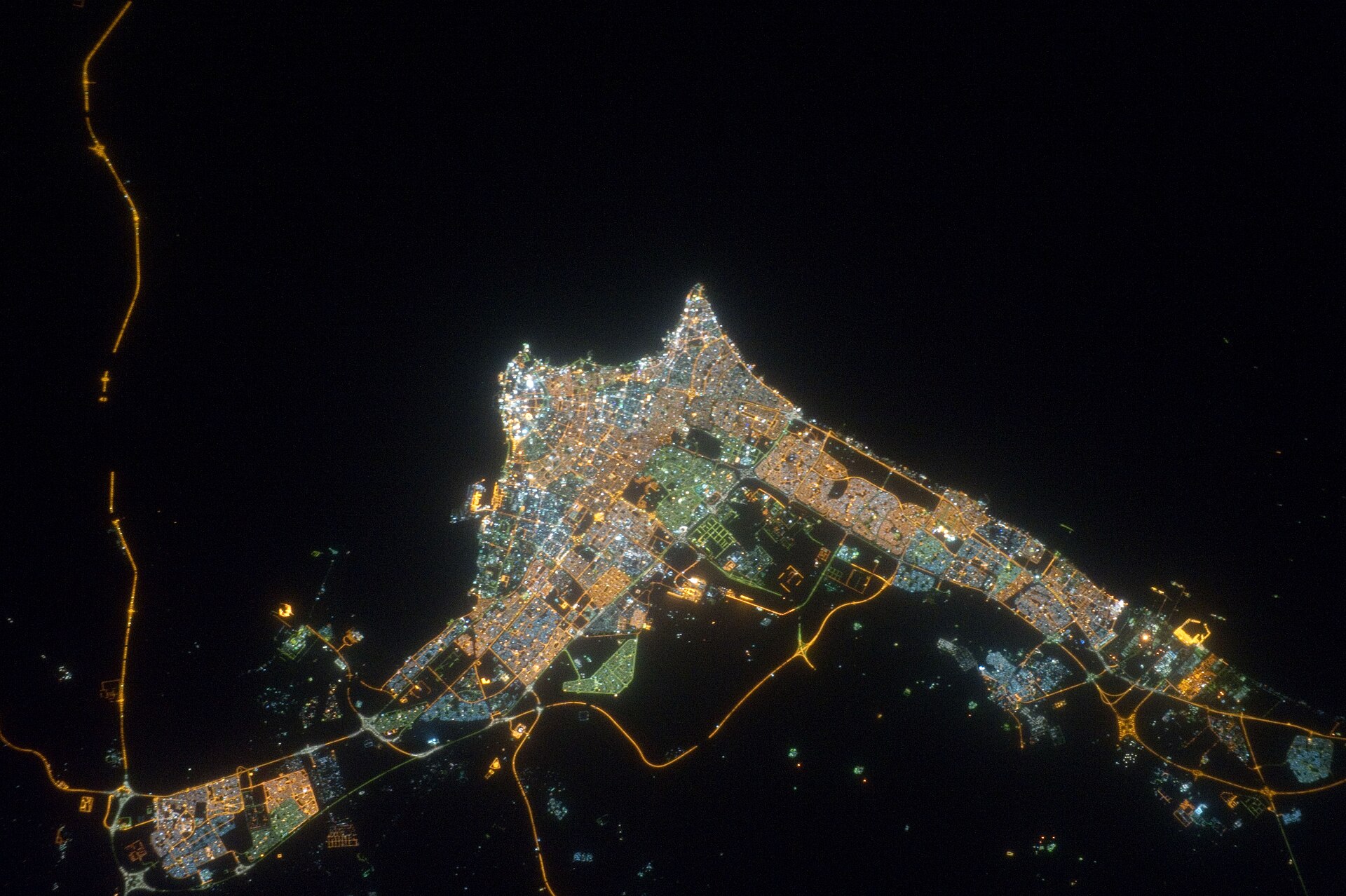

Kuwait is a small constitutional monarchy on the Persian Gulf, bordered by Iraq and Saudi Arabia. It grew from an 18th-century Bedouin trading post into one of the world's most urbanized countries, with an economy anchored in oil and overseas investment. The country gained independence from Britain in 1961, endured invasion and occupation by Iraq in 1990–1991, and today ranks among the richest countries per person.
Overview
The State of Kuwait — Dawlat al-Kuwayt in Arabic — is a small emirate nestled between Iraq and Saudi Arabia, with a total area of 17,818 square km.1 It lies within one of the driest and least hospitable stretches of desert on Earth.1 Its coast, however, opens onto Kuwait Bay, a deep harbour on the Persian Gulf.1 It was there, in the 18th century, that Bedouin from the interior founded their trading post.1 The deep harbour of Kuwait Bay gave the young settlement its natural port on the gulf.1 The gulf, not the desert, gave the young settlement its link to the wider world.1 The bay's deep water has served Kuwait since the earliest settlement.1 From that post grew a state in which most of the population lives in Kuwait City, making Kuwait one of the world's most-urbanized countries.1 Today the country is a compact, highly urbanized state facing the Persian Gulf.1
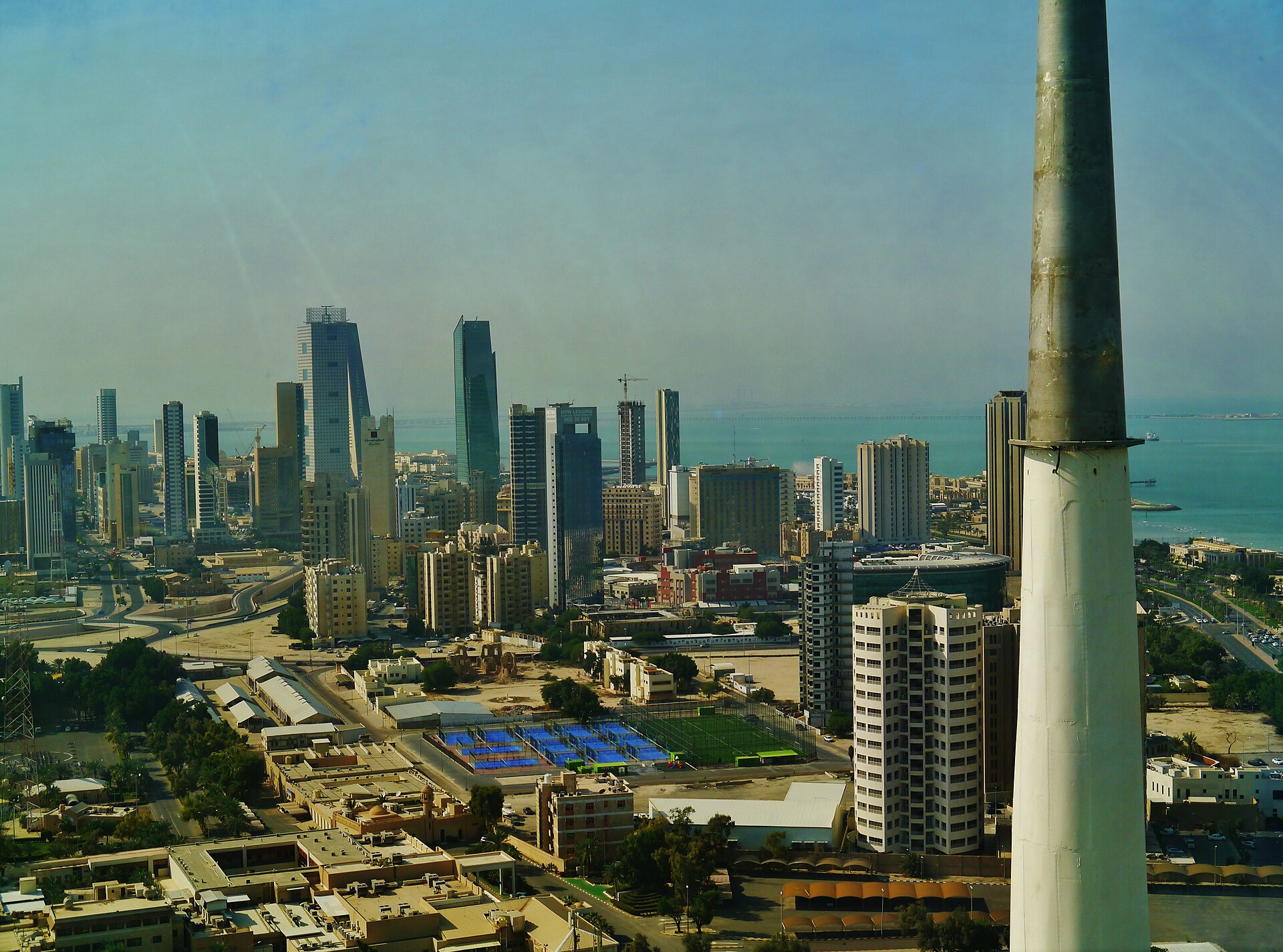
The name Kuwait comes from the Arabic diminutive of the Hindustani kūt, which means “fort”.1 In 1756 the ruling family, the Āl Ṣabāḥ, formally established a sheikhdom, and Kuwait's fortunes have been linked to foreign commerce ever since.1 The Āl Ṣabāḥ have held the emirate ever since.1 Over the generations, and with accumulated wealth, the small fort grew into Kuwait City, a modern metropolis where skyscrapers, apartment buildings, and mosques stand together.1 Because Kuwait City holds most of the country's population, Kuwait ranks among the world's most-urbanized countries.1 The capital grew out of the small fort of the trading era.1 Skyscrapers, apartment buildings, and mosques mark the modern skyline of the capital.1
Kuwait's total area is 17,818 square km, and its capital is Kuwait City.1 Arabic is the official language, and Islam the official religion.1 The national currency is the Kuwaiti dinar; one US dollar equals 0.309 dinar.1 The country is a constitutional monarchy ruled by an emir from the Āl Ṣabāḥ family.1
Geography
In Kuwait, true soils are almost entirely absent from the natural landscape.1 What soils there are yield little to agriculture and contain very little organic matter.1 Wind-laid and sedimentary deposits cover much of the ground, and the soils are heavily salted, especially in basins and other places where residual water pools.1 Basins and low places where water lingers are the saltiest ground.1 Little of the land is suited to cultivation.1 Agriculture therefore plays only a modest part in the country's landscape and economy.1
The Persian Gulf War left a deep environmental wound: the desert's rigid surface layer, which held underlying sand deposits in place, was widely destroyed.1 As a result, more sand now travels on the wind, and the dunes have grown larger and more numerous.1 The desert surface, once held firm by that layer, now shifts more freely with the wind.1 The war, in this way, left a lasting mark on Kuwait's desert terrain itself.1
Along the gulf, Kuwait and Saudi Arabia long shared a territory of 2,200 square miles (5,700 square km) as a neutral zone, until the two countries agreed on a political boundary in 1969.1 Each country now administers half of the zone, known as the Neutral, or Partitioned, Zone.1 Yet they continue to divide equally the oil revenues of the entire area.1 The zone remains a distinctive feature of Kuwait's border arrangements with Saudi Arabia.1 Kuwait administers half of the Neutral, or Partitioned, Zone today.1
Kuwait's shore includes Kuwait Bay, a deep harbour on the Persian Gulf.1 The bay shelters the country's maritime front and provided the early settlement its port.1 Beyond the coast, the land runs into one of the driest, least-hospitable deserts on Earth.1 The gulf shore is Kuwait's window to the sea.1
Government and politics
Kuwait is a constitutional monarchy whose single legislative body is the National Assembly.1 The current monarch is Emir Sheikh Mishal al-Ahmad al-Jabir al-Sabah.1 He is assisted by Prime Minister Sheikh Mohammad Sabah al-Salem al-Sabah.1 The Āl Ṣabāḥ family has ruled Kuwait since it established the sheikhdom in 1756.1 Executive power is concentrated in the emir and his appointed council.1
The emir governs through a Council of Ministers, which he appoints and which is largely composed of members of his own family.1 The prime minister himself is drawn from the ruling family.1 The Council of Ministers carries out the emir's government.1
Voters elect the National Assembly's 50 members to four-year terms.1 Cabinet ministers sit in the parliament too, and the chamber has been dissolved several times.1 Political parties are banned, yet quasi-political organizations still find representation in parliament.1 Appointed ministers and elected members thus share Kuwait's political stage.1 Elections bring the assembly back every four years.1
Conservative elements in society long resisted reforms such as women's suffrage, which women gained only in 2005.1 The result is a political order in which family rule, an appointed cabinet, and an elected assembly coexist.1
Economy
Oil sits at the very centre of Kuwait's economy: virtually all of the nation's wealth comes, directly or indirectly, from petroleum extraction and processing.1 Since the 1970s, the oil industry has expanded steadily and rapidly — the most dramatic element of the country's economic development.1 Petroleum extraction and processing, in short, touch nearly every part of national economic life.1 Few sectors of the economy stand outside the oil industry's reach.1
Kuwait holds nearly one-tenth of the world's proven oil reserves, a stock large enough to sustain current production for roughly 150 years.1 The country also holds considerable reserves of natural gas.1 These endowments place Kuwait among the world's most oil-rich countries.1 Natural gas deepens the country's energy wealth.1 The reserves underpin both state revenue and exports.1
Thanks to oil and overseas investments, Kuwait enjoys one of the highest per capita incomes in the world.1 Petroleum and petroleum-derived products make up almost all of Kuwait's exports, and Asia and the Middle East are their most important markets.1 The World Bank recorded Kuwait's GDP at about 157.2 billion current US dollars in 2025, down from about 160.9 billion in 2024.2 GDP per capita stood at about 32,312 US dollars in 2025, down from about 32,856 in 2024.2 The population was recorded at about 4.87 million in 2025, down from about 4.90 million in 2024.2 Life expectancy at birth reached about 84.6 years in 2024, up from about 83.2 in 2023.2 Both output and income eased slightly between 2024 and 2025, by the World Bank's measures.2
History
From 1899 until 1961, Kuwait stood as a British protectorate.1 When the protectorate ended, the country became an independent state.1 The protectorate era followed the long line of Āl Ṣabāḥ sheikhs who had governed since 1756.1 During those decades, the emirate remained a small community bound by its trading links to the wider world.1
When Iraq invaded and occupied Kuwait in 1990, more than half of the population fled the country.1 Many of those who fled took refuge in foreign countries until the occupation was reversed.1 The occupation drove Kuwaitis abroad in huge numbers.1 The invasion came decades after Kuwait's independence in 1961.1
In February 1991, a United Nations coalition led by the United States launched an offensive and drove Iraq's army out of Kuwait within days.1 Retreating Iraqi troops set more than 700 of Kuwait's oil wells alight, an act of destruction that caused an environmental disaster across the entire region.1 By autumn 1991 the fires were out, and production soon climbed back to preinvasion levels.1
In May 1991, as hundreds of thousands of Kuwaitis came home from foreign refuges, the full damage of the invasion, the looting, and the war became clear.1 The returning families found their homes damaged by invasion, looting, and war.1 Amid an otherwise turbulent region, Kuwait has been called an “oasis” of peace and safety.1
Kuwait has largely recovered from the war, and once again its per capita income is among the highest in the world.1 The post-war recovery restored the country's economic standing.1
Culture and heritage
Kuwait City began as a small, mud-walled town that lived from fishing, pearling, and trade.1 Pearling and fishing sustained the town long before the oil age.1 After World War II, as the petroleum industry developed, the city grew rapidly into a flourishing administrative, commercial, and financial center.1 The old wall was removed in 1957.1 The maritime trades shaped the city's early character.1 The mud-walled town became the administrative, commercial, and financial center of the country.1
Al Sadu is the traditional weaving of a textile that Bedouin women make on a ground loom.3 The weavers work the natural fibres of their environment into a tightly woven, durable cloth.3 Bright colours such as reds and oranges enliven the textile.3 The patterns mirror the desert in a simple, pure form, their geometric designs flowing in rhythmic repetition and symmetry.3
Traditional weaving of Al Sadu was inscribed on the UNESCO Representative List of the Intangible Cultural Heritage of Humanity in 2020 by Kuwait and Saudi Arabia.3 In 2025, Qatar joined the nomination, which was inscribed that year under Decision 20.COM 7.b.54.3 The inscription recognizes the craft as part of humanity's shared intangible heritage.3 The UNESCO list now carries the craft under the joint file of three states.3
The primary bearers of Al Sadu are older Bedouin women who are master weavers.3 They transmit the related skills to others, most often within their households.3 With time, the textile has shifted from a functional object to a symbol of shared tradition and culture.3
Settlement and urban development
Kuwait is a small emirate nestled between Iraq and Saudi Arabia.1 In the 18th century, Bedouin from the interior founded a trading post on the shore of Kuwait Bay.1 The name Kuwait is derived from the Arabic diminutive of the Hindustani kūt, meaning "fort."1 Since the emirate's ruling family, the Āl Ṣabāḥ, formally established a sheikhdom in 1756, the country's fortunes have been linked to foreign commerce.1 In time and with accumulated wealth, the small fort grew to become Kuwait city, a modern metropolis mingling skyscrapers, apartment buildings, and mosques.1
Following the development of Kuwait's petroleum industry after World War II, Kuwait City rapidly grew into a flourishing administrative, commercial, and financial center.1 Kuwait City's old wall was removed in 1957.1
Terrain, soils, and environment
True soils scarcely exist naturally in Kuwait; those that exist have little agricultural productivity and extremely low organic matter.1 A high degree of salinity is found in Kuwait's soils, particularly in basins where residual water pools.1 One environmental consequence of the Persian Gulf War was the widespread destruction of the desert's rigid surface layer, leading to more wind-borne sand and larger, more numerous dunes.1
A territory of 2,200 square miles (5,700 square km) along the gulf was shared by Kuwait and Saudi Arabia as a neutral zone until a political boundary was agreed in 1969; each country now administers half, while sharing equally the oil revenues of the whole area.1
Postwar recovery and contemporary conditions
A United Nations coalition led by the United States drove Iraq's army out of Kuwait within days of launching an offensive in February 1991.1 The damage from the invasion, looting, and war became clear as hundreds of thousands of Kuwaitis returned from foreign refuges to their homes in May 1991.1 By the fall of 1991, the oil-well fires had been extinguished, and production soon returned to preinvasion levels.1 Kuwait has largely recovered from the effects of the war and again has one of the highest per capita incomes in the world.1 Kuwait has been called an "oasis" of peace and safety amid an otherwise turbulent region.1
The steady and rapid expansion of Kuwait's oil industry since the 1970s has been the most dramatic element of the country's economic development.1 The income generated by oil and overseas investments gave Kuwait one of the highest per capita incomes in the world.1 Petroleum and petroleum-derived products account for almost all of Kuwait's exports, with Asia and the Middle East being the most important markets.1 Kuwait also has considerable natural gas reserves.1 The World Bank recorded Kuwait's GDP per capita at about 32,312 US dollars in 2025, down from about 32,856 in 2024.2 The World Bank recorded Kuwait's life expectancy at birth at about 84.6 years in 2024, up from about 83.2 in 2023.2
Timeline
The Āl Ṣabāḥ sheikhdom established
The ruling family, the Āl Ṣabāḥ, formally established a sheikhdom, and Kuwait's fortunes became linked to foreign commerce.1
British protectorate begins
Kuwait became a British protectorate, a status that lasted until 1961.1
Independence
The British protectorate ended and Kuwait became an independent state.1
Invasion and occupation by Iraq
Iraq invaded and occupied Kuwait, leading more than half of the population to flee the country.1
Liberation
A United Nations coalition led by the United States drove Iraq's army out within days of launching an offensive; retreating troops set fire to over 700 oil wells, extinguished by fall 1991.1
Women's suffrage
Kuwaiti women were enfranchised, after conservative elements in society had long resisted the reform.1
Al Sadu inscribed by UNESCO
Traditional weaving of Al Sadu was inscribed on the UNESCO Representative List of the Intangible Cultural Heritage of Humanity by Kuwait and Saudi Arabia.3
Qatar joins the Al Sadu file
The Al Sadu nomination was extended with Qatar joining Kuwait and Saudi Arabia (Decision 20.COM 7.b.54).3
Frequently asked questions
Where is Kuwait located?
Kuwait is a small emirate nestled between Iraq and Saudi Arabia, in a section of one of the driest, least-hospitable deserts on Earth.1 Its shore includes Kuwait Bay, a deep harbour on the Persian Gulf.1
What does the name Kuwait mean?
The name Kuwait is derived from the Arabic diminutive of the Hindustani kūt, meaning “fort”.1
How did Kuwait become independent?
Kuwait was a British protectorate from 1899 until 1961.1 When the protectorate ended, Kuwait became an independent state.1
What happened in the 1990–1991 Gulf War?
Iraq invaded and occupied Kuwait in 1990, leading more than half of the population to flee.1 A United Nations coalition led by the United States drove Iraq's army out within days of launching an offensive in February 1991.1 During their retreat, Iraqi troops set fire to over 700 oil wells, and the fires were extinguished by the fall of 1991.1
How large are Kuwait's oil reserves?
Kuwait has nearly one-tenth of the world's proven oil reserves, enough to sustain current production levels for about 150 years.1 The country also has considerable natural gas reserves.1
How is Kuwait governed?
Kuwait is a constitutional monarchy with a single legislative body, the National Assembly.1 The emir governs through a Council of Ministers largely composed of his family members, whom he appoints.1 Political parties are prohibited, and women were not enfranchised until 2005.1
What is the Neutral Zone?
A territory of 2,200 square miles (5,700 square km) along the gulf was shared by Kuwait and Saudi Arabia as a neutral zone until a political boundary was agreed in 1969.1 Each country now administers half of the territory, but the two continue to share equally the revenues from oil production in the entire area.1
What is Al Sadu weaving?
Traditional weaving of Al Sadu refers to a woven textile made by Bedouin women using a ground loom.3 It was inscribed on the UNESCO Representative List of the Intangible Cultural Heritage of Humanity in 2020 by Kuwait and Saudi Arabia, and in 2025 Qatar joined the nomination.3
Knowledge graph
Sources & citations
Every factual claim in this article is drawn from the sources below. Bracketed numbers in the text link to the corresponding source.
- 1
- 2
- 3