Saudi Arabia
The kingdom that is custodian of Islam's birthplace, one of the world's largest oil producers, and home to the largest oasis on Earth.
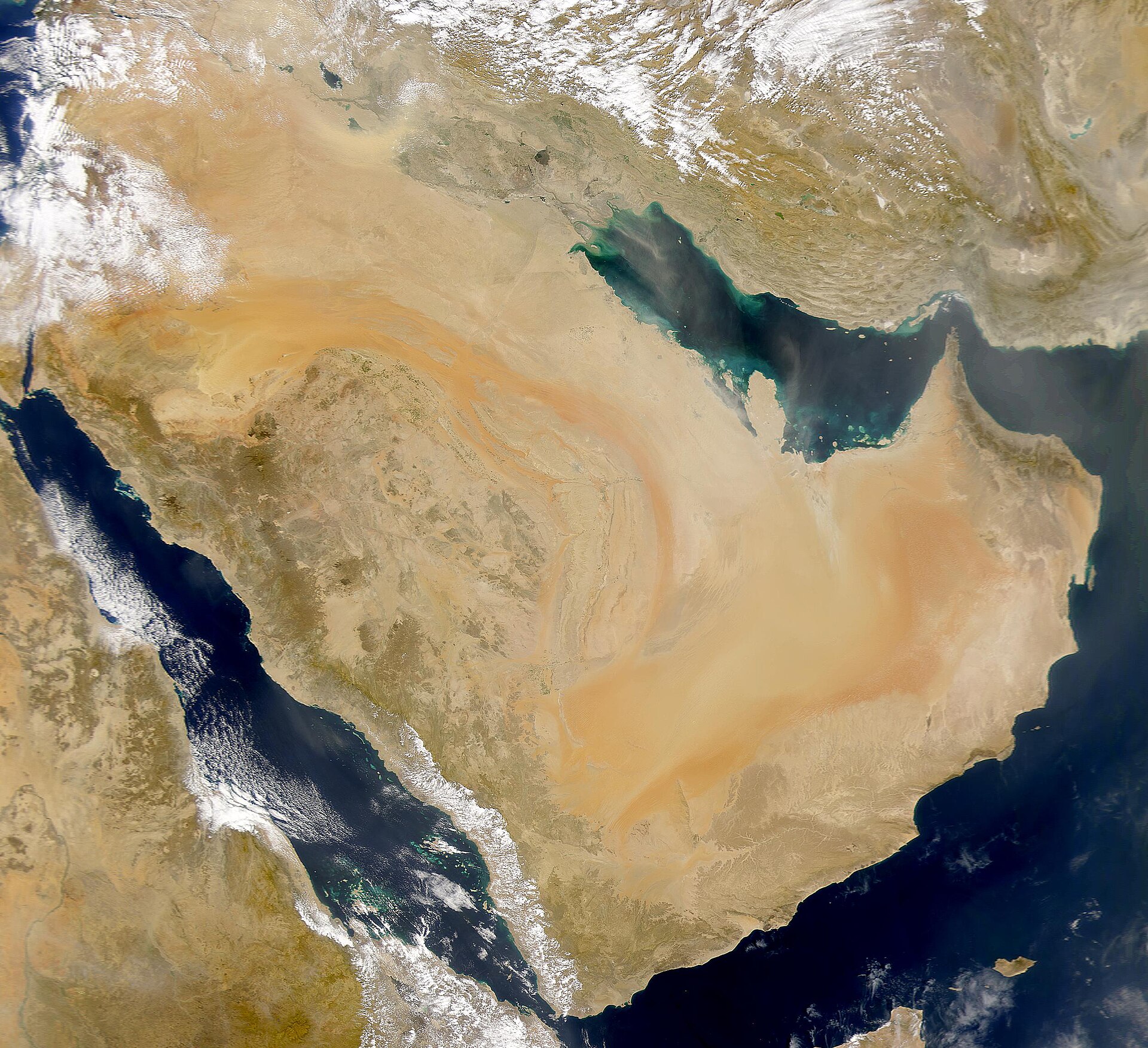

Saudi Arabia is an absolute monarchy occupying most of the Arabian Peninsula. Unified in 1932 by Abdulaziz Al Saud, it is the custodian of Islam's two holiest cities, Mecca and Medina, and one of the world's largest oil producers. Its economy and society have been reshaped in recent years by the reform program of Crown Prince Mohammed bin Salman, while its heritage — from the Al-Ahsa Oasis to the annual Hajj — remains central to its identity.
Overview
Saudi Arabia is a kingdom occupying most of the Arabian Peninsula, whose stature rests on its prestige as the custodian of the birthplace of Islam and on its status as one of the world's largest oil producers.1 It is bordered to the west by the Red Sea and to the east by the Arabian Gulf, the United Arab Emirates and Qatar, to the north by Kuwait, Iraq and Jordan, and to the south by Yemen and Oman.2 The kingdom is a sovereign state whose religion is Islam, whose constitution is the Quran and the Sunna of the Prophet, whose language is Arabic and whose capital is Riyadh.2
Riyadh is also the largest city in the country.1 The kingdom covers an area of 2,149,690 square kilometres.1 Its coasts extend approximately 3,800 kilometres along three seafronts — the Red Sea, the Gulf of Aqaba and the Arabian Gulf.2 Administratively, the country is divided into thirteen provinces.2
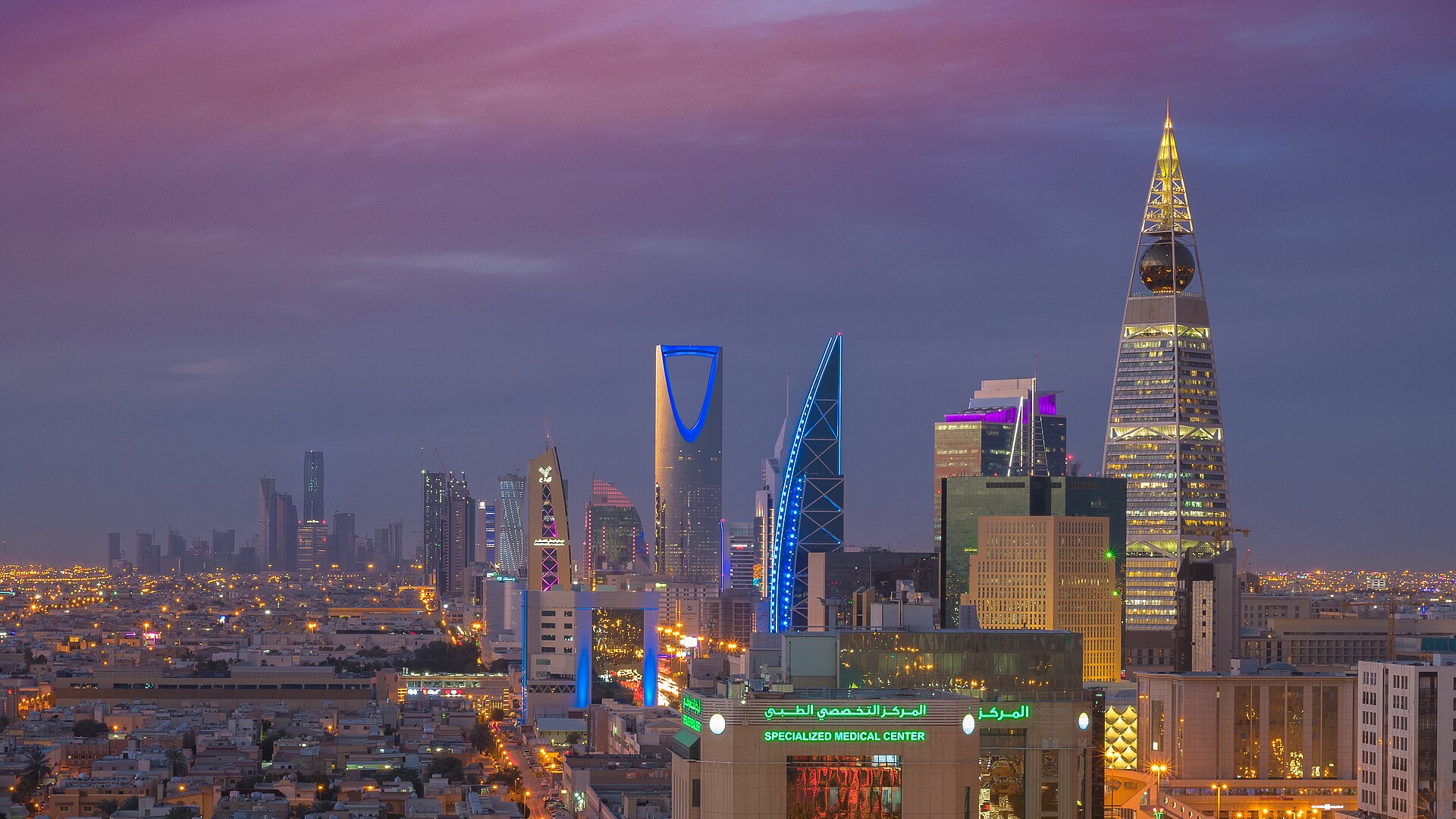
A census conducted in 2022 counted a population of 32,175,224, of whom 18.8 million were Saudis and 13.4 million non-Saudis.3 The census found a young population, with a median age of 29.3 It also recorded that the total population had grown by 8.2 million — 34.2 per cent — since 2010.3 Within the kingdom lie Mecca and Medina, the holiest cities of Islam, towards which Muslims from all over the world converge for the annual Hajj.1 The Al-Ahsa Oasis, the largest oasis in the world, lies in the east of the country.4
Geography
Saudi Arabia's territory stretches from the Red Sea in the west to the Arabian Gulf in the east.2 Its western coastline on the Red Sea and the Gulf of Aqaba spans approximately 2,600 kilometres, including around 180 kilometres along the Gulf of Aqaba.2 Roughly 80 per cent of the eastern shore of the Red Sea falls within its borders.2
Along the Red Sea runs the Tihama coastal plain, approximately 1,100 kilometres long.2 To its east rises the Sarawat mountain range, whose high peaks reach nine thousand feet in the south.2 In the southeast lies the Rub' al-Khali, the Empty Quarter.5
The Rub' al-Khali covers an area of about 650,000 square kilometres, lying mainly in southeastern Saudi Arabia with lesser portions in Yemen, Oman and the United Arab Emirates.5 It is the largest area of continuous sand in the world and occupies more than one-fourth of the kingdom's total area.5 One of the driest regions on Earth, it is virtually uninhabited and largely unexplored.5
In the east of the peninsula lies the Al-Ahsa Oasis, bordered to the east by the Gulf and to the south by the desert of Ar-Rub' Al-Khali.4 The oasis is a serial property comprising gardens, canals, springs, wells and a drainage lake, as well as historical buildings, urban fabric and archaeological sites.4 With its 2.5 million date palms, it is the largest oasis in the world.4 Its historic fortresses, mosques, wells and canals record continued human settlement in the Gulf region from the Neolithic to the present.4
Government
Political power in Saudi Arabia is held as a monopoly by the Al Saud dynasty, and the country is an absolute monarchy.1 The Basic Law of Governance, issued by Royal Order in 1992, sets out the state's structural and political foundations in eighty-three articles.2 It stipulates that the system of governance is a monarchy limited to the sons of King Abdulaziz Bin Abdulrahman Al Saud and their descendants.2
The King appoints or dismisses his Crown Prince by Royal Order, following consultations with the Allegiance Council.2 The Council of Ministers is the highest executive authority in the kingdom, operating from headquarters in Riyadh and Jeddah.2 The Shura Council, whose official establishment under its current name dates to its reconstitution in 1927, reviews and advises on general state policies.2
King Salman bin Abdulaziz al-Saud ascended the throne in January 2015 following the death of his half-brother Abdullah.1 In June 2017 he made his son Mohammed bin Salman heir-apparent, and the crown prince now controls all the major levers of power.1 Prince Mohammed bin Salman is the kingdom's de-facto ruler.1
The country comprises thirteen administrative provinces.2 Riyadh Province covers approximately 380,000 square kilometres and had 8,591,748 residents at the 2022 census.2 Makkah al-Mukarramah Province, within whose boundaries the Grand Mosque stands, ranks second in population with 8,021,463 residents.2 The Eastern Province covers 540,000 square kilometres, or 27 per cent of the kingdom's area.2
Economy
The kingdom's economy is anchored in petroleum.1 Its importance as an oil exporter has made economic interdependence with the West — where the main consumer demand is found — a necessity.1 The World Bank recorded Saudi Arabia's GDP at about 1,276.9 billion current US dollars in 2025, up from about 1,254.1 billion in 2024.6 GDP per capita stood at about 34,537 US dollars in 2025.6
The World Bank recorded the population at about 36,973,555 in 2025, with life expectancy at birth of about 79.0 years in 2024.6 Unemployment was about 3.0 per cent in 2025, down from about 3.5 per cent in 2024.6 Female labour force participation reached about 33.6 per cent in 2025.6 About 84.6 per cent of the population lived in urban areas.6
Inflation was about 2.1 per cent in 2025.6 Carbon dioxide emissions were about 652.5 million tonnes in 2024.6 Beyond oil, the Kingdom ranks thirteenth globally for the richness and diversity of its mineral resources, with more than forty-eight types identified.2 The official currency is the Saudi Riyal, denoted internationally as SAR.2
| Indicator | Value | Source |
|---|---|---|
| Capital | Riyadh | 1 |
| Area | 2,149,690 km² | 1 |
| Population (2022 census) | 32,175,224 | 3 |
| Population (World Bank, 2025) | 36,973,555 | 6 |
| GDP (2025) | 1,276.9 billion USD | 6 |
| GDP per capita (2025) | 34,537 USD | 6 |
| Life expectancy (2024) | 79.0 years | 6 |
| Proven crude oil reserves (end-2024) | 267,200 million barrels | 7 |
| Crude oil production (2024) | 8,955 thousand b/d | 7 |
| World Heritage sites | 8 | 8 |
Oil and OPEC
Saudi Arabia's proven crude oil reserves stood at 267,200 million barrels at the end of 2024, according to OPEC's Annual Statistical Bulletin.7 World proven crude oil reserves totalled 1,566,869 million barrels.7 OPEC members held 1,241,294 million barrels of that total.7
The kingdom's crude oil production averaged 8,955 thousand barrels per day in 2024, down from 9,606 thousand barrels per day in 2023.7 Crude oil exports averaged 6,049 thousand barrels per day.7 The largest destinations were OECD Asia Pacific, which received 1,787 thousand barrels per day, and China, which received 1,495 thousand.7 OECD Europe took 721 thousand barrels per day and India 624 thousand.7
Oil was discovered in commercial quantities in Dammam City, in the east of the kingdom, in 1938.2 A decade later, in 1948, Al-Ghawar — the world's largest conventional oil field — was discovered in the northeastern part of the Rub' al-Khali.5 Extending roughly north-south for some 260 kilometres east of Riyadh, the field contains tens of billions of barrels of oil.5
History
The modern history of Saudi Arabia began with the recovery of Riyadh, led by the Founding King Abdulaziz Bin Abdulrahman Al Saud, on January 15, 1902.2 The unification of the kingdom's regions and cities spanned thirty-two years from that beginning.2 On September 19, 1932, a Royal Order unified the country and established it as the Kingdom of Saudi Arabia; the announcement on September 23, 1932 was later designated the kingdom's National Day.2
In 1972, the kingdom gained control of 20 per cent of Aramco, lessening US control over Saudi oil.1 The following year Saudi Arabia led an oil boycott against the Western countries that supported Israel in the October Yom Kippur War with Egypt and Syria, and oil prices quadrupled.1 In 1979, extremists seized the Grand Mosque of Mecca; the government regained control after ten days and those captured were executed.1
King Salman bin Abdulaziz al-Saud ascended the throne in January 2015 following the death of his half-brother Abdullah.1 King Salman made his son Mohammed bin Salman heir-apparent in June 2017.1 The kingdom's fifth census, conducted in May 2022, counted 32,175,224 residents and found that the population had grown by 8.2 million since 2010.3
Culture and heritage
Saudi Arabia is the custodian of the birthplace of Islam, and Mecca and Medina, the two holiest cities of the faith, lie within its territory.1 The Grand Mosque in Makkah houses al-Kaaba al-Musharrafa, the Qibla for Muslims, and is the holiest site on earth for them.2 Muslims from all over the world converge on Mecca for the annual Hajj pilgrimage.1
For the 1445H (2024) Hajj season, the General Authority for Statistics recorded 1,833,164 pilgrims: 1,611,310 arrived from outside the kingdom and 221,854 were internal pilgrims, including citizens and residents.9 The Ministry of Hajj and Umrah traces its origins to 1946, when the first General Directorate of Hajj was established.2 It became the Ministry of Hajj and Endowments in 1961, was renamed the Ministry of Hajj in 1994, and took its current name in 2016.2
Saudi coffee was inscribed on the UNESCO list of intangible cultural heritage as 'Arabic coffee, a symbol of generosity'.2 The national flag of the kingdom is green, bears the phrase 'There is no God but Allah and Muhammed is the Messenger of Allah' above an unsheathed sword, and is never lowered at half-mast.2 Today's form of the flag was approved during the reign of King Abdulaziz in 1937.2
World Heritage
Eight properties in Saudi Arabia are inscribed on the UNESCO World Heritage List — seven cultural and one natural.8 Hegra Archaeological Site, inscribed in 2008, was the first, followed by the At-Turaif District in ad-Dir'iyah in 2010, Historic Jeddah in 2014, Rock Art in the Hail Region in 2015, the Al-Ahsa Oasis in 2018, the Hima Cultural Area in 2021 and the Cultural Landscape of Al-Faw Archaeological Area in 2024.8 The natural site 'Uruq Bani Ma'arid was inscribed in 2023.8
Hegra — al-Hijr, or Mada'in Salih — is the largest conserved site of the civilization of the Nabataeans south of Petra in Jordan.10 With its 111 monumental tombs, 94 of which are decorated, and its water wells, the site is an outstanding example of the Nabataeans' architectural accomplishment and hydraulic expertise.10 Its decorated tomb facades date from the 1st century BC to the 1st century AD, and it also preserves some 50 inscriptions of the pre-Nabataean period and cave drawings.10
North-west of Riyadh, the At-Turaif District in ad-Dir'iyah was the first capital of the Saudi dynasty and bears witness to the Najdi architectural style.11 Founded in the 15th century, it became in the 18th and early 19th century the centre of the temporal power of the House of Saud and of the spread of the Salafiyya reform.11 Historic Jeddah, on the eastern shore of the Red Sea, was established from the 7th century AD as a major port for Indian Ocean trade routes and was the gateway for Muslim pilgrims who arrived by sea.12 Its tower houses, built in the late 19th century by the city's mercantile elites, combine Red Sea coastal coral building traditions with influences and crafts from along the trade routes.12
The Hima Cultural Area in the southwest lies on one of the ancient caravan routes of the Arabian Peninsula and contains some of the most significant and ancient desert wells in the Middle East.13 Its spectacular petroglyphs cover a period of at least 7,000 years, in scripts including Musnad, Aramaic-Nabatean, South-Arabian, Thamudic, Greek and Arabic.13 Across the six component parts of the property, it may contain more than 100,000 petroglyphs, encompassing the region's largest concentrations of rock art and rock inscription sites.13
Vision 2030 and reform
Vision 2030 is the kingdom's programme of transformation, built on three pillars.14 The first is a vibrant society in which all citizens can thrive and pursue their passions, underpinned by strong social infrastructure and effective social services.14 The second is a thriving economy where everyone has the opportunity to succeed, supported by a business environment open to firms of all sizes and by investment in education.14 The third is an ambitious nation committed to efficiency and accountability at all levels.14
Vision 2030's delivery programmes include the Quality of Life Program, the Pilgrim Experience Program, the Public Investment Fund Program and the National Transformation Program.14 Its programmes also range from the Housing Program and the Human Capability Development Program to the Privatization Program.14 Its flagship projects include NEOM, The Red Sea, Qiddiya, Diriyah, ROSHN, AlUla and the Saudi Green Initiative.14
NEOM is an ecosystem in northwest Saudi Arabia anchored by Oxagon, its economic engine, supporting industry, trade and the development of a knowledge-based economy.15 Its land footprint is 26,500 square kilometres.15 The territory includes 41 islands and 468 kilometres of coastline.15 More than 100 nationalities work at NEOM, and 4.7 million plants and shrubs have been planted there.15
Timeline
The kingdom is unified
The Kingdom of Hejaz and Sultanate of Nejd, controlled by Abdulaziz bin Abdul Rahman Al Saud (Ibn Saud), were unified under the name Kingdom of Saudi Arabia.1
Oil is found at Dammam
Oil is discovered in commercial quantities in Dammam City, in the east of the Kingdom.2
Al-Ghawar is discovered
Al-Ghawar, the world's largest conventional oil field, is discovered in the northeastern part of the Rub' al-Khali, extending some 260 km east of Riyadh.5
Control of Aramco begins to shift
Saudi Arabia gained control of 20% of Aramco, lessening US control over Saudi oil.1
The oil boycott
Saudi Arabia led an oil boycott against Western countries that supported Israel in the October Yom Kippur War; oil prices quadrupled.1
The Grand Mosque seizure
Extremists seized the Grand Mosque of Mecca; the government regained control after 10 days and those captured were executed.1
Hegra becomes Saudi Arabia's first World Heritage site
Hegra Archaeological Site (al-Hijr / Mada'in Salih) becomes the first World Heritage property inscribed in Saudi Arabia.10
King Salman ascends the throne
Salman bin Abdulaziz al-Saud became king following the death of his half-brother Abdullah.1
Mohammed bin Salman becomes heir-apparent
King Salman made his son Mohammed bin Salman heir-apparent; he now controls the major levers of power.1
Al-Ahsa inscribed by UNESCO
The Al-Ahsa Oasis, the largest oasis in the world with 2.5 million date palms, was inscribed on the UNESCO World Heritage List.4
The 2022 census
The Kingdom's fifth census is conducted in May 2022; it counts a population of 32,175,224, with a median age of 29.3
Frequently asked questions
What kind of government does Saudi Arabia have?
Saudi Arabia is an absolute monarchy in which the Al Saud dynasty holds a monopoly of political power.1 Under the Basic Law of Governance, issued by Royal Order in 1992, the monarchy is limited to the sons of King Abdulaziz Bin Abdulrahman Al Saud and their descendants.2 The current king, Salman bin Abdulaziz al-Saud, ascended the throne in January 2015, and his son Mohammed bin Salman, made heir-apparent in June 2017, controls all the major levers of power as the kingdom's de-facto ruler.1
What is the capital of Saudi Arabia, and how large is the country?
The capital is Riyadh, which is also the largest city in the country.1 The kingdom covers an area of 2,149,690 square kilometres.1 It is divided into thirteen administrative provinces.2
When was the Kingdom of Saudi Arabia founded?
The modern state began with the recovery of Riyadh by the Founding King Abdulaziz Bin Abdulrahman Al Saud on January 15, 1902.2 On September 19, 1932, a Royal Order unified the country and established it as the Kingdom of Saudi Arabia, with the announcement made on September 23, 1932 — the date later designated National Day.2
How many people live in Saudi Arabia?
The 2022 census counted 32,175,224 residents: 18.8 million Saudis and 13.4 million non-Saudis, with a median age of 29.3 The World Bank recorded a population of about 36,973,555 in 2025.6
Why does Saudi Arabia matter to world oil markets?
It is one of the world's largest oil producers.1 Its proven crude oil reserves stood at 267,200 million barrels at the end of 2024, according to OPEC's Annual Statistical Bulletin.7 Crude oil production averaged 8,955 thousand barrels per day in 2024 and crude exports 6,049 thousand barrels per day.7
What is the Hajj, and how many pilgrims take part?
Muslims from all over the world converge on Mecca for the annual Hajj pilgrimage.1 For the 1445H (2024) season, GASTAT recorded 1,833,164 pilgrims, of whom 1,611,310 arrived from outside the kingdom and 221,854 were internal pilgrims.9
Which World Heritage sites does Saudi Arabia have?
Eight properties are inscribed on the UNESCO World Heritage List — seven cultural and one natural — among them Hegra (2008), the At-Turaif District in ad-Dir'iyah (2010), Historic Jeddah (2014), the Al-Ahsa Oasis (2018) and the Hima Cultural Area (2021).8 Hegra, with its 111 monumental tombs, 94 of them decorated, was the first Saudi property inscribed.10
What is Vision 2030?
Vision 2030 is a national transformation programme built on three pillars: a vibrant society, a thriving economy and an ambitious nation.14 Its flagship projects include NEOM, The Red Sea, Qiddiya, Diriyah and ROSHN, and its delivery programmes range from the Quality of Life Program to the Pilgrim Experience Program.14 NEOM, in the northwest of the kingdom, has a land footprint of 26,500 square kilometres.15
Knowledge graph
Sources & citations
Every factual claim in this article is drawn from the sources below. Bracketed numbers in the text link to the corresponding source.
- 1
- 2
- 3
- 4
- 5
- 6
- 7
- 8
- 9
- 10
- 11
- 12
- 13
- 14
- 15