Atom
The history and structure of the atom: from ancient Greek atomism and Dalton's chemical theory to the discoveries of the electron, the nucleus and the quantum-mechanical model.
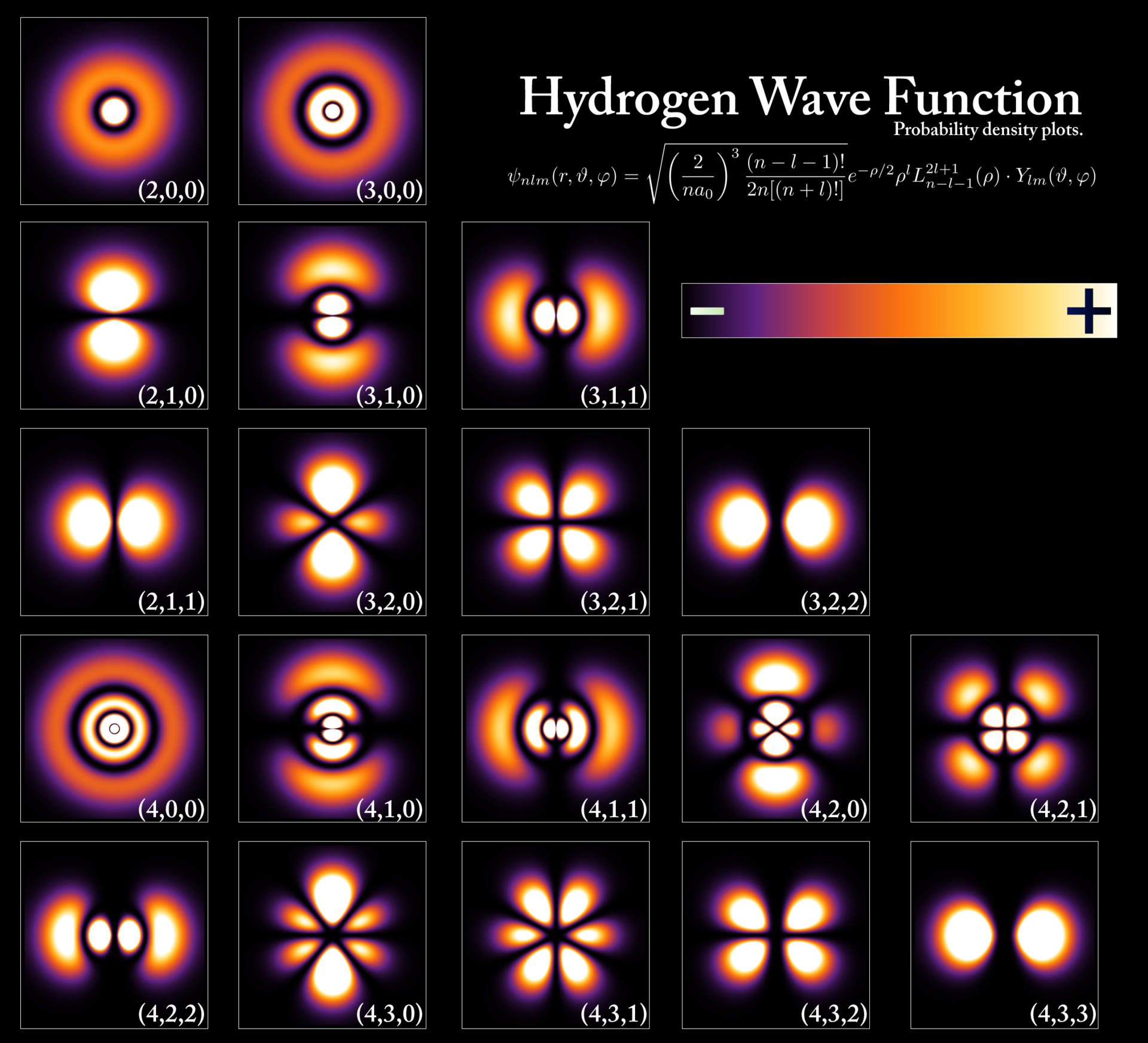
The atom is the smallest unit of ordinary matter that retains its chemical identity, consisting of a nucleus of protons and neutrons surrounded by electrons. Ancient atomists proposed indivisible particles moving in void; John Dalton made the idea quantitative in the early 19th century, and between 1897 and 1932 the electron, nucleus, proton and neutron were discovered, leading from the Bohr model of 1913 to the quantum-mechanical atom based on Schrödinger's wave equation of 1926. Isotopes, quarks and the Standard Model complete the modern picture.
In this article
- 1Overview
- 2Etymology and Ancient Greek Origins
- 3Atomism in Lucretius
- 4Dalton and the Modern Atomic Theory
- 5Discovery of the Electron
- 6Rutherford and the Nucleus
- 7Bohr Model and Quantum Mechanics
- 8Subatomic Structure and the Standard Model
- 9Isotopes
- 10Scale and Dimensions
- 11Timeline: from ancient atomism to the quantum atom
- 12Frequently asked questions
- 13Knowledge graph
Overview
An atom is the basic building block of chemistry and the smallest unit into which matter can be divided without the release of electrically charged particles. It is also the smallest unit of matter that keeps a chemical element's characteristic properties.
Atoms consist of protons and neutrons in the nucleus, surrounded by electrons. The number of protons in an atom determines its atomic number in the Periodic Table of Elements.
All ordinary matter, including every atom on the periodic table of elements, is built from only three types of matter particles: up and down quarks, which form the protons and neutrons in the nucleus, and electrons that surround the nucleus. The Standard Model explains how quarks, which make up protons and neutrons, and leptons, which include electrons, compose all known matter, as well as how force-carrying particles belonging to the boson group influence them.
1. Etymology and Ancient Greek Origins
The word atom descends from the ancient Greek adjective atomos, which literally means "uncuttable". The name thus preserves, in its etymology, the defining claim of the earliest atomic philosophy: that matter is ultimately composed of bodies that cannot be divided further. What began as a Greek term for indivisibility became the permanent designation for the basic units of the natural world.
Atomism in the Greek tradition is usually credited to Leucippus, a thinker of the fifth century BCE. Little is known about Leucippus himself, but the ideas of his student Democritus, who is said to have taken over and systematized his teacher's theory, survive through many reports and fragments quoted by others.
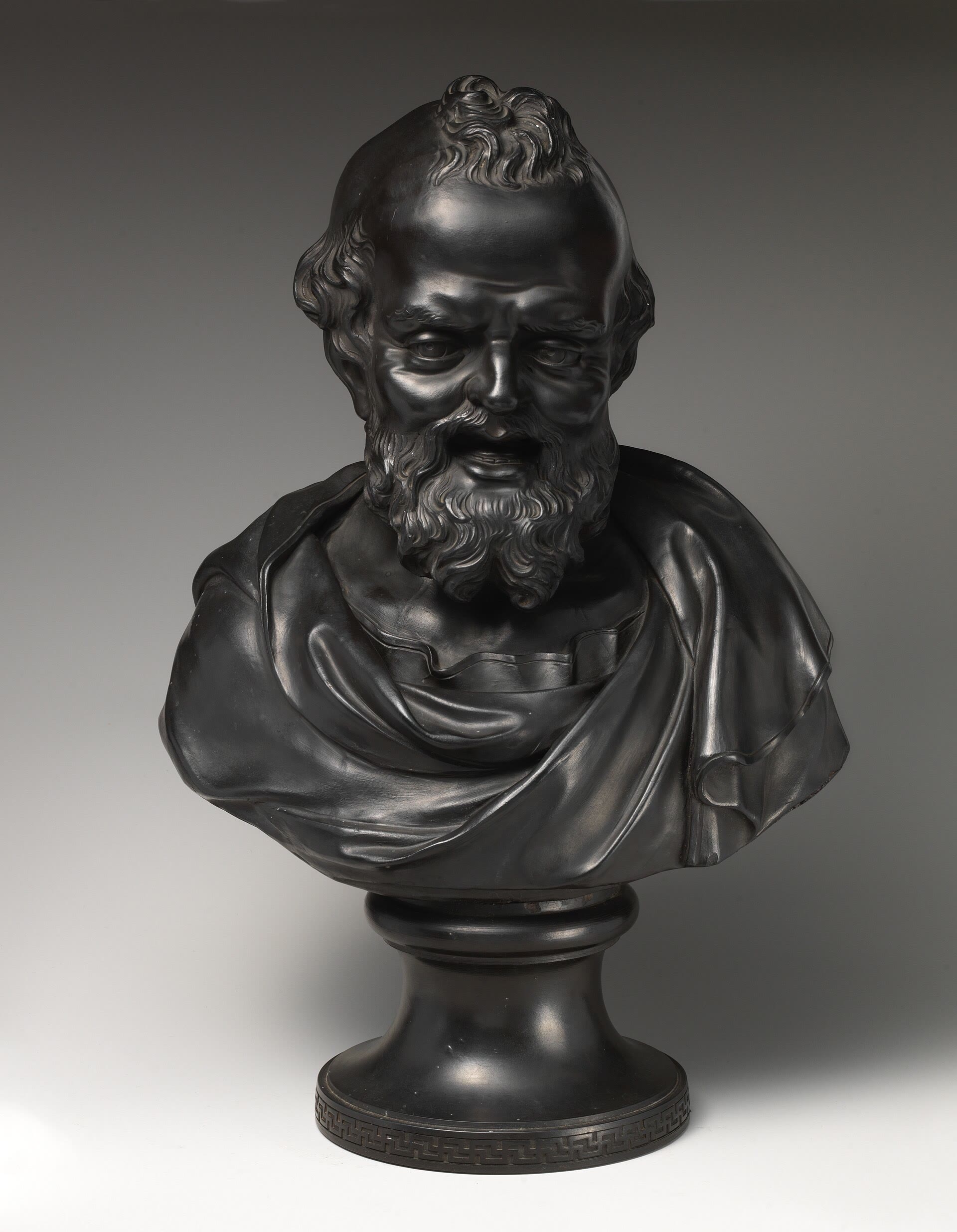
The early Greek atomists held that the two fundamental and oppositely characterized constituents of the natural world are indivisible bodies called atoms and void, the latter described simply as nothing or as the negation of being. Atoms, possessing only a few intrinsic properties such as size and shape, strike against one another, rebound, and interlock in an infinite void. Leucippus held that an infinite number of atoms move for all time through an infinite void and can form cosmic systems, or kosmoi, by means of a whirling motion that randomly establishes itself in a large enough cluster of atoms. From this spare repertoire of bodies and empty space, the atomists sought to account for the origins of everything.
This powerful and consistent materialism was regarded by Aristotle as a chief competitor to teleological natural philosophy. After his criticisms, the theory was reformulated by Epicurus and gained a second life as the philosophy of a school devoted to the pursuit of tranquillity and a communal life of simple pleasures.
2. Atomism in Lucretius
All nature, self-sustained, consists of two things: bodies and the void in which the bodies are set and are moved around.
Lucretius, De Rerum Natura 5On the Nature of Things (De Rerum Natura), Book I · Internet Classics Archive, MIT (trans. William Ellery Leonard) ↗
Lucretius opens his account of the physical world by dividing it into two constituents: bodies, and the void in which those bodies are set and moved around 5. He adds that common instinct declares that body exists of itself 5.
Nothing from nothing was ever born.
Lucretius, De Rerum Natura 5
Repose is given to no bodies among the elements, since there is no bottom where they might settle; in endless motion everything goes on forevermore.
Lucretius, De Rerum Natura 5
From the principle that nothing from nothing was ever born, Lucretius draws a further consequence: fear holds dominion over mortality only because men, seeing much in land and sky whose cause they do not know, believe divinities are working there 5. Motion, too, is universal in his system, for repose is given to no bodies among the elements, since there is no bottom where they might settle, and in endless motion everything goes on forevermore 5.
The poem in which these arguments appear, De Rerum Natura, known in English as On the Nature of Things, is dated "Written 50 B. C. E. " in the Internet Classics Archive edition translated by William Ellery Leonard 5.
3. Dalton and the Modern Atomic Theory
John Dalton was an English meteorologist and chemist who lived from 1766 to 1844, born into a modest Quaker family in Cumberland, England, and earning his living for most of his life as a teacher and public lecturer. He was born in Eaglesfield, Cumberland, on September 5 or 6 in 1766 and died in Manchester on July 27 in 1844. The theory of atomism that he proposed in the early 19th century, and which he derived from his meteorological studies, is the foundation of the modern concept of the atom. After settling in Manchester, Dalton joined the Manchester Literary and Philosophical Society, which provided him with a stimulating intellectual environment and laboratory facilities, and his first paper to the society was on the color blindness that afflicted him and is still sometimes called Daltonism.
Dalton's atomic theory held that each element consists of its own unique kind of indivisible atom, and that the atoms of one element are all alike but differ from the atoms of other elements. He wrote in 1808 that chemical analysis and synthesis go no farther than to the separation of particles one from another and to their reunion, and that no new creation or destruction of matter is within the reach of chemical agency. He consolidated his atomic theories in the New System of Chemical Philosophy, published between 1808 and 1827. He created the first rudimentary table of atomic weights in 1803, and in 1826 he became the first recipient of the Royal Society's royal medal.
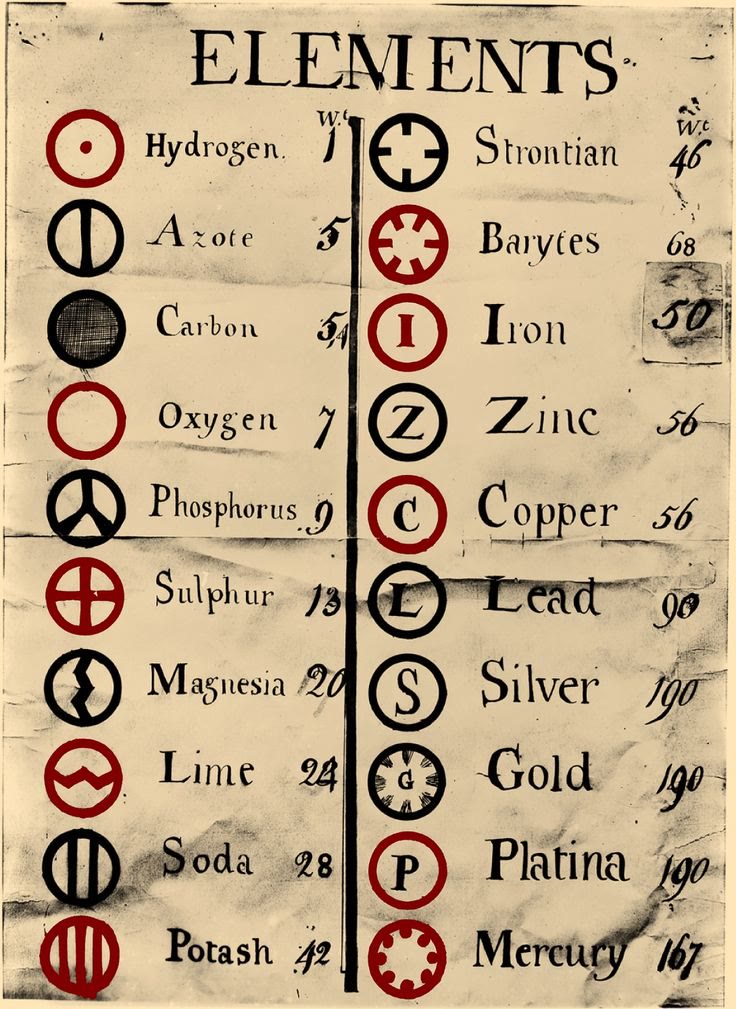
Dalton developed a crude method for measuring the masses of the elements in a compound, and his law of multiple proportions states that when two elements form more than one compound, the masses of one element that combine with a fixed mass of the other are in a ratio of small whole numbers. His law of partial pressures states that the total pressure of a gaseous mixture is equal to the sum of the partial pressures of the individual component gases, partial pressure being the pressure that each gas would exert alone within the volume of the mixture at the same temperature. Five wooden balls made by Peter Ewart of Manchester around 1810 were used by Dalton for demonstrating his atomic theory into the 1840s. Dalton's wooden atomic models and his 'thinking cap' are held in the Science Museum Group collections.
4. Discovery of the Electron
The electron was discovered in 1897 by J.J. Thomson at the Cavendish Laboratory in Cambridge. The finding emerged from an original study of cathode rays, and Thomson showed that these rays consist of particles — electrons — that conduct electricity. From this work he concluded that electrons are part of atoms.
The discovery was announced on 30 April 1897 during Thomson's evening lecture to the Royal Institution.
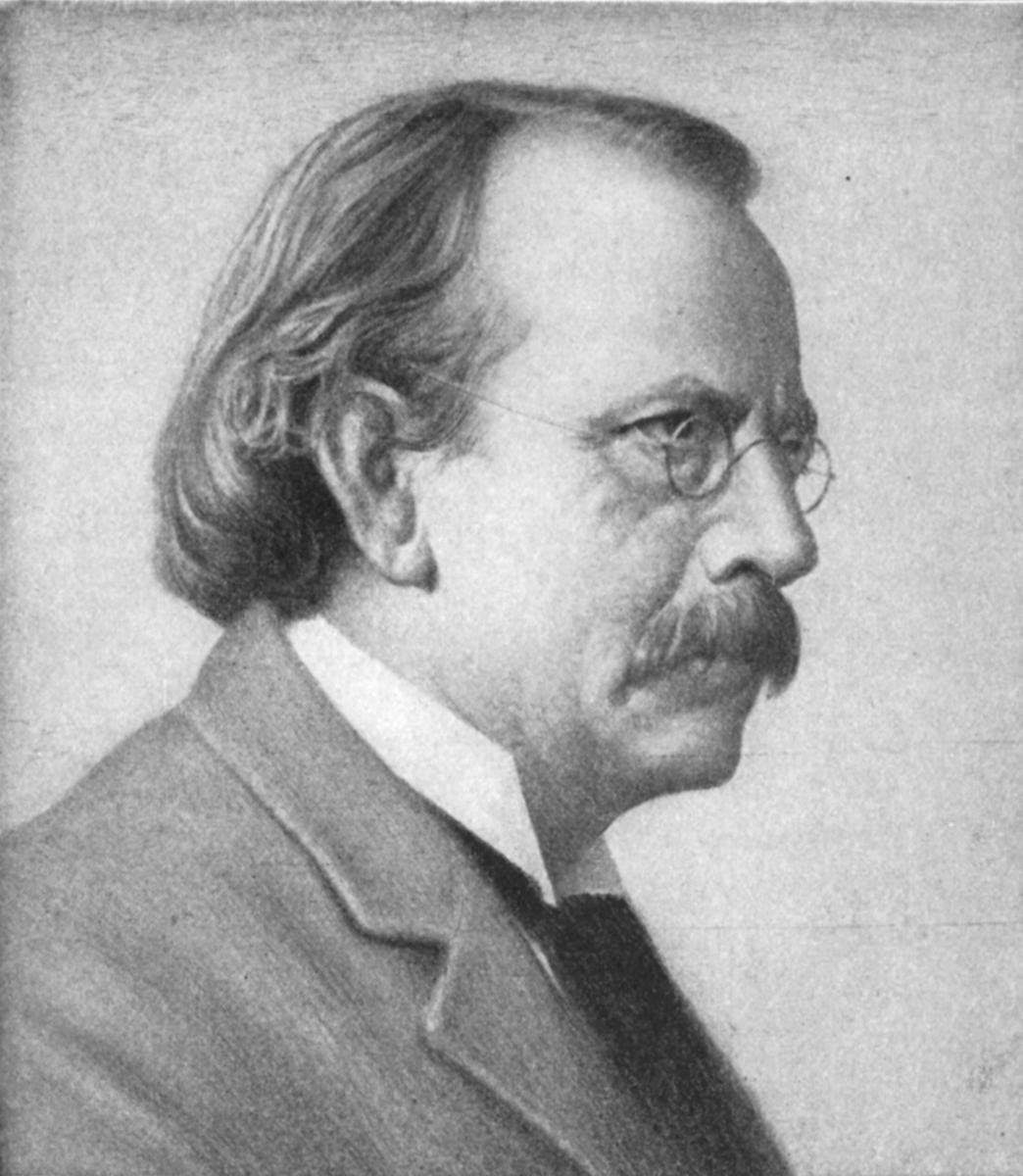
Thomson's investigations on the conduction of electricity by gases were later recognized with the 1906 Nobel Prize in Physics. He had served as Cavendish Professor of Experimental Physics from 1884 to 1918, in succession to Lord Rayleigh.
5. Rutherford and the Nucleus
In 1909 Ernest Rutherford and his colleague Hans Geiger were looking for a research project for their student Ernest Marsden, while Rutherford had been measuring the small forward angles at which most alpha particles scattered off a gold target. Rutherford, refusing to neglect any angle of an experiment, suggested that Marsden look for alpha particles that actually scattered backwards, and although Marsden was expected to find nothing he carefully carried out the experiment. In May 1911 Rutherford published the explanation that the backward scattering of alpha particles was caused by a hard, dense core at the center of the atom, which he called the nucleus.
Rutherford proposed that electrons orbit the central core like planets around the sun. He announced the finding in March 1911 at a meeting of the Manchester Literary and Philosophical Society. The nucleus was discovered in 1911 by Ernest Rutherford of the University of Manchester and published in May 1911. Compared with the atom's overall size the nucleus is minute — in the same proportion as a marble to a football field — with nuclear sizes measured in femtometers equal to 10 −15 meter.
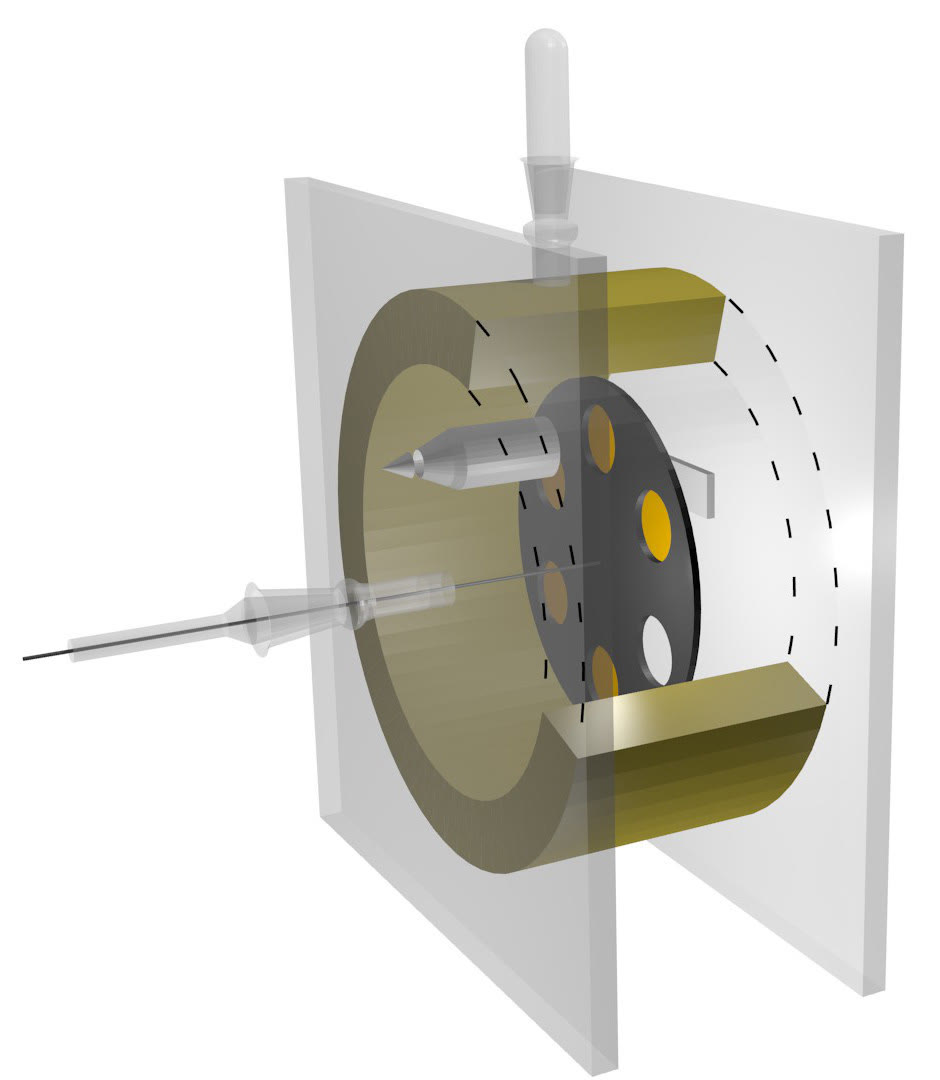
In 1917 Ernest Rutherford became the first person to create an artificial nuclear reaction in laboratories at Manchester, an achievement popularly described as splitting the atom though quite distinct from the nuclear fission discovered later in the 1930s. Between 1914 and 1919 Rutherford conducted many experiments at Manchester by bombarding nitrogen gas with alpha particles, and the penetrating radiation emitted he hypothesised might be the nucleus of a hydrogen atom. The hydrogen nucleus emitted in Rutherford's first nuclear reaction experiments was actually a subatomic particle now called the proton, with Blackett later revealing the mechanism of the reaction. Rutherford's greatest discovery was the atomic nucleus, made in Manchester in 1911 and giving rise to the Rutherford model of the atom, which catalysed the revolution in modern physics at the start of the 20th century.
6. Bohr Model and Quantum Mechanics
In 1913 Niels Bohr proposed a theory for the hydrogen atom grounded in quantum theory, in which certain physical quantities take only discrete values. In his model the electrons move around the nucleus solely in prescribed orbits, and radiation is emitted when an electron drops to a lower-energy orbit. The scheme thereby accounted for the observation that atoms emit light only at fixed wavelengths. Bohr's electrons circled the nucleus in orbits of set discrete energies, gaining or losing energy only by passing from one orbit to another and absorbing or emitting radiation as required.
The model nevertheless makes poor predictions for the spectra of larger atoms. It is still taught in introductory physics classes, yet it is not quite correct, for it violates the uncertainty principle by assigning electrons a definite radius and known orbital periods that cannot be directly determined at the same time. The Bohr atom is now recognized as a precursor of the quantum-mechanical description of atoms developed more than a decade after Bohr's work.
Assuming that matter such as electrons could be regarded as both particles and waves, Erwin Schrödinger formulated in 1926 a wave equation that accurately calculated the energy levels of electrons in atoms. It earned Schrödinger the 1933 Nobel Prize in Physics for the discovery of new productive forms of atomic theory. Bohr's own pioneering work on atomic structure had been honoured earlier, with the 1922 Nobel Prize in Physics for his services in the investigation of the structure of atoms and of the radiation emanating from them.
7. Subatomic Structure and the Standard Model
Protons and neutrons are hadrons, composite particles made of quarks held together by the strong interaction force. The proton contains two up quarks and one down quark, while the neutron contains one up quark and two down quarks. The proton carries a positive electrical charge and is found in the atomic nucleus of every element. Free protons are stable, and the proton is the only stable type of subatomic particle made of even smaller particles.
It accounts for three of the four fundamental forces that govern the universe: electromagnetism is carried by photons, the strong force by gluons, and the weak force by W and Z bosons. Developed in the early 1970s, the Standard Model encapsulates physicists' best understanding of how a few basic building blocks called fundamental particles, governed by four fundamental forces, make up everything in the universe.
On 4 July 2012 the ATLAS and CMS experiments at CERN's Large Hadron Collider announced they had each observed a new particle in the mass region around 126 GeV, consistent with the Higgs boson. On 8 October 2013 the Nobel Prize in physics was awarded jointly to François Englert and Peter Higgs for the theoretical discovery of a mechanism that contributes to understanding the origin of mass of subatomic particles, confirmed by the discovery of the predicted fundamental particle at CERN's Large Hadron Collider.
Although the Standard Model is currently the best description of the subatomic world, it does not explain the complete picture, since the theory incorporates only three out of the four fundamental forces and omits gravity.
8. Isotopes
Isotopes are members of a family of an element whose atoms all share the same number of protons in the nucleus but contain different numbers of neutrons. Because the proton count is unchanged, isotopes of an element occupy the same place in the periodic table.
Carbon occurs naturally as three isotopes: carbon-12, with six neutrons; carbon-13, with seven neutrons; and carbon-14, with eight neutrons. Every element has its own number of isotopes, and adding even a single neutron can dramatically change an isotope's properties.
Hydrogen is the only element whose isotopes have unique names: deuterium, with one neutron, and tritium, with two neutrons.
Isotopes of a given element have almost identical chemical properties yet differ in mass and therefore in physical properties. Two kinds are recognized: stable isotopes, which do not emit radiation, and unstable isotopes, which do emit radiation and are called radioisotopes. More than 3000 radioisotopes are known, and as unstable forms of elements that emit radiation they are useful in medicine, industry, agriculture, radiopharmaceutical sciences and other applications. Radioisotopes are produced artificially and safely in research reactors and accelerators, and radioisotope therapy uses them to manage cancer and chronic diseases by treating cancerous cells.
9. Scale and Dimensions
The atom is defined by a striking disparity between the reach of its outer structure and the compactness of its core. The radius of an atom measures 1 to 2 angstroms, one angstrom being 10^-10 meter, and all atoms are roughly the same size 1Atom | Definition, Structure, History, Examples, Diagram, & Facts · Encyclopaedia Britannica ↗. Laid out in a single line, about 50 million atoms of solid matter would span 1 cm 1.
Nuclear sizes are measured in femtometers, equal to 10^-15 meter 1. The diameter of a nucleus depends on the number of particles it contains and ranges from about 4 femtometers for a light nucleus such as carbon to 15 femtometers for a heavy nucleus such as lead 1. Virtually all the atom's mass is concentrated there 1.
| Property | Value | Source |
|---|---|---|
| Atomic radius | 1-2 angstroms (1 angstrom = 10^-10 meter) | britannica-atom |
| Number of atoms in 1 cm | About 50 million | britannica-atom |
| Nuclear diameters | 4 femtometers (carbon) to 15 femtometers (lead) | britannica-atom |
10. Timeline: from ancient atomism to the quantum atom
- 5th century BCEAncient Greek atomismLeucippus, a thinker of the fifth century BCE, is usually credited with inventing atomism in the Greek tradition; his student Democritus took over and systematized the theory that indivisible bodies called atoms and void are the fundamental constituents of the natural world.
- c. 50 BCELucretius writes De Rerum NaturaLucretius' poem On the Nature of Things sets out atomism in Latin verse, teaching that all nature consists of bodies and the void and that nothing is ever born from nothing.
- September 5 or 6, 1766Birth of John DaltonJohn Dalton was born in Eaglesfield, Cumberland, and died in Manchester on July 27 in 1844; he was an English meteorologist and chemist and a pioneer in the development of modern atomic theory.
- 1801Law of partial pressuresDalton formulated the Law of Partial Pressures, according to which the pressure of a mixed gas is the sum of the pressures that each of its components would exert if occupying the same space.
- 1803First table of atomic weightsAt the end of an 1803 paper on the absorption of gases by liquids Dalton set out the first rudimentary table of atomic weights.
- 1808-1827New System of Chemical PhilosophyDalton consolidated his atomic theories in the New System of Chemical Philosophy, in which each element consists of its own unique kind of indivisible atom.
- 30 April 1897Discovery of the electronJ.J. Thomson announced the discovery of the electron during his evening lecture to the Royal Institution, the culmination of an original study of cathode rays.
- 1906Thomson's Nobel PrizeJ.J. Thomson received the Nobel Prize in Physics in recognition of his theoretical and experimental investigations on the conduction of electricity by gases.
- 1908Rutherford's Nobel PrizeErnest Rutherford received the Nobel Prize in Chemistry for his investigations into the disintegration of the elements and the chemistry of radioactive substances.
- May 1911The nuclear atomRutherford published his explanation that alpha particles scattering backwards from a gold foil were deflected by a hard, dense core at the center of the atom — the nucleus — and calculated that it was only about 1/100,000 the size of the atom.
- 1913Bohr's model of the atomNiels Bohr proposed a theory for the hydrogen atom in which electrons move only in prescribed orbits and emit radiation when jumping to a lower-energy orbit, explaining why atoms emit light of fixed wavelengths.
- 1917-1919First artificial nuclear reactionBombarding nitrogen with alpha particles at Manchester, Rutherford and his team became the first to initiate an artificial nuclear reaction; the hydrogen nucleus emitted was actually the proton.
- 1926Schrödinger's wave equationAssuming that matter such as electrons could be regarded as both particles and waves, Erwin Schrödinger formulated a wave equation that accurately calculated the energy levels of electrons in atoms.
- 1932Discovery of the neutronJames Chadwick proved that the penetrating radiation emitted when alpha particles were directed at beryllium consisted of a neutral particle with about the same mass as a proton — the neutron.
- 4 July 2012Higgs boson observedThe ATLAS and CMS experiments at CERN's Large Hadron Collider announced they had each observed a new particle in the mass region around 126 GeV, consistent with the Higgs boson.
- September 201712 GeV upgrade at Jefferson LabThe 12 GeV upgrade of Jefferson Lab's CEBAF accelerator was officially completed, tripling its original operating energy to image nuclei at their deepest level.
11. Frequently asked questions
Where does the word 'atom' come from?
The word derives from the ancient Greek adjective atomos, which literally means 'uncuttable' 4Ancient Atomism · Stanford Encyclopedia of Philosophy ↗. Leucippus, a thinker of the fifth century BCE, is usually credited with inventing atomism in the Greek tradition 4, and the ideas of his student Democritus, who is said to have taken over and systematized his teacher's theory, are known from many reports and fragments quoted by others 4.
Who first proposed the modern atomic theory?
John Dalton proposed the theory of atomism in the early 19th century, deriving it from his meteorological studies, and it is the foundation of the modern concept of the atom 6John Dalton & The Theory of Atomism · Science History Institute ↗. Dalton consolidated his atomic theories in the New System of Chemical Philosophy (1808-1827) 6, and he created the first rudimentary table of atomic weights in 1803 9John Dalton | Science Museum Group Collection · Science Museum Group Collection ↗.
How was the electron discovered?
In 1897 J.J. Thomson showed that cathode rays consist of particles — electrons — that conduct electricity, and he concluded that electrons are part of atoms 11J.J. Thomson – Facts · Nobel Prize Outreach (NobelPrize.org) ↗. The discovery was announced on Friday April 30 in 1897 during Thomson's evening lecture to the Royal Institution, the culmination of an original study of cathode rays 10J.J. Thomson – Biographical · Nobel Prize Outreach (NobelPrize.org) ↗.
What is inside an atom?
An atom consists of protons and neutrons in the nucleus, surrounded by electrons 2DOE Explains...the Standard Model of Particle Physics · U.S. Department of Energy, Office of Science ↗. Protons and neutrons are hadrons, composite particles made of quarks held together by the strong interaction force; protons contain two up quarks and one down quark, while neutrons contain one up quark and two down quarks 3DOE Explains...Protons · U.S. Department of Energy, Office of Science ↗.
How big is an atom compared with its nucleus?
All atoms are roughly the same size: about 50 million atoms of solid matter lined up in a row would measure 1 cm, and the radius of an atom measures 1 to 2 angstroms, one angstrom being 10−10 meter 1. Compared with the atom's overall size the nucleus is minute, occupying only 1 part in 100,000 of the atom's volume, with nuclear sizes measured in femtometers equal to 10−15 meter 1.
What are isotopes?
Isotopes are members of a family of an element whose atoms all share the same number of protons in the nucleus but contain different numbers of neutrons 19DOE Explains...Isotopes · U.S. Department of Energy, Office of Science ↗. Carbon occurs naturally as three isotopes — carbon-12 with six neutrons, carbon-13 with seven neutrons and carbon-14 with eight neutrons — and every element has its own number of isotopes 19.
References (23)
- 1Atom | Definition, Structure, History, Examples, Diagram, & Facts — Encyclopaedia Britannica Web↩View source
- 2DOE Explains...the Standard Model of Particle Physics — U.S. Department of Energy, Office of Science Web↩View source
- 3DOE Explains...Protons — U.S. Department of Energy, Office of Science Web↩View source
- 4Ancient Atomism — Stanford Encyclopedia of Philosophy Web↩View source
- 5On the Nature of Things (De Rerum Natura), Book I — Internet Classics Archive, MIT (trans. William Ellery Leonard) Book↩View source
- 6John Dalton & The Theory of Atomism — Science History Institute Web↩View source
- 7John Dalton | Biography, Discoveries, Atomic Model, & Facts — Encyclopaedia Britannica WebView source
- 8John Dalton: atoms, eyesight and auroras — Science and Industry Museum (Science Museum Group) WebView source
- 9John Dalton | Science Museum Group Collection — Science Museum Group Collection Web↩View source
- 10J.J. Thomson – Biographical — Nobel Prize Outreach (NobelPrize.org) 1906 Web↩View source
- 11J.J. Thomson – Facts — Nobel Prize Outreach (NobelPrize.org) 1906 Web↩View source
- 12May, 1911: Rutherford and the Discovery of the Atomic Nucleus — American Physical Society (APS News) 1911 WebView source
- 13Rutherford's Legacy – the birth of nuclear physics in Manchester — The University of Manchester WebView source
- 14History and heritage — Department of Physics and Astronomy, The University of Manchester WebView source
- 15Niels Bohr – Facts — Nobel Prize Outreach (NobelPrize.org) 1922 WebView source
- 16March 6, 1913: Bohr describes his model of atom to Rutherford — American Physical Society (APS News) 1913 WebView source
- 17Erwin Schrödinger – Facts — Nobel Prize Outreach (NobelPrize.org) 1933 WebView source
- 18The Standard Model — CERN WebView source
- 19DOE Explains...Isotopes — U.S. Department of Energy, Office of Science Web↩View source
- 20What are Isotopes? — International Atomic Energy Agency (IAEA) WebView source
- 21James Chadwick – Facts — Nobel Prize Outreach (NobelPrize.org) 1935 WebView source
- 22Ernest Rutherford – Facts — Nobel Prize Outreach (NobelPrize.org) 1908 WebView source
- 23Science — Thomas Jefferson National Accelerator Facility (Jefferson Lab) WebView source